

Temple Of Debod Madrid Travel Guide
Plan temple of debod madrid with top picks, neighborhood context, timing tips, and practical booking advice for a smoother trip.
On this page
Temple Of Debod Madrid: An Ancient Gift
The Temple of Debod Madrid offers a unique piece of ancient Egypt right in the heart of Spain.
This 2,200-year-old monument, originally built on the banks of the Nile, arrived in Madrid in the 1970s as a gift from Egypt — and it remains the only authentic Egyptian temple in Spain.
Visitors come for its history, its reflective pools, and what is widely considered the best sunset viewpoint in the city.
Admission is free, and the location inside Parque de la Montaña puts it within easy walking distance of the Royal Palace.
Plan with trusted sources: cross-check opening hours and seasonal details with the official Madrid tourism site, and read more about the city on its Wikipedia entry before you go.
History of the Temple of Debod
The Temple of Debod was built around the 2nd century BC in Nubia, in what is now southern Egypt, roughly nine miles south of Aswan. It was commissioned by Adikhalamani, the Meroitic King of Kush, as a small chapel dedicated to two of the most powerful Egyptian deities: Amun, the king of the gods, and Isis, the divine mother. The site was considered sacred because legend held that Isis gave birth to the sky god Horus there.
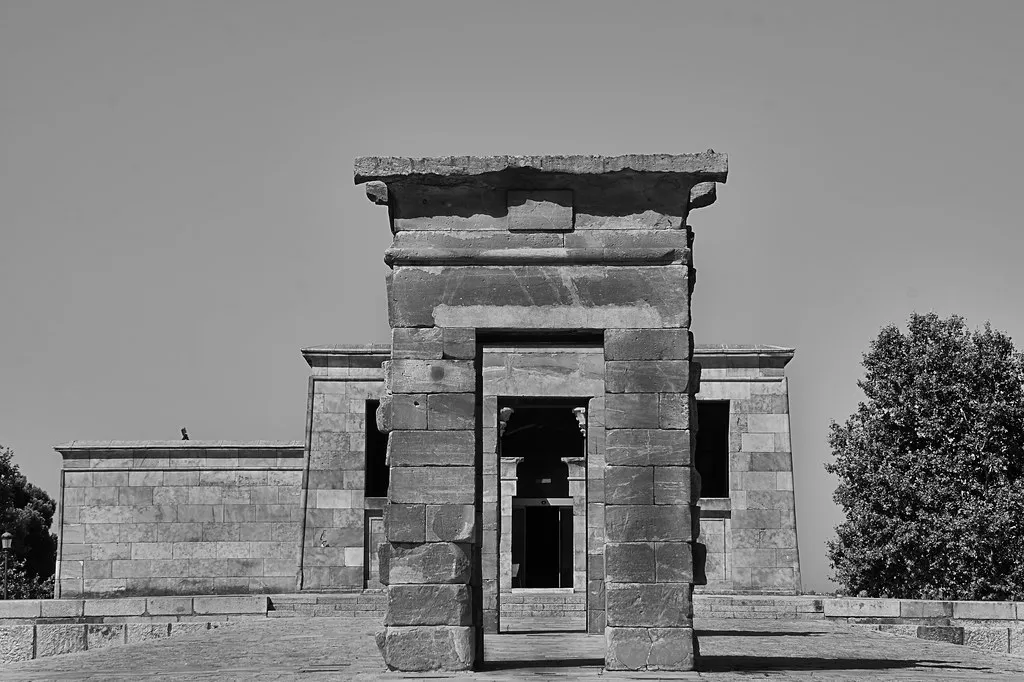
Over the following centuries, the temple grew. Pharaohs of the Ptolemaic dynasty and later Roman emperors — Augustus, Tiberius, and Hadrian — each added vestibules, reliefs, and inscriptions. By the 6th century AD, as Christianity spread through Nubia, the temple ceased to function as a place of worship. It remained largely intact for another fifteen centuries before modern events threatened its survival.
In 1960, Egypt began construction of the Aswan High Dam. The reservoir it created — Lake Nasser — would flood a vast swath of ancient Nubia, including 22 sites of critical archaeological importance: the great temples at Abu Simbel, the island complex at Philae, and the Temple of Debod among them. UNESCO launched the International Campaign to Save the Monuments of Nubia, assembling experts from 50 countries in what has been called the greatest archaeological rescue operation in history.
Spain was among the countries that contributed most to the campaign, helping to relocate the Abu Simbel temples. As a token of gratitude, Egypt gifted the Temple of Debod to Spain in 1968. It was one of six temples given to countries that played a central role in the rescue. The others ended up in museums in New York, Turin, Leiden, Khartoum, and Berlin. Madrid's temple is the only one still displayed outdoors in the open air — a decision that has drawn criticism from conservationists but gives it a raw authenticity the museum-bound examples cannot match.
The Journey to Madrid
The relocation of the Temple of Debod was an enormous logistical undertaking. In 1961, before the waters of Lake Nasser rose, engineers carefully documented the structure and began dismantling it stone by stone. The stones were transported to Elephantine Island near Aswan, where they went into storage. There they sat for nine years while Spain and Egypt arranged the final details of the gift and determined where it would be reconstructed.
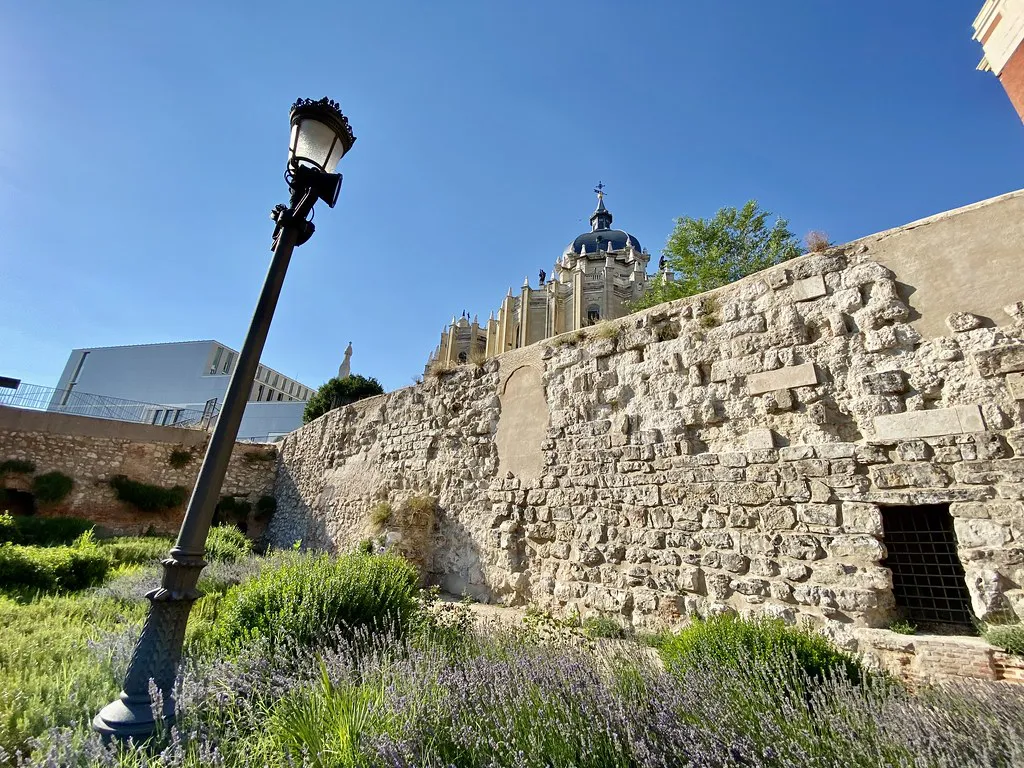
In 1970, a Spanish transportation company collected the stones from Alexandria and shipped them to the port of Valencia. From Valencia, trucks carried the cargo overland to Madrid. The site chosen for reassembly was the hill in Parque de la Montaña — a location with its own layered history. The military barracks that stood here, the Cuartel de la Montaña, were the launching point for the military uprising of July 1936 that triggered the Spanish Civil War. Before that, in 1808, rebels from the Dos de Mayo uprising against Napoleonic rule were executed on this same hillside — the event immortalised in Francisco Goya's painting, housed today in the nearby Prado Museum.
Reassembly of the temple took two years. Engineers preserved the original east-to-west orientation, though photographs from Egypt show that the two pylons — the monumental gateways — were put back in the reverse order from how they originally stood. The Temple of Debod opened to the public in 1972, making it the first and only authentic Egyptian monument on Spanish soil.
What to Expect Inside the Temple
The temple complex consists of two pylons set on a raised walkway that leads to the central enclosed sanctuary. Walking through the gateway and into the interior, you move through several vestibules, each added by successive rulers over five centuries. The oldest part is the Adikhalamani Chapel, built by the Meroitic king who commissioned the original structure. Its walls bear reliefs and hieroglyphs showing Adikhalamani presenting offerings to various gods. Even for visitors unfamiliar with Egyptian iconography, the detail preserved in the carvings is striking.
Beyond the chapel, exhibits include scale models of the temple in its original Nubian setting, fragments of statuary, small artefacts, and audiovisual projections cast onto the ancient walls. Information panels are provided in both Spanish and English, explaining the history of the structure and the rescue campaign that brought it here. The full interior circuit takes roughly 10 to 15 minutes.
One practical reality shapes every visit: only 30 people are allowed inside at any one time, for a maximum of 30 minutes per group. During peak hours — especially in the hour before sunset — this creates a queue. Last entry is 15 minutes before closing. Arrive early in the morning (around 10:00) if you want to walk straight in without waiting. The temple also closes frequently for conservation work or private events, with no reliable advance notice on the official website. Check the notice boards on-site or arrive with the expectation that the exterior and park remain accessible even when the interior is shut.
The Sunset and the Park
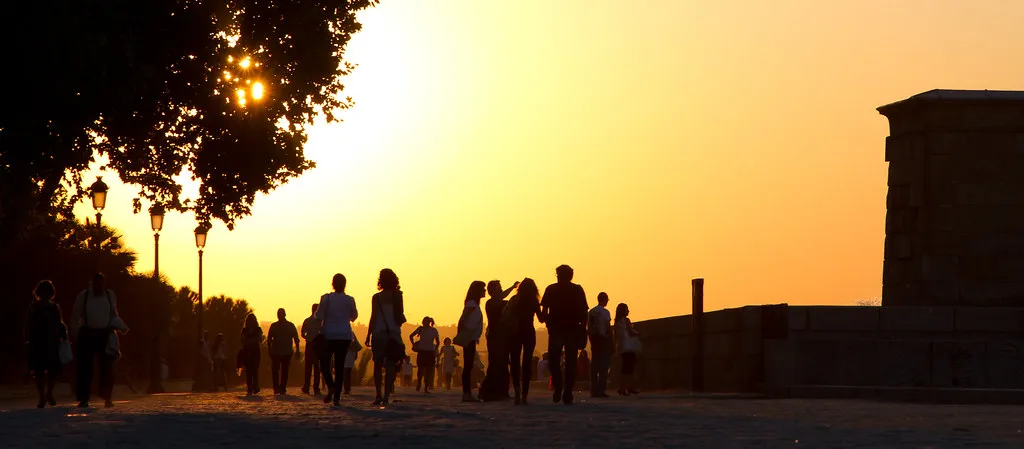
The Temple of Debod at sunset is one of the most photographed scenes in Madrid. As the light shifts from gold to deep orange, the stone pylons are silhouetted against the sky and their reflection shimmers in the long rectangular pool that surrounds the base. Locals bring blankets and sit on the hillside; visitors cluster along the railings with cameras. The atmosphere is communal and unhurried, and on a clear evening in autumn or spring it is genuinely spectacular.
For photographs, professional photographers and the Accor travel guide both advise against using flash, which flattens the ambient glow. A tripod and a slow shutter speed will capture the illuminated stone against the fading sky far more effectively. The best vantage point is along the south-facing edge of the terrace wall, slightly west of the main gateway — this angle frames both pylons with the city skyline behind them.
The temple sits within Parque de la Montaña, which connects directly to the larger Parque del Oeste. Combined, these green spaces offer a full afternoon's worth of ground to explore. The Rosaleda del Parque del Oeste is a formal rose garden that blooms intensely in May and June. Panoramic viewpoints along the hillside look out toward the Royal Palace and the Casa de Campo. Families and joggers share the paths with visitors making their way between sights. Discover more free things to do concentrated in this same western corridor.
Practical Information
The Temple of Debod is located at Calle Ferraz 1, Madrid. Admission is free. The temple is open Tuesday to Sunday from 10:00 to 20:00 (last entry 19:45) during summer months; winter hours are typically 09:45 to 13:45 and 16:15 to 18:15. It is closed every Monday and on public holidays including 1 January, 6 January, 1 May, and 25 December. Hours can shift without much notice — check the Madrid City Council website or arrive with a flexible schedule.
The closest metro stop is Plaza de España (Lines 3 and 10), a 10-minute walk uphill to the temple. The Ventura Rodríguez stop (Line 3) is slightly closer but involves a steeper climb. A single metro ticket in central Madrid costs between €1.50 and €2 depending on distance. Madrid's BiciMAD bike-share scheme also has docking stations near the park entrance, making cycling from the city centre a practical option.
Bus lines 74, 75, and C run along Paseo del Pintor Rosales, which borders the park on the east. If you are visiting with children or have mobility considerations, note that the approach from Plaza de España involves a sustained uphill walk on cobblestone paths; the park entrance from Paseo del Pintor Rosales is flatter and easier to navigate with pushchairs or wheelchairs. Find tips on getting around the city by public transport for the full route options.
There are no bag storage facilities at the temple. The surrounding park has no dedicated food vendors; the nearest cafes and restaurants are on Calle de Ferraz, a short walk downhill at the base of the park. For a comfortable visit, bring water — especially between June and September when temperatures regularly reach 35°C — and arrive at least 45 minutes before your target sunset time to secure a good position on the terrace.
Family-Friendly and Budget Visit
Because admission is free and the park surrounding the temple is open and safe for children, the Temple of Debod is one of the most accessible family attractions in Madrid. Kids who have studied ancient Egypt at school often find the real hieroglyphs and carved reliefs more engaging than any textbook image. The reflective pool around the base is shallow and fenced, so young children can get close without risk.
Pack a picnic from any of the supermarkets near Plaza de España before heading up — there is ample lawn in Parque del Oeste for a relaxed lunch or dinner before sunset. This eliminates the need for a restaurant stop and lets the afternoon stretch naturally from the temple visit into the park and back. Combine the trip with other nearby free attractions, including the gardens of the Royal Palace (Jardines de Sabatini) and the Temple of Debod viewing terrace for a full half-day without spending anything beyond transport.
For families seeking a more structured day, read our guide on visiting Madrid with kids for attractions that work well in combination with a morning or early-evening temple visit.
Planning Your Visit
The optimal strategy depends on your priorities. If seeing the interior exhibition matters, go on a weekday morning when the queue is short and the temple reliably open. Tuesday and Wednesday openings are typically least crowded. If the sunset is the goal, go any evening from about an hour before dusk; crowds peak in the final 30 minutes before the sun drops below the horizon, so arrive early and choose your spot unhurriedly.
Spring (April and May) and autumn (September and October) deliver the best combination of mild temperatures, reliable clear skies, and manageable crowds. July and August are the hottest months — sunsets are late (around 21:30) and visitor numbers are high, but the golden light in the final hour before dark makes the trip worthwhile if you bring water and arrive prepared. Winter sunsets are early (around 18:00) and the park is far less crowded; the experience is quieter and more intimate.
The Temple of Debod integrates naturally into a broader Madrid itinerary. It pairs well with the Royal Palace (a 15-minute walk), the Prado Museum (25 minutes by metro or foot), and the Gran Vía shopping and restaurant strip. For a structured approach to fitting it all in, see our Madrid 3-day itinerary and our guide on where to stay in the city — the Malasaña and Argüelles neighbourhoods put the temple within easy walking distance.
For the wider city context, see our complete Madrid tourism attractions guide.
Frequently Asked Questions
Which Temple of Debod Madrid options fit first-time visitors?
First-time visitors should prioritize seeing the temple at sunset for its iconic views. Explore the exterior and reflective pools, then read the informative panels inside. Allow about an hour to fully appreciate the site and its surroundings. Consider a stroll through Parque del Oeste afterwards.
How much time should you plan for Temple of Debod Madrid?
Plan for 1 to 1.5 hours to visit the Temple of Debod Madrid. This allows time to walk around the exterior, appreciate the views, and read the historical information. If you plan to watch the sunset, arrive at least 30-45 minutes beforehand. This ensures you find a good spot.
What should travelers avoid when planning Temple of Debod Madrid?
Avoid visiting during midday in summer, as it can be very hot and crowded. Do not expect extensive indoor exhibits, as the temple's main appeal is its exterior and setting. Also, avoid leaving your visit until the last minute if you want to catch the sunset, as it gets busy. Check opening hours for interior access.
Is Temple of Debod Madrid worth including on a short itinerary?
Yes, the Temple of Debod Madrid is definitely worth including on a short itinerary. Its central location and free admission make it an accessible attraction. It offers a unique cultural experience and stunning views, especially at sunset. You can easily fit it into a Madrid 1-day itinerary.
Which Must-See Temple Attractions options fit first-time visitors?
First-time visitors to the Temple of Debod should focus on the main temple structure and its surrounding reflective pools. The sunset views are a must-see for a memorable experience. Also, take time to read the historical plaques to understand its Egyptian origins. The tranquil park setting adds to the appeal.
The Temple of Debod Madrid truly offers a unique and enriching experience for all visitors.
This ancient Egyptian monument, gracefully relocated to Spain, tells a compelling story of history and international cooperation.
Whether you seek stunning sunset views, a peaceful park stroll, or a touch of ancient culture, the temple delivers.
Make sure to include this remarkable landmark in your Madrid itinerary for an unforgettable journey.
You might also like


Continue reading
More guides you'll find useful


