

10 Unforgettable Things to Do in Barcelona with Kids (2026)
Plan things to do in barcelona with kids with top picks, neighborhood context, timing tips, and practical booking advice for a smoother trip.
On this page
10 Best Things to Do in Barcelona with Kids for a Memorable Trip
After three visits to Barcelona with my own children, I've learned what truly captivates young travelers in this vibrant city. It's a destination brimming with unique architecture, engaging museums, and endless outdoor spaces perfect for family adventures. This guide shares our top family-friendly activities and essential tips for a smooth 2026 visit.
Barcelona effortlessly blends cultural immersion with playful discovery, ensuring there's something for every age. From Gaudí's whimsical creations to interactive science centers, the city invites kids to explore and learn. Planning ahead for tickets and transport will help maximize your family's enjoyment.
Plan with trusted sources: cross-check opening hours and seasonal details with the official Barcelona tourism board, and read more about the city on its Wikipedia entry before you go.
Things to Do in Barcelona with Kids
Barcelona is one of those rare cities that works brilliantly for every age in the family. The neighborhoods are walkable, the metro is clean and frequent, and locals are genuinely welcoming to children in cafes, restaurants, and museums alike. The challenge isn't finding things to do — it's not trying to cram too much in, because tired children in 32°C heat will derail even the best itinerary.
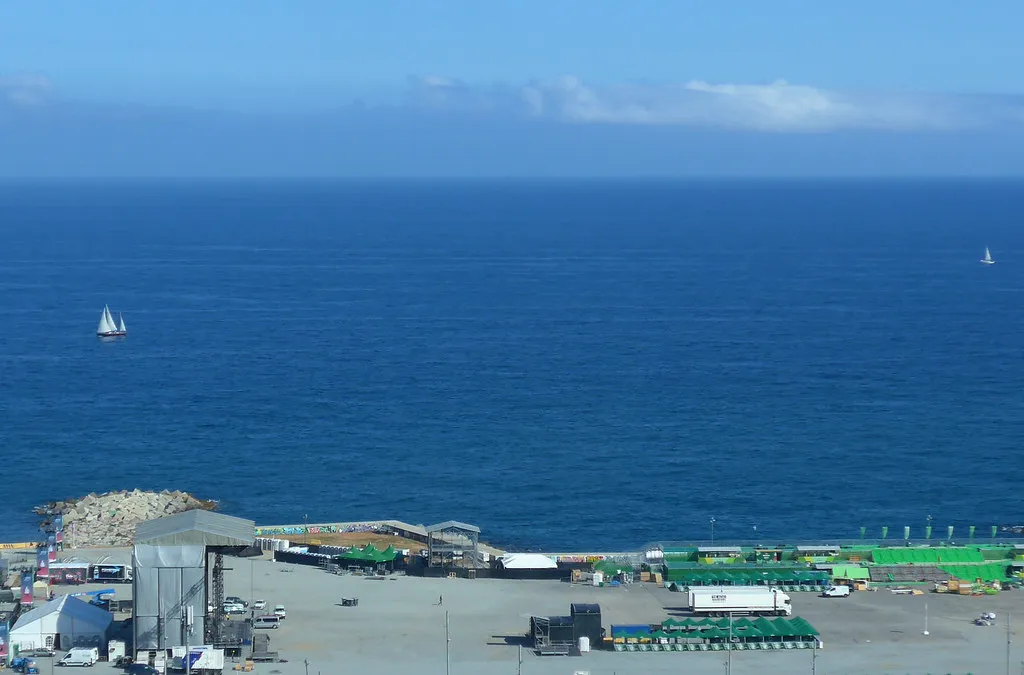
The activities below prioritize genuine engagement over adult-friendly culture that kids merely tolerate. Mix one indoor activity with one outdoor one each day, build in a park stop mid-morning, and keep afternoons flexible. Barcelona rewards slow exploration more than a relentless checklist.
Park Güell
Designed by Antoni Gaudí, Park Güell is a fantastical open-air space of colorful mosaic terraces, gingerbread-style gatehouses, and panoramic views across the city. Kids can run freely through the park's free outer areas, but the ticketed Monumental Zone — home to the famous mosaic salamander and the main terrace — requires a timed-entry ticket. In 2026 those cost €10 for adults; children under 7 enter free.
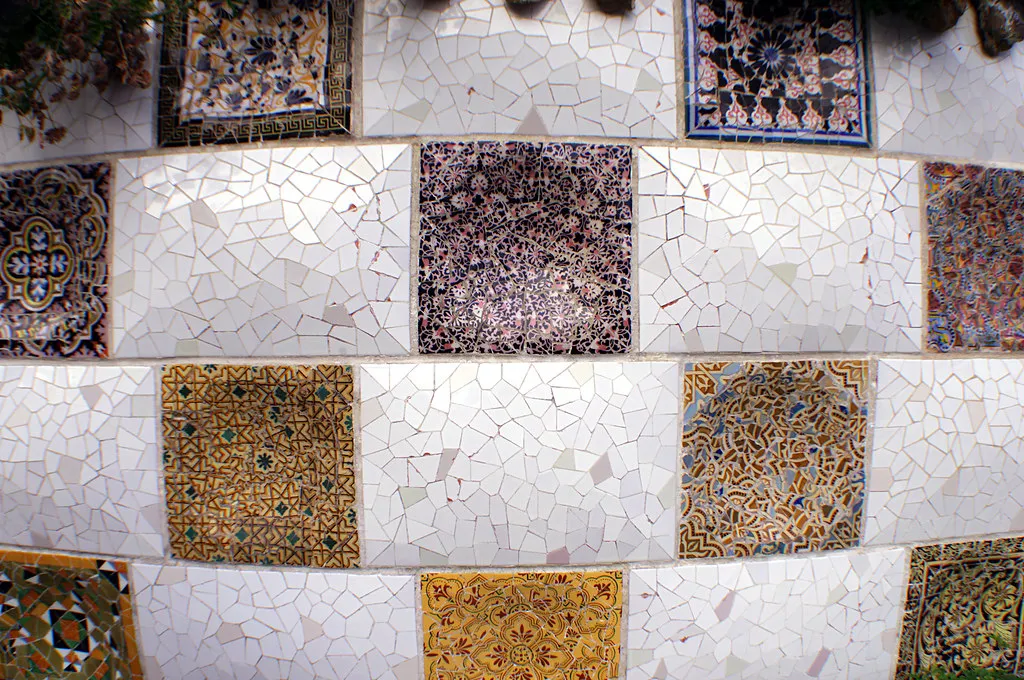
Book tickets at least a few days ahead in peak season; they sell out regularly. The best family strategy is to arrive at opening (08:00) before the heat builds and crowds thicken. The nearest entrance is on Carrer d'Olot, 1. There are playgrounds and picnic tables inside the Monumental Zone, so it easily fills a half-morning.
One tip that almost no guide mentions: the free outer park above the Monumental Zone has open lawns and stone viaducts that children love climbing. It's less crowded than the ticketed terrace and gives you extra time without extra cost.
Barcelona Aquarium
L'Aquarium de Barcelona is Europe's largest Mediterranean aquarium and one of the most reliably crowd-pleasing stops for families. The centerpiece is an 80-metre glass walk-through tunnel where sharks, stingrays, and giant sea turtles glide overhead. Children are rarely unimpressed. Beyond the oceanarium there are interactive play areas where kids can press buttons, climb through tubes, and explore tide-pool touch tanks.
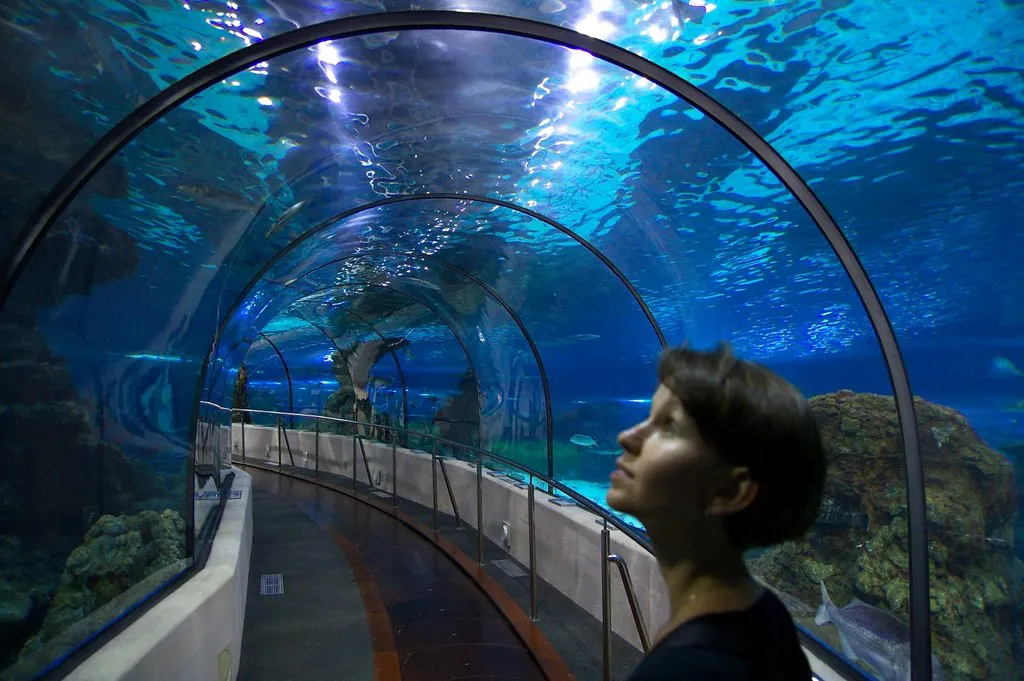
Sharks are fed by divers on Tuesdays and Fridays, with the first feeding starting around 11:30. Penguins are fed at 11:00 daily. Arriving by 10:30 on either of those days means you can catch two feedings without rushing. Tickets in 2026 run approximately €21 for adults and €13–18 for children depending on age; booking online saves both money and queuing time. The aquarium is at Moll d'Espanya del Port Vell and opens daily from 10:00.
Allow 2–3 hours. There is a small outdoor playground on the upper floor — useful if you need to decompress a toddler mid-visit. Port Vell itself is pleasant for a post-aquarium walk along the harbor.
Hop-On Hop-Off Bus
The Barcelona Bus Turístic runs three color-coded routes covering the main sights: the Red Route (north/Gaudí sights), Blue Route (seafront/Montjuïc), and Green Route (Fòrum/Diagonal Mar). A 24-hour family ticket costs around €75 for two adults and two children, giving unlimited rides across all routes. Kids genuinely love the novelty of the open top deck, and the audio guide keeps older children engaged between stops.
The bus is particularly useful on the first full day in Barcelona, when the overview helps you prioritize which areas to revisit on foot. It also solves the logistics problem of getting between Montjuïc and Gràcia with tired legs. Stop 14 (Sagrada Família) and Stop 4 (Park Güell) are the most useful drop-off points for families. Buses run approximately every 15–20 minutes from 09:00.
If you're pushing a stroller, the lower deck has fold-down space at the front. The bus does get crowded in July and August — aim for the first departure of the day to secure top-deck seats.
Barcelona Zoo and Ciutadella Park
Parc de la Ciutadella is one of Barcelona's best free family destinations. The park has two distinct playgrounds (one for toddlers, one for older kids), a pond where you can rent rowboats for about €7 per 45 minutes, and a life-size woolly mammoth sculpture that's become a beloved photo stop. You'll almost always find someone blowing giant soap bubbles along the main promenade. Picnicking here after a morning at a paid attraction is a reliable way to keep the budget sane.
Barcelona Zoo sits within Ciutadella Park and adds giraffes, elephants, and primates to the mix. There's an electric train ride that loops most of the grounds — worth the small extra cost on a hot day with young children. Admission in 2026 is approximately €21.40 for adults and €12.95 for children aged 3–12. Book tickets for the Barcelona Zoo online for a slight discount. The zoo is open daily from 10:00.
A practical note: Santa Caterina market is a 10-minute walk from the park gates. Picking up picnic supplies there before entering the zoo is a much better option than the overpriced in-park cafes. The zoo is free with the Barcelona Family Card.
CosmoCaixa Science Museum
CosmoCaixa is the single best museum for children in Barcelona, and it's remarkably affordable. The main exhibits spread across five floors accessed by a beautiful spiral ramp — kids enjoy the ramp as much as what's inside. The headline exhibit is the Flooded Forest: a genuine slice of Amazonian rainforest rehoused indoors, complete with caimans, capybaras, and a dark educational tunnel beneath the trees. Children who found the Sagrada Família hard to engage with will be glued to this.
Other highlights include interactive experiments covering wave physics, geology, and the cosmos, plus a fully reconstructed Antarctic research base that sets up fascinating conversations about climate science. Temporary exhibitions rotate regularly and are consistently well-produced. A planetarium is on-site but costs extra — book its session time when you buy entry tickets. CosmoCaixa is at Carrer d'Isaac Newton, 26 and opens Tuesday–Sunday 10:00–20:00.
Entry is €6 for adults. Children under 16 enter free, making this one of the cheapest half-days you'll spend in the city. If you hold the Barcelona Card, entry is also free. Plan 3–4 hours. The museum's café is decent and affordable by Barcelona standards.
Museu Blau (Natural History Museum)
Museu Blau occupies a striking triangular building in the Fòrum district, its pitch-black walls lit by projections showing the evolution of Earth. The collection covers fossils, minerals, stuffed animals, and exotic specimens, with interactive floor projections that young children find mesmerizing. The real draw is a room specifically designed for toddlers where everything — animal fur, pine cones, rocks, shells — can be touched and handled. Admission is around 30 minutes for this space and time-slots must be reserved, so check the timetable on arrival.
General admission is modest (around €7 for adults). Sunday after 15:00 and the first Sunday of each month are free entry, though family crowds are heavier on those days. The museum sits at Plaça Leonardo da Vinci, 4–6, and there are excellent playgrounds behind and beside the building — a climbing frame for older kids and a separate toddler zone just 30 seconds further on. Pairing Museu Blau with Barcelona Bosc Urbà (the urban adventure course directly nearby) makes for a full physical-plus-educational day.
Chocolate Museum
Barcelona's Museu de la Xocolata is small enough that it won't exhaust young children — 45 minutes to an hour covers everything. The museum traces the history of cacao from the Americas to Europe through chocolate sculptures, some of them impressive enough to stop adults in their tracks. Every child receives a complimentary chocolate bar with entry. The gift shop is dangerous.
Workshops and family chocolate-making sessions are available for an extra charge and are worth booking ahead. Check the schedule on the museum's website before you visit. Tickets are €6 per adult; children under 7 enter free. The museum is at Carrer del Comerç, 36 and opens Tuesday–Saturday 10:00–19:00, Sunday 10:00–15:00. If you hold the Barcelona Card or Barcelona Family Card, entry is free.
The Gothic Quarter location means you can pair a visit here with a pastry stop and a wander through El Born. Keep expectations calibrated for younger children: this is a quieter, exhibit-based experience rather than an interactive one — though the chocolate-bar bribe at the end helps.
Poble Espanyol
Set on Montjuïc, Poble Espanyol is an open-air architectural village that recreates streets and buildings from every region of Spain at full scale. For kids it functions as an adventure: there are courtyards to duck into, craft workshops to watch (and sometimes join), and enough open space to run without worrying about traffic. Adults get a surprisingly good survey of Spanish regional architecture in a couple of hours.
Artisans work on-site, and some workshops — ceramics, glass-blowing, paper-making — are open to family participation for a small fee. Live flamenco performances take place most evenings. Adult admission is around €14; children up to age 7 enter free, ages 7–12 around €7. The complex opens daily from 10:00 and is reachable on the Bus Turístic Blue Route or by bus 150 from Plaça Espanya. Plan 2–3 hours.
Kids and Family Gothic Quarter Walking Tour
A dedicated kids-focused guided walk through the Gothic Quarter is one of the most underused options for families visiting Barcelona. The standard format is a 2.5-hour walk visiting the medieval city's highlights — King's Square, Roman ruins, the Cathedral, and local markets — through stories, role-play, and interactive workbooks rather than a passive audio guide. Children participate rather than trail behind.
Scheduled public tours typically run at 10:00 on Saturdays from April to October, with an extra Wednesday departure in summer. Private kids' tours operate year-round and are bookable for any day. Families who do this walk at the start of a trip rather than the end consistently say it reframes the rest of the stay — the kids start recognizing architectural details and asking questions they wouldn't have otherwise. Meeting point is Plaça de l'Àngel, 12.
This works best for children aged 5 and up. Toddlers will struggle with a 2.5-hour structured walk regardless of how engaging the guide is. If your children are on the younger end, save this for a future trip and do Ciutadella Park instead.
Camp Nou Stadium and Barça Museum
For football-mad children, Camp Nou is non-negotiable. The self-guided Spotify Camp Nou Experience includes the stadium tour, the players' tunnel, the dugout, and the Barça Museum's vast trophy collection. As of 2026, Camp Nou is still undergoing renovations — check the official FC Barcelona website for the current tour scope before booking, as some sections may be partially restricted. Tickets run approximately €28 for adults and €21 for children aged 4–10.
The museum alone justifies the visit for serious fans. Trophy cabinets, Messi memorabilia, and interactive screens showing great goals hold children for longer than most parents expect. The Robokeeper penalty-shoot experience (available as an add-on) is a strong option for kids who want something active. Allow 2–3 hours. The stadium is at Carrer d'Arístides Maillol and is reachable on Metro Line 3 (Les Corts station).
Non-football families can reasonably skip this in favor of Tibidabo or the Aquarium, which offer broader appeal. But if even one child in your group is into football, the shared experience of standing in that tunnel is worth the admission price.
Cable Cars: Montjuïc vs the Port
Barcelona has two very different cable car experiences, and most family guides treat them as interchangeable. They are not. The Telefèric de Montjuïc is the modern, smooth cabin that ascends to Montjuïc Castle from Paral·lel metro station — very safe, stroller-friendly, and the logical choice for families with young children. A return ticket costs approximately €13.50 for adults and €9.80 for children aged 4–12.
The Transbordador Aeri del Port is the older, more dramatic cable car that crosses from Barceloneta beach over the harbor to Montjuïc. It's genuinely thrilling — glass-floor gondola, high altitude, sweeping harbor views — but it is also slow, occasionally creaky, and not recommended for children prone to heights anxiety or for families with pushchairs (no stroller space). A one-way ticket is around €13.50 per person. If you do it, go one-way and descend via the funicular, which is free with your metro ticket.
The practical sequencing that works best: take the Bus Turístic to Montjuïc in the morning, see the castle and Magic Fountain area, then descend on the Transbordador Aeri for the harbor views, arriving near the Aquarium or Port Vell for a late lunch. This avoids backtracking and covers two cable cars in a single afternoon loop.
Tibidabo Amusement Park
Tibidabo is one of the oldest operating funfairs in the world, with the first ride dating to 1928, and its hilltop position above Barcelona makes it feel genuinely special. Rides are color-coded by height and age appropriateness, so younger children have dedicated zones that aren't overshadowed by adult thrill rides. The Automat Museum — a collection of mechanical figures and coin-operated machines — is a highlight that most visitors miss.
Full park entry in 2026 is around €35 for adults and €14 for children between 90–120 cm. The park operates on weekends and select weekdays; the seasonal calendar is on the official website. Getting there requires Bus Turístic or Bus 196 followed by the Tramvia Blau tram (€6 return) and the Tibidabo funicular (included in the entrance ticket) — the journey is part of the fun. The park is exposed and can be extremely hot in summer; bring water and sun protection.
The Barcelona Family Card and Practical Tips
The Barcelona Family Card is a savings pass specifically designed for families that most guides mention in passing but never quantify properly. A 48-hour card for two adults and up to three children costs around €65 in 2026, and covers free entry to the Barcelona Zoo (€21.40 adult + €12.95 child = ~€35 saved for a family of three), free entry to the Chocolate Museum (€6 per adult), and free CosmoCaixa entry for adults (children already enter free). The card also covers the Bus Turístic and offers discounts on the Aquarium. For a family spending two days hitting multiple attractions, the math typically works out positively — run the numbers against your specific itinerary before purchasing.
| Attraction | Adult (2026) | Child price | Free age |
|---|---|---|---|
| Park Güell (Monumental Zone) | €10 | €7 | Under 7 |
| Barcelona Aquarium | €21 | €13–18 | Under 4 |
| Barcelona Zoo | €21.40 | €12.95 (3–12) | Under 3 |
| CosmoCaixa | €6 | Free | Under 16 |
| Museu Blau | ~€7 | Free (Sun after 15:00) | Under 4 |
| Chocolate Museum | €6 | Free | Under 7 |
| Poble Espanyol | ~€14 | ~€7 (7–12) | Under 7 |
| Camp Nou Experience | ~€28 | ~€21 (4–10) | Under 4 |
| Tibidabo Amusement Park | ~€35 | ~€14 (90–120 cm) | Under 90 cm |
| Telefèric de Montjuïc (return) | €13.50 | €9.80 (4–12) | Under 4 |
Transport practicalities: the metro is the fastest and cheapest way to move between neighborhoods. A 10-trip T-Casual card costs around €12.15 and works across metro, bus, and tram. Children under 4 travel free. If you're arriving from the airport, the Aerobus to Plaça Catalunya costs €6.75 per adult and takes 30–35 minutes; children under 4 travel free. Strollers are permitted and there is dedicated space. Most central metro stations have elevators, but check the accessibility map on the TMB website before planning a route with a pushchair.
For food: tapas works surprisingly well with children — Spanish tortilla, patatas bravas, and pan con tomate are crowd-pleasers at any age. Dining in the plazas of Gràcia, particularly Plaça del Sol, gives kids a playground to use while adults wait for food. Reserve restaurants early for dinner; the city's default service window starts at 21:00, which is genuinely late for young children not raised on Spanish hours.
Is Barcelona Good for Families?
Barcelona is an excellent destination for families, with a genuine culture of welcoming children in public spaces. The city has over 300 public playgrounds, a walkable layout, and a fast metro that makes cross-city logistics straightforward. Safety in tourist areas is generally good, though standard precautions against pickpocketing — particularly on La Rambla and the Barceloneta beach — are worth taking.
The beaches deserve special mention. Barceloneta is the most central but also the most crowded. For families wanting a proper swim, the Blue Flag beaches of Bogatell and Nova Icaria are better — less tightly packed, cleaner water, and still reachable in 25 minutes from the center. In July and August, avoid weekend beach visits entirely; weekday mornings before 11:00 are far more pleasant. For more general planning advice, see our guide on how many days you need in Barcelona.
The city's weather is another strong point for families. Summers are hot but manageable with early-morning and evening activity windows. Spring (March–May) and autumn (September–October) offer milder temperatures and shorter queues — these are objectively the best seasons for a family trip. For more on timing, see our guide to the best time to visit Barcelona. Check our guide on practical travel tips for additional city logistics.
Frequently Asked Questions
Do you need a babysitter while in Barcelona?
While many activities are family-friendly, if you wish for an adults-only evening, professional babysitting services are available in Barcelona. Several reputable agencies offer vetted, multilingual sitters for hotels or apartments. Booking in advance is highly recommended, especially during peak tourist seasons.
Which things to do in Barcelona with kids options fit first-time visitors?
First-time visitors with kids should prioritize Park Güell, the Barcelona Aquarium, and a visit to Ciutadella Park with the Barcelona Zoo. These offer a great mix of iconic sights, interactive experiences, and outdoor play. The Hop-On Hop-Off bus is also excellent for getting an overview.
How much time should you plan for things to do in Barcelona with kids?
To comfortably experience a good selection of family activities, plan at least 4-5 full days in Barcelona. This allows for a relaxed pace, factoring in travel time between attractions and essential rest breaks for children. A longer stay, 7 days or more, would allow for some day trips.
Barcelona truly shines as a family destination, offering an incredible range of activities that cater to every age and interest. From the imaginative worlds of Gaudí to engaging science museums and vibrant outdoor spaces, the city invites playful exploration. With a little planning around transport, timing, and the right savings passes, your family can cover a remarkable amount without exhausting budget or energy.
Pace yourselves, embrace the mid-afternoon plaza break, and factor in a churros stop. Whether it's the cable car crossing the harbor, a morning in the Amazonian rainforest at CosmoCaixa, or your child walking through the players' tunnel at Camp Nou, the memories will stick.
You might also like


Continue reading
More guides you'll find useful


