Royal Palace Of Madrid Travel Guide
Plan royal palace of madrid with top picks, neighborhood context, timing tips, and practical booking advice for a smoother trip.
On this page
Royal Palace Of Madrid
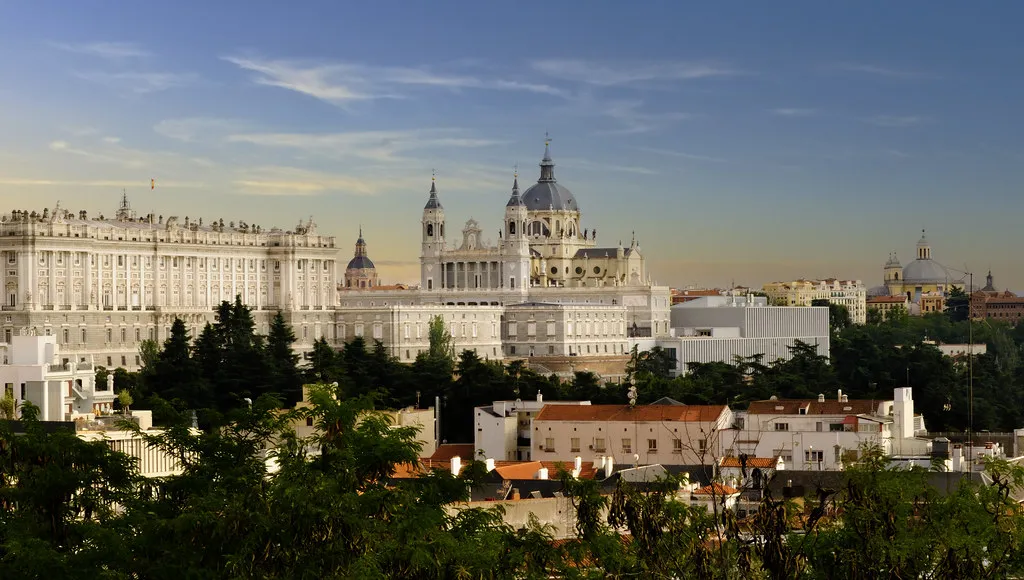
The Royal Palace of Madrid is one of the largest functioning royal palaces in Europe, with 3,418 rooms and an art collection that rivals many dedicated museums. Built in the 18th century on the site of a 9th-century Moorish fortress, it serves as Spain's official royal residence — though the royal family lives at Zarzuela Palace and uses this one only for state ceremonies. The result is a palace frozen in ceremonial splendor, fully open to the public on most days of the year.
This guide covers everything you need to plan a visit: the rooms worth prioritizing, exact 2026 ticket prices, opening hours by season, tour formats, and how to reach the palace by public transport. Consider pairing it with your Madrid 3-day itinerary — the palace sits on the western edge of the city center, walkable from the Puerta del Sol in about 20 minutes.
Plan with trusted sources: cross-check opening hours and seasonal details with the official Madrid tourism site, and read more about the city on its Wikipedia entry before you go.
About the Royal Palace of Madrid
The current building was commissioned by Philip V after a fire destroyed the original Alcázar fortress in 1734. Philip chose Italian architect Filippo Juvarra to design a new palace in the Baroque style, but Juvarra died before construction began. His successor, Juan de Villanueva, completed the project — the palace was inaugurated in 1764 under Charles III.
With over 3,000 rooms, it is larger than Versailles by floor area, though only around 50 rooms are open to visitors. The building is constructed entirely of limestone and granite — Philip V specifically banned wood after the Alcázar fire. The result is a structure that has survived intact for more than 250 years.
Artistically, the palace holds works by Caravaggio, Velázquez, Goya, and Rubens. Many pieces remain in the rooms where they were originally hung, giving the collection a context that standalone museums cannot replicate. The Royal Armory, a separate collection within the complex, is considered one of the finest in the world.
Must-See Royal Palace Attractions
The Throne Room is the visual centerpiece of any visit. Its crimson velvet walls, gilded lions, and ceiling fresco by Giovanni Battista Tiepolo — one of the largest ceiling paintings ever created — make it the most photographed room in the palace. This is where the king traditionally received ambassadors and foreign dignitaries.
The Royal Armory occupies a separate building within the complex and requires around 30 minutes on its own. The collection spans the 13th through 17th centuries and includes full suits of armor worn by Charles V and Philip II. Few collections anywhere in Europe match its depth or condition.
The Royal Chapel features ceiling frescoes by Corrado Giaquinto and houses relics from the Spanish royal family's private devotional collection. The Gala Dining Room, capable of seating 145 guests, is still used for state banquets — the long table, candelabras, and Chinese porcelain collection are all original to the room. The Hall of Mirrors (Salón de Espejos) offers a scaled but genuinely impressive counterpart to its Versailles equivalent.
The Royal Collections Gallery
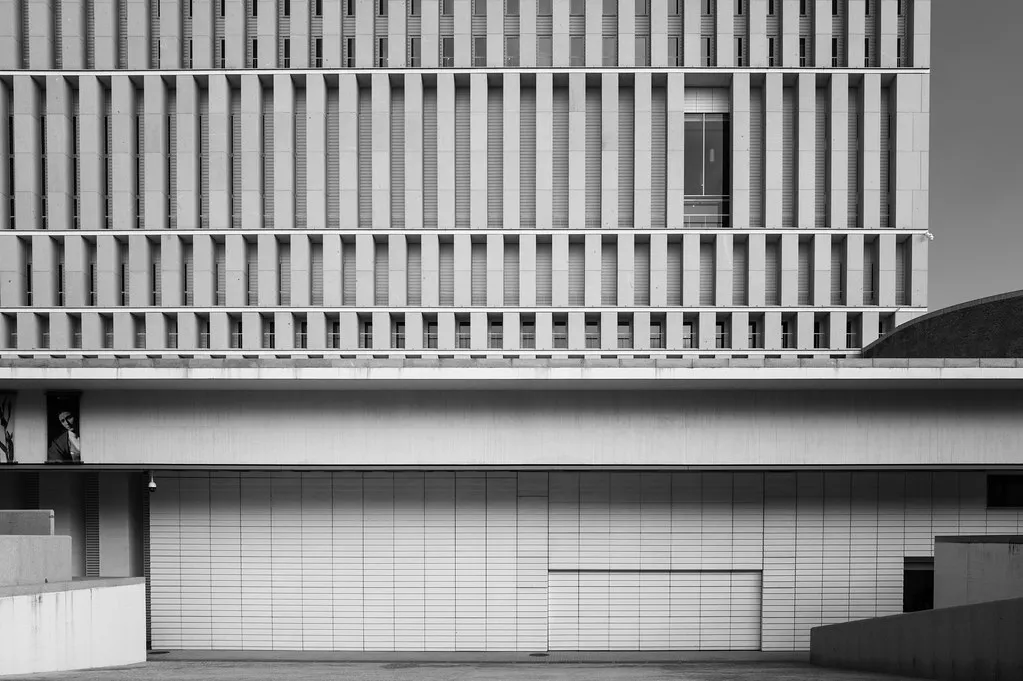
The Galería de las Colecciones Reales opened in 2023 immediately south of the palace, beside the Almudena Cathedral. It houses more than 700 objects from the Spanish royal collection — tapestries, carriages, religious art, and decorative objects — that were previously in storage or scattered across other royal sites. It is the newest major cultural space in Madrid and still relatively uncrowded compared to the Prado.
From 29 May to 12 October 2026, visitors who hold a ticket for the Royal Palace can visit the current exhibition "Brambila, Painter of the Royal Sites" at the Gallery entirely free. This is a time-limited promotion worth factoring into your visit if you plan to come between those dates.
The combined ticket covering both the Palace and the Gallery costs €24 standard (€12 reduced). Your Gallery entry is valid for seven days before or after your Palace visit, so you do not need to visit both on the same day. Note that the Gallery's free evening hours (Monday–Thursday, 18:00–20:00) cannot be combined with the Palace ticket promotion.
Parks, Gardens, and Outdoor Spots
The Sabatini Gardens on the palace's north side are formal French-style gardens with clipped hedges, fountains, and close-up views of the palace's northern facade. They are free to enter and popular in the early evening when the building catches the last light. This is also one of the better spots for a wide-angle photograph of the exterior.
The Campo del Moro, below the palace's western wall, is a larger English-style garden laid out along a long central promenade. It gives the only unobstructed ground-level view of the full palace height from below — the building looks considerably more imposing from here than from Bailén Street. The garden is free and opens daily, but closes earlier than the Sabatini Gardens.
Plaza de Oriente, east of the palace, connects the building to the Royal Theatre. The square's equestrian statue of Philip IV was engineered with input from Velázquez and Galileo on balancing the rearing horse — worth mentioning to anyone interested in the mechanics of 17th-century bronze casting. It is a pleasant place to start or end the visit.
Visiting Times and 2026 Closure Dates
Hours change by season. In summer (April through September), the palace is open Monday to Saturday from 10:00 to 19:00, and Sundays from 10:00 to 16:00. In winter (October through March), Monday to Saturday hours shorten to 10:00–18:00, with Sundays unchanged at 10:00–16:00. The ticket office closes one hour before the palace closes.
Plan for approximately 45 minutes if you are doing a self-guided tour of the main halls only. The Royal Armory adds around 30 minutes. Most visitors doing a thorough visit — palace plus armory, possibly the gardens — need two to three hours in total.
The palace is fully closed on the following dates in 2026: 1 January, 6 January, 1 May, and 25 December. It closes early (from 15:00) on 24 and 31 December; on those days the ticket office shuts at 14:00. Additional closures occur without notice when official state events are scheduled — check the Patrimonio Nacional website the day before if your visit falls on a national holiday or around a major state occasion.
Prices and Ticket Types in 2026
The standard self-guided admission is €18 per person. Reduced admission (€9) applies to children aged 5–16, visitors over 65, and accredited students up to 25 with a valid student card. Children under 5 enter free. These are the current 2026 rates from Patrimonio Nacional — earlier sources citing €12–€15 are out of date.
If you want a guided tour, there is a supplement of €8 per person on top of the base admission. Standard guided admission comes to €26; reduced guided admission is €17. Guided tours are led by Patrimonio Nacional staff — not third-party guides — and the language is fixed at booking, so choose the time slot carefully.
Free admission is available for EU citizens and Latin American citizens with residency or work permits in the EU, but only Monday to Thursday from 17:00 to 19:00 in summer (16:00–18:00 in winter). Free slots are walk-in only, handled at the ticket office, and do not include guided tours or access during those hours for guided groups. Expect queues of 20–40 minutes on weekday afternoons in high season. Bring national ID, passport, or proof of residency — they check.
Additional free categories include persons with a disability of 33% or more (plus one essential companion), ICOM members, accredited teachers, official tourist guides, and people registered as unemployed with supporting documentation. The visit is also eligible for purchase with the Bono Cultural Joven from Spain's Ministry of Culture — useful for visitors under 30 who hold the card.
| Ticket Type | Standard | Reduced | Free |
|---|---|---|---|
| Palace only (self-guided) | €18 | €9 | Mon–Thu 17:00–19:00 (summer) |
| Palace + guided tour | €26 | €17 | — |
| Palace + Royal Collections Gallery | €24 | €12 | — |
| Children under 5 | — | Always free | |
Guided Tour Times
Guided tours run throughout the day in multiple languages. English tours depart Monday to Saturday at 10:45, 11:45, 13:45, and 15:15, with a Sunday schedule of 10:45, 11:45, 13:45, and 14:15. Spanish tours run more frequently — every 30 minutes from 10:30 through to 16:30 on most days, with an additional 17:00 slot on Fridays and Saturdays.
Italian tours run daily at 12:45. French and German tours are available on limited days: French on Tuesday and Wednesday at 14:30, German on Monday and Friday at 14:30. Note that for 2026, French and German guided sessions are only scheduled through 14 June — after that date, availability for those languages has not been confirmed. Book early if you need a specific language.
Book online through the Patrimonio Nacional ticketing site and arrive at the Santiago arch entrance (on Bailén Street, opposite Requena Street) at least 15 minutes before your tour time. Present yourself at the meeting point inside the entrance hall 5 minutes before the tour starts. If you purchase a guided tour ticket, you do not need to separately rent an audio guide.
Interactive Audio Guides
Audio guides are available in two formats. Physical devices can be rented at the ticket office; collect the device from the GVAM service counter after passing access control. The rental is valid only for the day of your visit.
The digital option uses the official Royal Palace app, available on iOS and Android. Download it before your visit, then activate it using the ticket number from your confirmation email. App access is also limited to the day of purchase. Bring your own headphones and charge your phone fully beforehand — the palace has no phone-charging facilities.
The audio guide covers all major rooms with commentary on art, architecture, and history. It is a solid choice for visitors who prefer to move at their own pace. The app version works offline once activated, which matters in some interior rooms where signal is weak.
How to Get There
The palace address is Calle de Bailén, s/n, 28071 Madrid. Visitor entry is through the Santiago arch on Bailén Street, opposite Requena Street. Group access uses a separate entrance further along Bailén Street. The Almudena Cathedral is immediately to the south; Plaza de Oriente is to the east.
By metro, take Line 5 or Line 2 to Ópera station — the palace is a 5-minute walk from the exit. By bus, lines 3, 25, 39, and 148 stop nearby. Commuter trains (Cercanías) serve Príncipe Pío station, which is a 10-minute walk along the river path. Driving is not recommended: parking around Bailén Street is heavily restricted and the surrounding streets are one-way.
From the Puerta del Sol, the walk takes about 20 minutes through the pedestrianized streets of the Habsburg quarter, passing the Plaza Mayor. This is one of the more pleasant ways to arrive — the approach along Calle Mayor gives a gradual reveal of the palace's scale as you descend toward the valley. Open in Maps.
Family-Friendly and Budget-Friendly Options
The Royal Armory is consistently the section children respond to most — the full-scale armor for horses and the child-sized suit made for the young Philip II are particularly striking. The scale of the Throne Room and the Gala Dining Room also tends to land well with younger visitors in a way that painting-heavy rooms do not.
Children under 5 enter free. For families with older children, the reduced rate (€9) applies up to age 16. Large families with an official EU or Latin American family book are entitled to free admission regardless of time slot — this is a less-publicized exemption worth knowing about if it applies to you.
For budget visitors, the free afternoon window (Monday–Thursday, 17:00–19:00 in summer) is the most accessible option. Pair the palace with the adjacent Sabatini Gardens and a walk through Campo del Moro — both free — and you have a half-day itinerary that costs nothing. Find more free things to do to fill the rest of the day, and check practical travel tips for logistics on getting around without a transport card.
How to Plan Your Visit
Book tickets online in advance. The Patrimonio Nacional site lets you choose a specific entry time, which matters most on summer weekends when walk-up queues can run 45–60 minutes. Online booking also guarantees entry on days the palace reaches capacity, which happens several times a year during school holidays.
Arrive at opening (10:00) or after 15:00. Midday from 11:00 to 14:00 is the busiest window, particularly in July and August. Weekdays are consistently quieter than weekends throughout the year. If you plan to use the free afternoon slot, arrive at the ticket office no later than 16:45 in summer — the queue closes when the box office does.
The palace does not allow tripods, selfie sticks, or flash photography. Personal photography without flash is permitted in most areas, with a few exceptions (signs mark the restricted zones). Bag storage is available at the entrance. Comfortable flat shoes are necessary — the floors are historic stone and tile, and the route covers a significant distance.
If you are visiting Madrid for three or more days, consider pairing the palace with the Prado or Reina Sofía on the same day rather than combining it with the wider Madrid sightseeing list — the palace and a major museum together constitute a full day for most visitors.
Frequently Asked Questions
How much time should you plan for Royal Palace of Madrid?
Plan at least 2 to 3 hours to fully experience the Royal Palace of Madrid. This allows enough time for the main rooms, the Royal Armory, and some of the courtyards. If you wish to explore the gardens thoroughly, add another hour to your visit.
Where is the Royal Palace of Madrid located?
The Royal Palace of Madrid is centrally located in Madrid, Spain, adjacent to the Almudena Cathedral. Its address is Calle de Bailén, s/n, 28071 Madrid. You can easily reach it by metro, bus, or on foot from many central Madrid locations. You can Find on Maps.
Which Royal Palace of Madrid options fit first-time visitors?
First-time visitors should opt for general admission tickets and consider an audio guide for a self-paced tour. This allows you to explore the main attractions like the Throne Room and Royal Armory at your leisure. Alternatively, a guided tour offers expert insights and a structured experience for a comprehensive overview.
Is Royal Palace of Madrid worth including on a short itinerary?
Yes, the Royal Palace of Madrid is definitely worth including even on a short itinerary. Its central location makes it easily accessible. Allocate at least 2-3 hours to see the main highlights. This ensures you experience its grandeur without feeling rushed. It is a key historical site for any Madrid visit.
What should travelers avoid when planning Royal Palace of Madrid?
Avoid visiting without pre-booked tickets, especially during peak season or free entry hours. This can lead to long queues and wasted time. Also, do not forget to check for any special closures or events on the official website before your visit. Be aware of pickpockets in crowded areas.
The Royal Palace of Madrid rewards visitors who come prepared. The ticket prices have changed in 2026, the combined Gallery ticket offers genuine value, and the free afternoon window is real — but it requires showing up early enough to clear the box office queue. Get those details right and the palace itself will handle the rest.
Whether you take a guided tour or navigate the rooms at your own pace with an audio guide, allocate enough time not to rush the Armory or the gardens. You can find more top things to do in Madrid to build around your palace visit.
You might also like


Continue reading
More guides you'll find useful