Madrid 1 Day Itinerary: Your Perfect 24-Hour Guide
Maximize your Madrid 1 day itinerary with our expert guide. Discover top attractions, local food, and practical tips for an unforgettable 24 hours in the Spanish capital.
On this page
Madrid 1 Day Itinerary: Your Perfect 24-Hour Guide
One day in Madrid is tight, but it works if you plan it right. The city center is compact and walkable, the metro is fast, and most headline sights sit within a 2 km radius of each other. This itinerary is built for first-time visitors who want to hit the big landmarks without running themselves into the ground.
The route runs roughly west to east in the morning, then east to west in the afternoon, so you avoid doubling back across the city. Start early — 08:00 is ideal — and you will comfortably reach every stop below. Wear good shoes. Madrid's pavements are uneven in the historic quarter and the hills add up.
Plan with trusted sources: cross-check opening hours and seasonal details with the official Madrid tourism site, and read more about the city on its Wikipedia entry before you go.
Madrid 1 Day Itinerary: At a Glance
Here is the full day mapped out with rough timings. Each block accounts for travel time between stops. Adjust based on how long you linger at the Prado — that is where most itineraries lose an hour.
- 08:00–10:00 — Churros at Chocolatería San Ginés, then Puerta del Sol and Plaza Mayor
- 10:00–13:00 — Prado Museum (or Reina Sofía / Thyssen-Bornemisza depending on taste)
- 13:00–14:30 — Lunch near the museum, then Mercado de San Miguel for a wander
- 14:30–16:00 — El Retiro Park: Crystal Palace, Rose Garden, boating lake
- 16:00–19:00 — Royal Palace of Madrid and Almudena Cathedral
- 19:00–20:00 — Sunset rooftop at Círculo de Bellas Artes
- 20:30 onward — Tapas dinner in La Latina or the Literary Quarter
Morning: Traditional Breakfast and Historic Sights
Begin at Chocolatería San Ginés, a Madrid institution since 1894 on Pasadizo de San Ginés, a narrow alley just off Calle Arenal. Order churros con chocolate — about €5–€7 for a full portion with a pot of thick drinking chocolate. The café operates 24 hours Thursday to Sunday and 08:00–midnight Monday to Wednesday, so an 08:00 arrival means you will have the marble-topped tables nearly to yourself.
Walk five minutes east to Puerta del Sol, the geographic centre of Spain. Look for the bronze bear and strawberry tree statue (Madrid's coat of arms) on the south side of the square, and the stone Kilometre Zero plaque set into the pavement in front of the old post office building. Allow 15–20 minutes here — it is a good orientation point rather than a deep-dive attraction.
Head southwest along Calle Mayor for five minutes to reach Plaza Mayor. The 17th-century arcaded square was built under Philip III and has hosted bullfights, royal coronations, and Inquisition trials. The equestrian statue of Philip III stands in the centre. Enter through the Arco de Cuchilleros in the southwest corner for the most dramatic approach — a short climb up stone steps that opens suddenly onto the full square. The surrounding cafés charge tourist prices; if you want a second coffee, save it for a side street.
From Plaza Mayor, a two-minute detour west brings you to the entrance of Mercado de San Miguel, the iron-and-glass covered market built in 1916. It is a tourist magnet, but worth a quick look for its architecture and the rows of Iberian ham. Avoid spending serious money here — you will eat better and cheaper elsewhere later in the day.
Midday: Art, Culture and Authentic Lunch
Madrid's three world-class museums — the Prado, Reina Sofía, and Thyssen-Bornemisza — sit within a ten-minute walk of each other along the Paseo del Prado. Known as the Golden Triangle of Art, you only have time for one on a single day. Choose based on your interests, not hype.
The Prado (Museo Nacional del Prado) holds the world's finest collection of Spanish painting: Velázquez's "Las Meninas" (Room 12), Goya's "The Third of May 1808" (Room 64), and Bosch's "The Garden of Earthly Delights" (Room 56A) are the three works no first-timer should skip. Tickets cost €15 (€7.50 reduced); book timed entry online at museodelprado.es to avoid queues. The Goya entrance on the south side gives the most direct route to the key rooms. Plan two hours minimum; three if you get absorbed.
The Reina Sofía is the right choice if modern and contemporary art is your preference. Picasso's "Guernica" is displayed in Room 205.10 on the second floor of the Sabatini building — start there, then work down through Dalí and Miró. Tickets are €12; the museum closes on Tuesdays. Its location near Atocha station means it sits slightly further from the afternoon's westward route, so factor in an extra 20-minute walk or one metro stop to the Royal Palace.
The Thyssen-Bornemisza covers ground the other two do not: Dutch masters, Impressionists, and 20th-century American art. It is free on Mondays (though it does not open until noon on Mondays, which may not suit this itinerary). Tickets are €13 on other days. Its location directly beside the Prado makes it the easiest swap.
| Museum | Standard ticket | Free entry | Closed | Best for |
|---|---|---|---|---|
| Prado | €15 (€7.50 reduced) | 18:00–20:00 Mon–Sat; 17:00–19:00 Sun | — | Spanish masters (Velázquez, Goya, Bosch) |
| Reina Sofía | €12 | 19:00–21:00 Mon & Wed–Sat; 13:30–21:00 Sun | Tuesday | Modern art (Picasso's Guernica, Dalí, Miró) |
| Thyssen-Bornemisza | €13 | Free Mondays (opens 12:00) | — | Dutch masters, Impressionists, 20th-c. American |
For lunch, skip the market food stalls and walk three minutes south from the Prado to Calle de Moreto. Taberna Jimmy's on Calle de la Academia serves a menu del día (two courses plus wine) for around €13–€15 — the kind of sit-down lunch that locals actually eat. Alternatively, grab food to take into El Retiro from a deli on Calle de las Huertas and eat by the lake. Both options are faster and better value than the Mercado de San Miguel at lunchtime.
Afternoon: Retiro Park and the Royal Palace
El Retiro Park is a UNESCO World Heritage Site and the green lung of central Madrid. Enter from Calle de Alfonso XII to the west and walk the main avenue past the secondhand bookstalls that have traded here since 1925. The park is free and open from 06:00–midnight in summer (closes 22:00 in winter). Allow 45–60 minutes for a circuit that takes in the Fountain of the Fallen Angel — at exactly 666 metres above sea level according to local legend — the Rosaleda Rose Garden, and the Crystal Palace beside its reflecting pond. The boating lake further north has rowboats for hire at €6 for 45 minutes if you want to slow down.
From the park's western exit, walk 20 minutes (or take Metro Line 5 one stop to Ópera) to the Royal Palace of Madrid — the largest functioning royal palace in Europe, with over 3,000 rooms. The palace is used today only for state ceremonies. Standard entry costs €12–€15; buy online at patrimonionacional.es to skip the queue. However: entry is free from 17:00–19:00 Monday to Thursday (in winter, 16:00–18:00). If your schedule allows it, timing your arrival just before 17:00 is the best budget move on this entire itinerary. Lines for free entry can be 20–30 minutes, which still puts you inside well before closing at 19:00. Sundays have shorter hours (last entry 15:00), so free entry does not apply then. Allow 90 minutes inside to see the Royal Armoury, the Throne Room, and the main state apartments.
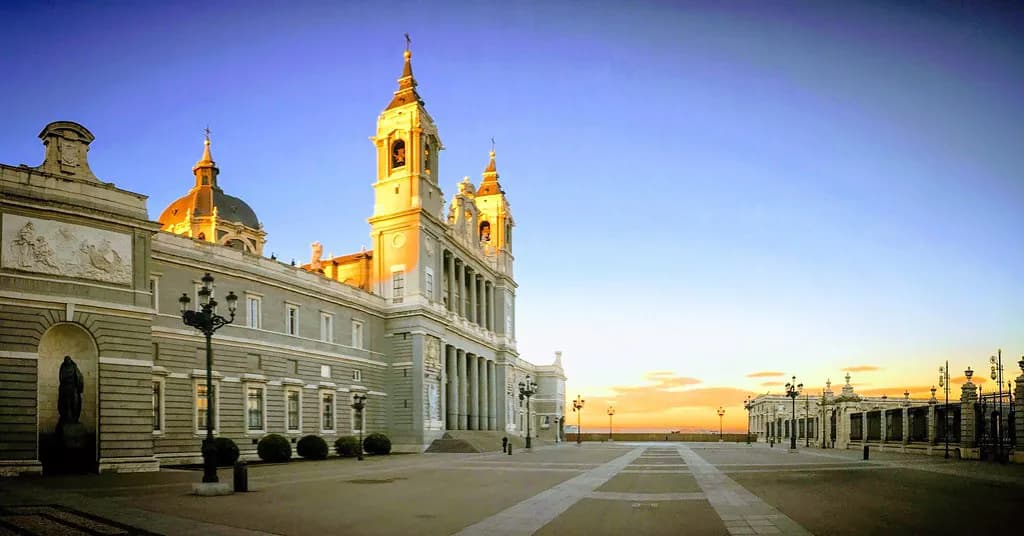
Directly beside the palace stands Almudena Cathedral, completed in 1993 after a century of construction. The cathedral floor is free to enter (use the door on Calle de Bailén). The interior is notable for its unexpectedly modern stained glass and geometric ceiling. For the best views of the day, pay to climb the cathedral dome (€6): the 360-degree rooftop terrace looks directly across at the Royal Palace and out over the Casa de Campo parkland to the west. Almost no competitor guide mentions this viewpoint, yet it consistently outperforms the better-known rooftop bars for clear skyline photography.
Evening: Sunset Views and a Memorable Dinner
From the cathedral, walk or take the metro (Line 2 to Gran Vía) to the Círculo de Bellas Artes rooftop on Calle de Alcalá. Entry to the rooftop terrace costs €5.50 and includes access to the cultural centre's ground-floor exhibitions. The terrace offers a panoramic sweep from Gran Vía to El Retiro and the distant Guadarrama mountains. Aim to arrive 30–40 minutes before sunset for a seat; the elevator queue builds fast in the final 15 minutes of daylight.
For the walk back, stroll west along Gran Vía itself — Madrid's equivalent of a Parisian boulevard, with Art Nouveau, Art Deco, and Neo-Baroque facades stacked above chain stores and independent theatres. Look up rather than into the shop windows. The full length takes about 20 minutes at a gentle pace and ends at Plaza de España.
For dinner, head to the La Latina neighbourhood around Calle de la Cava Baja. This is Madrid's most authentic tapas corridor and the right place to do the traditional crawl: order a portion at one bar, finish, move on. Look for patatas bravas (fried potatoes in a smoky tomato sauce), croquetas de jamón, and tortilla española. A proper three-stop dinner with drinks runs €25–€35 per person. Taberna Malaspina near Puerta del Sol is a reliable backup with reasonable prices and a traditional atmosphere. For dinner reservations at a sit-down restaurant, Barmitón on Calle de la Cava Alta books up quickly and is worth planning ahead for.
If you want to extend the evening, Madrid's nightlife starts late — most bars fill up around 22:00 and flamenco shows run from 20:00 onward. The Torres Bermejas tablao near Gran Vía is one of the oldest and most established; book ahead if flamenco is on your list.
Essential Madrid Travel Tips
Getting around: The city centre is walkable for all the stops above. The metro is clean, fast, and cheap — a single ticket costs €1.50–€2 depending on your starting zone; a 10-trip Metrobús card (€12.20) is worthwhile if you plan more than five rides. Uber and Bolt both operate in Madrid and are typically cheaper than hailed taxis for longer distances. The EMT Madrid bus app shows real-time routes if you want to avoid the metro.
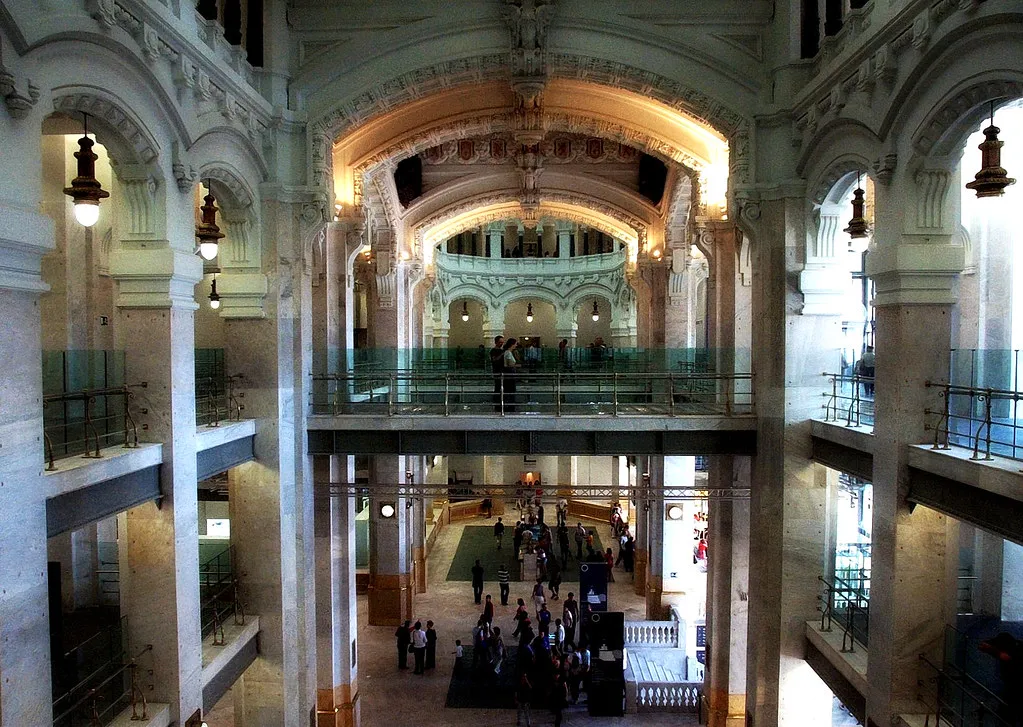
Book in advance: Timed-entry tickets sell out for the Prado and Royal Palace, especially in summer and on weekends. Book the Prado at museodelprado.es and the Royal Palace at patrimonionacional.es. The Mirador Madrid rooftop at Palacio de Cibeles (a free alternative viewpoint on Plaza de Cibeles) also requires advance booking on the official website and closes on Mondays. For the Círculo de Bellas Artes rooftop, walk-up entry is usually fine except on summer weekend evenings.
Luggage storage: If you are arriving by train, Atocha and Chamartín stations have coin-operated lockers. The Locker Madrid network has several city-centre locations open from 08:00–22:00, with day rates from €3 for a small bag. Stow luggage before starting the itinerary rather than carrying it between sights.
Siesta hours: Madrid's siesta is real but partial. Museums, major attractions, and the metro operate continuously. Smaller shops and some restaurants close between 14:00–17:00. This itinerary routes you through the park and palace during that window, so you will not notice the slowdown. For dinner, do not show up before 21:00 if you want to eat alongside locals rather than other tourists.
Weather planning: Spring (March–May) and autumn (September–November) offer the most comfortable walking temperatures, typically 15–25°C. Summer temperatures regularly hit 35–38°C in July and August — carry water, wear a hat, and front-load your outdoor walking before noon. Winter is mild, around 8–12°C in January, and crowds are noticeably thinner at all attractions.
Where to Stay for a Short Visit
For a one-night stay, location matters more than price tier. Staying within the Centro district (bounded roughly by Puerta del Sol, Gran Vía, and La Latina) puts you within walking distance of every stop on this itinerary and avoids early metro rides. The Salamanca district northeast of El Retiro is quieter, safer, and more upscale — useful if noise is a concern, though it adds a 15-minute walk or one metro stop to the morning sights.
Mid-range options near Puerta del Sol include Hotel Moderno and Hotel Miau, both well-reviewed and centrally located. For apartments that suit groups or families, PlazaMayorSuites and Sonder Santa Ana both get strong reviews. At the luxury end, the Four Seasons on Calle Sevilla has an excellent central location with a rooftop bar. Budget travellers fare well at hostels like The Hat (near Plaza Mayor) or 007 Chueca (in the gay-friendly Chueca neighbourhood, also convenient for Gran Vía). If you fly out early the next morning, an airport hotel and the Cercanías train (line C-1, 13 minutes from Nuevos Ministerios to T4) makes more sense than a city-centre night.
Madrid for Solo Female Travellers
Madrid is widely considered one of the safest capitals in Europe for solo women. Dining alone carries no stigma — walking into a tapas bar on your own is completely normal and you will see plenty of other solo diners doing exactly the same. The central neighbourhoods covered by this itinerary are busy and well-lit throughout the day and into the late evening. Violent crime is rare; the main risk is pickpocketing in crowded areas like Puerta del Sol, Plaza Mayor, and the metro. Use a secure crossbody bag, keep your phone in your front pocket, and do not leave a bag on a chair back unattended at cafés.
For nighttime movement, Madrid is generally safe in the main neighbourhoods until 01:00–02:00, but sticking to taxis or rideshare apps for unfamiliar side streets after midnight is a sensible precaution — especially if you are new to the city. The emergency number is 112 across Spain. Madrid also operates a Tourist Police unit called SATE with an office at Calle de Leganitos 19, useful for reporting theft or getting assistance in English. Food tours are a particularly good format for solo travellers who want to meet people while covering the culinary highlights efficiently; Devour's half-day food tour and the Tapas, Taverns and History format both have good reputations for group atmosphere.
Frequently Asked Questions
How to get around Madrid in one day?
Madrid is very walkable, especially in the city center. For longer distances, the metro is efficient and affordable. A single ticket costs around €1.50–€2; consider a 10-trip Metrobús card (€12.20) if you plan more rides. Uber and Bolt also operate throughout the city.
What foods should I try in Madrid in one day?
You must try churros con chocolate for breakfast and various tapas for lunch or dinner. Don't miss patatas bravas, jamón ibérico, croquetas de jamón, and tortilla española. Mercado de San Miguel is great for a visual wander, but the tapas bars in La Latina on Calle de la Cava Baja offer better quality and lower prices.
Do I need to make reservations for Madrid attractions?
Yes, for major attractions like the Royal Palace and the Prado Museum, booking timed entry tickets online in advance is highly recommended. This saves significant time and ensures your entry, especially during peak season. The Royal Palace offers free entry from 17:00–19:00 Monday to Thursday, though queues for free entry can be 20–30 minutes.
Madrid rewards decisiveness. Pick one museum, commit to it, and spend the time you save at the less obvious spots: the Almudena Cathedral dome, a slow hour in El Retiro, a proper sit-down lunch. The city's energy is easy to absorb even in 24 hours. If this day leaves you wanting more — and it usually does — our guide to how many days to spend in Madrid and our broader top things to do in Madrid list are the right next steps for planning a return trip.
You might also like


Continue reading
More guides you'll find useful