

How Many Days In Madrid Travel Guide: 3-Day Itinerary
Plan how many days in madrid with top picks, neighborhood context, timing tips, and practical booking advice for a smoother trip.
On this page
How Many Days In Madrid: Your 3-Day Itinerary
Figuring out how many days in Madrid you need depends almost entirely on what kind of traveler you are. Madrid is Spain's largest city, and its historic core is compact and walkable, but its museums, neighborhoods, and food scene reward patience. This guide maps out the right duration for different traveler types — from a packed single day to a slower four-day stay — then gives you a concrete 3-day plan you can use as-is or expand.
I've visited Madrid multiple times and last updated this guide in June 2026. Three days remains the sweet spot for first-time visitors who want to cover the major sights without feeling rushed. Two days works if Madrid is a stopover en route to other parts of Spain. Four days is the ceiling before diminishing returns set in, unless you're adding day trips.
Plan with trusted sources: cross-check opening hours and seasonal details with the official Madrid tourism site, and read more about the city on its Wikipedia entry before you go.
How Many Days in Madrid for Each Type of Traveler
The most useful answer to this question is traveler-specific. Madrid's tourist core is walkable and its metro is cheap and easy, so the real variable is your pace and your interests — not the city's size.
1 day is enough to see the highlights if you're tight on time. The walkable triangle of Plaza Mayor, Royal Palace, and Prado Museum can be covered in a long day. Add Puerta del Sol, churros at Chocolatería San Ginés, and a tapas crawl on Calle Cava Baja. It is a full, tiring day, but it works for transit stops or people itching to reach Seville or Granada.
2 days is the sweet spot for first-time visitors to Spain who want to see Madrid without lingering. You can visit the Royal Palace and Prado without rushing, wander a neighborhood, and have time for a leisurely dinner. Madrid's historic core is small enough that 2 days never feels wasted.
3 days is ideal for those who want the full picture — both iconic sights and authentic neighborhoods. You can fit in Reina Sofía, Retiro Park, Malasaña, and an evening flamenco show. Three days lets you eat at a real pace: a long lunch, vermouth at 13:00, dinner after 21:00. This is the itinerary most of this guide is built around.
4 days suits art devotees, museum enthusiasts, and slow travelers. The extra day covers the Thyssen-Bornemisza Museum, a proper wander through Salamanca or Lavapiés, and leaves room for a half-day trip to Toledo (30 minutes by high-speed train from Atocha). Beyond four days, most visitors find the city exhausted and start wishing they were in Seville or Mallorca instead.
When to Visit Madrid
Spring (March–May) and early autumn (September–October) are the best times. Temperatures are mild — 16–22°C in April, 19–24°C in October — and queues at the Prado and Royal Palace are shorter than in summer. October is a particularly strong choice: the heat has broken, locals are back from holiday, and the city feels fully alive again.
Summer (July–August) is peak season. Temperatures regularly hit 36–40°C, especially in July. The Prado and Royal Palace are at their most crowded. Many smaller restaurants and neighborhood spots close for part of August — locals call it the "summer desert." If summer is your only option, start sightseeing by 09:00 and rest indoors between 13:00 and 17:00.
Winter (November–February) is the cheapest time to visit. Hotels drop in price, queues are short, and the Prado is almost unhurried. The downside is cold evenings (3–8°C) and occasional rain. Christmas is an exception — Plaza Mayor hosts a large market and the city fills up from mid-December through early January.
3-Day Madrid Itinerary Overview
This plan organizes three days by neighborhood to cut down on metro time. Days 1 and 2 cover the major landmarks. Day 3 is for neighborhoods and slower exploration. If you only have two days, combine the morning of Day 1 with the afternoon of Day 2 and drop the neighborhood day.
| Day | Focus | Key Stops | Evening |
|---|---|---|---|
| Day 1 | City center & royal sights | Puerta del Sol, Plaza Mayor, Royal Palace, Almudena Cathedral, Gran Vía | Tapas crawl in La Latina (Calle de la Cava Baja) |
| Day 2 | Art & parks | Lavapiés breakfast, Reina Sofía (Guernica), Cuesta de Moyano bookstalls, Retiro Park & Crystal Palace | Live jazz at Café Central, Barrio de Las Letras |
| Day 3 | Neighborhoods | El Rastro flea market (Sun), Malasaña vintage shops & tortilla, Temple of Debod at sunset | Rooftop drinks on Gran Vía |
- Day 1 — City center and royal sights: Puerta del Sol, Plaza Mayor, Royal Palace, Almudena Cathedral, Gran Vía, evening tapas in La Latina.
- Day 2 — Art and parks: Lavapiés breakfast, Reina Sofía Museum (Guernica), Cuesta de Moyano bookstalls, Retiro Park and Crystal Palace, evening in Barrio de Las Letras.
- Day 3 — Neighborhoods: La Latina market streets, Malasaña vintage shops and tortilla, Temple of Debod at sunset, rooftop drinks on Gran Vía.
Day 1: Madrid's City Center and Main Sights
Start at Puerta del Sol by 09:00. This is the geographic center of Spain — the Kilometre Zero plaque is set into the pavement in front of the old post office. The square is always busy, but mornings are manageable. Stop at La Mallorquina on the edge of the square for a chocolate napolitana: the pastry shop has been open since the 1800s and the croissants are genuinely good.
Walk five minutes south-west to Plaza Mayor. The 17th-century arcaded square hosts a Sunday stamp and coin market and a Christmas market in December, but it is worth seeing at any time for the architecture. From the square's north-west corner, head up Calle Mayor to Chocolatería San Ginés for churros if you skipped breakfast — the queue looks long but moves fast.
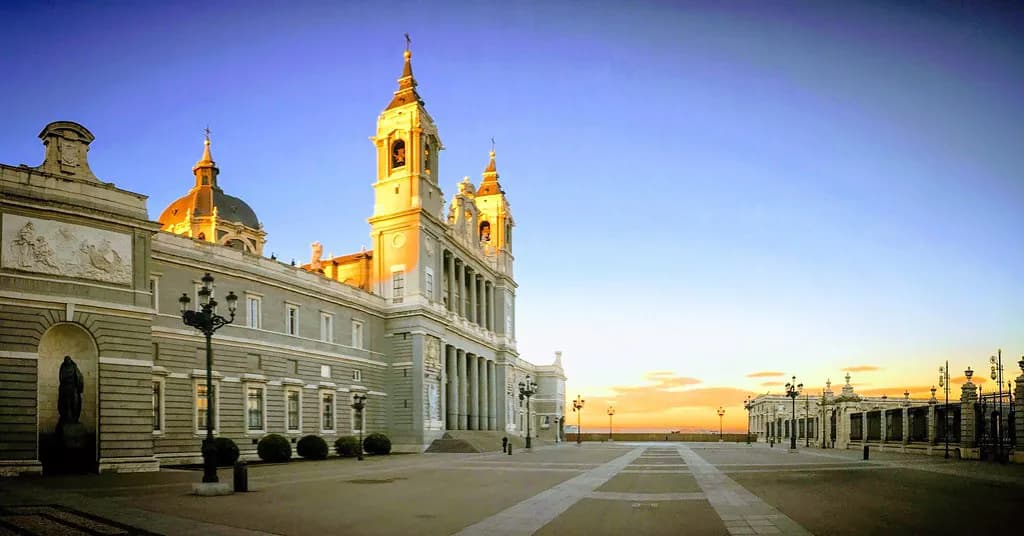
Continue to the Royal Palace of Madrid. This is one of Europe's largest palaces in terms of floor space. Budget 1.5–2 hours inside. Tickets cost €14 online (2026 pricing); book at least a few days ahead during spring and summer to secure a timed-entry slot. The adjacent Campo del Moro gardens are free and offer the best exterior views of the palace. Almudena Cathedral sits directly opposite — entry is free and takes 20 minutes.
In the afternoon, walk east along Gran Vía, Madrid's main commercial artery. The architecture from the 1910s–1930s is worth looking up at, even if you skip the shops. End the day with tapas in La Latina, specifically along Calle de la Cava Baja. The bar-hopping here runs from roughly 19:00 onwards; a half-ration of patatas bravas and a caña (small beer) at three or four bars is the local approach. Dinner in Spain rarely starts before 21:00.
Day 2: Lavapiés, Reina Sofía Museum, and Retiro Park
Begin the morning in Lavapiés, one of Madrid's most multicultural and genuinely local neighborhoods. Pum Pum Café on Calle de la Embajadores is a long-standing neighborhood breakfast spot — good coffee, egg dishes, and no tourist markup. Lavapiés has a slightly rough-around-the-edges feel that contrasts sharply with the polished tourist corridors around Sol; this is part of its appeal.
From Lavapiés, walk ten minutes to the Museo Reina Sofía (open 10:00–21:00, closed Tuesdays; tickets €12 or free 19:00–21:00 Monday and Wednesday–Saturday, and all day Sunday). The permanent collection alone justifies a two-hour visit. Picasso's Guernica — the 1937 anti-war painting that covers an entire wall — is the centrepiece. Give it at least 15 minutes; the surrounding preparatory sketches add important context. The building also holds major works by Miró and Dalí.
After the museum, walk along Cuesta de Moyano, a tree-lined street of secondhand bookstalls that has been operating since 1925. It connects the museum to Retiro Park. The park itself covers 125 hectares and is genuinely peaceful on weekday mornings. The Crystal Palace (Palacio de Cristal) inside the park is a late 19th-century iron-and-glass structure that now hosts contemporary art exhibitions — entry is free. Row boats on the boating lake cost around €6 for 45 minutes.
Spend the evening in Barrio de Las Letras, Madrid's literary quarter. Plaza de Santa Ana is the social centre: sit at one of the terrace bars and watch the square fill up after 20:00. Café Central, just off the plaza, has hosted live jazz most evenings since 1982 — check their programme in advance as sets sell out.
Day 3: Neighborhood Wandering in La Latina, Malasaña, and Arguelles
Day 3 is a slower, more exploratory day. If you are visiting on a Sunday, start in La Latina for El Rastro, Madrid's enormous open-air flea market. It runs 09:00–15:00 along Calle de la Ribera de Curtidores and the surrounding streets. Come early for the better finds; the crowd thickens significantly after 11:00. The market is free to browse and surrounded by antique shops that stay open on Sunday mornings.
After La Latina, cross Gran Vía into Malasaña. This is Madrid's bohemian district — think vintage clothing shops, independent cafés, and low-key bars clustered around Plaza del Dos de Mayo. Stop for a proper tortilla española at one of the neighbourhood bars; Malasaña has several spots that do a good runny-centred version. The neighbourhood is compact enough to cover on foot in two hours.
Head west to the Temple of Debod in late afternoon. This genuine ancient Egyptian temple was dismantled, transported to Spain, and reassembled here in the 1970s as a gift from the Egyptian government. Entry to the temple interior is free (check current opening hours on the Madrid city website, as they change seasonally). The terrace around the temple faces west and is one of the best sunset spots in the city — arrive 30–45 minutes before sunset for a good position. From here it is a short walk north to Argüelles for dinner.
If you want rooftop views to cap the trip, the bar at the top of the RIU Hotel on Plaza de España is open to non-guests in the evening and offers an unobstructed panorama of the city.
The Paseo del Arte Ticket: Madrid's Museum Pass Nobody Mentions
Madrid has three world-class art museums within walking distance of each other — the Prado, the Reina Sofía, and the Thyssen-Bornemisza. Individual tickets are €15, €12, and €13 respectively. But the Paseo del Arte combined card covers all three for approximately €32 (2026 pricing), saving around €8 versus buying separately. It is valid for a year from first use, so you can spread visits across consecutive days.
Most travel guides cover the Prado and Reina Sofía but skip the Thyssen, which is a mistake. The Thyssen-Bornemisza holds one of the most comprehensive private collections of European painting in the world — everything from early Flemish masters to 20th-century Expressionism. If you have three days, the Thyssen fits naturally on Day 2 or Day 3 and adds an hour and a half without exhausting you the way a full Prado day does. It also opens at 10:00 and is less crowded than the Prado for most of the day.
The Paseo del Arte card is sold at the ticket desks of all three museums. It is also the best argument for a fourth day in Madrid: spread the three museums across three afternoons and spend your mornings on neighborhoods, parks, and food.
Optional 4th Day: Day Trips Outside Madrid
If you have a fourth day, Madrid's position at the centre of Spain's high-speed rail network makes it one of the best bases for day trips in Europe. All of the options below can be done as a return trip in a single day.
Toledo is the closest and most visited. The high-speed train from Atocha takes 33 minutes and costs around €14 each way. Toledo was once the capital of Spain and its medieval old city combines Christian, Jewish, and Moorish architecture in a small, walkable area. Plan 5–6 hours in the city. The cathedral is genuinely extraordinary; budget 1.5 hours inside. Book train tickets in advance as popular departure times sell out.
Segovia takes 30 minutes by high-speed train from Chamartín station. The Roman aqueduct — two tiers of granite arches, no mortar, built in the 1st or 2nd century AD — stands intact in the city centre. The Alcázar castle at the far end of the old city is the other main draw. Segovia is also famous for cochinillo (roast suckling pig); Restaurante José María on Plaza Mayor is the most visited spot, but book a table the day before.
Ávila is 45 minutes from Chamartín (€10–12 each way). The city walls — 2.5 km of intact medieval fortifications — are the main sight. You can walk the full circuit on top of the walls. Ávila pairs well with Segovia on the same day if you want to combine two stops; several tour operators run the Segovia–Ávila combination from Madrid.
Where to Stay in Madrid: Best Bases
Three neighborhoods stand out for first-time visitors. Your choice depends on what you want outside of sightseeing hours.
La Latina gives you the most authentic atmosphere. The streets around Calle de la Cava Baja are historic, quiet in the morning, and lively from early evening. It is a 15-minute walk to Puerta del Sol and close to the Royal Palace. This is where a local would send a friend. Hotel options range from the Posada del León de Oro (a restored 19th-century tavern, around €150–300/night) to the newer One Shot La Latina (€150–200/night).
Barrio de Las Letras is the literary quarter around Plaza de Santa Ana. It sits between the Prado and the city centre, which makes it ideal if museums are your priority. The atmosphere is more polished and slightly more touristy than La Latina, with good restaurant density and easy access to Retiro Park. Hotel Urban (€300/night) and Catalonia Las Cortes (€175–225/night) are the standout options here.
Sol and Gran Vía is the most convenient location for sightseeing but also the busiest and most expensive. If you want to step outside the door and immediately be at the heart of things, this is the choice. Expect more noise at night. Hotel Vincci Capitol (€200–350/night) on Gran Vía is well-placed and good quality. See our full where to stay guide for more options across all budgets.
Madrid Planning Cheatsheet
A few practical notes to keep in mind before your trip in 2026.
- Getting around: The metro covers the whole city. A 10-trip tourist card (Tarjeta Multi) costs €12.20 and covers central zones. The city centre is walkable — most Day 1 and Day 2 sights are within 2–3 km of each other. Uber, Bolt, and Cabify all operate in Madrid and are cheap by European capital standards.
- Book in advance: The Royal Palace and Prado Museum both sell out timed-entry slots on busy days. Book at least a week ahead in spring and summer. Flamenco shows at intimate venues in Barrio de Las Letras sell out 5–7 days ahead.
- Meal timing: Breakfast at 08:00–10:00, lunch at 14:00–16:00, dinner after 21:00. Eating at 19:00 marks you as a tourist. Many restaurants do not open for dinner until 20:30 or 21:00. The upside: kitchen queues are short if you eat at local hours.
- Free museum hours: Prado is free 18:00–20:00 Monday–Saturday and all day Sunday. Reina Sofía is free 19:00–21:00 Monday and Wednesday–Saturday, and all day Sunday. Both queue quickly during free hours — arrive 15–20 minutes before opening.
- August caveat: A significant number of neighbourhood restaurants and smaller shops close for summer holidays between late July and mid-August. This mainly affects La Latina and Lavapiés bars; tourist-facing venues around Sol stay open.
Frequently Asked Questions
How Many Days in Madrid Do You Really Need?
Most first-time visitors find 3 days in Madrid ideal. This allows you to see major attractions like the Royal Palace and Prado Museum without rushing. You can also explore charming neighborhoods and enjoy local cuisine.
Short and sweet: how many days are ideal for the average tourist?
For the average tourist, 3 days is ideal. This duration provides enough time to cover Madrid's highlights, including art, history, and vibrant nightlife. It balances sightseeing with opportunities for relaxation and enjoying the city's atmosphere.
What should travelers avoid when planning how many days in Madrid?
Avoid over-scheduling your days; Madrid is best enjoyed at a relaxed pace. Don't try to fit too many museums into one day, as it can lead to burnout. Also, avoid eating dinner too early, as locals typically dine after 9 PM.
Madrid rewards travelers who match their duration to their pace. One day covers the essentials; two days removes the rush; three days is the full city experience; four days adds day trips and a deeper museum pass. Whatever you choose, book timed-entry tickets for the Royal Palace and Prado in advance, eat at Spanish hours, and leave at least one evening free to follow a neighborhood wherever it takes you.
You might also like


Continue reading
More guides you'll find useful


