

10 Essential Practical Tips for Visiting Madrid (2026)
Plan practical tips for visiting Madrid with top picks, neighborhood context, timing tips, and practical booking advice for a smoother trip.
On this page
10 Practical Tips for Visiting Madrid
Madrid rewards visitors who know a few things in advance: when the museums go free, which market is worth the crowds, and which neighborhood to base yourself in. This guide pulls together the practical tips for visiting Madrid that actually change how your trip feels — not just a list of sights, but the context around each one that helps you decide what to prioritize. All information is current for 2026.
Whether you have three days or a week, Madrid's rhythm is distinctive. Lunch runs from 14:00 to 16:00, dinner rarely starts before 21:00, and the city comes fully alive well after dark. Leaning into that schedule rather than fighting it is the single biggest mindset shift that separates a great Madrid trip from a frustrating one.
Plan with trusted sources: cross-check opening hours and seasonal details with the official Madrid tourism site, and read more about the city on its Wikipedia entry before you go.
Madrid Planning Cheatsheet
Spring (April–May) and autumn (September–October) are the sweet spots: temperatures sit between 15°C and 24°C, outdoor terraces are in full swing, and crowds are manageable. July and August bring intense heat — regularly above 38°C — and many family-run restaurants close for the last two weeks of August. December and January are quieter and mild, with Christmas lighting on Gran Vía worth seeing in its own right.
Getting around is easy on the metro. A 10-trip Metrobús card (€12.20) covers buses and metro rides within Zone A — which covers almost everything you'll visit. A single metro ticket from the airport costs €4.50 on top of the standard fare, so the multi-trip card is worth buying on arrival. The metro runs from 06:00 to 01:30 daily.
For accommodation, three neighborhoods give you the best base: La Latina for an authentic castizo atmosphere and tapas bar proximity, Barrio de Las Letras for closeness to the Prado and a walkable literary quarter feel, and Sol if you want every sight within ten minutes on foot. Sol is the most convenient but also the most touristy and loudest at night. Budget for €150–300/night in midrange hotels across all three. For more on picking a neighborhood, see our guide on where to stay in the city.
Book tickets for the Prado, Reina Sofía, and Royal Palace online at least a few days ahead in peak season — queues at the door on summer mornings can run 45 minutes or more. The Prado and Reina Sofía both have free entry during their last two hours of the day (see the Museums section below for exact times).
Day 1: Madrid's City Centre and Main Sights
Start at Puerta del Sol, the literal kilometer zero of Spain. The bear-and-strawberry-tree statue here is the city's coat of arms made physical — worth two minutes and a photo. Then walk two minutes west along Calle Mayor to Plaza Mayor. The square itself is free; sitting at one of the perimeter cafés for a coffee is expensive but justified once. The bocadillo de calamares (fried squid sandwich, €3–4 from a bar on the square) is the local snack of choice here.
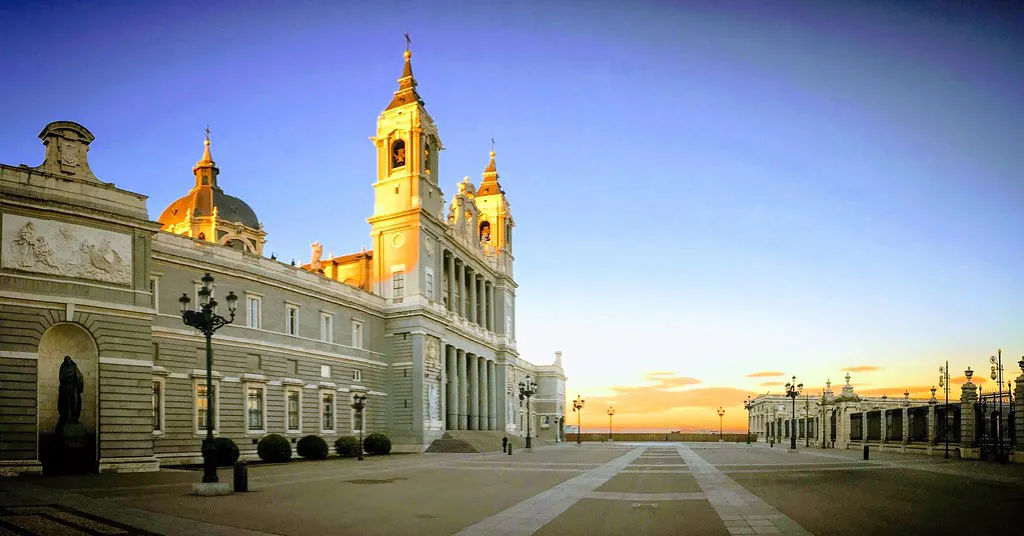
From Plaza Mayor, it is a five-minute walk northwest to the Royal Palace. General admission is €14; free for EU citizens on some afternoons (check patrimonionacional.es for current schedule — it changes seasonally). Budget 90 minutes for the interior rooms, which include the Throne Room, the Grand Dining Hall used for state dinners, and a surprisingly intimate globe room with grapevine wall decorations. Directly opposite the palace is the Almudena Cathedral — free to enter and worth a ten-minute stop for its scale and eclectic Neo-Gothic interior.
In the afternoon, walk east along Gran Vía. This is Madrid's equivalent of a Broadway–Times Square axis: grand early 20th-century architecture, flagship stores, and theaters showing Spanish-language musicals. At Plaza del Callao (roughly midway along), look for the El Corte Inglés building — take the lift to the ninth floor for the Gourmet Experience rooftop. The views over Gran Vía toward the Edificio España are excellent, and unlike the RIU Hotel rooftop, this is completely free with no wait required (see the Rooftop Views section for how both options compare). End the day at the Prado Museum for the free evening window — details in the Museums section.
Museums in Madrid: Prado, Reina Sofía, and the Royal Palace
The Prado Museum is Spain's national art museum and one of the great collections in the world. General admission is €15. Free entry runs Monday to Saturday 18:00–20:00 and Sunday 17:00–19:00 — arrive at the free queue by 17:45 on weekdays or 17:30 on Sundays to avoid a long wait. If you join the free queue at 18:15, you may only have 45 minutes inside, which is enough for the major Velázquez and Goya rooms but not a thorough visit. A guided tour adds €10 on top of the entry fee; an audio guide costs €5. For a full visit, buy a timed ticket online for the morning.
The Reina Sofía Museum houses 20th-century Spanish art, centered on Picasso's Guernica. It is located near Atocha station. General admission is €12; free on Mondays and on Saturdays from 19:00, and Sundays 10:00–14:30. Guernica is in Room 206 of the Sabatini Building — go there first because the room gets crowded quickly. The museum has two buildings; allow 2–3 hours to do both justice.
Just adjacent to the Prado is Iglesia de San Jerónimo el Real, a 16th-century church that is free to enter and rarely crowded. It is easy to miss since it sits slightly behind the museum building, but the Gothic interior is well worth a ten-minute stop. Many visitors pass it entirely — walking in costs nothing and is a genuine contrast to the museum crowds right outside. A small adjacent garden offers a quiet moment between museum visits.
If contemporary art interests you, the Thyssen-Bornemisza Museum on Paseo del Prado completes the so-called Golden Triangle of Art. Admission is €13; free on Mondays for permanent collection access. Together, these three museums make the Paseo del Prado one of the densest museum corridors in Europe. It is perfectly walkable in a single afternoon if you limit time at each, or you can dedicate a full day to one.
Tour the Templo de Debod
The Templo de Debod is a genuine 2nd-century BC Egyptian temple, dismantled in the 1960s when the Aswan Dam flooded the Nile valley and gifted to Spain in 1968. It now sits in Parque de la Montaña near the Ventura Rodríguez metro stop. Entry to the park is free. Interior access to the temple itself is also free, but limited — ten people are admitted at a time, and the queue moves slowly. On weekends in summer, expect to wait 60–90 minutes for a few minutes inside.
The hieroglyphics inside are partially legible; some inscriptions were damaged during transport and reconstruction. If you have been to Egypt, the temple will feel modest. If you have not, the incongruity of an ancient Egyptian structure in a Madrid park is genuinely striking. The honest advice: skip the interior queue and enjoy the exterior. The gates, the reflecting pool (currently drained — the pumping system was not repaired and there are no plans to restore it as of 2026), and the park itself are all freely accessible without waiting. More importantly, behind the temple there are unobstructed views southwest over the Casa de Campo and Madrid skyline — one of the best sunset vantage points in the city, no queue required.
Arrive 45–60 minutes before sunset for the best light. The park is a comfortable ten-minute walk from Plaza de España, making it a natural continuation of a Gran Vía afternoon.
Rooftop Views: RIU Hotel vs El Corte Inglés Callao
Two rooftop options dominate Madrid's view-seeking scene, and they serve different needs. The RIU Hotel 360º Rooftop Bar on Plaza de España is the more famous of the two. It wraps the entire perimeter of the building, has a glass floor section over the street below, and serves drinks from around €12–15 per cocktail. The views in every direction are genuinely spectacular, especially at dusk. The catch: it is very popular. On summer weekend evenings, the queue starts forming from 19:00 and can run 30–60 minutes by 20:00. Go on a Sunday rather than Friday or Saturday if flexibility allows, and arrive before 19:30.
The El Corte Inglés Callao rooftop (9th floor, Gourmet Experience) offers something almost no other Madrid viewpoint can: free access with no wait. There is no bar minimum, no guest list, and no queue. You walk up, step outside, and look directly down Gran Vía toward the old city. The perspective is different from the RIU — you are lower and more embedded in the street grid — but the Edificio España and the sweep of the avenue make for strong photos, particularly as the street lights come on. A coffee or pastry from the café costs €3–5 if you want to sit, but it is entirely optional. This is the practical tip most guidebooks skip.
Check Out El Rastro Flea Market (Sundays Only)
El Rastro is Madrid's legendary Sunday flea market, running every Sunday and public holiday in the La Latina neighborhood. Vendors line Calle de la Ribera de Curtidores and spill onto Calle de Toledo, Calle de Embajadores, and the surrounding squares. It is free to browse. Expect clothing, vintage accessories, leather goods, handmade jewellery, art prints, ceramics, and general bric-a-brac. Quality varies widely; the vintage clothing stalls toward the top of Ribera de Curtidores tend to have better curation than the souvenir sellers lower down.
Most vendors arrive by 09:00 and pack up around 15:00. Go early — before 10:00 — for the best selection and manageable crowds. By noon the crowds are dense and pickpockets are active. Keep your phone in a front pocket and leave backpacks zipped at all times. Cash is preferred by most vendors; some smaller stalls do not accept cards. A good practical tip: the tapas bars on nearby Calle de la Cava Baja in La Latina open from about 13:00, so a market morning followed by a long tapas lunch is a natural pairing.
Day 2: Lavapiés, Reina Sofía, Retiro Park, Barrio de Las Letras
Start in Lavapiés, one of Madrid's most multicultural neighborhoods. It sits south of the city center and feels more lived-in and less polished than Sol. Grab breakfast at one of the local cafés — options range from classic Spanish tostadas con tomate (toast with crushed tomato, €2–3) to multicultural fusion spots that open from about 09:00. From Lavapiés, it is a 15-minute walk north to the Reina Sofía Museum at Calle de Santa Isabel 52.
After the Reina Sofía, walk east along Cuesta de Moyano, a sloping street lined with second-hand and antique bookstalls that operates daily (busiest on weekends). It connects seamlessly to the north entrance of Retiro Park. The park covers 350 acres and includes a rowing lake, the Palacio de Cristal (a 19th-century glass pavilion used for free contemporary art exhibitions), rose gardens that peak in May and early June, and shaded paths. Entry is free. If you want to rent a rowboat on the lake, budget €6–8 for 45 minutes. Visit on a weekday morning if possible — weekends bring large local crowds, especially around the lake.
In the evening, walk to Barrio de Las Letras, the historic literary quarter just west of the Prado. Plaza de Santa Ana is the neighborhood's centerpiece, surrounded by terrace bars and restaurants. Café Central on the square hosts live jazz most evenings — check their schedule in advance at cafecentralmadrid.com (tickets typically €12–18). The combination of a meal on the plaza followed by a jazz set is one of the best evening sequences in the city, and quieter than the Sol nightlife circuit.
Try the Tapas: Mercado de San Miguel vs Mercado San Antón
Mercado de San Miguel, a few steps from Plaza Mayor, is Madrid's most photogenic food market. The wrought-iron and glass building dates from 1916. Stalls sell jamón ibérico, oysters, anchovies, vermouth, and small pintxos-style bites at around €3–5 per piece. It is open daily from 10:00 until midnight (01:00 on weekends). The honest caveat: it is very crowded, especially on weekend afternoons. Pickpockets are active in the tight indoor space. If you go, treat it as a standing snack and drinks stop, not a full meal — prices for a filling lunch will add up quickly. Midweek late mornings (around 11:00–12:00) are the calmest window.
Mercado San Antón in Chueca is the better-kept secret. It is a three-floor neighborhood market on Calle de Augusto Figueroa, about a 15-minute walk north of Sol. The ground floor sells fresh produce, cheese, and charcuterie for cooking. The first floor has food stalls aimed at locals — tapas, croquetas, bocadillos — with prices noticeably lower than San Miguel and far fewer tourists. The third floor is a rooftop bar with a retractable glass roof, open from about 12:00. It draws an after-work crowd rather than a tourist crowd. If you visit Madrid outside of December and January, the rooftop at San Antón is one of the more comfortable spots to sit down with a drink mid-afternoon. For a full meal rather than grazing, this market delivers better value and a more genuinely local atmosphere.
Day 3: Neighbourhood Wandering in La Latina, Malasaña, and Arguelles
La Latina is the neighborhood to understand Madrid's castizo identity — the old, rooted, working-class spirit of the city. The streets around Calle de la Cava Baja are lined with traditional tapas bars, many of which have barely changed in decades. This is where to order patatas bravas, tortilla española, and croquetas de jamón alongside a glass of house wine for €2. On Sundays, La Latina merges with El Rastro market traffic, which makes the area festive but more crowded. On weekday afternoons it is significantly quieter and easier to linger.
Malasaña, just north of Gran Vía, is Madrid's creative and bohemian quarter. The neighborhood is named after Manuela Malasaña, a young seamstress executed during the 1808 uprising against Napoleon — her story is still commemorated on 2 May each year with events in Plaza Dos de Mayo. Today the neighborhood has vintage clothing shops on Calle de Fuencarral, independent coffee shops, and a younger local population. It is more relaxed than La Latina and good for an afternoon walk without a specific destination in mind.
From Malasaña, cross back over Gran Vía for churros and thick hot chocolate at Chocolatería San Ginés on Pasadizo de San Ginés — it has operated continuously since 1894 and is open 24 hours. The portion (€5–6) is generous. From there it is a ten-minute walk to Parque de la Montaña and the Templo de Debod for a sunset finish. For dinner, Arguelles — the neighbourhood immediately surrounding Plaza de España — has local restaurants that avoid the tourist-menu pricing of the Sol area. Budget for €12–20 per person for a full meal with wine.
Easy Day Trips from Madrid
Toledo is the most popular day trip, reachable in 33 minutes by AVE high-speed train from Atocha station. Return tickets cost around €20–25 (book on Renfe.com). Toledo was a center of Christian, Muslim, and Jewish coexistence for centuries, and the old city holds a cathedral, two synagogues, a mosque, and El Greco's home and museum within walking distance of each other. A full day is ideal; the hilltop old town is entirely walkable but involves significant inclines.
Segovia takes about 30 minutes from Chamartín station by Avant train (€20–25 return). The Roman aqueduct running through the city center is the most complete Roman engineering structure still standing in Spain — 163 arches, no mortar. The Alcázar castle at the far end of the old city was one of the design inspirations for Disney's Sleeping Beauty castle. Segovia is also the definitive place to eat cochinillo asado (roast suckling pig), with Mesón de Cándido near the aqueduct the most famous address for it.
El Escorial is a different kind of day trip — a vast royal palace, monastery, basilica, and library complex built by Philip II in the 16th century. It sits 50 km northwest of Madrid and is reachable by Cercanías commuter train (C-3 line from Atocha, 1 hour, €4–6 each way). Admission is €12. The scale of the complex is imposing rather than ornate — El Escorial is austere where Segovia and Toledo are picturesque — but the Royal Pantheon (burial chamber for Spanish monarchs) and the library ceiling frescoes are exceptional. A half-day visit is sufficient. For day trip planning and more options, see our guide on Madrid's best restaurants for where to eat when you return.
| Destination | Train from Madrid | Journey time | Return fare (approx.) | Top highlight |
|---|---|---|---|---|
| Toledo | AVE from Atocha | 33 min | €20–25 | Cathedral, two synagogues, El Greco museum |
| Segovia | Avant from Chamartín | 30 min | €20–25 | Roman aqueduct, Alcázar castle |
| El Escorial | Cercanías C-3 from Atocha | ~60 min | €4–6 | Royal Pantheon, library ceiling frescoes |
Eat Your Way Through Madrid: Food Tips That Matter
Madrid's food identity is built on simplicity done well. A few dishes are non-negotiable: cocido madrileño (a slow-cooked chickpea and meat stew, typically served in courses starting with the broth), tortilla española (potato omelette, best eaten at room temperature), croquetas de jamón, and bocadillo de calamares. The best places to find these are neighborhood bars rather than restaurants with tourist menus — look for a handwritten daily menu on a chalkboard and tables full of locals.
The menú del día (set lunch menu) is the most useful practical tip in Madrid for budget-conscious travelers. Most restaurants offer a two- or three-course set lunch with bread and a drink for €12–16 between 14:00 and 16:00. The same dishes ordered à la carte for dinner can cost 40–60% more. If you want to eat well on a budget, restructure your day around a large lunch and a lighter dinner of tapas.
For the neighborhoods: La Latina (Calle de la Cava Baja) for traditional tapas bars, Malasaña for independent modern cafés, and Barrio de Las Letras for sit-down dinners that balance quality and price. Avoid the restaurants immediately on Plaza Mayor and Puerta del Sol — tourist-menu pricing is inflated and quality is inconsistent. Walking even one or two blocks off the main squares typically cuts prices by 20–30% and improves the food considerably.
As you plan, our guides to Is Madrid Worth Visiting? An Honest Review & Travel Guide and Madrid Neighborhood Guide cover the rest of the essentials.
Frequently Asked Questions
Which practical tips for visiting Madrid options fit first-time visitors?
First-time visitors should prioritize the Prado Museum, Royal Palace, Retiro Park, and Plaza Mayor. Experiencing a flamenco show and visiting Mercado de San Miguel also offer quintessential Madrid experiences. These provide a great overview of the city's culture and history.
How much time should you plan for practical tips for visiting Madrid?
Plan for at least 3-4 full days to cover Madrid's main attractions and get a feel for the city. If you want to include day trips to nearby cities like Toledo or Segovia, extend your visit to 5-6 days. This allows for a more relaxed pace and deeper exploration.
What should travelers avoid when planning practical tips for visiting Madrid?
Avoid eating at tourist-trap restaurants directly on Plaza Mayor and buying cheap souvenirs from generic shops. Also, try to avoid booking too many activities in one day; Madrid's charm lies in its leisurely pace. Don't forget to account for the later dining schedule.
Madrid is a city that rewards curiosity and flexibility more than rigid planning. The practical framework here — timing your museum visits for the free windows, eating the menú del día at lunch, using El Rastro on a Sunday morning before tapas in La Latina — turns a standard sightseeing trip into something that feels genuinely immersive. Most of these adjustments cost nothing and make a significant difference to how the city feels.
Keep an eye on official museum websites for hours and pricing, which change seasonally. With these practical tips for visiting Madrid in hand, you are well set for 2026. The art, the food, the late nights, and the easy pace of the city are waiting.
You might also like


Continue reading
More guides you'll find useful


