
Puerta Del Sol Madrid Travel Guide
Plan Puerta del Sol Madrid with top picks, neighborhood context, timing tips, and practical booking advice for a smoother trip.
On this page
Puerta Del Sol Madrid: Your Essential Guide
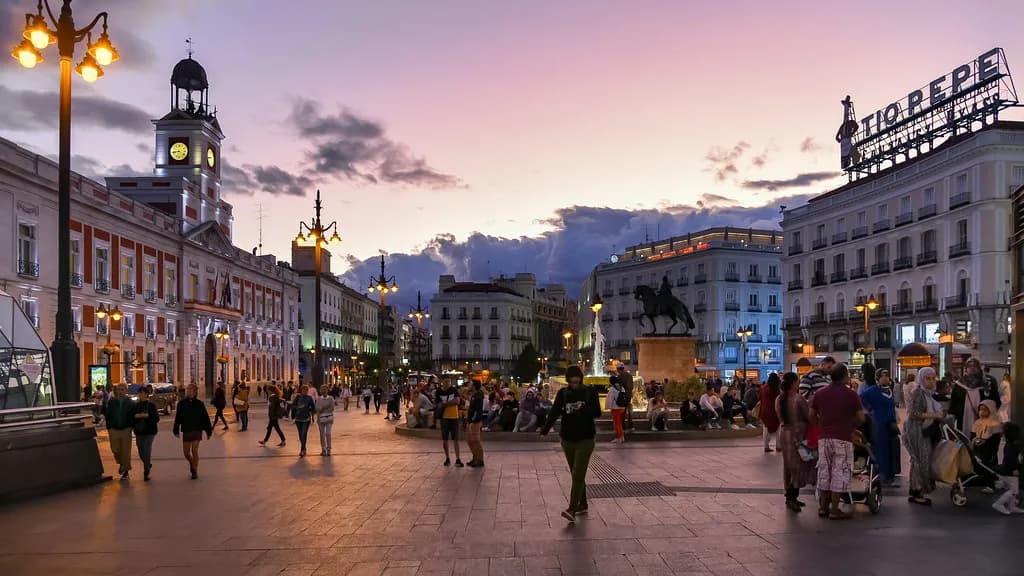
Puerta del Sol is the geographic and social heart of Madrid. Every major road in Spain radiates outward from the Kilómetro Cero marker embedded in the pavement here. The square connects the old city to Gran Vía, links three metro lines, and funnels a constant stream of locals, commuters, and first-time visitors through its semicircular space every hour of the day.
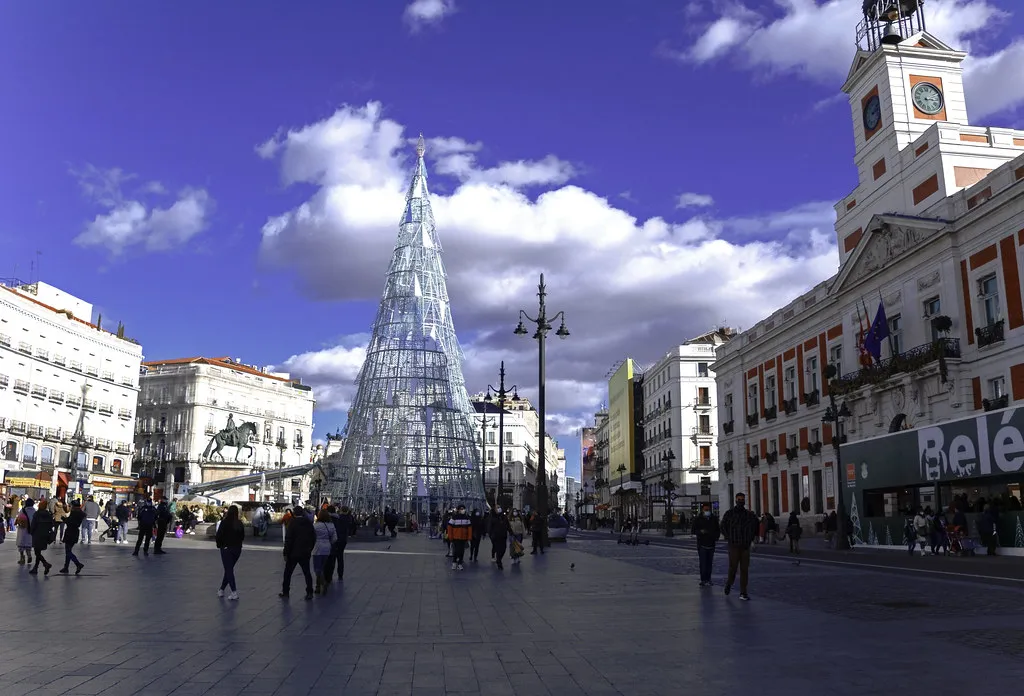
In 2026 the square looks noticeably different from even a few years ago. A major city-council project has completed the full pedestrianization of Puerta del Sol, removing through-traffic and widening the walkable area significantly. If your last visit predates the renovation, expect a quieter, more open plaza with reorganized entry points from the surrounding streets.
This guide covers what to see at the square itself, what lies within a short walk, the best time of day to arrive, the history behind the landmarks, and practical tips for making the most of a visit whether you have one hour or a full afternoon.
Plan with trusted sources: cross-check opening hours and seasonal details with the official Madrid tourism site, and read more about the city on its Wikipedia entry before you go.
Must-See Puerta del Sol Attractions
Three landmarks define the square visually and culturally. The first is the Bear and the Strawberry Tree (El Oso y el Madroño), a bronze statue that serves as the official symbol of Madrid. Every visitor photographs it; locals use it as the city's default meeting point. Arrive before 09:30 if you want a clear shot without a crowd of tourists in the frame.
The second landmark is the Kilómetro Cero plaque set into the pavement directly in front of the Casa de Correos. It marks the point from which all national road distances in Spain are measured. It is easy to miss underfoot — look for the small stone disc and the queue of people positioning themselves above it for photos.
The third is the clock on the façade of the Casa de Correos itself. On New Year's Eve (Nochevieja), millions across Spain watch this clock live on television and eat one grape per chime at midnight. Standing beneath it on a normal day, it is easy to imagine the scale of the celebration that fills this space every 31 December.
The equestrian statue of King Charles III stands at the center of the square. Charles III ruled from 1759 to 1788 and was responsible for much of the urban planning that gave central Madrid its current grid. His presence in the square is deliberate — this is the city he shaped.
The 2026 Pedestrianization: What Changed for Visitors
Madrid's city council approved a full overhaul of Puerta del Sol to create a more ordered, balanced, and fully car-free space. The project, completed ahead of the 2026 tourist season, removed all vehicle traffic from the main semicircle and reshaped several surrounding approach streets. The result is a noticeably less chaotic square — wider pavements, cleaner sightlines to the Casa de Correos, and more seating areas on the south side.
The practical implications for visitors are real. Bus routes that previously cut through the area have been redirected. If you are navigating from the Atocha direction by bus, check current routing before you travel. The three metro lines (1, 2, and 3) serving Sol station are unaffected and remain the fastest way in from anywhere in the city.
Street-level access from Calle Mayor (toward Plaza Mayor) and from Calle Arenal (toward the Royal Opera) is unchanged on foot. The renovation also added bike-parking infrastructure on the perimeter, which matters if you are using Madrid's BiciMAD rental scheme. The getting around the city guide has updated transit details.
What Puerta del Sol Looked Like in 1854
Before the mid-19th-century demolition works, Puerta del Sol was a narrow, enclosed street with a city gate — the actual "Sun Gate" — that no longer exists. A series of photographs and engravings from 1854 survive and show a cramped, dense urban fabric with the gate arch still partially standing. The Madrid city tourism office highlights this historical contrast prominently because the transformation is so dramatic.
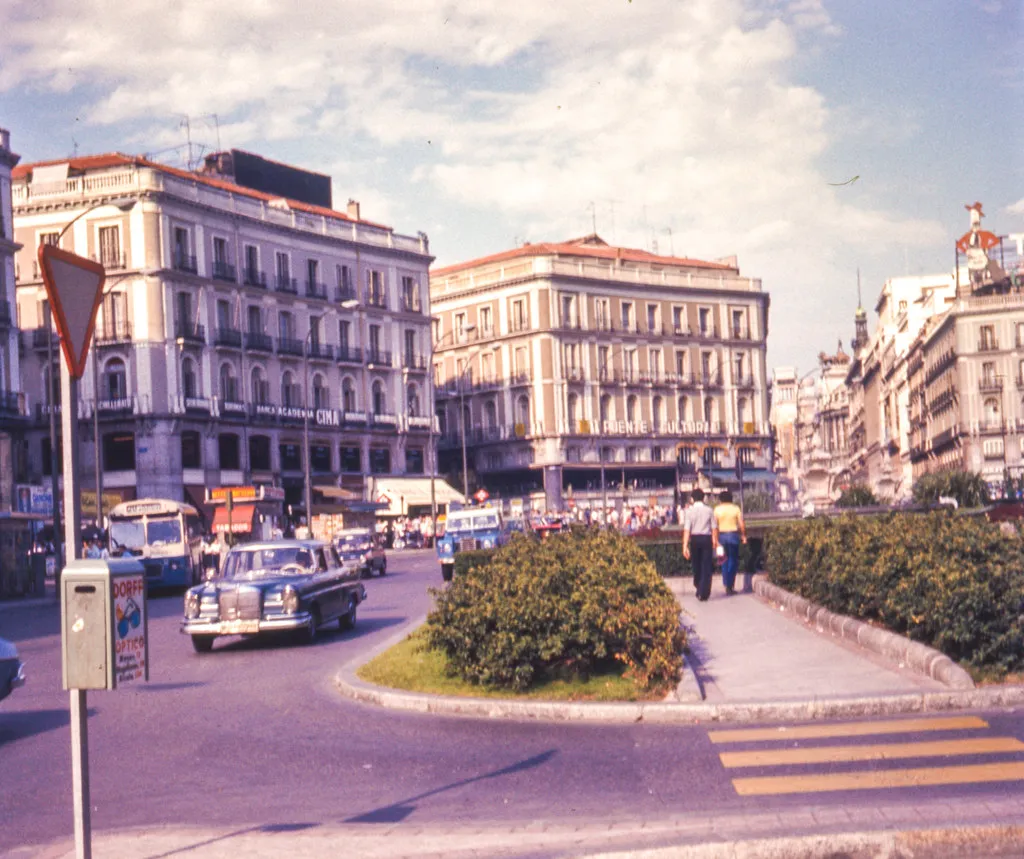
The clearing of the gate and surrounding medieval structures in the 1850s created the current open semicircular layout. The Casa de Correos, built in the 1760s as a postal headquarters and later repurposed as the seat of the regional government (Comunidad de Madrid), is essentially the oldest surviving structure the square was built around. Its clock tower was added in 1866, after the square was already open.
Understanding this timeline changes how you read the square. The uniformity of the surrounding five- and six-story buildings is not ancient — most date from the late 19th and early 20th centuries. What looks like a historic ensemble is actually a relatively recent invention of the Bourbon-era urban planners, layered over a medieval street map. That contrast between apparent age and actual age is one of Madrid's defining characteristics.
Museums, Art, and Culture Near the Square
Puerta del Sol is a starting point, not a destination for indoor culture. The major museums are a short metro ride or a 15–25 minute walk away. The Thyssen-Bornemisza Museum on Paseo del Prado holds one of the strongest private collections in Europe, spanning from the 13th century to the 20th. Our the Thyssen-Bornemisza covers tickets, skip-the-line options, and which rooms to prioritize.
The Reina Sofía Museum, accessible from Atocha metro, houses Picasso's Guernica along with major works by Dalí and Miró. Free entry applies to EU citizens and on certain afternoons for non-EU visitors — check current hours at the door. For full planning details see the Reina Sofía Museum guide.
One cultural institution that genuinely is within walking distance is the Monasterio de las Descalzas Reales on Calle San Martín, a five-minute walk north of the square. It is a functioning convent that holds an extraordinary collection of Flemish tapestries, paintings by Rubens, and royal relics. Guided tours only; advance booking is strongly recommended. Entry is around €6 for adults. It draws far fewer visitors than the big three museums and is consistently underrated.
Parks and Outdoor Spaces Within Easy Reach
The square itself is paved and offers no greenery, but two parks are reachable without transport. The Jardines de Sabatini, a formal 18th-century garden on the north side of the Royal Palace, is about a 20-minute walk west. It is best in morning light when the fountains are running and the palace facade behind them catches the sun. Entry is free.
Retiro Park is a 25-minute walk southeast or two metro stops from Sol to Retiro station (line 2). The park covers 125 hectares and includes the Crystal Palace, a boating lake, a rose garden (best in May and June), and several exhibition pavilions. It is genuinely worth half a day. The Retiro Park lists the current exhibition schedule and the quickest routes in from the Sol direction.
Plaza Mayor, while not a park, functions as an outdoor room just five minutes' walk from Puerta del Sol. Its enclosed architecture, cobblestones, and central statue of Philip III create a different quality of public space — quieter than Sol in the early morning, lively at lunch. The surrounding arcades provide shade in summer and shelter in rain.
Family-Friendly and Budget-Friendly Options
Everything at the square itself is free: the statues, the Kilómetro Cero plaque, the street performers, and the architecture. Children respond well to the Bear and Strawberry Tree statue — it is climbable, tactile, and at child height in a way that most public art is not. The square is entirely pedestrianized in 2026, which removes the anxiety of managing children near traffic.
Street performers are reliable entertainment for families, particularly on weekend afternoons. Living statues, magicians, and flamenco dancers work the south side of the square. There is no obligation to tip, though a euro or two is the understood norm if you stop and watch.
For budget meals, avoid the restaurant terraces directly on the square — prices reflect the location. Walk one street back on any side and the same food costs 30–40% less. The Mercado de San Miguel (three minutes' walk toward Plaza Mayor) is excellent for grazing on small portions: jamón, cheese, anchovies, croquetas. A full lunch for two is achievable under €25 if you stick to the market stalls rather than the sit-down counters. See our guide to cheap eats around the city for more specific options by neighborhood.
How to Plan Your Visit to Puerta del Sol
Arrive before 09:30 or after 20:00 to avoid peak congestion. Midday from 11:00 to 16:00 is the busiest window, when tour groups and cruise-ship day-trippers from the Madrid Barajas connection combine with regular foot traffic. The square never fully empties, but morning light is also better for photography.
The Sol metro station sits directly beneath the square with exits on the north and south sides. Lines 1 (blue), 2 (red), and 3 (yellow) all connect here, making it one of the best-connected single points in the entire Madrid network. A single metro journey costs €1.50 with the Multi card (buy at any station machine).
| Option | Cost (2026) | Journey Time | Best For |
|---|---|---|---|
| Metro (Sol station, lines 1/2/3) | €1.50 per trip (Multi card) | Varies by origin | Most visitors — fastest from anywhere in the city |
| Cercanías commuter rail (Sol/Atocha) | €1.50–€2.60 | 5 min from Atocha | Arriving from airport or Renfe stations |
| Bus (city network) | €1.50 per trip | Slower; check rerouting post-pedestrianization | Surface sightseeing en route |
| BiciMAD e-bike rental | €2 activation + €0.50/30 min | Depends on start point | Short hops from nearby neighborhoods |
| Walking from Plaza Mayor | Free | 5 min | Combining both squares in one loop |
Pickpocketing is a real risk in this specific location. The crowd density and tourist concentration make it one of Madrid's higher-risk spots. Carry your bag in front, keep your phone in a front pocket when photographing, and be alert around the Kilómetro Cero marker where people stop and look at the ground. None of this should deter you — it is a normal big-city precaution, not a reason to avoid the area.
Combine the square with Plaza Mayor (5 min walk), Mercado de San Miguel (8 min), and Gran Vía (5 min north) into a two to three-hour loop. This is a compact enough circuit that you can cover it in a morning without rushing. For a broader Madrid day, the Madrid 3-day itinerary integrates Puerta del Sol into a logical route that avoids unnecessary backtracking between the museum triangle and the old city.
Best Photo Spots Around Puerta del Sol
The Bear and Strawberry Tree is the obvious starting point. For a cleaner shot, position yourself to the east of the statue with the Casa de Correos clock in the background — you get both iconic elements in one frame. Early morning gives you soft light and a manageable crowd. The statue faces northwest, so afternoon light from the west creates unflattering shadows on the bronze.
The Casa de Correos clock tower reads best from the south end of the square, shooting north. You need the full width of the square behind you to get the façade without distortion. A 35mm-equivalent focal length works well; wide-angle lenses exaggerate the perspective and shrink the tower.
Plaza Mayor, five minutes' walk away, offers better architectural photography than the square itself. The uniform red-and-ochre Habsburg buildings and the enclosed rectangle create a visual coherence that Puerta del Sol's open semicircle lacks. The Plaza Mayor covers lighting and the best arcades for detail shots. Several rooftop hotel bars in the Sol area also offer elevated views of the square — the Melia Madrid Princesa and Hotel Urban both have accessible rooftop spaces, though drinks prices are high.
How Madrileños Actually Use the Square
The phrase "quedamos en Sol" — "let's meet at Sol" — is embedded in the city's social vocabulary. It is the default meeting point before going to a restaurant, a theater, or a bar. Locals do not typically linger in the square; they use it as a convergence node and then move on. You will rarely see a madrileño sitting at a café terrace on the square itself.
The New Year's Eve tradition (Las Uvas de la Nochevieja) is taken seriously. Eating twelve grapes on the twelve strokes of midnight is done by most families watching at home on television, but tens of thousands still pack the square in person. If you are in Madrid over New Year's, the square fills by 22:00 and exits become difficult. Bring the grapes in advance; vendors near the square sell pre-packed portions.
The Orgullo LGTBIQA+ festival in late June and early July uses Puerta del Sol as one of its main stages. The parade route ends nearby on Paseo del Prado, but concerts and events run from the square throughout the festival week. It is one of the largest Pride celebrations in Europe and changes the character of the entire central district for those days.
Seasonal Highlights Throughout the Year
Spring (March–May) is the most comfortable season to visit. Temperatures range from 14°C to 22°C, the outdoor café culture is fully operating, and the square has not yet reached peak summer congestion. May is ideal: the rose garden in Retiro is in bloom and the city's schedule of outdoor festivals starts to ramp up.
Summer (June–August) brings heat — Madrid regularly exceeds 35°C in July and August — and maximum tourist numbers. The saving grace is that Spanish summer evenings are genuinely pleasant. The square at 21:00 in July, with the light still in the sky and the restaurants filling up, is one of the more enjoyable versions of the place. Carry water; public fountains are few.
Autumn (September–October) rivals spring for comfort and tends to have more local events and fewer coach-tour groups. November is an underrated month — crowds drop sharply, prices across the city follow, and the light is often clear and low. Check our Madrid's weather month by month guide for month-specific temperature and rainfall data.
Winter centers on the New Year's Eve celebrations, but the Christmas season (late November to 6 January) is also genuinely festive. The square and the surrounding streets carry lights and seasonal markets. The Three Kings parade (5 January) passes through central Madrid and is heavily attended by families with children.
Nearby Highlights Worth Combining
Plaza Mayor is the most logical first stop after Puerta del Sol — five minutes on foot via Calle Mayor. Its enclosed square, Habsburg arcades, and the central statue of Philip III offer a strong architectural contrast to Sol's open semicircle. Outdoor tables under the arcades serve the same coffee and cerveza for comparable prices, without the Sol premium.
Mercado de San Miguel sits on the northwest corner of Plaza Mayor. It is a covered iron-and-glass market from 1916, now operating as a gourmet food hall. Quality is genuinely high: Joselito jamón, fresh oysters, traditional croquetas. It gets crowded from noon to 15:00 and again from 19:00. Go at 11:00 for a relaxed visit. The Mercado San Miguel covers what to order and how to navigate the stalls.
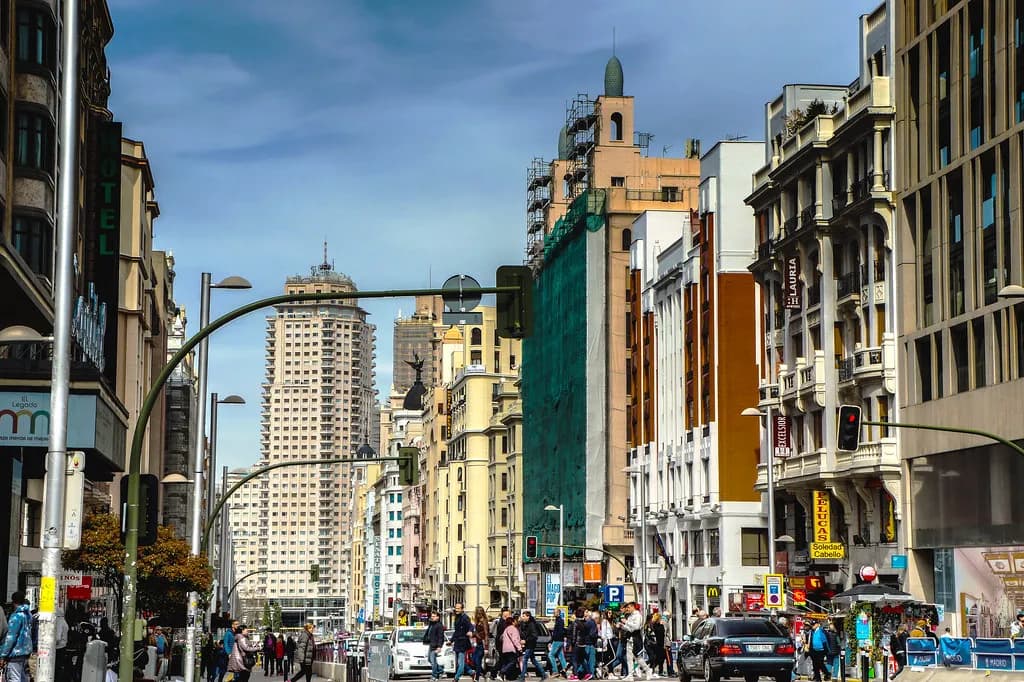
Gran Vía begins just north of the square and runs west toward the Callao metro hub and beyond. It is lined with early 20th-century Beaux-Arts and Art Deco buildings, major theaters, flagship stores, and the Edificio Metrópolis at the eastern end. A walk along Gran Vía takes 20–25 minutes end to end and is one of the better architectural strolls in the city. More detail in the Gran Vía Madrid guide.
The Royal Palace and Almudena Cathedral are a 20-minute walk west via Calle Mayor and Calle Bailén. The palace is the largest functioning royal palace in Western Europe by floor area. Combined with a walk through the Sabatini Gardens on its north side, this makes a half-day excursion from Puerta del Sol. The a guide to Madrid's neighborhoods maps out the logical walking sequence between all these points.
Souvenirs and Official Merchandise Near the Square
The official Madrid Tourism information point near the south side of the square sells city maps, guidebooks, and a small range of Madrid-branded merchandise. Items here carry official city branding and tend to be better quality than the souvenir shops on the surrounding streets, where Bear and Strawberry Tree replicas range from reasonably made to disposable plastic.
For more considered purchases, El Corte Inglés on nearby Calle Preciados (two minutes on foot) has a full floor of Spanish food products — good olive oil, tinned seafood, regional wines — that make more useful gifts than ceramic magnets. The Royal Palace gift shop, a 20-minute walk away, stocks reproduction prints, ceramics, and books tied specifically to the royal collections.
Street vendors in the square sell selfie sticks, phone mounts, and small trinkets. These are legal but the quality is low. If you are approached by someone offering a bracelet or a small trinket as a "gift," it is a precursor to a pressure sale — decline politely and keep moving. This is consistent advice from Madrid's tourism office and not specific to Puerta del Sol.
Pair this with our broader Madrid tourism attractions guide for the full city overview.
Frequently Asked Questions
¿QUÉ HAY EN LA ZONA?
The area around Puerta del Sol Madrid is incredibly rich with attractions. You will find iconic landmarks like Kilómetro Cero and the Bear and Strawberry Tree statue. Additionally, it is surrounded by major shopping streets, historic squares like Plaza Mayor, and numerous tapas bars. The central location makes it a perfect starting point for exploring many of Madrid's highlights.
Which Puerta del Sol Madrid options fit first-time visitors?
First-time visitors should prioritize seeing the Kilómetro Cero plaque, the Bear and the Strawberry Tree statue, and the famous clock on Casa de Correos. Strolling through the square to soak in the atmosphere is also essential. Consider combining this with a visit to nearby Plaza Mayor and Mercado de San Miguel for a complete experience. These sites offer a foundational understanding of Madrid's heart.
How much time should you plan for Puerta del Sol Madrid?
You can comfortably explore Puerta del Sol Madrid itself in about 1-2 hours. This allows time for photos and soaking in the atmosphere. If you plan to visit nearby attractions like Plaza Mayor or Mercado de San Miguel, allocate half a day. A full day is ideal if you include a museum visit or extensive shopping.
What should travelers avoid when planning Puerta del Sol Madrid?
Travelers should avoid visiting during peak midday hours if they prefer fewer crowds. Also, avoid carrying valuable items in easily accessible pockets. Do not accept items from street vendors unsolicited, as these can sometimes be scams. Lastly, avoid rushing your visit; take time to appreciate the square's unique energy.
Is Puerta del Sol Madrid worth including on a short itinerary?
Absolutely. Puerta del Sol Madrid is a must-see, even on a short itinerary. Its central location and iconic landmarks make it a quick yet impactful stop. You can experience its highlights in an hour or two. It offers a great introduction to the city's pulse. Consider adding it to your Madrid 1-day itinerary.
Puerta del Sol is worth more than the 20-minute stop most itineraries budget for it. The square itself takes minutes to cross, but understanding what each landmark means — Kilómetro Cero, the Casa de Correos clock, the renovation that cleared away centuries of clutter to reveal the current space — turns a photo stop into a genuinely interesting piece of urban history. The 2026 pedestrianization has made the experience noticeably better: less noise, more room, easier navigation.
Use it as your daily orientation point, your starting pistol for mornings, and your endpoint after a long evening. Madrid's layout radiates from here for a reason. Follow the streets outward in any direction and you will find something worth your time.
You might also like


Continue reading
More guides you'll find useful


