
Gran Via Madrid Travel Guide
Plan Gran Via Madrid with top picks, neighborhood context, timing tips, and practical booking advice for a smoother trip.
On this page
Gran Via Madrid: Explore Madrid's Iconic Street
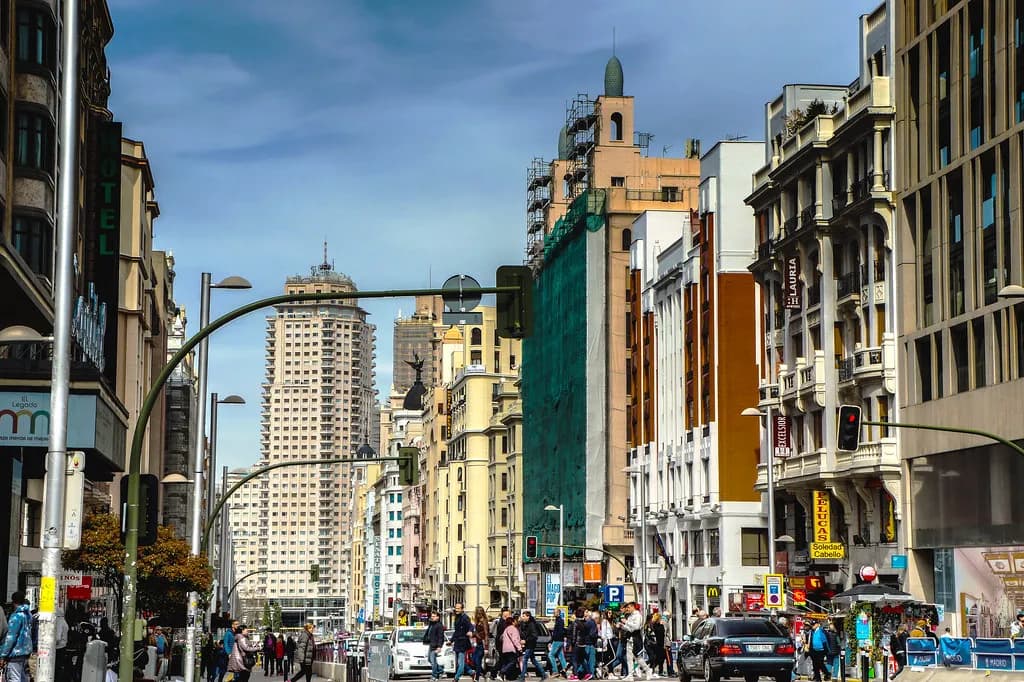
Gran Vía is Madrid's most-walked street — 1,300 metres of grand early-20th-century architecture, flagship stores, theater marquees, and packed pavements running from Calle Alcalá all the way to Plaza de España. It draws over 10 million visitors a year and anchors the city's commercial and cultural center.
The street was recently upgraded: pavements widened, more greenery added, car traffic reduced, and a dedicated cycling lane installed along the Plaza España–Callao stretch. In 2026 it is more pedestrian-friendly than at any point in its history. That makes it easier to walk slowly, look up at the facades, and actually enjoy it rather than fight through traffic.
This guide covers the three distinct sections of Gran Vía, the best shops by category, where to eat, rooftop bars worth the detour, and the practical details that make the difference between a rushed dash and a genuinely good half-day.
Plan with trusted sources: cross-check opening hours and seasonal details with the official Madrid tourism site, and read more about the city on its Wikipedia entry before you go.
The Three Sections of Gran Vía and What Each One Offers
Gran Vía splits naturally into three sections, each with a different character. Understanding the layout helps you decide where to start and what to prioritize.
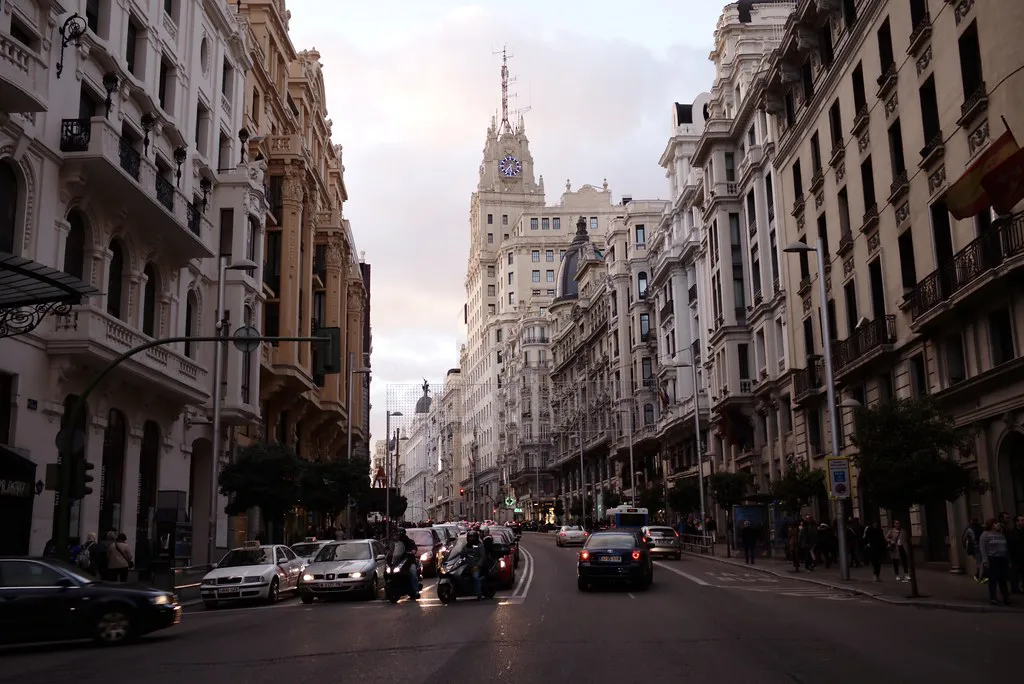
Calle Alcalá to Red de San Luis (nos. 1–21). This is the architecturally richest stretch. The Metropolis Building — the domed landmark at the corner of Alcalá — anchors one end. Along here you find the oldest boutiques: Loewe (no. 8; leather goods), Grassy (no. 1; high-end watches), and Aristocrazy (jewellery). New Balance (no. 15) and Adidas (no. 21) signal the shift toward the mid-street retail zone. Walk slowly here; the upper-floor ornamentation is extraordinary.
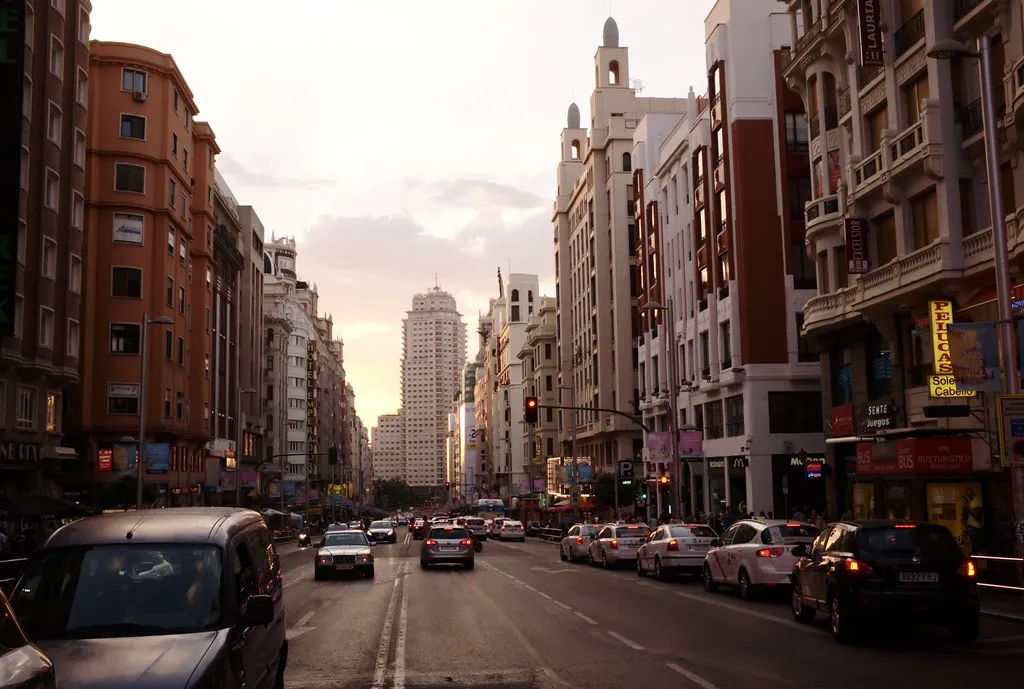
Red de San Luis to Plaza de Callao (nos. 27–50). This is the busiest section and where most international chains cluster. The Telefónica Building (no. 28) — one of Europe's first skyscrapers — now houses a tech shop and a cultural exhibition space. Major stores here include ZARA (no. 34), H&M (no. 37; inside the former Cine Avenida), Real Madrid Official Store (no. 31), Primark (no. 32), UNIQLO (no. 37), Victoria's Secret (no. 38), Urban Outfitters (no. 43), and Pop Mart (no. 44). La Casa del Libro (no. 29) is a sprawling Spanish bookshop worth browsing. WOW Concept (no. 18) functions as a multi-brand concept store with pop-up spaces and a café inside.
Plaza de Callao to Plaza de España (nos. 47–end). The pace slows and the shops shift toward souvenirs, mid-range fashion, and a few interesting stops. The Capitol Building with its Schweppes neon sign marks the start of this stretch. Find Atlético de Madrid Official Store (no. 47), Lacoste (no. 51), and the large Starbucks at no. 58 — housed inside a beautiful period building and worth a quick look even if you skip the coffee. Jardín Secreto by Salvador Bachiller (near the end) is a multi-floor accessories shop with a rooftop café-terrace tucked inside.
Spanish Fashion on Gran Vía
Gran Vía is where Spanish mass-market fashion built its reputation. Zara, Bershka, Stradivarius, and Cortefiel all have flagship-sized stores on this street. These brands are considerably cheaper here than in northern Europe — prices in euros run 15–30% below UK or Nordic equivalents for the same items.
For Spanish-origin luxury or premium brands, the best stop is Loewe at Gran Vía 8. The leather goods — bags, wallets, small accessories — are made in Spain and represent the street's longest retail legacy. Salsa Jeans (no. 27) is a Portuguese-origin brand popular across Iberia; their denim fits are cut differently from northern European labels and worth trying if you're buying jeans on the trip.
If you want to shop beyond Gran Vía's main drag, the Barrio de Salamanca is a 20-minute walk or two metro stops east (line 4, Serrano or Velázquez). That neighborhood carries Loewe's full collection, plus Balenciaga, Bottega Veneta, and independent Spanish designers. Gran Vía handles volume; Salamanca handles investment pieces. Use that distinction to plan your time rather than trying to do both on the same afternoon.
Must-See Gran Vía Landmarks
The Metropolis Building (1911, corner of Alcalá and Gran Vía) is the single most-photographed structure on the street. Its bronze winged-victory statue atop the dome is best seen from across Calle Alcalá, not from directly below. Cross the road and look back — that's the shot.
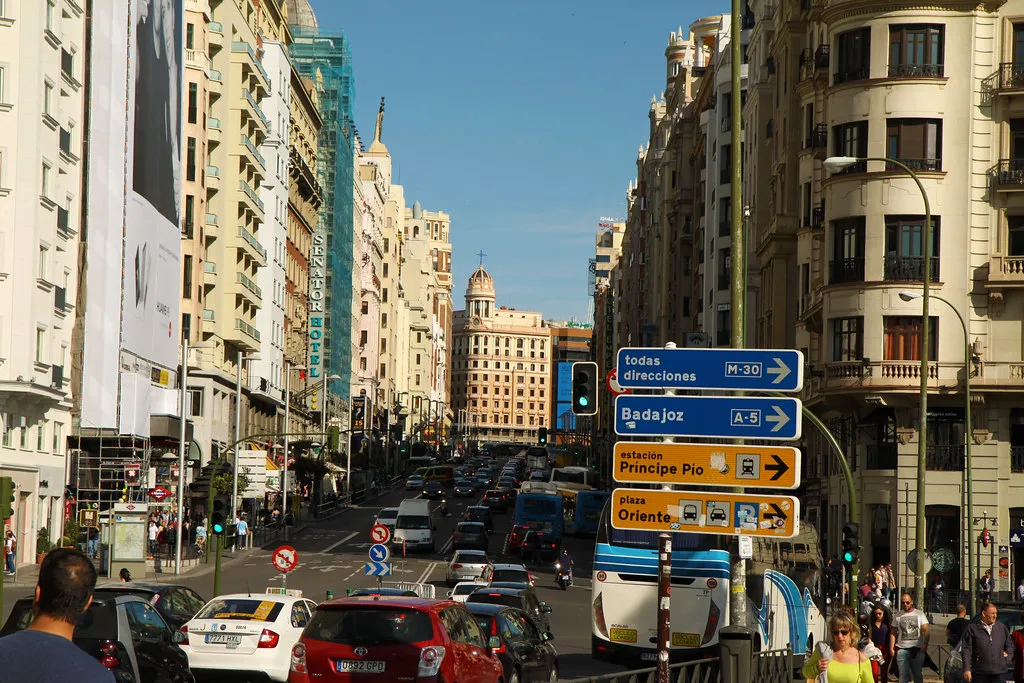
The Telefónica Building (no. 28, completed 1929) was the tallest building in Spain for decades. During the Civil War, Soviet military intelligence operated from this building and it was repeatedly shelled. The cultural centre on the ground floor runs free exhibitions and is open most days. Check their listings before you arrive — the shows change every few weeks.
The Capitol Building at Plaza de Callao is the center of the theater district. The area between Callao and Plaza de España is nicknamed Broadway Madrid for its concentration of large musical venues. Shows currently running include long-running productions in Spanish plus occasional English-language touring productions. Book any theater tickets through official venue websites — the queue surcharges from resellers are steep.
Plaza de Callao itself functions as a de facto Times Square equivalent, with large digital screens, buskers, and permanent foot traffic. It's the natural midpoint for a break and the best place to orient yourself before deciding which direction to continue.
Museums, Art, and Culture Near Gran Vía
Gran Vía itself is not a museum district, but three world-class institutions are within a 20-minute walk. The Prado, Thyssen-Bornemisza, and Reina Sofía form the "Golden Triangle of Art" — all accessible from the eastern end of Gran Vía toward Paseo del Prado. The Reina Sofía houses Picasso's Guernica; the Thyssen covers the broadest historical range; the Prado concentrates on Spanish and Flemish masters. Build a separate half-day for any of them — they don't work as a quick hour's visit. Check the top things to do in Madrid guide for museum opening hours and free-entry windows.
The Telefónica cultural space on Gran Vía 28 runs rotating free exhibitions — photography, design, and digital art tend to feature. This is a genuinely overlooked stop that adds 20–30 minutes without any cost or queuing. The building's lobby architecture alone justifies stepping inside.
Madrid's performing arts calendar is anchored on Gran Vía. The Teatro Lara, Teatro Coliseum, and Teatro Rialto are all within a short walk of each other between Callao and Plaza de España. If you are in Madrid for more than two nights, an evening performance is worth planning around — it is how locals use the street after dark.
Outdoor Breaks and Green Spaces
Gran Vía itself now has wider pavements and more planted areas along the central reservation after the recent urban redesign. The cycling lane on the Plaza España–Callao stretch means cyclists no longer share the main pavement — a practical improvement for pedestrians walking that section.
The closest full park is Parque del Retiro, about a 25-minute walk from the eastern end of Gran Vía (or take Metro line 2 to Retiro). The lake rowboats run daily until sunset. Entry is free. The Jardines de Sabatini, beside the Royal Palace, are 10 minutes on foot from Plaza de España and make a quieter alternative — particularly good at dusk when the palace illumination starts.
The Temple of Debod — an actual ancient Egyptian temple gifted to Spain — sits on a small hill five minutes' walk from Plaza de España. It is one of the free things to do and the sunset views over the city from that hill are some of the best available without paying for a rooftop terrace. Arrive 30 minutes before sunset for the best light.
Where to Eat on and Around Gran Vía
Restaurants directly on Gran Vía tend to charge 20–40% more than equivalent spots one block back. The practical rule: turn right or left off the main drag and the prices drop immediately. Calle de la Montera, Calle Fuencarral, and the streets feeding into Malasaña all have affordable tapas bars within a three-minute walk of the main street.
For quick and cheap eating, the Mercado de San Antón on Calle de Augusto Figueroa (five minutes north of Gran Vía) has a top-floor terrace bar and a market floor with tapas counters. It's less touristy than the Mercado de San Miguel and priced closer to local rates. Bocadillos (sandwiches) from a panería typically cost €3–5; a plate of patatas bravas with a beer runs €4–6 off the main street. Explore some cheap eats around the city for more specific recommendations.
Chocolatería San Ginés, tucked in the Pasadizo de San Ginés just off Gran Vía near Callao, is the best-known churros spot in the city. It operates 24 hours. Churros con chocolate cost around €4.50 for a plate. It's worth the short detour if you haven't had churros elsewhere in Madrid; if you've already eaten them at a local café, the price premium here is mainly for the historic atmosphere.
For a sit-down meal near Gran Vía, La Terraza del Casino (Calle de Alcalá 15, a 5-minute walk east) sits at the top end — Michelin-starred, expensive, best for a celebration dinner. For everyday quality, the tapas bars on Calle de la Victoria, between Gran Vía and Sol, are reliable and unpretentious.
Rooftop Bars and Elevated Views
Gran Vía has a concentration of hotel rooftop terraces that rank among the city's best elevated drinking spots. The Riu Plaza España rooftop sits atop the tallest building on Plaza de España — views extend across the entire skyline and out toward the Sierra de Guadarrama on clear days. Access is open to non-hotel guests; expect a minimum spend of around €10–15 per person. Best visited from 19:00 onwards when the light softens.
The Vincci The Mint hotel (Gran Vía 10) has a rooftop pool bar open in summer (June–September). It runs a reservation system for non-guests — worth checking their website before you go, as walk-ins can be turned away on busy evenings. The views are less dramatic than Riu Plaza but the atmosphere is more relaxed.
The the best rooftop bars guide covers the full list with current opening hours and pricing. From Gran Vía specifically, the Riu Plaza España rooftop and the Hotel Indigo Rooftop are the two most worth going out of your way for in 2026.
Budget-Friendly Options on Gran Vía
Walking the full length of Gran Vía from Calle Alcalá to Plaza de España costs nothing and takes about 30–40 minutes at a sightseeing pace. The architectural facades, street performers near Callao, and the general bustle provide continuous entertainment without spending a euro. Kids respond well to the scale of the buildings and the energy of the street.
The Telefónica cultural space (no. 28) is free to enter. The nearby Jardín Secreto by Salvador Bachiller is worth a browse even without buying — the multi-floor layout and rooftop café are worth seeing. Many flagship stores (Primark, ZARA, Uniqlo) allow extended browsing without pressure to buy, and their air conditioning makes them useful on hot July or August afternoons.
Cinema tickets at the Cines Callao on Plaza de Callao start at around €8 for matinees on weekdays. The building is a 1920s period cinema with original interior details still visible in the main auditorium. Matinees showing Spanish-language films run cheaper than evening blockbusters and give you a distinctly local experience.
For budget accommodation context, several mid-range and budget hotels sit directly on or within one block of Gran Vía — the street's metro access (stops at Gran Vía, Callao, and Santo Domingo) makes it a practical base. getting around the city from this central location is easy in every direction.
How to Plan Your Gran Vía Day
Start at the eastern end (Calle Alcalá) and walk west. This means you start in the architecturally richest section when your energy is highest, reach the busiest retail zone in the middle of the morning (before it peaks at 12:00–14:00), and finish near Plaza de España where you can continue to the Jardines de Sabatini or Temple of Debod without backtracking.
Arrive before 10:00 if you want the street relatively quiet. Shops open from 10:00; most restaurants open for lunch from 13:30. The peak crowd is 12:00–15:00 on weekends and 17:00–20:00 on weekdays. If you dislike crowds entirely, a weekday morning in January–March is the quietest window.
The metro is the fastest way to reach Gran Vía — Line 3 stops at Gran Vía station (central), Line 3/5 at Callao, and Line 3/10 at Plaza de España. The Cercanías (suburban rail) stops at Sol, a 10-minute walk from the eastern end. If you have a multi-day transport pass, Gran Vía is easy to reach from any Madrid accommodation. Book theater tickets at least a week ahead for weekend performances — the Broadway Madrid productions sell out regularly.
| Metro Stop | Line(s) | Where on Gran Vía | Best For |
|---|---|---|---|
| Gran Vía | Line 3 (Yellow) | Central (near Callao) | Shops, Telefónica Building, mid-street access |
| Callao | Lines 3 & 5 | Mid-street (Plaza de Callao) | Theater district, Capitol Building, rooftop bars |
| Plaza de España | Lines 3 & 10 | Western end | Temple of Debod, Jardines de Sabatini, Riu Plaza rooftop |
| Banco de España | Line 2 (Red) | Eastern approach (Alcalá) | Metropolis Building, Loewe, Grassy, Golden Triangle museums |
| Sol (Cercanías) | C-1, C-2, C-3, C-4, C-5 | 10-min walk to eastern end | Arriving by suburban/regional train |
Wear comfortable shoes. The street is 1,300 metres and the side streets, rooftop detours, and museum visits add considerably to that. Factor in at least one long café stop — the pavements invite it, especially on the widened stretch near Callao.
Frequently Asked Questions
Which Gran Via Madrid options fit first-time visitors?
First-time visitors to Gran Via Madrid should prioritize the Metropolis Building and Plaza de Callao. These iconic landmarks offer great photo opportunities and a sense of the street's grandeur. Catching a musical or enjoying a rooftop view are also highly recommended. A leisurely stroll provides an excellent overview of the area.
How much time should you plan for Gran Via Madrid?
Plan at least half a day to fully experience Gran Via Madrid, especially if you want to explore shops or enjoy a meal. If you include a show or visit nearby museums, a full day is advisable. Consider a 3-day Madrid itinerary to cover Gran Via and other major sights. The amount of time depends on your specific interests.
What should travelers avoid when planning Gran Via Madrid?
Travelers should avoid visiting Gran Via during peak midday hours if they dislike crowds. Also, do not forget to wear comfortable shoes, as you will walk extensively. Avoid making last-minute plans for popular shows; book tickets in advance. Overpacking your schedule will lead to rushing through experiences.
Is Gran Via Madrid worth including on a short itinerary?
Yes, Gran Via Madrid is definitely worth including, even on a short itinerary. Its central location and vibrant atmosphere make it an essential Madrid experience. You can easily walk through the main highlights in a few hours. It provides a great introduction to the city's energy and architecture.
Which Must-See Gran Via Attractions options fit first-time visitors?
First-time visitors should focus on the Metropolis Building, the Telefónica Building, and Plaza de Callao. These are easily identifiable and offer a great introduction to Gran Via's splendor. Enjoying the street's general ambiance and architecture is also key. These spots provide excellent photo opportunities.
Gran Vía Madrid truly stands as the beating heart of the city, offering endless possibilities for every traveler. Its blend of historical grandeur, modern entertainment, and vibrant street life creates a unique atmosphere. This iconic boulevard promises memorable experiences, from architectural marvels to world-class shopping.
Whether you seek cultural immersion, retail therapy, or simply a lively stroll, Gran Vía delivers. Remember the practical tips for a smoother visit, like comfortable shoes and early starts. Embrace the energy and explore the many facets of this magnificent street.
Your journey through Gran Vía Madrid will undoubtedly be a highlight of your Spanish adventure. It encapsulates the dynamic spirit and charm that make Madrid such an unforgettable destination. Enjoy every moment of your exploration.
You might also like


Continue reading
More guides you'll find useful


