

How to Get to Barcelona: Your Complete Travel Guide
Plan how to get to Barcelona with our comprehensive guide. Discover the best ways to arrive by plane, train, and cruise, plus navigate the city with ease.
On this page
How to Get to Barcelona: Your Complete Travel Guide
Barcelona sits at one of Europe's great transport crossroads. High-speed trains connect it to Madrid in under three hours. Dozens of airlines fly direct from North America, Asia, and every major European hub. And the city's cruise port ranks among the busiest in the Mediterranean. Whatever your starting point, there is a practical, well-priced route in.
This guide walks through every major arrival method — plane, train, bus, car, and cruise — and then explains how to move around the city once you land. Prices and schedules reflect 2026 conditions.
Plan with trusted sources: cross-check opening hours and seasonal details with the official Barcelona tourism board, and read more about the city on its Wikipedia entry before you go.
Ways to Get to Barcelona: An Overview
Barcelona is served by three main entry points: Barcelona-El Prat Airport (BCN), Barcelona Sants railway station, and the Port of Barcelona cruise terminal. Most visitors from outside Europe fly in. Travelers already in Spain or France typically find the train faster, more comfortable, and cheaper than a last-minute flight. Buses offer the lowest fares of all, though journey times are longer.
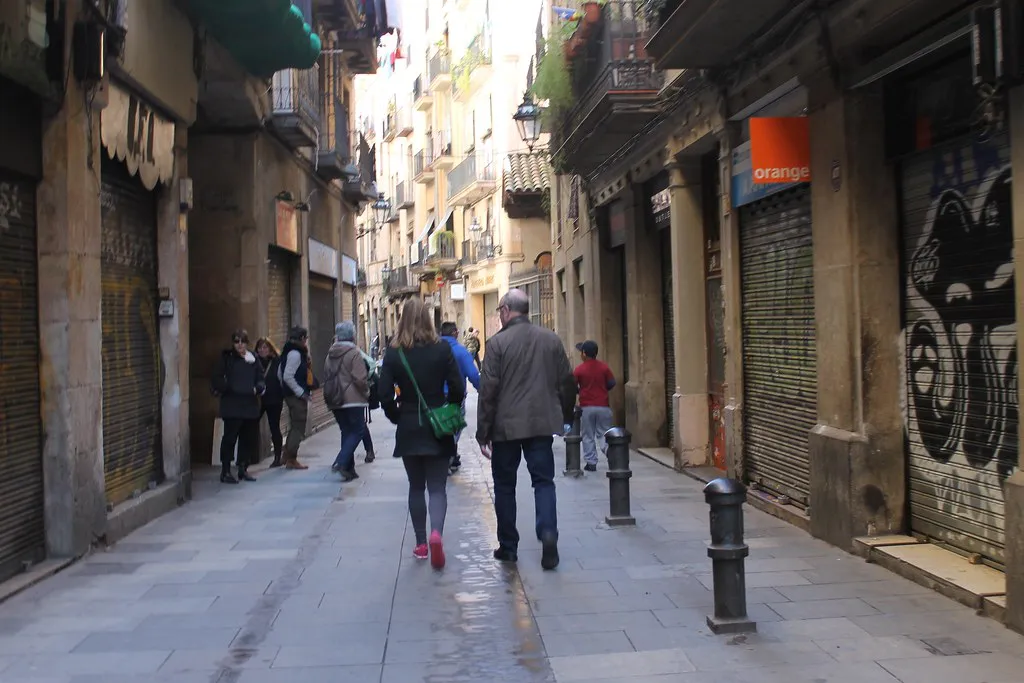
The right choice depends on your origin, how much luggage you carry, and your budget. Flying from London, Paris, or Amsterdam usually takes two hours or less and often costs under €80 return if booked in advance. The high-speed AVE from Madrid takes about 2 hours 30 minutes and costs €40–€100 depending on timing. Intercity buses can undercut those fares but add two to four hours of travel time.
Regardless of how you arrive, the city center is compact and well-connected. Barcelona's Metro has over 180 stations, buses cover the gaps, and most hotels cluster within a short walk of a station. Getting in and getting around is genuinely straightforward once you know the options.
How to Get to Barcelona by Plane
Barcelona-El Prat Airport (BCN) is Spain's second-busiest airport, about 15 kilometers southwest of the city center. It has two terminals: T1, used by major network carriers including Lufthansa, Iberia, and British Airways, and T2, which handles most low-cost and charter flights — easyJet uses T2C exclusively. A free inter-terminal shuttle connects T1 and T2 every few minutes.
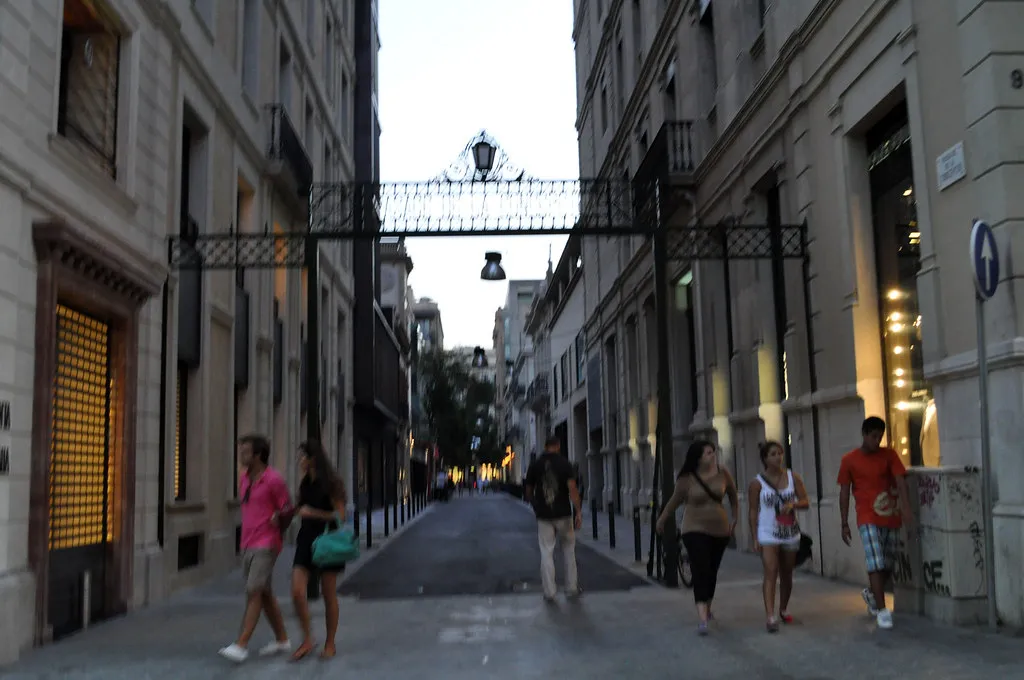
Direct flights to Barcelona operate from most major European cities, as well as New York, Los Angeles, Miami, Toronto, Dubai, Doha, and Singapore. Transatlantic fares fluctuate widely; booking eight to twelve weeks ahead typically gives the best combination of price and availability. Budget carriers like Vueling, Ryanair, and Wizz Air dominate the European routes and frequently offer one-way fares under €30 when booked early.
Once you land, the airport is clear and manageable. Baggage claim is well-signposted, and all public transport connections — Metro, Aerobús, train, and buses — are accessible within a few minutes' walk of the arrivals hall. The transfer section below covers every option in detail.
Arriving at Barcelona Airport (BCN): Your Transfer Options
Five public transport options connect the airport to the city. The right one depends on your budget, luggage, destination, and arrival time.
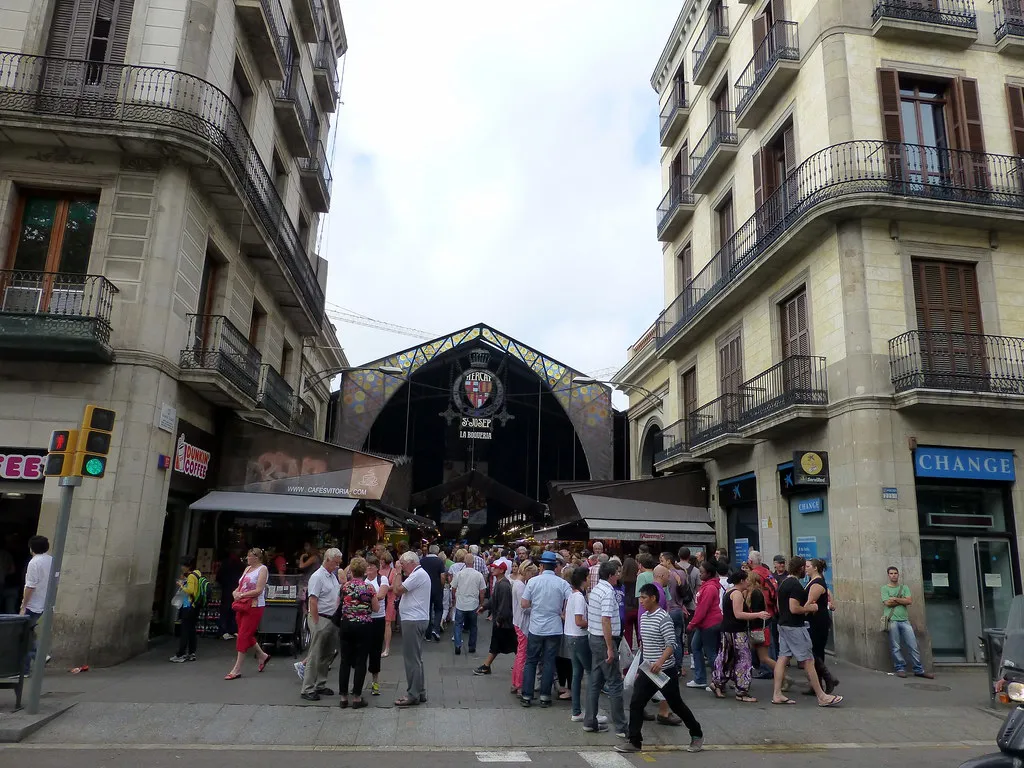
Aerobús is the most popular choice for most travelers. Two lines run from both terminals: A1 from T1 and A2 from T2, both terminating at Plaça Catalunya via Plaça Espanya. The journey takes about 35 minutes. Buses run every 5 minutes during the day and every 20 minutes through the night — 24 hours a day, 365 days a year, including public holidays. A single ticket costs €6.75 and return costs €11.60. Crucially, the Hola Barcelona Travel Card and T-Casual card are not valid; you pay a separate Aerobús fare. It is the fastest direct option with generous luggage space.
Metro L9 Sud stops at both T1 and T2 and connects into the broader Metro network. You can transfer at Collblanc (L5, heading toward Eixample) or ride to Zona Universitària and transfer to L3 for the old town. The journey to a central station takes 30–40 minutes in total. The dedicated airport zone surcharge means a single ticket costs €4.50, or you can use a Hola Barcelona Travel Card which already includes the airport surcharge. Metro hours are 05:00–00:00 Sunday to Thursday, 05:00–02:00 Friday, and 24 hours Saturday. Note: this option is slower than the Aerobús if your hotel is in the center, but better if you need to reach the outer neighborhoods directly.
Rodalies R2 Nord train runs from a station at Terminal T2 (not T1) to Barcelona Sants in 20 minutes, then continues to Passeig de Gràcia. Trains run every 30 minutes from 05:42 to 23:38. A single ticket with the airport surcharge costs €4.60. If you arrive at T1, take the free shuttle to T2 first, adding about 15 minutes. This option is ideal if you are continuing onward along the Costa Daurada (Sitges, Tarragona) or the Costa del Maresme, since you can change trains at Sants.
Bus 46 is the cheapest option, costing only €2.55 with a standard city ticket. It runs from both terminals to Plaça Espanya and accepts the T-Casual and Hola Barcelona cards. The catch: the journey takes 45–60 minutes depending on traffic, the bus stops frequently, and there are no luggage racks. Best suited for solo travelers with light bags who are not in a hurry.
Night buses N17 and N18 fill the gap when the Metro and regular buses have finished for the night. Both terminate at the Plaça Catalunya – Pelai stop and depart from T1 and T2B/T2C. The N17 runs via the northern districts; the N18 takes a more southerly route through Eixample. Frequency is every 10–20 minutes from around 22:30 onward. Travel time is longer than the Aerobús — the N17 makes 35 stops — but fares are standard city bus prices and the Aerobús is not the only 24-hour option. If you arrive between 00:00 and 05:00 and are on a tight budget, the night bus works perfectly well.
Taxi or ride-hail costs €35–€55 to most central hotels, depending on destination and traffic, plus luggage and night-time surcharges. From the airport the minimum metered fare to the city center is €21. Taxis queue outside both terminals; expect a short wait at busy arrival times. Apps like FreeNow let you book ahead, which is useful during trade fairs or rainy evenings when street taxis are scarce. The cruise port is a fixed-price transfer at €45 from the airport.
| Option | Journey Time | Cost (single) | Runs 24h? | Best For |
|---|---|---|---|---|
| Aerobús (A1/A2) | ~35 min | €6.75 | Yes | Most travellers; direct to Plaça Catalunya |
| Metro L9 Sud | 30–40 min + transfer | €4.50 | No (05:00–00:00) | Outer neighbourhoods; T-card holders |
| Rodalies R2 Nord | 20 min to Sants | €4.60 | No (05:42–23:38) | T2 arrivals; onward Costa Daurada travel |
| Bus 46 | 45–60 min | €2.55 | No | Solo travellers, light bags, tight budget |
| Night Bus N17/N18 | 45–60 min | €2.55 | Nighttime only | Arrivals between 00:00–05:00 |
| Taxi / Ride-hail | 25–40 min | €35–€55 | Yes | Groups, heavy luggage, door-to-door comfort |
How to Get to Barcelona by Train
Barcelona Sants is the city's main intercity and international rail hub. High-speed AVE trains run by Renfe connect it to Madrid (2h 30min, €40–€100), Valencia (1h 40min, €20–€60), Seville (5h 30min), and Zaragoza (1h 45min). Trains depart frequently — the Madrid route runs roughly every 30–60 minutes throughout the day, with earlier morning departures often the cheapest.
International services also serve Sants directly. TGV trains from Paris take about 6h 30min; trains from Marseille take around 4h 30min. Eurail Pass holders can use their pass on these routes, though seat reservations are mandatory on high-speed services and carry an additional fee (€15–€30 depending on the train type). Book reservations at Renfe's website or any Sants station counter.
Regional trains (Rodalies) connect Barcelona to smaller Catalan towns. If you are traveling from Girona or the Costa Brava, the R11 and R1 lines terminate at Sants and Passeig de Gràcia, making onward connections simple. Sants station has Metro lines L3 and L5, so you can reach virtually any part of the city in under 20 minutes from arrival. A Metro and Rodalies train map helps you plan your onward journey from Sants.
How to Get to Barcelona by Bus
Long-distance buses are the most economical way to reach Barcelona from elsewhere in Spain and many European cities. The main operator is ALSA, which runs services from Madrid (7–8h, from €15), Valencia (3h 30min, from €12), Seville (11h), and dozens of smaller towns. International services connect Barcelona to Lisbon, Rome, Milan, and London through operators including Flixbus and Eurolines.
Most long-distance buses arrive at Estació del Nord, a short walk from Arc de Triomf Metro station (L1), or at Sants station for services that share the rail corridor. Fares are consistently lower than trains, especially on routes where the train network is less frequent. The trade-off is time: a Madrid–Barcelona bus takes two to three times longer than the AVE.
Driving to Barcelona is another option worth knowing about. The AP-7 motorway runs along the coast from France and the south; the A-2 connects Madrid via Zaragoza. Journey time from Madrid by car is around 6 hours; from Paris it is about 10–11 hours. Parking in central Barcelona is expensive and limited — budget €25–€40 per day for a central garage. If you are planning to drive only for the Barcelona leg, leaving the car at a park-and-ride on the outskirts and taking the Metro into the center is a practical alternative.
How to Get to Barcelona by Cruise
Barcelona is one of the Mediterranean's major cruise homeports, ranking consistently among Europe's top three by passenger numbers. The Port of Barcelona has seven cruise terminals grouped around the southern end of La Rambla. Most ships dock within 1–2 kilometers of the Columbus Monument at the foot of La Rambla, making it one of the most walkable cruise arrivals in Europe.
Cruise line shuttle buses run from the terminals to the World Trade Center area, typically for €3–€5 return. From there, the L3 Metro line at Drassanes station puts you one stop from Liceu (Gothic Quarter) and three stops from Passeig de Gràcia. Taxis queue outside the terminals and charge around €10–€15 to Plaça Catalunya, taking 10–15 minutes. If your ship docks at the more distant Terminals D or E, the shuttle is the easiest first step.
Cruise passengers on shore excursions will typically have transport arranged. Independent visitors are well-served by a city bus or taxi for the first leg, then the Metro for everything else. The hop-on hop-off Bus Turístic also stops near the port and covers Sagrada Família, Park Güell, and Montjuïc — a convenient option if you have only a few hours before embarkation.
Getting Around Barcelona: Local Transport Guide
The Metro is the backbone of urban transport. Eight lines and more than 180 stations cover the city from Zona Universitària in the west to Badalona in the northeast. Trains run every 2–5 minutes during peak hours, making waits short. A single journey costs €2.55. For stays of two or more days, the T-Casual card (10 journeys, €12.15) is better value. If you plan four or more journeys per day, the Hola Barcelona Travel Card (€16.60 for 48h, €22.00 for 72h, up to €35.40 for 120h) covers Metro, buses, Nitbus, tram, and Rodalies within Zone 1.
City buses run along virtually every major street and into neighborhoods the Metro misses. The hop-on hop-off Bus Turístic (€35 adults, €20 children for 1 day) is aimed at first-timers wanting to tick off the main landmarks — it stops at the Sagrada Família, Park Güell, Camp Nou, and Barceloneta Beach. Regular city buses are far cheaper and cover the same ground if you are comfortable navigating.
Walking is genuinely the best way to experience the Gothic Quarter, El Born, and Barceloneta. The old town is compact; you can cross it on foot in 20 minutes. Cycling is practical along the waterfront and in Eixample, which has dedicated lanes on most main streets. Bicing is the city's bike-share scheme (subscription-based, aimed at residents); tourist rentals are widely available at shops near the port and Barceloneta for around €10–€15 per day. A full guide to getting around Barcelona covers all these options in depth.
Taxis are metered and reliable. Base fare is €2.15; expect €8–€12 for most cross-city journeys. FreeNow and Cabify operate ride-hailing apps with fixed quotes. Night rates (after 21:00) and weekend surcharges increase costs by 20–30%. Uber operates with limited availability compared to other European cities — local apps are usually faster.
First-Time Visitor Transport Tips for Barcelona
One detail many first-timers miss: the L9 Sud Metro line from the airport does not connect directly to the main Metro network without a transfer. If you buy a standard single T-Casual ticket, it will not cover the airport surcharge — you need either the airport-specific ticket (€4.50) or a Hola Barcelona Travel Card that already includes the airport zone. Getting this wrong at the machine when tired after a long flight is a common and avoidable mistake.
Ticket validation matters every time you board. Tap your card or insert your ticket at every Metro entry gate and on every bus boarding. Inspectors do check, and a fine for failure to validate is €100. Buy your T-Casual or Hola Barcelona card at any Metro station machine — they accept credit cards and display menus in English.
Spain uses the Euro (€). Credit cards are accepted at almost all hotels, restaurants, and transport ticket machines. Carry €10–€20 in cash for small cafés, market stalls, and any situation where card readers are down. ATMs are plentiful on La Rambla and throughout Eixample; avoid those with dynamic currency conversion prompts.
La Rambla and the Gothic Quarter are the highest-density pickpocket zones in Barcelona. Use a money belt or front pocket for your phone and wallet. The Metro at peak tourist hours — especially around Sagrada Família and Barceloneta — also attracts opportunistic theft. Beyond the tourist core, Barcelona is a safe, welcoming city and these precautions are just sensible habits rather than serious concerns.
As you plan, our guides to Barcelona 3 Day Itinerary and Restaurants in Barcelona Right Now cover the rest of the essentials.
Frequently Asked Questions
What is the best way to get to Barcelona from the airport?
The Aerobús is generally the best option for most travelers, offering direct service to Plaça Catalunya in 30-35 minutes for about €6.75. For budget-conscious travelers, the Metro (L9 Sud) is a good alternative at €4.50 with the airport surcharge, though it requires a transfer to reach central stations. Late arrivals after Metro closure can take the N17 or N18 night buses to Plaça Catalunya.
How long does it take to get from Madrid to Barcelona by train?
The high-speed AVE train from Madrid to Barcelona takes approximately 2.5 to 3 hours. This is the fastest and most efficient way to travel between these two major Spanish cities. Tickets typically range from €40-€100 depending on booking time.
Is the Barcelona Metro easy to use for tourists?
Yes, the Barcelona Metro is very easy to use for tourists. It's well-signed, efficient, and covers most major attractions. You can purchase single tickets or a T-Casual card for 10 rides, which simplifies travel. All machines offer an English-language option.
Getting to Barcelona is a straightforward process with excellent connections by air, rail, bus, and sea. Knowing which transfer option matches your timing and budget — especially the night bus coverage if you land after midnight — means you can move from airport to hotel without stress. Once in the city, the Metro, buses, and your own feet will take you anywhere you need to go.
Plan ahead, pick up a Hola Barcelona Travel Card on arrival, and the logistics will take care of themselves. The city's attractions — from top things to do in Barcelona to the best neighborhoods to explore — are all waiting on the other side of a smooth journey in.
You might also like


Continue reading
More guides you'll find useful


