

Where to Stay in Barcelona: 6 Best Neighborhoods (2026)
Plan where to stay in barcelona with top picks, neighborhood context, timing tips, and practical booking advice for a smoother trip.
On this page
6 Best Neighborhoods: Where to Stay in Barcelona (2026 Guide)
Barcelona's neighborhoods feel like separate cities — each with its own pace, price point, and personality. Choosing the wrong one is one of the most common planning mistakes: too far from the metro, a block too deep into the tourist maze, or unknowingly on the left side of Eixample when you wanted the right. This guide cuts through that confusion with clear trade-offs for each area, so you can book with confidence rather than guess.
The six neighborhoods below cover the full range of travel styles, from first-timers wanting to be near the Sagrada Família to returning visitors hunting for a genuinely local base. Read the planning cheatsheet first, then jump to the neighborhood that matches your trip.
Plan with trusted sources: cross-check opening hours and seasonal details with the official Barcelona tourism board, and read more about the city on its Wikipedia entry before you go.
Barcelona Planning Cheatsheet
Before you open a single hotel tab, fix these four things in your head. First, pick your neighborhood — then filter by price. Most visitors do it the other way around and end up in the wrong area. Barcelona's neighborhoods are genuinely distinct, and a misplaced hotel costs you time every day in metro rides and transit fees.
Transport is excellent. The metro has 12 lines and nearly 200 stations; from any of the six neighborhoods below you can reach the main sights in under 25 minutes. Skip the Hola Barcelona Travel Card — it is marketed heavily to tourists but rarely pays off unless you're doing 5+ rides a day. The T Casual card (10 rides for €13.00) is better value for most visitors. Note that the T Casual does not cover the L9S airport metro; for the airport, buy a separate ticket for €5.90 or take the Aerobús.
Don't rent a car in the city. Parking costs €30–€50 per day in central Barcelona, lanes are narrow, and the superblocks limit driving in entire swathes of Eixample. Pick up a rental on the day you leave for day trips outside the city. Also budget for the tourist tax: Barcelona collects a city tax (€3.25–€6.75 per night depending on hotel category) on top of the Catalan regional tax (€4.00 per night for most hotels). It is charged at the hotel on arrival, not included in the online rate.
Finally, book early. Barcelona is consistently one of Europe's most-visited cities and summer availability tightens from April onward. For visits during August, note that Gràcia holds its Festa Major de Gràcia in the third week of the month — a wild, free street festival that makes the neighborhood uniquely fun but also significantly louder than usual.
Quick Summary of the 6 Recommended Neighborhoods
All six areas below are central and connected. The real question is atmosphere, not access — each has metro stops within a short walk and can reach the Gothic Quarter in under 20 minutes. Use this summary to narrow your shortlist, then read the full section for whichever area matches your style.
| Neighborhood | Best For | Price/Night | Metro Access |
|---|---|---|---|
| La Dreta de l'Eixample | First-time visitors | €150–€500 | Passeig de Gràcia, Diagonal, Verdaguer |
| Gràcia | Local vibes, families | €100–€300 | Fontana, Diagonal, Joanic (edge stops) |
| Sant Antoni | Food and nightlife | €100–€250 | Sant Antoni (L2) |
| El Born | Historic center, less crowded | €120–€350 | Jaume I (L4) |
| Esquerra de l'Eixample | Budget, returning visitors | €70–€200 | Hospital Clínic, Urgell, Rocafort, Entença |
| Barri Gòtic | Atmosphere, short stays | €100–€300 | Jaume I (L4), Liceu (L3) |
- La Dreta de l'Eixample — Best overall pick for first-time visitors. Wide boulevards, modernist architecture, Sagrada Família and Casa Batlló within walking distance. Hotels run €150–€500/night.
- Gràcia — Best for local vibes and families. Village squares, independent shops, Park Güell nearby. More limited hotel supply; €100–€300/night.
- Sant Antoni — Best for food and nightlife without the tourist density. The renovated market is the social hub. €100–€250/night.
- El Born — Best for historic-center access without Gothic Quarter crowds. Picasso Museum, Santa Maria del Mar, good tapas bars. €120–€350/night.
- Esquerra de l'Eixample — Best for returning visitors and longer stays. Residential feel, cheaper rates, very good metro access. €70–€200/night.
- Barri Gòtic — Most central, most atmospheric, most crowded. Great for short trips if you can handle the tourist density. €100–€300/night.
La Dreta de l'Eixample — The Best Area for Most First-Time Visitors
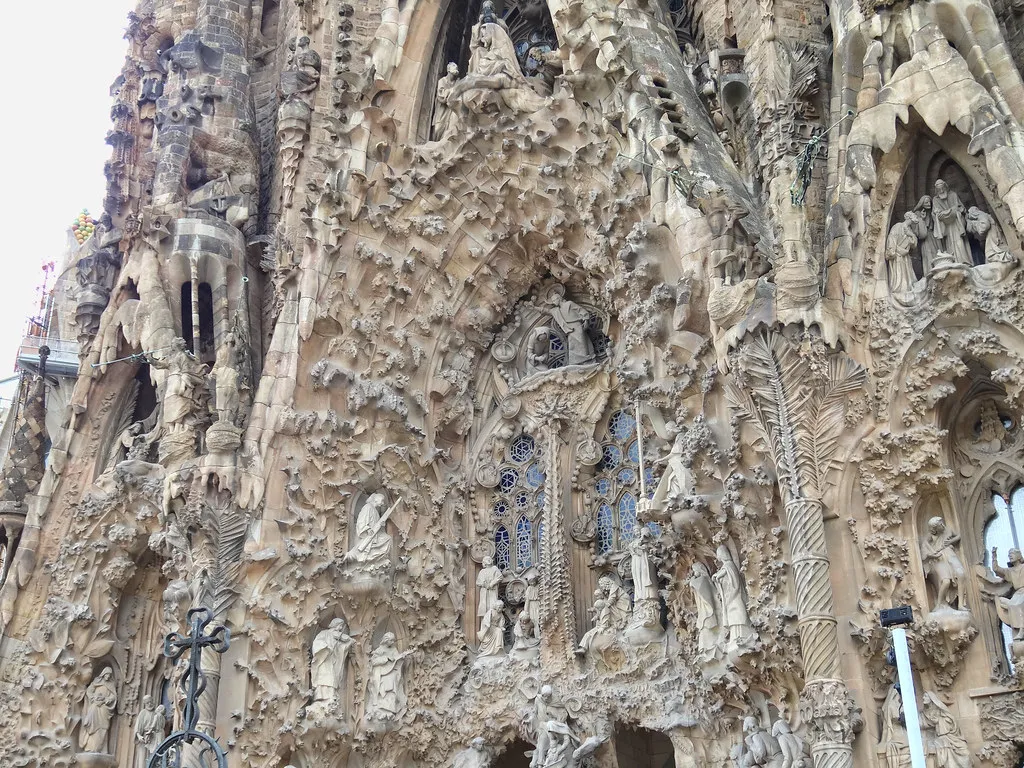
La Dreta de l'Eixample — literally the "right side" of the Eixample district — is where most visitors should base themselves on a first trip. The neighborhood sits between Passeig de Gràcia and Carrer de la Marina, and it puts you within walking distance of Casa Batlló, La Pedrera, and a 15-minute walk from Sagrada Família. The wide, tree-lined boulevards make navigation easy, and the grid layout means you rarely feel disoriented.
The atmosphere is upscale but not stuffy. There are designer boutiques along Passeig de Gràcia, but plenty of local cafés and neighbourhood restaurants once you move a block or two off the main drag. The area is touristy near the big sights, but it thins out quickly — two streets away from Casa Batlló you'll find families walking dogs and local residents doing their weekly shopping.
Hotels here run €150–€500 per night. Budget options are limited, but mid-range choices like Hotel Praktik Rambla (€150–€200) and the Occidental Diagonal 414 (€120–€200) offer solid value for the location. For luxury, Alma Barcelona on Passeig de Gràcia (€500+) has a rooftop bar and garden dining that justify the price. Multiple metro stations — Passeig de Gràcia, Diagonal, Verdaguer — give you direct lines to every other neighborhood on this list.
One important caveat: many online hotel searches label the entire Eixample district as a single area. Make sure you are booking in Dreta, not Esquerra. The dividing line is roughly Carrer del Consell de Cent and the Passeig de Gràcia axis. If your hotel is west of that axis and north of Gran Via, you are in Esquerra — a fine neighborhood (see below) but a different experience, and about 10 minutes further from the main modernist sights.
Gràcia — For Local and Laidback Vibes
Gràcia was an independent village until the 1890s, and it still feels like one. The neighborhood sits just north of Eixample, and the shift in atmosphere as you cross the boundary is immediate — wide avenues give way to narrow lanes and the open plazas of Plaça del Sol, Plaça de la Vila de Gràcia, and Plaça de la Virreina, where locals linger over coffee at all hours. It is consistently the neighborhood that repeat visitors say they wish they had discovered on their first trip.
The trade-off is convenience. There are no metro stations inside the neighborhood itself — the closest stops are Fontana (L3), Diagonal (L3/L5), and Joanic (L4), all on its edges. Most central sights are a 10–20 minute metro ride away. If your trip is three days or fewer and you want to maximize sightseeing, La Dreta de l'Eixample is a more efficient base. But if you have four or more nights and want to feel like you're living in the city rather than touring it, Gràcia is hard to beat.
Two Gaudí works are within walking distance: Park Güell (book timed tickets online, €10 for the monumental zone) and Casa Vicens, his first completed commission, which is smaller, cheaper, and far less crowded than his later buildings. The Festa Major de Gràcia in the third week of August transforms the neighborhood into a free outdoor festival for five days — themed street decorations, live music, and the entire city turning up to wander. Hotels fill fast for that week; book three months ahead. Accommodation runs €100–€300 per night, with limited supply — boutique options like Seventy Barcelona (€200–€400) and Hotel Catalonia Gràcia (€150–€200) are the standout choices.
Sant Antoni — Less Pretty, but Hip and Trendy
Sant Antoni sits at the southwestern edge of Eixample, flanked by the Avinguda del Paral·lel and Gran Via. It is not architecturally dramatic — the streets are wide and functional rather than ornate — but it has become one of the most talked-about neighborhoods in Barcelona over the past decade. The catalyst was the 2018 renovation of the Mercat de Sant Antoni, a 19th-century iron market that now anchors a large pedestrianized zone filled with outdoor terraces, coffee shops, and tapas bars.
On Sunday mornings the market hosts a secondhand book and coin fair that draws locals from across the city. On weekday evenings, Carrer del Parlament is lined with people doing aperitivo — vermouth, pintxos, and conversation. The neighborhood feels genuinely mixed: young professionals, long-term residents, and enough visitors to keep it lively without tipping into tourist-trap territory. For travelers who prioritize eating and drinking over ticking off sights, this is the best base in Barcelona.
The Sant Antoni metro station (L2) connects you to the Eixample in minutes and to the Gothic Quarter in under 15. Hotels are generally mid-range, running €100–€250 per night. Hotel Casa Elliot (€200–€350) and Hotel Lugano (€150) are strong choices. The neighborhood is also within a 20-minute walk of the Gothic Quarter and Barceloneta, making it practical even for heavy sightseeing days. The the best rooftop bars are mostly in Eixample, and several are a short walk or taxi from Sant Antoni.
El Born — A Less Touristy Alternative to the Gothic Quarter
El Born occupies the eastern edge of the Ciutat Vella (Old City), sandwiched between the Gothic Quarter to the west and Parc de la Ciutadella to the east. The streets are medieval, the architecture is beautiful, and the bar and restaurant density is high — but locals actually live here, which keeps it from feeling like a theme park. It is the right answer for travelers who want to be immersed in the historic center without the full-force tourist crush of the Gothic Quarter.
The neighborhood's anchor is the Santa Maria del Mar church, a 14th-century Gothic masterpiece that is less-visited than the cathedral and arguably more beautiful. Nearby, the Picasso Museum on Carrer de Montcada is one of the best in Europe and requires advance ticket booking. Mercat de Santa Caterina — with its mosaic roof designed by Enric Miralles — is the local alternative to La Boqueria, less crowded and used by actual residents. The Palau de la Música Catalana, a UNESCO-listed concert hall, is a 10-minute walk north.
Accommodation options are more limited here than in Eixample, and prices reflect the central location: €120–€350 per night for hotels. Grand Hotel Central (€500, with a rooftop pool) is the standout luxury option. Budget travelers are better served by El Raval or the cheaper end of the Gothic Quarter. For getting around, Jaume I metro station (L4) is the main hub, with Barceloneta station a 10-minute walk away for beach days. The neighborhood is very walkable — most of El Born and the Gothic Quarter can be explored entirely on foot. Check our guide to getting around the city for transport pass options.
Esquerra de l'Eixample — Affordable and Ideal for Returning Visitors
Esquerra de l'Eixample ("left side of Eixample") is the residential counterpart to the more glamorous Dreta. It runs west of Passeig de Gràcia toward Carrer de Tarragona, and while it lacks the showstopper architecture of its neighbor, it compensates with lower prices, a genuine neighborhood atmosphere, and excellent metro connectivity. Four stations — Hospital Clínic (L5), Urgell (L1), Rocafort (L1), and Entença (L5) — sit within the neighborhood.
There are no major tourist sights in Esquerra, which is exactly why returning visitors tend to prefer it. The streets are quiet in a pleasant way, the restaurants are priced for locals, and the LGBT nightlife district known as Gaixample — centered on Carrer de Villarroel and Consell de Cent — makes it a natural choice for LGBTQ travelers. The neighborhood is also home to a cluster of craft beer bars along Carrer del Consell de Cent, which locals call "Beerxample."
Hotel rates run €70–€200 per night, making it the best-value central option on this list. The Corner Hotel (€200–€300) and Hotel Villa Emilia (€200) are reliable mid-range picks. From here, a metro ride puts you at Passeig de Gràcia in two stops and the Gothic Quarter in three. For anyone on a budget who still wants a central base, or for a second visit where the main-sight rush is over and the goal is to eat and live locally, Esquerra is the smart choice.
Barri Gòtic — Beautiful, Atmospheric, and Insanely Touristy
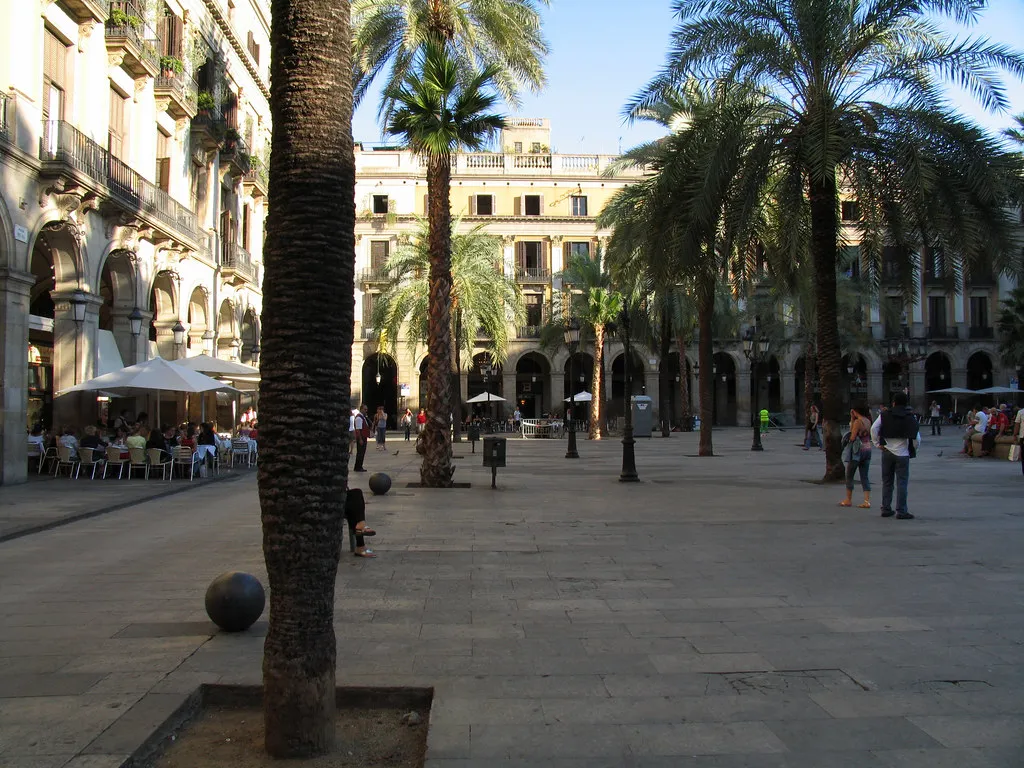
The Gothic Quarter is Barcelona's oldest neighborhood, built on the foundations of the Roman city of Barcino. The streets are narrow, pedestrianized, and spectacular — Roman walls peek out beneath Gothic towers, and medieval plazas like Plaça Reial and Plaça de Sant Felip Neri have a cinematic quality. The Barcelona Cathedral, the Museu d'Història de Barcelona (with preserved underground Roman ruins), and the Pont Gòtic on Carrer del Bisbe are all within a short walk of any hotel in the neighborhood.
The drawback is the crowd density. From April through October the Gothic Quarter is relentlessly busy during daylight hours. Pickpockets are active in the dense pedestrian alleys — keep bags in front, don't use your phone while walking. Bachelorette groups and pub crawls run through every night until 02:00 or 03:00. If you are a light sleeper or staying in summer, ask specifically for a room facing an interior courtyard, not the street. Hotels at the Carrer dels Banys Nous end of the neighborhood are slightly quieter than those on or near La Rambla.
Hotels range widely — €100–€300 per night covers most of the market, with boutique options like Mercer Hotel and Hotel Neri on the pricier end (€300+). Budget travelers can find hostel beds for €30–€60 per night. The Jaume I metro station (L4) and Liceu (L3) both border the neighborhood. For a short trip with maximum sightseeing efficiency and a high tolerance for crowds, the Gothic Quarter works. For anything longer, most visitors find it exhausting by day three.
A Few Quick Things to Know Before You Book
Barcelona is divided into 10 official districts, but for practical trip planning there are four core zones: Ciutat Vella (the Old Town, encompassing the Gothic Quarter, El Born, El Raval, and Barceloneta), Eixample (the 19th-century grid expansion), Gràcia (the former village to the north), and Sants-Montjuïc (home to Montjuïc hill, Sant Antoni, and Poble Sec). All four zones have good metro access. Most first-time visitors only need to venture beyond Eixample and Ciutat Vella for Park Güell, which requires booking timed entry tickets in advance at €10 for the monumental zone.
La Barceloneta deserves a mention as a beach-access base. The neighborhood sits between the Gothic Quarter and Port Olímpic, and it is the closest residential area to the main city beach. The atmosphere is lively but narrow — most accommodation is in small apartment buildings, and the selection is limited compared to Eixample or the Old Town. Hotel Arts (from €350) and the W Barcelona (from €400) are the premium options; the Sofitel Barcelona Skipper (€200–€300) offers a beach-resort feel at slightly lower prices. It works well for visitors whose primary goal is beach time combined with a day or two of sightseeing.
La Rambla itself is worth addressing directly. It is Barcelona's most famous street, but it is not a good base for accommodation. The hotels along La Rambla charge a premium for the address, the street noise runs until 03:00, and pickpocket risk is the highest in the city. One or two blocks off La Rambla — either into the Gothic Quarter or into El Raval — you find better-value hotels that are just as central. The famous La Boqueria market is on La Rambla, but go before 09:00 to beat the crowds; by 11:00 the stalls are primarily performing for tourists rather than selling to locals.
Getting Around Barcelona from Your Base
The metro is the backbone of Barcelona's transport network and operates from 05:00 to midnight Sunday through Thursday, with 24-hour service on Fridays and Saturdays. The night bus (Nitbus) fills the gap on other nights. As noted in the cheatsheet, the T Casual 10-ride card (€13.00) gives the best day-to-day value for visitors. A single ride without a card costs €2.90, so the T Casual pays for itself in five return journeys. The T Familiar (8 rides, transferable within the family group) is useful if you're traveling with children.
Cycling is increasingly practical. Barcelona has over 200 km of dedicated bike lanes, and the city is largely flat. There is no visitor-accessible bike share (Bicing is residents-only), but rental shops are plentiful — expect to pay €10–€15 per day. The beachfront path from Barceloneta to Poblenou is one of the most pleasant cycling routes in the city, and the Eixample superblocks have created protected lanes across the district's grid. If your hotel has secure bike storage, cycling is a genuine alternative to the metro for daytime sightseeing.
Walking remains the best option within neighborhoods. The Gothic Quarter and El Born are almost entirely pedestrianized; a walk from Plaça de Catalunya to Barceloneta beach takes about 25 minutes along La Rambla and through the Old Town. From Sant Antoni to the Gothic Quarter is a 20-minute walk. Taxis and ride-sharing are available and reasonably priced — a cross-city ride rarely exceeds €15. For more detailed transport pass advice, see our guide on getting around the city.
Frequently Asked Questions
Which Barcelona neighborhood is best for first-time visitors?
For first-time visitors, La Dreta de l'Eixample is the strongest base — it puts you within walking distance of Sagrada Família, Casa Batlló, and La Pedrera, with excellent metro access and a mix of upscale and local dining. The Barri Gòtic or El Born work well too if you want to be in the historic center, though both are considerably more crowded.
How many days should I plan to stay in Barcelona?
Most travelers find that 3 to 5 days is an ideal amount of time to experience Barcelona. This allows you to explore key neighborhoods, visit major attractions like Sagrada Familia, and enjoy the local cuisine without feeling rushed. For a more in-depth experience, consider a 3-day itinerary or longer.
Is it better to stay in a hotel or an apartment in Barcelona?
The choice between a hotel and an apartment depends on your travel style. Hotels offer amenities like daily cleaning and concierge services, while apartments provide more space and a kitchen, ideal for longer stays or families. Apartments can offer a more local experience, especially in residential neighborhoods.
Choosing where to stay in Barcelona shapes the entire trip. La Dreta de l'Eixample is the safest all-round pick for first-timers; Gràcia rewards visitors who want local life over convenience; Sant Antoni suits food-focused travelers; El Born balances history and livability; Esquerra offers the best value for returning visitors; and the Barri Gòtic delivers maximum atmosphere at the cost of maximum crowds. Whatever you choose, book early, confirm which side of Eixample your hotel is actually on, and factor in the tourist tax when budgeting.
You might also like


Continue reading
More guides you'll find useful


