21 Best Day Trips from Barcelona (2026 Local Picks & Planning Guide)
Discover the 21 best day trips from Barcelona, hand-picked by a local. Get insider tips, planning advice, and practical details for unforgettable excursions.
On this page
21 Best Day Trips From Barcelona (Picked by a Local! 2026)
Catalonia stretches in every direction from Barcelona and rewards anyone willing to spend a day outside the city. Within two hours you can stand inside a 2,000-year-old Roman amphitheatre, eat lunch above a medieval Jewish quarter, or watch flamingos wade through a UNESCO delta. This guide covers the 21 best day trips from Barcelona, updated for 2026, with concrete transport details, honest crowd warnings, and the practical decisions that actually matter.
Most of these destinations are reachable without a car. Where a car makes a meaningful difference I say so plainly, so you can decide early rather than regret it later. For help balancing city time with excursions, see our guide to top things to do in Barcelona.
Plan with trusted sources: cross-check opening hours and seasonal details with the official Barcelona tourism board, and read more about the city on its Wikipedia entry before you go.
Quick Tips for Barcelona Day Trips
Train is the right default for most trips. Rodalies commuter trains and high-speed AVE/Avant services cover the majority of destinations here, and buying tickets the morning of is fine for most routes. Exceptions: Figueres on a weekend in summer and Montserrat on any weekend — book those the day before or earlier. The T-Casual (10-trip metro card) does not cover Rodalies journeys outside Zone 1, so budget a separate train fare.
A rental car earns its cost when you plan to visit multiple Costa Brava coves, the trio of medieval villages (Besalú, Castellfollit de la Roca, and Rupit), or the Ebro Delta in a single day. Parking in Girona's old town is awkward; for Girona alone, the train is faster and cheaper. Tolls on the AP-7 motorway north toward Girona and Figueres add roughly €10–€18 each way depending on your route, so factor that in.
Crowd management is the detail most articles skip. Montserrat before 10:00 is a different experience from Montserrat at 11:30 — the monastery queue for the Black Madonna roughly triples in the hour after the first tour groups arrive. Sitges is pleasant any weekday; avoid the weekend of its February Carnival unless you came specifically for it. For longer-range planning, check our guide on how many days to spend in Barcelona to decide how many excursions fit your trip.
Montserrat Mountain: Spiritual Retreat and Nature
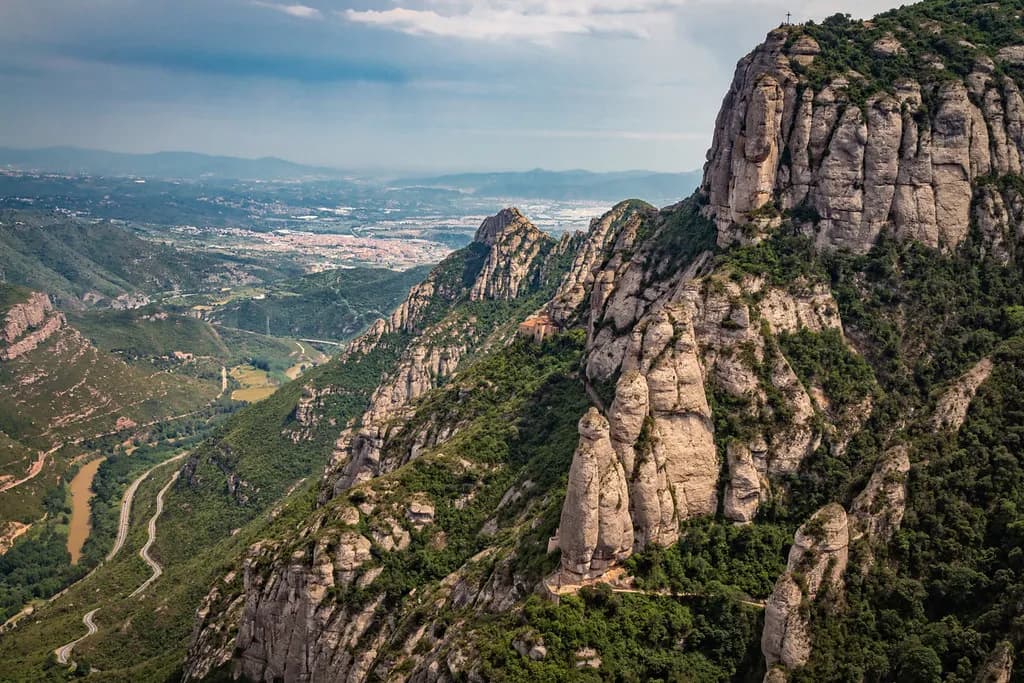
Montserrat is the most iconic day trip from Barcelona and earns that status. A Benedictine monastery clings to the side of a serrated mountain 725 metres above sea level, 60 km northwest of the city. Inside the basilica, pilgrims queue to touch the hand of the Black Madonna, a 12th-century wooden statue. The Escolania boys' choir performs most days at 13:00 — check the monastery calendar before you go, as they do take breaks.
The mountain itself is the underrated half of the trip. From the Sant Joan funicular (ticket ~€8 return on top of the rack railway/cable car fare), a 40-minute walk brings you to the Cross of Sant Miquel with sweeping valley views. The full Sant Jeroni hike (1,236 m, about 1.5 hrs each way from the funicular top station) is one of the best short alpine walks within reach of a major European city. Bring water and snacks — the monastery cafeteria is expensive and unremarkable.
Get there on the R5 Rodalies train from Plaça Espanya. You have two options: alight at Aeri de Montserrat for the cable car (5 min, dramatic), or at Monistrol de Montserrat for the rack railway / Cremallera (23 min, more comfortable). Buy tickets for one or the other at the station — they are not interchangeable. The Trans Montserrat or Tot Montserrat combo tickets include the metro to Plaça Espanya, the round-trip train, and the cable car or rack railway. Budget €25–€35 all in. Allow a full day.
Sitges: Coastal Charm and Beaches
Sitges sits 35 km southwest of Barcelona, accessible in 35–40 minutes on the R2 Sud Rodalies train from Passeig de Gràcia. A single fare is around €4.50. The town packs 17 beaches into a small stretch of coast. The main promenade beaches closest to the old town have restaurants and rentals; if you want quieter water, walk 15 minutes in either direction.
The old town itself is worth an hour of wandering. The white church of Sant Bartomeu i Santa Tecla sits directly above the sea, and the streets behind it hide art galleries, local wine bars, and tapas spots. Sitges is well-known as one of Europe's most welcoming destinations for LGBT+ travelers, with a concentrated strip of bars near Carrer del Peccat and a major Pride event each June.
A lesser-known draw is Casa Bacardí on Plaça de la Vila. Don Facundo Bacardí, founder of the rum brand, was born in Sitges. The museum runs tasting sessions and mixology workshops (€15–€25, book online) — worth doing if you arrive on a warm afternoon and want something more than beach time. Avoid Sitges on the Saturday of the February Carnival unless you're there specifically for the parade; crowds and hotel prices spike sharply that weekend.
Girona: Medieval History and Game of Thrones
Girona is one of the five best-preserved old towns in Spain and the easiest city-break day trip from Barcelona. The AVE or Avant high-speed train from Sants covers the 100 km in 38 minutes; regional trains take about 1h40 and cost less. One-way fares range from €9 to €20 depending on train type and how far in advance you book.
Walk the city walls first. They run almost the full length of the old town and give you an aerial view before descending into the streets. The Jewish Quarter (Call Jueu) is one of the oldest and most intact in Europe — narrow stone passageways lead between houses that have been occupied since the 9th century. The Jewish History Museum on Carrer de la Força costs €4 and is worth the hour. Girona Cathedral, built over a Roman forum and a Moorish mosque, has the widest Gothic nave in the world at 22.98 metres.
Game of Thrones fans will recognise the Steps of Sant Martí as the Braavos scenes from season 6. The tourist office has a free GoT map. Beyond the TV association, Girona's restaurant scene punches well above its size — the city has produced multiple Michelin-starred restaurants. An afternoon spent eating at the covered market (Mercat del Lleó) and walking the Onyar River embankment with its colourful facades is a full day without any forced sightseeing.
Figueres and Cadaqués: Dalí's Surreal World
Figueres is 140 km north of Barcelona, about 55 minutes on the AVE from Sants. The Dalí Theatre-Museum is the reason to come. Salvador Dalí designed the building himself — pink walls, giant eggs on the roof, a ceiling fresco you have to lie on the floor to appreciate — and it houses the most comprehensive collection of his work anywhere. Tickets cost €15 standard, €11 reduced; book online at least a few days ahead in summer, as entry is timed and the popular slots fill up. Dalí is buried in a crypt beneath the stage.
Allow two hours minimum in the museum. A common mistake is booking a late entry time and then missing the last train back. The last AVE from Figueres to Barcelona runs around 21:30, but check current Renfe timetables. Figueres itself is a compact town; beyond the museum, the Rambla and the old market square are pleasant for a coffee, but the museum is the clear headline act.
Combining Figueres with Cadaqués makes for a long but rewarding full day, though it requires a car or coordinated buses. Cadaqués is a whitewashed fishing village 35 km east of Figueres across the Cap de Creus peninsula. The drive takes about 40 minutes over a winding mountain road; buses run 3–4 times daily from Figueres (Teisa company, about 45 min). Cadaqués was Dalí's spiritual home for much of his life — his house in nearby Port Lligat is open as a museum (€14, advance booking essential, small group entry only). The village itself, with its narrow alleys and church above the bay, is one of the most photographed spots in Catalonia.
Costa Brava: Beaches and Charming Towns
The Costa Brava runs northeast from Blanes to the French border, a stretch of rugged cliffs, pine-backed coves, and small fishing towns that define the best of the Catalan coast. It is easier to visit by car, but buses (Moventis Sarfa company) connect Barcelona's Estació del Nord to Tossa de Mar, Palafrugell, and other towns daily.
Tossa de Mar is the most accessible entry point. The medieval Vila Vella fortress sits on the headland above the bay — walk up along the 14th-century walls for views that stretch south toward Barcelona. The beach in front is lively; for something quieter, the coves to the north of the headland are reachable on foot. Bus from Estació del Nord takes about 1h30 and costs around €12 each way.
Further north, Calella de Palafrugell and Pals represent the Costa Brava at its most photogenic. Calella is an old fishing village of white houses and small boat coves — the Port Bo neighbourhood is worth the walk, and the Cap Roig botanical garden nearby has clifftop Mediterranean views. Pals, a few kilometres inland, is a hill village so well-preserved it feels like a film set: stone balconies, cobbled alleys, a round tower, and sunflower fields visible from the walls. Both are car-dependent unless you base yourself in Palafrugell (bus from Barcelona, ~2h) and take local connections.
Tarragona: Roman Ruins and History
Tarragona was the Roman Empire's capital on the Iberian Peninsula — Tarraco — and the archaeological ensemble earned UNESCO World Heritage status in 2000. The amphitheatre is the showpiece: it faces the sea, holds 14,000 spectators in its time, and is one of the best-preserved in the world. Entry is around €4 per site, or a combined Museu Nacional Arqueològic de Tarragona pass covers multiple sites for around €11.
The Passeig Arqueològic is a free promenade that follows the Roman walls around the old town. The Circ Romà (circus, underground galleries open for visits) and the Roman Forum are a 10-minute walk apart in the city centre. After the ruins, the old town's cathedral square and the Rambla Nova are good places to sit and eat. Tarragona's beaches — particularly Platja del Miracle directly below the amphitheatre — are underused by day-trippers who forget the city has a 15 km coastline.
Take the Rodalies R16 or a regional Renfe train from Sants. The journey is around 1 hour, fares from €8–€15 return. Faster intercity trains take 33 minutes but cost more. Tarragona station is about a 20-minute walk or short taxi from the archaeological zone — map it before you go, as the walk through the newer part of the city is uninspiring but manageable.
Penedès Wine Region: Cava and Organic Wines
The Penedès is Spain's cava heartland and sits just 40–60 km west of Barcelona — close enough for a half-day trip. The R4 Rodalies train connects Plaça Catalunya to Sant Sadurní d'Anoia (the cava capital) in about 45 minutes for a few euros return. About 60 cava producers are based in Sant Sadurní, from household names like Freixenet and Codorníu to smaller family bodegas. Most run organised visits with tunnel tours and tastings; Freixenet's visitor centre is the most polished (€15–€20, includes tour and tasting), while smaller estates like Agustí Torelló Mata offer a more personal experience.
What makes cava distinct from Champagne or Prosecco is the grape varieties. The traditional Penedès blend uses Macabeu, Xarel·lo, and Parellada — all indigenous to Catalonia. The second fermentation happens in the bottle rather than in a tank, producing smaller, more persistent bubbles. A good guide at any of the major bodegas will walk you through this in 20 minutes and it makes the tasting genuinely more interesting.
Vilafranca del Penedès, one stop further on the R4, is the regional capital and has its own wine museum (Museu de les Cultures del Vi, VINSEUM) housed in a 10th-century palace. If you want to combine both towns, the train runs frequently. For a guided experience with transport from Barcelona, the Barcelona Turisme wine and cava 4x4 premium experience bundles transport and multiple winery visits into a half-day for around €75–€95.
Besalú, Castellfollit de la Roca, and Rupit: Medieval Villages
These three villages sit in the volcanic Garrotxa region 100–120 km north of Barcelona and are best visited together by car over a full day. Public transport combinations exist but are time-consuming. Besalú anchors the trio: declared a site of national historical importance in 1966, the entire old town is built in honey-coloured sandstone and entered via a fortified 12th-century Romanesque bridge over the Fluvià River. Walk across it slowly — the seven arches and mid-bridge gatehouse are the most photographed image in inland Catalonia. Inside, the medieval Jewish quarter contains a rare intact 12th-century mikveh (ritual bathhouse), one of only three surviving in Spain.
Castellfollit de la Roca is less visited and more dramatic. The village perches on a basalt cliff just 50 metres wide and nearly a kilometre long, dropping 50 metres to the river below. The effect is almost optical-illusion absurd when seen from the road. Walk to the viewpoint at the northern tip of the cliff for the full perspective. It takes under an hour to see everything, making it a natural mid-route stop.
Rupit i Pruit is the furthest and most atmospheric of the three. Built almost entirely from dark basalt stone, it sits 822 metres above sea level surrounded by forest and waterfalls. A wooden suspension bridge crosses the gorge at the village entrance. The handful of restaurants here serve traditional mountain fare — wild mushroom dishes are a local speciality in autumn. The entire circuit (Barcelona → Besalú → Castellfollit → Rupit → Barcelona) is a comfortable full day with an early start.
PortAventura World: Thrills and Family Fun
PortAventura is the largest theme park in Spain and covers three separate parks on the same site near Salou, about 100 km south of Barcelona. PortAventura Park is the main attraction, with six themed zones (from Polynesia to China), multiple record-holding roller coasters, and live shows. Ferrari Land opened in 2017 and hosts the fastest and tallest roller coaster in Europe — Red Force hits 180 km/h in 5 seconds. Caribe Aquatic Park is the water park, open in summer. Combined tickets for two or all three parks are available.
Single-day PortAventura Park tickets range from €40 to €65 depending on season and how far in advance you book online — summer weekends are the most expensive. A useful trick: buy the park ticket bundled with your Rodalies train from Passeig de Gràcia or Estació de França. The return train journey is included in the bundle and the station (named "PortAventura") is directly at the park entrance. Travel time is about 1h30. This beats driving, which costs petrol plus tolls plus parking.
Practical notes for families: the park officially opens at 10:00 and peak queues for headline rides hit 60–90 minutes by noon in July and August. Arrive at opening and hit Dragon Khan and Shambhala first. The park stays open until 22:00 or midnight in high summer, making a full day genuinely full. Check the seasonal calendar on the PortAventura website before booking — the park is closed on select weekdays outside peak season.
Vic: Authentic Catalan Culture
Vic sits 70 km north of Barcelona in the Osona plain, accessible by Rodalies R3 train from Plaça Catalunya in about 1h15 (€6–€10 return). It is the least touristy city within easy reach of Barcelona, which is exactly why it belongs on this list. The Plaça Major is one of the finest porticoed main squares in Catalonia — 14th-century arcades wrap around a market space that has been in continuous use for over a thousand years.
Come on a Tuesday or Saturday for the market. Local farmers sell sausages (Vic is the fuet capital of Catalonia — a thin dry-cured pork sausage eaten cold with bread), cheese, and seasonal produce. The covered daily market (Mercat Municipal) is smaller but worth a look any day of the week. The Episcopal Museum (Museu Episcopal, €8) holds a collection of Romanesque and Gothic art that routinely surprises visitors who expected a minor regional museum — it is genuinely one of the best collections of its kind in Europe.
Calella de Palafrugell: Picturesque Fishing Village
Calella de Palafrugell is one of those Costa Brava villages that still resembles a fishing settlement rather than a resort. The Port Bo neighbourhood — whitewashed houses right at the water's edge, small wooden fishing boats on the beach — is the image most associated with the Costa Brava in travel photography. Small coves separated by low rocky headlands give the bay a series of intimate swimming spots rather than one large beach. Snorkelling is rewarding here; the water is clear and the rocky edges shelter small fish.
The Cap Roig botanical garden, a 10-minute walk north along the coastal path, sits on a clifftop with views that stretch across to the Medes Islands. It hosts a major summer music festival in July and August (Cap Roig Festival), with internationally known acts — tickets sell out early if you want specific performances. From Barcelona, take a bus from Estació del Nord to Palafrugell (about 2h, €17–€22 return), then a local bus or taxi for the final 3 km to Calella.
Delta de l'Ebre: Nature and Birdwatching
The Ebro Delta is a UNESCO Biosphere Reserve 150 km south of Barcelona — the furthest destination on this list. Over 300 of Europe's 500 bird species have been recorded here, including large flocks of flamingos on the Encanyissada and Tancada lagoons. The delta is flat, vast, and crossed by rice paddies that turn pale gold in late summer before the October harvest. It is a genuinely different landscape from anywhere else in Catalonia.
The best way to visit is by car, renting bicycles on arrival from one of several outlets in Deltebre town (€10–€15/day). The delta's roads are flat and quiet and the circular cycling routes through rice fields and along lagoon edges are some of the most peaceful riding in Spain. There is also a boat excursion that tours the river mouth and the barrier spit of Trabucador. The nearby town of Tortosa, a 20-minute drive inland, adds a different layer — its castle and cathedral reflect layers of Muslim, Christian, and Jewish history.
Regional trains connect Barcelona Sants to L'Aldea-Amposta station (about 1h30, from €12 return), though you still need local transport from there to reach the delta's interior. If visiting without a car, joining a guided day tour from Barcelona is the practical option — several run on weekends in spring and autumn, which are the best birdwatching seasons.
Cala Fonda (Waikiki Beach): Secluded Beach Escape
Cala Fonda is a wild beach backed by cliffs about 10 km north of Tarragona city, locally nicknamed Waikiki for its remote, pristine feel. There are no facilities — no bars, no showers, no kiosks. The water is clear and the beach is rarely crowded during weekdays because reaching it requires effort. Bring everything you need.
By car, drive to the village of La Mora (parking on the roadside) and walk the coastal track about 15 minutes to the beach. By public transport: take the Rodalies train to Altafulla–Tamarit station, then walk or take a taxi to La Mora. The combination adds up to 2h from Barcelona each way. Pairing this with a morning in Tarragona (Roman ruins, cathedral, lunch) and an afternoon at Cala Fonda is a rewarding full-day structure — Tarragona is directly on the same rail line.
La Molina and Vall de Núria: Mountain Escapes and Skiing
La Molina is the closest ski resort to Barcelona, 150 km north in the Pyrenees. In winter (roughly December to April), the Skitren package is the most efficient way to go: a single combined ticket covers the return Rodalies R3 train from Plaça Catalunya (2h30), a connecting bus to the slopes, and a full-day ski pass for around €41. No car needed, no pre-planning headaches. Ski and snowboard hire is available at the resort if you don't want to haul gear. In summer, La Molina has hiking trails and mountain biking, though the draw is less compelling than in winter.
Vall de Núria is a different proposition — a glacial valley at 1,967 metres accessible only by the Cremallera rack railway from Ribes de Freser (no road access). The valley holds a sanctuary, a small ski area (11 pistes, more suited to beginners and intermediates), and extraordinary summer hiking among marmots and ibex. The train from Plaça Catalunya to Ribes de Freser takes about 2h on the R3 line; the Cremallera from Ribes to Núria adds another 45 minutes. A combined return ticket runs around €30. A similar Skitren winter package exists for Vall de Núria, bundling train, rack railway, and ski pass. Book both mountain trips well in advance on winter weekends, as the trains fill up.
Sant Pol de Mar: Seaside Serenity
Sant Pol de Mar is the quieter alternative to Sitges — a small coastal town on the Maresme coast, 50 km north of Barcelona, reachable by Rodalies R1 train from Plaça Catalunya in about 1h (€5–€10 return). The train station is literally metres from the beach, making the arrival unusually satisfying. The beach is a clean strip of sand with calm Mediterranean water, less crowded than Barceloneta on any summer day.
The old town sits on a small hill above the beach with narrow streets and viewpoints toward the sea. The chiringuito (beach bar) culture here is local rather than tourist-facing — expect simple seafood, cold beer, and a pace of life several notches slower than the city. Sant Pol suits a half-day trip better than a full day; pair it with nearby Calella de la Costa or Canet de Mar for a Maresme coast circuit if you want to fill a whole day.
Begur: Coastal Beauty and Coves
Begur is a medieval town on a hill in the heart of the Costa Brava, 125 km northeast of Barcelona, crowned by a ruined 11th-century castle. The castle ruins are free to explore and offer a 360-degree view of the coast from the Medes Islands to Cap de Creus — worth the 15-minute climb from the town square. The town itself has a well-preserved old centre with good restaurants and a less-commercial feel than Tossa de Mar.
The coast below Begur has some of the best coves on the entire Costa Brava. Aiguablava (a sheltered turquoise bay with a parador perched above it), Aiguafreda, and Platja Fonda are all within a few kilometres. These beaches get crowded in July and August; arriving before 10:00 gives you an hour of near-solitude even in peak season. Reaching Begur without a car involves a bus from Barcelona to Palafrugell (2h, Moventis Sarfa), then a local bus to Begur — manageable but requires planning around timetables.
Tibidabo: Amusement Park and City Views
Tibidabo is the anomaly on this list — it is technically within the city limits, but it functions as a day out from central Barcelona. The amusement park at the summit of Tibidabo hill is one of the oldest in the world (opened 1901) and mixes vintage rides with modern thrill attractions. Views from the top over Barcelona, the Eixample grid, and the coastline to the horizon are outstanding at any time of day and spectacular at dusk. Entry costs €28–€35 for full access; the Mirador de l'Aviació (viewpoint and a few ride tickets) is a cheaper option for those who mainly want the view.
Getting there from Plaça Catalunya: take the FGC train to Peu del Funicular (line S1 or S2), then the Funicular del Tibidabo up to the park gate. Alternatively, the Tibibus (bus 196) connects Plaça Catalunya directly on days the park is open. The park is closed on many weekdays outside summer — check the calendar on the Tibidabo website before making the journey. The Temple Expiatori del Sagrat Cor, the church above the park, is always accessible and free.
Collserola Natural Park: Hiking and Green Spaces
Collserola is Barcelona's green lung — an 8,000-hectare natural park of Mediterranean oak and pine forest that borders the city to the northwest. It is the easiest nature escape from central Barcelona: the FGC train from Plaça Catalunya reaches the park edge in under 30 minutes (stations: Baixador de Vallvidrera or Peu del Funicular). Entry is free and the park is open year-round.
A well-marked trail network covers the main ridge above the city. The route from Peu del Funicular to the Torre de Collserola (Norman Foster's telecommunications tower, with a paid viewpoint) and then along the ridge to the Tibidabo summit takes about 2.5 hours at a comfortable pace. The tower's viewpoint (€5.50) is open on weekends and gives the clearest aerial perspective of Barcelona's street grid. Spring (March to May) is the best time — wildflowers are out, the heat is manageable, and trails are quiet.
Pals and the Maresme Coast: Local Secrets Worth Knowing
Pals is the medieval village most competitors overlook or lump vaguely into "Costa Brava." It sits on a hill 5 km inland from the coast, once fortified and now a maze of stone alleys, arched doorways, and craft shops. The circular basalt tower at the village's highest point (Torre de les Hores) dates from the 11th century. From the Mirador de Peratallada viewpoint below the town, sunflower fields stretch toward the coast in July. Pals pairs naturally with Calella de Palafrugell — the beach is 20 minutes by car.
Further south, the Maresme coast between Mataró and Sant Pol de Mar is a string of small towns that Barcelona residents use as their local beach escape but that almost no guidebook promotes to visitors. Towns like Arenys de Mar, Sant Pol de Mar, and Canet de Mar all have good beaches, local seafood restaurants with tables on the promenade, and near-zero tourist infrastructure — in the best sense. Every town on this stretch is on the Rodalies R1 line, so you can hop between them in a single day for the price of one zone's train ticket. It is the most practical low-budget beach day from the city.
One thing no competitor mentions: the seasonal mismatch between popular day trips and actual visitor experience. Montserrat, Girona, and Sitges are best in May, early June, or October — shoulder season crowds are a fraction of August and the light is better for photography. If your trip falls in peak summer (mid-July through August), shift priority toward destinations that are hard to reach and therefore naturally self-filtering: Cala Fonda, the Ebro Delta, Besalú mid-week, or Vall de Núria first thing in the morning.
Planning Your Barcelona Day Trip: Transport and Tips
Train is the right choice for Montserrat, Sitges, Girona, Tarragona, Figueres, Sant Pol de Mar, Sant Cugat, and PortAventura. These destinations are all either directly on a Rodalies line or served by AVE/Avant from Sants, and the train often drops you within walking distance of the main sights. Buy Rodalies tickets from machines at any station; high-speed tickets should be booked on the Renfe website or app, especially for Figueres and Girona on weekends.
| Destination | Best Transport | Journey Time | Approx. Return Fare | Best For |
|---|---|---|---|---|
| Montserrat | R5 train + cable car/rack railway | ~1h + ascent | €25–€35 (combo) | Hiking, monastery, views |
| Sitges | R2 Sud Rodalies | 35–40 min | ~€9 | Beaches, old town |
| Girona | AVE/Avant from Sants | 38 min | €18–€40 | Medieval city, food |
| Tarragona | R16 Rodalies / regional train | ~1h | €8–€15 | Roman ruins, beach |
| Figueres | AVE from Sants | ~55 min | €20–€40 | Dalí Museum |
| Penedès (Sant Sadurní) | R4 Rodalies | ~45 min | ~€6 | Cava tastings, wineries |
| PortAventura | Rodalies from Sants (bundled ticket) | ~1h30 | €40–€65 (park incl.) | Theme park, families |
| Costa Brava (Tossa) | Bus from Estació del Nord | ~1h30 | ~€24 | Coves, medieval fort |
| Besalú/Medieval villages | Car | ~1h30 | €15–€25 tolls | Medieval history, scenery |
| Ebro Delta | Train to L'Aldea + local transport/car | ~1h30 + transfer | €12+ train | Birdwatching, cycling |
A rental car makes real sense for Costa Brava cove-hopping, the medieval villages circuit (Besalú–Castellfollit–Rupit), Begur, and the Ebro Delta. Tolls on the AP-7 add up on a round trip — budget €15–€25 and factor in the time saving. Parking in small villages is usually free; parking in Girona's old town is genuinely difficult and unnecessary given the fast train option.
Organised tours handle logistics for complex itineraries: the Dalí triangle (Figueres, Gala-Dalí Castle at Púbol, and Port Lligat house), multi-winery Penedès tours, and Medieval Villages tours are all better with a guide who knows the timetables. Several reputable Barcelona-based operators offer small-group day tours — compare options on the Barcelona Turisme official booking platform. For more general city advice, see our practical travel tips.
Packing basics: carry water for any mountain or beach trip. Sun protection is essential from April through October — UV levels in Catalonia are higher than in northern Europe. Wear shoes you can walk in comfortably for 3–5 hours; sandals are adequate for beach towns but wrong for Montserrat, Rupit, or Girona's cobblestones. Many heritage sites in Catalonia require advance ticket purchase for a specific time slot — check each destination's official website before the day.
FAQs About Day Trips from Barcelona
Frequently Asked Questions
How to get to Montserrat from Barcelona?
You can reach Montserrat by taking the R5 train from Plaça Espanya station to either Aeri de Montserrat (for the cable car) or Monistrol de Montserrat (for the rack railway). Both options offer scenic routes up the mountain. The journey takes about an hour, plus the ascent.
How to get to Sitges from Barcelona?
Sitges is easily accessible by train. Take the Rodalies R2 Sud line from stations like Passeig de Gràcia or Estació de França. The direct train ride typically takes around 40 minutes, making it a very convenient coastal escape from the city.
How to get to Girona from Barcelona?
For the fastest journey to Girona, take a high-speed AVE or Avant train from Barcelona Sants station. This journey can take as little as 38 minutes. Regional trains are also available, taking about 1 hour 30 minutes but costing less.
Is it better to rent a car or use public transport for day trips in Catalonia?
Public transport is excellent for major cities and popular sites like Montserrat or Sitges. However, renting a car offers much more flexibility for exploring rural areas, multiple medieval villages, or secluded Costa Brava coves. Your choice depends on your itinerary and preference for independence versus convenience.
What is Cava and how can I experience it in the Penedès Region?
Cava is Spain's celebrated sparkling wine, primarily produced in the Penedès region. You can experience it by taking a train to Sant Sadurní d'Anoia, the heart of Cava production, and visiting one of the many wineries for a tour and tasting. Many guided tours also depart directly from Barcelona.
Catalonia is one of those regions that genuinely improves with each additional day you give it. The 21 destinations above range from 20-minute train rides to full-day commitments, and none of them require more planning than buying a train ticket in advance. Montserrat and Girona are the two best first-time choices for most visitors; after those, let your interests guide you — coast, Roman history, surrealist art, medieval villages, mountains, or wine.
The practical rule that applies everywhere: go earlier than you think you need to. Crowds at popular sites arrive between 10:00 and 11:00 and thin again after 16:00. An early departure from Barcelona, a relaxed afternoon, and a dinner in the destination town before the return train is consistently a better day than arriving at noon and rushing.
You might also like


Continue reading
More guides you'll find useful