

12 Best Beaches in Barcelona & Nearby (Local's Guide 2026)
Discover the best beaches in Barcelona and hidden gems nearby with our local's guide. Find family-friendly spots, day trip ideas, and practical tips for your perfect beach day.
On this page
12 Best Beaches in Barcelona & Nearby: A Local's Guide
Barcelona's beaches feel like an accident of history — because most of them are. Five of the seven city beaches were built from scratch for the 1992 Olympic Games, transforming what had been an industrial waterfront into the sandy strip millions now visit each summer. That origin story matters when you're planning your beach day: the city beaches are excellent for convenience, but the coastline stretching north and south holds the spots locals actually choose when they have the time. This guide covers both — the urban beaches worth knowing and the hidden gems a short train ride away.
Plan with trusted sources: cross-check opening hours and seasonal details with the official Barcelona tourism board, and read more about the city on its Wikipedia entry before you go.
Best Beaches in Barcelona City (Urban Favorites)
Barcelona's urban beaches run for about 4.5 kilometres along the city's eastern waterfront, all connected by the Passeig Marítim promenade. They're free to access, well-maintained, and lifeguarded from late June through September. The further north you walk from Barceloneta, the fewer tourists you encounter.
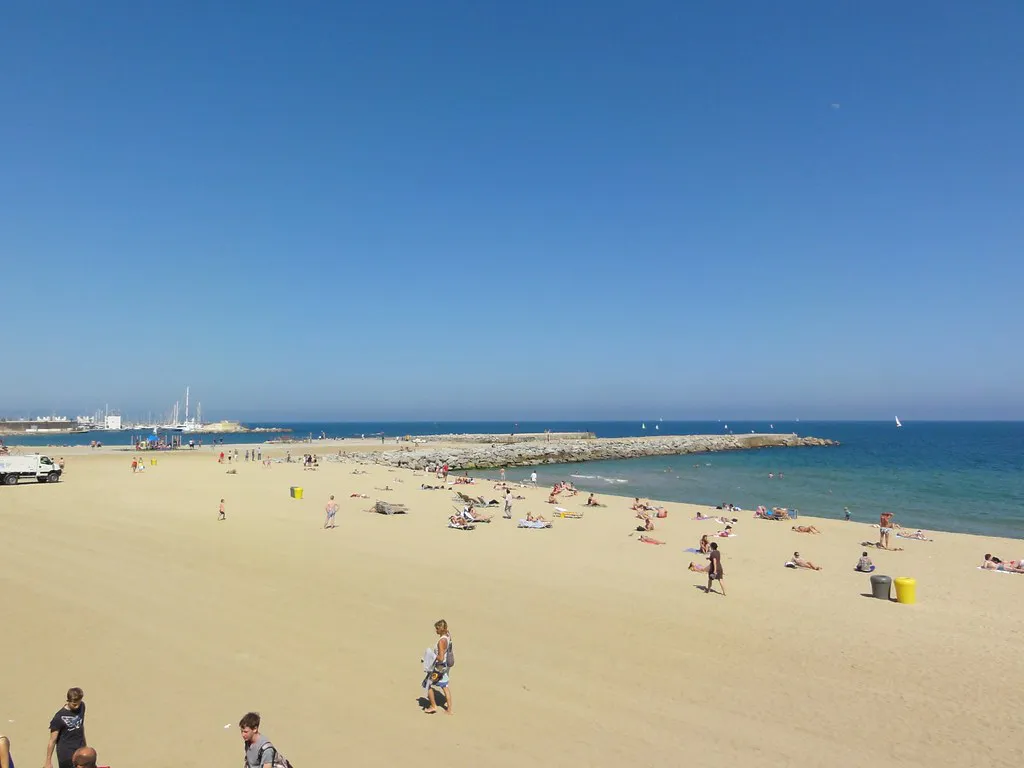
Barceloneta Beach is the most famous stretch, 1.1 km of golden sand backed by the old fishing quarter. Arrive before 09:00 or after 18:00 in July and August — the midday crowds are dense enough to make relaxation difficult. The neighbourhood behind the beach has better, cheaper restaurants than anything on the beachfront itself. Metro L4 to Barceloneta, then a 10-minute walk. Single ticket: €2.40.
Nova Icària Beach sits next to Port Olímpic and has the calmest waters of all the city beaches, making it the most practical choice for families. The beach wheelchair loan service here is one of the best on the Catalan coast — free to borrow, available from the Red Cross post at the beach entrance. Volleyball courts, ping-pong tables, and a clean public changing area round out the amenities. Metro L4 to Ciutadella Vila Olímpica, then a 10-minute walk.
Bogatell Beach draws mainly locals. It's wider than Barceloneta, quieter, and the neighbouring Rambla del Poblenou offers a genuinely good selection of restaurants for a post-beach dinner. Metro L4 to Poblenou, 10 minutes on foot. Mar Bella Beach, a bit further north, is Barcelona's designated clothing-optional beach and has a strong LGBTQ+ following. A water sports centre here rents windsurfers and paddleboards for around €20 per hour. Metro L4 to Poblenou, then a 15-minute walk.
Hidden Gems & Underrated Beaches South of Barcelona
The Garraf coast running south from Barcelona toward Sitges holds some of the region's most underrated beaches. The terrain here shifts from the flat city waterfront to limestone cliffs and horseshoe coves — a completely different feel within 30 minutes by Rodalies train.
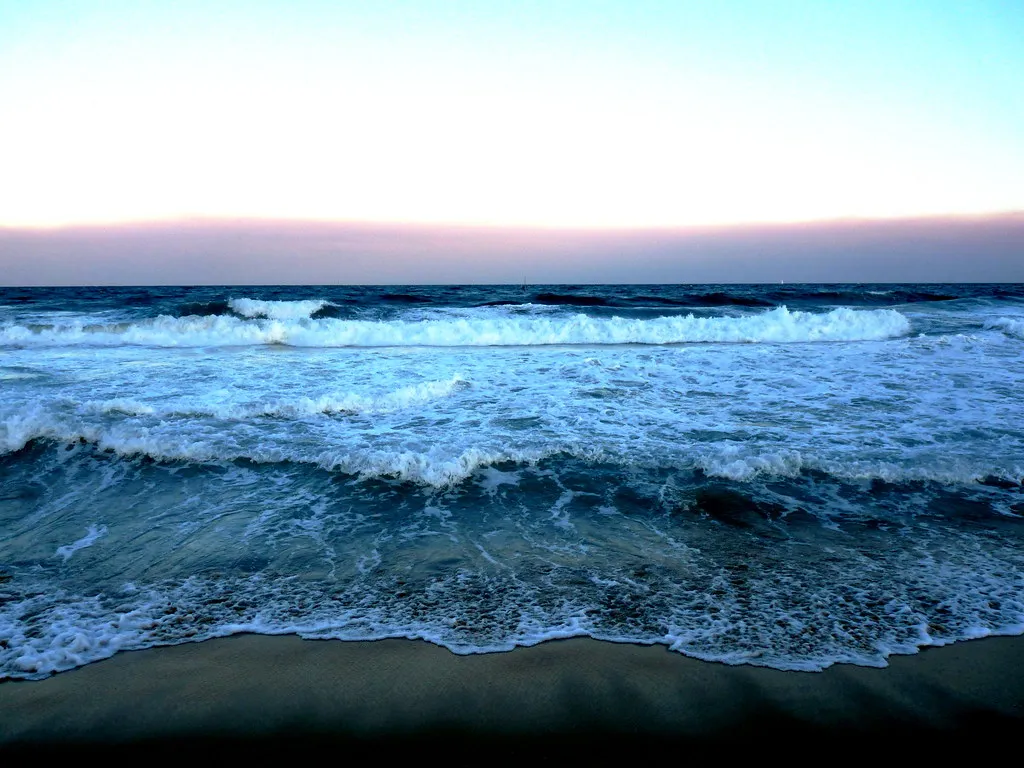
Platja del Garraf is the standout. A small fishing village nestled between cliffs, its beach is only 380 metres wide but protected by a horseshoe bay that keeps the water unusually calm. The row of 1920s white and green wooden beach huts — called casetes — is one of the most photographed scenes on the Catalan coast. Take the R2 Sud train from Sants to Garraf, around 30 minutes; one-way fare is approximately €3.80. Arrive before 10:00 on summer weekends to secure a spot near the huts.
Platja de Castelldefels stretches for 5 kilometres and is the beach Barcelona residents drive to when they want real space. The wide sand, steady onshore winds, and shallow entry make it ideal for kitesurfing and windsurfing lessons. R2 Sud from Sants to Castelldefels, about 25 minutes, €2.90 one-way. Bike rentals are available along the promenade if you want to cover more ground.
For something even more removed, Platja del Remolar lies just past El Prat airport, tucked behind the Delta del Llobregat nature reserve. It's genuinely quiet, often empty midweek, and popular with birdwatchers. There are no lifeguards and no facilities, so it rewards self-sufficient visitors who want seclusion over comfort.
Tranquil Shores & Local Favorites North of Barcelona
The Maresme coast running north from Barcelona is where residents go when they want a proper beach day without the trip to Sitges. These are working coastal towns with real fishing ports, and the beaches are wider and quieter than anything in the city.
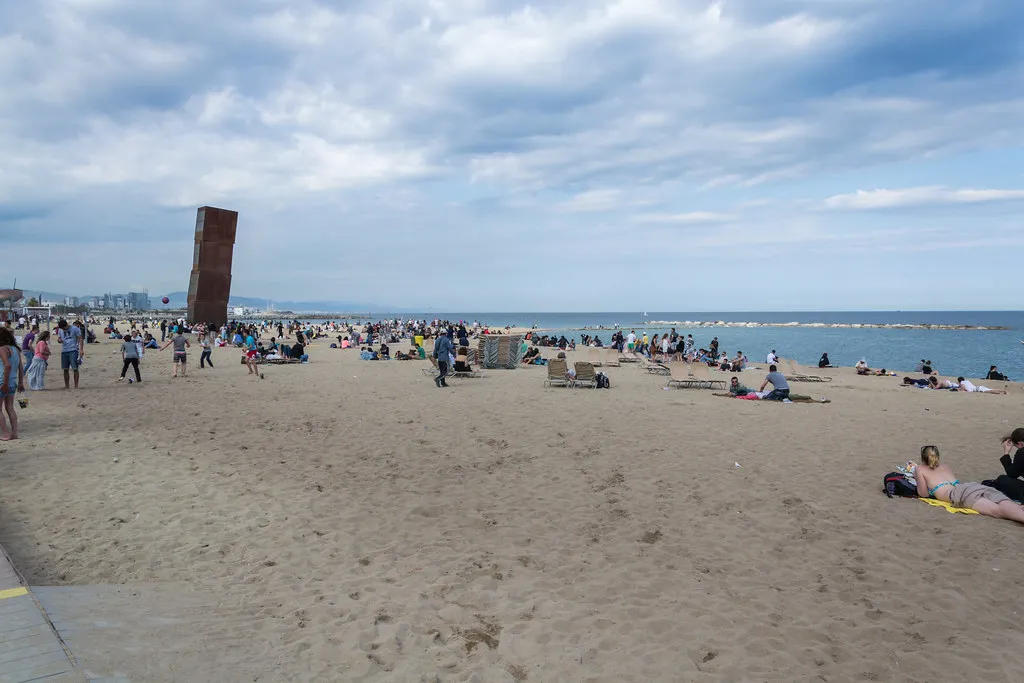
Platja d'Ocata in El Masnou is the most popular local escape: a 2.5 km expanse of clean, wide sand that rarely feels crowded even on summer Saturdays. The R1 train from Plaça de Catalunya reaches Ocata station in about 20 minutes; one-way fare is €2.40. Wooden walkways and adapted facilities make it one of the most accessible beaches on this stretch of coast. The chiringuitos here serve fresh seafood at prices noticeably lower than the city.
Platja dels Pescadors in Badalona is just north of Barcelona and reachable by Metro L2 to Badalona Pompeu Fabra. The beach itself is long and uncrowded, but the reason to come here is the Pont del Petroli — a 250-metre industrial pier converted into a public walkway that stretches out into the Mediterranean. The sunset view back toward Barcelona from the end of the pier is worth the trip alone.
Caldetes, formally Caldes d'Estrac, sits 45 minutes north on the R1 train (€4.10 one-way). This former thermal spa town, once the summer retreat of Barcelona's modernista artists and architects, has an 800-metre beach backed by elegant 19th-century villas. The beach stays surprisingly uncrowded even in August because few tourists look this far up the Maresme coast. The historic thermal baths behind the beach still operate and are worth a visit.
Top Beach Towns & Day Trips from Barcelona
The beaches within Barcelona's immediate orbit are just the entry point. A 40-minute train ride opens up Sitges; go another 45 minutes and you're on the Costa Brava, where the coastline shifts to dramatic cliffs, medieval villages, and turquoise coves that look nothing like the urban beaches back home.
Sitges has 17 beaches spread across 4 kilometres of coastline. Platja de Sant Sebastià, in front of the old town, is the liveliest. The secret calas south of Sitges — including Cala de l'Home Mort — are accessible by coastal path from the southern end of town and tend to attract a clothing-optional, LGBTQ+-friendly crowd. The R2 Sud train from Passeig de Gràcia takes about 40 minutes; fare is €4.60 one-way at the station. The Sitges Film Festival in October is an excellent excuse to combine a beach visit with one of Catalonia's best cultural events.
Tossa de Mar on the Costa Brava is the most photogenic day trip. The medieval walled town, Vila Vella, rises directly behind Platja Gran's sand — you swim with a 12th-century castle as your backdrop. Quieter coves like Cala Pola are a short walk from the main beach. The direct Sarfa bus from Barcelona Nord station takes about 1 hour 30 minutes and costs around €15–18 one-way. If you go by car along the GI-682 coastal road, stop at the mirador above town for a view that will reorganise your priorities for the day.
Tarragona gives you Roman history alongside the beach. The Platja del Miracle sits directly below the city's 2nd-century amphitheatre, making it the only beach in Europe where you can watch waves break within sight of a UNESCO World Heritage site. The R15 train from Sants runs to Tarragona in about 1 hour 10 minutes. Further south still, Platja de Sant Salvador near El Vendrell is wide, Blue Flag-certified, and noticeably calmer than anything closer to the city.
Best Beaches for Families in Barcelona
The key variables for families are water calmness, walking distance from transport, and availability of shade and toilets. Most of Barcelona's urban beaches tick these boxes adequately, but two stand out. Nova Icària is the consistent top pick: calm water, free beach wheelchair loan, volleyball, ping-pong, and public changing facilities all in one compact stretch next to Port Olímpic. It's also the closest calm-water beach to the city centre, reachable without a long walk from the metro.
Outside the city, Castelldefels is the beach Barcelona families drive to. The 5 km stretch gives children space to run without feeling cramped against neighbouring towels. The shallow gradient keeps depth manageable for younger swimmers well into the water. Watersport rental outfits on the beach offer introductory kitesurfing and paddleboard sessions for older children. The R2 Sud train means you don't need a car — bring a folding trolley for gear and the 25-minute ride is straightforward.
Ocata is worth the 20-minute train ride for families who want width and calm. The beach is broad enough that even a busy summer Saturday leaves room around your towel, and the wooden walkways mean prams and beach wheelchairs can reach the waterline. The handful of chiringuitos nearby offer full meals, which removes the need to pack everything from home. For the complete Barcelona family experience, pair a morning at Nova Icaria with the afternoon in the nearby Ciutadella Park.
The Beach Calendar Locals Actually Use
The official Barcelona beach season runs from late April through mid-October. Lifeguards are posted from roughly late June through early September; outside those dates the beaches are open but unguarded. The city municipality typically announces the start date each spring — in 2026 the season opened on the Saturday of the second week of April, as it has in recent years.
June is the best month most visitors overlook. Water temperature reaches 22–23°C by mid-June, the crowds are a fraction of July's, and the city's Sant Joan bonfire festival on the night of 23–24 June turns the entire beach into a firelit celebration — one of the most spectacular free events in Barcelona. September is the second sleeper window: water stays warm from summer heat, school holidays have ended across Europe, and prices for everything from parking to paella drop noticeably.
July and August are peak season for good reason — reliably hot, long days, full facilities — but they come with real costs. Barceloneta can reach 95% capacity by 11:00 on a weekend, at which point the city activates beach capacity alerts on its app. If you arrive at the city beaches after 10:00 in high summer and find them at capacity, the fastest relief is the Rodalies train north to Ocata or south to Castelldefels, both reachable within 30 minutes. For more context on timing your whole visit, see our guide on the the best time to visit.
How to Choose Your Perfect Barcelona Beach
The honest answer is that your choice depends on whether you have 2 hours or a full day, and whether you're willing to take a train. If you have 2 hours and are already near the city centre, Nova Icaria or Bogatell give you the best balance of calm water and fewer tourists without any planning. If you have a full day and don't mind a 25–45 minute Rodalies journey, Castelldefels or Ocata will feel significantly more relaxed than anything inside the city limits.
For hidden coves and dramatic scenery, the Costa Brava near Tossa de Mar is worth the 90-minute commitment — but treat it as a full-day excursion, not a casual afternoon. For a beach town atmosphere with restaurants, nightlife, and history combined, Sitges has no equal within the region. The R2 Sud train makes it easy and cheap regardless of the season.
Families with young children should default to Nova Icaria or Castelldefels. Solo travellers or couples wanting a social scene should go to Barceloneta early or Sitges any time. Anyone seeking genuine solitude should pick Platja del Remolar or the calas south of Sitges, pack food and water, and accept that facilities will be minimal. For a complete view of how to allocate your time in the city around beach visits, our guide on how many days to spend in Barcelona covers the logistics in detail.
Getting to the Beaches: Transport Options
Barcelona's city beaches (Barceloneta through Mar Bella) are served directly by Metro L4. A single metro ticket costs €2.40 in 2026; the T-Casual 10-trip card is €12.15 and covers the metro, bus, and tram within the city zone. The tram line T4 runs along the beachfront promenade and connects to the metro at Ciutadella, which is useful if you're moving between city beaches.
For beaches south of the city, the Rodalies R2 Sud line from Barcelona Sants is the main artery. Castelldefels is 25 minutes (€2.90 one-way), Garraf is 30 minutes (€3.80), Sitges is about 35 minutes (€4.60 at the station). For the Maresme coast north of Barcelona, the R1 line from Plaça de Catalunya serves Badalona (€2.40), Ocata (€2.40), Caldetes (€4.10), and Sant Pol de Mar (€5.25). Trains run every 20–30 minutes on most lines throughout the day.
| Beach / Destination | Train Line | From | Journey Time | One-Way Fare (2026) |
|---|---|---|---|---|
| Barceloneta / Nova Icária | Metro L4 | City centre | 10 min walk from metro | €2.40 |
| Badalona / Pescadors | Metro L2 | City centre | ~20 min | €2.40 |
| Ocata (El Masnou) | R1 | Plaça de Catalunya | ~20 min | €2.40 |
| Castelldefels | R2 Sud | Barcelona Sants | ~25 min | €2.90 |
| Platja del Garraf | R2 Sud | Barcelona Sants | ~30 min | €3.80 |
| Sitges | R2 Sud | Passeig de Gràcia | ~40 min | €4.60 |
| Caldetes | R1 | Plaça de Catalunya | ~45 min | €4.10 |
| Tossa de Mar | Sarfa bus | Barcelona Nord | ~90 min | €15–18 |
Costa Brava destinations like Tossa de Mar are not directly served by train. The Sarfa bus company runs coaches from Barcelona Nord bus station; tickets for Tossa de Mar cost around €15–18 one-way. Renting a car gives you access to the smaller coves between towns, particularly on the GI-682 coastal road, but parking at popular spots like Cala Aiguablava in Begur fills by 09:30 in July. For more detail on navigating the city's transport network, see our getting around Barcelona guide.
Essential Packing for a Barcelona Beach Day
Sunscreen with SPF 50 is non-negotiable. The Mediterranean sun reflects off both water and sand, and the UV index in July and August regularly hits 9–10 (very high). A wide-brimmed hat and UV-rated sunglasses are standard among people who spend regular time on these beaches. Reapply sunscreen every two hours in full sun — the shift from 10:00 to 14:00 is when most visitors underestimate exposure.
For city beaches, a lightweight beach bag, towel, and water bottle are sufficient — facilities are comprehensive. For day trips to less developed spots like Platja del Remolar or the calas south of Sitges, add food and water for the day, sturdy sandals for rocky access paths, and snorkelling gear. The water clarity at Garraf and the calas near Tossa de Mar makes snorkelling genuinely rewarding. A portable charger is useful if you're navigating via phone, particularly on the Costa Brava where signal drops in coves.
FAQs About Barcelona Beaches
Common questions covered in detail in the FAQ section below, including the best hidden beaches, family recommendations, facilities, and the beach calendar.
Frequently Asked Questions
What are the best hidden beaches near Barcelona?
For truly hidden gems, head south to Platja del Garraf with its charming huts or north to Platja d'Ocata for a local escape. These offer more tranquility than city beaches, though they require a short train ride.
Which Barcelona beach is best for families?
Nova Icària is consistently rated as the best family-friendly beach in Barcelona. It features calm waters, playgrounds, and essential facilities, making it safe and enjoyable for children of all ages.
Are Barcelona beaches worth visiting?
Absolutely, Barcelona's beaches are definitely worth visiting, offering a fantastic urban escape and easy access to the Mediterranean. They provide a refreshing contrast to the city's cultural attractions, perfect for relaxation.
How much time should you plan for a Barcelona beach day?
For city beaches, a half-day (3-4 hours) is usually sufficient to enjoy a swim and relax. For day trips to beaches like Sitges or those on the Costa Brava, plan a full day (6-8 hours) to allow for travel and exploration.
Are there nudist beaches near Barcelona?
Yes, Mar Bella Beach within Barcelona city limits is the designated nudist beach, though clothing is optional. Further afield, some more secluded coves on the Costa Brava may also have areas where nudism is practiced.
What facilities are available at Barcelona's city beaches?
Barcelona's urban beaches are well-equipped with public restrooms, showers, lifeguard services, and often playgrounds. You'll also find chiringuitos (beach bars) offering food and drinks, plus rental services for sun loungers and parasols.
Barcelona's coastline runs from man-made Olympic beaches in the city centre to medieval castle coves 100 kilometres up the Costa Brava — a range that rewards visitors who look beyond Barceloneta. The city beaches are excellent for a morning swim before sightseeing. Castelldefels and Ocata are where you go when you want a full beach day with room to breathe. And Sitges, Tossa de Mar, or the quiet calas south of Garraf are where you go when you want to understand why people move to Catalonia and don't leave. Use the Rodalies train; most of these beaches cost less than €5 to reach from the city centre.
You might also like


Continue reading
More guides you'll find useful


