

11 Best Day Trips from Madrid: Toledo, Segovia & More (2026)
Discover the top 11 day trips from Madrid, including Toledo, Segovia, and Ávila. Get practical tips on transport, must-see attractions, and how to plan your perfect escape.
On this page
11 Best Day Trips from Madrid: Your Ultimate Guide (2026)
Madrid sits almost exactly at the geographical centre of Spain, which means that within 30 minutes to three hours by train, you can reach some of the country's most extraordinary cities. Five UNESCO World Heritage Sites, a medieval fortress city, Cervantes' birthplace, La Mancha windmills, and hanging houses over a gorge — all reachable in a day. This guide covers every destination worth your time, with transport options, costs, and the specific sights that make each trip worth the effort.
Plan with trusted sources: cross-check opening hours and seasonal details with the official Madrid tourism site, and read more about the city on its Wikipedia entry before you go.
Day Trip to Toledo from Madrid
Toledo is the most visited day trip from Madrid for good reason. A UNESCO World Heritage Site since 1986, its medieval old town preserves layers of Roman, Muslim, Jewish, and Christian history in a remarkably compact area. The city was Spain's capital until the mid-16th century, and that importance shows in the scale of its monuments. Arrive early — by 09:00 if possible — before tour groups take over the narrow streets.
 Toledo from Madrid in Madrid, Spain" loading="lazy" width="1200" height="800" />
The Toledo Cathedral, begun in 1226 and completed over three centuries, is one of the finest Gothic buildings in Spain. Inside, the Transparente — a baroque altarpiece with an opening cut into the ceiling to flood it with natural light — stops most visitors in their tracks. The Alcázar de Toledo, a fortress rebuilt multiple times since Roman days, houses a military museum with exhibits on the Spanish Civil War. Buy cathedral tickets online in advance (€10 in 2026) to skip the entrance queue.
Toledo is also the birthplace of Spain's famous marzipan. You can buy it at shops throughout the old town, but the best version comes directly from convents — ring the bell at Monasterio de San Clemente on Calle San Clemente and buy from the nuns through a revolving wooden hatch. It costs a couple of euros and tastes far better than the packaged versions.
Getting there: High-speed AVE train from Madrid Atocha to Toledo takes 33 minutes and costs around €13 each way (book Renfe in advance for the best price). From Toledo station, take bus 5, 61, or 62 (€1.40) to the historic centre — the uphill walk from the station is steep and takes 25 minutes in full sun. Budget travellers can take an Alsa bus from Plaza Elíptica for around €5 each way, but the journey takes 75 minutes.
Practical tip: Arrive at Toledo station, take a taxi (€6–8) directly to the Mirador del Valle viewpoint on the south bank of the Tagus, get the panoramic photo of the whole city before crowds arrive, then cross back into the old town via the Puente de Alcántara bridge and work your way downhill through the monuments. This approach is far easier on the legs than starting at the bottom of the hill and cuts 20 minutes of unnecessary backtracking that catches most first-timers off guard.
Day Trip to Segovia from Madrid
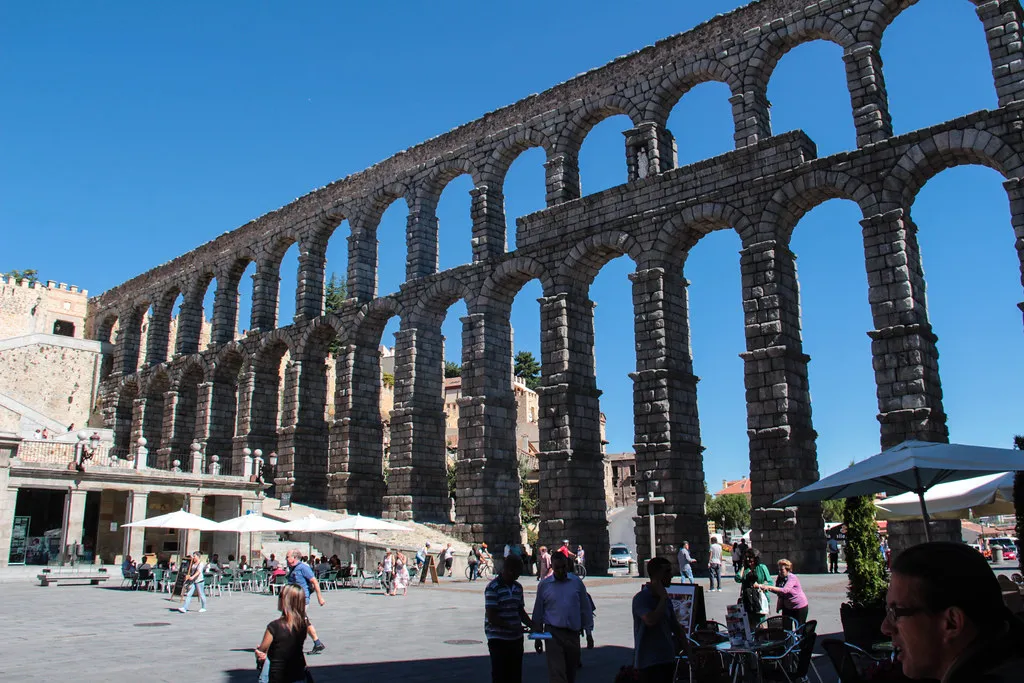
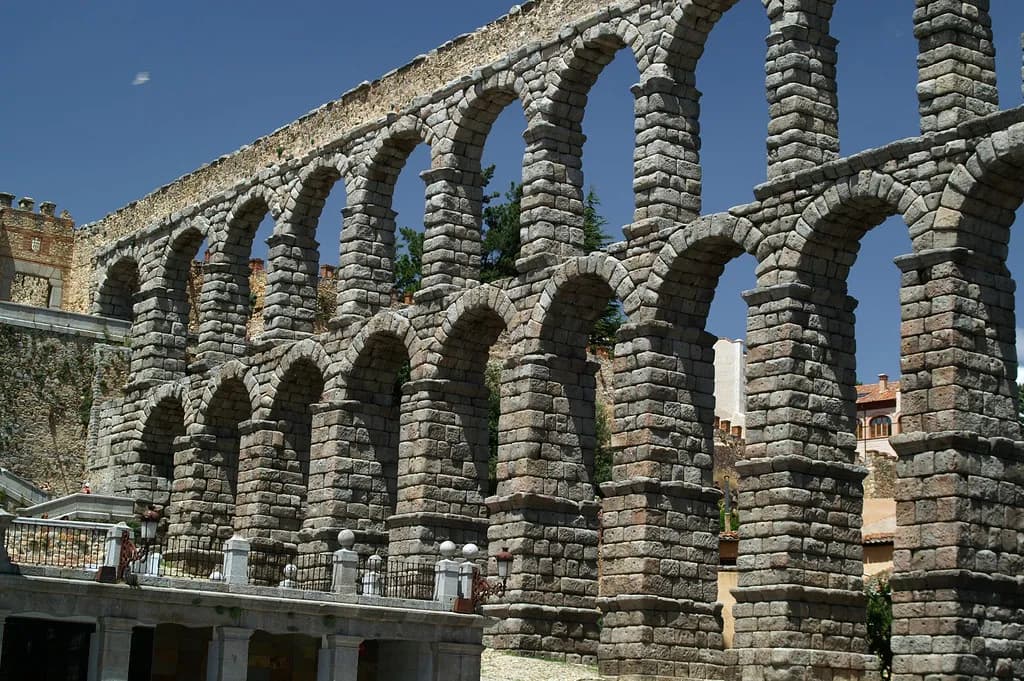
Segovia is the easiest day trip from Madrid by train. The city's Roman Aqueduct stands at the edge of the old town in perfect preservation — built around the 1st century AD, entirely without mortar, using some 20,000 granite blocks — and you can walk right up to it for free. It was still carrying water into the 20th century, which says everything about Roman engineering. Segovia is also a UNESCO World Heritage Site.
The Alcázar de Segovia is one of the most recognisable castles in Europe: a ship-shaped fortress perched on a rocky spur above two rivers, with towers that were said to inspire the design of Cinderella's Castle at Disneyland. Entry costs €9 (2026) or €11 including the tower climb. The views from the top tower over the Castilian plateau are genuinely spectacular. The Cathedral, completed in 1577 and one of the last Gothic cathedrals built in Spain, sits in the Plaza Mayor a short walk from the Alcázar.
Segovia is famous for its roasted suckling pig, cochinillo asado. The piglet is so young and tender that waiters ceremonially slice it with a china plate rather than a knife. Mesón de Cándido on Plaza del Azoguejo, directly beneath the Aqueduct, is the most famous restaurant serving it; a ración costs around €28–35. For a slightly cheaper and less touristy option, try Mesón José María on Calle Cronista Lecea, a few streets away from the Aqueduct, where prices run about €8 lower.
Getting there: AVE high-speed train from Madrid Chamartín or Príncipe Pío takes just 28 minutes and costs around €14 each way. Note that Segovia's high-speed station (Segovia-Guiomar) is about 6km outside the old town — take the connecting bus from the station forecourt (€1.50, runs frequently). An Avanzabus from Moncloa interchange takes 75 minutes and costs around €8 return, dropping you closer to the city centre.
Day Trip to Ávila from Madrid
Ávila is Spain's best-preserved medieval walled city, and the walls themselves — 2.5 kilometres of granite ramparts with 88 towers and 9 gates — are the main reason to visit. They date to the 11th century, built using stones recycled from earlier Roman and Visigothic structures. You can walk the upper circuit along the top of the walls (€5 in 2026) for sweeping views over the Castilian plain. The city is another UNESCO World Heritage Site.
The Cathedral is remarkable because it is physically built into the city wall — its apse doubles as one of the defensive towers. Inside, the alternating dark and light stone striping gives it a dramatically different feel to other Spanish cathedrals. Ávila was also the birthplace of Saint Teresa of Ávila in 1515, and her birth house, convento, and a museum dedicated to her life are all open to visitors. A less-known treat is Yemas de Santa Teresa, small round sweets made from egg yolks, sugar, and cinnamon — they sell for a couple of euros a box at confectionery shops near the cathedral and make an easy souvenir.
Getting there: Train from Madrid Chamartín takes around 90 minutes and costs approximately €11–14 each way. Direct buses from Madrid's Estación Sur take about 90 minutes and cost around €8 each way. Ávila is manageable in half a day, so it pairs well with Salamanca for ambitious travellers willing to take the connecting regional train (50 minutes between the two cities).
Day Trip to San Lorenzo de El Escorial from Madrid
El Escorial is only 50 kilometres northwest of Madrid and makes one of the most straightforward half-day trips from the capital. The town exists almost entirely because of the Monastery of El Escorial, a vast UNESCO-listed complex commissioned by Philip II in 1563. It served simultaneously as a royal palace, monastery, basilica, mausoleum, library, and art collection — an ambition that took 21 years to build.
The monastery's exterior is deliberately austere, with 2,600 windows and 1,200 doors punctuating grey granite walls. Inside, the Real Biblioteca (Royal Library) has a fresco-covered ceiling and over 40,000 books including illuminated manuscripts. The Panteón de los Reyes (Royal Pantheon) sits beneath the high altar and holds 26 gold-and-marble sarcophagi containing every Spanish monarch from Charles I onwards. Entry to the complex costs €13 (2026), reduced to €6 on Wednesdays for EU citizens.
Getting there: Bus 664 from Madrid's Moncloa interchange (metro line 3 and 6) runs every 15–30 minutes and drops you steps from the monastery entrance. Journey time is around 55 minutes. The cost is around €4.35 each way. On weekends, the vintage Tren de Felipe II tourist train departs from Príncipe Pío station in Madrid — a slower but charming option for families.
Day Trip to Aranjuez from Madrid
Aranjuez sits at the confluence of the Tagus and Jarama rivers, and Spanish royalty spent every spring here for centuries. The Royal Palace of Aranjuez and its gardens are a UNESCO World Heritage Site, modelled on the Palace of Versailles in France. The palace interior is opulent: the Porcelain Room is tiled floor-to-ceiling with Chinese-style Royal Alcora ceramics, and the Smoking Room is a near-copy of the Alhambra's Hall of the Two Sisters in Granada.
The gardens are the real draw for many visitors. Jardín del Príncipe, stretching along the Tagus, contains Chinese and botanical sections and the Casa del Labrador (a miniature royal retreat requiring a separate ticket). Jardín de la Isla across the river is a formal French garden with fountains depicting scenes from Greek mythology. Aranjuez is at its best from March through June when the gardens are in full bloom and temperatures are mild.
Getting there: Cercanías C-3 commuter train from Madrid Atocha runs every 30 minutes, takes 44 minutes, and costs around €3.70 each way. The Royal Palace is a pleasant 10-minute walk from the station. Aranjuez is one of the most affordable day trips from Madrid — no need for a taxi or additional bus once you arrive.
Day Trip to Alcalá de Henares from Madrid
Alcalá de Henares is the birthplace of Miguel de Cervantes, author of Don Quixote. Its historic university town centre — a UNESCO World Heritage Site — preserves the Universidad de Alcalá founded in 1499, with its remarkable Plateresque façade and the Paraninfo (great hall) where the annual Cervantes Prize for Spanish-language literature is awarded. It is one of the closest and cheapest day trips from Madrid, taking under 40 minutes on the commuter train.
Beyond the university, Alcalá's old town is a walkable medieval grid. The birthplace of Cervantes on Calle Mayor is now a museum (€6 in 2026). The 15th-century Catedral Magistral and the archbishop's palace are both worth a quick visit, and the medieval columns lining the Calle Mayor arcade make for easy, shaded wandering even in summer heat. White storks nest in the city's towers from March through August — around 90 nesting pairs make their home here each year, giving Alcalá an unexpectedly wildlife-rich atmosphere for an urban day trip.
Getting there: Cercanías C-2, C-4, or C-7 from Madrid Atocha or Sol takes 35–45 minutes and costs around €4 return — the cheapest day trip on this list. Trains run every 15 minutes during peak hours. There is no need to book in advance; just buy at the station barriers.
Day Trip to Salamanca from Madrid
Salamanca is the most visually stunning of all the cities on this list, built almost entirely from warm golden sandstone that glows amber in afternoon light. The Plaza Mayor is widely considered the most beautiful main square in Spain, ringed by baroque arcades and home to outdoor cafés that fill up all year. The University of Salamanca, founded in 1218, is one of the oldest in Europe and still a functioning academic institution.
The Old and New Cathedrals stand side by side — you can move between them through an internal door. The Old Cathedral (12th century) contains a stunning Byzantine dome and a 53-panel altarpiece. The Convento de San Esteban has an extraordinary Plateresque facade that took 16 years to carve. Look for the frog hidden on the façade of the university building — finding it is said to bring good luck in exams, and students have a ritual of pointing it out to visitors.
Salamanca is the furthest destination on this list, so it makes for a long day trip. Leaving Madrid by 07:30 and returning after 20:00 gives a comfortable 8–9 hours in the city. The evening atmosphere is particularly good if your schedule allows — the illuminated Plaza Mayor and the bars on Calle Van Dyck serving tapas make a compelling reason to stay for dinner before catching the last train back.
Getting there: Train from Madrid Chamartín runs in around 1 hour 40 minutes and costs approximately €17–22 each way on an ALVIA service (book Renfe in advance). By car the journey takes 1 hour 45 minutes via the A-50. Regional buses from Madrid's Estación Sur take about 2 hours 30 minutes and cost around €12–15 each way.
Day Trip to Cuenca from Madrid
Cuenca is one of the most visually dramatic cities in Spain. Its old town sits on a narrow ridge between two gorges — the Huécar and the Júcar — with medieval houses built right to the cliff edge, some with wooden balconies projecting out over a 100-metre drop. The Casas Colgadas (Hanging Houses), which now contain a museum of Spanish abstract art, are the city's most photographed image. Cuenca is a UNESCO World Heritage Site.
The Gothic Cathedral, the first built in the Iberian Peninsula in that style, has a striking façade that mixes medieval and early-20th-century restoration. Crossing the iron footbridge (Puente de San Pablo) over the Huécar gorge to get a view back toward the Hanging Houses is a highlight many visitors miss by not venturing far enough from the town centre. Note that many shops and smaller attractions close for siesta between 14:00 and 16:00, so plan lunch into those hours to avoid frustration.
Getting there: High-speed AVE from Madrid Atocha to Cuenca takes around 55 minutes and costs approximately €12–17 each way (book Renfe early for the cheapest fares). The high-speed station (Cuenca Fernando Zóbel) is 5km from the old town — take a taxi (€12) or local bus (€1.25) from the station. The journey is long enough to justify an early start; take the 08:00 train to maximise your time.
Day Trip to Chinchón from Madrid
Chinchón is the most underrated day trip on this list. It is a small Castilian town 45 kilometres southeast of Madrid, best known for its perfectly elliptical Plaza Mayor — a 16th-century square ringed by wooden-balconied buildings that doubles as a bullring for its summer festivals. The town moves at a sleepy pace that feels genuinely different from the tourist-heavy UNESCO cities, and it is easy to spend a pleasant morning wandering its lanes, visiting the 15th-century castle, and eating well.
Chinchón produces its own anís liqueur, and you will find bottles on sale in every shop and restaurant. The local cuisine is traditionally Castilian — roast lamb, garlic soup, and freshly made rosquillas (ring doughnuts). The garlic festival in September draws crowds from Madrid, but the town is calm and charming on any regular weekend. An afternoon here followed by an early dinner before the bus back makes a particularly relaxing outing.
Getting there: La Veloz buses run from Madrid's Conde de Casal interchange (metro line 6) roughly every hour during weekdays and less frequently on weekends. The journey takes around 45 minutes and costs approximately €3 each way. There is no direct train to Chinchón.
Day Trip to Consuegra from Madrid
Consuegra is the windmill village of La Mancha, the landscape that inspired Cervantes when he wrote Don Quixote. Twelve restored 16th-century windmills stand along a ridge beside a medieval castle, and the combination of white cylinders, rolling plains, and distant mountains is genuinely photogenic. In October, the surrounding fields turn purple when the saffron crocuses bloom — the same saffron that ends up in paella across Spain. A saffron festival is held each October, drawing visitors who come to see the harvest.
The windmills themselves can be entered and some contain small exhibitions. The castle (Castillo de la Muela) at the end of the ridge is free to walk around and gives the best overview of the whole site. Consuegra is often combined with Toledo on the same day since Toledo is only 60 kilometres away and both are roughly on the same route south of Madrid.
Getting there: There is no train to Consuegra. The Samar bus company runs services from Madrid's Méndez Álvaro bus station; journey time is around 2 hours 30 minutes and costs approximately €10–12 each way. By car from Madrid, the A-4 motorway takes you to Consuegra in about 1 hour 30 minutes, making a self-drive day trip the most practical option.
Day Trip to La Granja de San Ildefonso from Madrid
La Granja de San Ildefonso sits in the foothills of the Sierra de Guadarrama, 11 kilometres from Segovia and easily combined with it on the same day. The royal palace here was built by Philip V in the early 18th century as a Spanish answer to Versailles, and its French baroque gardens are arguably the finest in Spain. The gardens contain 26 monumental fountains depicting mythological scenes — on days when they are turned on (Wednesday, Saturday, and Sunday afternoons in summer, and festival dates), jets of water shoot up to 40 metres high.
The palace interior has sumptuous tapestry collections and state apartments, but most visitors come primarily for the garden spectacle. Entry to the palace and gardens together costs €7 (2026). The town itself has a working glass factory (Real Fábrica de Cristales) that has been producing fine glass since 1727 and offers guided visits and a museum.
Getting there: La Granja does not have a direct train connection from Madrid. The most practical approach is to take the AVE to Segovia (28 minutes) and then a local bus from Segovia's bus station on Paseo Ezequiel González (around 15 minutes, €2). Alternatively, the Avanzabus service from Madrid's Moncloa interchange runs via Segovia and stops in La Granja; the full journey takes about 90 minutes.
Planning Your Madrid Day Trips: Essential Tips
Book train tickets on Renfe's website as soon as your dates are fixed. For AVE services to Toledo, Segovia, or Cuenca, early booking gets you the cheapest fare — the same journey can cost twice as much purchased at the station on the day. Cercanías commuter trains (Aranjuez, Alcalá de Henares) do not require advance booking and run on a flat-rate fare regardless of when you buy. For bus travel, check schedules at the Consorcio Regional de Transportes de Madrid for regional routes.
| Destination | Best Transport | Journey Time | Approx. Cost (one way) | Station / Stop |
|---|---|---|---|---|
| Toledo | AVE train | 33 min | €13 | Madrid Atocha |
| Segovia | AVE train | 28 min | €14 | Madrid Chamartín / Príncipe Pío |
| Ávila | Train | 90 min | €11–14 | Madrid Chamartín |
| El Escorial | Bus 664 | 55 min | €4.35 | Moncloa interchange |
| Aranjuez | Cercanías C-3 | 44 min | €3.70 | Madrid Atocha |
| Alcalá de Henares | Cercanías C-2/C-4/C-7 | 35–45 min | €4 (return) | Madrid Atocha / Sol |
| Salamanca | ALVIA train | 1 h 40 min | €17–22 | Madrid Chamartín |
| Cuenca | AVE train | 55 min | €12–17 | Madrid Atocha |
| Chinchón | La Veloz bus | 45 min | €3 | Conde de Casal interchange |
| Consuegra | Samar bus / car | 2 h 30 min / 1 h 30 min | €10–12 / fuel | Méndez Álvaro bus station |
| La Granja de San Ildefonso | AVE + local bus | ~45 min | €14 + €2 | Via Segovia AVE station |
Consider whether to book organised tours or travel independently. Tours make sense if you want a guide explaining historical context, or if you want to combine two destinations in one day (combined Toledo–Segovia or Ávila–Salamanca tours are common). Independent travel gives you flexibility on timing — especially useful for Toledo, where arriving by 08:30 and leaving by 15:00 gets you the best light and the thinnest crowds. Families with young children often find organised tours less stressful for longer destinations like Salamanca or Cuenca.
For the best day trip from Madrid for first-timers, choose Toledo. It is the closest complete medieval city, it packs the most varied history into a walkable area, and the train takes just 33 minutes. Segovia is the second-best first-timer option, particularly if the Roman Aqueduct is on your bucket list. Check out our guide to top things to do in Madrid for planning the rest of your stay in the capital.
Pack comfortable shoes regardless of destination — every historic centre on this list involves cobblestones and hills. Carry water in summer; temperatures in Toledo and Cuenca regularly exceed 35°C in July and August, and the exposed old towns offer little shade on the walking routes between monuments. Visiting from late September through November or March through May keeps temperatures in the 15–22°C range, which is ideal for day trips.
As you plan, our guides to Madrid 3 Day Itinerary and Madrid 1 Day Itinerary cover the rest of the essentials.
Frequently Asked Questions
Should you take a tour for a day trip near Madrid, or go on your own?
Choosing between a tour and independent travel depends on your priorities. Tours offer convenience and expert guidance, handling all logistics. Traveling independently provides more flexibility to explore at your own pace and customize your itinerary.
Which day trips from Madrid options fit first-time visitors?
For first-time visitors, Toledo and Segovia are highly recommended. Both are UNESCO World Heritage sites with iconic attractions and are easily accessible by high-speed train. They offer a fantastic introduction to Spain's rich history and culture.
How much time should you plan for day trips from Madrid?
Most day trips from Madrid can be comfortably done in a full day, typically 8-10 hours including travel. For destinations like Salamanca or Cuenca, which are a bit further, plan for a longer day or consider an overnight stay if your schedule allows.
Can you do Toledo and Segovia in one day?
While it is physically possible to visit Toledo and Segovia in one day, it is not recommended for a truly enjoyable experience. Both cities offer a wealth of attractions that deserve dedicated time. Combining them often results in a rushed visit, allowing only a superficial glance at each.
Madrid truly serves as an exceptional gateway to some of Spain's most historically rich and visually stunning destinations. From the medieval charm of Toledo to the Roman grandeur of Segovia, each day trip offers a unique window into the country's past. By following these tips and choosing your destinations wisely, you can easily enhance your Spanish adventure. These excursions promise unforgettable memories beyond the bustling capital.
You might also like


Continue reading
More guides you'll find useful


