Sitges Day Trip From Barcelona Travel Guide
Plan sitges day trip from barcelona with top picks, neighborhood context, timing tips, and practical booking advice for a smoother trip.
On this page
Sitges Day Trip From Barcelona: Your Ultimate Guide
Sitges sits 35 minutes south of Barcelona by train, yet it feels like a different world. The town trades traffic and tourist queues for cobbled lanes, Baroque churches perched above the sea, and 17 beaches ranging from busy to blissfully quiet. Most day-trippers can cover the beach, the old town, and the main museums comfortably before the last evening train back.
This guide runs in rough chronological order — train logistics, morning beach time, cultural stops, lunch, late afternoon wandering, and a quick briefing on nightlife for those who want to linger. Whether you have six hours or a full day, you will leave knowing exactly where to go and when.
Plan with trusted sources: cross-check opening hours and seasonal details with the official Barcelona tourism board, and read more about the city on its Wikipedia entry before you go.
How to Get to Sitges from Barcelona
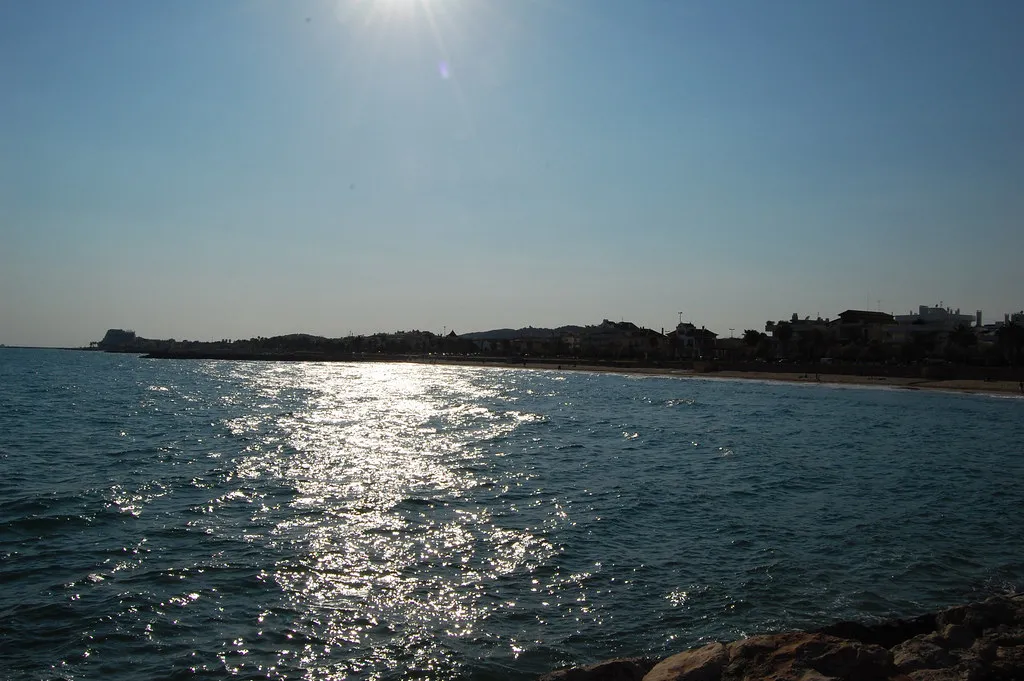
The R2 Sud regional train is the easiest and cheapest option. Trains depart from Barcelona Sants, Passeig de Gràcia, and Estació de França roughly every 10–30 minutes throughout the day. The ride takes 35–40 minutes and hugs the coastline for part of the journey, so grab a window seat. Sitges station is at the northern edge of the old town, about a 10-minute walk downhill to the beach.
A single ticket costs around €4.60. If you already have a T-casual card loaded with journeys, it covers this route. No advance booking is needed unless you are travelling on a major festival weekend in high summer — trains run frequently enough that you can turn up and go. Aim to board before 10:00 so you arrive before the beach gets crowded.
On the way back, consider having dinner in Sitges first and taking the train after 21:00. This sidesteps the afternoon rush of daytrippers returning to Barcelona and gives you time to enjoy sunset over the Mediterranean before you leave.
Sitges Beaches: Where to Swim and When
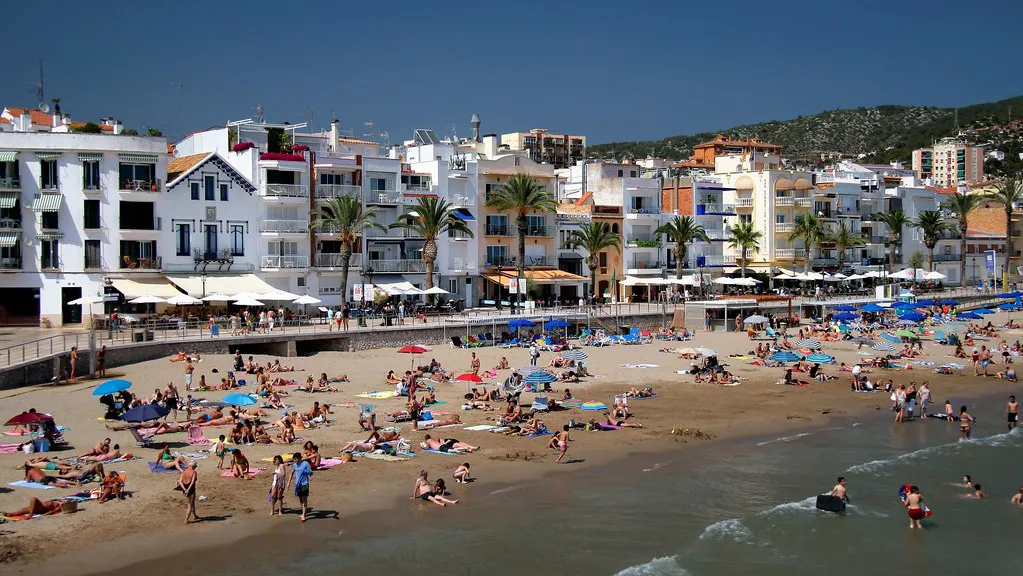
Sitges has 17 beaches in total, and choosing the right one for your morning makes a real difference. Platja de la Ribera is the main town beach — wide, golden, and lively, with nearby bars, sunbed rentals, and easy access to the promenade. It suits families and anyone who wants a social beach experience. Just around the promontory, Platja de Sant Sebastià has finer sand, calmer water, and a quieter, more local crowd. The iconic church tower rises directly behind it, making it the most photogenic spot in Sitges.
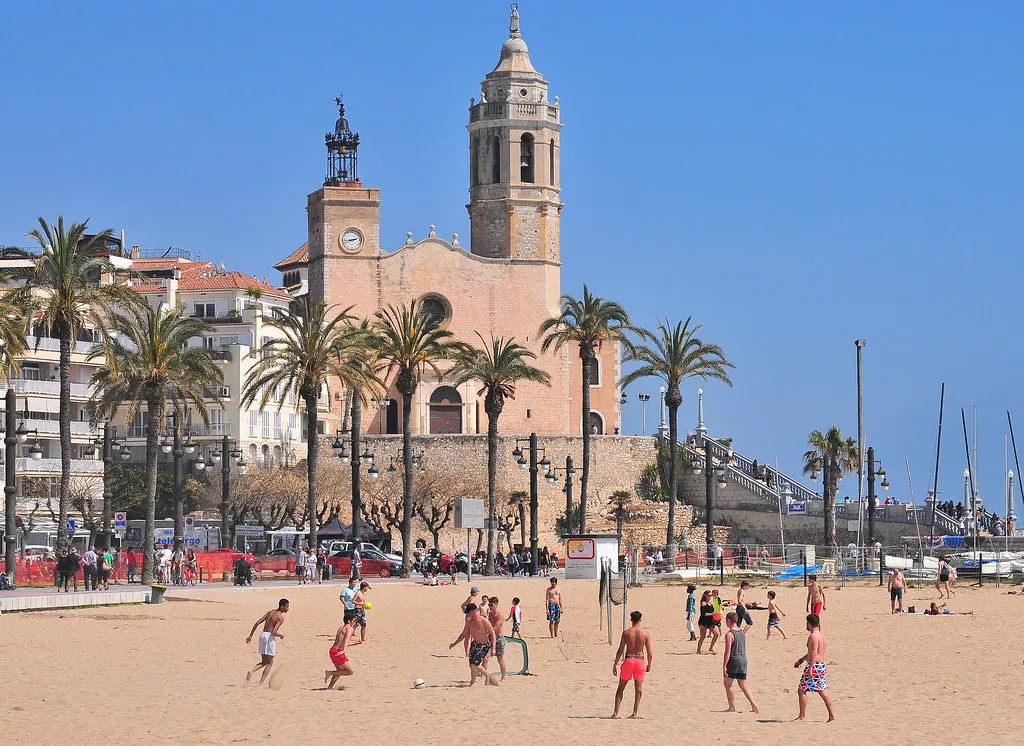
If you arrive early — say between 09:00 and 11:00 — the light is soft, the sand is cool, and you will have your pick of spots. By early afternoon in July and August, both main beaches are genuinely packed. Platja dels Balmins, a short walk south past the old town, is well known as a welcoming nudist and LGBTQ+ beach with a calm, unhurried feel even on busy summer days.
Before you hit the sand, it is worth stopping at the Mercadona supermarket near the station. Pick up cold orange juice, watermelon, or a warm ensaïmada pastry for the beach. Prices are a fraction of what beachside stalls charge, and the freshly squeezed juice is genuinely exceptional. Basic beach supplies — umbrellas, towels, sun cream — are available at ALE-HOP nearby if you are travelling light.
The Old Town and the Americanos Houses
Most visitors walk through Sitges old town and admire the whitewashed facades without realising why the architecture here looks different from other Catalan coast towns. In the 19th century, a wave of Sitges residents emigrated to Cuba and Argentina in search of fortune. Those who returned — known as the Americanos — built or remodelled homes that blended Mediterranean simplicity with colonial influences from Havana and Buenos Aires. Look for ornate wrought-iron railings, grand wooden doors, decorative tile entryways, and plaster facades in soft ochre and cream. These are not generic beach-town houses; they are a physical record of migration, wealth, and two continents colliding on a single street.
The best streets to walk are Carrer Barcelona and Carrer de l'Aigua — two of the oldest cobbled lanes in the town. The noise drops, the air cools slightly, and bougainvillea spills from balconies above you. From here, look for the small ceramic plaques on certain walls marking prize-winning entries in the Corpus Christi Flower Carpet contest. Every year in early summer, residents create elaborate floor mosaics from flower petals, leaves, and natural materials on these streets as part of the Corpus Christi celebration. The plaques are a permanent hall-of-fame, each recording the year and winner — a detail almost every passing tourist misses entirely.
A short detour off Carrer de l'Aigua brings you to the Muralla de Sitges, a 12-metre stretch of 13th-century medieval wall near the junction of Passeig de la Ribera and the Baluard. It is easy to walk past without noticing. Look for the rough stone facade just below the parish church — it is the last surviving fragment of the fortifications that once enclosed the entire town.
Must-See Sitges Attractions
The Church of Sant Bartomeu and Santa Tecla is the unavoidable landmark — a 17th-century Baroque structure with twin towers, set dramatically on the rocky promontory called La Punta. Its terracotta facade rises directly above the sea, and the view from the esplanade in front of it, looking back along the beach promenade, is one of the best free vantage points in town. On the esplanade you will also find the bronze La Sirena de Sitges, a mermaid sculpture by Pere Jou placed here in 1965. High-fiving her worn-smooth outstretched palm has become a quiet local ritual.
Further along the promenade you can find statues commemorating Santiago Rusiñol and Ramón Casas, two artists who shaped Sitges into a Modernisme hub at the turn of the 20th century. A small plaque also marks the birthplace of Facundo Bacardí Massó — the founder of Bacardi rum was born in Sitges on 16 October 1814. The town honours him with a statue near the seafront, and it is a genuinely surprising detail for most visitors who arrive without knowing the connection.
The Passeig Marítim promenade connects all of this — beach clubs, restaurants, sea views, and architectural set pieces — in a single palm-lined walk that can be done end to end in about 30 minutes. Walk it in the late afternoon when the light turns golden and the worst of the heat has passed.
Museums, Art, and Culture in Sitges
The two main museums in Sitges sit side by side near the seafront, and a combined ticket (€17 in 2026) gives you access to both. Each can also be visited individually. Plan your museum visit for midday when the beach is at its hottest — the interiors are cool, the galleries are rarely crowded, and it is a satisfying way to spend two to three hours.
Museu Cau Ferrat was originally the home and studio of artist Santiago Rusiñol, who moved here in the 1890s and hosted the famous Festes Modernistes gatherings that brought Catalan painters, poets, and musicians together under one roof. The space is not arranged like a conventional museum — it feels like stepping inside an artist's obsessive notebook. Ironwork chandeliers, hand-painted blue tiles, Gothic candlesticks, Picasso sketches, and Symbolist canvases are layered room by room. The Sala del Brollador, with its small fountain and antique ceramics, is particularly atmospheric.
Next door, Museu Maricel occupies a former hospital building connected to the Palau Maricel by a dramatic arched passage over the street. The collection spans Romanesque altarpieces to Noucentisme paintings, arranged in rooms with sea views and intricate carved ceilings. The adjacent Palau de Maricel offers guided tours of the gilded Saló d'Or, the cool Saló Blau, and a cloister with rooftop terraces overlooking the Mediterranean. Check opening hours before you visit — the Palau sometimes closes for private events.
Where to Eat in Sitges
The most enjoyable way to do lunch in Sitges is a pintxos crawl. Pintxos (sometimes written pinchos) are small bites served on bread slices, originally from the Basque Country but now found across Catalonia. You graze from bar to bar, paying by the toothpick at the end. It is casual, affordable, and ideal if you want to try multiple things without committing to a sit-down meal. Carrer Major and the streets around it have the highest concentration of pintxos bars. Izarra Taberna Vasca on Carrer Major is a reliable first stop — friendly atmosphere, strong pintxos lineup, and hot bites brought out fresh throughout service.
For a sit-down lunch with sea views, the restaurants along Passeig de la Ribera are the obvious choice. Book in advance during summer weekends — Sitges fills up fast in July and August, and the seafront spots fill first. Pic Nic, on the seafront, has a solid tapas menu and a full gluten-free menu. Can Laury and Factor Vi are more considered options for fresh seafood and a slower pace, worth it if you are not rushing back to Barcelona.
One practical tip: dinner in Spain starts late. In Sitges, 21:00 is normal and 22:00 is common. If you want to linger into the evening and eat before catching a late train, restaurants will not seat you for dinner much before 20:30. Plan accordingly, especially if you have children with you.
Parks, Gardens, and Outdoor Spots in Sitges
The Terramar Gardens, southwest of the town centre, offer a quieter escape from the beachfront crowds. The gardens are laid out around an elegant fountain, with exotic plants, sculpture, and sea views that make them worth the 20-minute walk from the old town. Early morning or late afternoon visits are best — the midday heat can be intense in summer.
The Passeig Marítim promenade is the spine of outdoor life in Sitges. Stretching along the coastline past bars, restaurants, and beach access points, it connects the old town to the quieter southern beaches. Cycling is a practical option if you want to cover more ground — rental bikes are available near the train station. The promenade is also where the tourist train runs in summer, connecting the ME Sitges hotel area to the town centre roughly every 30 minutes.
Nightlife and Bars in Sitges
Sitges has a reputation as one of the most vibrant nightlife towns on the Catalan coast, and it is largely deserved. The town is long known as a welcoming destination for the LGBTQ+ community, but the bars, clubs, and beach venues are genuinely inclusive and mixed. Straight visitors, families, and older travellers all coexist here without any visible tension — it is a notably tolerant and open-minded place by any measure.
For a day-tripper who wants one drink with a view before catching the train home, Marmut Sitges near the main square is the spot. It is relaxed and stylish, and the local order is vermouth — vermut — over ice with orange and olives. This is what Catalan locals actually drink in the late afternoon; sangria is largely for tourists. Vivero Beach Club on the promenade is another good late-afternoon option with cocktails and ocean views.
If you are staying later, the nightlife street is Calle del Pecado — sometimes called Sin Street — a short strip of dance bars including Pachito (a spin-off of the original Pasha nightclub, which was actually founded in Sitges) and Everlasting Love next door. These open late and run until the early hours. Radio Rooftop at the ME Sitges hotel offers a contrasting experience: crafted cocktails and panoramic views in a more composed setting. It is the right choice if you want atmosphere without volume.
The best time to visit for pure atmosphere is during Sitges Carnival in February or March — the Mardi Gras celebration here is one of the most exuberant in Spain. The Sitges Film Festival in October transforms the town for ten days with screenings and events. If your day trip happens to fall during the Festa Major de Santa Tecla in late September, expect closed roads, fireworks, and an improvised club on the seafront. Check the calendar before you go.
What to Do on a Day Trip to Sitges
A well-paced day trip to Sitges works best if you structure it in loose halves: beach and old town in the morning, museums and lunch in the midday heat, then promenade and evening in the late afternoon. Arrive before 10:00 to get a good spot on the beach before crowds build. Spend an hour or two on the water, then use the hottest part of the day (13:00–16:00) in the cool galleries of Museu Cau Ferrat and Museu Maricel.
After museums, walk Carrer Barcelona and Carrer de l'Aigua before the siesta ends and shops reopen. Once the heat softens around 17:00, walk the full length of the Passeig Marítim promenade south and back, stopping at La Punta to see the church from the esplanade. Have vermouth at Marmut before a late dinner at one of the seafront restaurants. Catch the 21:30 or 22:00 train back to Barcelona and you will have seen the town properly without feeling rushed.
One day is enough to cover the highlights. If your itinerary allows it, a night in Sitges lets you experience the late-evening calm after day-trippers have left — the beaches at 20:00 are a different and better version of themselves. Booking a guided day trip to Sitges is a reasonable option if you prefer not to navigate the train independently, though the train requires no advance planning and costs a fraction of the price.
Best Time to Visit Sitges from Barcelona
Spring (April and May) and early autumn (September and October) are the best windows for a day trip. The weather is warm enough for the beach, the promenade restaurants are open, and the crowds are significantly smaller than in peak summer. September is particularly good — water temperatures are still high from the summer, hotel prices drop, and the Sitges Film Festival adds an extra dimension to the town in early October.
July and August are the busiest months. The beaches are lively and the atmosphere is energetic, but arriving before 10:00 is important if you want a comfortable spot. Train capacity fills fast on summer weekends, so an earlier departure is always a better plan. Winter is quiet — some beachside restaurants close between November and March — but the old town, museums, and promenade are pleasant for a short visit, and there are rarely crowds anywhere.
More Day Trips from Barcelona
Exploring Sitges is just one of many excellent the best day trips. Each destination within easy reach of the city offers a distinct character and a different reason to leave for the day.
A a day trip to Montserrat is the direct counterpoint to Sitges — mountain views, a Benedictine monastery perched on dramatic rock formations, and hiking trails that range from easy to strenuous. It is the most popular day trip from the city for good reason.
A a day trip to Girona suits travellers drawn to medieval architecture and history. The preserved Jewish quarter, cathedral, and city walls make Girona feel more substantial than most Spanish day-trip destinations. If you are planning the broader visit, our guide on how many days you need will help you balance the city itself against these excursions.
Frequently Asked Questions
How to get to Sitges from Barcelona?
The easiest way to reach Sitges from Barcelona is by train. Services depart frequently from stations like Estació de França, Passeig de Gràcia, and Sants. The journey typically takes around 35-40 minutes, making it a quick and convenient day trip from Barcelona. You can purchase tickets at the station or use a T-casual card for better value.
Is Sitges worth a day trip from Barcelona?
Absolutely, Sitges is highly recommended for a day trip from Barcelona. It offers a beautiful contrast to the city with its stunning beaches, charming old town, and vibrant cultural scene. The relaxed seaside atmosphere and artistic heritage make it a refreshing escape. Sitges offers beach views, small plazas, historic streets, and a laid-back seaside atmosphere, making it a truly worthwhile destination.
Where to stay in Sitges if I want to extend my trip?
If you wish to extend your stay in Sitges, the town offers a range of accommodation options. You can find boutique hotels in the Old Town, beachfront resorts, and charming guesthouses. Consider staying near the promenade for easy beach access or in the town center for nightlife. Booking in advance, especially during peak season, is always recommended for the best choices.
Is Sitges good for straight people?
Yes, Sitges is good for everyone, including straight people. While it is renowned as a welcoming destination for the LGBTQ+ community, Sitges is a diverse and inclusive town. Its beautiful beaches, cultural attractions, and lively atmosphere appeal to all visitors. Everyone can enjoy its charm, regardless of their sexual orientation. The town embraces a tolerant and open-minded environment.
Is Sitges a party town?
Sitges has a vibrant nightlife, especially during summer and festivals, but it is not exclusively a party town. It offers a balanced experience with lively bars and clubs alongside relaxing beaches and cultural sites. Visitors can enjoy a peaceful day exploring and a fun evening out. The atmosphere depends largely on the season and specific events happening.
A Sitges day trip from Barcelona provides a fantastic blend of relaxation and culture. This coastal town offers stunning scenery and a welcoming atmosphere. It serves as a perfect escape from city life.
From its historic churches to its beautiful beaches, Sitges has something for everyone. Planning your visit carefully ensures a smooth and enjoyable experience. Remember to check train schedules and attraction hours.
Whether you seek art, sun, or charming streets, Sitges delivers. This guide helps you make the most of your time in this Catalan gem. Enjoy your unforgettable day trip to Sitges.
You might also like


Continue reading
More guides you'll find useful