

15 Best Things to Do at Barceloneta Beach Barcelona (2026)
Discover the top 15 things to do at Barceloneta Beach in Barcelona, from relaxing on the sand to exploring local culture and dining. Plan your perfect beach day!
On this page
15 Best Things to Do at Barceloneta Beach, Barcelona
Barceloneta Beach is where Barcelona stops performing and starts living. The 1,100-metre strip of golden sand flanked by Sant Miquel Beach to the west and Somorrostro Beach to the east draws locals, expats, and visitors who want something beyond the scripted sights of La Rambla. The neighborhood behind it — La Barceloneta, developed in the mid-18th century to house fishermen displaced by the Citadel fortress — still functions as a real community, with laundry drying on balconies and residents playing cards in shaded plazas. The beach itself was thoroughly redeveloped for the 1992 Olympics, gaining the promenade, improved facilities, and the cluster of Port Olímpic that now anchors its eastern end.
This guide covers the best things to do here in 2026: what to do on the sand, where to eat, how to reach the beach, when to go, and what the neighborhood offers beyond sunbathing. Whether you have a single afternoon or a full day, these 15 experiences give you a complete picture of what makes Barceloneta worth your time.
Plan with trusted sources: cross-check opening hours and seasonal details with the official Barcelona tourism board, and read more about the city on its Wikipedia entry before you go.
Relaxing on the Sand: Sunbathing and Swimming
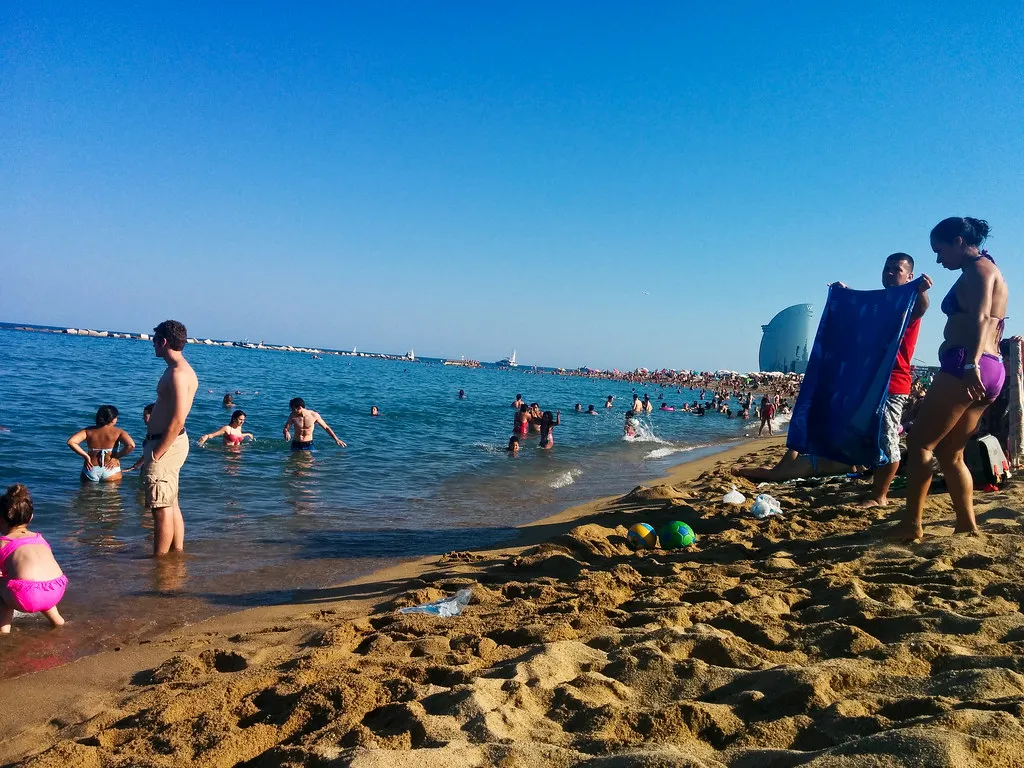
Barceloneta's wide, south-facing sands are the main draw for a reason. The water is calm, the Mediterranean current gentle, and the beach wide enough that you can almost always find a spot. Showers, public toilets, and changing facilities are distributed along the beach at regular intervals. Lifeguards patrol from June through September between 10:00 and 19:00.
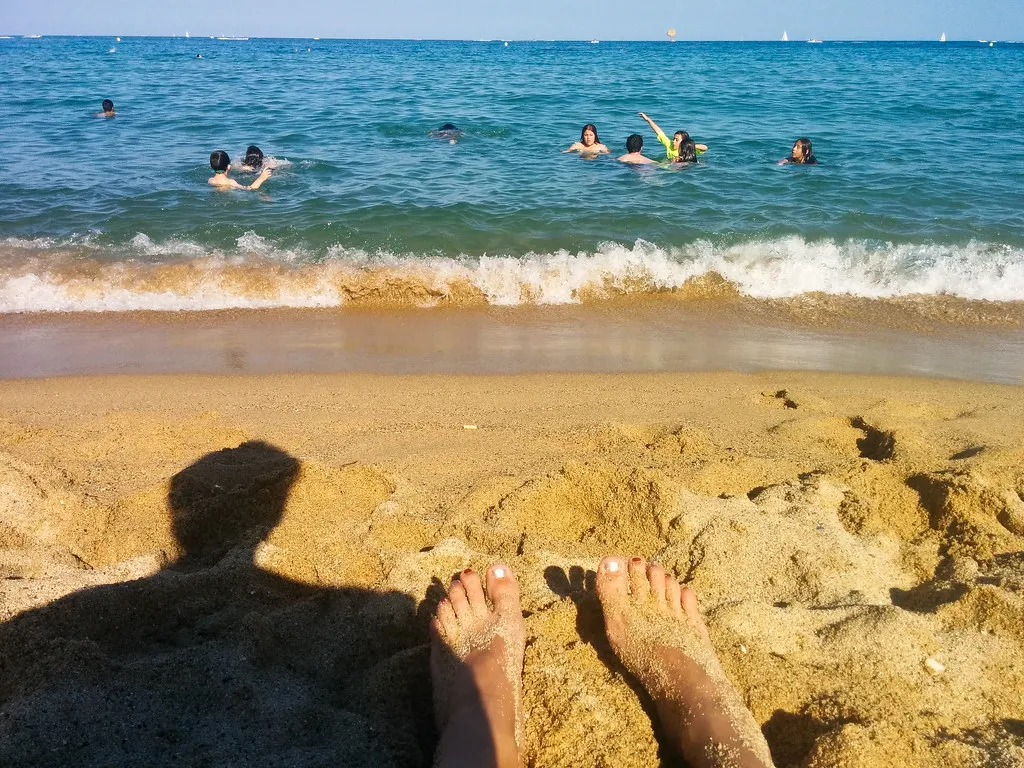
Beach access is free. Sunbed and parasol rentals from the official kiosks typically run €10–€20 per day depending on placement. For a quieter experience, arrive before 10:00 or head to the eastern end near Somorrostro, which draws more local families and fewer tourists than the central stretch in front of the W Hotel. In July and August, the peak midday hours (12:00–16:00) are the most congested — factor that into your timing if crowds bother you.
Water Sports and Activities: From Paddleboarding to Beach Volleyball
The beach supports a full range of active water sports. Paddleboarding, kayaking, and windsurfing are available through rental kiosks along the shore, with paddleboard hire typically costing €15–€25 per hour. Kitesurfing conditions improve in autumn when the Tramontana wind picks up, though most beginners hire gear in summer when the sea is calmer.
On dry land, beach volleyball courts are free and first-come-first-served. GoCity notes beach tennis, ping pong, and a designated gymnastics area are also on offer near the central section. If you want to book a water sports lesson rather than just renting gear, several operators near Port Olímpic offer structured sessions lasting 90 minutes to two hours — useful for first-timers who want instruction before hitting open water.
Exploring the Barceloneta Promenade: Walking, Cycling, and Skating
The Passeig Marítim de la Barceloneta runs the full length of the beach and connects seamlessly to the wider coastal path stretching toward Poblenou and beyond. It is one of the most enjoyable flat walks in the city — wide enough for pedestrians, cyclists, and rollerskaters to coexist without friction. The promenade is accessible 24 hours and free to use.
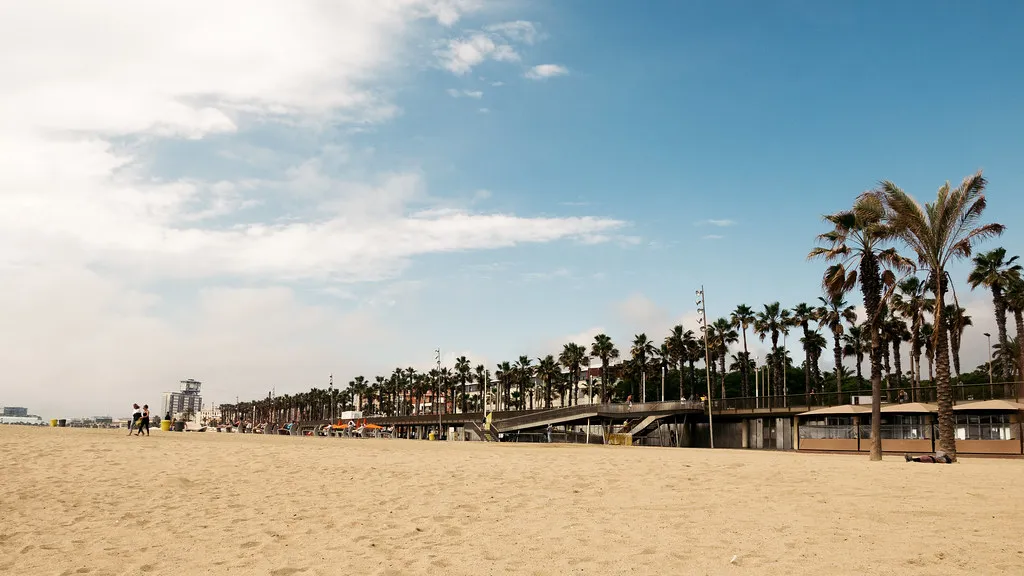
Bicycle rentals are available at several shops near the Barceloneta metro exit, typically €10–€15 for a half-day. Electric scooters and rollerblades are also for hire. The route north toward Poblenou passes through Nova Icària Beach and Bogatell, quieter stretches popular with Barcelona residents who avoid the tourist concentration at Barceloneta proper. An early morning ride (07:00–09:00) offers the best light and the fewest people.
Dining by the Sea: Chiringuitos and Seafood Restaurants
Barceloneta's dining scene divides neatly into two tiers. The beachfront chiringuitos are casual open-air bars serving cold beer, fresh seafood, and grilled dishes from around noon until late. These are the places for a long, unhurried lunch with a view. For paella and fideuà, look for spots on Carrer de la Maquinista or the side streets of the neighborhood rather than the promenade frontage — restaurants there cater to locals and tend to offer better quality at lower prices. Expect €20–€40 per person at a mid-range seafood restaurant; chiringuito snacks and drinks run €5–€15.
The local specialty to order is arroz negro (squid-ink rice, served with aioli), closely followed by a traditional paella Valenciana or fideuà (noodle-based paella). Most promenade restaurants open at noon and serve until 23:00. The best tip for avoiding tourist pricing is to look for menus with handwritten boards in Catalan — that's a reliable signal that the kitchen is cooking for regulars, not just passers-by.
Experiencing Barceloneta's Nightlife: Beach Bars and Clubs
After dark, the beach and the streets behind it shift into a different mode. Groups gather on the sand with speakers and drinks from around 22:00 onward — a longstanding tradition that the city has repeatedly tried to regulate and never fully extinguished. The larger clubs around Port Olímpic open between 23:00 and midnight and run until 04:00–05:00. Entry typically costs €15–€30, often including one drink.
The beach bar scene is more relaxed: most chiringuitos stay open until midnight in summer, serving cocktails at the table or to take down to the sand. For a safer, lower-key evening, the terrace bars on Passeig Joan de Borbó — one block back from the beach — are popular with both locals and visitors and tend to feel less frenetic than the clubs. Stick to well-lit, populated areas after midnight and use a ride-share or taxi to return to your hotel; the Barceloneta metro closes around 00:00 on weeknights and runs until 02:00 on Fridays and Saturdays.
Discovering Public Art: L'Estel Ferit (The Wounded Star)
At the eastern end of Barceloneta Beach, near the Port Olímpic, stands L'Estel Ferit — The Wounded Star — by German sculptor Rebecca Horn. The stack of four rusting iron cubes, positioned as though they might topple at any moment, was commissioned in 1992 to commemorate the chiringuitos and fishing shacks that once lined this coast and were demolished before the Olympics. The piece functions both as a memorial and as a provocation about urban transformation.
It is accessible 24 hours, free to view, and genuinely one of the most photogenic spots on the beach. Shoot it at sunrise from the south for dramatic silhouette shots against the sky; shoot from the west at golden hour when the low light catches the rust on the iron surfaces. The sculpture stands at roughly 10 metres and is visible from some distance along the promenade, making it a useful landmark for orientating yourself along the beach.
Visiting Barceloneta Market: A Taste of Local Life
The Mercat de la Barceloneta sits on Plaça de la Font, one of the neighborhood's main squares, roughly five minutes' walk from the beach. It operates Monday to Saturday from 08:00 to 14:30 and on Saturday afternoons as well. The market is small compared to La Boqueria but far more functional — locals actually shop here rather than pose for photos. Stalls sell fresh fish, vegetables, olives, and prepared foods.
During La Fiesta Mayor, the square in front of the market becomes the center of community dancing and music. Even on ordinary days the plaza has a lived-in quality that feels authentically Barceloneta. Pick up lunch ingredients or grab a coffee at one of the surrounding bars. The market's location on Google Maps makes it easy to build into any walking route through the neighborhood.
Delving into History: The Old Fishing Quarter and its Origins
La Barceloneta was laid out in 1753 by military engineer Juan Martín Cermeño on a triangular peninsula that had previously been marsh. The grid plan — unusually regular for Barcelona — was designed to house the 4,000 people displaced when the Citadel fortress was constructed by Philip V in the early 1700s. The original buildings were single-storey dwellings; most were subsequently raised to two or three storeys over the following century as the population grew.
Walk Carrer de Sant Carles and Carrer del Baluard to get a sense of the original street scale. Some façades still display the narrow proportions of the 18th-century originals. The neighborhood also carries a literary footnote: the Go City guide notes that Cervantes's fictional Knight fights in a fishing village strongly resembling Barceloneta — the beach itself features in the final chapters of Don Quixote. The Museu d'Història de Catalunya, located in Port Vell at the Palau de Mar, covers the full sweep of Catalan history from the Palaeolithic to the present. Entry starts at €8; the rooftop terrace is free to access and gives an excellent view over the port and neighborhood.
Attending La Fiesta Mayor de la Barceloneta: Local Festival Highlights
The Fiesta Mayor de la Barceloneta takes place in the last week of September, centered on 29 September (Sant Miquel's Day). It is one of the most community-rooted festivals in the city — not a ticketed event but a neighborhood celebration running across several days. Marching bands process through the streets, a man in Napoleonic uniform fires candy and confetti from a cannon into crowds of children, and sardana dance troupes perform in Plaça de la Font to a live cobla band. Castellers (human tower builders) also perform on one of the festival days.
Most of the events are free and happen in the streets and squares of the neighborhood rather than on the beach. The festival creates real crowds in the narrow streets, which can mean slower progress but a genuinely festive atmosphere. Check the official Fiesta Mayor schedule closer to your visit for exact dates and the event programme. If you're visiting Barcelona in late September, timing your trip to overlap with this festival is genuinely worth planning around.
Family-Friendly Fun: Playgrounds and Accessible Areas
Barceloneta is well set up for families with young children. Several playgrounds sit along the promenade and in the neighborhood's squares. The water close to the shore is generally calm and shallow enough for supervised paddling. Lifeguards are stationed at regular intervals between June and September, operating 10:00–19:00. The beach itself has wooden walkways in several sections that allow pushchairs and wheelchairs to reach the sand.
The Espai de Mar center — located on the beach — provides adapted showers, changing rooms, and mobility assistance for visitors with reduced mobility. All services there are free. For families doing a full day, the Barcelona Aquarium at Port Vell is a ten-minute walk and costs around €21 per adult and €14 for children under 10 — it's a good refuge if the afternoon sun becomes too intense. The Maremagnum shopping and entertainment complex at the same end of the harbor provides another indoor option for families needing a break.
Seeing Barceloneta from Above: Cable Car and Rooftop Views
One angle that most visitors miss entirely is the aerial view. The Transbordador Aeri del Port — the old cable car that connects Barceloneta with the Miramar viewpoint on Montjuïc — departs from the tower at the end of Passeig Joan de Borbó, directly in the neighborhood. The crossing takes about 10 minutes, swinging out over the commercial harbor before climbing to Montjuïc. On clear days the views stretch north along the coast toward the Besòs delta and south toward Castelldefels. Tickets run around €12–€15 one way; the car runs daily in season and is suspended in strong winds.
If you'd rather stay at ground level but still want height, the W Barcelona hotel at the tip of the Barceloneta peninsula has a public rooftop bar (Eclipse) with unobstructed 360-degree views. The minimum spend is around €15–€20 per person, but the vantage point — looking back at the city, the port, and the beach simultaneously — is worth it for one drink. No other viewpoint in the city combines the beach, port, and downtown skyline in a single frame. This combination of cable car and rooftop is something none of the standard Barceloneta guides develop, but it gives the neighborhood a completely different dimension.
Sailing and Boat Trips: See Barcelona from the Water
Several operators at Port Vell run short catamaran and sailing excursions along the coast. A standard 1.5-hour trip costs €25–€40 per person and usually departs twice daily in summer — typically at midday and at sunset. The sunset departure is worth the premium: the light on the skyline and the mountains behind the city is at its best in the late afternoon. Private charters for small groups start at around €200 for two hours.
The departures are mostly from the Moll de la Fusta or the marina adjacent to the Aquarium. Look for operators who are registered with the port authority rather than informal sellers on the promenade — the official kiosks at Port Vell are a reliable starting point. This is also a useful option if the beach becomes too crowded and you want an hour on the water without committing to a full excursion.
Nearby Attractions: Port Vell and Maremagnum
Port Vell, the historic harbor immediately west of Barceloneta, is one of the most visually satisfying parts of Barcelona to walk through. The rows of yachts and sailing boats, the Rambla del Mar wooden boardwalk that arcs over the water, and the sight of the Columbus Monument at the far end make it a scenic extension of any beach visit. It takes about 15 minutes to walk from the main beach to the Columbus Monument, passing through the old fishing harbor and the Palau de Mar.
Maremagnum — the mall built on a small artificial island accessed via the Rambla del Mar — holds shops, restaurants, and a cinema. It is genuinely useful on hot afternoons and opens daily from 10:00 to 21:00. The Barcelona Aquarium next to it is one of Europe's largest, with a 80-metre transparent underwater tunnel as its centerpiece. If you have children or a particular interest in Mediterranean marine life, it is worth the entry fee; otherwise the harbor walk itself is free and covers most of the same scenery.
Beachfront Yoga and a Guided Tapas Tour: Active and Culinary Extras
Early morning yoga sessions are a fixture on Barceloneta Beach throughout the warmer months. Several independent instructors and local studios hold classes on the sand between 07:00 and 09:00, usually costing €10–€15 per drop-in session. The combination of cool morning air, the sound of the Mediterranean, and the empty beach is a genuine contrast to the afternoon crowds. Check local studio Instagram accounts or neighborhood notice boards (look in the cafes on Carrer de la Maquinista) for current schedules.
For a deeper introduction to the neighborhood's food culture, a guided tapas tour of La Barceloneta (typically €50–€80 per person, 2–3 hours) is the most efficient way to cover the local eating landscape in a single evening. A good guide will take you into family-run bars that don't appear in any app and explain which dishes are genuinely Catalan rather than generic tourist versions. The tours usually run from around 19:00, timing the final stop for a late dinner.
Best Time to Visit Barceloneta Beach
June and early July offer the best balance of warm weather and manageable crowds before the August peak. The sea temperature reaches a comfortable 24–26°C by late June. Late September and early October remain warm enough to swim (22–24°C) and the beach drops back to a mostly local crowd — late September also overlaps with the Fiesta Mayor. The period from mid-July to late August is the most crowded, hottest (35°C+ on peak days), and most expensive for accommodation in the city.
If you want to avoid crowds entirely, visit on a weekday morning before 10:00 regardless of season. Barceloneta in February is genuinely pleasant for a walk and a long lunch — temperatures typically sit at 12–15°C, the promenade belongs to joggers and dog-walkers, and the neighborhood's restaurants operate for locals rather than tourists. For swimming, the safe window is roughly May through October; outside that the water is too cold for most people and the beach facilities (lifeguards, rentals) are closed or reduced.
| Period | Air Temp | Sea Temp | Crowds | Lifeguards & Rentals | Best For |
|---|---|---|---|---|---|
| Nov–Feb | 12–15°C | 13–15°C | Very low | Closed | Promenade walks, local dining |
| Mar–May | 16–22°C | 16–20°C | Low–moderate | Partial (from June) | Cycling, sightseeing, shoulder season |
| June–early July | 24–28°C | 22–24°C | Moderate | Full (10:00–19:00) | Best overall balance |
| Mid-Jul–Aug | 30–35°C+ | 25–27°C | Very high (peak) | Full | Water sports, nightlife |
| Late Sep–Oct | 22–26°C | 22–24°C | Low–moderate | Reduced from Oct | Fiesta Mayor (late Sep), quiet beach |
Practical Tips for Visiting Barceloneta Beach
Petty theft is the primary safety concern. Keep valuables in a zipped bag and never leave phones or wallets unattended on the sand while you swim. A waterproof pouch worn around your neck is the most practical solution. Police patrols are visible throughout summer but pickpockets work in the crowds by the water. Avoid leaving bags unattended even for a few minutes.
The beach is open continuously and free to access. Alcohol consumption is technically prohibited on the beach itself under city bylaws, though enforcement is inconsistent — the open-air bars and restaurants adjacent to the beach operate with full licenses. Topless sunbathing is legally permitted. Dogs are not allowed on the beach from June through September; there is a dedicated dog beach at Llevant, about 2km northeast along the coast. For general safety after dark and other practical information, see our practical travel tips guide.
Getting to Barceloneta Beach: Metro, Bus, and Walking
The fastest option from central Barcelona is the L4 (yellow line) metro to Barceloneta station. The walk from the station exit to the beach takes about 10 minutes through the narrow streets of the neighborhood. The station connects easily to Passeig de Gràcia (change at Diagonal or Urquinaona) and to the Sagrada Família area. Trains run from around 05:00 to midnight on weekdays and until 02:00 on Friday and Saturday nights.
Bus lines D20, V15, V17, and 39 serve the area, with stops closer to the beach than the metro exit. If you are coming from the Gothic Quarter or El Born, a 15–25 minute walk via Port Vell is the most scenic approach and free. Cycling via the city's Bicing bike-share scheme or a rental is practical, as dedicated cycle lanes run along the promenade. For live route planning use the Barcelona journey planner. Avoid driving — street parking near the beach is almost nonexistent in summer, and the area around Port Olímpic charges high parking fees.
As you plan, our guides to Restaurants in Barcelona Right Now and Tapas Bars in Barcelona cover the rest of the essentials.
Frequently Asked Questions
What are the best things to do at Barceloneta beach Barcelona?
The best things to do include relaxing on the sand, trying water sports like paddleboarding, and exploring the vibrant promenade. Don't miss dining at beachfront chiringuitos and visiting the Mercat de la Barceloneta for local flavors. Enjoy the public art and consider a guided tapas tour for a deeper culinary dive.
Is Barceloneta beach good for families?
Yes, Barceloneta Beach is generally good for families, offering calm waters, playgrounds, and accessible facilities. Lifeguards are on duty during peak season, and the Espai de Mar center provides services for visitors with reduced mobility. It's best to visit in the mornings to avoid the largest crowds.
How do I get to Barceloneta beach by metro?
To get to Barceloneta Beach by metro, take the L4 (yellow line) to the Barceloneta station. From the station, it's a straightforward 10-minute walk through the neighborhood to reach the beach. This route is convenient from most central Barcelona locations.
What restaurants are near Barceloneta beach?
Near Barceloneta Beach, you'll find a wide array of seafood restaurants and beachfront 'chiringuitos' offering fresh catches and traditional paella. Many establishments line the promenade, while smaller, authentic eateries are tucked away in the neighborhood's side streets. Look for places serving 'arroz negro' for a local specialty.
When is La Fiesta Mayor de la Barceloneta?
La Fiesta Mayor de la Barceloneta, the neighborhood's main festival, typically takes place in late September. The exact dates vary each year, so it's best to check the official Barcelona cultural events calendar closer to your visit. This vibrant festival features traditional parades, human towers, and live music.
Barceloneta rewards the visitor who does more than unroll a towel. The neighborhood behind the sand is one of Barcelona's most intact historic quarters, the promenade connects to a coast that stretches for kilometers, the cable car gives you the aerial view most guidebooks skip entirely, and the Fiesta Mayor in late September is as close to an authentic local festival as you'll find in a city that has largely been reshaped around tourism. Whether you come for a morning swim or a full day, these 15 experiences give you the full picture.
Plan your time around the best season for your priorities — June for good weather without August crowds, late September for the festival and a quieter beach, winter for the neighborhood at its most local. For more on planning your trip, check out our guide to top things to do in Barcelona.
You might also like


Continue reading
More guides you'll find useful


