Málaga City Pass Guide Travel Guide
Plan your Málaga city pass guide with top picks, neighborhood context, timing tips, and practical booking advice for a smoother trip.
On this page
Málaga City Pass Guide: Your Essential Travel Companion
Málaga packs more museums per square kilometre than almost any city in Spain. The challenge isn't finding things to do — it's deciding whether a city pass actually saves you money given your itinerary. This guide breaks down the Málaga Pass card, explains what it includes, gives you the honest math, and covers everything else you need for a smooth visit in 2026.
The city itself is the birthplace of Picasso, home to one of Europe's few Pompidou satellite centres, and the gateway to Andalusia's most dramatic day trips. Whether you have one day or five, understanding your options upfront makes the difference between a rushed trip and a genuinely memorable one.
Plan with trusted sources: cross-check opening hours and seasonal details with the official Andalusia tourism board, and read more about the city on its Wikipedia entry before you go.
What Is the Málaga Pass and Is It Worth It?
The Málaga Pass is an official city card issued by Málaga Town Hall that gives you free entry to the city's main museums and monuments, plus priority queue-skip access at participating sites. You also get a 15% discount at shops, restaurants, and tour operators displaying the Málaga Pass sticker. A companion app — available in English, Spanish, and five other languages — provides curated routes, historical notes, and a detailed map.
As of 2026, the card comes in four durations. A 24-hour card costs €28 and suits day-trippers. The 48-hour card is €38, aimed at two-day visitors. The 72-hour card at €46 works well for a long weekend, and the 7-day card at €62 covers an extended cultural trip. You buy online at malagapass.com or in person at the Malaga Store in Plaza La Marina, beside the port. After purchase, you receive confirmation by email.
The card is non-transferable. Activation is triggered the first time you scan it at an attraction — not when you buy it. That matters: if you arrive in the afternoon and plan to start sightseeing the next morning, wait until you're standing at the first ticket desk before activating. You lose hours on the clock the moment the card is first used. The included attractions cover the Picasso Museum, Centre Pompidou Málaga, Alcazaba, Gibralfaro Castle, Málaga Cathedral and Museum, the Contemporary Art Centre, the Museum of Flamenco, and several more.
Is the pass worth buying? Run the numbers for your specific itinerary. The Alcazaba costs €3.50 standalone; the Picasso Museum is around €12; the Pompidou is €9; the Cathedral with rooftop runs €8. If you plan to visit at least four of the major paid sites, the 48-hour pass at €38 typically pays for itself. The Roman Theatre is free — it doesn't add pass value — and entry to several city beaches and the port area costs nothing. If your trip is beach-heavy and museum-light, individual tickets may serve you better.
| Pass Duration | Pass Price | Breaks Even At | Best For |
|---|---|---|---|
| 24-hour | €28 | 3–4 paid sites | Day-trippers |
| 48-hour | €38 | 4 paid sites | 2-day city visit |
| 72-hour | €46 | 5 paid sites | Long weekend |
| 7-day | €62 | 6–7 paid sites | Extended cultural trip |
| Individual ticket prices: Alcazaba €3.50 · Picasso Museum ~€12 · Pompidou €9 · Cathedral + rooftop €8 | |||
Best Things to Do In Málaga
The Alcazaba is the city's most iconic monument — an 11th-century Moorish palace-fortress with jasmine-scented courtyards, tiered gardens, and commanding views over the port. Immediately below it sits the Roman Theatre, a well-preserved 1st-century BC amphitheatre that you can view freely from the street without buying a ticket. The two together anchor the eastern edge of the Old Town and are a logical starting point for any Malaga 1-day itinerary.
Gibralfaro Castle crowns the hill above the Alcazaba. The walk up is steep but worth it: the panoramic view from the castle walls takes in the city, the port, La Malagueta beach, and — on clear days — the mountains behind Ronda. The Picasso Museum occupies a 16th-century palace near Plaza de la Merced, Picasso's birthplace. The collection spans paintings, sculptures, and ceramics across 200 works. Book online to avoid the queue.
The Cathedral, nicknamed La Manquita (the one-armed lady) because one of its two towers was never completed, stands at the centre of the historic district. The interior is Baroque and Renaissance, with carved choir stalls by Pedro de Mena. Tickets that include a rooftop visit are available and add real value. The Centre Pompidou Málaga at Muelle Uno is the only Pompidou outside France; its rotating programme of 20th-century and contemporary art is surprisingly strong. The Soho district around Calle Arte has some of the best urban murals in southern Spain and costs nothing to walk through.
La Malagueta beach is the main city beach, walkable from the centre. It gets crowded in peak summer but is relaxed in spring and autumn. If you want a quieter beach day, take the bus or a short taxi to Pedregalejo or El Palo, two old fishing neighbourhoods about 4 km east where the chiringuitos (beach bars) serve fish grilled over charcoal right on the sand.
Top Málaga Tours and Activities
A guided walking tour of the Old Town takes two to three hours and covers the Alcazaba, Roman Theatre, Cathedral, and Picasso's birthplace. These run daily from the city centre, typically costing €15–25 per person, and are useful for first-time visitors who want context behind the architecture. Several operators offer early-morning tours before the afternoon heat and crowds build up.
Flamenco shows in Málaga range from tourist-facing tablaos to more serious performances at local peñas. The show at Kelipé — a dedicated flamenco cultural centre in the Soho area — is one of the more authentic options in the city, with smaller audiences and performers who work the genre professionally. It typically runs on Thursday and Friday evenings; book ahead as capacity is limited.
The sunset catamaran cruise from Muelle Uno is a popular add-on for visitors staying two or more days. Departures are usually at 18:00 and 20:00 in summer, later in spring and autumn. The trip runs about 90 minutes along the coastline and includes drinks. It's a low-effort way to see the city from the water. Hammam Al Ándalus near the Alcazaba offers traditional Arab baths for around €35 and is worth booking if you want a slower afternoon activity.
Málaga Old Town Map
Málaga's Old Town is compact enough to cover on foot in a morning. The main axis runs east–west along Calle Larios (the pedestrian shopping street) connecting Alameda Principal in the south to Plaza de la Constitución at its northern end. From the plaza, most major sights are within a 10-minute walk.
The Alcazaba and Roman Theatre sit at the eastern end of the Old Town. The Cathedral is two blocks west of Calle Larios. The Picasso Museum is northeast of the Cathedral near Plaza de la Merced. Mercado de Atarazanas — the covered market with its beautiful stained-glass facade — is on the western edge, off Alameda Principal. The Soho arts district begins just south of Alameda Principal, between the old town and the port.
Tourist offices near Plaza de la Marina distribute free paper maps. Download an offline version before you arrive so you don't rely on mobile data while navigating. The Old Town's cobblestone streets are uneven in places; comfortable flat shoes make the difference, especially if you plan to climb toward the Alcazaba or Gibralfaro.
Map of Málaga Attractions
Beyond the Old Town, Málaga's attractions spread along the port and coastal strip. Muelle Uno is the redesigned modern port promenade where the Centre Pompidou sits, alongside cafés, shops, and departure points for boat tours. It's roughly a 10-minute walk south from Calle Larios. Muelle Dos, the adjacent extension, is less commercial and good for a quieter evening walk.
Further east along the coast, La Malagueta beach and its promenade lead into the Pedregalejo fishing neighbourhood. The Automobile and Fashion Museum is housed in a converted tobacco factory about 1.5 km from the Old Town — further out than most sites but worth an afternoon if classic cars or vintage fashion interest you. The Botanical Garden La Concepción is 4 km north of the centre and one of the most underrated sites in the city: 23 hectares of subtropical plants, a 19th-century palm collection, and far fewer visitors than the Old Town museums. Check out a detailed top things to do in Málaga guide for a fuller list with opening times.
Online interactive maps help group nearby sites and plan transit times. Most major attractions are walkable from the Old Town in under 20 minutes. Use the map to identify which sites your city pass covers and build your days around the ones that offer the most individual savings.
Where to Stay In Málaga
The Old Town and the adjacent Soho district are the most practical bases. You're walking distance from every major museum and monument, and the dining and nightlife options are concentrated here. Hotels in this area range from budget guesthouses on side streets to boutique options in restored palaces — the Vincci Selección Posada del Patio, for instance, is built around a 16th-century Moorish courtyard. Petit Palace Plaza Málaga sits directly on the main square and is a reliable mid-range choice.
For panoramic views and a quieter atmosphere, the Parador de Málaga Gibralfaro sits at the top of the hill beside the castle. The views from its terrace are exceptional — city, port, and sea in one frame — and it's a short downhill walk or quick cab ride to the Old Town. It's more expensive than centre hotels, but the setting is unique and genuinely hard to replicate elsewhere in the city.
Families often prefer the La Malagueta or Pedregalejo areas, which trade proximity to museums for easier beach access. Budget travellers have good hostel options scattered through Soho and near the main bus station. Research where to stay in the city to compare specific hotels by neighbourhood. Book at least six to eight weeks ahead in summer and during Semana Santa, when prices rise sharply and availability drops.
Best Time to Visit Málaga
Málaga has over 300 days of sunshine annually, which means almost any month works for a visit. The practical question is what kind of trip you want. Spring (March–May) offers mild temperatures in the 18–22°C range, manageable crowds except during Semana Santa (Holy Week), and blooming botanical gardens. It's the best season for combining museums with outdoor walks and day trips. The August fair — Feria de Málaga — transforms the city for a week of free outdoor concerts, flamenco, and street celebrations; expect high energy, full hotels, and significantly higher prices.
Summer (June–August) delivers hot, dry days with highs around 31°C. The beach is in full swing, evening dining stretches past midnight, and the city atmosphere is vibrant. The trade-off is peak crowds at every major site and accommodation prices at their highest. If you're going in July or August, book museum tickets well in advance and plan outdoor sightseeing in the early morning (before 10:00) or late afternoon (after 18:00).
Autumn (September–October) is the pick of many regular visitors: temperatures drop back into the mid-20s, summer crowds thin out, and prices fall. November brings some rain and shorter days, but the city is still pleasant. Winter (December–February) is mild by northern European standards — daily highs around 17–18°C — and Málaga's Christmas decorations on Calle Larios are genuinely spectacular. Check the best time to visit for a deeper seasonal breakdown.
Where to Eat In Málaga
Málaga's food scene is built on fresh Andalusian ingredients and a tradition of generous tapas. The local speciality is espetos de sardinas — whole sardines skewered on a cane rod and grilled over an open fire on the beach. You find the best versions at chiringuitos in Pedregalejo and El Palo, not in the Old Town. For a proper sit-down lunch in the centre, try the Mercado de Atarazanas first: the market stalls here serve fresh fish, jamón, and local cheeses at prices well below nearby restaurants.
Casa Aranda near Calle Larios has been serving churros with hot chocolate since 1932 and is the correct choice for breakfast. Illari Vinos y Tapas in the historic centre is a well-reviewed gourmet tapas spot with outdoor seating on a central pedestrian street. El Pimpi on Calle Granada has been a fixture of Málaga's Old Town for decades — the wine barrels signed by celebrity visitors are a curiosity — and serves solid regional food in a large, lively space. For a lighter option on the port side, the terrace cafés along Muelle Uno are good for coffee and a quick lunch. Explore the what to eat in Málaga guide for a more complete list of restaurants by neighbourhood and budget.
How Expensive Is Málaga?
Málaga is significantly cheaper than Madrid or Barcelona, and its dining scene in particular offers strong value. Budget travellers spending carefully — a hostel bed, market lunches, free attractions like the Roman Theatre and beach — can manage on around €59 per person per day. A mid-range trip with a comfortable hotel, sit-down meals at good restaurants, and paid entry to four or five museums runs closer to €140 per day. High-end options including boutique hotels and fine dining push toward €300+.
Museum entry is the main variable. The Málaga Pass makes sense if you're hitting four or more paid sites in 48 hours; below that threshold, individual tickets are more economical. Most museums offer a free entry window on Sunday afternoons, including the Picasso Museum and the Carmen Thyssen. If your trip straddles a Sunday, plan your most expensive museum visit for the free window and buy individual tickets for everything else. The free things to do in Málaga guide covers no-cost options in detail. Transport within the city is cheap: a single EMT bus ticket costs €1.40, or buy a bonobus multi-journey card for better value if you plan multiple rides.
Málaga in 1 Day — Itinerary
Start at 09:00 at the Alcazaba before queues build. Spend 60–75 minutes exploring the palace complex, then descend to the Roman Theatre (free, 10 minutes is enough). Walk west along Calle Alcazabilla to the Picasso Museum — plan 90 minutes inside and book tickets online in advance to skip the entrance queue. From there it's a five-minute walk to Plaza de la Merced, where Picasso was born; the house is now a small museum with free admission to the ground floor.
Head to Mercado de Atarazanas around 12:30 for lunch at the market stalls. In the afternoon, visit the Cathedral (allow 60 minutes, include the rooftop if the weather is clear) and walk Calle Larios south toward the port. The Centre Pompidou at Muelle Uno is worth 60–90 minutes if you have the time and interest; it's included in the city pass. Wrap up with a sunset walk along the port promenade. Dinner on Calle Granada or in the Soho district completes the day.
This itinerary covers the Alcazaba, Picasso Museum, Cathedral, and Pompidou — four paid sites worth a combined €34 in individual tickets. The 24-hour Málaga Pass at €28 saves you money on this specific day. Consider a Malaga 3-day itinerary if you want to extend the experience.
How Many Days in Málaga Is Enough?
Two full days cover the city's must-see attractions without feeling rushed. Day one works through the major Old Town sites (Alcazaba, Picasso Museum, Cathedral). Day two reaches the Pompidou, a beach afternoon at La Malagueta or Pedregalejo, and an evening on Calle Larios or in the port area. Three days allows you to add the Carmen Thyssen Museum, a half-day in Soho, and a relaxed meal at a proper chiringuito.
Four to five days is the right duration if you want to combine the city with day trips. Málaga is an unusually good base for Andalusia: Ronda is 90 minutes by car and 1h45m by train; Granada and the Alhambra are about 1h30m by bus or car; Nerja is 50 minutes. Add an extra night for each day trip you plan, and you'll avoid the feeling of rushing back from somewhere spectacular.
Málaga, Spain: The Basics
Málaga is the capital of the Costa del Sol in Andalusia, southern Spain. The currency is the Euro (€). Spanish is the official language; English is widely spoken in the tourist centre and at all major museums. Tipping is not compulsory — rounding up the bill or leaving 5–10% at restaurants is standard practice. Tap water is safe to drink throughout the city.
Getting to Málaga is straightforward. Málaga-Costa del Sol Airport (AGP) is 8 km from the city centre. The train from the airport to Málaga Centro Alameda takes under 15 minutes and costs €1.80 one way — the most efficient airport transfer. The airport bus (Line A) takes up to 45 minutes and costs €4. Taxis run €20–30 depending on destination and time of day. By train from Seville the journey is around 2 hours; from Madrid, the AVE high-speed takes about 2h30m.
Public transport within the city is reliable. EMT buses cover the whole urban area at €1.40 per trip; a bonobus multi-journey card offers savings for frequent users. The metro runs to outer districts but is less useful for standard tourist routes. Walking is the best mode of transport in the Old Town and along the seafront. The city is flat near the coast but hilly toward Gibralfaro; factor that into planning if you have mobility considerations. Check the the best time to visit for climate details by month.
Brief History of Málaga
The Phoenicians founded Málaga around 770 BC as a trading port, naming it Malaka. The Romans followed, leaving the theatre at the foot of the Alcazaba hill and developing the city's trade in wine, olive oil, and garum — a fermented fish sauce prized across the empire. Moorish rule began in 711 and lasted until 1487, shaping the city's architecture profoundly. The Alcazaba was built in the 11th century; Gibralfaro Castle was added in the 14th century to protect it from naval attacks.
Ferdinand and Isabella reconquered Málaga in 1487, integrating it into Castile and beginning construction of the Cathedral shortly after. Arab influence persisted culturally until the final expulsion of the Islamic population under Philip III in the early 17th century. The city entered a long period of instability marked by social unrest, plagues, and natural disasters, though wine and raisin exports eventually drove economic recovery. Learn more about the Alcazaba of Malaga and its layered history.
The 20th century brought severe damage during the Spanish Civil War (1936–39), when many historic buildings were destroyed or damaged. The post-war "Costa del Sol" tourism strategy transformed Málaga from a modest port city into one of Europe's most visited destinations. Pablo Picasso, born here in 1881, became its most famous son; the opening of the Picasso Museum in 2003 anchored the city's modern identity as a cultural capital rather than simply a beach gateway.
Getting Around Málaga
Walking covers most of what first-time visitors need. The Old Town is compact; the Alcazaba, Cathedral, Picasso Museum, and Muelle Uno are all within a 20-minute walk of each other. The main exceptions are Gibralfaro Castle (steep uphill walk — take the bus or a taxi if the heat is a factor) and the eastern beaches at Pedregalejo (4 km east, served by bus line 11 from the centre).
The EMT bus network reaches every neighbourhood at €1.40 per trip. A bonobus card allows you to pre-load 10 journeys at reduced cost and can be shared between multiple people; it's worth buying if you're planning to move around the city regularly. Taxis are plentiful and the city is small enough that most in-town fares stay under €10. Uber and Bolt both operate in Málaga. Bicycle rental is a good option for the flat seafront strip between Muelle Uno and La Malagueta; the promenade has designated cycle lanes and no significant gradients.
Top Day Trips From Málaga
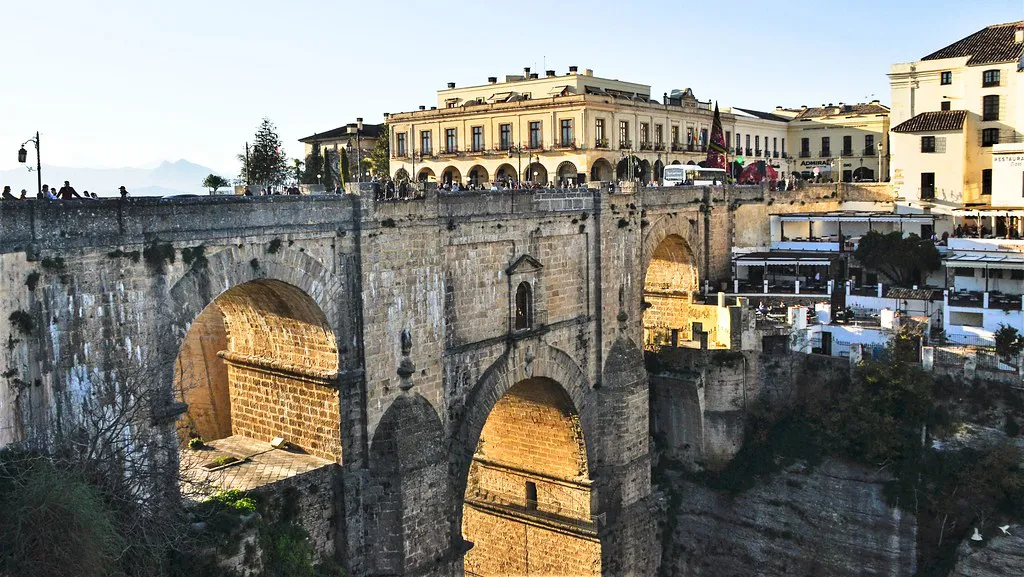
Ronda is the most dramatic option: a white hilltop city perched on a sheer gorge, 90 minutes by car or 1h45m by train. The Puente Nuevo bridge over the El Tajo gorge is genuinely spectacular. Combine it with the nearby village of Setenil de las Bodegas — its houses are built into the overhanging rock face — if you have a car and want a full day. Nerja, 50 minutes east along the coast, offers the Balcón de Europa clifftop promenade and the Nerja Caves, where Neanderthal-era cave paintings dating to approximately 42,000 years ago were discovered in 1959. The cave is open 363 days a year; adult entry is around €12.
The Caminito del Rey is a 7.7 km walkway pinned to the vertical walls of a limestone gorge about 60 km north of Málaga. The path was historically the most dangerous walk in the world before a full restoration in 2015. Tickets sell out weeks in advance in spring and summer — book as soon as your dates are confirmed. Granada and the Alhambra are feasible as a day trip (1h30m each way by bus from Estación de Autobuses), though the Alhambra alone demands several hours and Alhambra tickets must be booked weeks ahead. Consider a dedicated overnight stay in Granada if time allows. the best day trips has full transport details and booking links for each destination.
Antequera is a less-visited option that rewards the detour: 47 minutes north of Málaga by car, it has a pristine Moorish castle and the Dolmens of Antequera, a UNESCO World Heritage Site featuring megalithic burial chambers dating to around 3,500 BC. It's quieter than most Andalusian day-trip destinations and gives you a different, more local side of the region.
Frequently Asked Questions
What do I get if I Buy a Málaga Pass Card?
A Málaga Pass Card typically offers free entry to several top museums and attractions. It often includes unlimited use of public transport for a set period. Some passes also provide discounts on tours, shops, and restaurants. Always check the specific inclusions of the pass you are considering.
Which Málaga city pass guide options fit first-time visitors?
First-time visitors to Málaga often benefit most from a comprehensive city pass. Look for options that include major sights like the Alcazaba, Picasso Museum, and Cathedral. Passes with public transport are also very convenient. Compare different pass durations to match your trip length.
How much time should you plan for Málaga city pass guide?
Plan 2-3 full days to make the most of a Málaga city pass, especially for first-time visitors. This allows you to visit key attractions without rushing and utilize public transport benefits. A longer stay provides flexibility for more in-depth exploration. You can also include some free things to do.
What should travelers avoid when planning Málaga city pass guide?
Avoid buying a Málaga city pass if your itinerary is very short or focused on only one or two attractions. Do not purchase a pass without comparing its value to individual ticket prices. Also, check for any time-sensitive restrictions or booking requirements. Ensure the pass genuinely aligns with your plans.
Choosing the right Málaga city pass comes down to a simple calculation: list the paid sites you actually plan to visit, add up their individual entry costs, and compare that total against the pass price for your stay duration. If you're visiting four or more major sites in 48 hours, the pass wins. If your trip is more beach-and-tapas than museum-heavy, individual tickets or the free Sunday afternoon windows often work better.
Málaga rewards the visitor who does some preparation. Book Picasso Museum tickets and Caminito del Rey permits before you travel. Activate the city pass only at the moment you first use it. Build your days around the Old Town core and branch outward to the coast and day-trip destinations. With that groundwork done, the city more than delivers on its reputation.
You might also like


Continue reading
More guides you'll find useful