Prado Museum Madrid Travel Guide
Plan your Prado Museum Madrid visit with top picks, neighborhood context, timing tips, and practical booking advice for a smoother trip.
On this page
Prado Museum Madrid: Essential Visitor's Guide
The Prado Museum Madrid is one of the world's great art institutions — not because of its size, but because of its concentration of masterworks. Assembled by Spanish royalty at the height of the empire, the collection gives you Velázquez, Goya, Bosch, Titian, and Rubens in a single building, each represented at the peak of their powers.
With over 7,600 paintings in storage and roughly 2,000 on display at any one time, you need a plan. This guide tells you what to see first, how to move through the rooms efficiently, when to go, and what everything costs in 2026.
Plan with trusted sources: cross-check opening hours and seasonal details with the official Madrid tourism site, and read more about the city on its Wikipedia entry before you go.
Prado Museum History and the Royal Collection
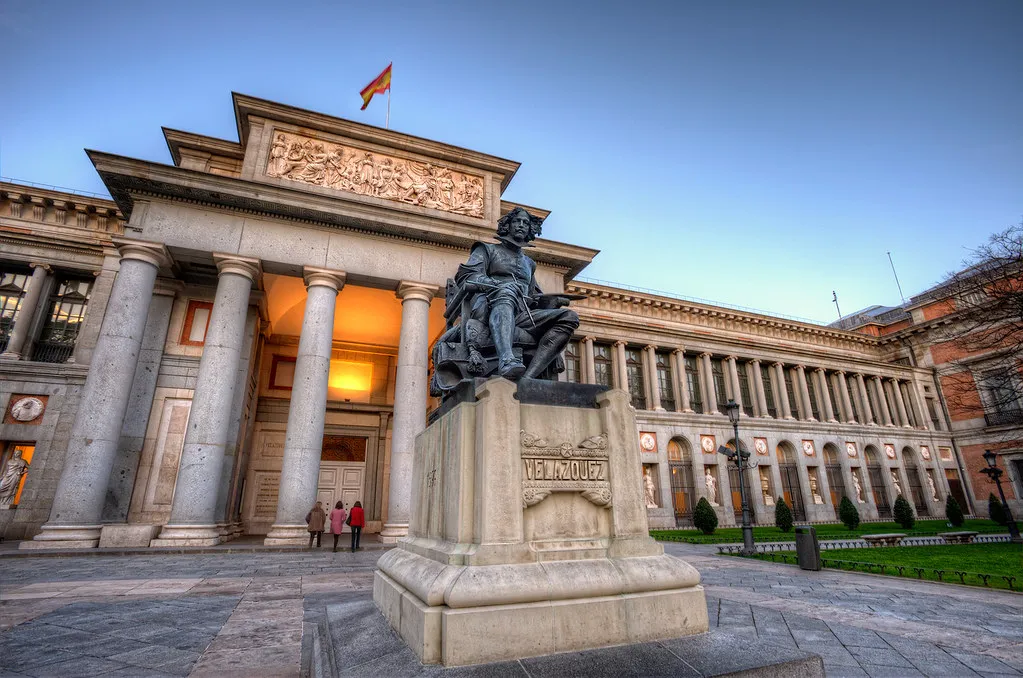
The building dates to 1785, when architect Juan de Villanueva designed it under King Charles III as a natural history cabinet. It became a museum of paintings and sculpture in 1819 under Ferdinand VII. What made it exceptional from the start was its source: not a random accumulation, but the deliberate collecting of three of Spain's most acquisitive monarchs.
Carlos I was a devoted patron of Titian, eventually bringing the Venetian master to Spain as a salaried court painter. Felipe II added Flemish works and Italian Renaissance panels. Felipe IV gave his court painter Diego Velázquez a blank check and sent him across Europe to purchase the finest paintings available. The result is a collection assembled by people of genuine taste rather than conquest or inheritance.
This royal provenance explains why the Prado holds more than 40 Titian canvases, an unrivalled Rubens collection, the world's most significant group of Bosch triptychs, and more Velázquez paintings than any other museum on earth. It also explains why works by El Greco, Zurbarán, Murillo, and Ribera sit alongside Raphael, Fra Angelico, and Rembrandt. The Prado opened to the public in 1819 — it celebrated its bicentennial in 2019 — and its collection has grown steadily ever since, now holding over 28,000 works in total.
Must-See Prado Museum Highlights: Famous Paintings
The Prado's permanent collection is vast enough to defeat any visitor without a strategy. Focus on the three Spanish masters first — Velázquez, Goya, and El Greco — then cross into the Flemish rooms for Bosch and van der Weyden. Italian works by Titian and Raphael are along the way. The following are the paintings that consistently stop visitors in their tracks.
Las Meninas by Diego Velázquez (Room 012) is the centrepiece. The painting is over three metres tall and nearly as wide. What looks at first like a portrait of the Infanta Margarita and her ladies-in-waiting turns out to involve Velázquez himself at his easel, the royal couple reflected in a back-wall mirror, and a courtier paused in a doorway. Working out what's actually happening — and where the viewer stands in the scene — is the experience. Plan at least 15 minutes here.
The Garden of Earthly Delights by Hieronymus Bosch (Room 056A) is a triptych created between 1490 and 1510. The left panel shows Eden, the right panel shows hell, and the enormous central panel is filled with nude figures, giant birds, people inside bubbles, and structures that look like science fiction. It rewards 20 minutes of slow looking; every square centimetre contains something new. Expect a crowd — arrive early or use the lunchtime lull to get close.
Goya's Black Paintings (Room 067, lower floor) were painted directly on the walls of Goya's house outside Madrid near the end of his life. Saturn Devouring His Son is the most visceral: a giant consumes a human body while staring outward with an expression of terror rather than appetite. These 14 paintings — transferred to canvas after Goya's death — are among the strangest and most psychologically intense works in Western art.
La Maja Desnuda and La Maja Vestida by Francisco de Goya
These two paintings hang side by side in Room 036 and are always worth stopping for. The clothed version (La Maja Vestida) and the nude (La Maja Desnuda) were painted for Goya's patron Manuel Godoy, chief minister to King Charles IV. The nude was sequestered by the Spanish Inquisition for decades on grounds of indecency — Goya was summoned before them in 1815 and only escaped serious punishment by arguing the work was a classical study rather than an erotic commission.
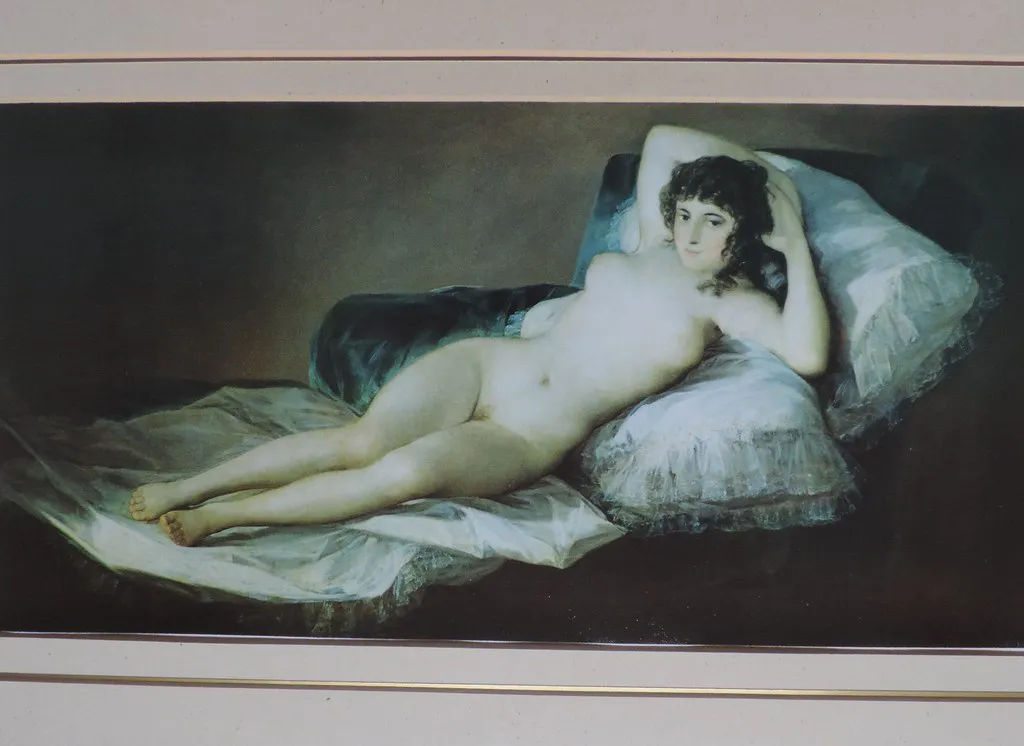
The identities of the model remain disputed. For generations she was assumed to be the Duchess of Alba, a powerful aristocrat with whom Goya had a documented close relationship. Current scholarship points more likely to Pepita Tudó, Godoy's mistress. The uncertainty adds to the paintings' intrigue. What is not disputed is the quality: the nude in particular is rendered with extraordinary delicacy, far softer and more intimate in handling than its clothed companion.
In the same room you'll also find Goya's portraits of King Charles IV's family and his two large war paintings — The Second of May 1808 and The Third of May 1808. Standing between Goya's royal commissions and his war reportage in one room captures his full trajectory better than almost anywhere else in the museum.
Descent from the Cross by Rogier van der Weyden
This painting from around 1435 hangs in Room 058, one of the first rooms visitors reach off the main entrance. Many people consider it the single most emotionally powerful work in the museum. Van der Weyden squeezed ten near-life-size figures into a space originally designed for an altarpiece, and the compression makes it feel more immediate rather than less. The fainting Virgin Mary and the concentrated grief on every face have a directness that centuries of familiarity have not blunted.
The technical achievement is extraordinary. Look at the drapery: each fold is rendered individually, with the weight and texture of real cloth. The colour palette — vivid crimson, deep green, pale gold — pulls the eye through the composition systematically. Van der Weyden was also exceptional at depicting hands, and the painting is full of them in different states of grief and support.
This is one of the first Flemish works to have a demonstrable influence on Spanish painting. Velázquez would have known it well. Standing in front of it before the tour groups arrive — head there as soon as the museum opens at 10:00 — is one of the more memorable experiences the Prado offers.
Albrecht Dürer and the Prado's Hidden Gems
Dürer's Self-Portrait from 1498 hangs near the Flemish rooms and is worth seeking out deliberately. Dürer was 26 when he painted it, and the expression — a mixture of supreme confidence and mild contempt for anyone who might not recognize his genius yet — is immediately readable. He looks slightly down at the viewer, dressed impeccably in Italian fashion, projecting status he had not yet fully earned. Just to the right hangs his monumental Adam and Eve from about a decade later, which confirms he could back it up.
The Prado has several other works that most visitors skip while moving between the famous rooms. The Dauphin's Treasure — a collection of decorative vessels in crystal, enamel, and precious stones brought from Versailles when Philip V took the Spanish throne — sits in the Toro Norte on the second floor of the Goya Wing. Sofonisba Anguissola's portrait of Philip II is worth finding not just for its quality but for the story: a portrait of a 16th-century king painted by a female artist, misattributed to a male painter until 1990. Giambattista Tiepolo's Immaculate Conception depicts Mary not as a passive girl but as a strong figure trampling evil underfoot.
The Italian rooms hold Titian's Equestrian Portrait of Charles V, which established the template for royal equestrian portraiture across Europe for two centuries. Raphael's The Holy Family and The Cardinal are both in excellent condition. Fra Angelico's Annunciation is one of the quietest paintings in the museum and one of the finest.
A Self-Guided Tour: Room-by-Room Route
The Prado's layout can disorient first-time visitors. This route hits the main highlights in a logical sequence and takes three to four hours at a reasonable pace. Pick up a free floor map at the information desk near the entrance — it marks the locations of all major works.
- Rooms 049–058 (Flemish, ground floor): Start here as soon as you enter. Go straight to van der Weyden's Descent from the Cross (Room 058) and then Bosch's Garden of Earthly Delights (Room 056A). Tour groups fill these rooms by 11:00; arriving at opening gives you 15–20 minutes in front of each painting without competition.
- Rooms 025–029 (Titian and Rubens, first floor): Move upstairs into the long central gallery. Charles V at Mühlberg by Titian anchors this section alongside his mythological works. Rubens's Adoration of the Magi is at the far end. These rooms also connect to the El Greco section (Room 008B).
- Room 012 (Velázquez): Las Meninas is here, along with several other Velázquez masterworks including The Surrender at Breda, The Spinners, and his portrait series of the royal family. Budget 30–40 minutes in these rooms.
- Rooms 032, 036, 067 (Goya): Room 032 has the large war paintings and the portrait of Charles IV's family. Room 036 has the Maja paintings. Head down to the lower floor for the Black Paintings in Room 067 — these require daylight or good artificial light and are best seen in the morning.
If time is short, drop the Italian rooms on a first visit and spend the time saved standing longer in front of Las Meninas and the Black Paintings. Both reward more time than most visitors give them.
Prado Museum Tickets, Hours, and Practical Information
The Prado opens at 10:00 every day. Closing times are 20:00 Monday through Saturday, and 19:00 on Sundays and holidays. The museum closes entirely on 1 January, 1 May, and 25 December. On 6 January, 24 December, and 31 December it closes at 14:00. General admission costs €15. Reduced admission (€7.50) applies to visitors over 65. Entry is free for anyone under 18 and for students up to age 25 with a valid student ID.
| Ticket Type | Price (2026) | Who Qualifies |
|---|---|---|
| General admission | €15 | Adults (18–64) |
| Reduced admission | €7.50 | Visitors 65 and over |
| Free entry | €0 | Under 18 / students up to 25 with valid ID |
| Free daily window (Mon–Sat) | €0 | All visitors, 18:00–20:00 |
| Free daily window (Sun & holidays) | €0 | All visitors, 17:00–19:00 |
| Paseo del Arte combined | €32.80 | Prado + Reina Sofía + Thyssen (discounted) |
Free admission runs during the last two hours of each day: 18:00–20:00 Monday through Saturday, and 17:00–19:00 on Sundays and holidays. These slots are popular — if you plan to use the free window, arrive at least 45 minutes before it starts. The queue builds quickly and you may spend the first 30 minutes waiting outside.
Buy tickets online in advance at museodelprado.es. Online tickets allow direct entry through security without stopping at the box office, which saves time especially during spring and summer peaks. Timed-entry slots fill up days in advance in July and August. The main entrance for pre-purchased tickets is the Puerta de los Jerónimos on the northeast side of the building.
The Prado's official app is free and available before your visit. It includes audio guides keyed to specific works, a searchable floor plan, and background on over 1,000 paintings. Download it before you arrive — in-museum wifi is unreliable. Photography is not permitted anywhere in the galleries; museum guards enforce this actively. The Prado's own website hosts high-resolution images of most major works for free if you want to study them before or after your visit: the Prado in Madrid.
When to Visit for Fewer Crowds
The Prado is busiest between 11:00 and 14:00, particularly in spring and summer. The two best windows are immediately at opening (10:00) and during the lunchtime lull (around 13:30–15:00), when visitors leave for lunch and rooms thin out noticeably. The free-entry evening hours are busy year-round despite the timing — many visitors specifically target them and the queues can be long.
Weekdays in November, January, and February are the quietest overall. Saturday mornings in summer are the worst. If you're visiting during Easter week (Semana Santa) or in July and August, book tickets two to three weeks in advance and aim for the 10:00 opening slot.
Plan for at least three to four hours. Art enthusiasts who want to cover Flemish, Spanish Golden Age, and Goya in depth should budget a full day. The museum has a cafeteria on site if you need a break. For more general advice on getting around the city, see our guide to top things to do in Madrid.
The Prado's Neighbors: Reina Sofía and Thyssen-Bornemisza
The Prado sits at one corner of Madrid's "Golden Triangle of Art." Within a five-minute walk are two more world-class museums: the Museo Nacional Centro de Arte Reina Sofía and the Thyssen-Bornemisza. A combined Paseo del Arte ticket costs €32.80 and grants discounted entry to all three. It represents one of the genuinely good value propositions in European cultural tourism.
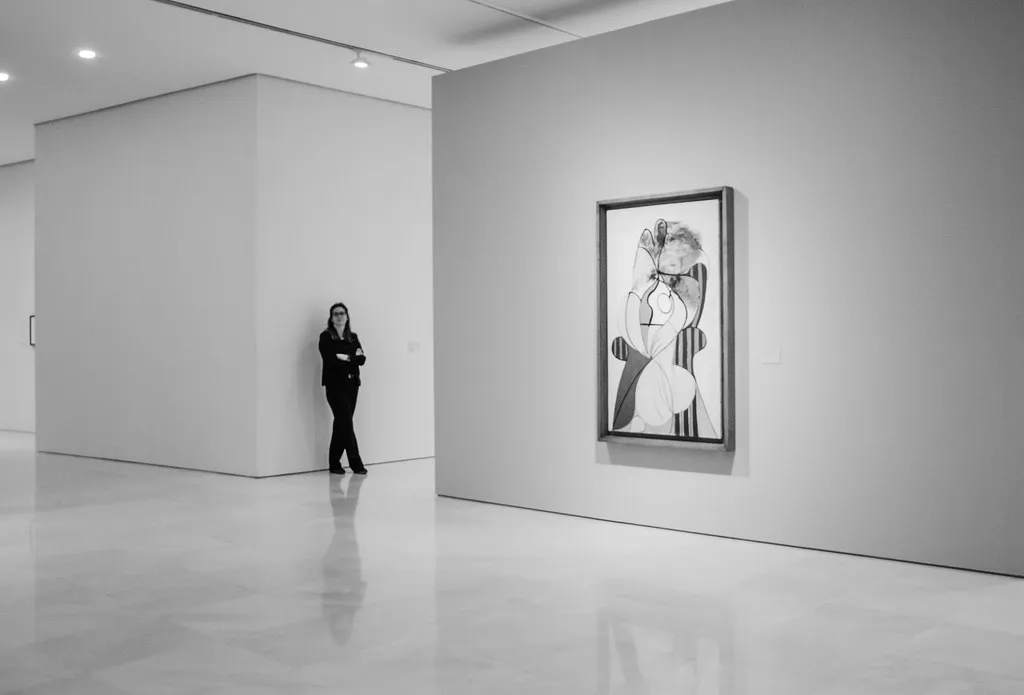
The Reina Sofía focuses on 20th-century Spanish art. Its most visited work is Picasso's Guernica — nearly four metres tall and nearly eight metres wide, the anti-war painting is one of those rare works that is substantially more powerful in person than in reproduction. The museum also holds the best collection of Spanish Surrealism anywhere: Miró, Dalí, Juan Gris, and Picasso together in consecutive rooms.
The Thyssen-Bornemisza covers the periods the Prado deliberately leaves out: Impressionism, Post-Impressionism, American painting, and European modernism from Monet and Renoir through Edward Hopper and Rothko. Think of it as the chapter of art history the Prado doesn't write. If art is your primary reason for being in Madrid, budget a full day for the Prado and a second day split between the Reina Sofía and Thyssen.
Consider staying near these museums to maximize your time. For accommodation options around the museum district, see our guide to where to stay in the city.
What to Do Near the Prado
After three or four hours in the galleries, fresh air helps. Retiro Park is directly adjacent to the museum's east side — a large formal park with a boating lake, the Crystal Palace exhibition pavilion, and enough tree-lined paths to walk for an hour without backtracking. It's one of the best places in Madrid to sit down without spending money. Read more about Retiro Park Madrid.
The Royal Botanical Garden (Real Jardín Botánico) shares a fence with the museum's south side. Entry costs €6 in 2026. It's a quiet, well-curated space that works well as a 30-minute cooldown between museums. The CaixaForum exhibition centre is across the Paseo del Prado and usually has one or two strong temporary shows alongside the Prado's own temporary exhibitions.
For food, the Huertas neighbourhood — a short walk northwest of the museum — has a good mix of traditional tapas bars and neighbourhood restaurants at non-tourist prices. La Sanabresa on Calle del Amor de Dios is a reliable casa de comidas with a lunch menu. Casa González on Calle del León is a neighbourhood deli worth stopping in for cured meats and cheese. Mercado Antón Martín combines traditional market stalls with contemporary food options. You can also explore free things to do to fill the rest of your day without overspending.
Frequently Asked Questions
What is the most famous painting in the Prado Museum in Madrid?
The most famous painting at the Prado Museum is widely considered to be 'Las Meninas' by Diego Velázquez. This masterpiece from 1656 is celebrated for its complex composition and intriguing play with perspective. It is a must-see for any visitor to the museum.
How long do you need to spend at the Prado Museum?
You should plan to spend at least three to four hours at the Prado Museum to see the main highlights. Art enthusiasts might easily spend an entire day exploring its vast collection. Consider your interests and stamina when planning your visit duration.
What are Prado Museum hours?
Prado Museum hours typically run from 10:00 AM to 8:00 PM Monday through Saturday, and 10:00 AM to 7:00 PM on Sundays and holidays. Free admission is usually available during the last two hours of operation. Always check the official Prado website for the most current schedule and any special closures.
Can you take photos in the Prado?
Generally, photography is not allowed inside the exhibition rooms of the Prado Museum to protect the artworks and ensure a pleasant experience for all visitors. However, you can often take photos in the main halls and exterior areas. Always look for signage or ask staff for clarification on specific rules.
The Prado Museum Madrid offers an unforgettable journey through centuries of artistic genius.
From Velázquez's 'Las Meninas' to Bosch's 'Garden of Earthly Delights', its collection is truly world-class.
Careful planning, including booking tickets in advance, ensures a smooth and enriching experience.
Immerse yourself in this cultural gem and discover the heart of Spanish art history.
You might also like


Continue reading
More guides you'll find useful