10 Best Restaurants in Madrid for Foodies (2026)
Discover the 10 best restaurants in Madrid with top picks, neighborhood context, timing tips, and practical booking advice for a smoother trip.
On this page
10 Best Restaurants in Madrid: A Food Lover's Guide (2026)
Madrid rewards visitors who eat on its own schedule. The city runs on five meals a day — a pastry at breakfast, a mid-morning almuerzo, a sit-down comida from 14:00 to 16:00, coffee and cake at merienda, and a proper dinner that rarely starts before 21:00. Understand that rhythm and the city's restaurant scene makes instant sense. This guide covers the best restaurants in Madrid for 2026, organized by what you actually need to know: which places to book, which bars to walk into, which markets to use as a base, and where to find a proper paella.
Plan with trusted sources: cross-check opening hours and seasonal details with the official Madrid tourism site, and read more about the city on its Wikipedia entry before you go.
The Best Restaurants in Madrid (2026)
Madrid's restaurant scene spans centuries-old taverns and three-Michelin-star experimentation. The ten places below were chosen for consistent quality, clear identity, and genuine local use — none of them survive purely on tourist traffic.
| Restaurant | Neighborhood | Specialty | Price Range |
|---|---|---|---|
| Sobrino de Botín | La Latina | Cochinillo & cordero asado | €25–€40 mains |
| DiverXO | Chamartín | 3-Michelin-star tasting menu | ~€365 pp |
| La Tasquería de Javi Estévez | Retiro | 1-star offal & creative tasting | ~€70 tasting |
| Casa Lucio | La Latina | Huevos estrellados | €20–€40 mains |
| El Mesón del Boquerón | Cava de San Miguel | Callos & fried anchovies | Budget–mid |
| La Venencia | Huertas | Sherry wines & simple tapas | Budget |
| Bodega de la Ardosa | Chamberí | Tortilla, salmorejo, callos | Budget |
| Chocolatería San Ginés | Puerta del Sol | Churros & hot chocolate | €4–€6 |
| Sala de Despiece | Chamberí | Creative small plates | €10–€25 dishes |
| Mercado de San Miguel | Plaza Mayor | Gourmet market hall | €3–€15 items |
- Sobrino de Botín — Certified by Guinness as the world's oldest continuously operating restaurant, open since 1725. The wood-fired ovens still cook the cochinillo asado (roast suckling pig) and cordero asado (roast lamb) the same way they have for three centuries. Book a table in the cellar vaults for the full effect. Mains €25–€40. Address: Calle de los Cuchilleros 17, La Latina. Hours: daily 13:00–16:00 and 20:00–23:00.
- DiverXO — Chef Dabiz Muñoz holds three Michelin stars and was awarded World's Best Chef in 2023. The tasting menu (around €365 per person) is deliberately disorienting — dishes arrive on flying-pig sculptures, flavors collide, and the theatrical service is part of the experience. Reservations open months in advance online; set an alarm. NH Collection Eurobuilding hotel, Chamartín. Open Tue–Sat lunch and dinner.
- La Tasquería de Javi Estévez — One Michelin star built on offal. Chef Javi Estévez takes lamb sweetbreads, pork cheek, beef tongue, and red prawn in combinations that make even reluctant diners curious. Tasting menu around €70. Calle Duque de Sesto 48, Retiro. Hours: Mon–Sat 13:30–16:00 and 20:30–23:00.
- Casa Lucio — Legendary in La Latina for huevos estrellados: fried potatoes blanketed by a broken egg. Royalty, politicians, and footballers eat here, yet the room stays traditional and the portions are enormous. Main courses €20–€40. Calle de la Cava Baja 35. Daily 13:00–16:00 and 20:30–24:00.
- El Mesón del Boquerón — The anchor of Cava de San Miguel, one block from Plaza Mayor. Order the callos a la madrileña (tripe with chorizo and morcilla, no chickpeas — the Madrid way) alongside the namesake fried anchovies. Cash-in-hand pricing keeps it honest. Hours: Wed–Mon 13:00–17:00 and 20:00–00:30.
- La Venencia — Five types of Sherry wine, a handful of simple tapas, chalk tabs on the bar, and an interior untouched since the Spanish Civil War. Cameras are discouraged, cocktails do not exist, and cash is the only payment. Calle de Echegaray 7, Huertas. Hours: Mon–Thu 12:30–15:30 and 19:30–01:00; Fri–Sat until 01:30.
- Bodega de la Ardosa — Open since 1892, now flanked by Chamberí's trendy bars but still packed with regulars ordering salmorejo, tortilla de patata, and callos. Go on a weekday afternoon to get a stool. Calle de Colón 14. Hours: Mon–Thu 08:00–02:00; Fri 08:00–02:30; Sat–Sun 10:00–02:30.
- Chocolatería San Ginés — Open since 1894 and operating 24 hours a day every day of the year. Churros and porras served with thick, dark chocolate. A serving is around €4–€6. Late-night after a concert is the classic move, but mid-morning before the tourist rush is the practical one. Pasadizo de San Ginés 5, off Puerta del Sol.
- Sala de Despiece — Chamberí's most inventive small-plates spot, with a menu organized around a butcher's concept: every cut treated as a creative challenge. Go with three or four people and order widely. Dishes €10–€25. Calle de Ponzano 11. Tue–Sat 13:30–16:00 and 20:30–23:30.
- Mercado de San Miguel — The gourmet iron-and-glass hall beside Plaza Mayor is the easiest way to sample Iberian ham, fresh oysters, croquetas, and montaditos in one visit. Individual items €3–€15. It crowds badly on Friday and Saturday evenings — go mid-morning or 17:00–19:00 for breathing room. Daily 10:00–24:00.
Madrid Bars: Where to Drink Like a Madrileño
Madrid has more bars per capita than almost any other city in Europe, and each neighborhood has its own rhythm. The bars worth seeking out are not cocktail lounges — they are old-school tabernas and bodegas where the drink is specific to the house and the food is served to fuel conversation, not to impress a reviewer.
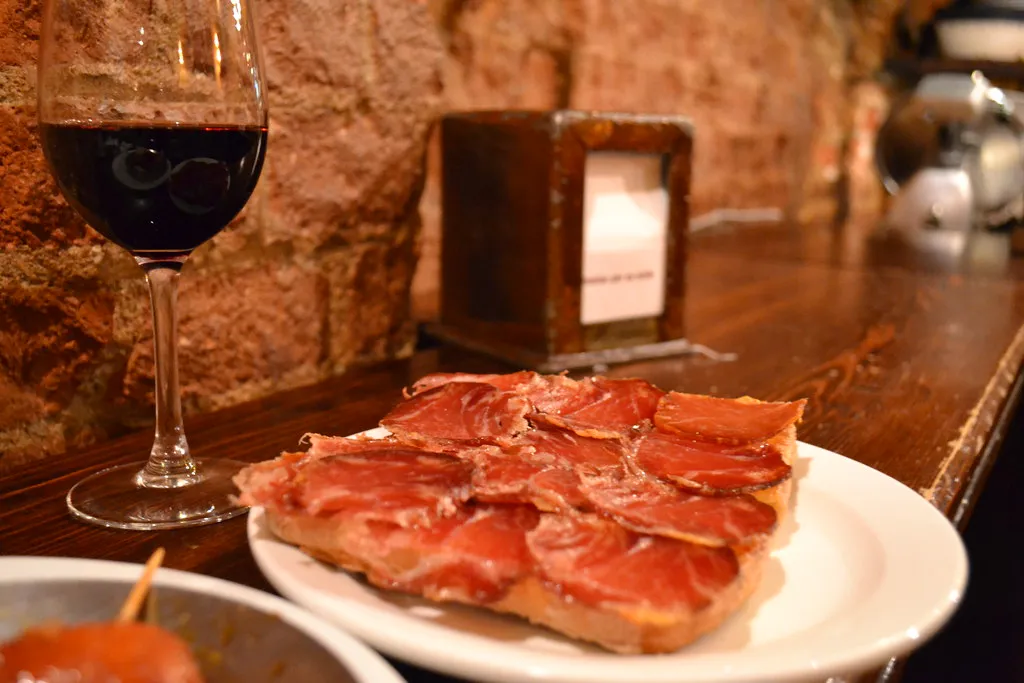
La Venencia (Huertas) is the starting point for any serious bar crawl in Madrid. It stocks only Sherry: Manzanilla, Fino, Amontillado, Palo Cortado, and Oloroso. Order light to dark and pair each glass with anchovies or cured sausage. The bartender tallies your tab in chalk on the wooden bar and has done so since the 1930s. Ernest Hemingway drank here.
Taberna de Angel Sierra (Plaza de Chueca) runs on vermut. On Sunday from 13:00 onwards, the standing-room space overflows onto the street. Spanish vermouth — aromatized, served de grifo (on tap), ice-cold with olives — is the city's most socially acceptable pre-noon drink. This taberna has been open since 1917. Arrive on a weekday to actually get inside. Calle San Gregorio 2. Hours: Mon–Sat 12:00–02:30; Sun until 01:30.
Viva Madrid (Huertas, just off Calle de Echegaray) is decorated with hand-painted ceramic tiles and draws a crowd for gin and tonics. Spain elevated the G&T to its own art form — large balloon glass, premium gin, premium tonic, and garnishes that range from fresh herbs to pink peppercorns. Viva Madrid's version is served more classically, but the tiled interior alone is worth the visit. Calle de Manuel Fernández y González 7. Tue–Thu and Sun 12:00–02:00; Fri–Sat until 02:30.
The Best Tapas in Madrid
Unlike San Sebastián (where pintxos are laid on the bar) or Granada (where tapas come free with every drink), Madrid's tapas scene operates on a pay-per-plate model. The city's contribution to small-plate culture is depth rather than generosity: Madrid specializes in dishes that have been refined over a century in a single kitchen.
Mesón del Champiñón (Cava de San Miguel 17, La Latina) has been filling mushrooms with chorizo and baking them since 1964. The queue stretches outside most evenings, but turnover is fast. Order mushrooms and a caña — the city's sensibly small 200ml beer — and stand at the bar. A plate of six costs around €8.
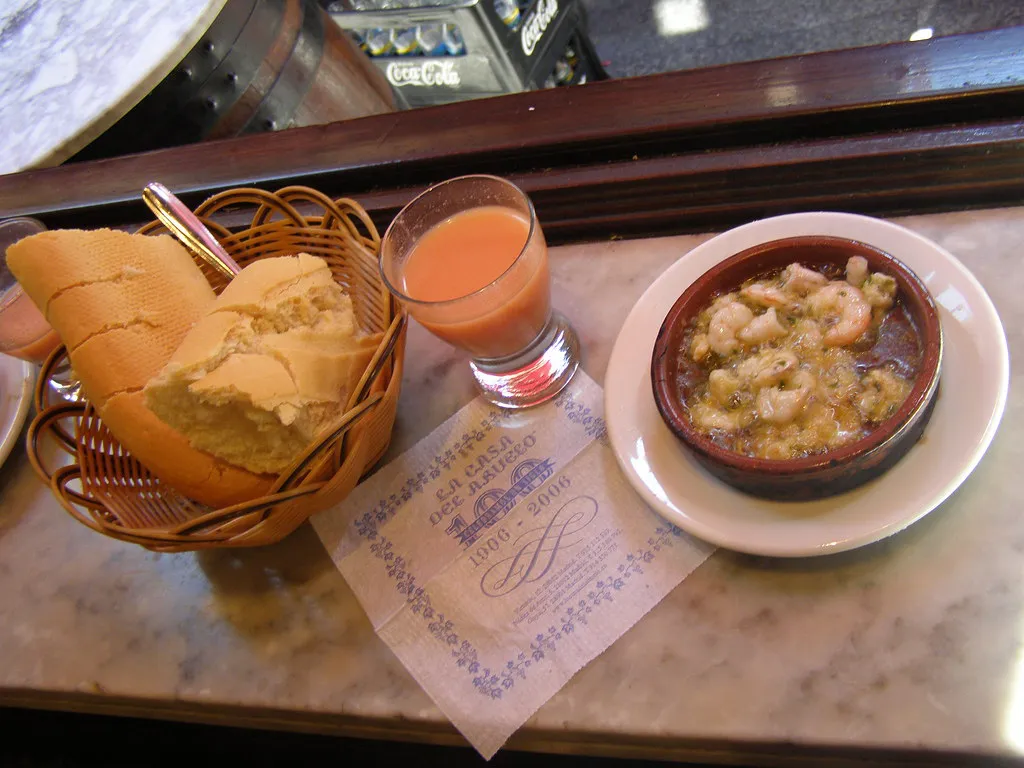
La Casa del Abuelo (Calle de la Victoria 12, near Puerta del Sol) has been serving gambas al ajillo — shrimp sizzling in garlic oil and a splash of dry sherry — since 1906. The house also pours its own sweet red wine. A ración runs €10–€14. This is single-dish cooking perfected over four generations.
Bodega de la Ardosa (Chamberí) and El Cisne Azul (Calle de Gravina 19, Chueca) represent the modern tapas register. El Cisne Azul specializes in wild mushrooms — chanterelles with scrambled eggs and truffle, boletus with foie gras — and is the destination for Madrileños craving seasonal fungi. For a broader spread, Arzabal near the Reina Sofía museum offers elevated tapas in a taberna setting with multiple locations. Check our what to eat in Madrid for a full neighborhood-by-neighborhood breakdown of tapas streets.
Madrid Markets: Where Locals Actually Eat
Every Madrid neighborhood has a market, and the best ones function as social anchors rather than tourist attractions. The gap between a market built for visitors and one built for residents is noticeable within about thirty seconds of walking in.
Mercado de San Fernando (Calle de Embajadores 41, Lavapiés) is the most genuine of the central options. The Embajadores neighborhood is multicultural and gritty, and the market reflects it — traditional tapas bars beside international stalls, a second-hand bookshop, craft beer taps, and no polished signage anywhere. Come for chorizo and lomo, stay for a Mahou cerveza and the atmosphere. Hours: Tue–Thu 09:00–21:00; Fri–Sat 09:00–23:00; Sun 11:00–17:00; Mon 09:00–15:00 and 17:00–21:00.
Mercado de San Antón (Calle de Augusto Figueroa 24, Chueca) has three floors: a traditional fresh-produce market on the ground level, a gourmet tapas hall on the first floor, and a rooftop terrace bar. It is more polished than San Fernando but still serves a primarily local clientele from the Chueca neighborhood. The ground-floor fishmongers will cook your selection at the bar stalls upstairs. Hours: Mon–Sat 10:00–22:00.
Mercado de San Miguel (Plaza de San Miguel, near Plaza Mayor) is the tourist-facing version — a beautiful 1916 iron pavilion turned gourmet hall. It draws bigger crowds than the Prado on some weekends. The quality of produce is genuinely high, but so are the prices. Use it for a tasting visit rather than a seated meal. If you arrive mid-morning before 12:00, it is manageable. After 19:00 on a Friday or Saturday, it is not.
For a purely local market with no pretension, try Mercado de Chamartín or Mercado Maravillas in the north of the city. Both are working produce markets where Madrid's immigrant communities and long-term residents shop. Dabiz Muñoz names Mercado Maravillas as one of his regular stops precisely because it reflects the multicultural reality of modern Madrid.
Where to Get Your Paella Fix in Madrid
Paella is a Valencian dish and Madrid is not Valencia. That caveat stated, the city has genuine arrocerías (rice specialists) that execute paella well — you just need to know what to look for and where to look.
A real paella takes 20–30 minutes to cook and is almost always sold for a minimum of two people. If a restaurant offers individual portions or delivers it in under ten minutes, it was made earlier. The sign of a properly cooked paella is the socarrat — the caramelized crust that forms on the bottom of the pan when rice meets the heat at exactly the right moment. It should be golden and slightly crunchy, not burnt.
Berlanga is the choice endorsed by Dabiz Muñoz for traditional Valencian-style paella: round-grain rice, chicken, rabbit, green beans, and garrofó beans cooked over wood fire. The result is close to what you would eat on the Valencian coast. For something less formal, Samm on Calle Reina Mercedes offers equally excellent rice dishes at lower prices and with less ceremony. Both restaurants require advance booking for weekend lunch.
La Paella de la Reina (Calle de la Reina 26, near Gran Vía) and Arrocería Daniela (Calle del General Oráa 21, Salamanca) are reliable central options. Daniela in particular has a calm dining room well-suited to a long comida. Avoid any restaurant in the Plaza Mayor tourist corridor that displays laminated paella photos — these are almost never made to order.
Madrid's Gastronomic Evolution
For most of the twentieth century, Spain's culinary reputation belonged to the Basque Country and Catalonia. Madrid was respected for its traditional cooking — cocido madrileño, roast meats, cured hams — but not for innovation. That changed significantly from 2019 onward, and two developments drove the shift.
First, major hotel openings brought fine-dining infrastructure to the city. The Mandarin Oriental Ritz reopened after a three-year renovation in 2021 with a flagship restaurant by chef Quique Dacosta. The Four Seasons Hotel Madrid launched the same year with multiple dining concepts. These openings created new fine-dining destinations that attracted serious international attention and gave Madrid a luxury restaurant tier it previously lacked.
Second, a generation of younger chefs began reinterpreting Madrid's own culinary identity rather than importing techniques from elsewhere. Paco Roncero's work at Casino de Madrid, Diego Guerrero's fermentation-led cooking at Dstage, and the fire-centered menu at Smoked Room represent this direction. The city currently holds 26 Michelin-starred restaurants as of 2026 — more than any other Spanish city outside of the Basque Country.
The practical consequence for visitors is a wider range of quality than existed even five years ago. You can now eat one of the most technically accomplished meals in Europe at DiverXO or Dstage, then walk ten minutes to a 1892 taberna for tripe and house wine. That contrast is not available in most cities at this density.
Madrid Food Tours: How to Use Them
A guided food tour in Madrid makes more sense here than in most cities because the knowledge barrier is real. Many of the best tapas bars have no English menus, some have no menus at all, and the rhythm of a tapas crawl — how many stops, how much to order at each, when to move on — is genuinely unfamiliar to first-time visitors.
Devour Madrid runs a four-hour tour through the historic center that covers four tapas stops, contextualizes Spanish history around the food (Moorish influence on spices, Habsburg-era roasting culture, the post-Franco food boom), and serves tinto de verano alongside everything. It costs around €75 per person and is consistently rated among the top food experiences in Madrid on booking platforms. The tour begins near the Puerta del Sol and ends in La Latina.
If you prefer a more focused experience, wine-and-tapas tours lasting around 2.5 hours cover the sherry bars of Huertas and the vermouth culture of Chamberí in one evening. Cooking classes are also widely available for visitors who want to learn cocido madrileño or tortilla de patata firsthand. Book any food tour at least three days ahead in peak months (June–September and December); the better operators sell out fast. Check our guide on top things to do in Madrid for tour operators and current pricing.
Madrid Dining by the Clock: The Five-Meal Day
No single piece of practical knowledge will improve your Madrid food experience more than understanding the five-meal structure that governs daily eating here. Arriving at a restaurant at 19:00 for dinner and finding it empty or closed is one of the most common first-timer frustrations — it happens not because the restaurant is bad, but because dinner in Madrid does not exist at 19:00.
The sequence runs: desayuno (breakfast, 07:00–10:00, typically coffee and a pastry on the go); almuerzo (a mid-morning snack, 10:00–12:00, often a bocadillo or small tapa at a bar); comida (the main meal of the day, 14:00–16:30, when restaurants are full and kitchens are at full capacity); merienda (coffee, cake, or churros in the late afternoon, 17:00–19:00); and cena (dinner, 21:00–23:30 on weekdays, midnight or later on weekends).
The comida is the anchor. Spanish people eat their largest meal between 14:00 and 16:00, which means lunch queues at popular restaurants begin forming by 13:30. If you want to eat at Sobrino de Botín or Casa Lucio without a reservation, arrive at 13:00 when the doors open. The post-comida window from 16:00 to 21:00 is when bars do their strongest tapas trade — this is the best time to do an unplanned tapas crawl through La Latina or Lavapiés without fighting for a table.
On Sundays, aperitivo time (roughly 13:00–15:00) is a citywide institution. Bars like Taberna de Angel Sierra fill well before the lunch hour with locals drinking vermut and sharing olives. It is, as the Guardian noted in 2024, the most socially acceptable time to drink before noon in Spain — not brunch, but aperitivo. Plan your Sunday food itinerary around it.
Booking Tips and Practical Notes
Michelin-starred restaurants require reservations weeks to months in advance. DiverXO releases availability online at specific dates — follow them on social media to know when the next window opens. Dstage and Paco Roncero Restaurante are slightly easier to book but still require at least two weeks' notice for weekends. La Tasquería can usually be booked 10–14 days out.
Mid-range restaurants and traditional taverns are more flexible. For Sobrino de Botín or Casa Lucio, book three to five days ahead for weekdays and a week ahead for weekends. Same-day bookings are occasionally possible at lunch if you call at 11:00 when lines open. Many restaurants use TheFork (formerly ElTenedor) for online reservations — it works well and occasionally offers discount deals on off-peak slots.
Tipping is not mandatory in Spain. Locals typically round up the bill or leave small change. For good service at a sit-down restaurant, 5–10% is appreciated but never expected. Service is included in the bill at most fine-dining establishments. For a deeper look at what to do in the evenings, our what to eat in Madrid covers the full bar and restaurant landscape by neighborhood.
Frequently Asked Questions
Which best restaurants in Madrid options fit first-time visitors?
First-time visitors should prioritize a mix of traditional and market experiences. Sobrino de Botín offers historic charm and classic Spanish dishes. Mercado de San Miguel provides a great introduction to diverse tapas in a lively setting.
How much time should you plan for best restaurants in Madrid?
For a sit-down meal at a mid-range to high-end restaurant, plan 1.5 to 2 hours. A casual tapas crawl or market visit can be shorter, lasting 45 minutes to an hour per stop. Fine dining experiences might extend to 3 hours or more.
What should travelers avoid when planning best restaurants in Madrid?
Avoid restaurants with aggressive touts outside or menus translated into many languages with photos; these are often tourist traps. Also, try to avoid eating dinner before 8:30 PM, as many kitchens won't be fully ready, and the atmosphere will be lacking.
Is best restaurants in Madrid worth including on a short itinerary?
Absolutely. Madrid's food scene is a core part of its culture and experience. Even on a short itinerary, prioritize at least one traditional meal and a visit to a food market or tapas bar to fully immerse yourself in the city's flavors.
Madrid's dining landscape rewards visitors who eat on the city's terms. Come at the right hour, book ahead for the places that matter, and use the markets and bars as a daily anchor between bigger meals. Whether you are sitting down to cochinillo at Botín at 13:00, drinking Fino at La Venencia at 20:00, or eating churros at San Ginés at midnight, you are participating in something that has been running continuously for a very long time.
The city currently has more Michelin stars than anywhere in Spain outside the Basque Country, but its identity is still rooted in the taberna and the mercado. The best food experiences in Madrid in 2026 are often free of ceremony — a stool at a bar, a chalk tab, and a glass of something cold. Start there and work outward.
You might also like


Continue reading
More guides you'll find useful