15 Best Day Trips from Málaga: Ultimate Guide & Planning Tips (2026)
Discover the 15 best day trips from Málaga, including hidden gems and popular spots. Get practical tips on transport, timing, and what to see for an unforgettable adventure.
On this page
15 Best Day Trips from Málaga: Your Ultimate Guide
Málaga is one of southern Spain's most rewarding bases for exploration. Its central position on the Costa del Sol puts ancient cities, dramatic gorges, white villages, and UNESCO landmarks within a short bus or train ride. This guide covers the 15 best day trips from Málaga in 2026 — with travel times, ticket costs, and transport specifics for each destination so you can plan without guesswork.
Whether you have one free day or several, the options suit every pace and interest. Culture seekers will find Moorish palaces and Roman ruins. Hikers can choose between karst rock formations and cliffside walkways. Beach lovers have a dozen coastal towns within reach. Pick one destination and go deep, or combine two shorter ones — the guide tells you which pairings work best.
Plan with trusted sources: cross-check opening hours and seasonal details with the official Andalusia tourism board, and read more about the city on its Wikipedia entry before you go.
Why Take a Day Trip from Málaga?
Málaga sits at the center of Andalusia, which means nearly every major destination in the region is reachable within two hours by public transport. The María Zambrano train station connects directly to Córdoba, Granada, and Antequera. The main bus station, right next to María Zambrano, runs frequent services to Nerja, Ronda, Marbella, and the Costa del Sol towns. You rarely need to rent a car.
Andalusia is one of Europe's most diverse regions, and basing yourself in Málaga gives you access to all of it without changing hotels. The contrast between destinations is part of the appeal — a morning in a cave, an afternoon on a clifftop, a night back in the city for dinner. Few bases in Spain offer this kind of range within a single day trip radius. For a full picture of the city itself, see our guide to top things to do in Málaga before planning your excursions.
1. Caminito del Rey: The King's Little Path
The Caminito del Rey is the most dramatic walk in Málaga province. A 7.7 km boardwalk clings to the sheer walls of the Guadalhorce gorge, reaching 105 meters above the river at its highest point. The path runs in one direction only — north to south — starting near Ardales and ending at El Chorro. The full hike takes three to four hours at a comfortable pace.
Tickets cost €10–€18 depending on the entry point and whether you book a guided or self-guided visit. They sell out weeks ahead in summer — book as early as possible on the official website. Children under 8 are not permitted on the path. Wear proper hiking shoes and bring water; there are no facilities mid-route.
By public transport: take the Cercanías train from Málaga Centro-Alameda to El Chorro (about 55 minutes, €4 each way), then a shuttle bus to the North Access starting point. With a car, it is roughly 55 km north of Málaga. Arrive at the access point at least 30 minutes before your ticket time. The shuttle back from El Chorro to the station runs until early evening.
2. Ronda: The Cliffside City
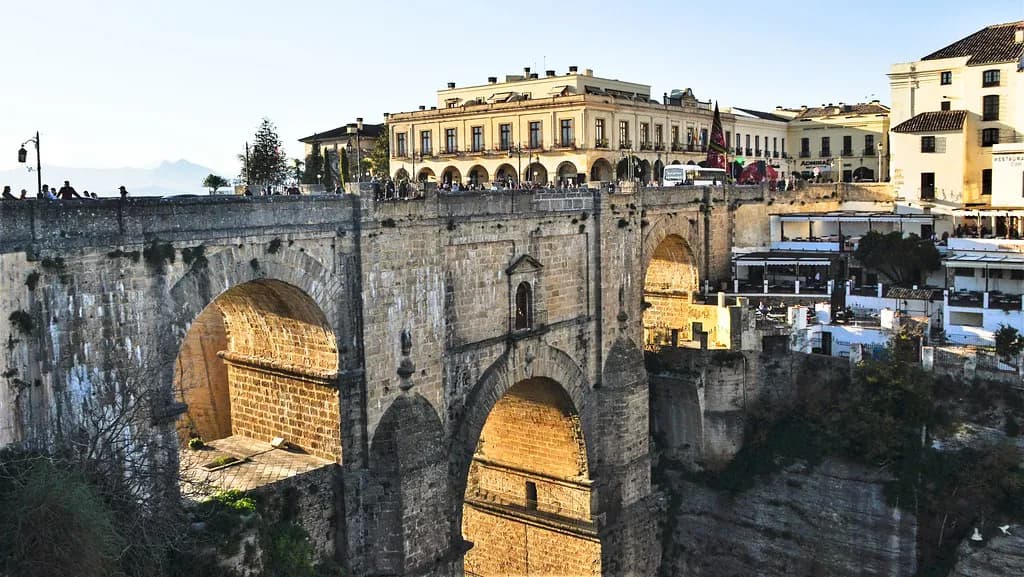
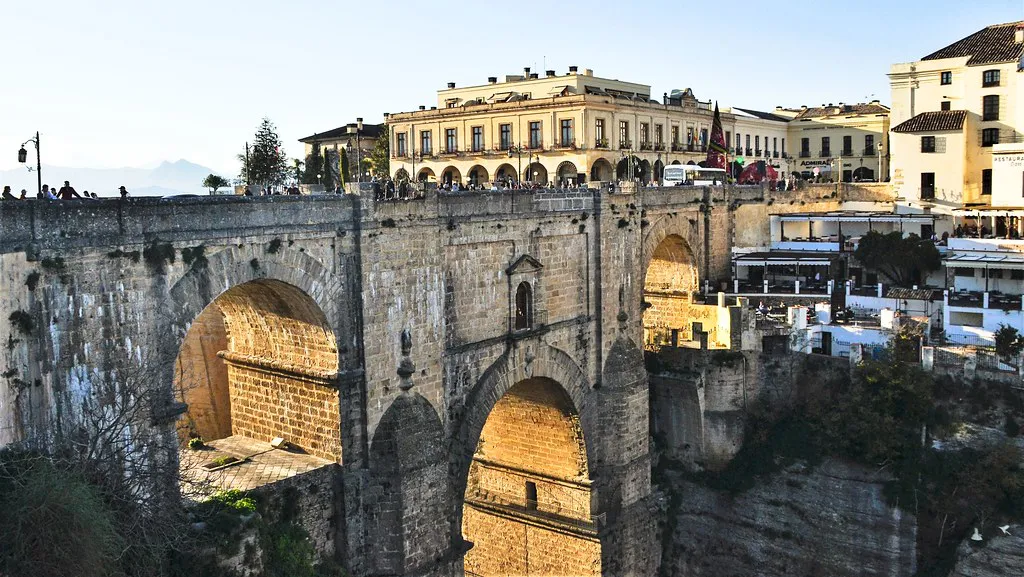
Ronda is built on a plateau split by the 120-meter El Tajo gorge, and the Puente Nuevo bridge connecting the two halves is one of Andalusia's defining images. The bridge itself dates from 1793 and took 42 years to build. The view from the Parador terrace or the path down into the gorge gives you a perspective of the bridge that the main mirador above cannot match — aim for late afternoon when the light hits the cliff face directly.
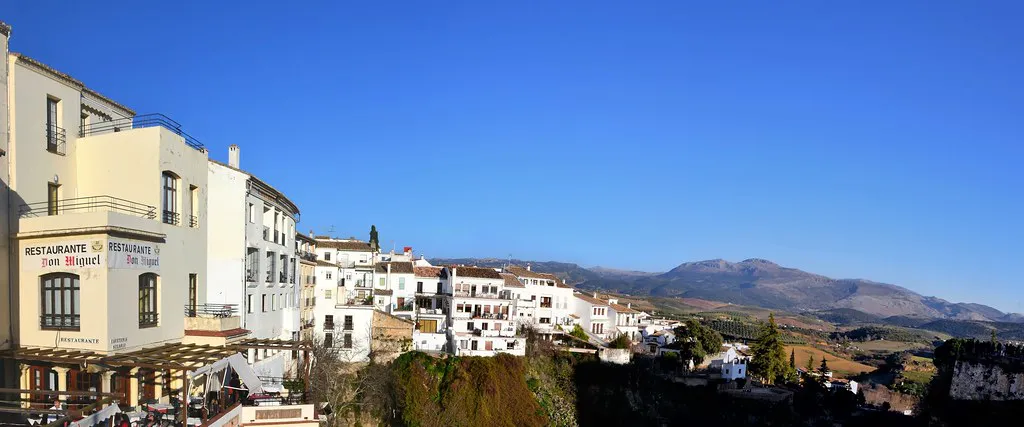
Beyond the bridge, Ronda's Old Town holds the Plaza de Toros (one of Spain's oldest bullrings, with a small museum; €8), the Arab Baths, and the Casa del Rey Moro with its underground water mine. Allow four to six hours in town. The Old Town is walkable but hilly — comfortable shoes are essential. You can find the best vantage point for the bridge on the path leading down into the gorge, not from the top.
By bus: about 2 to 2.5 hours from Málaga's main bus station, with Alsa running several services daily. Tickets start around €8 each way. By train, the journey takes about 1 hour 15 minutes. Ronda also makes a natural pairing with Setenil de las Bodegas — see #9 below — since Setenil is only 20 minutes by car from Ronda.
3. Granada: Alhambra's Grandeur
Granada is the most popular full-day trip from Málaga and the one that requires the most advance planning. The Alhambra Palace is the best-preserved Moorish palace in Europe, a UNESCO World Heritage Site, and the single most-visited monument in Spain. Tickets (€14–€20 depending on the zone and time of visit) sell out months ahead in peak season. Book the moment you confirm your travel dates — walk-up entry is essentially impossible in summer 2026.
The Generalife Gardens attached to the Alhambra are included in the standard ticket and worth at least an hour on their own. After the palace, cross to the Albaicín neighbourhood — a labyrinth of Moorish streets on the opposite hill — for sunset views back over the Alhambra. The city also has excellent teterías (Moroccan-style tea houses) concentrated on Calle Calderería Nueva, and flamenco shows in the Sacromonte cave district.
By bus: direct services from Málaga run every 30–60 minutes, taking 1.5 to 2 hours, with tickets from €11 each way (Alsa). By train: the high-speed service takes 1 hour 15 minutes and costs around €37 return — faster, but trains run less frequently. Whichever you choose, start early; you need a full day to do Granada justice.
4. Nerja & Frigiliana: Caves, Beaches, and White Villages
Nerja sits 57 km east of Málaga on a stretch of coast that feels less developed than the Costa del Sol resorts to the west. The town's Balcón de Europa — a cliffside promenade — overlooks three small beaches, and the best swimming beach, Burriana, is a 10-minute walk east of the centre. The main draw is the Cueva de Nerja, a cave system with enormous stalactites discovered in 1959 and containing what archaeologists believe are the world's oldest cave paintings. Entry costs €13 for adults and the cave stays a constant 18°C year-round — bring a light layer.
Frigiliana sits on the hills 7 km above Nerja and is regularly called the most beautiful village in Málaga province. Its whitewashed lanes are decorated with flowering plants and hand-painted ceramic tiles depicting the town's Moorish history. A local bus connects Nerja to Frigiliana roughly every hour (€1.20). You can also walk up in about 90 minutes. A guided Caves of Nerja, Nerja and Frigiliana day tour from Málaga combines both stops efficiently.
By bus: Alsa runs direct services from Málaga bus station to Nerja roughly every 30 minutes; the journey takes about one hour and tickets start at €5 one way — book online here. The combination of the cave, the Balcón, a beach swim, and Frigiliana fills a full day comfortably.
5. Marbella: Glamour and Old Town Charm
Marbella has two entirely different faces. The Old Town (Casco Antiguo) is a grid of whitewashed lanes centred on the flower-filled Plaza de los Naranjos, largely unchanged since the 16th century. The church of Nuestra Señora de la Encarnación and the town walls are free to explore. Push south and you hit the Paseo Marítimo, a seafront promenade linking the city beaches. Push west and you reach Puerto Banús — the glitzy marina district full of superyachts and designer boutiques, worth a walk even for window shoppers.
Four to six hours covers both the Old Town and Puerto Banús at a relaxed pace. La Concha mountain forms a dramatic backdrop visible from almost everywhere in the city. The beaches here are clean and well-organised, with sunbeds and beach bars available from spring through autumn. Marbella also works as a half-day trip paired with Estepona if you have a car.
By bus: frequent services from Málaga's main bus station take 45 minutes to 1.5 hours (the express is faster). Tickets start around €6 each way — book via Avanza. The bus drops you at Marbella's bus station, a 10-minute walk from the Old Town.
6. Gibraltar: British Enclave in Spain
Gibraltar is technically a British Overseas Territory — you cross a border, show your passport, and suddenly find yourself walking past red phone boxes and pubs serving real ales. The Rock of Gibraltar (426 meters) dominates the landscape. The cable car to the summit costs £18 return and gives you views over the Strait of Gibraltar to Morocco on clear days. At the top, the famous Barbary macaques — the only wild primates in Europe — roam freely and will try to steal food, so keep bags closed.
Below the summit, St. Michael's Cave is an impressive limestone cavern sometimes used as a concert venue. The Great Siege Tunnels, carved by hand during the 1779–1783 siege, are one of the more unusual history sites in southern Europe. Main Street has duty-free shopping, which makes Gibraltar popular with day-trippers looking for cheaper tobacco, alcohol, and electronics. Remember: currency is Gibraltar pounds (GBP), though euros are accepted everywhere.
By bus: take any Alsa service toward Algeciras and get off at La Línea de la Concepción (about 2.5 hours, €15 each way). From La Línea bus station, walk 15 minutes across the border. Border queues can add 20–40 minutes, especially on weekends. A full day (6–8 hours in Gibraltar) is needed. Bring your passport — EU ID cards are accepted for EU nationals.
7. Antequera: Dolmens, Castles, and Churches
Antequera is Málaga's most underrated day trip. The town sits 56 km north of Málaga and holds three UNESCO-listed prehistoric dolmens — the Menga, Viera, and El Romeral tombs — dating back over 5,500 years. The Menga dolmen is the largest in Europe, built from stones weighing up to 180 tonnes. Entry to the archaeological site is free and the visitor centre is excellent. You can walk from Antequera's bus stop to the dolmens in about 20 minutes.
The Alcazaba (Moorish fortress) crowns the hill above the old town and offers panoramic views over the surrounding olive groves. Entry is around €6. Below the Alcazaba, Antequera has 33 churches for a town of its size — the result of an intense 16th-century building programme after the Reconquista. The natural park of El Torcal (see #14) is 13 km south of Antequera but requires a car or taxi to reach from town. A suggested order: dolmens first thing, Alcazaba mid-morning, lunch in the old town, optional taxi to El Torcal in the afternoon.
By bus: Alsa connects Málaga directly to Antequera in about 45 minutes — buy tickets online from around €6 each way. By train: the high-speed station (Antequera-Santa Ana) is 13 km from town and requires a taxi or bus connection, so the bus is more practical for most visitors.
8. Córdoba: Mezquita-Cathedral and Patios
Córdoba requires the most travel time of any destination on this list, but the Mezquita-Catedral alone justifies the journey. The building began as a Visigoth church, was converted into a mosque in 784 CE, expanded over three centuries into one of the Islamic world's great architectural statements, and then had a Renaissance cathedral inserted into its centre after the Reconquista. The result is unlike anything else in Europe. Entry costs €11 (€9 Mon–Sat 08:30–09:30 for free entry, but you must still queue). Book tickets online to avoid long waits at the door.
The Jewish Quarter (Judería) surrounds the Mezquita and rewards slow walking — look for the 14th-century synagogue (one of only three surviving in Spain; €0.30 entry) and the Patio de los Naranjos, a courtyard of orange trees attached to the Mezquita. Every May, Córdoba holds its Patio Festival when residents open their private flower-filled courtyards to visitors; in 2026 it runs in the first two weeks of May. The Roman Bridge over the Guadalquivir is free and worth crossing for the views back toward the Mezquita tower.
By train: the high-speed AVE from Málaga María Zambrano takes about one hour and costs around €30–€45 return depending on timing — by far the fastest option. By bus: Avanza runs a 2.5-hour service. Either way, leave Málaga by 08:00 to get a full day in Córdoba before the last realistic return.
9. Setenil de las Bodegas: Houses Built into Rocks
Setenil de las Bodegas is one of the strangest-looking villages in Spain. The town was built into and under an overhanging rock shelf, and the result is streets where the cliff face forms the ceiling of the buildings on one side and the sky opens up on the other. The two main streets — Calle Cuevas del Sol (sunny side) and Calle Cuevas de la Sombra (shaded side) — are the most photographed spots. Bars and restaurants are literally carved into the rock; eating here is part of the experience.
The town is small — two to three hours is enough to walk every street, visit the Nazarí Castle at the top, and have lunch. It pairs naturally with Ronda as a combined day trip; Setenil is 20 minutes by car from Ronda and 1 hour 10 minutes from Málaga directly. Parking is limited in the centre, especially on weekends — aim for the car park near the Nazarí Castle and walk down. There is no convenient direct bus from Málaga; most independent visitors drive or take a bus to Ronda and arrange a taxi onward.
10. Mijas Pueblo: White Village in the Hills
Mijas Pueblo sits at 430 meters above sea level in the hills behind Fuengirola, and the coastal views from its mirador stretch from Málaga to Gibraltar on clear days. The village is unquestionably tourist-oriented — the donkey taxis, souvenir shops, and restaurants are set up for visitors — but the old lanes, the 16th-century bullring (one of the smallest in Spain), and the hermitage of the Virgen de la Peña built into a cliff face give the town genuine character beyond the kitsch.
The Miniature Museum near the main square is worth 30 minutes for the oddly satisfying collection of miniature artworks (€4). Gardens along the cliff edge provide the best viewpoints and a place to sit away from the busiest streets. Three to four hours covers the village at a relaxed pace. Skip the donkey taxi; a leisurely walk around all the streets takes about 90 minutes and reveals the quieter residential corners the taxi tour doesn't reach.
There is no direct bus from Málaga to Mijas Pueblo. Take bus M-113 from Málaga to Fuengirola (about 50 minutes) and then local bus M-122 from Fuengirola bus station up to Mijas Pueblo (20 minutes, around €1.50). Total journey: about 70–75 minutes each way. Alternatively, it pairs well with a morning in Fuengirola — see #13 below.
11. Benalmádena: Coastal Fun and Pueblo Views
Benalmádena is actually three distinct areas: the coastal strip (Benalmádena Costa) with its marina and beaches, the town of Arroyo de la Miel inland, and Benalmádena Pueblo on the hilltop. Most day-trippers focus on the coast and miss the pueblo, which is a mistake. The village sits above the tourist bustle and has cobbled streets, a small archaeology museum, and dramatic views over the coast. The Castillo de Colomares — a monument to Christopher Columbus built by one man over 14 years — is a genuinely strange and impressive structure in the pueblo, and entry is free.
On the coastal side, the cable car (teleférico) ascends to Calamorro peak at 769 meters, where paragliding and hiking trails begin. Return tickets cost around €18. The marina area (Puerto Deportivo) has good seafood restaurants without the resort markups of Torremolinos. This is Málaga's most family-friendly day trip: Sea Life aquarium, cable car, beach, and castle for adults all in one place.
By bus: line M-110 Benalmádena–Málaga runs every 30 minutes and takes about 35 minutes. Tickets are bought from the driver; the journey costs around €1.80. By Cercanías train (line C1), Benalmádena station is 25 minutes from Málaga Centro-Alameda, around €2.40. Total time in Benalmádena needed: 4–6 hours.
12. Estepona: The Garden of the Costa del Sol
Estepona earned its "Garden of the Costa del Sol" nickname through a sustained decade-long effort to transform its streets with flower pots, murals, and manicured planting. The Old Town is the result: every alley is colour-coded by the flowers on display, and the effect is genuinely beautiful rather than contrived. The centrepiece is the Orchidarium — a greenhouse holding over 5,000 orchid plants, the largest public orchid collection in central Europe. Entry costs €3 and the building's architecture alone is worth seeing.
Estepona's beach promenade stretches for 21 km and is the longest on the Costa del Sol. The fish market near the port opens in the mornings and gives a sense of the town's working fishing port identity beneath the tourist surface. Allow four to five hours for the Old Town, Orchidarium, and a walk along the seafront. Combined with Marbella (30 minutes away by bus), it fills a full coastal day for those with a car.
By bus: Avanza operates services from Málaga's main bus station; journey time is 1 hour 15 minutes to 2 hours depending on the connection. Tickets start from around €9 each way.
13. Fuengirola: Beaches, Bioparc, and Castle
Fuengirola's main pull is the Bioparc — a zoo designed around immersive habitats rather than traditional enclosures. The African savannah zone, gorilla forest, and nocturnal fauna sections are genuinely well-executed, and it's the best zoo in Andalusia by some margin. Adult entry costs €25–€30; book online for a small discount. Allow three hours for the Bioparc alone. The beaches here are long (over 7 km of continuous sand), well-maintained, and backed by a promenade with cafes and restaurants at every price point.
Sohail Castle at the western end of the seafront is a Moorish and later Christian fortress that's free to enter during opening hours. The views from the castle walls over the coast are excellent, and the site regularly hosts outdoor concerts and markets in summer and autumn. For families, Fuengirola is the best-value day trip on the list — Bioparc plus castle plus beach plus promenade fills a day without needing a car or expensive tours.
By Cercanías train (line C1): 40 minutes from Málaga Centro-Alameda, around €3 each way — the fastest and most frequent option. By bus: Avanza M-113 takes 45–60 minutes from the main bus station.
14. El Torcal Natural Park: Otherworldly Landscapes
El Torcal is a karst limestone plateau south of Antequera where millions of years of erosion have sculpted the rock into formations that look more like abstract sculpture than natural geology. The landscape is unique in Europe: grey towers, arches, and labyrinthine corridors of rock rising from a plateau covered in wild herbs, orchids, and vultures circling overhead. The visitor centre at the top of the access road (1,200 meters altitude) is the starting point for all marked trails.
The Verde trail (1.5 km loop, 45 minutes) is accessible to most visitors including those with limited mobility on a good surface day. The Amarillo trail (3.2 km, 90 minutes) covers the most dramatic formations. The Rojo trail (4.5 km, 2.5 hours) reaches the highest viewpoints. Entry to the park is free; the shuttle bus from the lower car park to the visitor centre costs €2.50 return. Weather changes quickly at altitude — bring a wind layer and water even in summer.
El Torcal requires a car or taxi from Antequera (13 km, about €15 one way by taxi). There is no direct bus from Málaga to El Torcal. The most practical approach for non-drivers: take the bus to Antequera and arrange a taxi round-trip to the park (around €30 total), combining both stops in one day. The park closes at sunset and all visitors must be off the trails one hour before.
15. Rincón de la Victoria: Hidden Gem with a Treasure Cave
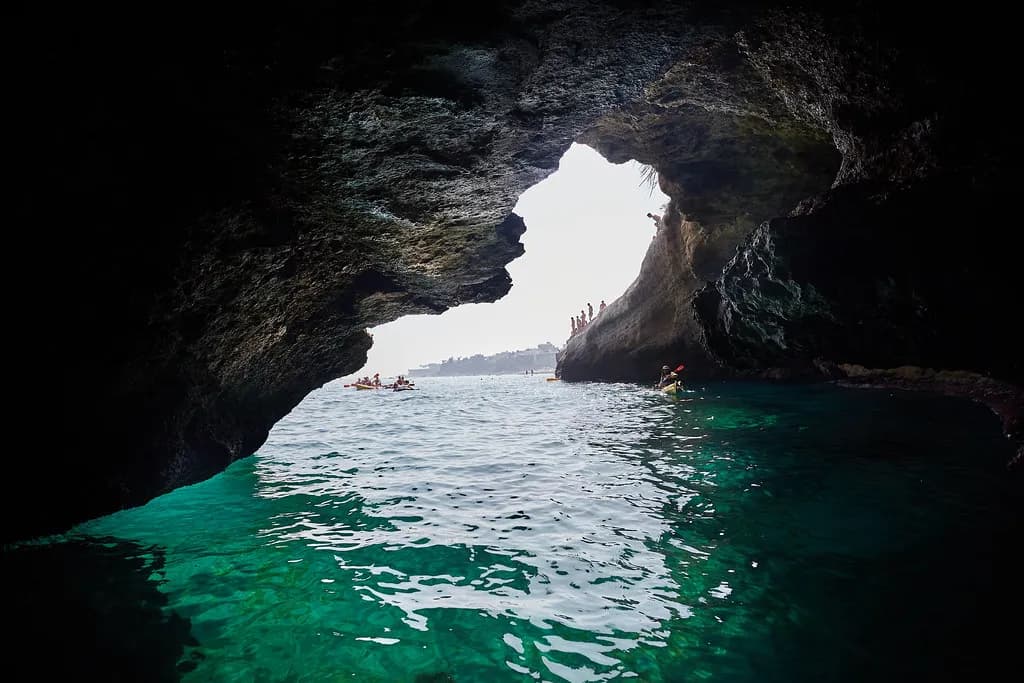
Rincón de la Victoria is one of the least-visited destinations on this list and one of the most rewarding for those willing to look beyond the usual circuit. The town sits 15 km east of Málaga along a stretch of coast that most tourists drive through without stopping. Its main attraction is the Cueva del Tesoro — one of only three marine caves open to the public in Europe, and one of the few sites in the world where Palaeolithic cave paintings are accessible on a guided tour. The cave stays a cool 18°C inside and contains stalactite formations as well as legends of Moorish treasure hidden in its chambers.
The beachfront promenade is quieter than Nerja's and the restaurants are priced for locals rather than tourists, making this a good option for those who want an authentic Costa del Sol experience without the crowds. The Casa Fuerte de Bezmiliana, a restored 18th-century fortress near the beach, adds a small historical detour. Two to three hours covers the cave, the promenade, and lunch — making Rincón de la Victoria a realistic half-day option or an easy first stop before continuing east to Nerja.
By bus: Alsa runs a local service from Málaga's main bus station; the journey takes 20–30 minutes. Check the Alsa website for current timetables — services run approximately every 30 minutes during the day.
Bonus: Montes de Málaga Natural Park (Half-Day from the City)
Almost no day-trip list mentions the Montes de Málaga, yet the natural park starts just 15 minutes by car from the city centre. The 5,000-hectare park was reforested in the early 20th century after being stripped by charcoal production, and today it is dense pine and oak forest with marked hiking trails, a wildlife recovery centre, and a rural inn (the old Venta del Túnel, now a restaurant) that has been operating since the 18th century.
The park is the only day trip from Málaga where you can be walking in wilderness in under 30 minutes from the Alcazaba. The short trails around the visitor centre are accessible to families; the full ridge trail to Puerto del León (11 km round trip) rewards hikers with views over both the city and the mountains beyond. This is also one of the best places in the province to see Iberian ibex, short-toed eagles, and wild boar. There is no bus to the park interior — you need a car or taxi. But for anyone renting a vehicle, this should be on the itinerary alongside a longer destination.
Planning Your Málaga Day Trips: Essential Tips
Match the destination to your travel style first. Solo travelers and couples gain the most from Granada and Córdoba — immersive, historically dense destinations that reward slow exploration. Families do best at Fuengirola, Benalmádena, or Nerja, where there are multiple activity types to keep different ages happy. If you have limited mobility, stick to coastal towns like Marbella and Nerja where the terrain is flat and transport drops you close to the main attractions.
Booking in advance is non-negotiable for three destinations: the Alhambra (months ahead in summer), Caminito del Rey (weeks ahead from April to October), and the Mezquita-Catedral in Córdoba (days ahead to avoid morning queues). For everything else, a few days' notice is usually sufficient. Check the official websites of each attraction directly for 2026 pricing and seasonal closures — several sites in Andalusia have adjusted their hours since the post-pandemic reopening.
Timing matters more than most visitors expect. Destinations like Ronda and Setenil de las Bodegas get crowded by mid-morning on summer weekends. Arriving on the first bus of the day — before 09:00 — gives you 60 to 90 minutes of near-empty streets before the coach tours arrive. Conversely, Granada's Albaicín neighbourhood is best at dusk, when the Alhambra lights up and the daytime crowds have left. For a broader view of what's worth doing in the city before heading out, check our guide to top things to do in Málaga.
Getting Around: Bus Tickets & Málaga Bus Stations
Málaga's main bus station (Estación de Autobuses de Málaga) is directly connected to the María Zambrano train station — you can walk between them in under five minutes. This makes the complex a single transport hub for almost every long-distance day trip. The two main operators are Alsa (serving Nerja, Antequera, Granada, Ronda, Gibraltar route, and others) and Avanza (Marbella, Estepona, Fuengirola, and Córdoba). Both have user-friendly websites with online booking.
| Destination | Best Mode | Journey Time | Approx. Cost (one way) | Advance Booking? |
|---|---|---|---|---|
| Caminito del Rey | Cercanías train + shuttle | ~55 min | €4 | Yes (entry ticket) |
| Ronda | Bus or train | 1h 15min – 2h 30min | €8 | Recommended |
| Granada | Bus or AVE train | 1h 15min – 2h | €11–€37 | Essential (Alhambra) |
| Nerja | Bus (Alsa) | ~1 h | €5 | Optional |
| Marbella | Bus (express) | 45 min – 1h 30min | €6 | Optional |
| Gibraltar | Bus to La Línea + walk | ~2h 30min | €15 | Optional |
| Antequera | Bus (Alsa) | ~45 min | €6 | Optional |
| Córdoba | AVE train | ~1 h | €30–€45 return | Recommended |
| Fuengirola | Cercanías train (C1) | ~40 min | €3 | No |
| Benalmádena | Bus M-110 or train C1 | ~35 min | €1.80–€2.40 | No |
| Estepona | Bus (Avanza) | 1h 15min – 2h | €9 | Optional |
| Rincón de la Victoria | Bus (Alsa local) | 20–30 min | ~€2 | No |
Short routes (under 45 minutes, to towns like Benalmádena and Rincón de la Victoria) can be paid directly to the bus driver in cash, and online booking is rarely necessary. For all other routes, book online at least a day ahead to secure your seat — weekend departures on the Granada and Ronda routes sell out fast. If you book online, the e-ticket on your phone is enough; you do not need a printed copy. Luggage goes in the hold for free on intercity services; prams and oversized items may incur a small charge.
The María Zambrano train station next door has a large Mercadona supermarket, several cafés, and a food court — useful for picking up snacks and drinks before an early departure. The bus station itself has limited facilities: a small café and a few ticket windows, but little else. For trains: Renfe operates Cercanías (local) services to Benalmádena, Fuengirola, and El Chorro, and AVE high-speed services to Córdoba, Granada, and Antequera. Cercanías tickets can be bought at the station or on the Renfe app. AVE tickets should be booked in advance, especially for peak-hour trains.
A practical tip on timing: buses in Andalusia are generally on schedule, but allow 15–20 minutes' buffer for larger stations like Granada and Córdoba where you may need to find your platform. Download the Moovit app or the Alsa/Avanza apps for real-time schedules and digital tickets. During July and August, add at least 15 minutes to estimated return journey times — bus stations in small towns can be busy late afternoon as everyone heads back at once.
FAQs About Day Trips from Málaga
Frequently Asked Questions
Which day trips from Málaga options fit first-time visitors?
For first-time visitors, Ronda, Nerja & Frigiliana, and Caminito del Rey are highly recommended. These trips offer a great mix of iconic sights, stunning scenery, and cultural immersion, providing a quintessential Andalusian experience easily accessible from Málaga.
How much time should you plan for day trips from Málaga?
Most day trips require a full day, typically 6-8 hours, including travel time. For destinations like Granada or Córdoba, where you'll visit major attractions, starting early is crucial to maximize your exploration. Shorter trips, such as Mijas Pueblo or Benalmádena, can be done in 4-5 hours.
What should travelers avoid when planning day trips from Málaga?
Avoid over-scheduling your day, especially if relying on public transport, as delays can occur. Don't forget to book popular attractions like the Alhambra months in advance, as tickets sell out quickly. Also, avoid underestimating travel times and always check the latest bus or train schedules.
Is day trips from Málaga worth including on a short itinerary?
Absolutely. Even with a short itinerary, incorporating one well-chosen day trip can significantly enhance your experience of Andalusia. Destinations like Mijas Pueblo or Nerja are relatively close and offer a wonderful contrast to Málaga city life, providing a broader taste of the region. For inspiration, check out our Málaga 3-day itinerary.
Málaga's transport connections and central position make it one of the best bases for day trips in all of Spain. Whether you choose the drama of Caminito del Rey, the Moorish grandeur of Granada, the cave-house streets of Setenil de las Bodegas, or the quiet coast at Rincón de la Victoria, each destination adds a distinct layer to your understanding of Andalusia. Start with the destination that matches your primary interest, book the essential tickets early, and leave room in the day for unexpected discoveries. The best moments on these trips often happen between the guidebook highlights. For more on what awaits in Málaga itself before you set out, browse our guide on where to stay in the city.
You might also like


Continue reading
More guides you'll find useful