

Montjuic Barcelona Guide: Attractions, How to Get There & Itineraries
Discover Montjuic Barcelona's top attractions, from the castle and Magic Fountain to museums and gardens. Plan your visit with our comprehensive guide, including transport and itinerary tips.
On this page
Montjuic Barcelona: Your Ultimate Guide to Attractions & Planning
Montjuïc is Barcelona's most versatile hill: a single morning can take you through a 17th-century fortress, a world-class modern art museum, a free Olympic stadium, and a shaded botanical garden — all within walking distance of each other. The mountain rises 173 metres above sea level to the southwest of the city centre, overlooking the port and the Mediterranean.
Planning a visit can feel overwhelming because Montjuïc is enormous. The mountain has three distinct levels: the base (Espanya and Paral·lel metro stops), the mid-level where most museums and the Olympic Ring sit, and the summit where the castle and cable car terminus are. Understanding this structure shapes everything from how you arrive to how long you need.
This guide covers every major attraction, the real costs of each transport option, and three practical itineraries for different types of visitors. Concrete prices are in EUR; times are 24h.
Plan with trusted sources: cross-check opening hours and seasonal details with the official Barcelona tourism board, and read more about the city on its Wikipedia entry before you go.
How to Get to Montjuïc: Cable Car, Funicular & More
There are four distinct ways to reach Montjuïc, each with different trade-offs on cost, views, and convenience. The choice you make at the base determines how much you pay and what you see on the way up.
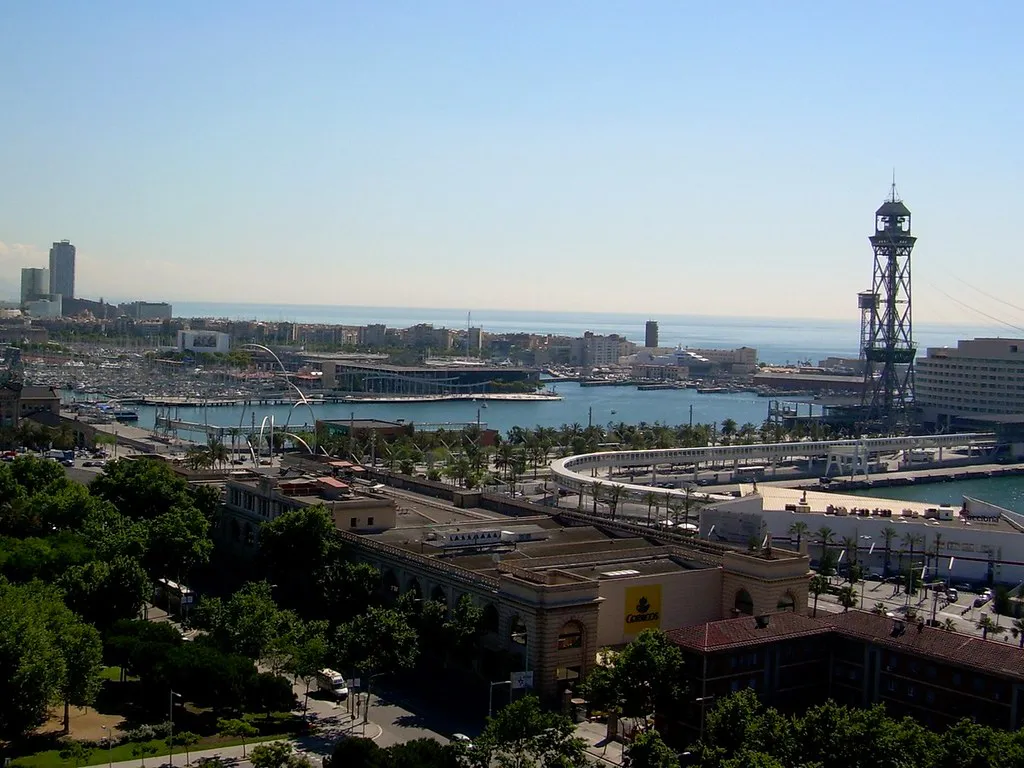
The Montjuïc Funicular departs from Paral·lel metro station (lines 2 and 3) and runs to the Parc de Montjuïc mid-level in under five minutes. It costs nothing extra — your standard T-Casual metro ticket covers the ride. This is the most practical option for budget travellers and anyone already using Barcelona's public transport. From the funicular exit, the Telefèric de Montjuïc cable car station is a short walk and takes you up to the castle summit.
The Telefèric de Montjuïc (mid-level to castle) costs €8.40 one way or €12.70 return in 2026. It runs from the funicular station and delivers you directly to Montjuïc Castle at the top. The gondola-style cabins hold around eight people and offer open views over the city and port. This is the best value scenic option if you're heading to the summit.
The Telefèric del Port (Port Cable Car) is a separate, older system built in 1931. It runs from Torre de Sant Sebastià in Barceloneta beach over the harbour to the Miramar stop on Montjuïc, with 70-metre-high views over the port. A one-way ticket costs €11, return €16.50. It's the fastest route from the beach to the mountain and back, but it doesn't reach the castle — you'll still need to walk or take the upper cable car from Miramar.
Public buses are the most flexible low-cost option. Lines 13, 23, 55, 125, and 150 all serve Montjuïc; route 150 runs all the way to the castle. The hop-on-hop-off tourist bus red route also covers multiple stops at the mid-level. If you're arriving from Plaça d'Espanya on the Espanya side, escalators rise through the Avinguda de la Reina Maria Cristina promenade and make the walk to the mid-level straightforward. You can also walk from Paral·lel in about 25 minutes.
Plaça d'Espanya: The Gateway to Montjuïc
Most visitors who approach Montjuïc from the Espanya metro stop (red line, L1) arrive at Plaça d'Espanya, a large roundabout that can feel chaotic at first. It's worth pausing here for a moment. The two Venetian-style towers at the entrance to the Fira fairground mark the beginning of the ceremonial avenue — Avinguda de la Reina Maria Cristina — that climbs via escalators up to the MNAC and the Magic Fountain.
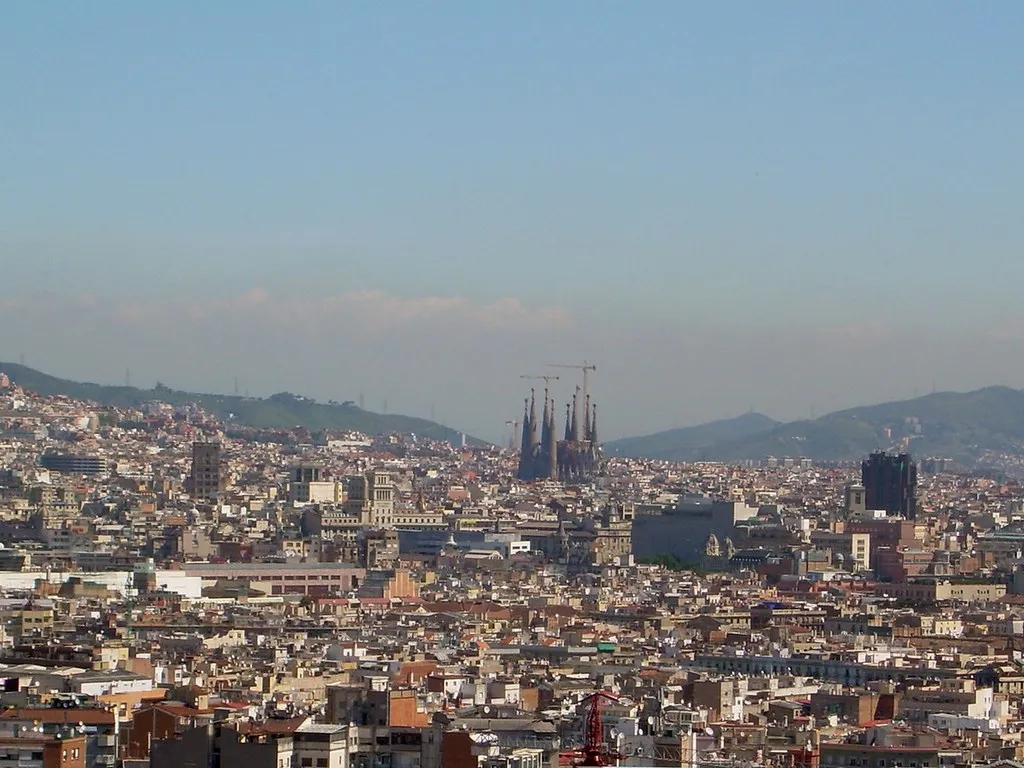
The avenue was built for the 1929 International Exposition, and the whole axis from Plaça d'Espanya to the MNAC steps was designed as a grand procession. Walking or riding the escalators up this avenue is free and gives you an elevated sense of the mountain's scale before you even reach its first attraction. The Font Màgica (Magic Fountain) sits at the foot of the MNAC steps along this route.
From Plaça d'Espanya you can also pick up the hop-on-hop-off bus and many of the local bus lines listed above. It's a practical staging point to orient yourself before heading deeper into the mountain.
Magic Fountain of Montjuïc: Showtimes & Best Viewing Spots
The Font Màgica was originally built for the 1929 World's Fair and restored ahead of the 1992 Olympics. Each evening show runs for around 15 minutes, combining water jets, coloured lights, and music. Admission is free. The fountain was temporarily closed in 2023 due to drought restrictions; as of 2026 it has returned to its regular seasonal schedule, but always check the current programme on the official Magic Fountain schedule before making the evening trip, as restrictions can return.
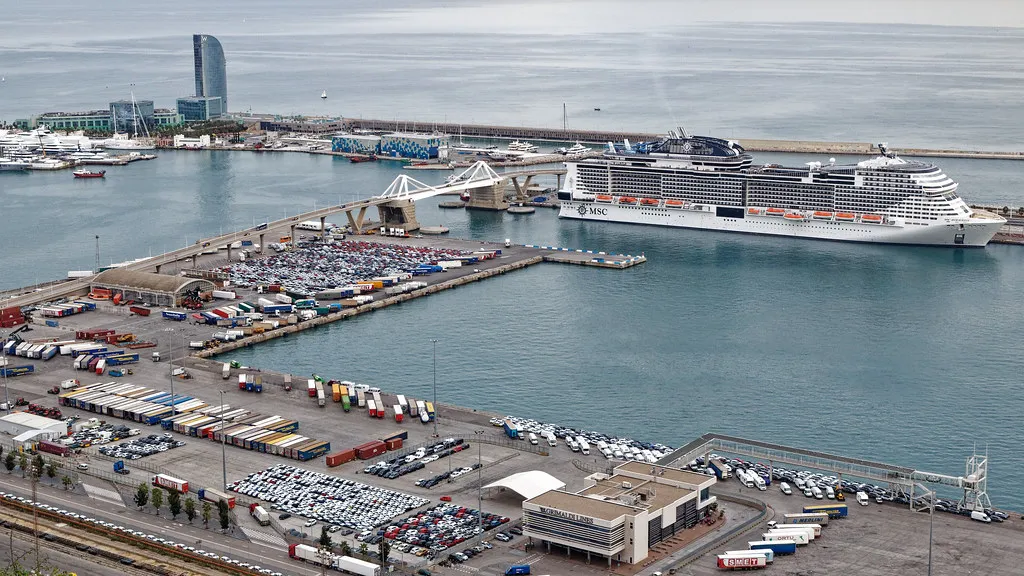
Show schedules vary significantly by season. In summer (June–September) performances typically run Thursday–Sunday from 21:30 to 23:00. In autumn and winter the hours shift to late afternoon on weekend days. Arrive 20–30 minutes early on weekends in July and August — the wide steps leading up to the MNAC fill quickly. The best viewing is from these stairs, which rise directly above the fountain and frame it with the lit-up MNAC building as a backdrop.
Combining the fountain show with an evening visit to MNAC's panoramic terrace (free with museum entry) makes an efficient pairing: see the terrace views while there is still daylight, then descend to the fountain level for the show after dark. The neighbouring Museu Nacional building is itself spectacular at night when lit up.
MNAC and Fundació Joan Miró: Art & Culture on Montjuïc
The Museu Nacional d'Art de Catalunya (MNAC) sits in the grand neo-Baroque Palau Nacional, the domed landmark visible from across the city. Its collection spans a thousand years of Catalan art, from Romanesque church frescoes to 20th-century modernisme. The medieval section is the stand-out: entire church apses from remote Pyrenean villages have been moved here and reassembled, giving Europe's most important grouping of Romanesque painting in a single gallery. The Renaissance and Baroque section features Velázquez, El Greco, and Zurbarán. Admission costs €12; under-16s enter free. Opening hours are Tuesday–Saturday 10:00–18:00, Sunday 10:00–15:00, closed Monday. Check the official MNAC website for current temporary exhibitions.
The Fundació Joan Miró, set into the terraced gardens of Montjuïc's mid-level, was designed by architect Josep Lluís Sert — a close friend of Miró — and opened in 1975. The building's white walls, skylights, and courtyard fountains are perfectly suited to Miró's vivid canvases. The collection spans hundreds of works from his early sketches through to mature symbolist paintings and large-scale sculptures. Look for the giant Tapis de la Fundació tapestry, which tends to be popular with children, and the sculptures installed on the rooftop terrace with panoramic views over the city. Ticket prices are around €14 for adults; check the official Fundació Joan Miró website for updated hours and exhibitions. The museum is closed on Mondays.
The mid-level also holds the Museu d'Arqueologia de Catalunya and the Museu Etnològic i de Cultures del Món, both of which are significantly less crowded than MNAC or the Miró Foundation. If you have a Barcelona Card or Articket museum pass, check which of these institutions it covers — a combined pass can cut the cost of visiting multiple museums substantially.
Olympic Ring & Sports Museum: Reliving Barcelona '92
The Anella Olímpica (Olympic Ring) sits at the mid-level and still feels purposeful in 2026. The Estadi Olímpic Lluís Companys was originally built for the 1929 World's Fair and then completely renovated to host the opening and closing ceremonies of the 1992 Games. Entry to the stadium is free (hours 08:00–20:00), and you can walk on the track — though it occasionally closes for concerts and events, so check in advance if that's your priority.
The adjacent Palau Sant Jordi, designed by Japanese architect Arata Isozaki for the gymnastics and basketball events, is one of the more architecturally impressive buildings on the mountain. It now operates as a concert and events venue. The Piscines Bernat Picornell, the Olympic pool complex, is open to the public for lap swimming at reasonable rates and is one of the more authentic local experiences on the mountain.
The Museu Olímpic i de l'Esport sits just below the stadium and is a modern, interactive exhibition on the history of the Olympics and sport more broadly. Ticket price is €5.80 for adults, with a reduced rate for children. Opening hours are Tuesday–Saturday 10:00–19:00, Sunday 10:00–14:30, closed Monday. It's best suited to visitors who are genuinely interested in sports history or families with children who enjoy interactive displays — the content rewards curiosity rather than deep prior knowledge.
Montjuïc Castle: History, Views & Visitor Information
The castle at the summit of Montjuïc dates to the 17th century, built on a site where a watchtower stood as early as 1073. Its strategic position — controlling both the city and the port — made it one of the most fought-over fortifications in Catalonia. During the War of Spanish Succession in the early 18th century it was used to bombard the city below. In the Spanish Civil War and under Franco's dictatorship, it became a prison and site of political executions: Lluís Companys, president of the Generalitat de Catalunya, was executed here in 1940. The cannons pointing out to sea are a reminder that this was never a purely decorative structure.
Today the castle is a city-run cultural space with permanent and temporary exhibitions on its history. The star-shaped fortifications, moat, and ramparts are well preserved and worth walking in full. The summit provides the most complete 360-degree panorama on the mountain: the port, the city grid, the Tibidabo hills, and on clear days the peaks of Montserrat. Standard admission costs €5. Free entry applies every Sunday after 15:00 and for the entire day on the first Sunday of each month — useful if you're timing your visit on a weekend.
Plan at least 1.5 hours for a complete circuit of the ramparts plus any exhibitions. The castle café serves tapas and snacks at reasonable prices. Guided tours are available and add significant context to the darker chapters of the castle's history; the self-guided audio option covers similar ground at your own pace. Getting here: take the Telefèric de Montjuïc cable car from the funicular station (€8.40 one way), or walk the path from the mid-level in about 20 minutes.
Montjuïc's Gardens: A Green Oasis Guide
The city-facing slopes of Montjuïc are threaded with a chain of landscaped gardens that connect the mid-level attractions. Walking between them is the most rewarding way to explore once you've arrived by funicular or bus.
The Jardins de Laribal are free to enter and open daily from 10:00–21:00 in summer. They were designed in the early 20th century with Moorish-inspired terraces, stone fountains, and shaded pergolas — a genuinely beautiful stretch of garden that feels worlds away from the museum crowds. The Jardins de Joan Maragall nearby are studded with sculptures and neoclassical pavilions; they're open only on weekends and public holidays, so time your visit accordingly.
The Barcelona Botanical Garden (Jardí Botànic de Barcelona) occupies a hillside between the Olympic Stadium and the castle path. It specialises in plants from Mediterranean-climate zones — California, Chile, South Africa, Australia, and the Mediterranean basin itself. Admission costs €3.50 and opening hours run 10:00–20:00 daily in summer. It's a quieter, more contemplative stop than the castle or museums. The Mossèn Costa i Llobera Gardens on the coastal side of the hill are free and open year-round, housing one of Europe's largest collections of cacti and succulents with views over the harbour.
In summer the Teatre Grec, an open-air amphitheatre built into a quarried hillside for the 1929 Exposition, hosts the annual Grec Festival of theatre, dance, and music (typically July). The garden setting and natural stone architecture make it one of the best performance spaces in the city — check the programme if your visit falls in July.
Refugi 307 and Poble Sec: The Local Side of Montjuïc
One of the most overlooked experiences connected to Montjuïc is Refugi 307 in Poble Sec, the neighbourhood at the base of the mountain's Paral·lel side. During the Spanish Civil War, local residents dug this air-raid shelter directly into the hillside to protect up to 2,000 people from Franco's bombardments. Today it operates as a heritage site where guided tours take you through the tunnels and explain the daily reality of the war for Barcelona's civilian population. Admission is €3.40. It opens Sunday 10:00–14:00 for walk-in visitors; pre-booked tours run daily. The combination of Montjuïc Castle's history and Refugi 307 below gives a layered account of the same political conflict from two very different vantage points — something no other neighbourhood in Barcelona offers.
Poble Sec itself is a genuinely local residential barrio with steep streets and a dense row of bars and restaurants along Carrer de Blai, Barcelona's most famous street of pintxos (Basque-style small plates on bread). It's compact, busy in the evenings, and priced for residents rather than tourists. This is a significantly better option for dinner than eating on the mountain itself.
For a more curated experience, Quimet i Quimet on Carrer del Poeta Cabanyes is a legendary standing-only bar serving inventive montaditos — try the tuna, salmon, and honey combinations. It's tiny, fills up by 13:30 on weekdays, and is closed on Sunday evenings. A few minutes further into the neighbourhood, Bar Calders does classic tapas and house vermouth. For dinner after the Magic Fountain show, the Carrer de Blai pintxos bars are the most practical choice — most open until midnight and require no reservations. Explore more the city's best tapas bars recommendations for the broader city.
Planning Your Montjuïc Day: Itineraries for Every Traveller
| Transport Option | Route | Cost (2026) | Best For |
|---|---|---|---|
| Funicular (metro ticket) | Paral·lel → mid-level | Included in T-Casual | Budget travellers |
| Telefèric de Montjuïc | Mid-level → Castle | €8.40 one way / €12.70 return | Scenic castle access |
| Telefèric del Port | Barceloneta beach → Miramar | €11 one way / €16.50 return | Arriving from the beach |
| Bus 150 | Espanya → Castle | T-Casual fare | Flexible, low cost |
| Walk from Paral·lel | Paral·lel → mid-level | Free | Active visitors |
The mountain rewards a logical flow from one side to the other. The most efficient route starts at Espanya metro (red line), walks the ceremonial avenue past the Magic Fountain to MNAC, then continues on foot or by escalator to the Olympic Ring and mid-level gardens, before taking the cable car to the castle summit and descending by funicular to Paral·lel. This crosses the mountain from west to east and deposits you in Poble Sec for dinner.
Half-day (4–5 hours): Arrive at Paral·lel, take the funicular to the mid-level, board the Telefèric cable car to the castle (€8.40), spend 90 minutes at the castle, descend on foot or cable car, and walk through Laribal Gardens to the Olympic Stadium (free entry). Finish with a coffee at the stadium café before heading back down. Skip the museums — save them for a full day. Best for: first-time visitors with limited time.
Full day — Art & Culture (7–8 hours): Start at Espanya at 10:00. Spend 90 minutes in MNAC (€12). Walk to Fundació Joan Miró for another 90 minutes (€14). Lunch at one of the mid-level cafes or descend to Poble Sec for pintxos at 14:00. Return for the Botanical Garden in the afternoon (€3.50). Ascend to the castle via cable car for sunset views. Descend to Paral·lel and have dinner in Poble Sec before the Magic Fountain evening show (free). Best for: art lovers and those who prefer depth over breadth.
Full day — Families: Begin with the Jardins de Joan Brossa (free, has zip lines and playgrounds). Walk to the Olympic Stadium for the free track visit. Continue to the Sports Museum (€5.80) for interactive exhibits. Lunch in the castle café after taking the cable car up. Spend the afternoon in the castle ramparts and walk the Jardins de Laribal back down. End the day with the Magic Fountain show. Best for: families with children aged 6–14. For broader Barcelona planning, see our Barcelona 3-day itinerary.
A practical note on accessibility: the funicular and cable cars both accommodate wheelchairs and pushchairs. The MNAC, Miró Foundation, and Olympic Museum are all fully accessible. The castle's inner ramparts have some uneven cobbled surfaces but the main viewing terraces are accessible. The Laribal Gardens involve steps and are not fully wheelchair-accessible. If you are planning around stroller or wheelchair use, the Espanya approach via escalators and the flat sections of the mid-level are the most manageable parts of the mountain.
Frequently Asked Questions
How do I get to Montjuic Barcelona?
You can reach Montjuïc by funicular from Paral·lel metro station, which connects to the Telefèric de Montjuïc cable car. Alternatively, public buses like route 150 go directly to the castle. The Port Cable Car also offers scenic transport from Barceloneta beach.
What are the top attractions on Montjuic?
Top attractions include Montjuïc Castle, the Magic Fountain, the Museu Nacional d'Art de Catalunya (MNAC), and the Fundació Joan Miró. The Olympic Ring and various beautiful gardens also draw many visitors. Each site offers a unique experience.
Is the Montjuic cable car worth it?
The Telefèric de Montjuïc cable car is worth it for the incredible panoramic views of Barcelona and the harbor. It offers a convenient and scenic way to reach the castle. The experience is memorable, especially on a clear day.
How much time should I spend on Montjuic?
You can spend anywhere from half a day to a full day exploring Montjuïc, depending on your interests. A half-day might cover the castle and a cable car ride. A full day allows for visits to museums, gardens, and the Magic Fountain. For more planning tips, see our guide on how many days you need.
When is the best time to see the Magic Fountain of Montjuic?
The best time to see the Magic Fountain of Montjuïc is during its evening performances, which vary by season. Always check the official schedule online before your visit. Arriving early helps secure a good viewing spot near the MNAC steps.
Montjuïc rewards visitors who plan their route around its three levels rather than treating it as a single attraction. The mountain combines free Olympic-era architecture, world-class art collections, and one of Barcelona's most underrated neighbourhoods at its base. Whether you have four hours or a full day, working from one metro stop to the other leaves you in Poble Sec — exactly where you want to be for the evening.
Check seasonal hours for the Magic Fountain and castle free-entry Sundays before you go. Use the funicular to save money on the ascent and spend that saving on a museum that genuinely interests you. Montjuïc is best explored at a walk — the gardens and viewpoints in between the main sites are part of the experience, not filler.
You might also like


Continue reading
More guides you'll find useful


