Casa Batlló Barcelona: Ultimate Guide & Ticket Tips
Plan your visit to Casa Batlló Barcelona with our ultimate guide. Discover ticket options, best times to visit, architectural secrets, and nearby attractions for an unforgettable experience.
On this page
Casa Batlló Barcelona: Your Essential Guide to Gaudí's Masterpiece
Casa Batlló Barcelona stands as a true marvel of Modernisme architecture. Antoni Gaudí transformed this ordinary building into an extraordinary work of art between 1904 and 1906. Its unique facade, vibrant interiors, and rich symbolism captivate visitors from around the globe. This guide gives you everything you need to plan an unforgettable visit.
Plan with trusted sources: cross-check opening hours and seasonal details with the official Barcelona tourism board, and read more about the city on its Wikipedia entry before you go.
Casa Batlló at a Glance: Key Facts & History
Casa Batlló sits at Passeig de Gràcia 43 in the Eixample district of Barcelona. The building was originally constructed in 1877, but textile industrialist Josep Batlló i Casanovas acquired it in 1900 and commissioned Gaudí to remake it entirely. Gaudí completed the renovation by 1906, producing a structure so radical it redefined what a residential building could be. UNESCO granted it World Heritage status in 2005 as part of the "Works of Antoni Gaudí" grouping.

The renovation was not a ground-up build — Gaudí worked within an existing shell, which makes the result all the more extraordinary. He rewrote every surface: the facade, the interior courtyards, the ceilings, the staircase, the roof. Structurally, he eliminated load-bearing interior walls by introducing a system of ceramic columns and arches, allowing natural light to flood the building. The central lightwell, lined with blue tiles that deepen in tone toward the bottom, creates the illusion of being submerged underwater.
The building is popularly known as the "House of Bones" — a nickname earned by its bone-like columns on the ground-floor facade and the skull-shaped balconies above. It draws roughly one million visitors per year and remains one of Barcelona's most-visited paid attractions. Opening hours in 2026 are 09:00–21:00 daily (last admission 20:00); confirm on the official site before your visit as hours shift slightly by season.
Why Visit Casa Batlló? Unveiling Gaudí's Genius
Visiting Casa Batlló is not a standard museum visit. The building itself is the exhibit — every doorknob, ceiling panel, and window frame was designed by Gaudí as part of a unified artistic vision. The noble floor, once the Batlló family's private residence, still shows the sweeping oak staircase, the mushroom fireplace, and the triple-arched windows overlooking Passeig de Gràcia. It is one of the few Modernisme interiors in Barcelona where a private family's rooms survive more or less intact.
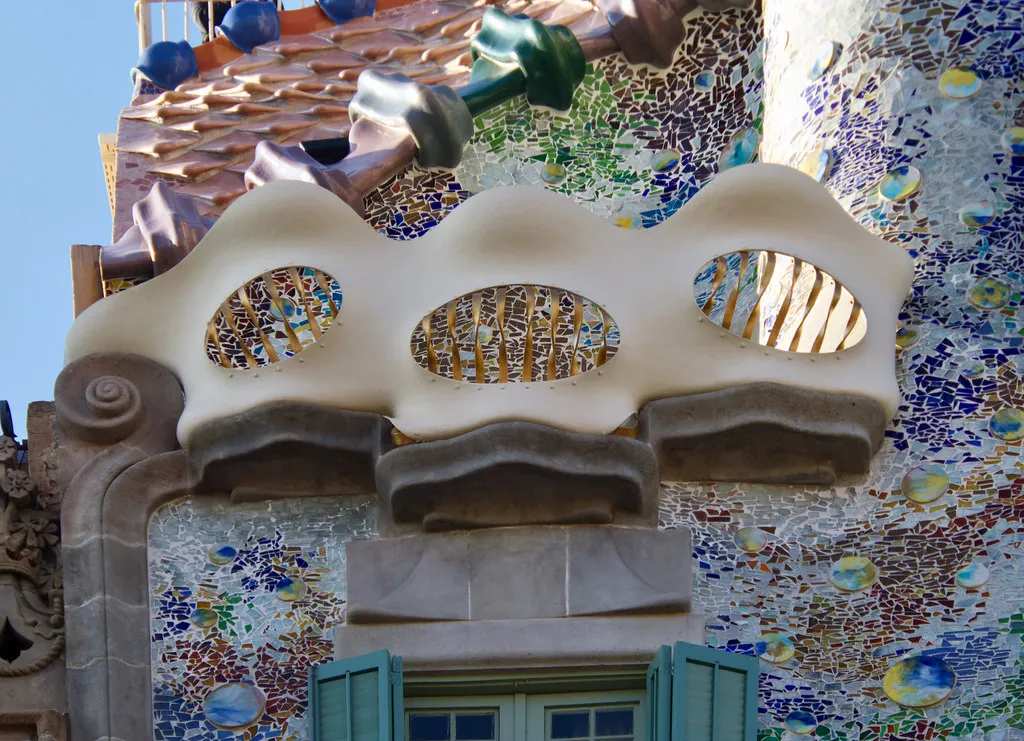
The technical innovations are just as compelling as the aesthetics. Gaudí designed the building without straight lines or right angles. Walls curve, ceilings swirl, and the central courtyard uses variable-density blue tiling — denser at the top to compensate for stronger light, lighter at the bottom — so that every floor receives equal illumination. This was applied science disguised as decoration, and no other building of the period achieves the same effect.
Modern additions since 2021 include a 360-degree immersive experience designed by digital artist Refik Anadol, a descending back staircase wrapped in aluminum chain installation by Japanese architect Kengo Kuma, and a Gaudí Dome experience in the basement. Opinions divide on whether these enrich or dilute the original. What is not debatable is that they give younger visitors — especially children — strong points of engagement throughout the tour.
Casa Batlló vs. Casa Milà: Which Gaudí House is Right for You?
Both buildings are UNESCO-listed Gaudí masterpieces on the same boulevard and within walking distance of each other. The question most visitors face is whether to do one or both. If time or budget forces a choice, the answer depends on what kind of traveler you are.
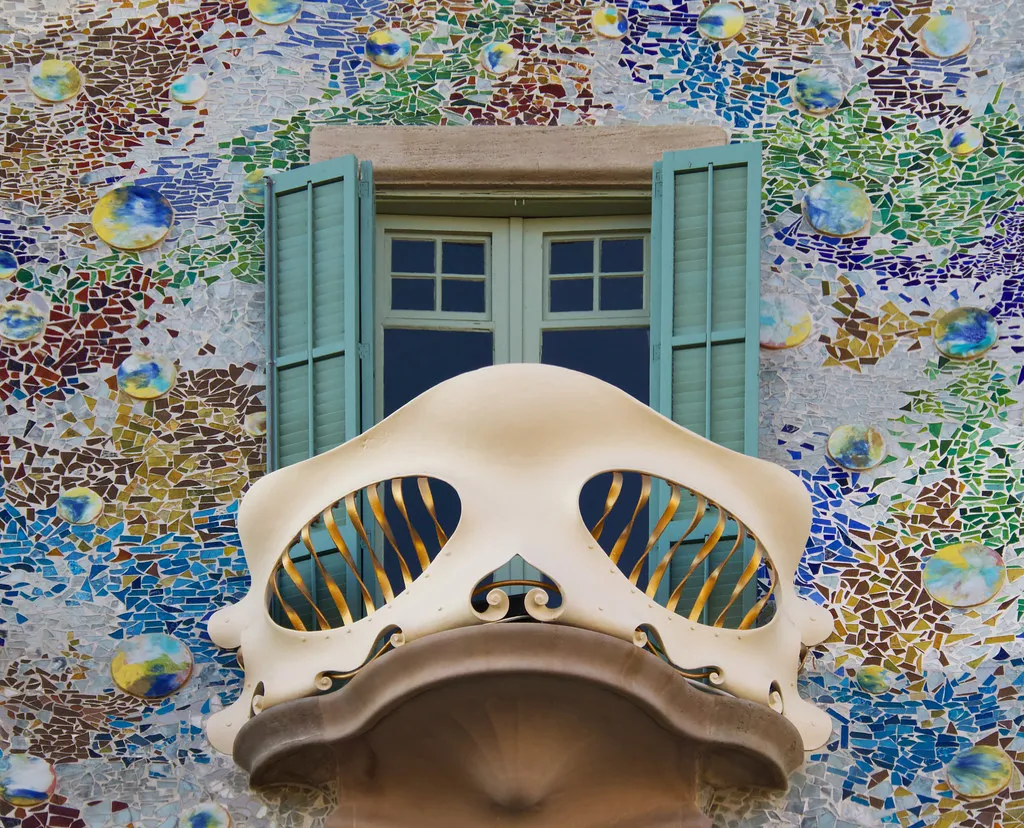
Casa Batlló wins on color, fantasy, and first-impact emotion. The facade is the most photogenic of the two, and the bone-like columns and iridescent tiles make an immediate impression. The interior is intimate and theatrical — think fairy-tale rather than grand. Children respond well to it, and the tablet-guided tour keeps them engaged. The drawback is that the living quarters are not fully furnished and several rooms are missing, which limits the sense of domestic history. It is also the more expensive of the two and, in high season, noticeably more crowded.
Casa Milà (La Pedrera) was designed from the ground up, and architects and architecture enthusiasts consistently rate it higher for structural innovation. The rooftop warrior-chimneys are one of the most recognizable skylines in Barcelona and offer genuine views of the city including Sagrada Família. The furnished apartment gives a clearer picture of early 20th-century bourgeois life in Barcelona. The attic has an excellent permanent exhibition on Gaudí's full body of work. It also handles crowd volumes better because the building is physically larger.
For families with children: Casa Batlló. For architecture enthusiasts or visitors with only one morning and no particular preference: Casa Milà tends to give more for the money. For anyone with two hours spare and no budget constraint: do both — they are five minutes apart on foot. You can BOOK CASA BATLLÓ and BOOK CASA MILÀ through their official sites for the best prices.
Casa Batlló Tickets: Your Complete Buying Guide
Casa Batlló sells tickets in four tiers for daytime visits, plus separate night-visit and early-morning options. Prices vary by season and demand — the figures below are the typical 2026 range; check the official site for the rate on your specific date. Always book online: buying at the door costs €4 more per ticket, and there is a real risk of sellout during summer and public holidays.
- Blue Ticket (€25–€35): The baseline visit. Covers the entrance hallway, the noble floor, interior courtyard, attic, and the Kengo Kuma staircase. Audio guide included. Note: the roof terrace is NOT included in the Blue ticket — this is the most common first-timer mistake. Children under 12 enter free on all tiers.
- Silver Ticket (Blue + €5): Adds access to the roof terrace. If the dragon's back roof is on your must-see list, upgrade to at least Silver.
- Gold Ticket (Blue + €10): Adds the interactive mini-tablet tour, the Gaudí Dome experience in the basement, and access to the first-floor Batlló family private residence furnished with Art Nouveau pieces. Recommended for families and anyone interested in the interactive layer.
- Platinum Ticket (Blue + €20): Includes everything in Gold plus skip-the-line fast-track entry. This is the only tier that guarantees queue bypass. Worth it in July and August when queues can run 30–40 minutes even with a timed slot.
| Ticket | Typical Price (2026) | Roof Terrace | Gaudí Dome | Fast-Track Entry |
|---|---|---|---|---|
| Blue | €25–€35 | No | No | No |
| Silver | ~€30–€40 | Yes | No | No |
| Gold | ~€35–€45 | Yes | Yes | No |
| Platinum | ~€45–€55 | Yes | Yes | Yes |
Night visits run separately (€25–€36 depending on date). The format changes: a different audio narrative tells the story through the "childhood memories" of the house, the rooms are lit in theatrical colors, and a glass of cava or Kir Royal is included. The night visit does not cover the rooftop. Early morning "Be the First" sessions cost around €45 but include all areas of the building without choosing between tiers — reasonable value if you want everything in one go before crowds arrive.
Avoid third-party reseller sites. They add booking fees on top of the official price and, at worst, some sell invalid tickets. Use the official Casa Batlló website only for reliable, price-guaranteed entry. A Barcelona Pass or city card can also include skip-the-line access to Casa Batlló and is worth pricing out if you plan to visit multiple paid attractions in the same trip.
Best Time to Visit Casa Batlló & Beat the Crowds
Casa Batlló is one of the smaller Gaudí buildings relative to its visitor volume, which means crowding is a genuine issue during peak season. In July and August, the narrow attic corridor that leads to the roof terrace can turn into a human traffic jam, and even timed-entry holders queue at the building entrance. The single most effective crowd-avoidance strategy is to visit 90 minutes before closing time (around 19:30). Group tours and morning crowds have dispersed by that point, and the late-afternoon light through the facade tiles is exceptional.
Early morning visits at 09:00 on a weekday also work well, especially from mid-September through May. The "Be the First" early-access option starts before the official 09:00 opening — useful if you want photos of the rooftop without other visitors in the frame. Weekdays from Tuesday to Thursday are consistently quieter than weekends. Avoid the first two weeks of August, Easter week, and Catalan public holidays entirely if crowd sensitivity is high.
Shoulder season (April–May and September–October) is the optimal window: mild weather, reasonable crowd levels, and the light on the facade is softer than in peak summer. January and February are the quietest months, though rain can close the La Pedrera rooftop — not an issue at Casa Batlló since its terrace is sheltered differently. Plan your visit to other Gaudí buildings Barcelona using the same seasonal logic for a smoother overall experience.
Exploring Casa Batlló's Iconic Architecture: The Dragon's Back & Beyond
The construction of the building showcases Gaudí's method of solving structural problems through organic form. He replaced the traditional stone columns with slender ceramic columns on the ground floor that distribute load like a tree's root system. This freed the interior walls from bearing weight, allowing him to open up the facade with the large bone-shaped windows visitors see today. The technique anticipated structural principles that would not enter mainstream architecture for another half-century.
The roof — called "the dragon's back" — is the building's defining feature. Its iridescent scales are composed of ceramic tiles in green, blue, and orange that shift color depending on sunlight angle. The ridge of the roof represents the dragon's spine, and the tower topped with a four-armed cross represents Saint George's lance piercing the beast. Up close, the surface is not smooth: each tile was broken and re-laid in the trencadís technique, turning waste ceramic into a shimmering mosaic skin.
Inside, pay close attention to the details competitors' guides often skip. The elevator, one of the earliest in Barcelona, still operates and retains its original carved wooden cabin. The doorknobs and light fittings were all custom-designed — nothing in the building was sourced from a catalogue. The noble floor ceiling swirls like a whirlpool, drawing the eye to the center and demonstrating Gaudí's obsession with movement in static material. On the back terrace, accessible through the Gold ticket, you see the private garden side of the house that most visitors never reach.
The Legend of Saint George: Gaudí's Inspiration
The legend of Sant Jordi (Saint George) is embedded in every corner of Casa Batlló. Sant Jordi is the patron saint of Catalonia, celebrated on April 23rd — a date when Barcelona fills with roses and books exchanged as gifts. The legend tells of a dragon terrorizing a village; Saint George slays it to save a princess, and from the dragon's blood grows a rose bush. Gaudí turned the entire building into a stone telling of this story.
The dragon's back roof is the most literal reference. The skull-shaped balconies below represent the dragon's victims. The bone columns on the facade are those same victims' remains. The tower and its four-armed cross are the lance and sword of Saint George. Even the color palette reinforces the narrative: the blue and green tiles of the facade evoke the scales of the mythical beast, and the gold and orange ceramic fragments on the roof catch the Catalan sun like a living creature.
This integration of local mythology makes Casa Batlló unlike any other Gaudí building. Where Sagrada Família draws from Christian iconography and Park Güell from Mediterranean nature, Casa Batlló is explicitly Catalan nationalist in symbolism — a deliberate political statement made through architecture at a time when Catalan cultural identity was fighting for recognition.
Location & What to See Around Casa Batlló
Casa Batlló sits in the heart of the Eixample on Passeig de Gràcia, Barcelona's grandest boulevard. The metro stop Passeig de Gràcia (lines L2, L3, L4) deposits you directly outside. Bus lines H10, V15, 7, 22, and 24 also stop here. The Bus Turístic stops on Passeig de Gràcia within a short walk, making it straightforward to combine with other sightseeing. From here, you can easily incorporate the building into a broader Barcelona 3-day itinerary without backtracking.
The immediate block is known as the Manzana de la Discordia (Block of Discord) — a reference to the competing architectural styles of three buildings commissioned in the same era by rival clients. Casa Amatller (next door at number 41, by Josep Puig i Cadafalch) and Casa Lleó Morera (number 35, by Lluís Domènech i Montaner) are both worth a few minutes outside. None charge entry for facade viewing. Casa Milà / La Pedrera is five minutes north on foot. For a slightly longer walk, Casa de les Punxes (Diagonal, 420) and Casa Vicens (Gaudí's first major commission, in Gràcia) complete a genuine Modernisme circuit that spans the breadth of the movement.
For eating after your visit, Cerveceria Catalana (Carrer de Mallorca 236) is a five-minute walk and serves reliable tapas and montaditos at moderate prices — usually with a queue worth joining. Teòric Taverna Gastronòmica on Carrer del Consell de Cent offers Catalan cuisine with a tasting menu if you want a longer sit-down meal. Both are local favorites rather than tourist traps. The Eixample grid also has dozens of coffee shops and patisseries if you only need a break before the next attraction. See the full top things to do in Barcelona guide for a wider set of neighborhood recommendations.
Practical Tips for Your Casa Batlló Visit
Allocate 1.5 to 2 hours for a complete visit. The Gold or Platinum tier adds another 20–30 minutes for the dome experience and the private residence floor. Photography is permitted throughout, including on the rooftop, and the building is well-lit enough for phone cameras to produce good results without flash. The original elevator is a genuine highlight — do not skip it even if the stairs look faster.
Accessibility: elevators reach most levels, and the building has ramps at the entrance. The narrow attic corridor is the one section that can feel tight for wheelchair users or those with mobility issues; staff can advise on an alternative route. The audio guide, included with every ticket tier, is available in over 10 languages and runs approximately 55 minutes if you follow every stop. Wearing comfortable flat shoes matters — the rooftop surface is uneven ceramic tile.
Pre-visit checklist: book online (save €4 on the door surcharge and guarantee your slot), choose your ticket tier before arrival so you are not upselling at the entrance desk, check the weather if the rooftop is a priority, and arrive at your timed slot — they are strict about entry windows in peak season. If you want the roof terrace, book at minimum a Silver ticket. Do not rely on upgrading at the desk on busy days; the higher tiers can sell out independently of the base visit slots.
Frequently Asked Questions
Which Casa Batllo Barcelona options fit first-time visitors?
First-time visitors should choose the Blue Ticket for Casa Batlló. It includes the immersive audio guide and access to all main areas. This provides a comprehensive introduction to Gaudí's unique design without needing additional upgrades. Booking online ensures your preferred entry time.
How much time should you plan for Casa Batllo Barcelona?
Most visitors should plan for 1.5 to 2 hours at Casa Batlló. This duration allows enough time to explore each floor, enjoy the augmented reality features, and appreciate the rooftop. Add extra time if you wish to browse the gift shop or linger over specific architectural details.
What are the different ticket types for Casa Batlló?
Casa Batlló offers several ticket types: Blue (standard), Silver (flexible entry, VR tablet), Gold (VIP access, private room, photo service), and Night Visits. Each tier provides different benefits and access levels. Check the official website for the most current offerings and pricing before booking your visit.
Is Casa Batllo Barcelona worth including on a short itinerary?
Yes, Casa Batlló is definitely worth including even on a short Barcelona 1-day itinerary. Its central location and unique architecture make it a standout attraction. Pre-booking skip-the-line tickets is crucial to maximize your time and avoid delays. You can experience its highlights within a couple of hours.
What should travelers avoid when planning Casa Batllo Barcelona?
Travelers should avoid visiting Casa Batlló without pre-booked tickets, especially during peak season. Also, try to avoid midday visits (11 AM to 3 PM) when crowds are heaviest. Relying solely on walk-up tickets can lead to long waits or even missed entry. Always verify opening hours before your visit.
Casa Batlló Barcelona stands as a breathtaking testament to Antoni Gaudí's boundless creativity. Its vibrant colors, organic forms, and rich symbolism offer an unparalleled architectural experience. Planning your visit with these tips ensures you can fully appreciate this UNESCO World Heritage site. From ticket choices to avoiding crowds, you are now ready to explore Gaudí's masterpiece. Make sure to add this iconic building to your Barcelona itinerary for an unforgettable journey.
You might also like


Continue reading
More guides you'll find useful