La Boqueria Market Barcelona Travel Guide
Plan La Boqueria market Barcelona with top picks, neighborhood context, timing tips, and practical booking advice for a smoother trip.
On this page
La Boqueria Market Barcelona: Your Ultimate Guide
La Boqueria market in Barcelona is one of the most famous food markets in Europe. Officially called Mercat de Sant Josep de la Boqueria, it sits directly on La Rambla and has been feeding the city since 1840. Its 13,600 square metres of stalls hold fresh seafood, cured meats, cheeses, spices, and a string of tapas bars that cook with whatever just arrived that morning.
The market draws over 45,000 visitors per day in peak season, which means your experience depends almost entirely on when you arrive and how you navigate the space. The front stalls near La Rambla cater heavily to tourists. The back half of the market — where the fishmongers, butchers, and specialist grocery vendors work — runs on a completely different rhythm. This guide explains how to tell the difference and make the most of both.
Plan with trusted sources: cross-check opening hours and seasonal details with the official Barcelona tourism board, and read more about the city on its Wikipedia entry before you go.
History of the Mercat de Sant Josep de la Boqueria
Market activity at this spot on La Rambla dates to the early 13th century, when farmers and traders gathered outside the city walls. The name "Boqueria" comes from the old Catalan word for butcher — meat sellers dominated the early market. In 1826, the Marquis of the Sacred Field adopted the first formal market rules, and on 18 October 1827 the current market was officially founded on the site of the demolished Convent of Sant Josep.
Building proceeded in stages. The foundation was laid in 1840, the administrative building completed in 1848, and fruit and vegetable traders were granted the right to sell here only in 1861 — until then, it remained primarily a meat and fish market. The market reached its current footprint in 1869 when the building beyond Carrer de Jerusalem was demolished to free up space. The signature iron roof that still covers the market today was inaugurated in 1914, which is also when La Boqueria became a destination tourists sought out deliberately.
The 20th century brought waves of renovation, including a major parking and infrastructure overhaul from 2007 to 2010. Many regular local shoppers who found alternatives during that construction period never returned — a shift that partly explains why the market's customer mix skews more tourist-facing today than it did a generation ago.
Pla de l'Os: What You Walk Over to Get In
Most visitors don't realise they're crossing a work of art when they approach La Boqueria from La Rambla. The mosaic set into the pavement at the market entrance is Pla de l'Os — a circular piece created by Joan Miró in 1976. Miró chose La Rambla deliberately, wanting his work to be part of everyday street life rather than a museum. The name translates roughly as "Bone Place," a reference to the jugglers who once performed here with dancing bears.
On the opposite side of the entrance you can see the Casa Bruno Quadros, a 19th-century shop facade decorated with Chinese-style copper screens and a cast-iron dragon holding an umbrella. The building once sold umbrellas and parasols, and the dragon was part of the shop's advertising. These two details — the Miró mosaic underfoot and the dragon overhead — are genuinely worth pausing for before you push into the market. Most visitors walk straight past both.
Opening Hours and When to Go
La Boqueria is open Monday to Saturday, 08:00 to 20:30. It is closed on Sundays. That said, the listed hours don't fully describe what you'll find inside. Until around 10:00, most vendors are still unpacking — crates line the aisles and the full displays aren't ready. Crowd numbers start climbing around 11:00 and peak between 12:30 and 14:00, when tour groups and lunchtime visitors converge simultaneously.
The practical window for the best balance of open stalls and manageable crowds is 10:00 to 12:00 on a weekday. You get full displays, the tapas bars are serving but not yet overwhelmed, and the fish section is at its freshest before the lunch rush clears out the prime catches. On Saturday afternoons after 15:00, vendors start looking to sell remaining stock — you can sometimes negotiate on fruit and some seafood, and a few vendors will throw in extras unprompted.
After 16:00, the tapas bars close and only a fraction of stalls remain open: mostly to-go food, fruit, and one or two seafood counters. Evening visits after 18:00 are mostly useful if you want to find discounted fruit or juice without crowds — don't expect the full market experience.
| Time Window | Crowd Level | Stalls Open | Best For |
|---|---|---|---|
| 08:00–10:00 | Low | Partial (setup) | Atmosphere; not full displays |
| 10:00–12:00 | Moderate | Full | Best overall — fresh seafood, tapas bars open |
| 12:30–14:00 | High (peak) | Full | Avoid if crowds bother you |
| 15:00–16:00 (Sat) | Lower | Most | End-of-day deals on fruit and seafood |
| After 16:00 | Low | Limited | Discounted fruit/juice only |
Is La Boqueria a Tourist Trap?
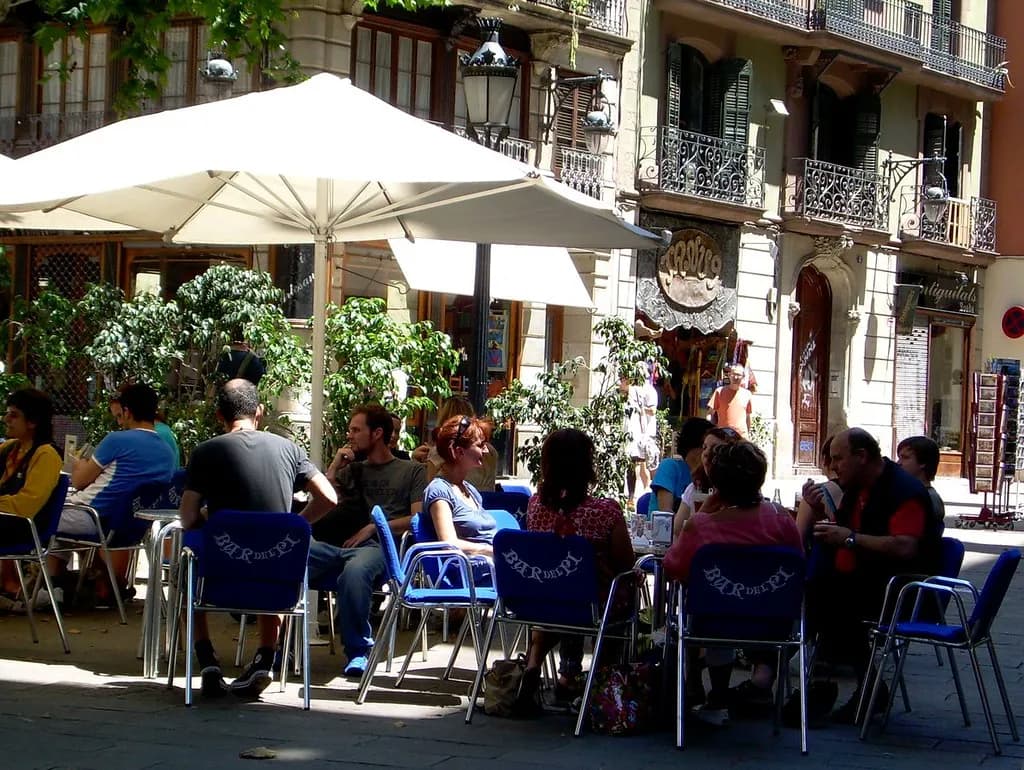
The honest answer is: partially, and it depends on where you stand. The stalls closest to the La Rambla entrance lean heavily toward tourists — pre-cut fruit cups, brightly packaged sweets, and trinkets priced for visitors who won't be back. The tapas bars at the very front get so busy at peak hours that the experience feels more like queuing than eating.
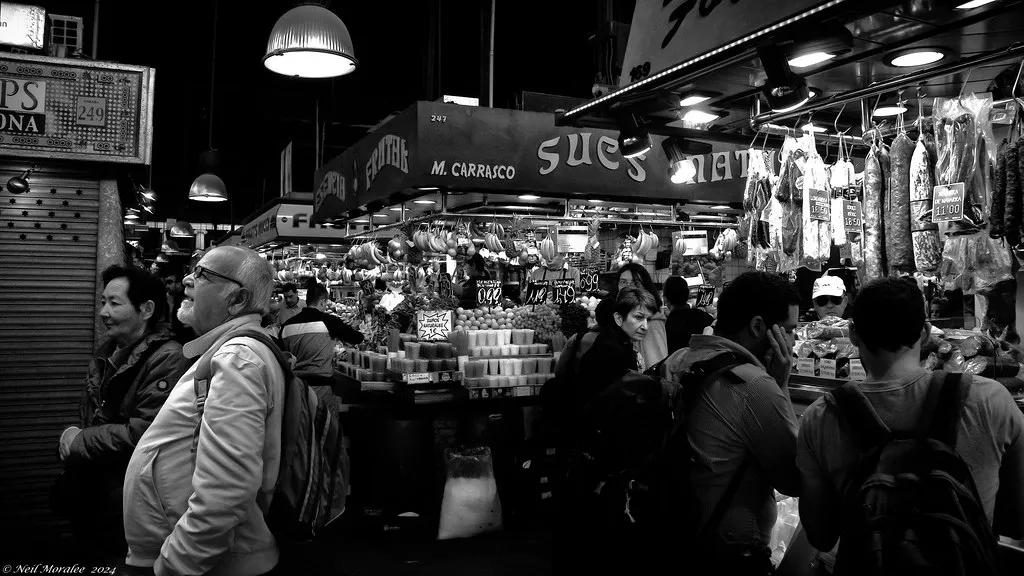
Move twenty metres deeper into the market and the character changes. The fishmongers, butchers, and specialist grocery stalls in the back half of La Boqueria still operate like a working market. Prices are more in line with city norms. Vendors here are selling to professional buyers, local residents, and restaurant kitchens — not primarily to tourists. The density of tour groups also drops sharply once you get past the first three rows of stalls.
Do locals still shop at La Boqueria? Yes, but selectively. The competition from renovated neighbourhood markets — Mercat de Sant Antoni, Mercat de Santa Caterina — has pulled regular grocery shoppers elsewhere. Locals who still come are typically after something specific: a particular cut of meat, seasonal seafood from a vendor they trust, or specialty spices. For everyday produce, most Barcelona residents shop closer to home. Knowing this helps you find the right parts of the market to spend time in.
Shopping in La Boqueria: What to Buy
If you're buying food to take home, a few categories are worth prioritising. Jamón ibérico is one of the most worthwhile purchases at La Boqueria — the Mas charcuterie stalls carry good quality at transparent prices. Don't buy a whole leg unless you have the tools to carve it at home; opt for vacuum-packed sliced portions instead. For olive oil, stalls like Graus and Eva Lugo stock small-format bottles that travel well and make solid gifts.
Saffron and smoked paprika (pimentón de la vera) are available from several spice vendors, including the colourful Jesús y Carmen stall. One practical tip: the same product in a plain plastic bag costs less than the same product in a painted tin. Buy the decorated packaging for gifts; buy the plain packaging for cooking. The price differential on saffron in particular can be significant.
If you're shopping to cook — useful if you're staying in an apartment nearby — look for Cal Neguit for local seasonal produce from sustainable farms, Boket for high-quality veal and butcher cuts, and Angelina i Miquel or Pep i Eva for seafood sourced from local fishing boats. The Llegums La Boqueria stalls sell cooked traditional beans and stews by portion, ready to heat. These are genuinely useful for self-catering visitors and essentially unavailable anywhere outside the market.
Eating in La Boqueria Market
Bar Pinotxo, right at the market entrance, is the most famous counter in La Boqueria. It has been run by the same family for generations. Arrive before 10:30 for a proper breakfast — their chickpeas with botifarra sausage and grilled cuttlefish are the dishes most regulars order. The bar fills fast; if all stools are taken, wait rather than walking away. Turnover is quick and the owner Juanito will often wave you in the moment a space opens.
El Quim de la Boqueria, located deeper in the market, is known for creative cooking with market-fresh ingredients. Their fried eggs with baby squid is the signature dish and genuinely worth ordering. El Quim also does a good version of pan con tomate with jamón. Both bars are not cheap — expect to pay EUR 12–20 per person for a proper snack — but the quality justifies the cost. What you're paying for is direct access to whatever arrived that morning.
For lighter eating, the food-to-go stalls along the right-hand wall as you enter from La Rambla sell croquettes, empanadas, and wraps at lower price points. The Greek stall Simposion on the far side of the market is a genuine outlier and worth seeking out. For seafood grazers, the outer lane of the fish section sells fried fish and oysters to take away — the oysters and sea urchins are worth a few euros of your budget. Avoid the overpriced pre-cut fruit cups near the entrance; buying a whole piece of fruit from a produce vendor costs a fraction of the same amount.
Tours of the Mercat de la Boqueria
A guided food tour of La Boqueria adds context that's difficult to pick up on your own. Good guides have relationships with specific vendors and can walk you straight to the stalls worth your attention, cutting through the tourist layer at the front. They also explain what's in season, which matters in a market that changes its character month to month. A cooking class that starts with a Boqueria market visit — picking ingredients, then preparing them — is one of the most coherent ways to spend a half-day in Barcelona if food is a priority for you.
Private food tours of Barcelona that include La Boqueria typically run EUR 80–150 per person depending on group size and whether the tour includes a sit-down meal. Group tours are cheaper — EUR 30–60 — but move faster and cover less ground inside the market. If you book a cooking class, look for ones that use ingredients you select rather than a fixed menu: these feel more authentic and give you a better sense of what seasonal Catalan cooking actually uses.
One practical note: most quality tours start between 09:00 and 10:00, before the main crowds arrive. If a tour starts at 11:30 or later, the market experience will be more congested and the tapas bars harder to access. Check tour start times before booking. Discover more culinary experiences in our the city's best tapas bars guide.
Market Etiquette and Practical Tips
A few behaviours mark visitors as respectful in La Boqueria. Do not touch produce or products — point at what you want and the vendor will handle it. This applies even if you intend to buy. Do not attempt to haggle; it is considered offensive and won't work. If you want to photograph a vendor, ask first. Photographs of the stalls and products are generally fine; flash photography directed at vendors is not — some have reported migraine problems from years of tourist camera flashes.
At the tapas bars, ask a waiter where to sit. Some bars operate by strict arrival order and will tell you when a seat is ready; sitting down without being directed can cause friction during busy service. If all seats are taken, stand near the counter rather than hovering over seated diners.
There is a public toilet at the far end of the market, reached by going down some stairs. If you have a purchase receipt from the market, you can use it for free. Without a receipt, a small fee applies. Most stalls now accept credit cards since the post-pandemic period, but carrying a small amount of cash covers edge cases. Keep your valuables close — the market's crowds make it a pickpocket environment.
How to Get to La Boqueria in Barcelona
La Boqueria is at La Rambla 91, directly on Barcelona's most-walked pedestrian street. The closest metro station is Liceu on L3 (the green line). One thing worth knowing about Liceu: the two platforms are not connected inside the station. When you leave the market and head underground, make sure you enter through the correct side for your direction of travel — otherwise you will exit the fare zone, pay again, or have to backtrack one stop to switch platforms.
Bus lines 59 and V13 both stop within one block of the market. If you are arriving from Plaça de Catalunya via the tourist bus, it is a seven-minute walk south down La Rambla. Walking is the most practical option if you are staying anywhere in the Gothic Quarter, El Raval, or Sant Pere — La Boqueria is centrally located enough that most central Barcelona accommodation is within 15 minutes on foot. Explore the surrounding Barcelona neighborhoods as you walk in.
Driving is not recommended. Parking in central Barcelona is expensive and scarce, and La Rambla itself is pedestrianised. Public transport or walking covers the approach from every sensible direction. Admission to the market is free.
Other Markets in Barcelona Worth Visiting
Mercat de Sant Antoni is the best alternative for visitors who want a proper Barcelona market experience without tourist crowds. It reopened after nine years of renovation in 2018 and now operates as a model neighbourhood market — a large covered food hall on weekdays, plus a Sunday morning secondhand book and coin market on the outdoor perimeter that draws collectors from across the city. It is quieter than La Boqueria and prices reflect a local clientele.
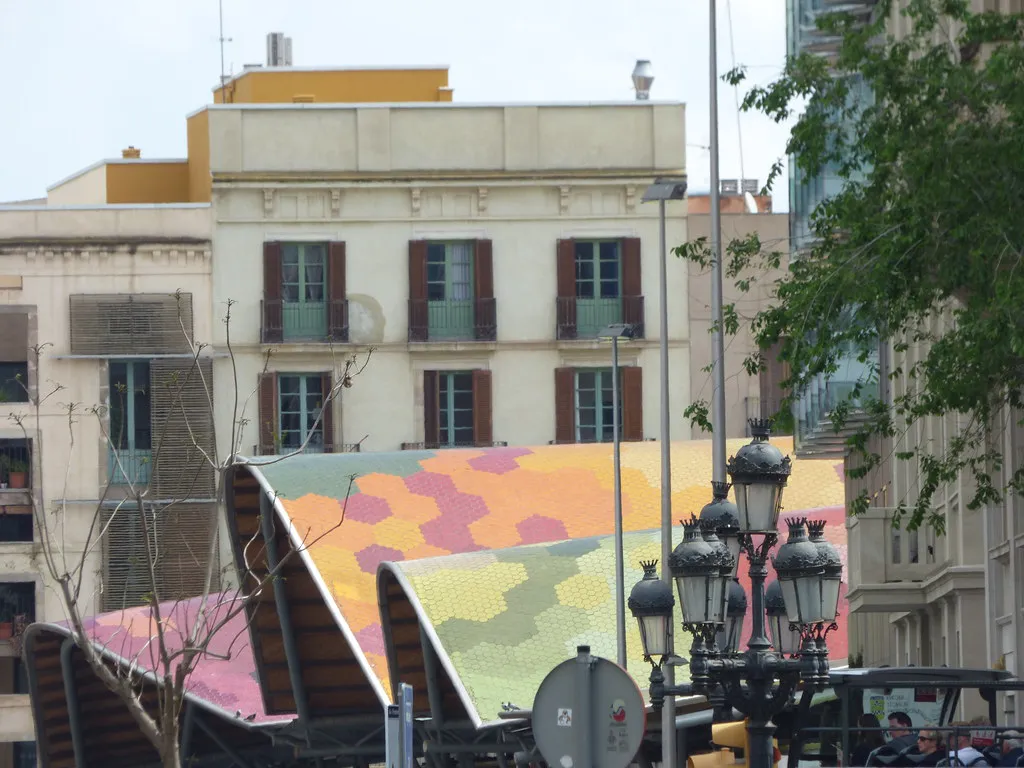
Mercat de Santa Caterina in El Born is architecturally striking, with a wave-shaped mosaic roof designed by Enric Miralles. It is smaller than La Boqueria and functions mainly as a working food market for the surrounding neighbourhood. The seafood and vegetable sections are strong, and there is a good tapas bar on site. Crowd levels are low by La Rambla standards even on weekends.
Mercat de la Barceloneta sits near the beach and specialises in fish and seafood from the port. It serves local chefs and residents from the Barceloneta neighbourhood. If you want the freshest catch with the most direct connection to the fishing boats, this market is a better choice than La Boqueria for that purpose. Find more culinary experiences in our what to eat in Barcelona.
Frequently Asked Questions
Is La Boqueria a tourist trap?
La Boqueria market is popular with tourists, but it's not entirely a trap. Many stalls still offer high-quality, fresh produce and ingredients at fair prices. Locals often visit for specialty items. To avoid tourist traps, explore deeper into the market and try less prominent eateries. Visiting early mornings can offer a more authentic experience.
Do locals shop at La Boqueria market?
Yes, locals do shop at La Boqueria, particularly for specific, high-quality ingredients like fresh seafood or unique spices. However, for everyday groceries, many prefer smaller, neighborhood markets. The market's central location on La Rambla means it attracts a large number of tourists. This balance creates a unique, bustling atmosphere.
How much time should you plan for La Boqueria market Barcelona?
Plan at least 1-2 hours to fully experience La Boqueria market Barcelona. This allows time to wander through the various sections, admire the displays, and perhaps grab a bite to eat. If you plan to sit down for a meal at one of the tapas bars, allocate more time. A guided tour might extend your visit to 2-3 hours.
What should travelers avoid when planning La Boqueria market Barcelona?
Travelers should avoid visiting during peak lunch hours (1 PM - 3 PM) if they dislike crowds. Also, be wary of overly expensive pre-cut fruit cups at the very front of the market. These are often overpriced. Do not take photos of stalls without asking permission first. This shows respect for the vendors. Always be mindful of your belongings in crowded areas.
La Boqueria market Barcelona rewards visitors who understand its geography. The front stalls are theatrical and photogenic; the back half is where the real market lives. Arrive between 10:00 and 12:00 on a weekday, walk past the fruit cups and chocolate stalls near the entrance, and spend your time with the fishmongers, the specialist vendors, and the tapas bars that have been here for generations.
The history embedded in this market — from the 13th-century traders on La Rambla to the Miró mosaic under your feet — makes La Boqueria more than a grocery stop. It is a working piece of Barcelona's culinary identity. The fact that it draws tourists does not diminish what it is. It just means you have to navigate it with some intention. Discover more top things to do in Barcelona.
You might also like


Continue reading
More guides you'll find useful