Gothic Quarter Barcelona Travel Guide
Plan gothic quarter barcelona with top picks, neighborhood context, timing tips, and practical booking advice for a smoother trip.
On this page
Gothic Quarter Barcelona: A Historic Journey
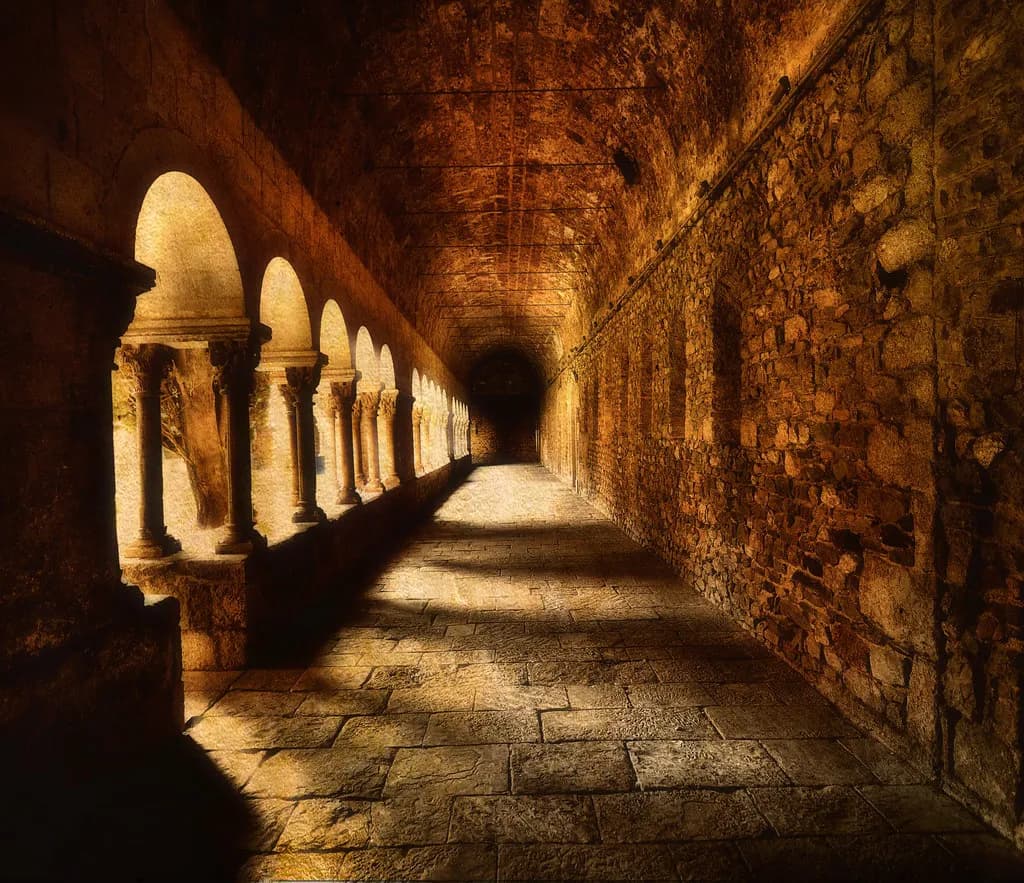
The Gothic Quarter Barcelona — locally known as Barri Gòtic — is the oldest part of the city and the single most atmospheric neighbourhood in Spain. Its narrow medieval streets sit on top of Roman ruins, and some buildings have been standing for over two thousand years. Walking here feels genuinely different from anywhere else in Europe.
Unlike the wide boulevards of Eixample or the beach strip of Barceloneta, the Gothic Quarter rewards slow movement. You will stumble on hidden courtyards, baroque churches, and locals-only tapas bars the moment you step off the main drag. This guide covers the key sights, the best bars and markets, where to sleep, and how to plan the day so you don't waste time doubling back.
Plan with trusted sources: cross-check opening hours and seasonal details with the official Barcelona tourism board, and read more about the city on its Wikipedia entry before you go.
See the Barcelona Cathedral
Use the Barcelona Cathedral as your orientation point when you first enter the Gothic Quarter. It sits at the heart of the district and every major street radiates from it. The facade is pure Catalan Gothic — dark stone, soaring pinnacles, intricate carvings — and it is most dramatic in the early morning before tour groups arrive.
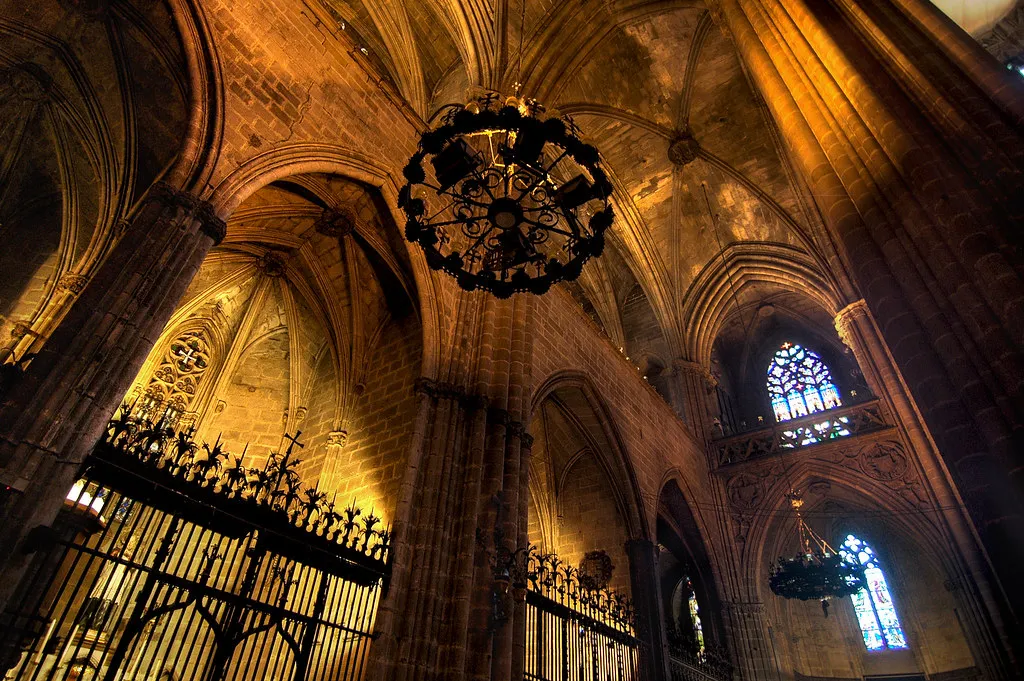
The cathedral is dedicated to Saint Eulalia, whose tomb lies beneath the main altar in the crypt. Look for the 13 white geese kept in the inner courtyard: they represent the 13 years Eulalia had lived when she was martyred. It is one of the more unusual details in any cathedral in Europe and children tend to love it.
Free entry runs 08:30–12:30 and 17:30–19:30. Outside those hours a ticket is required (around €9, including the rooftop terrace lift and choir). Booking online avoids the queue. The rooftop views over the Gothic Quarter's tiled roofscape justify the cost on their own.
Directly across the square is the Lamaro Hotel, which has a rooftop bar open to non-guests. No reservations needed — walk in and order a Catalan vermouth with a view of the cathedral.
Learn About the Legend of El Pont del Bisbe
El Pont del Bisbe (the Bishop's Bridge) spans Carrer del Bisbe, connecting the Casa dels Canonges to the Palau de la Generalitat. Joan Rubió i Bellver built it in 1928 in neo-Gothic style — it looks medieval but is less than a century old. It is one of the most photographed spots in Barcelona for good reason.
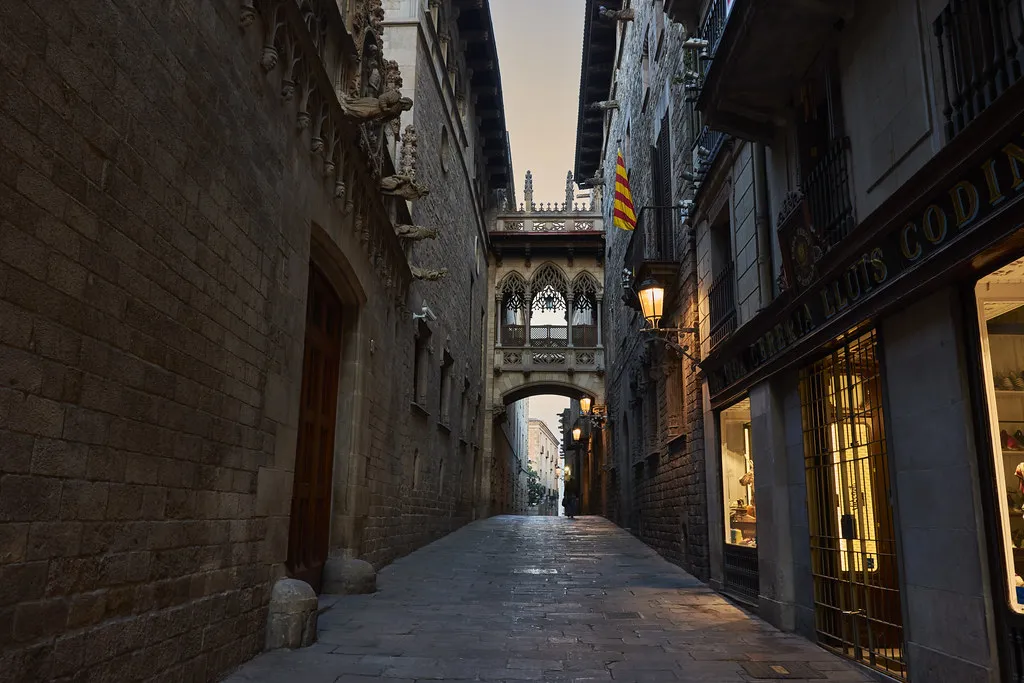
Look up as you walk beneath the arch and you will see a skull pierced by a dagger carved into the stone. The legend says that if the dagger is ever removed, Barcelona will collapse. A second folk tale adds a more playful twist: if you gaze at the dagger you invite bad luck, but walking backwards under the bridge while staring at it reverses the curse and grants a wish.
Access is completely free — the bridge spans a public street. Visit early morning or in the evening after most day-trippers have moved on. The light in late afternoon catches the stone particularly well. Plan two to three minutes here and continue down Carrer del Bisbe toward Plaça Sant Jaume.
Gaze at the String Lights in El Born
El Born sits immediately east of the Gothic Quarter and is worth treating as a separate micro-neighbourhood rather than lumping it in with the main Barri Gòtic. Take the Jaume I metro (L4, yellow line) and exit onto Carrer de la Princesa — from there dart into any alleyway heading south or west. Within one block the crowds thin out and the streets narrow to near-tunnel width.
At night, string lights stretch between the buildings above every major alley. The effect is particularly strong on Carrer del Rec, Carrer dels Mirallers, and the lanes around the Santa Maria del Mar basilica. This is the area that feels most like a film set — dark, moody, alive with bar noise and lantern light — and it is significantly less hectic than the central Gothic Quarter after dark.
El Born is also where you find the city's better cocktail bars and wine bars compared to the more tourist-facing spots on Las Ramblas. Parking yourself at a table outside one of the small bars on Plaça de Santa Maria after dark, with the basilica lit up in front of you, is one of the great free evenings in Barcelona.
Walk Down Las Ramblas and Visit La Boqueria
Las Ramblas — the 1.3 km pedestrian boulevard running from Plaça de Catalunya to the old port — borders the western edge of the Gothic Quarter and functions as a useful navigation spine. Walk it once, but do not linger: it is the single most pickpocketed street in Spain. Keep your phone in a front zip pocket and keep bags in front of your body, particularly around performers and street artists who create deliberate distraction zones.
Halfway down Las Ramblas on the right is Mercat de la Boqueria (officially Mercat de Sant Josep), Barcelona's most famous food market. It opens at 08:00 and closes at 20:30, Monday to Saturday. The stalls near the entrance are tourist-oriented and overpriced. Walk to the back third of the market for the serious fish, meat, and vegetable traders where locals still shop. A fresh juice at one of the mid-market stalls runs €2–3.
Boqueria gets genuinely packed from 11:00 to 14:00. If you want to browse without being jostled, arrive before 09:30 or after 17:00. The market does not take credit cards at every stall — bring a small amount of cash. It is worth at least a 20-minute walk-through even if you buy nothing, simply to see the scale and variety of a proper Spanish mercado.
People Watch at Plaça Reial
Plaça Reial is a colonnaded square tucked behind Las Ramblas, accessed through a narrow archway on the west side of the Gothic Quarter. The palm trees inside give it an oddly tropical feel for a medieval district. The fountain at the centre is flanked by two hexagonal lampposts — these were Antoni Gaudí's first commission for the city of Barcelona, completed in 1879, before he built anything else of significance.
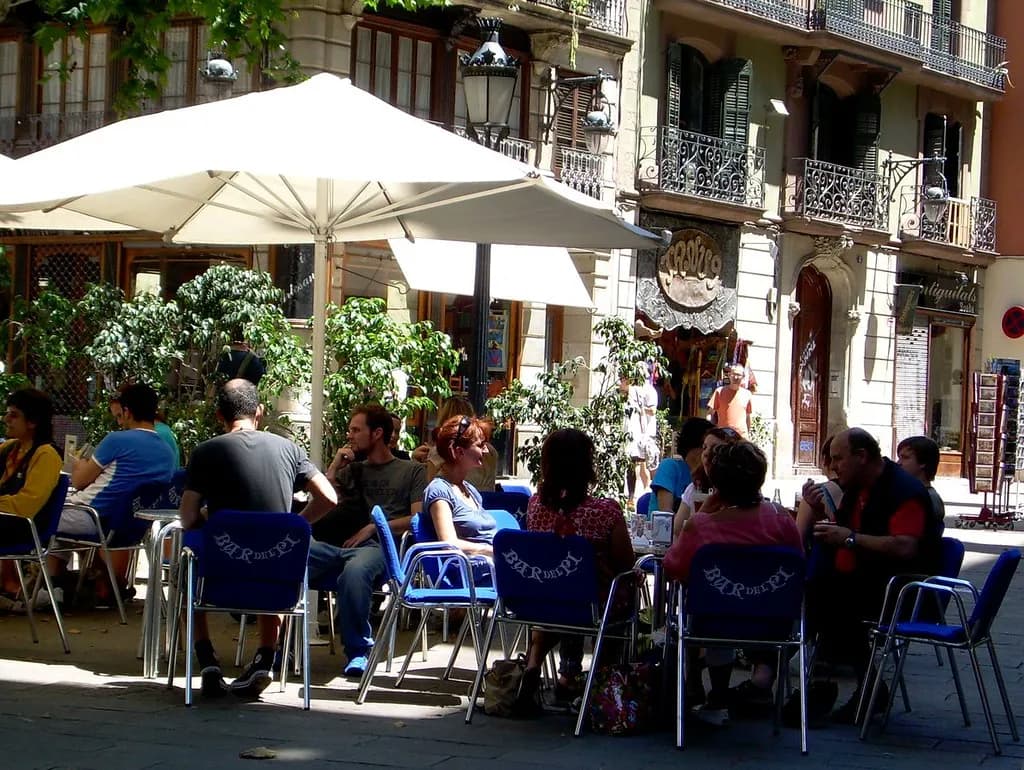
The square functions as Barcelona's main outdoor living room from mid-morning until late at night. Daytime: coffee at one of the terrace cafes, watching the mix of tourists and hungover locals piece together their day. Evening and night: the square hosts concerts, occasional festivals, and draws a nightlife crowd from around 22:00. Several clubs and bars are set into the arcade. Prices here are higher than side streets — budget €4–6 for a cortado, €8–12 for a beer at a terrace table.
Pickpockets operate in this square too, especially during busy evenings. Sit, don't stand, and you will be fine. The square is free to enter at any hour and there is no reason to rush through it.
Go Inside the Basilica of Santa Maria del Mar
Santa Maria del Mar stands in El Born and is often overshadowed by the larger Barcelona Cathedral, but many architects and art historians consider it the more accomplished building. It was constructed entirely between 1329 and 1383 — an unusually short span for a Gothic cathedral — funded by local merchants and dockworkers rather than by royal decree. The result is a strikingly unified interior: no later additions, no Baroque chapels bolted on, just pure Catalan Gothic proportion.
The interior is famous for its three naves of almost identical height, creating a sense of vertical space and light that the Barcelona Cathedral cannot match. The stained glass windows, particularly the enormous rose window above the main door, are spectacular when morning sun hits them from the east. Arrive between 09:00 and 10:30 for the best light.
Entry to the main nave is free during mass hours. A paid ticket (around €10) includes access to the terraces, towers, and crypt. Guided tours run daily and last approximately one hour. The basilica gained international attention through Ildefonso Falcones's novel Cathedral of the Sea, which used it as its central setting — copies of the book are sold in the gift shop if you want context before visiting.
Have a Spa Day at AIRE Ancient Baths
Escape the cobblestone crowds with a visit to AIRE Ancient Baths, a thermal spa set inside a restored 19th-century factory building in El Born. The AIRE group operates locations in several cities, but the Barcelona location is consistently cited as the most affordable and most atmospheric of their European sites. The architecture — exposed brick arches, candlelit vaulted ceilings — does most of the work before you even get in the water.
The circuit includes warm, hot, and cold plunge pools, a salt flotation bath, and a steam room. Various massage treatments can be added, ranging from 15-minute add-ons to 60-minute full treatments. A two-hour thermal circuit without massage costs around €38–45 depending on the day and session. Weekdays are significantly cheaper and less crowded than weekends.
Booking in advance is not optional on weekends — sessions sell out up to a week ahead in high season. Book on the AIRE website directly. The spa is located at Carrer dels Banys Vells 7 in El Born, a five-minute walk from the Santa Maria del Mar basilica. Bring nothing — they provide robes, slippers, towels, and lockers.
Get a Drink at Paradiso Bar
Paradiso was named the Best Bar in the World in 2022 by the World's 50 Best Bars. It is located on Carrer de Rera Palau in El Born, hidden behind the refrigerator door of what appears to be a small pastrami sandwich shop. You push the fridge, and the bar is behind it. The entry mechanic sounds like a gimmick, but the cocktails are not — they are serious, technical, and change their menu annually.
The house style leans toward complex, theatrical presentation, but the flavours back it up. Standing drinks are the standard format; the space inside is not large. Cocktails run €14–18. The Evolution Negroni is a recurring menu item worth ordering. The bartenders are deliberately theatrical — expect showmanship from the moment you walk in.
Paradiso does not take walk-in queues after a certain point and does not accept phone reservations. The entry method requires checking their current booking system online before you visit — this changes periodically, so look it up close to your visit date rather than relying on outdated travel blog instructions. Aim to arrive before 21:00 on weeknights; after that the wait is unpredictable. This is the one bar in the Gothic Quarter area that genuinely warrants building your evening around it.
Take in the History of Plaça Sant Jaume
Plaça Sant Jaume is the political centre of both Barcelona and Catalonia. The Palau de la Generalitat — headquarters of the Catalan government — faces the Ajuntament de Barcelona (city hall) across the square. Both buildings have stood here in various forms since the 15th century, and the square itself sits on the site of the Roman forum of the ancient settlement of Barcino.
The Roman street grid is still legible in the surrounding neighbourhood. Carrer del Call and Carrer dels Banys Nous run almost exactly along the lines of the Roman cardus and decumanus. The geological depth here — Roman street level is about five metres below the current pavement — is visible inside the MUHBA (Barcelona City History Museum) on Plaça del Rei, which is a ten-minute walk northeast.
The square is not a tourist trap — it functions as an actual civic space where protests, official celebrations, and Catalan national day events (11 September, Diada) take place. Entry to both government buildings is restricted except on designated open-door days. The facades are worth a good look regardless. Spend 15–20 minutes here and continue on to Plaça del Rei.
Where to Stay in The Gothic Quarter
Staying inside the Gothic Quarter puts you within walking distance of every attraction on this list and eliminates the need for metro travel on most days. The trade-off is noise: Carrer de Ferran, Carrer dels Escudellers, and the streets around Plaça Reial are loud until 03:00 most nights. Before booking, check whether the room faces a courtyard or an interior wall — street-facing rooms on those streets can be genuinely difficult to sleep in during summer weekends.
The Hotel Barcelona Catedral is the best-positioned option for sightseers, sitting metres from the cathedral facade. It is a full-service hotel with a rooftop pool and breakfast included in some rates. Mid-range pricing, book six to eight weeks ahead for summer dates.
For a more independent stay, Lamaro Barcelona offers apartment-style rooms with a rooftop bar open to guests. It suits couples and longer stays better than a single-night stopover. Explore the full range of options in our where to stay in the city guide to compare by budget and location. You can also browse all our picks for Barcelona neighborhoods if you are deciding between the Gothic Quarter and El Born, Eixample, or Gracia.
How to Plan a Gothic Quarter Day
The Gothic Quarter is compact — roughly 750 metres square — but it rewards at least a half day and ideally a full day if you are including El Born. Wear flat, closed-toe shoes. The cobblestones are uneven enough to turn an ankle in sandals or heels, and you will cover 6–9 km without noticing if you are exploring properly.
| Time | Activity | Location | Cost |
|---|---|---|---|
| 09:00–10:30 | Barcelona Cathedral + courtyard geese | Plaça de la Seu | Free (or €9 with rooftop) |
| 10:30–11:00 | El Pont del Bisbe + Carrer del Bisbe | Gothic Quarter core | Free |
| 11:00–12:00 | Plaça Sant Jaume + MUHBA Roman ruins | Plaça del Rei | Free–€7 |
| 12:30–14:00 | Lunch at Plaça de Santa Maria | El Born | €12–20 |
| 14:00–16:00 | Santa Maria del Mar + El Born alleys | El Born | Free–€10 |
| 16:00–18:00 | La Boqueria market + Las Ramblas walk | Las Ramblas | Free |
| 19:00–21:00 | Plaça Reial aperitivo + people-watching | Plaça Reial | €4–12 |
| 21:00+ | Paradiso cocktail bar | El Born | €14–18/drink |
A logical morning route: start at the Barcelona Cathedral at 09:00 before the tour groups arrive, walk down Carrer del Bisbe for El Pont del Bisbe, then cut through to Plaça Sant Jaume. From there, five minutes east brings you to Plaça del Rei and MUHBA if you want the underground Roman archaeology. Afternoon: cross into El Born via Carrer de la Princesa, visit Santa Maria del Mar, walk to Plaça de Santa Maria for lunch at one of the square-facing restaurants, then browse the El Born alleys.
Book Paradiso for the evening and AIRE in advance for whenever you want a mid-trip recovery slot. If you want the free things to do version of the day, skip AIRE and Paradiso entirely — the cathedral courtyard, El Pont del Bisbe, Plaça Reial, Las Ramblas, and La Boqueria cost nothing to enter and fill a full day. The Barcelona 1-day itinerary has a tight timeline if you only have one day in the city.
Be alert about pickpocketing on Las Ramblas and around Plaça Reial. Use a crossbody bag with a zip. Do not leave phones on restaurant tables. These are ordinary precautions in any crowded European city, not reasons to avoid the area — millions of people walk the Gothic Quarter every year without incident.
Frequently Asked Questions
What's So Special About Barcelona's Gothic Quarter?
The Gothic Quarter Barcelona is special for its rich history, dating back to Roman times. It features a labyrinth of narrow streets, stunning Gothic architecture, and hidden squares. This area offers a unique atmosphere where every corner tells a story. It provides a tangible link to Barcelona's past.
How much time should you plan for Gothic Quarter Barcelona?
Plan at least half a day to explore the Gothic Quarter Barcelona thoroughly. A full day allows for a more relaxed pace and visits to museums or specific attractions. You can combine it with other top things to do in Barcelona. Many visitors spend several hours wandering its charming streets.
Is Gothic Quarter Barcelona worth including on a short itinerary?
Yes, the Gothic Quarter Barcelona is absolutely worth including even on a short itinerary. Its central location and concentration of historical sites make it an essential stop. You can easily see key highlights in a few hours. It perfectly showcases Barcelona's unique character.
What should travelers avoid when planning Gothic Quarter Barcelona?
Avoid wearing uncomfortable shoes, as the cobblestone streets require sturdy footwear. Do not rush your visit; allow time for getting lost and discovering hidden gems. Also, be mindful of pickpockets in crowded areas. Stay alert and keep your belongings secure.
The Gothic Quarter Barcelona offers an unforgettable journey into the city's rich past. Its ancient streets and stunning architecture create a truly unique atmosphere. Every visit reveals new details and hidden treasures.
From historical landmarks to serene courtyards, this district caters to all interests. Plan your exploration to fully immerse yourself in its charm. The memories you make here will last a lifetime.
Embrace the magic of Barcelona's historic heart. Discover why the Gothic Quarter remains a favorite among travelers. We hope this guide helps you plan your perfect adventure.
You might also like


Continue reading
More guides you'll find useful