10 Must-Try Foods: What to Eat in Málaga (2026)
Plan what to eat in Málaga with top picks, neighborhood context, timing tips, and practical booking advice for a smoother trip.
On this page
10 Essential Dishes: What to Eat in Málaga in 2026
Málaga's food scene is built around its coastline, its markets, and the daily rhythm of tapas culture. This is not a city where you eat at set times in set places — it is a city where a morning coffee leads to a market lunch, which leads to an afternoon vermouth, which leads to a late dinner you planned to be quick but weren't. Understanding that rhythm is the first step to eating well here.
This guide covers the essential dishes you should order, the neighborhoods and specific spots where they taste best, the wine and sweet traditions that frame every meal, and a few practical habits that separate a good food trip from a great one.
Plan with trusted sources: cross-check opening hours and seasonal details with the official Andalusia tourism board, and read more about the city on its Wikipedia entry before you go.
The Essential Dishes: What to Order in Málaga
Málaga's culinary identity is shaped by three forces: the sea, the fertile hinterland of La Axarquía, and centuries of Moorish influence. The Moors brought almonds, citrus, aubergines, and irrigation — you taste all of it in the food today. The dishes below are specifically Malagueño, not just generically Andalusian.
Espeto de sardinas. Sardines skewered on reeds and grilled over hot coals in metal boats adapted from old fishing vessels. This is Málaga's most iconic beach dish. Head to Pedregalejo or El Palo — take bus 3 from the centre — and look for chiringuitos with smoke in the air and locals at the tables. A skewer costs €4–€6. Go for lunch; many stalls close by late afternoon.
Fritura Malagueña. A mixed platter of lightly battered, freshly fried local seafood: boquerones, calamari, small red mullet, sometimes prawns. The key word is fresca — the fish should be fried to order. Squeeze lemon over the whole plate. A platter for two runs €18–€25 at traditional marisquerías in El Palo or the Mercado de Atarazanas bar stalls.
Boquerones al limón. Fresh anchovies floured and fried until crisp, then served with a wedge of lemon. Eat them whole — bones and all. This is a staple at any decent freiduría (fried fish shop) in the historic centre. A plate is €7–€12 and doubles as a pre-lunch aperitivo snack.
Ajoblanco. A chilled soup of ground almonds, garlic, day-old bread, olive oil, and sherry vinegar, usually topped with white grapes or thin slices of melon. It is often mistaken for cream of something — it is not. The texture is thick and smooth, the flavour savoury and gently sharp. A bowl costs €5–€8 and appears on almost every traditional menu from May to October.
Porra Antequerana. A thicker cousin of gazpacho, originating from nearby Antequera. Blended tomatoes, bread, garlic, and olive oil, served cold and topped with chopped jamón ibérico and hard-boiled egg. It is denser than salmorejo and more intensely flavoured than gazpacho. Order it as a starter at lunch and use the bread in the basket to finish the bowl.
Gambas al pil-pil. Prawns flash-cooked in a small clay dish of sizzling olive oil, garlic, and dried chilli. The name comes from the sound the oil makes. The dish arrives still bubbling. Use crusty bread to mop up the garlicky oil — that's not optional, it's the point. A generous tapa is €9–€14 at most tapas bars citywide.
Plato de los Montes. The mountain counterpart to all that seafood: fried eggs, chorizo, lomo de cerdo, morcilla, and patatas a lo pobre (thin-sliced potatoes slow-cooked in olive oil with peppers). A hearty single plate, €12–€18, best found at restaurants that explicitly describe their cuisine as cocina malagueña de interior. Not a dish for a hot afternoon.
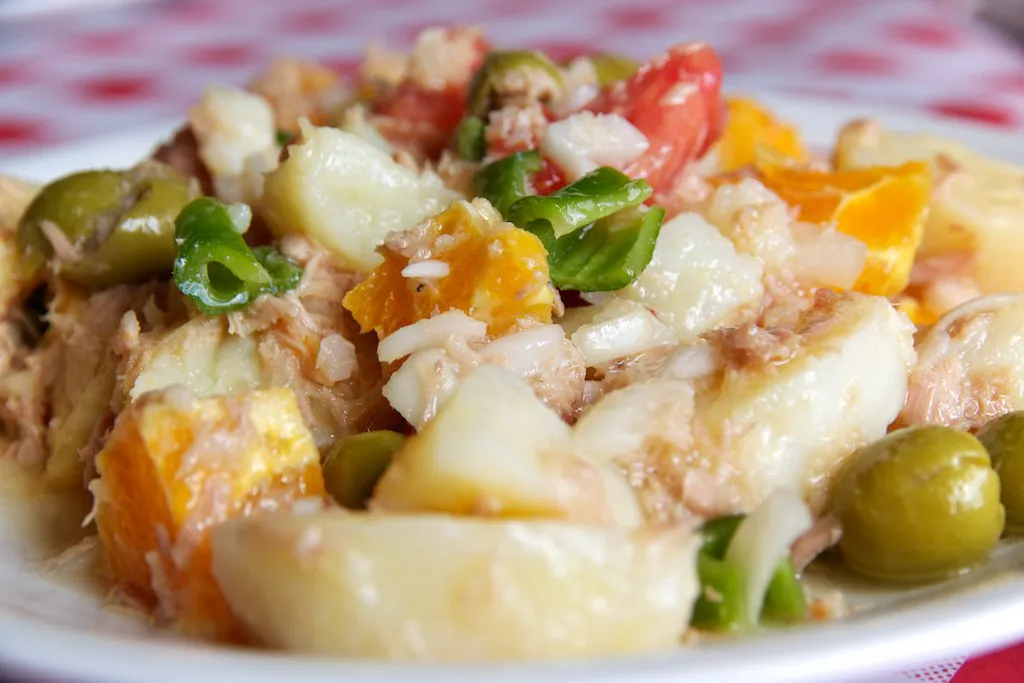
Ensalada Malagueña. One of two salads you will encounter in Málaga — do not confuse it with pipirrana. The Malagueña contains salt cod (bacalao), boiled potato, sliced orange, and green olives dressed with olive oil. The orange is not decorative. It is an old Moorish pairing that balances the salt of the cod. Found at traditional restaurants for €8–€12; order it alongside fried fish rather than as a standalone starter.
Berenjenas con miel de caña. Thin rounds of aubergine, lightly battered, fried until golden, and drizzled with dark sugarcane molasses. This dish stops first-timers cold: it looks like a dessert, arrives with the tapas, and tastes like neither. The sweetness cuts through the oil; the aubergine stays savoury underneath. Casa Lola on Calle Granada does a benchmark version. At €7–€10 it is one of the best value dishes in the city and one of the most distinctively Malagueño — Moorish sweet-savoury cooking at its most accessible.
Tarta Malagueña. A dense, almond-based cake incorporating local sweet wine (Moscatel or Pedro Ximénez), sometimes apricot jam and cinnamon. Rich, not airy. A slice is €4–€6 at traditional pastelerías near the Cathedral. Best eaten in the afternoon with coffee, or as a dessert after a long lunch rather than dinner.
Starting the Day: Breakfast and Morning Coffee
The most atmospheric morning stop is the Mercado de Atarazanas on Calle Atarazanas (open Monday to Saturday, 08:00–15:00). The building is a 14th-century former boatyard with a spectacular stained-glass window. Inside: piled citrus, every variety of local olive, the smell of fresh pescaito. Pull up a stool at one of the bar counters along the side aisles and order whatever is in the refrigerated case — a plate of jamón, a few anchovies, a small gazpacho. This is also the best place to buy Alorena olives (Málaga's DO-protected olive, cracked and brined with fennel and thyme) to take home.
For churros, go to Casa Aranda on Herrería del Rey, a narrow passage just off Calle Granada. Operating since 1932, it is busy from opening until closing. The churros are fried thin and crisp; the chocolate is thick and dark. A serving for two with chocolate costs around €5–€7. Arrive before 10:00 if you want a seat without waiting. Café Central on Plaza de la Constitución is a good alternative for coffee and pastries with one of the best views in the city.
Lunch: Where the Day Gets Serious
Lunch in Málaga runs from 14:00 to 16:00 and is the main meal of the day for most locals. Tapas bars open around noon but are at their best — freshest ingredients, most energy — in that two-hour window. The city's tapas culture works on a size system: a tapa is one or two bites; a media ración is a half-portion; a ración is a full plate. Order two or three tapas each and add a media ración to share rather than committing to a full portion of anything you haven't tried.
Casa Lola on Calle Granada 46 is the most practical starting point for visitors — multiple branches, fast service, consistently good chicharrones (cubes of fried pork belly), croquetas, and the berenjenas con miel de caña described above. It opens at 12:30 and is usually full by 13:00; go at opening or expect a wait. The Calle Strachan branch is larger and easier to get a table on a busy day.
For a more refined lunch, Trataga on Calle Fresca is in the Michelin guide and brings modern technique to traditional Andalusian ingredients without being precious about it. Padron peppers, an extensive wine list, creative small plates — book ahead for Friday or Saturday. El Tapeo de Cervantes on Calle Cárcer is another reliable option with a longer menu than the name suggests; the pumpkin risotto appears alongside traditional meatballs and its own good croquetas. Reserve for dinner; at lunch you can usually walk in before 14:00.
For seafood specifically, the chiringuito row at Pedregalejo — about 4 km east of centre, bus 3 or a short taxi — is where you eat espetos properly. Beachfront spots here are functional rather than pretty: plastic chairs, paper tablecloths, smoke from the espeto boats. That is the correct environment. Lunch here on a weekday costs €15–€20 per person for espetos, fritura, and a cold beer.
Málaga Wine and the Aperitivo Hour
Málaga has its own DO wine region — one of Spain's oldest — producing sweet wines from Moscatel and Pedro Ximénez grapes. These are not dessert wines you sip after dinner; they are aperitivo wines you drink at 18:00 with olives and jamón before you've decided where to eat. The range runs from pale, lightly sweet Moscatel to dense, dark, almost syrupy PX. A glass costs €2–€5 at most traditional bars.
The most atmospheric place to drink Málaga wine is Antigua Casa de Guardia on Alameda Principal 18, operating since 1840. Barrels line the walls; the staff mark your tab in chalk on the bar. Order a glass of Moscatel Málaga and ask what else is open. There is no menu; the wines rotate by barrel. This is where any serious food tour of Málaga should start, and the food tours run by local guides almost all stop here first precisely because it sets the tone for the evening.
Vermouth is also popular at aperitivo hour — look for it in traditional bars near the Mercado de Atarazanas or in the Soho district. Most restaurants don't open for dinner until 20:30 or later, so use the 18:00–20:30 gap intentionally: a glass of wine, some olives, one small plate before moving on.
Dinner: Eating Late, Eating Well
Dinner in Málaga begins at 21:00 and is often not fully underway until 21:30 or 22:00. Arriving at a restaurant before 20:30 marks you as a tourist; arriving at 21:15 for a reservation feels exactly right. The evening dining scene splits between old-school tapas bars and a newer wave of more ambitious restaurants — both are worth your time on different nights.
Mesón Ibérico on Calle San Lorenzo 27 is the most discussed dinner destination in Málaga. The experience centres on bar seats: you arrive before 20:30 (queue forms before it opens at 20:30) and eat at the counter watching the kitchen. The ham is sliced to order; the gambas pil-pil come from the plancha with perfect timing; the tuna belly is dressed with lemon and fried garlic. No reservations for bar seats — the queue is the reservation system. The restaurant section takes bookings for larger groups but the bar is the point.
For a special-occasion dinner, Palodu on Calle Sebastián Souvirón 7–9 earned its Michelin star with a tasting menu approach: 12–15 courses, excellent wine pairings, unhurried service. Budget €80–€120 per person with wine. Book at least a week ahead for weekend nights. Gastroteca Can Emma on Calle Ruiz Blaser 2, near Malagueta beach, is a smaller, less formal option with creative cooking — their arroz mar y monte (not quite paella, a wet rice with prawns, squid, and pork) is worth the trip alone. Lunchtime visit preferred; they close between lunch and dinner service.
Avoid restaurants on Calle Larios and the immediate plaza surrounds with picture menus in five languages — they cater to a generic tourist appetite and charge 30–40% more than comparable food two streets away. Also avoid any place advertising "paella for one, ready in 10 minutes": real paella is cooked fresh per order and takes 20 minutes minimum. The sign that a place is a tourist trap is not the price — it's the speed. Good food in Málaga takes exactly as long as it takes.
Practical Tips for Eating in Málaga
Spanish meal times differ significantly from northern European and American schedules. Lunch: 14:00–16:00. Dinner: 21:00–23:00. Tapas bars open midday but the kitchen may close between 16:30 and 20:00. If you turn up hungry at 19:00, the best strategy is the aperitivo approach — a glass of wine, a plate of almonds or olives, then dinner proper once the kitchen reopens. For more on scheduling your days around food and sightseeing, see our guide to how many days in Málaga.
Budgeting: a tapas lunch at a good bar costs €15–€25 per person including a drink. A mid-range dinner at a traditional restaurant is €25–€40. Tasting menus at places like Palodu run €80–€120. The good news is that Málaga does not force a choice between cheap and good — the tapas tier is genuinely excellent and not a consolation for a smaller budget. Always carry some cash; many smaller bars and market stalls prefer it or charge a supplement for card payments.
| Meal Type | Typical Venues | Cost Per Person | Best Time |
|---|---|---|---|
| Market breakfast | Mercado de Atarazanas bar counters, Casa Aranda | €5–€10 | 08:00–10:00 |
| Tapas lunch | Casa Lola, El Tapeo de Cervantes, freidurías | €15–€25 | 14:00–16:00 |
| Aperitivo & wine | Antigua Casa de Guardia, bars near Atarazanas | €5–€12 | 18:00–20:30 |
| Beachfront espetos | Chiringuitos at Pedregalejo / El Palo | €15–€20 | Lunch weekdays |
| Mid-range dinner | Mesón Ibérico, Gastroteca Can Emma, Trataga | €25–€40 | 21:00–23:00 |
| Tasting menu | Palodu (Michelin star) | €80–€120 | Dinner, book ahead |
Booking: for dinner at El Tapeo de Cervantes, Mesón Ibérico (table, not bar seats), Trataga, or Palodu on a Friday or Saturday night, book 3–5 days in advance. For weekday lunches at most of these, you can usually walk in before 13:30. Book online via their websites or through a standard reservation platform. For a structured introduction to the city's best spots — useful on a first night when you don't know the streets yet — a local food tour is worth considering; most run 3–4 hours, cost €65–€90 per person, and include 3–4 stops. For all things practical about navigating the city, check our practical tips for visiting Málaga.
One thing every food guide should say but most don't: the difference between a good tapas experience and an average one in Málaga is often the bar — not the table. Seats at the bar put you in direct contact with whoever is cooking and pouring. You see the dishes as they come out; you can point and ask what it is before you order; the energy is completely different from a table tucked in the corner. If you have the choice, sit at the bar.
As you plan, our guides to Málaga 3 Day Itinerary and Restaurants in Málaga cover the rest of the essentials.
Frequently Asked Questions
Which what to eat in Málaga options fit first-time visitors?
First-time visitors to Málaga should prioritize 'espeto de sardinas' on the beach and a 'fritura malagueña' for a taste of local seafood. Also, try 'ajoblanco' for a refreshing soup. These dishes offer an authentic introduction to the city's unique flavors.
How much time should you plan for what to eat in Málaga?
To fully explore Málaga's food scene, plan for at least 3-4 days. This allows ample time to visit the market, enjoy multiple tapas experiences, and try different restaurants. A shorter trip might require more focused planning for your meals.
What should travelers avoid when planning what to eat in Málaga?
Travelers should avoid restaurants directly on major tourist streets with extensive picture menus, as these often offer less authentic food at higher prices. Also, be cautious of 'paella for one' that appears to be pre-made. Seek out places filled with locals for better quality.
Is what to eat in Málaga worth including on a short itinerary?
Absolutely. Even on a short itinerary, integrating Málaga's food is essential. Focus on a few key dishes like espetos and boquerones, and visit Mercado de Atarazanas. Food is central to the Málaga experience, regardless of trip length.
Eating well in Málaga is less about finding the right restaurant and more about adopting the right pace. Start with a market coffee, work through a long tapas lunch, fill the late afternoon with wine at a bodega, and eat dinner at 21:30 like everyone else. The city rewards visitors who slow down and follow the local rhythm rather than compressing everything into two rushed meals.
The dishes here — from berenjenas con miel to ensalada Malagueña to ajoblanco — carry centuries of culinary history in simple preparations. You do not need to understand all of it to enjoy it. You just need to order, eat, and stay a little longer than you planned.
You might also like


Continue reading
More guides you'll find useful