

9 Best Neighborhoods: Where to Stay in Málaga (2026)
Plan where to stay in málaga with top picks, neighborhood context, timing tips, and practical booking advice for a smoother trip.
On this page
9 Top Neighborhoods: Where to Stay in Málaga (2026)
Choosing where to stay in Málaga comes down to one core decision: city center or beach. Get that right first, and the rest falls into place. This guide walks through every major neighborhood — with honest trade-offs on cost, noise, transport, and who each area actually suits — so you can stop scrolling and start booking.
Málaga has changed fast in recent years. The Old Town is now firmly on the tourist trail, beach neighborhoods fill up in high summer, and a handful of local areas offer real value if you know where to look. Here is an up-to-date breakdown for 2026, covering nine distinct areas from the historic core to the eastern fishing villages.
Plan with trusted sources: cross-check opening hours and seasonal details with the official Andalusia tourism board, and read more about the city on its Wikipedia entry before you go.
How Málaga Is Laid Out
Before picking a neighborhood, it helps to understand the city's shape. Málaga stretches east along the Mediterranean coast, with the Guadalmedina river cutting it roughly north-to-south. Almost everything tourists want — the historic center, the main city beaches, the museums — sits on the east side of that river.
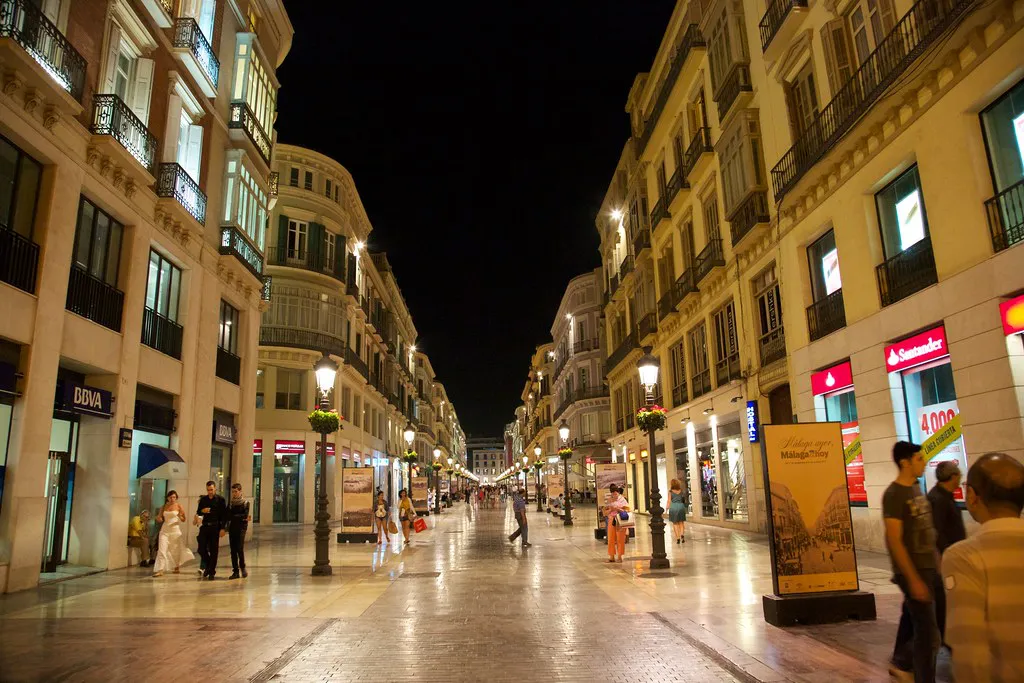
West of the river you have mostly residential, workaday neighborhoods. They are perfectly safe and very affordable, but there are no sights and the beach is not nearby. A few areas just across the river (El Perchel, La Trinidad) are an exception: close enough to walk to the center and noticeably cheaper than the Old Town.
If you are visiting for three days or fewer, staying anywhere east of the Guadalmedina puts you within easy walking distance of the major sights. If you plan to spend serious time on the beach, the decision shifts to which of the coastal neighborhoods suits your budget and preferred vibe.
Quick Picks: Best Neighborhoods by Travel Style
Here is a fast summary before the full breakdowns below. If you are a first-time visitor with limited days and no strong preference for the beach, the Historic Centre is the default choice — walkable to everything, the best concentration of hotels, and no transport faff. If beach access matters more than city sightseeing, pick La Malagueta for maximum convenience (though you must book early) or Pedregalejo for a calmer setting with easier availability.
- Best for first-timers: Centro Histórico
- Best for nightlife: La Merced
- Best for families: Pedregalejo or El Palo
- Best beach access in the city: La Malagueta
- Best for budget travelers: El Palo or La Trinidad / El Perchel
- Best local atmosphere near the center: La Merced / La Victoria / Lagunillas
- Best for art and cool cafes: Soho
| Neighborhood | Best for | Distance to center | Approx. nightly rate (high season) | Beach access |
|---|---|---|---|---|
| Centro Histórico | First-timers, sightseeing | On foot | €100–€200 | 20 min walk |
| Soho | Art lovers, luxury stays | 5 min walk | €80–€350 | 15 min walk |
| La Merced / La Victoria | Nightlife, local feel | 10 min walk | €50–€110 | 25 min walk |
| La Malagueta | Beach convenience | 15 min walk | €150–€350 | 5 min walk |
| Pedregalejo | Families, calm beach | 15 min bus | €60–€120 | On doorstep |
| El Palo | Budget beach travelers | 20–30 min bus | €50–€90 | On doorstep |
| La Trinidad / El Perchel | Budget near center | 10–15 min walk | €55–€120 | 30 min walk |
Centro Histórico: Best for First-Time Visitors and Short Trips
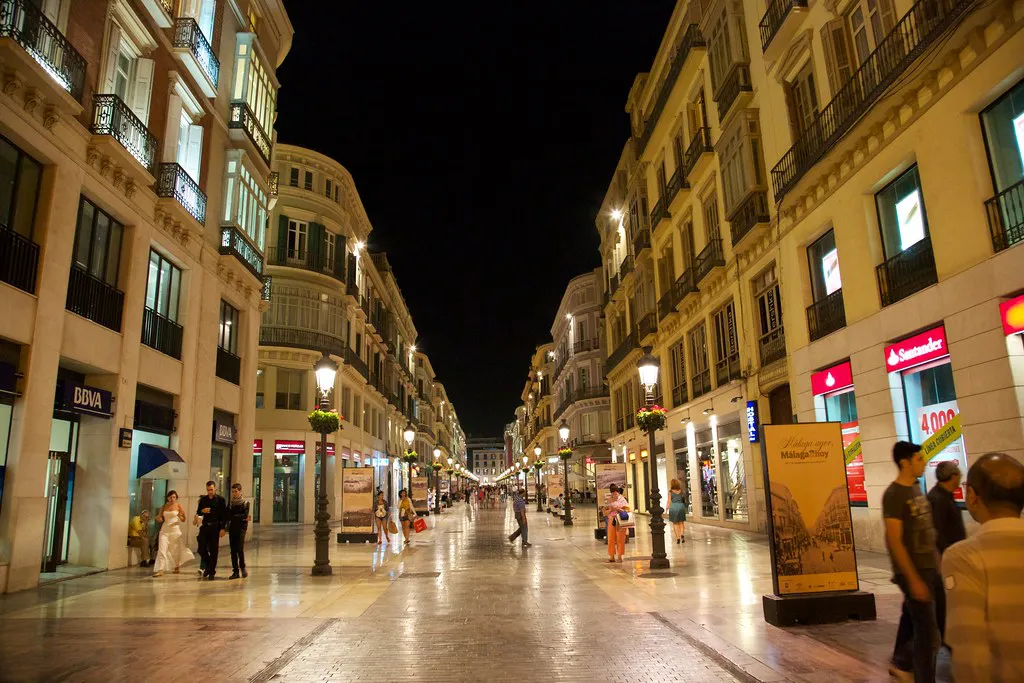
The Old Town is Málaga's most beautiful and most visited neighborhood. Marble-paved pedestrian streets, elegant 18th-century buildings, and a maze of plazas all sit within a compact area east of the Guadalmedina. The Alcazaba, the Picasso Museum, the Roman Theatre, and the Cathedral are all here or within a five-minute walk. Calle Marqués de Larios — the main pedestrian boulevard — cuts through the middle, lined with cafes and shops.
It feels very touristy at peak season, particularly June through August, when the streets are packed all day. If you are noise-sensitive, check whether your room faces a busy bar street; this is the single most common complaint in reviews for central hotels. That said, for a short visit of two to three days focused on sightseeing, there is no better base. You will not need a bus or taxi for anything.
Prices here are the highest in the city. Expect €100–€200 per night for a solid mid-range hotel in high season. There are a few boutique hotels in restored palaces, some well-regarded hostels, and a large stock of short-term apartments. Large chain hotels are rare given the scale of the buildings.
Book well in advance for July and August. The top attractions in Málaga are all within the historic core, so staying here keeps your entire sightseeing agenda walkable.
Soho: The Coolest Area of Málaga
Soho, officially known as Ensanche Centro, sits between the Historic Centre and the port. It is a compact grid of streets that has transformed quickly over the past decade into Málaga's arts and culture district. You will find large-scale street murals, independent galleries, the CAC contemporary art museum, and a noticeably more local clientele in the bars and restaurants compared to the Old Town.
It is still very well located. The historic center is a five-minute walk north, and the train and bus stations are also close — useful if you are arriving from the airport or heading out on day trips. The port promenade and Parque de Málaga are right on the eastern edge of the neighborhood.
This is actually where you will find some of Málaga's largest and highest-spec hotels. Several five-star and four-star properties are clustered here along the port side, with rooftop pools and sea views. Prices run from around €80 for smaller boutique stays up to €250–€350 for the top properties. For travelers who want a slightly cooler, less harried version of central Málaga with equal access to the sights, Soho is a very strong alternative to the Old Town.
La Merced, La Victoria, and Lagunillas: Best for Nightlife and Local Life
These three adjacent neighborhoods sit immediately north of the historic center. They are functionally one area from a visitor's perspective — small, walkable, and distinct in character from the tourist-heavy Old Town. Think traditional Andalusian residential streets, local cafes with no English menus, and a genuinely neighborhood feel. Accommodation here is significantly cheaper than in the center, though the number of actual hotels is limited — apartments and guesthouses dominate.
La Merced anchors on its famous plaza, Plaza de la Merced, which buzzes with terrace bars from midday until late. Picasso was born here; his birth house is now a museum on the square's north side. The nightlife scene is Málaga's best — a mix of dive bars, cocktail spots, and late-night clubs that stay lively well past midnight. This is where to stay if evenings out matter more than mornings.
La Victoria has a more mixed daytime energy. Calle Victoria runs through it with a good spread of independent restaurants, bakeries, and coffee shops. The Santuario de la Victoria church and the lower access path to Parque Gibralfaro are here. Lagunillas, the most working-class of the three, has been gradually gentrifying and now has a strong street art scene and a handful of well-reviewed budget stays.
One practical note: parts of La Merced are loud on Friday and Saturday nights. If you are a light sleeper, book a room facing an interior courtyard or check the reviews specifically for noise comments. The 10-minute walk into the historic center for sightseeing is easy and flat.
La Malagueta: Best for Beachside Access in the City Center
La Malagueta is Málaga's main urban beach — a long stretch of grey sand about a 15-minute walk east of the historic center. The neighborhood is modern and not particularly charming in terms of architecture (mainly high-rise residential blocks), but it delivers something the central neighborhoods cannot: you can walk out of your hotel and be on the sand in under five minutes.
The beach promenade connects directly to Muelle Uno, the port walkway, making the evening paseo here particularly enjoyable. Several upscale restaurants face the sea. The neighbourhood also has the Mirador de Gibralfaro at the hill above — one of the best viewpoints over the city and coastline.
The accommodation stock in La Malagueta is thin relative to demand. There are a handful of hotels, including the landmark Gran Hotel Miramar on the beachfront, but availability dries up fast in July and August. This is the neighborhood where booking four to six months ahead is not an exaggeration. Prices for beachfront hotels run €150–€350 in peak summer. If you miss the window, the neighboring Soho area gives you beach access via the promenade at a fraction of the scramble.
Pedregalejo: Best for Families and Peaceful Beach Days
Pedregalejo is a former fishing village about 4 km east of the city center, now absorbed into the city but still retaining a quieter, small-town feel. The beach here is calmer and less crowded than La Malagueta's, and the promenade is lined with chiringuitos — beachside restaurants serving grilled fish and cold drinks. It is a much more relaxed setting than anywhere in the center.
For families with children, Pedregalejo works well. The streets are low-traffic, there are sandy playgrounds along the seafront, and the pace of the neighborhood naturally slows down. Accommodation is mostly apartments and small guesthouses. Prices are noticeably lower than in the center — €60–€120 per night for a decent apartment — and availability is easier to find, even in summer.
The trade-off is distance. Pedregalejo is a 40-minute walk or a short bus ride (line 3 or 11 from Alameda Principal, around €1.40, about 15 minutes) from the historic center. It suits travelers who plan to spend most of their time on the beach and who treat the Old Town as a half-day excursion rather than their base. If you want equal access to sightseeing and beach, La Malagueta or Soho is more practical.
El Palo: Best Beach Area for Budget Travelers
El Palo is another former fishing village, slightly further east than Pedregalejo at around 5 km from the center. It has a rougher, more lived-in character than Pedregalejo — traditional tascas, local supermarkets, and none of the self-conscious quaintness. The beach here, Playa de El Palo, is broad and quieter than the city beaches. El Peñón del Cuervo, a rocky promontory at the eastern end, is a popular local swimming spot.
The main draw is price. Guesthouses and holiday apartments in El Palo regularly come in at €50–€90 per night even in high season. For budget travelers willing to bus it into the center (same lines as Pedregalejo, 20–30 minutes), this is the best-value beach option in the city. The famous espetos de sardinas — sardines grilled on bamboo skewers over open fires on the beach — originated here, and several long-standing beach restaurants still do them properly.
El Palo is not a good fit for first-timers who want to walk everywhere, or for travelers primarily interested in museums and culture. It is ideal for those who want genuinely local beach life at a low cost, and are happy to commute to the center when needed.
La Trinidad and El Perchel: Budget Options Near the Center
West of the Guadalmedina, La Trinidad and El Perchel are the closest budget neighborhoods to the historic center. They are not tourist areas — you will find everyday local life, no major sights, and a short 10-to-15-minute walk over the river to the Old Town. What they offer is a meaningful price difference: a four-star hotel here can cost 30–40% less than an equivalent property in the center during peak season.
El Perchel has seen some tourism-oriented development with new hotels opening in recent years. La Trinidad is more residential but has good public transport connections and a handful of well-priced guesthouses. Both suit travelers who are comfortable in a non-touristy neighborhood and want to keep accommodation costs down without going as far out as El Palo.
The Beach vs. Availability Trade-Off Nobody Warns You About
Every guide will tell you La Malagueta is the best beach neighborhood to stay in. What they rarely explain is that its hotel stock is small — perhaps a dozen properties of any real size — and it sells out earlier than anywhere else in the city. In practice, travelers who search for La Malagueta accommodation in June for an August stay often find nothing or resort to high-priced last-minute options.
The practical decision tree looks like this. If you are booking more than three months out, La Malagueta is worth pursuing for the beach convenience. If you are booking closer to your travel date in summer, or if beach access is important but not your only priority, Soho gives you the port promenade and a 20-minute walk to the beach, with far better hotel availability and a wider price range. Pedregalejo and El Palo have the best availability of all beach-adjacent options and lower prices — the cost is travel time to the center.
Regardless of which area you choose, Málaga rewards flexible travelers. The city's public transport is cheap and reliable, buses run until around midnight, and even the beach neighborhoods feel very safe to navigate at night. No neighborhood choice is a bad one — it is mostly a question of what you want outside your door in the morning.
Practical Tips for Staying in Málaga
The city is highly walkable. If you are based anywhere in the historic center, Soho, La Merced, or La Victoria, you will not need a car or a bus for daily sightseeing. Even La Malagueta is a comfortable walk. Rent a car only if you plan excursions outside the city — Ronda, Nerja, or the Caminito del Rey — and leave it in your hotel parking rather than driving through the center.
From Málaga airport, the Line A express bus into the center departs every 25–45 minutes, costs €4, and drops you at Plaza del General Torrijos near the Alameda Principal. A taxi to the center runs around €15–€25 depending on traffic. The journey takes 15–25 minutes in normal conditions.
Book any central hotel for July and August at least three months in advance. June and September are easier but still busy. October through April offers the best combination of pleasant weather, lower prices, and fewer crowds — and these are arguably the best months to visit if sightseeing rather than beach time is your priority. For timing context, the best time to visit Málaga covers each month in detail.
On noise: the historic center and La Merced are genuinely loud on weekend nights. Clubs and bars in Spain close late — often 05:00 or later — and sound travels far on warm evenings. Always check whether your room faces the street and read recent reviews for noise mentions before booking. Interior-facing rooms and neighborhoods one block off the main drag make a real difference.
If you have two to three days and want to use them well, a structured 2-day itinerary for Málaga can help you prioritize without overloading the schedule. And if you want to explore beyond the city, day trips from Málaga to Ronda, Nerja, and the Costa del Sol are easily done by bus or train.
Frequently Asked Questions
Where should a solo traveler stay in Málaga?
Solo travelers should consider the Historic Centre or La Merced for their central location and lively atmosphere. Both offer easy access to attractions, dining, and social opportunities, making it simple to connect with others.
Is it better to stay in Marbella or Málaga?
Málaga offers a richer historical and cultural experience with vibrant city life and diverse neighborhoods. Marbella is known for its luxury resorts and beaches, catering more to a high-end, relaxed vacation. For a blend of culture, history, and city beaches, Málaga is generally preferred.
Is it worth staying in Málaga?
Absolutely, Málaga is a fantastic city to stay in, offering a compelling mix of history, art, beautiful beaches, and delicious food. Its vibrant atmosphere and excellent weather make it a worthwhile destination for various types of travelers. Explore why Málaga is worth visiting for a deeper dive.
The right neighborhood in Málaga depends on why you are visiting. Sightseers and first-timers get the most out of the Historic Centre. Night owls should look at La Merced. Families and beach-focused travelers will be happiest in Pedregalejo or El Palo. Budget travelers staying near the center have good options in La Trinidad and El Perchel. And if you want luxury or arts-scene energy with strong hotel choice, Soho delivers both.
Whatever you pick, book early for summer — especially if you want La Malagueta or the historic core. The city rewards anyone who shows up with a rough plan and an appetite for wandering.
You might also like


Continue reading
More guides you'll find useful


