How Many Days in Málaga? Perfect Itineraries for Every Trip
Plan your ideal Málaga trip! Discover how many days you need with our detailed itineraries for 2, 3, 4+ days, covering culture, food, and beaches.
On this page
How Many Days in Málaga? Perfect Itineraries for Every Trip
Málaga is one of Andalusia's most rewarding city breaks: Moorish fortresses, world-class museums, lively tapas bars, and a long sandy beach — all packed into a compact, walkable centre. The question is never whether to go, but how much time to carve out. This guide breaks down the ideal trip length for every type of traveller, from a tight two-day weekend to a relaxed four-plus-day stay, and flags the practical details that competitors tend to skip.
Plan with trusted sources: cross-check opening hours and seasonal details with the official Andalusia tourism board, and read more about the city on its Wikipedia entry before you go.
How Many Days Do You Really Need in Málaga?
The honest answer is three days for most first-time visitors. Two days covers the non-negotiable highlights if you're disciplined, and four days lets you slow down, add a day trip, and explore beyond the old town. A full week is enjoyable but only truly justified if you plan to use Málaga as a base for the Costa del Sol.
Málaga's historic core is genuinely small — you can walk from the Alcazaba to Muelle Uno in under fifteen minutes. That compactness is both an asset (you cover a lot without a car) and a reminder that the city rewards depth over breadth. Seeing everything in a rush is possible; enjoying Málaga the way locals do requires at least a full extra day. Consider your travel style and what you most want from a Spanish break: history, food, beach, or a mix of all three.
- 2 days: best weekend highlights — Alcazaba, Cathedral, Picasso Museum, Muelle Uno, beach stroll
- 3 days: ideal first visit — all of the above plus Gibralfaro, Botanical Garden, evening tapas tour
- 4 days: full cultural immersion — adds a day trip to Ronda or Caminito del Rey, more neighbourhood exploration
- 5+ days: use Málaga as a base — Costa del Sol beaches, Frigiliana, Antequera, possible Seville or Granada excursion
| Trip length | Best for | Key highlights covered | What you miss |
|---|---|---|---|
| 2 days | Weekend break, tight schedule | Alcazaba, Cathedral, Picasso Museum, Muelle Uno, La Malagueta | Gibralfaro (needs time), day trips, Botanical Garden |
| 3 days | First-time visitors | All above + Gibralfaro, Botanical Garden, beach afternoon, evening tapas crawl | Day trips outside the city |
| 4 days | Culture & coast balance | All above + Carmen Thyssen, Hammam, one day trip (Ronda or Caminito del Rey) | Multiple day trips |
| 5+ days | Base for Andalusia exploration | All above + Nerja, Frigiliana, Antequera, Costa del Sol coast | Nothing significant in the region |
Factors to Consider When Planning Your Málaga Trip
Your personal interests determine the baseline. History and art lovers need more museum time and will want to spread the Alcazaba, Picasso Museum, Carmen Thyssen, and Cathedral across at least two or three mornings. Beach lovers may be satisfied with the city in two days, then day-trip along the Costa del Sol. Foodies benefit most from a third day to pace meals properly — Málaga's best eating requires unhurried lunches at chiringuitos and evening tapas crawls, not back-to-back tourist stops.

Arrival and departure times matter more than people expect. If you land at Málaga-Costa del Sol Airport (AGP) after 16:00 on your first day and fly home before noon on your last, a three-night booking effectively gives you two full days. Build your itinerary around real usable hours, not nights on the booking form. The airport is 8 km from the centre; the Cercanías C1 train reaches Málaga Centro-Alameda in 12–15 minutes for under €2, making a late arrival easy to absorb.
Time of year reshapes priorities too. In July and August, temperatures regularly exceed 35 °C by early afternoon — you'll want to shift sightseeing to the morning and take a beach break at midday rather than queue outside the Cathedral in full sun. Shoulder season (April–June and September–October) gives 20–28 °C, fewer crowds, and the most comfortable pace for walking the old town. Winter is genuinely pleasant for urban sightseeing, though beach time is limited and some chiringuitos close.
Families with young children do well with a slightly longer trip — three or four days — to accommodate a slower pace. The city has plenty of wide pedestrian areas, playgrounds near Parque de Málaga, and easy beach access at Playa de la Malagueta. Couples or solo travellers can often compress the same itinerary into two or three days. Budget is a less critical factor in Málaga than in other Spanish cities: the Alcazaba (€3.50) and Gibralfaro (€3.50, or combined €5.50) are far cheaper than comparable sites in Seville or Granada, and free entry applies on Sunday afternoons — useful if you're watching spend.
Málaga in 2 Days: A Weekend Getaway Itinerary
Two days in Málaga is a strong weekend break, not a compromise. You will cover all the headline attractions and eat well. The trick is to group sites by neighbourhood and resist the urge to add extra stops — the city rewards focus. Stay as close to the historic centre as possible so you spend no time in taxis between attractions.
- Day 1 — Historic Core & Waterfront
- 08:30: Breakfast in the old town (try Casa Aranda on Calle Herrería del Rey for churros con chocolate, open from 08:30, closed by midday)
- 09:30–12:00: Alcazaba and Roman Theatre — buy the combined Alcazaba + Gibralfaro ticket (€5.50) at the entrance. The Alcazaba alone takes 1.5–2 hours with the audio guide
- 12:00–13:30: Walk through the Cathedral quarter — La Manquita (entry €6, roof access extra) is 20 minutes on foot from the Alcazaba; the unfinished south tower is the defining visual of Málaga's skyline
- 13:30–15:30: Lunch at Mercado de Atarazanas or El Pimpi bodega on Calle Granada — both give a strong first taste of local food culture
- 15:30–18:00: Muelle Uno waterfront promenade and Centre Pompidou Málaga (€9, closed Tuesdays)
- 18:00–20:00: Stroll La Malagueta beach — the city's main urban beach, 15 minutes' walk from Muelle Uno
- Evening: Tapas in the Soho district or Calle Granada area
- Day 2 — Art, Castle & Departure
- 09:30–12:00: Picasso Museum (€13, pre-book; entry is by timed slot and frequently sells out by midday). Allow 1.5–2 hours
- 12:00–14:00: Climb to Gibralfaro Castle — 30 minutes on foot via the wooded path from the Alcazaba; the views over the port and bullring from the ramparts are the best in the city
- 14:00–16:00: Lunch with a view at the Parador de Málaga Gibralfaro restaurant (pricier but unique setting) or descend and eat in the old town
- 16:00 onwards: Soho art district murals, or rest at the beach before departure
Two days leaves almost no room for spontaneity — museum queues, a long lunch, or a late arrival on day one will push something off the list. If Picasso Museum is a priority, book in advance for a 10:00 slot. If you arrive on a Sunday afternoon, note the free entry window for both the Alcazaba (from about 14:00) and Gibralfaro — worth timing your first afternoon around this if budget is a consideration.
Málaga in 3 Days: The First-Timer's Perfect Itinerary
Three days is the sweet spot. You get the full historic core, a proper beach afternoon, at least one world-class museum visit, a relaxed meal in a neighbourhood outside the tourist centre, and enough breathing room to follow your nose down a good-looking alley. This is the itinerary built for first-timers who want to come away feeling like they understood the city, not just checked off a list.
- Day 1 — Ancient History & Rooftop Views
- Morning (09:00–13:00): Alcazaba and Roman Theatre. Allow 2–3 hours; the Alcazaba is the oldest in Andalusia, built in the 11th century over Roman foundations. Entry €3.50; Roman Theatre is free.
- Afternoon (13:00–17:00): Málaga Cathedral (La Manquita, entry €6) and a slow walk through the old town — Calle Larios, Plaza de la Constitución, Pasaje Chinitas.
- Evening (17:00 onwards): Climb to Gibralfaro Castle for sunset views. Return for tapas crawl — try El Tapeo de Cervantes on Calle Carcer for creative small plates.
- Optional: Book a 3-hour walking tour of Málaga's main historical attractions on day one for expert context that sets up the rest of your visit.
- Day 2 — Art, Market Flavours & Port Strolls
- Morning (09:30–13:00): Picasso Museum (€13, book in advance; timed entry, closed Mondays) — allow 1.5–2 hours. Then Mercado de Atarazanas, the covered market on Calle Atarazanas, for a coffee and a browse of the fresh fish stalls.
- Afternoon (13:00–17:00): Lunch at a chiringuito on La Malagueta beach; afternoon swim or stroll. Walk the Muelle Uno waterfront promenade.
- Evening (17:00 onwards): Soho art district and a rooftop bar. The AC Hotel Málaga Palacio rooftop on Cortina del Muelle has cathedral views; arrive early or reserve a table.
- Day 3 — Gardens, Coast & Farewell Dinner
- Morning (10:00–13:00): La Concepción Botanical Garden — take bus line 2 from the city centre (about €1.40); the garden is 7 km north of the old town. Entry €5.20, open 09:30–sunset, closed Mondays. Allow 2–3 hours.
- Afternoon (13:00–17:00): East coast beaches in Pedregalejo or El Palo, a 20-minute bus ride from the centre. More local atmosphere than La Malagueta, with a string of seafood chiringuitos along the promenade.
- Evening: Farewell dinner at one of El Palo's seafood restaurants — espetos de sardinas (sardines grilled on bamboo canes over an open fire on the beach) are the essential order.
Málaga in 4 Days: Deep Dive into Culture and Coast
A fourth day transforms Málaga from a city you've seen into a city you've begun to know. Use it for what three days doesn't have time for: a proper day trip, a less-visited museum, or a long afternoon in a neighbourhood where tourists rarely end up. It also gives you the buffer to recover if a museum queue or a slow lunch absorbs more time than expected in the first three days.
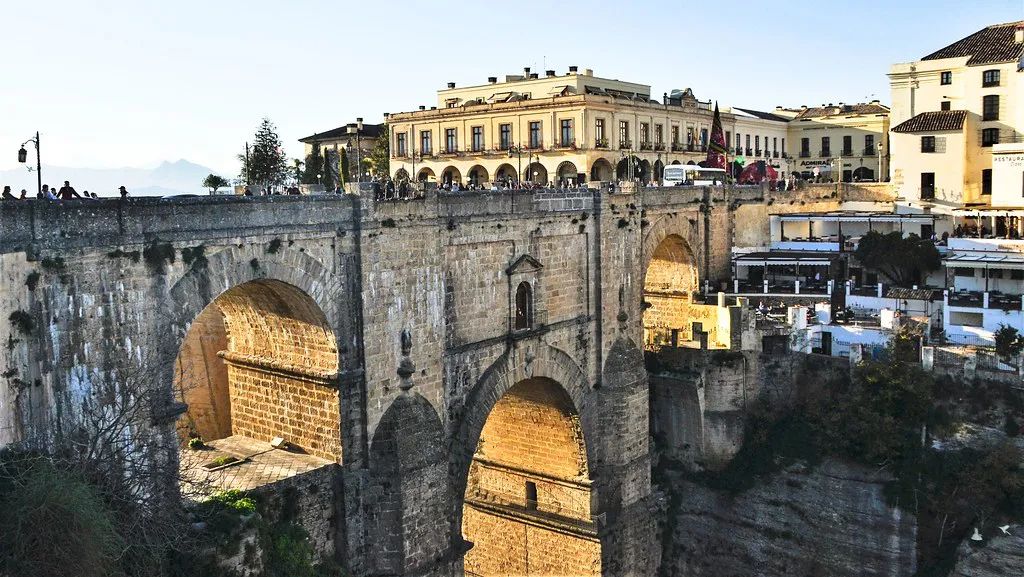
Use day four to take the day trip you'd otherwise skip. Ronda is the crowd favourite — the Puente Nuevo bridge over the Tajo gorge is genuinely dramatic, and the drive through the Serranía de Ronda (about 1 hour 30 minutes) is part of the experience. Go early; the gorge viewpoint requires a 10-minute steep descent and the village fills up by midday. Caminito del Rey is the active alternative — a cliff-path walk through the El Chorro gorge that requires advance booking (entry €10 plus a guided-walk fee if using the service entrance). Book at least two weeks ahead in spring and summer, the path sells out regularly.
If you prefer to stay in the city, day four is ideal for the Carmen Thyssen Museum Málaga (free entry on Sundays from 17:00) and the Museo del Automóvil y la Moda — a genuinely surprising pairing of vintage cars and period fashion that tends to be quieter than the Picasso Museum. Finish the afternoon at the Hammam Al Ándalus on Plaza de los Mártires: a traditional Arab bath experience with timed 90-minute sessions for about €35. This is the one experience that competitors consistently underemphasise — Málaga's hammam is one of the best in Andalusia and a calm counterweight to a day of walking.
Málaga for Longer Stays: 5+ Days and Day Trip Ideas
If you have more than four days, Málaga earns its place as a base rather than a destination in itself. The Costa del Sol and the Sierra de las Nieves national park are both within an hour's drive. The Cercanías commuter train connects Málaga to Fuengirola (35 minutes, €3.50) and all stations between — Torremolinos, Benalmádena, Arroyo de la Miel — giving beach access without a car. Nerja and Frigiliana are about an hour by bus and combine a coastal town with a dramatic white village in the same afternoon.
The best day trips by distance from Málaga in 2026:
- Ronda — 1h 30min by car, 2h by bus. Puente Nuevo bridge, bullring, and the old town quarter of La Ciudad. Best to arrive before 11:00.
- Caminito del Rey — 1 hour by car. The cliff walk through El Chorro gorge. Book online months ahead for summer weekends; the path is 7.7 km one-way.
- Nerja and Frigiliana — 55 minutes by bus. Combine the Balcón de Europa viewpoint and the Nerja Caves with a walk up to Frigiliana's Moorish quarter. Best done as two stops on the same day.
- Antequera — 45 minutes by train. UNESCO-listed dolmens (the Menga dolmen dates to around 3700 BC), the Alcazaba, and the dramatic rock formation El Torcal nearby.
- Setenil de las Bodegas — 1h 40min by car. A village built under a rock canyon, with restaurants and cafes literally carved beneath overhanging stone. Pair with Ronda on the same day.
How Many Days for Málaga for Foodies?
Foodies need at least three days in Málaga, and four is better. This is not a city where you rush from restaurant to restaurant — it's a city where a good meal turns into a two-hour afternoon, which is exactly how the locals intend it. Budget time for a morning in the Atarazanas market, a long beachside lunch at a chiringuito, an evening tapas crawl, and at least one sit-down dinner at a Michelin-recommended restaurant.
The essential Málaga food checklist: espetos de sardinas (sardines grilled over open coals on the beach, best from April to October), pescaíto frito (mixed fried fish served in a paper cone), boquerones al limón (anchovies marinated in lemon juice), ajoblanco malagueño (chilled white almond soup, a local specialty that most tourists miss entirely), and porra antequerana (a thick cold tomato soup). For churros con chocolate, Casa Aranda on Calle Herrería del Rey is the institution — arrive before 10:00 to avoid a queue.
Serious food travellers should budget a half-day around the Mercado de Atarazanas not just for lunch but for the morning market activity — fishmongers, produce vendors, and a glass of local wine from the Bodega El Pimpi wine bar attached to the market. Málaga produces its own sweet wines (Moscatel and Pedro Ximénez) that you won't find concentrated like this anywhere else. A dedicated food tour on day two or three will unlock spots that solo exploration rarely finds — see the top things to do in Málaga for a fuller breakdown of food experiences.
How Many Days for Málaga for Beach Lovers?
If your primary purpose is sun and sea, the calculus shifts. Málaga city's beaches are good — La Malagueta is wide, clean, and walkable from the centre — but they are urban beaches with beach bars, sunbeds, and a backdrop of buildings. The Costa del Sol's best sand is 20–40 minutes away by train or bus. Two days in Málaga city followed by a move along the coast is often a better structure than spending four nights in Málaga hoping for a quieter beach experience.
For context on Málaga's own beaches: Playa de La Malagueta (15 minutes' walk east of the old town) is the most central; Playa de Pedregalejo and Playa de El Palo (20–30 minutes by bus, line 11 from the centre) have a more local feel with excellent chiringuitos. Playa del Peñón del Cuervo, further east, is quieter on weekdays. None of these are remote coves — if that's what you want, take the bus to Nerja's Playa de Burriana (about 1 hour) or the train to Fuengirola and walk the Senda Litoral coastal path to smaller coves.
Two days in Málaga as a beach-first itinerary: morning sightseeing until about 12:00 (prioritise Alcazaba and the old town), then beach from midday to early evening, followed by seafood dinner. You will see the city's cultural highlights and still spend the best sun hours on the sand. A third day gives you the option of a full coast day trip to Nerja without sacrificing anything in the city. Check the best time to visit Málaga to match your beach expectations to the right season.
How Many Days for Málaga for History and Art Lovers?
Málaga is a more layered art city than most visitors expect. Picasso was born here, but the city doesn't stop at one museum. The Picasso Museum Málaga on Calle San Agustín houses around 150 works and is genuinely world-class; Picasso's Birthplace Museum on Plaza de la Merced (entry €3) is a smaller complement worth an hour. Centre Pompidou Málaga in the port area is one of the only Pompidou satellites in Spain and covers contemporary international art from the 1950s to the present (entry €9, closed Tuesdays). The Carmen Thyssen Museum near the old town focuses on 19th-century Spanish painting, particularly Andalusian landscapes and costumes (free Sunday afternoons from 17:00).
On the history side, Málaga's Alcazaba is the best-preserved Moorish palace-fortress in Spain that isn't the Alhambra — the difference being that the Alhambra draws enormous queues while the Alcazaba is quiet most mornings. Allow two hours minimum with the audio guide. Gibralfaro Castle, connected to the Alcazaba by a fortified passageway (La Coracha), adds another 45 minutes and the best panoramic viewpoint in the city. The Málaga Museum inside the Palacio de la Aduana is free and covers both fine arts and archaeology in the same building — often skipped, consistently excellent.
History and art lovers should plan four days minimum. Spread the major museums across mornings (cooler, less crowded) and use afternoons for the Alcazaba and Gibralfaro when the stone walls glow in the afternoon light. The where to stay in the city guide can help you position yourself near the cultural circuit — the historic centre keeps all these sites within a 20-minute walk.
Tips for Maximising Your Time in Málaga
The single most useful logistical tip for any trip length: take the Cercanías C1 train from the airport to Málaga Centro-Alameda station. The journey takes 12–15 minutes, costs about €1.80, and runs frequently from 06:30 to midnight. A taxi covers the same 8 km for €15–25 depending on traffic and time of day. The train drops you a five-minute walk from most hotels in the historic centre and the Soho district. Arriving by train means you hit the ground running — no congestion, no negotiating a fare.
Book the Picasso Museum in advance, always. Entry is by timed slot and the day frequently sells out by early afternoon in peak months. The Alcazaba and Gibralfaro do not require advance booking, but arrive before 10:00 on summer mornings before the heat builds. The Cathedral offers roof access (an extra ticket on top of general entry) that most visitors skip — the rooftop walk along the parapet gives a close-up view of the elaborate stonework and city views that justify the extra cost. For flamenco shows at Teatro Flamenco Málaga or similar venues, book at least 48 hours ahead; the good seats in small venues go fast.
A practical scheduling note for Sunday visitors: both the Alcazaba and Gibralfaro offer free entry on Sunday afternoons (from approximately 14:00 until closing). The Carmen Thyssen Museum is also free on Sundays from 17:00. Timing your first or last day of a 2026 trip to fall on a Sunday can save €15–20 per person. The trade-off is slightly larger afternoon crowds, particularly at the Alcazaba. Arriving at 13:45 and joining the free queue is still quicker and cheaper than the paid morning slot. Read more about getting around the city for transport options within Málaga.
Frequently Asked Questions
Are 2 days in Málaga enough for a first-time visitor?
Two days in Málaga can cover the main historical sites and give you a taste of the city's vibe. It's a great option for a quick weekend getaway, but you might feel a bit rushed. For a more relaxed experience, consider three full days.
What should travelers avoid when planning how many days in Málaga?
Avoid overpacking your itinerary, especially in the summer heat. Don't underestimate travel times between attractions or neglect booking popular sites in advance. Also, try to avoid eating solely in tourist traps; seek out authentic local eateries.
Málaga rewards however many days you give it. Two days is a solid first introduction; three days covers the city properly; four days lets you exhale and explore beyond the obvious. Whatever your trip length, the city's compact old town, affordable entry prices, and year-round warmth make it one of the most accessible city breaks in southern Spain. Use the itineraries above as a framework, then let the city fill in the gaps.
You might also like


Continue reading
More guides you'll find useful