Ronda Day Trip from Malaga: Your Ultimate 1-Day Itinerary
Plan your perfect Ronda day trip from Malaga with our detailed 1-day itinerary, including transport, top attractions, and insider tips for a memorable visit.
On this page
Ronda Day Trip from Malaga: Your Ultimate 1-Day Itinerary
A day trip from Malaga to Ronda is one of the most rewarding excursions you can make on the Costa del Sol. In roughly 90 minutes you leave the coast behind and climb 800 metres into the Serranía de Ronda, arriving at a town perched on the edge of a 100-metre gorge. Puente Nuevo, ancient Arab baths, the oldest bullring in Spain still in use, and some of the best Rabo de Toro you will ever eat — all within easy walking distance of each other.
This guide covers every transport option from Malaga, a practical hour-by-hour itinerary, the best viewpoints for photos, and the one timing detail most first-timers get wrong. It was updated in 2026 to reflect current train schedules, entry prices, and seasonal considerations.
Plan with trusted sources: cross-check opening hours and seasonal details with the official Andalusia tourism board, and read more about the city on its Wikipedia entry before you go.
Why a Day Trip to Ronda from Malaga is Unforgettable
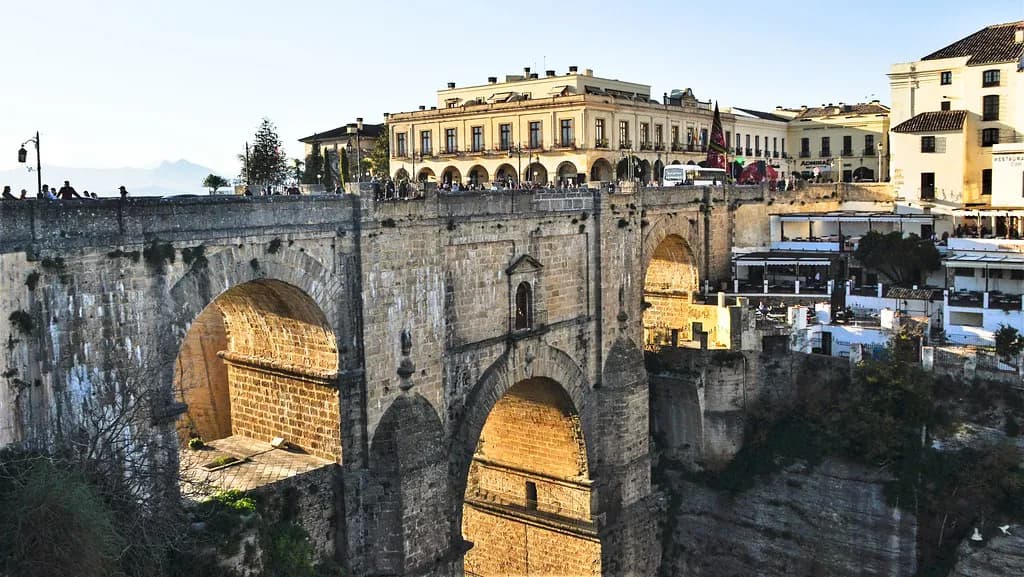
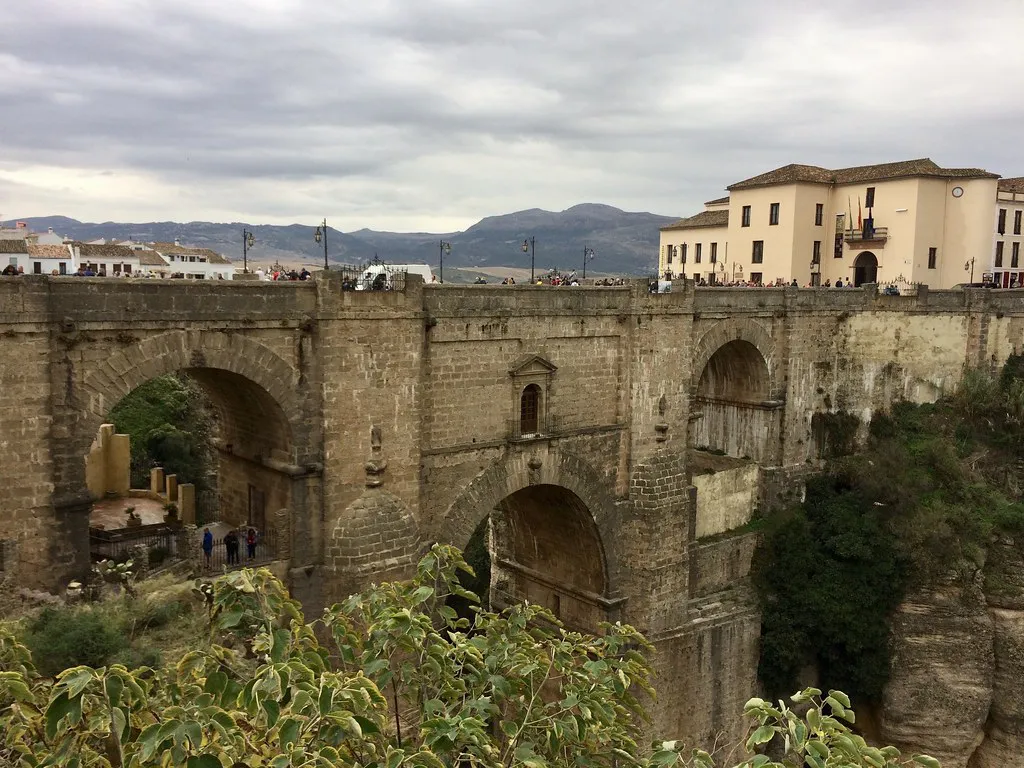
Ronda sits astride El Tajo gorge, a sheer cleft that the Guadalevín river carved over millennia to a depth of 100 metres. Three stone bridges stitch the two halves of the town together: one Roman, one Moorish, and the iconic Puente Nuevo completed in 1793. That visual drama — a whitewashed city balanced on the lip of a ravine — is what draws visitors from around the world and what makes Ronda unlike anywhere else in Andalusia.
Ronda also carries outsized cultural weight. The Romero dynasty codified the rules of modern bullfighting here in the 18th century, and the Real Maestranza bullring — opened in 1785 — is the oldest in Spain still in active use. Hemingway set parts of For Whom the Bell Tolls here; Orson Welles asked for his ashes to be scattered on an estate just outside town. These are not tourist-brochure embellishments but facts that give the place a weight you feel as you walk its streets.
For first-timers asking whether a day trip to Ronda is worth it: yes, unambiguously. The town is compact enough to cover its main sights on foot in six to seven hours. It provides a complete contrast to coastal Malaga — quieter streets, cooler air, mountain food, and a sense of history that goes back to Roman settlements. It consistently ranks among the most popular day excursions from the Malaga region.
Getting from Malaga to Ronda: All Your Transport Options
The distance from Malaga to Ronda is about 100 km. By car the journey takes roughly 90 minutes via the A-357 and A-367. By public transport you should allow closer to two hours each way. You have four realistic options.
| Transport | Journey Time | One-Way Cost | Best For |
|---|---|---|---|
| Train (Renfe) | ~2 hours | €15–25 | Scenic travel, relaxed pace |
| Bus (ALSA) | 1h 45m–3h | €10–15 | Budget travellers |
| Car | ~90 minutes | €30–50/day hire + fuel | Flexibility, side trips |
| Guided tour | ~90 minutes | €50–80 (group) / €300–600 (private) | Families, cruise passengers |
Train (Renfe). The scenic route and the most relaxed way to travel. Renfe runs from Malaga María Zambrano station; the journey is around 2 hours, sometimes requiring a change at Antequera. One-way tickets cost roughly €15–25. Here is the critical detail most guides skip: as of 2026, there is effectively only one direct daily service in each direction. The morning departure from Malaga leaves around 09:05–10:05 and the return from Ronda is around 16:50–17:00. If you miss the return train, you will need the bus or a taxi. Book tickets in advance on the Renfe website, especially in summer.
Bus (ALSA). The most economical option. Buses depart from Malaga's main bus station and the journey takes between 1h 45m and 3 hours depending on the service — check the travel time before you book, because the slower routes are not worth it for a day trip. One-way tickets cost approximately €10–15. The bus station in Ronda sits a few minutes' walk from the top of the main pedestrian street, making it easy to orient yourself on arrival.
Car. Maximum flexibility, especially if you want to combine Ronda with Setenil de las Bodegas or the Sierra de Grazalema. The drive up from the coast is genuinely beautiful — cork oak forests, white villages, mountain views. Car hire starts around €30–50 per day plus fuel. Note that in winter months snow or ice is possible on the higher roads; check conditions before you leave. Parking at Parking Martínez Astein, an indoor car park at the entrance of Ronda, puts you right at the top of the main pedestrian street. Free street parking is also available further along towards the Mercadona supermarket, about 15 minutes' walk from the old town.
Guided tour. Group tours typically cost €50–80 per person and include transport and a guide, removing all logistics. Private tours cost €300–600 per group (up to 6 people) and offer door-to-door pickup, a flexible itinerary, and local commentary. Many private tours also include a free-cancellation window of 24 hours, which is useful if your plans are uncertain. This is the best option for families, cruise passengers with a fixed departure time, or anyone who prefers not to navigate the mountain roads.
Your Perfect 1-Day Ronda Itinerary: Morning Exploration
Aim to arrive in Ronda by 09:30–10:00. The town gets noticeably busier between 11:00 and 15:00 when coach groups arrive. An early start means you get the main sights in relative quiet, better light for photos, and a proper lunch before the afternoon rush.
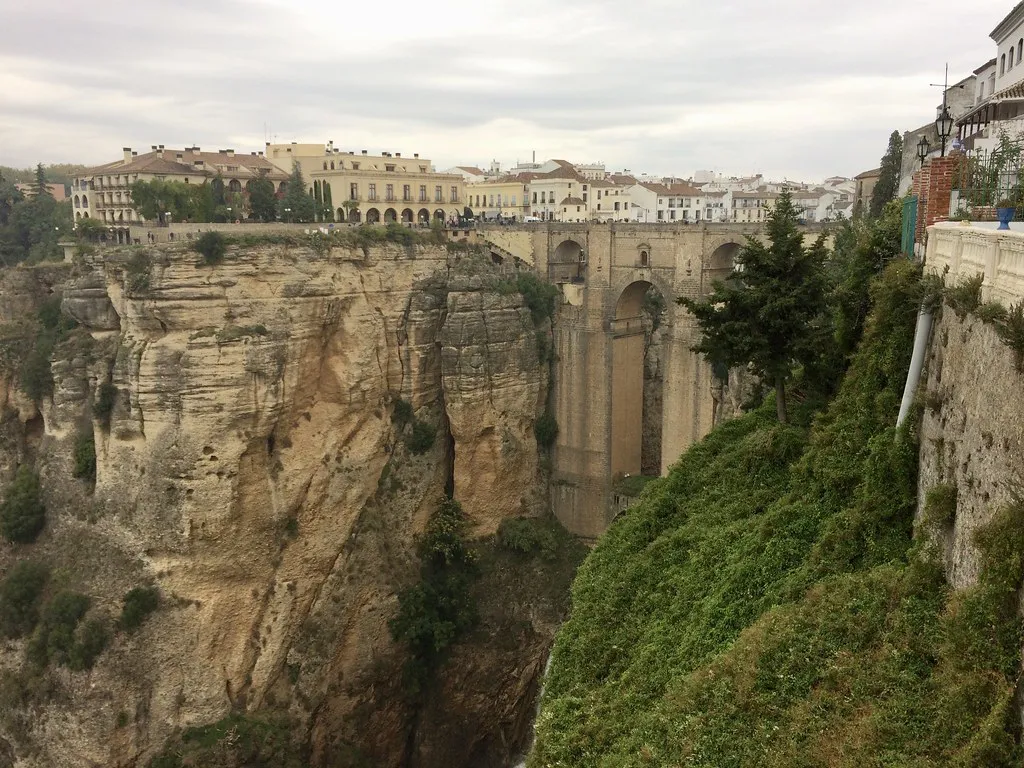
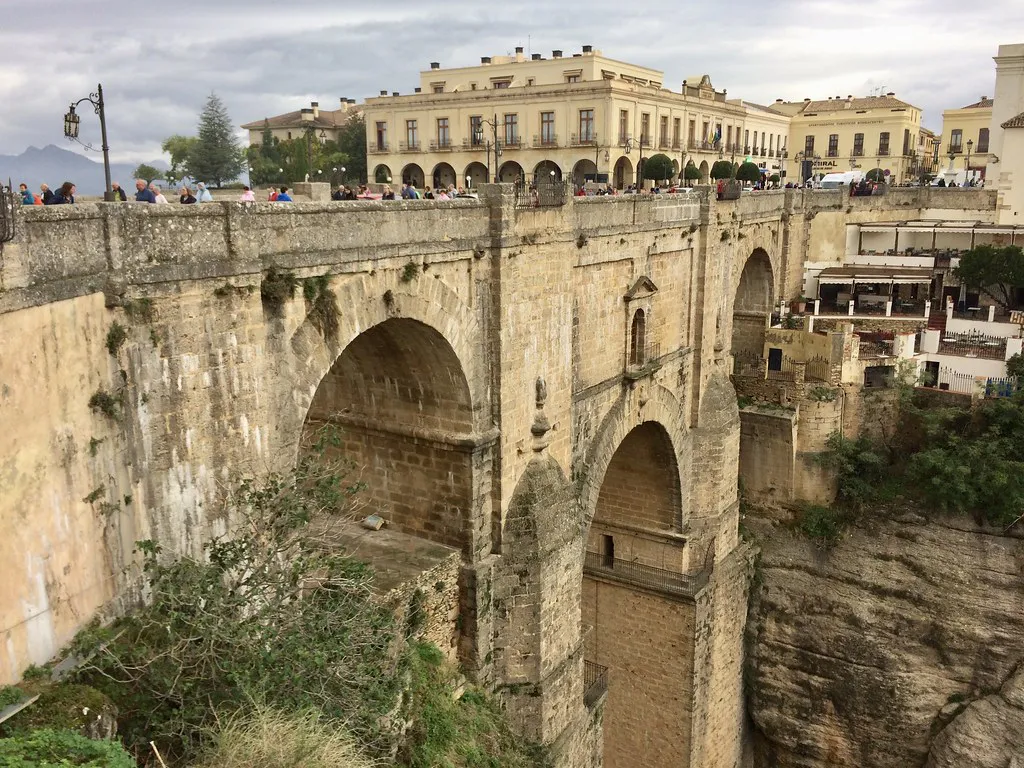
Puente Nuevo is the natural first stop. The bridge spans the 100-metre El Tajo gorge and connects the old Moorish quarter (La Ciudad) with the newer town (El Mercadillo). Construction started in 1759 and took 34 years — an earlier single-arch version collapsed six years after completion. The current three-arch structure was designed by architect José Martín de Aldehuela, who also designed the bullring. Walk to both sides and don't rush: the views from the La Ciudad side looking back along the gorge are just as spectacular as the classic frontal shot. You can also pay a small fee to walk inside the bridge chamber, which served as a prison during the Civil War.
La Ciudad (the Old Town) begins the moment you cross the bridge. Wander along Calle Armiñán past noble mansions, many still inhabited by Ronda's titled families. The Palacio de Mondragón (Municipal Museum) is worth the €4.50 entry — it traces Ronda's history from first settlers through Roman and Moorish rule, and the Moorish garden at the back is one of the most peaceful spots in town. Hours are generally 10:00–18:00; verify on arrival as seasonal changes apply.
Plaza Duquesa de Parcent is arguably Ronda's prettiest square. The Santa María la Mayor church dominates it — built on the site of the town's Moorish mosque, combining Gothic and Renaissance elements over nearly 200 years of construction. A wooden balcony on the exterior is the only surviving fragment of the original mosque. Entry is around €4. From here it is a short walk downhill to the Arab Baths.
Baños Árabes (Arab Baths) are considered the best-preserved Moorish baths in Spain, dating to the 10th–11th century. The star-shaped ceiling vents that allow light into the bathing chambers directly inspired similar vents at the Alhambra in Granada. A short video presentation on arrival (available in English) gives good context. Entry is €4.50. The baths are located just outside the old city walls near the Puente Árabe — allow 30–45 minutes here.
Your Perfect 1-Day Ronda Itinerary: Afternoon Highlights
After the Arab Baths, walk up through the old city walls — there are sections where you can walk along the tops and climb a watch tower — then head back across Puente Nuevo into the newer quarter for lunch around Calle La Bola (officially Carrera Espinel), Ronda's main commercial street.
Lunch in Ronda. The cuisine here is mountain Andalusian — hearty, meat-heavy, and genuinely good. The signature dish is Rabo de Toro (braised oxtail). Also look for Jabalí (wild boar stew), Perdiz en escabeche (marinated partridge), local jamón and goat cheeses. Three reliable spots: Casa Don Miguel has a gorge-view terrace directly beside Puente Nuevo and is popular with visitors; Restaurante Macías a short walk from the bullring offers proper home cooking at fair prices; Las Maravillas on Calle La Bola is packed with locals and serves the best tapas at honest prices. Budget €12–20 for a full meal with wine.
Plaza de Toros de Ronda (Real Maestranza bullring) is the oldest bullring in Spain still in use, opened in 1785 and holding 5,000 spectators. It is only used once a year — for the Feria de Pedro Romero in the first week of September, when matadors still fight in 18th-century costume. The rest of the year it functions as a museum covering the Romero dynasty, historic costumes, and the tradition of mounted bullfighters. Entry is €9 (€10 with audio guide). Hours: January–February and November–December 10:00–18:00; March and October 10:00–19:00; April–September 10:00–20:00. Full details at the Plaza de Toros de Ronda official website.
Paseo de Ernest Hemingway and the Alameda del Tajo. From the bullring, walk out along the cliff-edge promenade named after the writer who was obsessed with Ronda. This path leads past the Balcón del Coño — balconies that jut directly over the gorge wall and give a straight-down view into El Tajo that is genuinely vertiginous. Continue through the Alameda del Tajo park to the balcony at the far end for expansive views across the Andalusian countryside. The park is free and provides a natural breathing space after the paid sights.
If time and energy allow, add Casa del Rey Moro. The 14th-century mansion on the old-town side of the gorge is closed to visitors, but the gardens are open and — more importantly — you can descend the Mina de Agua (Water Mine), a steep 200-step staircase cut into the rock by Moorish engineers to reach the river. It is cool, slightly claustrophobic, and atmospheric in a way that photographs cannot capture. Entry €10. Allow 45 minutes.
Best Viewpoints in Ronda for Stunning Photos
Ronda has four distinct viewpoints, each giving a different angle on the bridge and gorge. The order below follows the natural walking circuit so you can hit all four without backtracking.
Mirador de Aldehuela (near the Parador hotel) gives you the classic postcard shot — a full frontal view of Puente Nuevo from the north. Late afternoon light falls on the bridge face from this direction, making it the best spot for warm-toned photos. This is where most Instagram shots of Ronda are taken.
Path below the bridge (La Ciudad side). Walk down the signposted path on the old-town side of the bridge for a head-on view with the waterfall and river directly beneath the arches. This is the most dramatic angle and one that general tourists often miss because the trailhead is not obvious. Locals joke that hundreds of cameras are dropped into the gorge here every year — keep a firm grip on yours. Allow 20 minutes down and back.
Jardines de Cuenca provides a terraced, lateral view of the bridge from the gorge wall — an angle you cannot get from anywhere else. The gardens are often quiet in the mornings when the main viewpoints are crowded. Each terrace reveals a slightly different composition. Free entry; involves stairs but accessible to most walkers.
Balcón del Coño / Paseo de Ernest Hemingway. Walk to the cliff-edge balconies off the promenade from the bullring for the most vertiginous perspective — straight down into the gorge. The name is crude Spanish slang for the exclamation people make looking over the railing, which tells you something about the view. This spot is in the heart of the afternoon circuit so most visitors walk past it without pausing; take the time to stop.
Essential Tips for Your Ronda Day Trip
The best months for a Ronda day trip from Malaga are April, May, September, and October. Temperatures are pleasant for walking, skies are clear, and crowds are manageable. Summer (mid-July through August) brings temperatures of 38–40°C and the heaviest coach-tour traffic — doable in a day but less enjoyable. Winter is quiet and sometimes cold, with reduced hours at some attractions. February and March offer a special bonus: almond blossoms cover the valley below town.
One local event worth planning around is the Feria de Pedro Romero in the first week of September. The town puts on its most spectacular week of the year — traditional costumes everywhere, the bullfight at the Real Maestranza, flamenco in the streets — but accommodation in Ronda books out months in advance. If you want the full atmosphere, plan far ahead.
Ronda's Sunday market takes place at the Recinto Ferial. It is more local than touristy — fresh produce, clothing, household goods — and provides a genuine glimpse of everyday Andalusian life if your trip falls on a Sunday. Shops and artisan stores in the old town are open daily.
On the question of crowds: Ronda is genuinely busy from about 11:00 to 15:00 when coach parties arrive. Arriving before 10:00 or arriving after 16:00 changes the experience significantly. The town empties out after sunset, which is why staying overnight (rather than a day trip) transforms the experience for anyone who has the option.
Practical checklist: wear comfortable walking shoes for cobblestones and inclines; bring water and sun protection in any month warmer than April; carry some cash as smaller tapas bars may not take cards; check Renfe train times before you leave Malaga as the return window is narrow.
Ronda's Wine Region: Worth a Stop if You Have Time
Most day-trip guides treat Ronda purely as a sightseeing destination, but the Serranía de Ronda is one of Spain's most exciting emerging wine regions. More than 20 bodegas operate under the DO Sierras de Málaga sub-zone, producing high-altitude reds and whites at elevations above 700 metres. The cool nights and well-drained soils produce wines with freshness and structure that are quite different from the heavy reds most people associate with southern Spain.
If you are driving and want to add a winery to your day trip, stick to one or two bodegas maximum — the drives between them are slow on mountain roads and tasting fatigue is real. Notable producers include Descalzos Viejos, Bodega García Hidalgo, and Joaquín Fernández. The Ronda Wine Information Centre, located in a beautiful house in the old town, is a useful first stop to get context and pick up a map of the bodegas before you drive out.
If you are arriving by train or bus, you can still get a taste of the region at lunch. Ask for a glass of Serrania de Ronda red with your Rabo de Toro — the pairing is correct and the wine is usually available by the glass in restaurants around the old town. This is a small detail that converts a good lunch into something more distinctly local.
Choosing Your Ronda Tour: Group vs. Private Options
Deciding between a group tour and a private tour depends on your budget, group size, and how much flexibility matters to you. Group tours typically cost €50–80 per person and include transport and a guide. They run on a fixed itinerary, usually covering Puente Nuevo, the old town, and the bullring. A group tour with a combined Ronda and Setenil de las Bodegas option is available from several Malaga-based operators and picks up from multiple coastal points including Fuengirola and Torremolinos.
Private tours cost €300–600 per group of up to six people, which works out cheaper per head for families or groups of four or more. The main advantages are door-to-door hotel pickup (including from cruise terminals), the ability to spend more time at attractions that interest you, and a local guide who can give context beyond what the standard circuit covers. Most private tours offer free cancellation up to 24 hours before departure, giving you the flexibility to book in advance without financial risk. This is a significant practical advantage over independent travel, where train and bus tickets may have stricter cancellation terms.
If you prefer independent travel but want some commentary, a self-guided audio tour of the old town is available and works well in combination with the train or bus. It is a reasonable middle ground between full guided tour and completely solo exploration.
Combining Ronda with Setenil de las Bodegas
Setenil de las Bodegas, the village famous for its houses built directly under overhanging rock ledges, is 20 minutes by car from Ronda and makes a natural add-on to any day trip. The rock overhangs are so low in places that they form a literal ceiling above the main street, a detail that photographs poorly and stuns visitors in person. Allow 1.5–2 hours in Setenil — it is small but the streets repay slow walking.
To visit Setenil, a rental car or private tour is the practical choice. Public transport connections between Ronda and Setenil are infrequent and add significant waiting time to an already full day. If you are on a group tour from Malaga, some operators include a Setenil stop on the return leg; check the itinerary before you book. The combined Ronda–Setenil day is one of the most popular formats for visitors staying in the Malaga area who want to see more of the pueblos blancos in one trip.
Frequently Asked Questions About a Ronda Day Trip
Below are the questions we hear most often from visitors planning this trip.
Frequently Asked Questions
What time of the year is the best to visit Ronda?
The best time to visit Ronda is during spring (April-May) or autumn (September-October). The weather is pleasant for walking, and crowds are generally more manageable. Summer can be very hot, making sightseeing less comfortable.
How far is Ronda from Malaga?
Ronda is approximately 100 kilometers (62 miles) inland from Malaga. The journey by car or bus typically takes around 1.5 to 2 hours. Trains might take slightly longer depending on connections, but offer scenic views.
Can you do a day trip to Ronda from Malaga?
Yes, a day trip to Ronda from Malaga is very popular and highly recommended. The town is compact enough to explore its main attractions in one day. Many transport options, including train, bus, and guided tours, make it easily accessible.
Is a day trip to Ronda worth it?
A day trip to Ronda is absolutely worth it for its dramatic scenery, iconic bridge, and rich history. It offers a unique cultural experience distinct from coastal Malaga. Ronda is consistently listed among the best day trips from Málaga.
Why is Ronda so famous?
Ronda is famous for its breathtaking Puente Nuevo bridge spanning the Tajo Gorge, its historic bullring (Plaza de Toros), and its white-washed Old Town. Its dramatic cliffside setting and rich cultural heritage draw visitors worldwide. It's truly a unique Andalusian gem.
A Ronda day trip from Malaga delivers more variety than almost any other excursion on the Costa del Sol — ancient baths, a gorge bridge completed in 1793, mountain food, high-altitude wine, and views that genuinely stop you in your tracks. The key to a good day is logistics: check the Renfe return time before you leave Malaga, arrive early to beat the coach crowds, and build in time for at least one of the less-visited spots — the Arab Baths, Casa del Rey Moro, or the Jardines de Cuenca — rather than spending the whole day at the main viewpoints.
Whether you take the train for the scenery, drive for the flexibility, or book a guided tour for the door-to-door convenience, Ronda rewards the effort. It is one of those places where the photographs do not exaggerate. If anything, they undersell it.
You might also like


Continue reading
More guides you'll find useful