Antequera Day Trip from Malaga: Your Perfect 1-Day Itinerary
Plan your ideal Antequera day trip from Malaga with our detailed 1-day itinerary. Discover UNESCO sites, El Torcal, and practical tips for a seamless visit.
On this page
Antequera Day Trip from Malaga: Your Perfect 1-Day Itinerary
Antequera sits just 45 minutes north of Malaga and packs more UNESCO World Heritage into a single day than almost anywhere else in Andalusia. Three megalithic dolmens, a Moorish fortress with sweeping rooftop views, and the alien limestone towers of El Torcal — all reachable in one well-planned loop. This guide builds a realistic hour-by-hour itinerary around those headline draws, explains your transport options honestly (including the current bus situation), and adds a few local details that most guides miss.
This itinerary is designed for independent travelers doing the trip without a guide. I've structured it to minimize backtracking and give you the right amount of time at each site, based on my most recent visit and 2026 opening hours.
Plan with trusted sources: cross-check opening hours and seasonal details with the official Andalusia tourism board, and read more about the city on its Wikipedia entry before you go.
Why Antequera is the Perfect Day Trip from Malaga
Antequera is often called the Heart of Andalusia, and the geography backs it up. The town sits at the junction of routes from Malaga, Seville, Cordoba, and Granada, which is why it grew into a strategically important city for every civilisation that passed through. Today that central position makes it unusually easy to visit from the coast.
The town holds the largest megalithic complex in Europe — the Dolmens of Antequera — alongside a Moorish fortress that predates the Reconquista, a well-preserved baroque old town, and El Torcal Natural Park just 13 km away. That range of attractions in a compact area is rare. Ronda offers drama, the coast offers beaches, but Antequera offers prehistory, medieval history, and extraordinary geology all in one day.
Visitor numbers here are notably lower than at Ronda or Granada. Even in peak summer, the Dolmens rarely have queues. That means you can explore at your own pace without fighting crowds, which makes the experience far more immersive. If you are building a wider Malaga itinerary, placing Antequera on a weekday morning is one of the best decisions you can make.
Antequera Day Trip from Malaga: Your 1-Day Itinerary At a Glance
This structure gives you the headline sites without exhausting yourself. Dolmens and Alcazaba in the morning when it is cool, El Torcal after lunch when the light is better for photography, and a relaxed walk through the old town before heading back. The sequence minimises taxi hops if you are without a car.
- 08:30–09:00 — Depart Malaga (train or bus)
- 09:00–10:30 — UNESCO Dolmens: Menga, Viera, and El Romeral
- 10:30–12:30 — Alcazaba fortress and Plaza de Santa María
- 12:30–13:30 — Lunch in Antequera old town
- 13:30–16:00 — El Torcal de Antequera (Green or Yellow trail)
- 16:00–17:00 — Stroll the old town, Arco de los Gigantes, tapas stop
- 17:30–18:30 — Return to Malaga
Car travelers can rearrange and start at El Torcal to beat the mid-afternoon heat. Without a car, do El Torcal second — you will need a taxi from town (about €20–25 one way) and must factor in waiting time for a return cab, since there is no Uber in Antequera.
Getting to Antequera from Malaga: Transport Options & Tips
Reaching Antequera from Malaga is possible by train, bus, or car — but the public transport options have some quirks worth knowing before you book. The choice affects how much of Antequera you can realistically see in a day, especially for El Torcal.
By train: Renfe runs high-speed services from Malaga María Zambrano to Antequera-Santa Ana in about 25 minutes (around €10–14 one way). A newer direct service also runs to Antequera AV station on a limited timetable — check Renfe for current schedules as this route was recently added. The critical catch: Antequera-Santa Ana station is 11 km outside the town centre. A taxi from Santa Ana to the Dolmens costs around €15–20 and takes 15–20 minutes. There is a bus connection but it is infrequent and not practical for day-trippers. Always pre-note a local taxi number before boarding the train at Malaga.
By bus: The Portillo/ALSA route between Malaga bus station and Antequera town centre takes around 1 hour 15 minutes and deposits you near the centre. Fares are typically €5–8 one way. Bus schedules are limited, particularly on weekends, and route availability has changed in recent years — always verify current timetables directly with Portillo or on Omio before relying on this option. The bus drops you in town, which is more practical than the Santa Ana train station if you are on foot.
By car: Driving gives you full flexibility, especially for El Torcal. The A-45 from Malaga takes 40–50 minutes. Parking is available near the Dolmens (free, off the A-7283 slip road) and in several car parks in the town centre. Renting a car is the recommended option if you want to combine Antequera with El Torcal in a single day without logistical stress. This is also the easiest option if you plan to explore multiple the best day trips.
| Option | Journey time | One-way cost | Drop-off point | El Torcal access |
|---|---|---|---|---|
| Train (Renfe) | ~25 min | €10–14 | Santa Ana station (11 km from centre) | Taxi needed (€15–20 extra) |
| Bus (ALSA/Portillo) | ~75 min | €5–8 | Town centre | Taxi needed (€20–30 one way) |
| Car (A-45) | 40–50 min | Fuel + parking (free) | Dolmens / town centre | Direct drive, 20 min |
Your Perfect Antequera Day Trip Itinerary: Morning Exploration
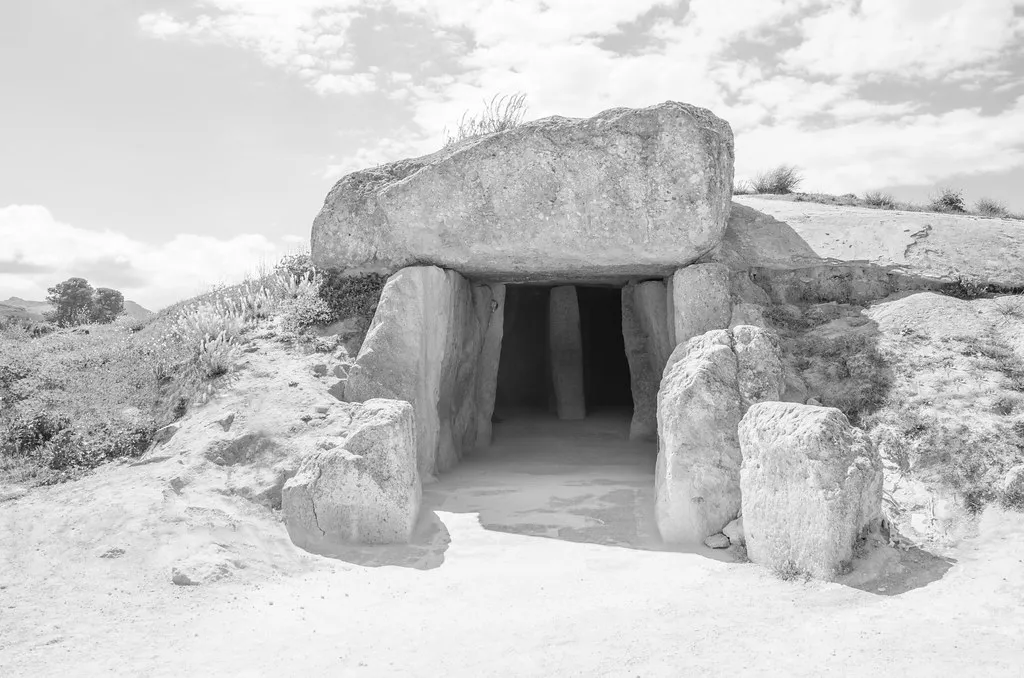
Start at the Dolmens. They open at 09:00 and early arrival means you will have the chambers almost to yourself. The visitor centre on Carretera de Malaga, 5 (29200 Antequera) is well signposted from the town entrance. Entry is free, but you must collect a timed ticket at the reception building before entering any of the three dolmens. Allow 60–90 minutes for all three.
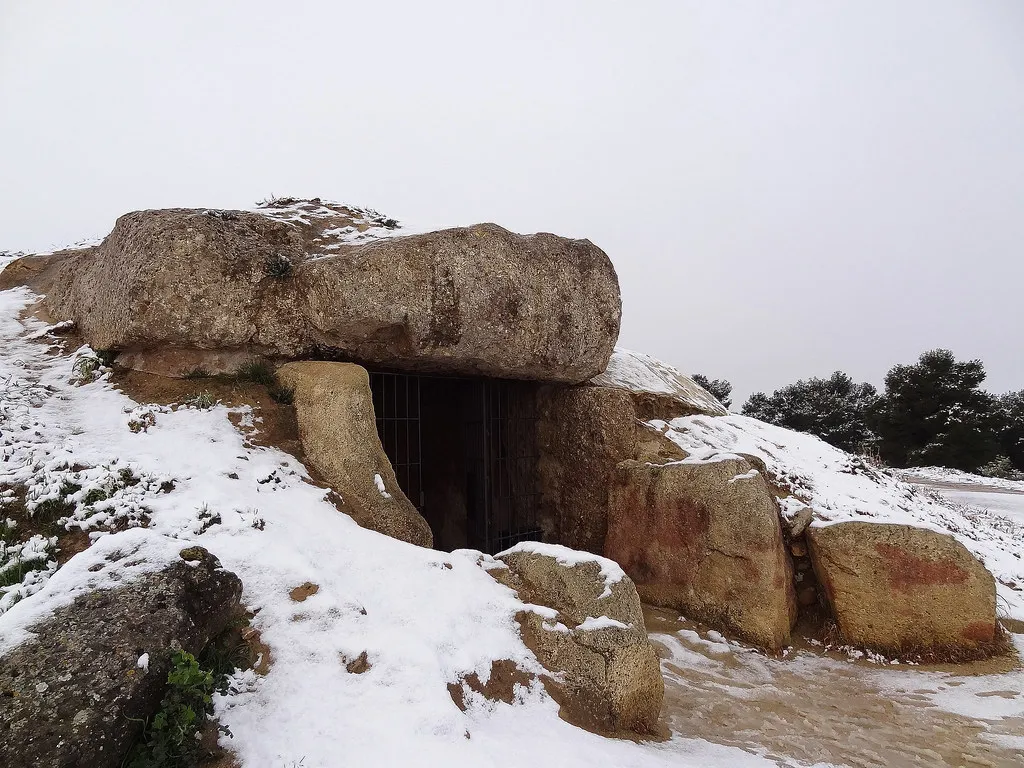
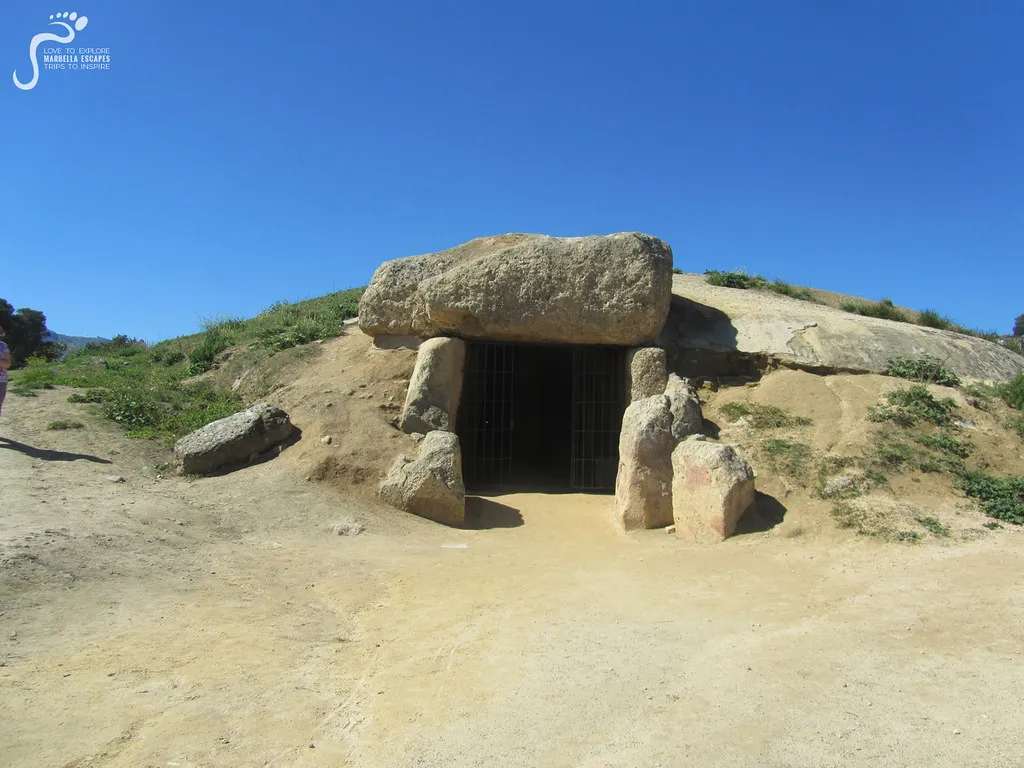
The Dolmen de Menga is the first and most spectacular. Built around 3700–3400 BC, it is the largest megalithic corridor tomb in Europe, constructed from 32 stones each weighing roughly 200 tonnes. Stand at the entrance and look outward: the doorway frames La Peña de los Enamorados on the horizon, a limestone peak shaped like a human face in profile. This alignment was deliberate — the neolithic builders oriented Menga toward their most sacred landmark. The Dolmen de Viera is a narrower corridor tomb aligned with the equinox sunrise, meaning light penetrates to the back chamber at dawn around 20 March and 22 September. If your visit falls near an equinox, arriving before the 09:00 opening to position yourself inside is genuinely worth the effort.
The Tholos de El Romeral is a 10-minute drive or taxi ride from Menga and Viera (its reception is on Carretera A-7283, direction Cordoba). This circular corbelled tomb, built around 1800 BC, is different in design from the other two and its axis points toward the highest peak of El Torcal. Admission to all three is free. Together the Dolmens form the UNESCO Archaeological Site of Antequera Dolmens Ensemble, inscribed in 2016.
From the Dolmens, take a taxi (or walk 25 minutes) up to the Alcazaba. The fortress dates from 14th-century Moorish rule and entry costs €5, which includes an audioguide that is genuinely useful for understanding the layered Roman, Visigoth, and Moorish ruins on the hill. The towers give panoramic views over Antequera's white rooftops toward El Torcal in the south. Just below the Alcazaba, the Plaza de Santa María holds the 16th-century Royal Collegiate Church of Santa María la Mayor (€6 entry for the baroque interior and bell tower views). Even if you skip the interior, the plaza itself — with its Roman bath ruins visible over the edge — is one of the most layered historical spots in Andalusia.
Your Perfect Antequera Day Trip Itinerary: Afternoon Adventures
After lunch, the afternoon splits between El Torcal and the old town. Which you do first depends on your transport. Car travelers should head straight to El Torcal (13 km south on the A-7075, 20 minutes) while temperatures are still manageable, then return to the town for a final wander. Without a car, arrange your taxi to El Torcal and budget around €40–50 for a return trip; alternatively ask the driver to wait or pre-book a return pick-up.
Antequera's old town deserves at least an hour on foot before you leave. Walk through the Arco de los Gigantes — a 1585 Moorish arch with two-metre-thick sandstone walls that marks the entrance to the upper old city. From there, wander south through Calle Infante Don Fernando, Antequera's main pedestrian street, lined with baroque churches (there are nearly 40 churches in the municipality), tapas bars, and the city's covered market. The Museo de la Ciudad de Antequera (entry €3) occupies a former convent and holds an impressive collection of Roman sculpture including the famous Efebo de Antequera, a 1st-century bronze boy. If your schedule is tight, the Arco de los Gigantes and a tapas stop along Calle Infante Don Fernando give you the essential flavour in 45 minutes.
One genuinely underrated spot near the top of the town is the Portichuelo chapel, dedicated to the Virgin del Socorro. You cannot enter the chapel itself, but the terrace in front of it offers one of the best 360-degree panoramas of Antequera and the surrounding countryside. It takes about 10 minutes to walk up from the Alcazaba and the views make it worthwhile, especially in the late afternoon light.
Exploring El Torcal de Antequera: A Natural Wonder
El Torcal de Antequera is a karst landscape unlike anything else in Spain. The entire terrain consists of eroded Jurassic limestone — the rock was laid down under the sea 150 million years ago, then uplifted and sculpted by weathering into towers, arches, and platforms that look genuinely extraterrestrial. It forms part of the UNESCO World Heritage designation alongside the Dolmens.
The visitor centre at the park entrance (open daily, free) has a small museum, toilets, a café, and a map of all trails. Three signed routes leave from here. The Green Route (1.5 km, about 45 minutes, easy) is suitable for most ages and gives a representative taste of the formations. The Yellow Route (3 km, about 2 hours, moderate) goes deeper into the park and reaches better viewpoints. The Orange Route (4.5 km, about 3.5 hours, challenging) is for experienced hikers with proper footwear. Guided tours are available from the visitor centre for around €10–15 per person and are worth it for the geological and fossil context. Check current times on the Torcal de Antequera official site.
Entry to the park is free. The park is open daily; summer hours typically run 09:00–19:00 and winter hours 09:00–18:00 (verify before visiting as these change seasonally). Wear sturdy shoes with ankle support — the limestone slabs are uneven and slippery when wet. Bring water even for the short trail: there is no shade on the plateau and temperatures on the rock surface can be 10°C higher than in the town. A wildlife note: you may see Spanish ibex (mountain goats) on the rocky outcrops in the morning and late afternoon. They are accustomed to visitors and often photographable at close range.
No public bus reaches El Torcal from Antequera town. On certain weekends during peak season a shuttle may run; check with the tourist office before your trip. Otherwise, a taxi from town costs €20–30 one way. If you have a car, parking at the visitor centre is free.
Essential Tips for Planning Your Antequera Day Trip
The best months to visit are April, May, October, and November. Temperatures are pleasant (18–24°C), the light is clear for photography, and wildflowers cover El Torcal in spring. Summer (July–August) is doable but demanding: town temperatures regularly hit 37–40°C and the exposed limestone at El Torcal intensifies the heat. If you visit in summer, plan El Torcal for early morning (09:00–11:00) and the town for late afternoon when temperatures drop slightly.
Dolmens opening hours vary by season. From 1 April to 30 June: Tuesday–Saturday 09:00–21:00, Sundays and public holidays 09:00–15:00, closed Mondays. From 1 July to 15 September: Tuesday–Saturday 09:00–18:00 with special night visits 20:00–22:00 available; Sundays 09:00–15:00. From 16 September to 31 March: Tuesday–Saturday 09:00–18:00, Sundays 09:00–15:00. Always verify on the official Antequera tourism site as these shift slightly year to year. The Dolmens are closed on Monday (except public holidays), 1 January, 6 January, 1 May, and 24–25 and 31 December.
A realistic budget breakdown for one person: train or bus from Malaga €6–14 return, taxi from Santa Ana station to Dolmens €15–20, taxi to/from El Torcal €40–50 (or included if you drive), Dolmens entry free, Alcazaba entry €5, church entry €6, El Torcal entry free, lunch €12–18, coffees and tapas €8–12. Total without a car: roughly €80–100. With a car (including parking and petrol), the non-transport costs drop to €30–40 for the day, making the rental worthwhile for groups of two or more.
Accessibility: the Dolmens visitor centre has level access and the paths to Menga and Viera are mostly flat, making them manageable for wheelchairs and prams, though the entrance tunnels narrow slightly. El Romeral requires a short unpaved path. The Alcazaba involves a steep uphill walk with uneven cobblestones — not wheelchair friendly. El Torcal's Green Route starts on a wide path but becomes rocky; the Yellow and Orange routes require agile footing. If mobility is a concern, the Dolmens plus the lower old town (Calle Infante Don Fernando, Arco de los Gigantes) can be done comfortably without hills.
The Fuente de Piedra Flamingo Lagoon: A Stop Most Day-Trippers Miss
About 22 km northwest of Antequera on the A-382 lies the Laguna de Fuente de Piedra, the largest natural lagoon in Andalusia and home to the biggest breeding colony of greater flamingos in Spain. It is not on most day-trip itineraries from Malaga, but for car travelers it slots in almost for free: the lagoon is 12 minutes off the A-45 motorway between Malaga and Antequera, meaning you can stop on the way there or back without meaningful detour.
Entry to the lagoon viewpoints is free. The flamingos are present year-round but numbers peak between January and August, when the colony breeds. Spring (March–May) is the best window: water levels are high, chicks hatch from April, and you can see tens of thousands of birds at once — the pink haze is visible from the roadside. A small visitor centre (open Tuesday–Sunday, check local hours) provides context and binoculars for loan. Bring your own if you have them.
The village of Fuente de Piedra itself is quiet and has a couple of cafés for a morning coffee stop. If you are driving from Malaga toward Antequera along the A-45, exit at the A-7280 toward Fuente de Piedra and allow 30–45 minutes for a proper look before continuing to the Dolmens. It costs nothing and adds genuine wildlife spectacle to a day already loaded with prehistoric and geological interest.
Where to Eat: Best Restaurants & Local Delights in Antequera
Antequera has its own culinary identity within Andalusia, built around a few iconic dishes. The most famous is Porra Antequerana — a cold, thick soup made from tomatoes, day-old bread, olive oil, and garlic, typically topped with boiled egg and Iberian ham. It is related to gazpacho but denser and richer, and the addition of red pepper gives it a distinct kick. Order it anywhere in town and you will not be disappointed. The local olive oil is exceptional; dishes fried or dressed in Antequera olive oil taste noticeably different from what you get on the coast.
The Mollete de Antequera is the local bread — a soft, flat roll served toasted with olive oil and tomato for breakfast. Look for it in any bar near the market from 08:00 onward; it makes an excellent fuel stop before the Dolmens. Bienmesabe, a sweet almond paste dessert, is the town's best-known sweet and widely available in pastry shops and on dessert menus.
For a sit-down lunch, the streets around Plaza de San Sebastián have the highest concentration of restaurants. Mesón Casa Barón (Calle Comedias, 17) serves hearty Andalusian mains at €12–20. Restaurante Abrasador Bodegas Triana, on the walk between the Alcazaba and the bus station, gets strong Google ratings for its street terrace and classic tapas at competitive prices — notably cheaper than comparable spots in Malaga. For tapas grazing, work your way along Calle Infante Don Fernando, where multiple bars offer plates at €3–5 each. Budget €12–18 for a full lunch with a glass of local wine.
Is Antequera Worth a Day Trip from Malaga?
Yes — and it stands out from other Malaga day trips precisely because the attractions are so varied. The Dolmens alone would justify the journey; standing inside a 6000-year-old stone chamber is a genuinely rare experience, and most visitors are visibly moved by the scale and age of the structures. Adding El Torcal and the Alcazaba makes the day feel full without feeling rushed, provided you follow a structured plan.
Without a car, the day is achievable but requires more planning. The main friction points are the Santa Ana train station taxi transfer and getting to El Torcal. If taxis prove hard to find, consider using a guided excursion from Malaga, which handles all transfers and includes a local guide for the Dolmens and Torcal — typically priced at €45–70 per person. This removes the logistical stress entirely and can be worth it for first-time visitors.
For those building a longer stay, Antequera itself makes a good base for exploring inland Andalusia — it is equidistant from Malaga, Cordoba, Seville, and Granada. But as a day trip from Malaga, it delivers exceptional variety in a compact package. Consider adding it to your Malaga 3-day itinerary on day two, when coastal fatigue tends to set in and you want something fundamentally different.
Frequently Asked Questions
What is there to do in Antequera on a day trip?
On an Antequera day trip, you can explore the UNESCO World Heritage Dolmens, visit the impressive Alcazaba fortress, wander through the charming old town, and hike the unique rock formations of El Torcal Natural Park. These key attractions offer a rich blend of history and natural beauty.
How do I get to Antequera from Malaga?
You can get to Antequera from Malaga by train or bus. High-speed trains take about 30 minutes to Antequera-Santa Ana station, requiring a short taxi to town. Buses take 1.5 hours directly to Antequera town center. Driving provides the most flexibility, especially for visiting El Torcal.
How much time should I spend in Antequera?
For a comprehensive Antequera day trip, dedicate a full day, ideally 8-10 hours including travel time. This allows enough time to visit the Dolmens, Alcazaba, and El Torcal. If you only plan to see the town, a half-day might suffice, but you'd miss El Torcal.
What are the opening times for the Antequera Dolmens?
The Antequera Dolmens generally open from 9:00 AM to 6:00 PM (winter) or 7:00 PM (summer), with varying closing times on specific days. They are typically closed on Mondays. Always verify the latest opening hours on the official UNESCO site or local tourism board before your visit.
An Antequera day trip from Malaga offers an unforgettable journey into Andalusia's rich past and stunning natural beauty. From ancient megalithic tombs to a dramatic karst landscape, it's a destination that truly captivates. This 1-day itinerary helps you navigate the best of Antequera efficiently and enjoyably. It provides a perfect contrast to Malaga's coastal charm.
Whether you choose public transport or rent a car, the effort to reach Antequera is well rewarded. You'll return to Malaga with incredible memories and a deeper appreciation for this unique region. Don't hesitate to add this enriching experience to your next Spanish adventure. Antequera truly is a hidden gem waiting to be discovered.
You might also like


Continue reading
More guides you'll find useful