Mercado San Miguel Madrid: Insider's Guide & Best Tips
Discover Madrid's iconic Mercado San Miguel with our essential guide. Get tips on what to eat, when to go, nearby sights, and how to make the most of your visit.
On this page
Mercado San Miguel Madrid: Your Essential Guide
Madrid's Mercado San Miguel is the city's most famous food hall — a soaring iron-and-glass building steps from Plaza Mayor where 30-plus stalls serve everything from Galician oysters to Michelin-starred paella. It draws over 7 million visitors a year, and for good reason. This guide tells you when to go, what to order, and how to get the most out of every euro you spend here.
The market opens daily at 10:00 and stays open until midnight Sunday through Thursday, and until 01:00 on Friday and Saturday nights. That long window means you can slot it into almost any Madrid day — but timing still matters enormously. Read on before you go.
Plan with trusted sources: cross-check opening hours and seasonal details with the official Madrid tourism site, and read more about the city on its Wikipedia entry before you go.
History and Evolution of Mercado San Miguel
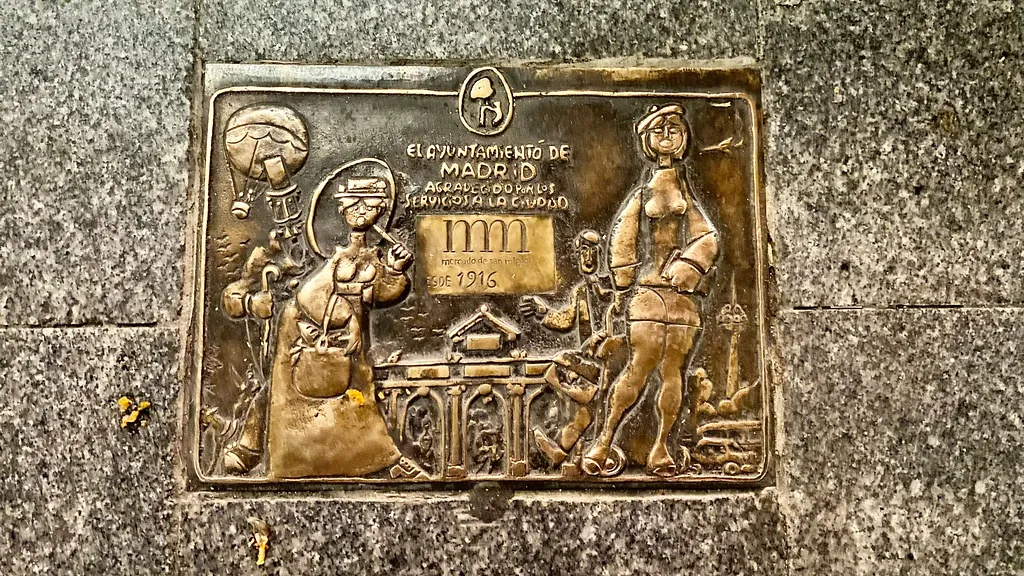
The market takes its name from the Iglesia de San Miguel, a medieval church that burned down in the late 18th century. The open ground left by the fire became an informal outdoor market for decades. In 1916 the city built the iron-framed, glass-walled structure that still stands today — one of the finest examples of early 20th-century market architecture in Spain.
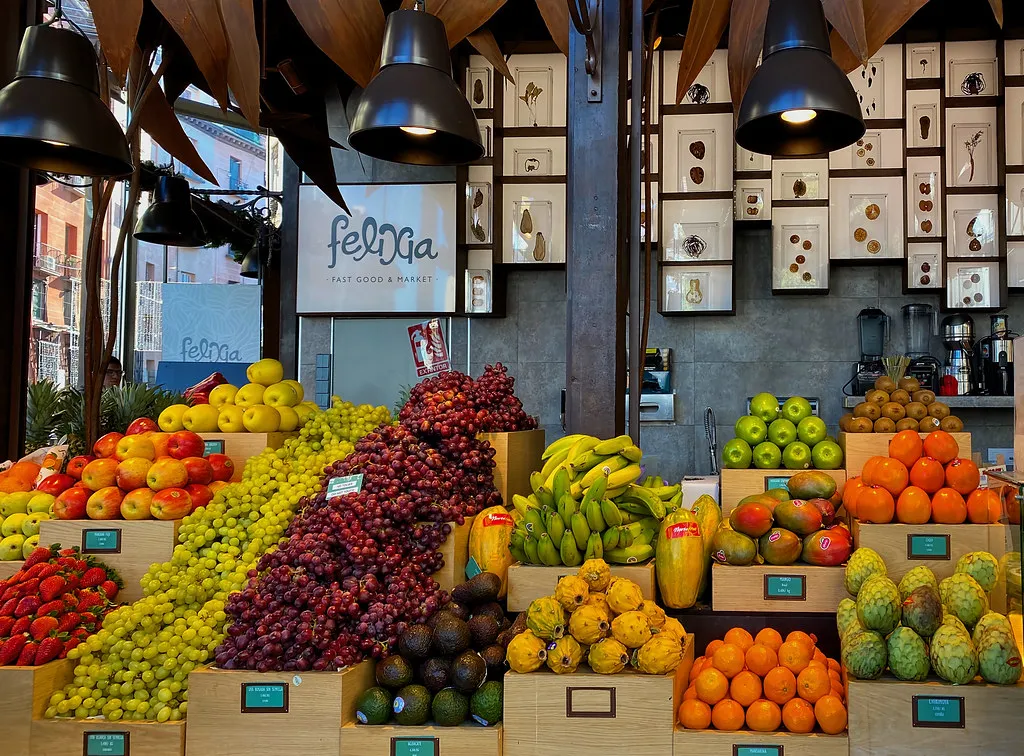
For most of its life the building functioned as a traditional fresh-food market: fishmongers, butchers, and produce vendors supplying the surrounding neighbourhood. By the early 2000s it had fallen into decline. A group of investors bought the concession and transformed it into Madrid's first gourmet food hall, reopening in 2009. In 2018 the market consolidated around a curated selection of high-quality operators, and after a brief pandemic closure it reopened in July 2021 with four new additions including the artisan bakery Madreamiga and mountain-milk cheesemaker Quesería Quesoba.
The transformation changed who comes here and why. Today the market is less a place to buy groceries and more a social and gastronomic stage — a showcase of regional Spanish products, craft drinks, and cooking talent from across the country. Its iron bones are unchanged; the food inside is entirely different from 1916.
Essential Tips for Visiting Mercado San Miguel
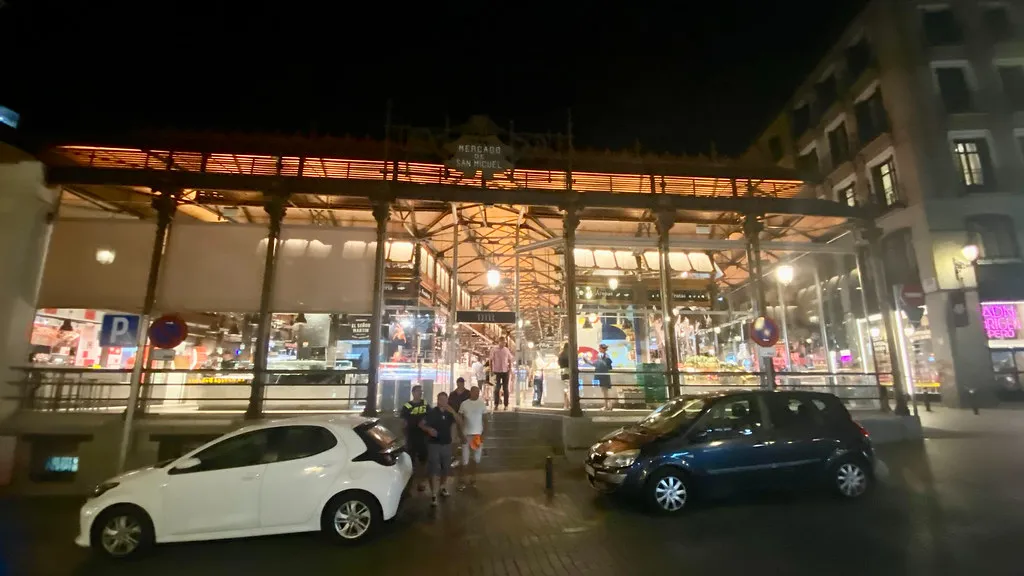
The market is open every day: 10:00–midnight Sunday to Thursday, 10:00–01:00 Friday and Saturday. It sits at Plaza de San Miguel, s/n — about a 2-minute walk from the southwest corner of Plaza Mayor. There is no entry fee.
Timing is the single biggest factor in how much you enjoy yourself. The busiest windows are 13:00–15:00 (Madrid's lunch rush) and 18:00–22:00 (pre-dinner drinks and evening grazing). During those periods the central aisles are essentially shoulder-to-shoulder. Weekday mornings before 12:00 and mid-afternoon slots between 15:30 and 17:30 are noticeably calmer — stalls have shorter queues and you can actually read the menus.
Pickpockets operate here because the crowds are dense and most visitors are distracted by food. Keep your phone in a front pocket or zipped bag — not on the counter while you order. Madrid has low violent crime, but opportunistic theft in busy tourist spots is real. Be especially alert at the entrance and near the most popular stalls.
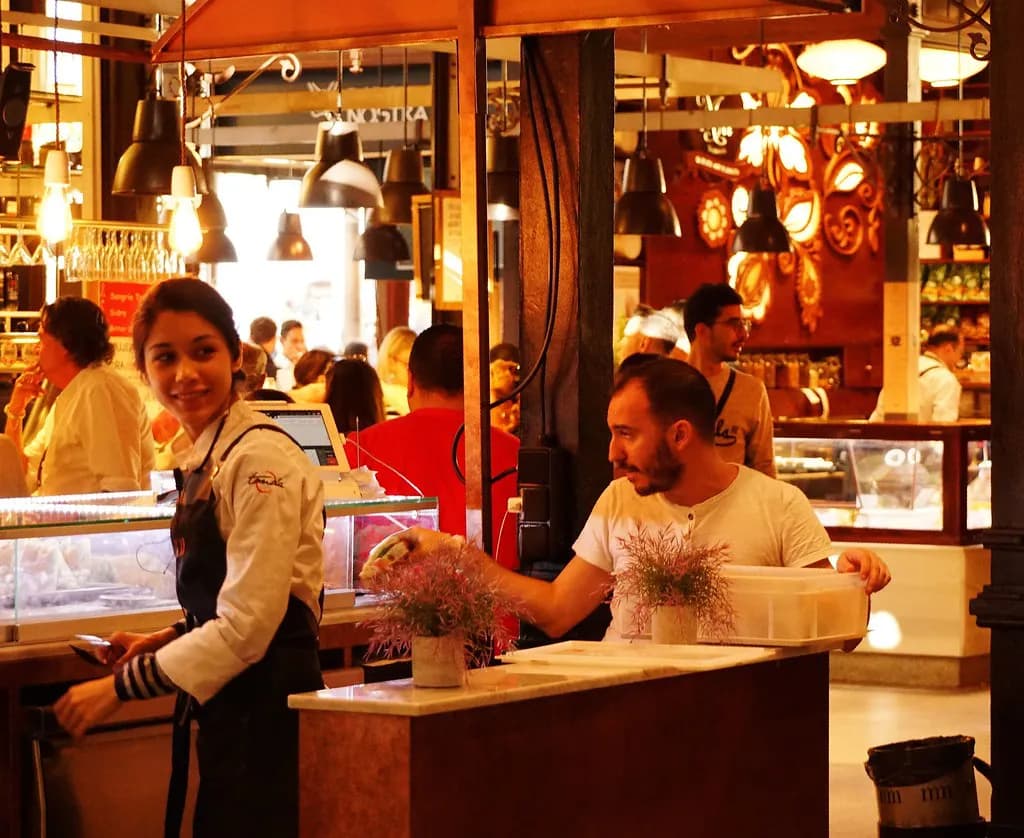
Come hungry and come ready to share. The market is designed for grazing, not a sit-down meal. Order one or two items at each stall, work your way around the building, and share plates where you can. Most items cost between €2 and €6, so a thorough tour of 8–10 stalls for two people typically runs €40–€60 all in. Card payment is accepted almost everywhere; cash works too but is slower.
What to Eat and Drink: A Culinary Tour of the Market
There are more than 30 stalls. These ten are worth seeking out specifically.
| Stall | Specialty | Price range | Best order |
|---|---|---|---|
| La Hora del Vermut | Vermouth & pickles | €3–€5 | Draught vermouth + gildas |
| Pinkleton & Wine | Spanish wines | €4–€5 / glass | Txakoli or Madrid organic red |
| La Casa del Bacalao | Salt cod | €3–€5 | Bacalao al pil-pil |
| Arzábal Croquetería | Croquetas | €2.50–€3.50 each | Jamón croqueta |
| Morris | Oysters & shellfish | €8–€12 / half-dozen | Galician oysters |
| Señor Martín | Fried fish | €4–€6 | Bocadillo de calamares |
| Power Paella | Rice dishes (Michelin chef) | €6–€9 / tapa | Arroz negro (black rice) |
| Madrí | Classic tapas & beer | €3–€5 | Torreznos + draught beer |
| Quesería Quesoba | Artisan mountain cheese | €3–€5 | Cantabrian cow's cheese |
| Rocambolesc | Desserts & ice cream | €4–€5 | Seasonal ice cream |
La Hora del Vermut is the starting point for most locals. Order a glass of house vermouth — they pour both bottled craft vermouths and the earthy, slightly bitter draught style — and pair it with a small plate of pickled gildas or Spanish olives. Vermouth hour (hora del vermut) is a pre-lunch ritual in Madrid, running roughly 12:00–14:00, and this stall captures it well.
Pinkleton & Wine is the best stop for wine. They pour Txakoli (crisp Basque white), Cava from Dominio de Requena, and organic reds from Bodega Las Moradas de San Martín — a small Madrid-area winery that most visitors have never heard of. A 150 ml glass runs around €4–€5.
La Casa del Bacalao prepares salted cod in more than a dozen ways, all served on two-bite crackers. The bacalao al pil-pil — cod in a silky, emulsified garlic oil — is the classic order. Salted cod has been central to the Spanish diet for centuries and this stall treats it with the seriousness it deserves.
Arzábal Croquetería has its own dedicated cart, which tells you something about the quality. The jamón croqueta is the benchmark; the boletus (wild mushroom) version is a close second. Expect to pay around €2.50–€3.50 per croqueta. The queue moves faster during off-peak hours — arriving before 12:30 cuts wait time significantly.
Morris handles the oyster and shellfish counter. Order six Galician oysters or a plate of navaja razor clams. The shellfish comes from Galicia's rías, some of the most productive cold-water estuaries in Europe.
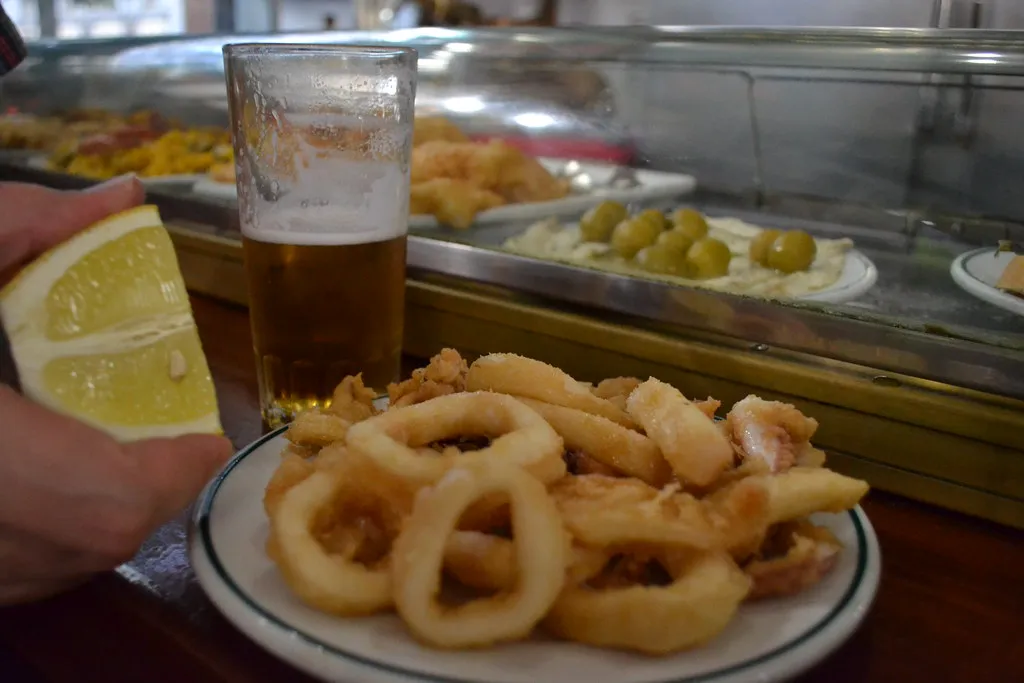
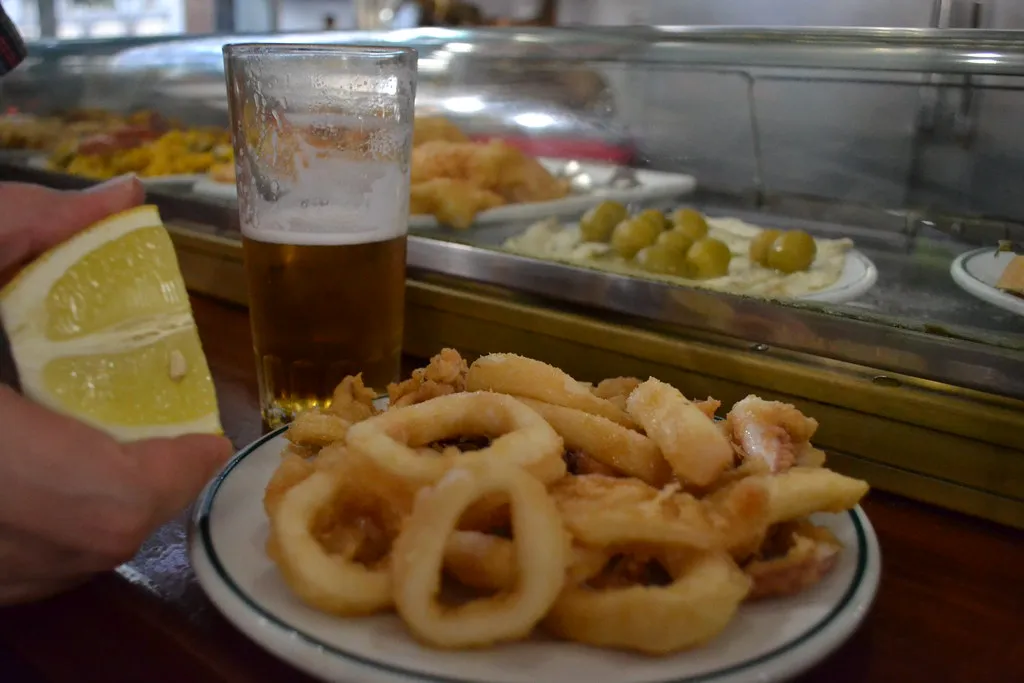
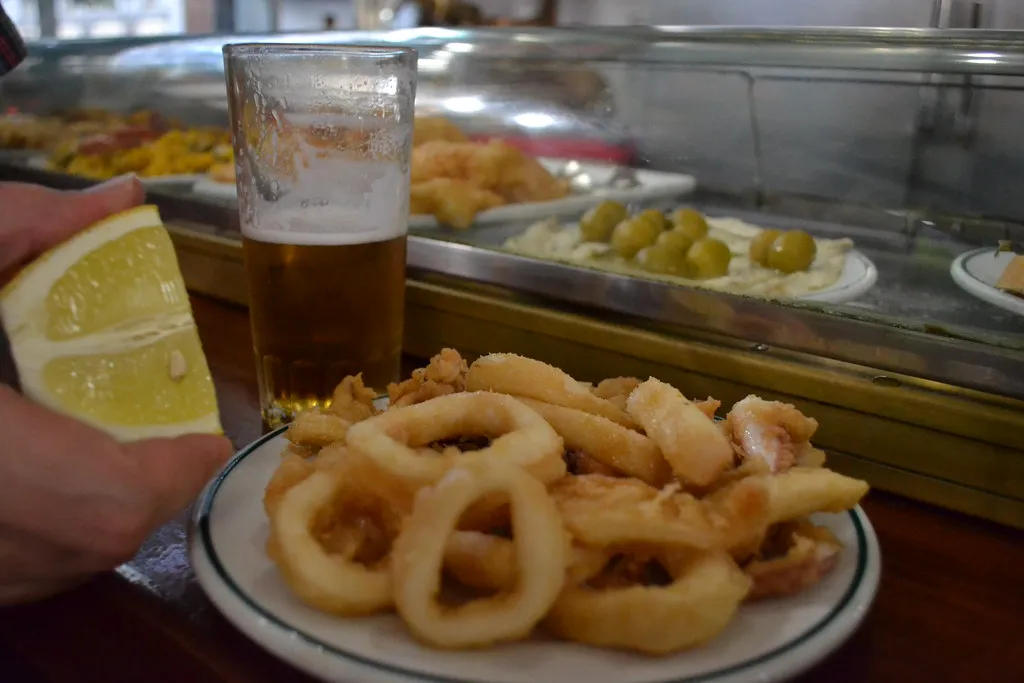
Señor Martín serves fried fish. The thing to order is a bocadillo de calamares — a Madrid classic of crispy calamari rings packed into a crusty roll. Simple and perfect.
Madrí does classic tapas and the best beer pour in the building. Order a glass of Turia on tap and pair it with torreznos (crispy pork belly). Most taps here pour Estrella Damm; Madrí is the counter-programming choice for anyone who thinks Madrid should drink its own beer.
Power Paella is run by Rodrigo de la Calle, a chef who holds one Michelin star for his restaurant El Invernadero. His black rice (arroz negro with squid ink) is the adventurous pick; the paella Valenciana is the crowd-pleaser. The vegetarian paella is also excellent. Get the tapa size (serves 2) rather than a full portion — you want room for everything else.
Quesería Quesoba specialises in artisan cheeses made from the milk of mountain-grazing cows in Cantabria. Pair a slice with that Madrid red from Pinkleton. Rocambolesc, at the far end of the market, is the dessert stop — ice cream designed by Jordi Roca, pastry chef at the three-Michelin-starred El Celler de Can Roca in Girona.
The Michelin Connection: Why San Miguel Is More Than Tourist Food
Visitors sometimes assume that a busy, central market must mean mediocre food at tourist prices. San Miguel is a partial exception, and the reason is the talent behind some of its stalls. Power Paella is Rodrigo de la Calle's project — his El Invernadero holds one Michelin star and he is known as the chef who brought vegetable-forward haute cuisine to Spain. Rocambolesc is a spinoff of El Celler de Can Roca, Spain's most decorated restaurant. These are not celebrity-name licensing deals; the cooking reflects their actual standards.
That said, not every stall reaches the same level. The market is a spectrum from genuinely exceptional (those oysters from Morris, the bacalao preparations at La Casa del Bacalao) to competent tourist-friendly (some of the churros and generic snack stalls near the entrance). Knowing which stalls to prioritise — and which to walk past — is what separates a good visit from a great one. The ten stalls listed in the section above are the consistent performers as of 2026.
Prices are higher than in a neighbourhood bar, partly because of the location, partly because of the operators. Budget roughly €3–€5 per tapa and €4–€6 per drink. For a proper grazing session covering 6–8 different stalls, plan on €25–€35 per person. If that feels steep, the nearby tapas bars in La Latina offer similar food for about 30% less — but the setting and variety under one roof are unique to San Miguel.
Beyond San Miguel: Other Madrid Markets Worth Visiting
San Miguel is exceptional for a concentrated, high-end grazing session. But Madrid has several other markets that offer a completely different experience — and in some ways a more authentic one.
Mercado Barceló (Calle de Barceló 1, near Tribunal metro) sits on the border of Malasaña and Chueca. The lower floors hold a serious fresh-produce market — one of the best in the city for seasonal vegetables, local cheeses, and organic meat. The top floor has restaurants serving both Spanish and international food. Traditional market hours apply: 10:00–15:00 and 17:30–20:00 Monday through Friday, 10:00–15:00 Saturday.
Mercado San Fernando in Lavapiés (Calle de la Embajadores 41) runs on a bohemian, community-run model. Saturday afternoon from noon to 17:00 is the peak moment: families and groups claim the central tables and send scouts to bring back tapas from a dozen different stalls. It is messy, loud, and genuinely fun in a way San Miguel is not. It also hosts cultural events, a bookshop, and craft stalls on weekdays.
Mercado de la Cebada (Plaza de la Cebada, La Latina) is one of Madrid's oldest market sites, though the current building is a concrete replacement from the 1960s. During the week it sells excellent fresh produce. On Saturdays the fish vendors prepare their catch right at the stalls and the surrounding bar culture kicks in. This is where the La Latina neighbourhood actually shops.
The short version: go to San Miguel for a curated food-hall experience with top-tier stalls. Go to Barceló for genuine fresh produce. Go to San Fernando for a community Saturday lunch. Go to Cebada for Saturday-morning fish and a local neighbourhood feel.
Nearby Attractions: What to Combine With Your Market Visit
The market's location puts you within easy walking distance of several of Madrid's most important landmarks. The natural move is to treat it as the centrepiece of a half-day in the historic core.
Plaza Mayor is a 2-minute walk east. The grand Habsburg-era square is one of the architectural highlights of Madrid — arcaded facades, a central equestrian statue of Felipe III, and plenty of outdoor seating. It is worth at least 20 minutes of wandering before or after the market.
From Plaza Mayor it is a further 10-minute walk west to the Royal Palace of Madrid, the official residence of the Spanish Royal Family. The state rooms and armory can occupy 1.5–2 hours. The Almudena Cathedral stands directly alongside; its dome offers panoramic views over the Casa de Campo park and the Sierra de Guadarrama mountains.
The neighbourhood directly south of the market — La Latina — is one of Madrid's oldest and most characterful barrios. The streets around Cava Baja and Cava Alta are lined with traditional tapas bars that have been operating for generations. On Sundays the El Rastro flea market (09:00–15:00, free entry) takes over the surrounding streets. Check out the the city's best tapas bars for a guide to La Latina's standout bars.
If you want a quieter moment after the market crowds, the Temple of Debod is a 20-minute walk northwest. This 2nd-century BC Egyptian temple was dismantled, shipped to Spain, and reassembled in Parque del Oeste in the 1970s. The surrounding park and the sunset views over the Manzanares valley make it one of the more unexpected pleasures in central Madrid. Learn more about practical travel tips to plan your route.
Making the Most of Your Visit: A First-Timer's Tasting Route
A structured approach helps on a first visit when 30 stalls and a crowd of people can feel overwhelming. Here is a route that covers the market's best offerings without backtracking or overeating too early.
Start near the entrance with a glass of vermouth at La Hora del Vermut — this puts you in the right mode and gives you time to survey the building without committing to food yet. From there, move to Pinkleton & Wine for a glass of something interesting. By now you have a drink in hand and you have seen most of the stalls.
Work along the seafood side: oysters at Morris, bacalao at La Casa del Bacalao. Then pick up a croqueta from the Arzábal cart and a bocadillo de calamares from Señor Martín. At this point you are roughly halfway through your appetite — hold some room. Move to Power Paella for a shared tapa portion of black rice, then finish savoury at Madrí with a torreznos and a beer.
End at Rocambolesc. The ice cream is genuinely unusual — flavour combinations and textures you will not find at a standard gelateria. A single scoop or a small dessert runs about €4–€5 and provides a clean finish to the circuit.
The whole route takes 60–90 minutes at a relaxed pace and covers the market's range without feeling like a food marathon. Survey the stalls you pass before ordering at each one — menus rotate slightly with season and availability, and a few stalls we did not list above are genuinely worth a detour if something catches your eye. For a broader view of Madrid food, the what to eat in Madrid covers the city's neighbourhoods and specialities in more depth.
Frequently Asked Questions
Which Mercado San Miguel Madrid options fit first-time visitors?
First-time visitors should focus on popular Spanish staples like croquetas, Iberian ham, and fresh seafood tapas. Do not miss a glass of vermouth or a small glass of wine. Arrive hungry and be ready to share plates to sample a wider variety of items. Consider visiting during off-peak hours for a more relaxed introduction.
How much time should you plan for Mercado San Miguel Madrid?
Plan to spend between 1 to 2 hours at Mercado San Miguel to fully enjoy the experience. This allows enough time to browse stalls, sample various foods, and soak in the atmosphere. If you visit during peak times, allow a bit more time due to crowds and potential queues. For a quick visit, 45 minutes might suffice.
Is Mercado San Miguel Madrid worth including on a short itinerary?
Yes, Mercado San Miguel is definitely worth including, even on a short Madrid 1-day itinerary. Its central location near Plaza Mayor makes it easy to fit into a busy schedule. You can experience a significant part of Madrid's culinary scene quickly. It offers a concentrated taste of Spanish gastronomy.
What kind of food can you find at Mercado San Miguel?
Mercado San Miguel offers a wide array of gourmet Spanish foods. You will find traditional tapas like croquetas, olives, and Spanish omelets. Fresh seafood, Iberian ham, cheeses, and paella are also popular. Additionally, there are desserts, wines, and vermouths available. It is a comprehensive showcase of Spanish culinary delights.
Is Mercado San Miguel expensive?
Mercado San Miguel is generally considered more expensive than traditional local markets or typical tapas bars. Prices reflect the gourmet quality, central location, and ready-to-eat format. You can expect to pay around €3-€5 for a single tapa or drink. While not budget-friendly, the experience and quality often justify the cost.
Mercado San Miguel is more than a tourist attraction — it is a legitimate showcase of Spain's food culture, anchored by operators who take their craft seriously. The iron building, the Michelin-starred paella, the Galician oysters, the Saturday vermouth ritual: these are not stage-set versions of Spanish food but the real thing in a conveniently central package. Go with a plan, go at the right time, and you will eat very well.
Use the tasting route above to avoid wandering hunger, keep your bag zipped, and arrive before the lunch rush if you can. Your two hours here will be among the most flavourful of your Madrid trip.
You might also like


Continue reading
More guides you'll find useful