Atarazanas Market Malaga Travel Guide
Plan atarazanas market malaga with top picks, neighborhood context, timing tips, and practical booking advice for a smoother trip.
On this page
Atarazanas Market Malaga: A Local's Guide
Atarazanas Market Malaga is the city's most famous food market — and its most misunderstood. The architecture is genuinely stunning, the seafood is exceptional, and the market bars serve some of the best standing tapas in Andalusia. But the front stalls near the entrance operate on tourist pricing, and if you arrive after 13:30 expecting fresh fish, you will find crushed ice and empty crates.
This guide covers the market honestly: what to buy, where to eat, when to go, and which aisles to skip. It also covers Málaga's four other municipal markets — because the city's real food culture lives beyond the stained-glass windows.
Plan with trusted sources: cross-check opening hours and seasonal details with the official Andalusia tourism board, and read more about the city on its Wikipedia entry before you go.
Central Market Atarazanas: What You're Actually Walking Into
Mercado Central de Atarazanas was built between 1876 and 1879 by architect Joaquín de Rucoba. The iron structure incorporates a grand marble horseshoe arch from the site's original 14th-century Nasrid naval workshop — the word "Atarazanas" comes from the Arabic for shipyard. At the rear, a large stained-glass window installed in 1973 by brothers Eduardo and Guillermo Pérez fills the interior with colored light. The building alone is worth the visit.
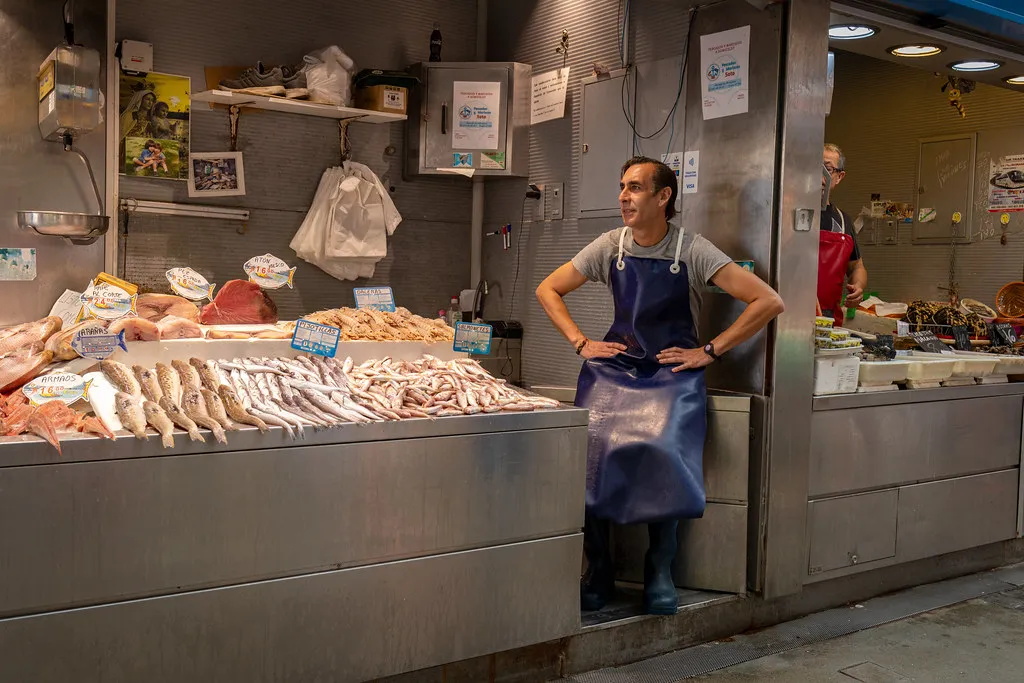
The market is divided into three sections: fish, meat, and fruits and vegetables. Many stalls have been passed down through the same families for generations. Each section has its own distinct energy — the fish hall is the loudest and most dramatic, with vendors calling out the morning catch.
The fruit and vegetable section is where seasonal Málaga specialties appear: nísperos (loquats) in May, chirimoyas in autumn, Axarquía mangoes in late summer, and the small San Juan pears that look unripe but are not. Walk past the front stalls near the entrance, which are aimed at tourists and charge accordingly. The better produce vendors are further inside.
Opening hours are Monday to Saturday, 08:00 to 14:00–15:00 depending on the stall. The fish department does not operate on Mondays — fishermen take Sundays off, so Monday supply is sparse or non-existent. If your sole reason for visiting is fresh fish, plan for Tuesday through Saturday.
Eating at Bar Mercado Atarazanas
Bar Mercado Atarazanas is the reason many people visit the market in the first place. What started as a humble coffee stall for vendors has become one of the most direct sea-to-fryer seafood operations in Málaga. There is no seating. You stand at a narrow metal counter, plates balanced in hand, in a wall of noise and bodies.
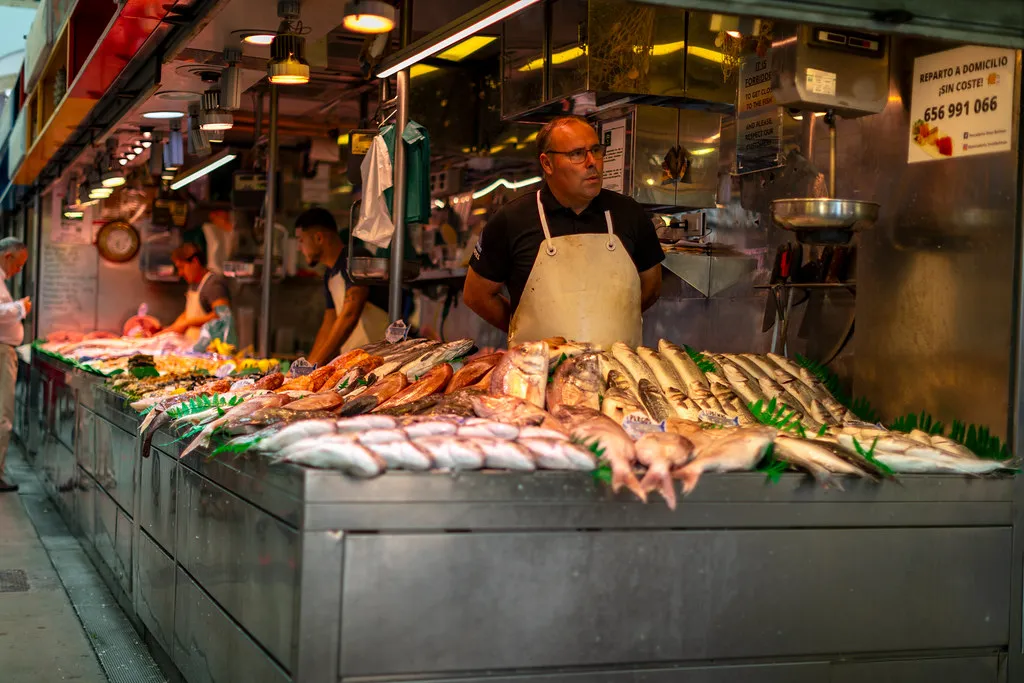
Order the pescaíto frito — fried anchovies (boquerones al limón) are the standout, golden and crisp and gone in seconds. Pinchitos de gambas (prawn skewers) are also consistently good. By early afternoon the bar is at its most chaotic. If you want a seat or a quieter experience, you will not find it here. If you want excellent fried fish eaten standing up for under €5, you will.
One practical note: do not hover politely waiting to be noticed. Walk to the counter, catch the bartender's eye, and state your order clearly. The bar runs on assertiveness, not queuing. Arrive before 13:00 to guarantee the best selection. A cold Victoria beer from the tap pairs well with everything on the menu.
Mercado del Carmen: Malaga's Real Seafood Sanctuary
Mercado del Carmen sits in the El Perchel neighborhood, named for the perchas (drying hangers) historically used to cure fish in this district. The building, rebuilt entirely in 2010, is a plain concrete box with none of Atarazanas' architectural drama. Walk past that. Inside, you will find the best seafood pricing and quality in Málaga — a market favored by serious home cooks and, reportedly, by Michelin-starred chefs sourcing ingredients.
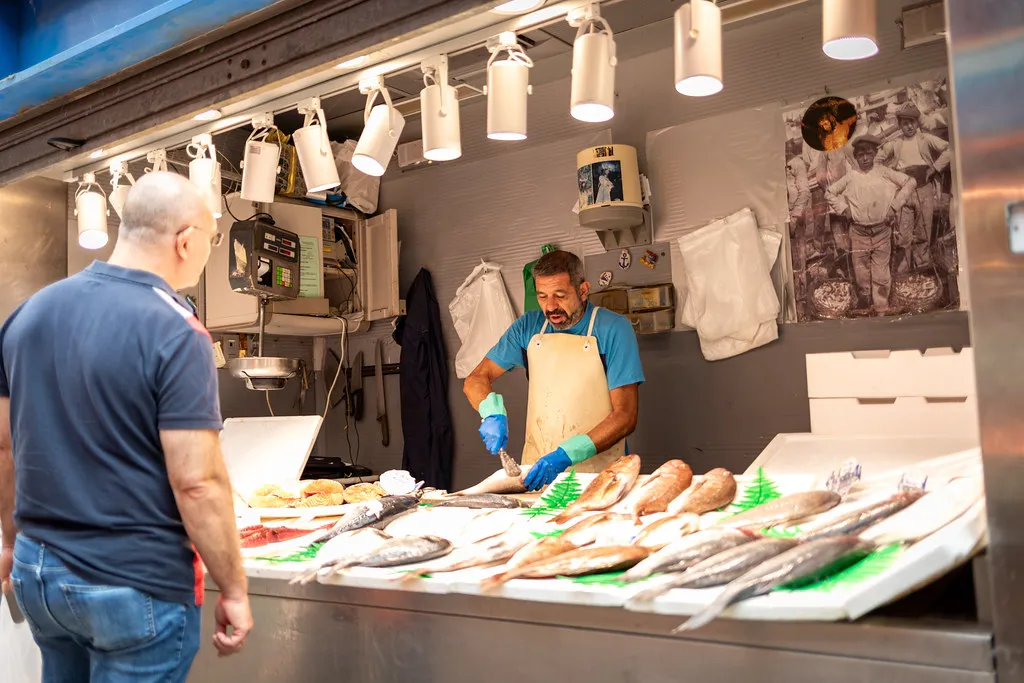
The stall to look for is conchas finas — large, smooth clams native to these waters, sold raw with lemon and black pepper. A reliable freshness test: the clam should twitch slightly when the lemon juice hits it. If it does not move, walk away. The iodine scent of the Alboran Sea is present throughout the fish hall in a way that Atarazanas, at its busiest, no longer delivers.
The market has an attached Cafetería Bar Mercado del Carmen. Buy your fish from a stall, carry it to the bar, and they will fry or grill it for a small fee. This buy-and-cook mechanic is genuinely useful for anyone staying in a self-catering apartment who wants the freshest possible meal without doing it themselves. Mercado del Carmen is less touristy than Atarazanas and prices reflect that.
Mercado de Huelin: The Working-Class Heart of the West
Mercado Municipal de Huelin is about 30 minutes west of the city center on foot, or a short bus ride. Built in 1974, it is purely functional architecture with no pretension — the second-largest municipal market in the city, built to serve working-class families in the Huelin district at competitive prices.
The market's standout feature is its encurtidos counters: sprawling displays of pickled vegetables, garlic, pearl onion skewers, and vats of crushed Aloreña olives. These are local olive-growing variety — distinct, slightly bitter, and sold nowhere in the city center at comparable prices. The seafood pricing is significantly cheaper than Atarazanas, which makes it a reliable option for anyone cooking their own meals.
After the market, the neighborhood itself is worth a look. Huelin beach is a short walk away, with a working promenade and local cafeterias rather than tourist restaurants. The nearby Cafetería Churreria Tejeringos serves fried dough that locals consider among the best in the district. This is Málaga operating at its everyday pace, away from the historic center crowds. Pair the market visit with a walk here to see a different side of the city. See our getting around Malaga guide for transport options to reach Huelin.
Mercado de Salamanca: The Neo-Mudejar Neighborhood Gem
Mercado de Salamanca was built between 1922 and 1925 by architect Daniel Rubio in the El Molinillo neighborhood. The building is a genuine example of Neo-Mudejar design — intricate glazed azulejos on the eaves and archways, horseshoe arches, and geometric tile patterns. It is architecturally comparable to Atarazanas but receives a fraction of the visitors, which is exactly why it is worth including in your itinerary.
El Molinillo is a neighborhood actively resisting the gentrification spreading through the historic center. The market reflects this: no tourist-facing stalls, no overpriced smoothies, no pre-cut fruit in plastic cups. You will find local butchers, artisan cheeses, and a corner bakery selling pan cateto — a heavy, dense sourdough loaf suited to carrying produce home. This is a raw ingredient shopping destination, not a tapas crawl.
The atmosphere is the sharpest contrast to Atarazanas available in Málaga. Where the central market is loud and crowded, Mercado de Salamanca runs on a quiet conversational murmur. Vendors know their regulars by name. If you are trying to understand what Málaga's food culture looks like when it is not performing for visitors, this market shows you.
The Cautionary Tale of Mercado de la Merced
In 2015, developers attempted to relaunch a traditional market in the La Merced neighborhood as a high-end gourmet food hall, modeled on Madrid's successful Mercado de San Miguel. Premium stalls, imported delicacies, craft cocktail bars. The local residents who had relied on the market for daily groceries found the prices impossible, and there were not enough tourists wandering that far north of the cathedral to make the numbers work.
The gourmet concept failed and closed. Mercado de la Merced today stands as a cautionary tale about transplanting the San Miguel formula onto a city that has perfectly good inexpensive fish at its actual working markets. If an older guidebook recommends La Merced for a gourmet tapas evening, cross it off your list. That version of the market no longer exists.
Practical Tips for Visiting Málaga Markets in 2026
The single most important timing rule: visit the fish stalls at Atarazanas before 11:00. Despite official closing times of 14:00–15:00, fishmongers begin packing up by 13:30. Arriving at 13:00 expecting a full display is a common first-timer mistake. For the freshest selection, aim for 09:00–11:00 on any day Tuesday through Saturday.
| Market | Neighbourhood | Best For | Hours (Mon–Sat) | Tourist Volume |
|---|---|---|---|---|
| Atarazanas | Historic Centre | Architecture, fried seafood bar | 08:00–14:00 | High |
| Mercado del Carmen | El Perchel | Freshest fish, buy-and-cook bar | 08:00–14:00 | Low |
| Mercado de Huelin | Huelin | Cheap produce, Aloreña olives | 08:00–14:00 | Very Low |
| Mercado de Salamanca | El Molinillo | Neo-Mudéjar architecture, local butchers | 08:00–14:00 | Very Low |
| Mercado de la Merced | La Merced | Gourmet concept (now closed) | Closed | N/A |
Carry small change. Vendors in neighborhood markets like Salamanca and Huelin prefer exact change for low-cost transactions — €1 and €2 coins disappear fast. Most stalls are cash-only or prefer it. Card terminals exist at some larger stands in Atarazanas, but do not rely on them.
Bring a reusable bag. Plastic bags exist, but anything heavy — melons, a kilo of clams, a bread loaf — needs proper carrying. A canvas or mesh tote bag is standard among local shoppers and prevents the embarrassment of juggling produce on the street.
A few Spanish phrases that actually help at market counters: ¿Puedo probar? (Can I try?), ¿Cuánto cuesta? (How much is it?), Me da un kilo, por favor (Give me a kilo, please), and ¿Son productos locales? (Are these local?). Vendors appreciate the effort and will often offer samples in return. For context on the broader city, the Picasso Museum is a five-minute walk from Atarazanas if you want to combine a market morning with an afternoon at one of Europe's best single-artist collections.
First-Timer Mistake: The Entrance Stalls
The fruit stalls immediately inside the Atarazanas entrance are specifically positioned for tourists arriving from the cruise port and city center. Prices for pre-cut fruit, smoothies, and photogenic produce are two to three times higher than the equivalent sold ten meters deeper into the market. This is not a new development — it is an established commercial strategy that has intensified as visitor numbers have increased.
The fix is simple: walk past the first row of stalls entirely. The vendors further inside sell the same seasonal tropical fruit — chirimoyas, mangoes, nísperos — at prices Malagueños actually pay. Stall 14, roughly midway through the fruit section, and the vendors in the back quarter of the vegetable hall consistently offer better value. The stall run by Alfonso at "Frutas Pozo" is known for fresh smoothies made to order, not pre-blended tourist versions. None of this requires any negotiation; you are simply choosing which vendors to walk to.
The same logic applies to the small bars at the market entrance versus Bar Mercado Atarazanas deeper inside. The entrance-facing bars charge restaurant prices. Bar Mercado Atarazanas, positioned inside the market proper, runs on market economics. The food is better and cheaper, and the clientele is predominantly local workers and regular shoppers rather than visitors on a timed itinerary. Learn more about tapas in Malaga to plan the rest of your food day around the market visit.
See our Málaga tourism attractions guide for the broader city overview.
Frequently Asked Questions
When is the best time to visit the fish stalls at Mercado Central de Atarazanas?
The best time to visit the fish stalls at Mercado Central de Atarazanas is early in the morning, between 9:00 AM and 11:00 AM. This ensures the freshest selection and the most vibrant atmosphere. Arriving early also helps you avoid the busiest midday crowds.
Where can I buy fresh fish and have it cooked on the spot?
You can buy fresh fish at the Atarazanas Market Malaga and have it cooked on the spot at some of the small bars within the market. Bar Mercado Atarazanas is famous for this service. They will prepare your chosen seafood simply and deliciously for a small fee.
Is Mercado de la Merced a good spot for gourmet tapas?
Yes, Mercado de la Merced is a good spot for gourmet tapas. It operates as a modern food hall with various stalls offering prepared dishes and drinks. However, it is not a traditional market for buying fresh ingredients. It provides a contemporary dining experience instead.
Are food markets in Malaga open on Sundays?
No, most traditional food markets in Malaga, including Atarazanas Market Malaga, are generally not open on Sundays. They typically operate from Monday to Saturday, usually closing by early afternoon. Always check specific market hours for 2026 before planning your visit.
How much time should you plan for Atarazanas Market Malaga?
You should plan about 1 to 2 hours for a comprehensive visit to Atarazanas Market Malaga. This allows enough time to explore all the sections, enjoy the atmosphere, and perhaps grab a bite at one of the market bars. If you plan to eat a full meal, allow closer to 2 hours.
Atarazanas Market Malaga rewards visitors who arrive early, walk past the front stalls, and eat at the right bar. The architecture is the most compelling of any food market in Andalusia. The fish is exceptional before noon. And the city's other four markets — Carmen, Huelin, Salamanca, and the cautionary La Merced — each show a different facet of how Málaga actually eats.
A morning that starts at Atarazanas at 09:00, continues with raw clams at Mercado del Carmen, and ends with a walk through the Huelin promenade covers more authentic Málaga than most multi-day itineraries. Plan the timing, bring cash and a bag, and skip the pre-cut fruit at the entrance.
You might also like


Continue reading
More guides you'll find useful