Picasso Museum Malaga Travel Guide
Plan your Picasso Museum Malaga visit with top picks, neighborhood context, timing tips, and practical booking advice for a smoother trip.
On this page
Picasso Museum Malaga: Your Essential Visitor's Guide
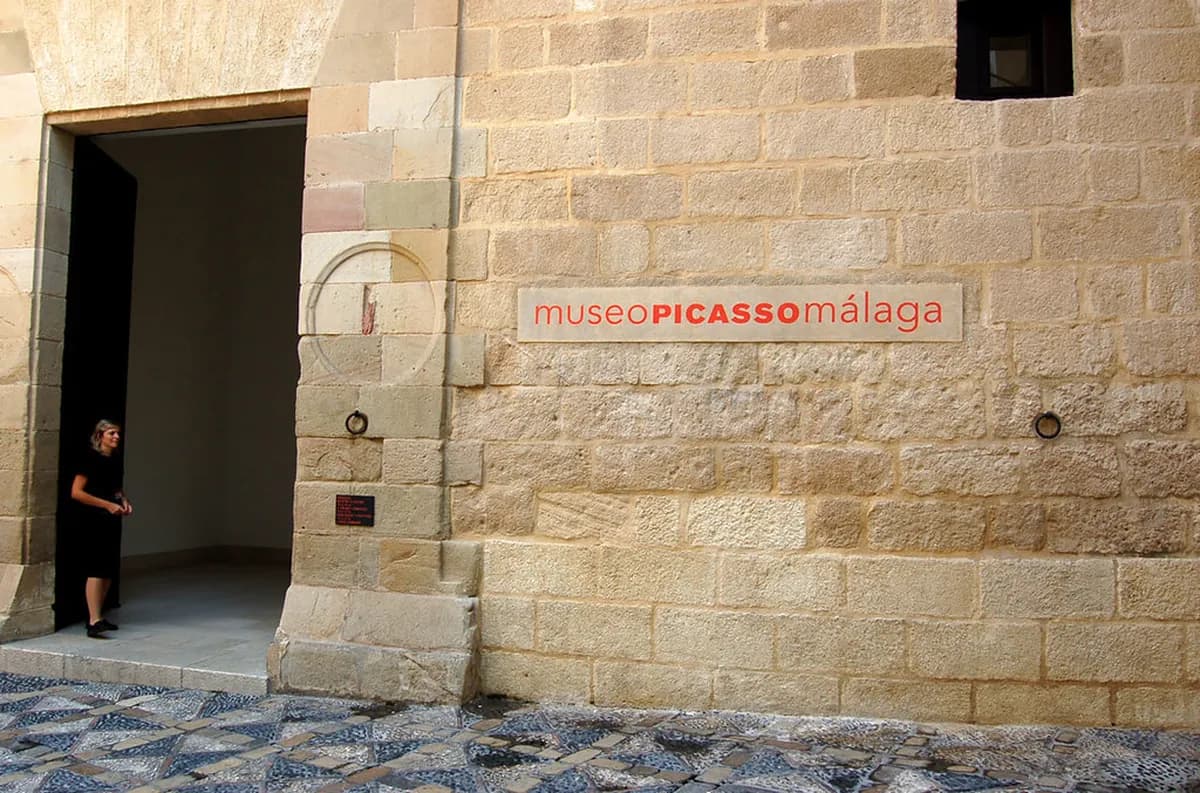
The Picasso Museum Malaga sits in the artist's birthplace, housed inside the 16th-century Palacio de Buenavista on Calle San Agustín. It holds over 200 works donated or loaned by Picasso's heirs — not a generic touring collection, but pieces tied directly to the city where he was born in 1881. That connection gives the museum a weight you won't find at larger Picasso institutions in Paris or Barcelona.
In 2026 the museum is showing its landmark retrospective "Pablo Picasso: Structures of Invention. The Unity of a Life's Work" — 141 works arranged not by date but by creative logic, including 10 pieces never previously exhibited in Spain. This guide covers everything you need to plan your visit: tickets, hours, what to see, and how to combine it with the Birthplace Museum nearby.
The museum integrates naturally into any Malaga itinerary. It sits in the historic centre, a five-minute walk from the Roman Theatre and the Alcazaba, so you can build a full cultural morning around it without doubling back.
Plan with trusted sources: cross-check opening hours and seasonal details with the official Andalusia tourism board, and read more about the city on its Wikipedia entry before you go.
What to see at the Picasso Museum Malaga
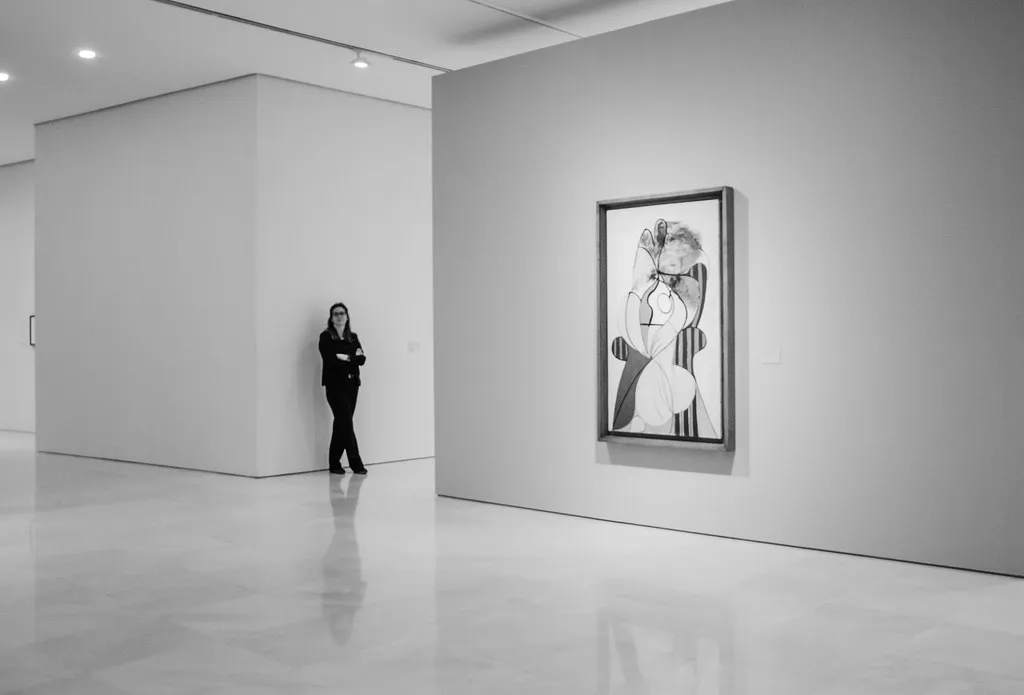
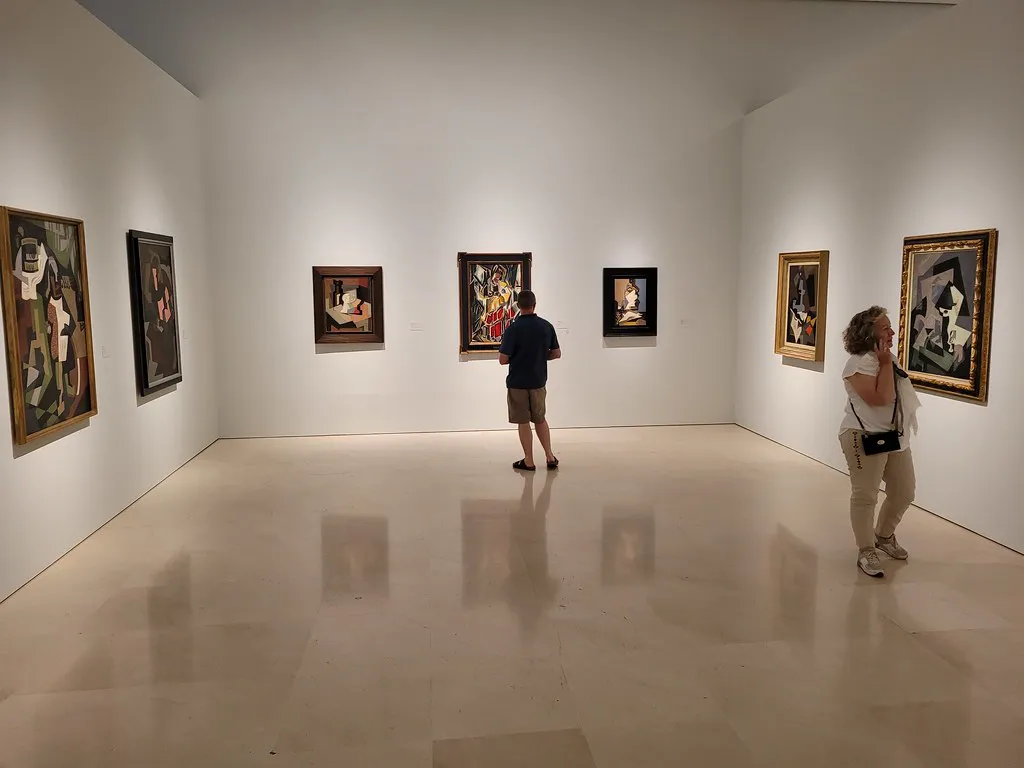
The permanent collection spans Picasso's full career — early academic drawings made before he turned 15, Blue and Rose Period canvases, the hard-edged geometry of Cubism, and late-period ceramics he produced in the south of France. Works like Olga Khokhlova with Mantilla and Woman with Raised Arms appear regularly in the permanent galleries. Sculptures and graphic works round out the survey.
The 2026 retrospective "Structures of Invention" reshuffles the collection by theme rather than chronology. You move between five interlocking spotlight exhibitions that trace Picasso's creative method across decades simultaneously. It is a disorienting approach at first, but it reveals connections between his early academic draftsmanship and his Cubist deconstructions that a timeline display would hide.
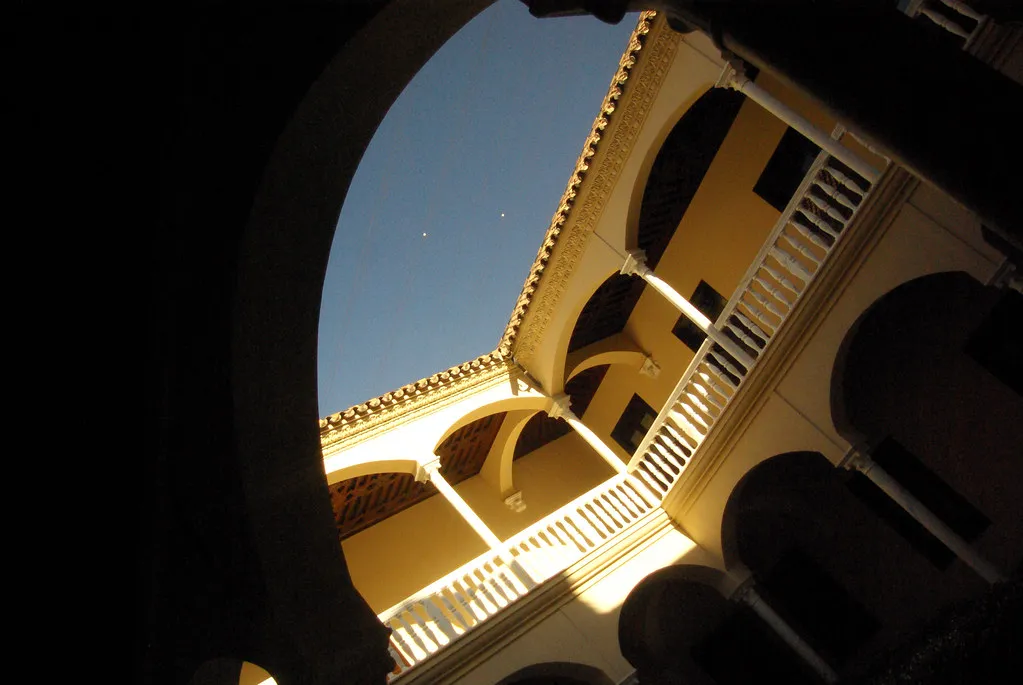
Beyond the paintings, leave time for the museum's archaeology. The lower levels expose Roman and Phoenician remains discovered during the palace's renovation — the building sits on layers of Málaga's pre-Roman past. The Central Patio, open to the sky and framed by Renaissance arcades, is the best-light spot in the museum and the natural place to pause between galleries.
The garden café at the rear of the building is a practical detail most visitors overlook. It is quieter than the entrance hall, open during museum hours, and useful for a break mid-visit rather than cutting your tour short to find food elsewhere.
Malaga's art scene beyond the Picasso Museum
Malaga has accumulated an unlikely density of international art institutions for a city its size. The Centre Pompidou Malaga occupies the Muelle Uno port area with a rotating programme from Paris. The Carmen Thyssen Museum focuses on 19th-century Spanish painting, especially Andalusian genre scenes that provide useful historical context for the region. Both are within 20 minutes' walk of the Picasso Museum.
If you plan to visit two or more museums in a single trip, check current combined ticket offers on the official Museopicassomalaga.org site. Multi-museum passes exist but the specific combinations change year to year. Booking online in advance also bypasses the ticket desk queues, which build by mid-morning during summer.
The Picasso Museum also runs its own temporary exhibitions, lectures, and educational workshops throughout the year. Check the programme before you arrive — catching a temporary show alongside the permanent collection makes the visit feel substantially richer than a single-purpose tour. Plan your Malaga itinerary to include at least two museum visits on the same day; the concentration of institutions in the historic centre makes this easy.
Picasso Museum Malaga opening hours and tickets
The museum opens at 10:00 daily. Closing times shift by season: 18:00 from November to February, 19:00 from March to June and again in September–October, and 20:00 in July and August. Last admission is 30 minutes before closing. The museum closes on 25 December and 1 January.
- November–February: 10:00–18:00
- March–June: 10:00–19:00
- July–August: 10:00–20:00
- September–October: 10:00–19:00
- Free entry: last two hours on Sundays (arrive early — this slot fills quickly)
- Closed: 25 December and 1 January
| Ticket type | Price | Who qualifies |
|---|---|---|
| Permanent collection (adult) | €12 | General public |
| Permanent + temporary (adult) | €15 | General public |
| Reduced rate | €6–9.50 | Students, seniors 65+, registered unemployed |
| Children | Free | Under 16 |
| Sunday free entry | Free | Last two hours (all visitors) |
Standard adult tickets are €12 for the permanent collection; combined tickets covering the permanent collection and temporary exhibitions are €15. Reduced rates (€6–9.50) apply to students, seniors over 65, and registered unemployed visitors. Children under 16 enter free. Verify current prices at museopicassomalaga.org before booking, as rates are updated periodically.
The museum has two entrances: the main door on Calle San Agustín, 8, and a secondary entrance on Calle Alcazabilla. If you are approaching from the Roman Theatre or the Alcazaba, the Alcazabilla entrance is closer and avoids the longer queue that typically forms at the main door.
How to plan your Picasso Museum visit
Book online in advance, especially from Easter week through September. The museum is small — about a dozen galleries — and entrance numbers are managed, so same-day tickets sell out by early afternoon during peak season. Buying tickets at least 24 hours ahead gives you a confirmed entry slot and saves 15–20 minutes at the desk.
Arrive at 10:00 when the doors open or after 16:00 when the morning tour groups have cleared. Weekday mornings in spring and autumn are the quietest windows. If you are visiting on a Sunday, the free-entry period in the final two hours draws large crowds — expect closer to museum-rush conditions than a relaxed gallery afternoon.
Budget 1.5 to 2 hours for a thorough visit. The "Structures of Invention" retrospective rewards slower looking, so if you plan to work through it properly, allow up to 2.5 hours. Audio guides are available at the entrance and add meaningful context to works that lack wall text in translation.
Wear flat shoes. The Palacio de Buenavista has uneven stone floors throughout, and the archaeological level involves a shallow staircase. The museum is fully accessible with lifts between floors, but the stone surfaces themselves are worth noting if you are visiting with young children or mobility aids.
Family visits and budget options
Children under 16 enter free, which makes the Picasso Museum one of the better-value cultural stops in Malaga for families. The museum runs educational workshops specifically for younger visitors — check the programme on their website, as these must be booked separately and in advance. On family days, staff deploy interactive materials in the galleries to help children engage with the works directly rather than just reading labels.
The Sunday free-entry window (last two hours) is the main budget option for adults. It works best on a quiet Sunday out of peak season; in July and August the final two hours are crowded enough that the experience suffers. A weekday visit during November to February — when the €12 ticket price applies but queues are minimal — often delivers better value than a free Sunday slot in summer.
Several free things to do cluster near the museum. The Roman Theatre directly below the Alcazaba is free to enter and takes about 20 minutes. Walking the Alcazaba grounds costs €3.50 and pairs logically with a museum morning. The Picasso Birthplace Museum on Plaza de la Merced adds context and is inexpensive enough to combine on the same visit.
Picasso Birthplace Museum (Casa Natal)
The Casa Natal de Picasso on Plaza de la Merced is a seven-minute walk from the main museum. This is the apartment building where Pablo Ruiz Picasso was born on 25 October 1881. The lower floors function as a foundation museum displaying personal memorabilia, family photographs, and early works — including pieces by his father, José Ruiz Blasco, who taught drawing at the nearby Escuela de Bellas Artes.
The collection is deliberately intimate. There are no monumental canvases here; instead you get the texture of his domestic upbringing: the furniture, the view from the windows overlooking the plaza, drawings made in his teens. For visitors who want to understand why Malaga shaped Picasso's sensibility before he left for Barcelona at 14, this is the more revealing of the two institutions.
Combined tickets covering both the Picasso Museum and the Casa Natal are available and reduce the total entry cost. Check booking platforms like Tickets-Malaga.com for joint ticket information and skip-the-line options for the Birthplace Museum specifically.
If you can only fit one, visit the main Picasso Museum first for the breadth of the collection, then cross to the Casa Natal in the afternoon when crowds there are typically lighter. The plaza itself — shaded by orange trees, lined with cafes — makes a natural endpoint for a Picasso-focused morning in the historic centre.
Best time to visit in 2026
March to May is the strongest window: daytime temperatures in Malaga are 18–23°C, the tourist volume is lower than summer, and the permanent galleries are accessible without the queues that build from June onwards. October is a close second — school groups have dispersed after summer and the city returns to a workable pace.
July and August bring the highest crowds and the extended 20:00 closing time. If you visit in summer, the early morning slot (10:00–11:30) or the late afternoon slot (16:00 onwards) avoids the worst congestion. Midday in summer is the hardest time to move through the small gallery rooms comfortably.
November to February offers the quietest experience. The museum is less busy, staff have more time for questions, and the city's cafe life operates at a more relaxed pace. The trade-off is the earlier 18:00 closing, which constrains afternoon visits. Winter weekday mornings are the best-kept secret for anyone who values unhurried time with the works.
What visitors say
Visitors consistently highlight the manageable scale of the museum. Unlike a large national gallery, the Picasso Museum Malaga can be absorbed in a single visit without fatigue. The building — its courtyard, stone archways, and archaeological lower level — draws as much comment as the art itself.
The historical setting of the Palacio de Buenavista earns repeated praise. The blend of Renaissance architecture with Picasso's often-destabilising compositions creates a productive friction that larger, purpose-built galleries lack. Many reviewers note that seeing the works in his birthplace city adds a layer of resonance not reproducible elsewhere.
Practical feedback centres on two points: book tickets online, and use the audio guide. The written wall texts are concise to a fault in some galleries, and the audio guide — available in multiple languages at the entrance — closes that gap. The gift shop draws positive remarks for its well-curated selection of print reproductions and locally made items. You can read more reviews on Tripadvisor.
Nearby attractions to combine with your visit
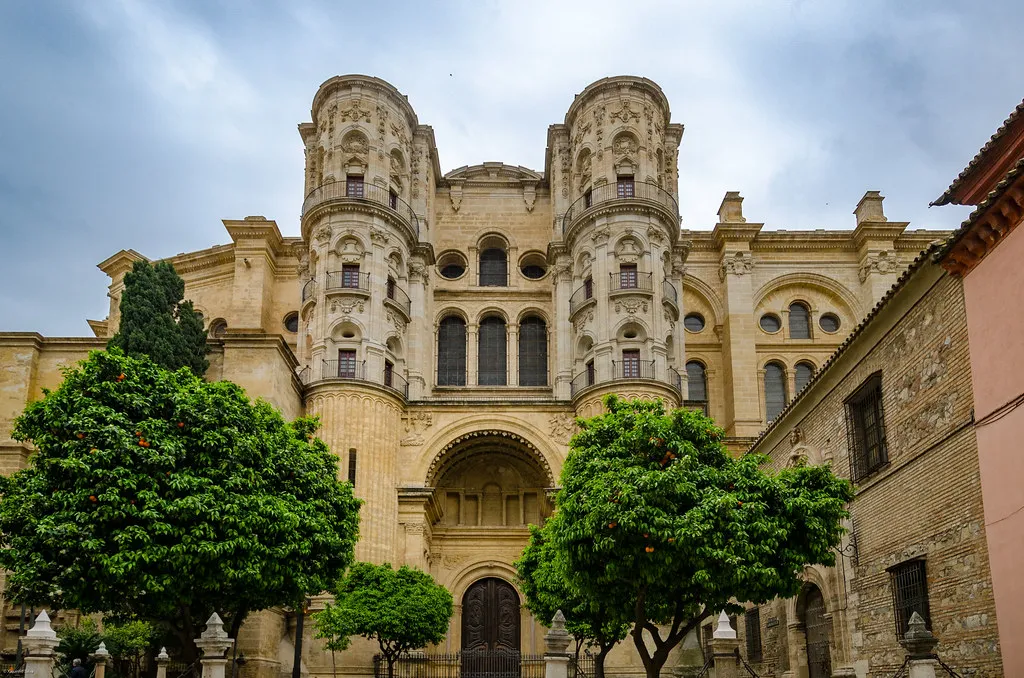
The Malaga Cathedral is a ten-minute walk southwest of the Picasso Museum. Its unfinished south tower — left incomplete when funds were diverted to the American War of Independence — gives the building a nickname, "La Manquita" (the one-armed lady), and a peculiar asymmetric silhouette worth seeing up close. The interior is cooler than the streets and worth the brief entry fee.
The Roman Theatre and the Alcazaba sit directly below the museum's Alcazabilla entrance. The Roman Theatre is free; the Alcazaba costs €3.50. Both take roughly 30–45 minutes each. A logical morning run: Picasso Museum (10:00–12:00), Roman Theatre (12:00–12:30), Alcazaba (12:30–13:30), lunch at Atarazanas Market.
The Atarazanas Market on Calle Atarazanas is a 15-minute walk west. It closes around 14:00, so time your visit accordingly. The stalls sell fresh fish, cured meats, and Málaga's distinctive sweet wines — a practical stop for lunch before the afternoon heat sets in. History buffs and first-time visitors will find the Alcazaba the natural complement to a Picasso morning: ancient Málaga layered under medieval Málaga, minutes from each other.
Frequently Asked Questions
Where is Picasso Museum Malaga located?
The Picasso Museum Malaga is located in the Palacio de Buenavista, in the heart of Malaga's historic center. Its address is Palacio de Buenavista, Calle San Agustín, 8, 29015 Málaga, Spain. This central location makes it easily accessible by foot from many popular areas.
Which Picasso Museum Malaga options fit first-time visitors?
First-time visitors should focus on the permanent collection to understand Picasso's artistic evolution. An audio guide is highly recommended for deeper insights into the artworks. Consider visiting during off-peak hours for a more relaxed experience.
How much time should you plan for Picasso Museum Malaga?
Plan to spend approximately 1.5 to 2 hours at the Picasso Museum Malaga. This allows enough time to view the main exhibits and absorb the information. If you enjoy lingering over art, allocate up to 3 hours for a comprehensive visit.
Is Picasso Museum Malaga worth including on a short itinerary?
Yes, the Picasso Museum Malaga is definitely worth including even on a short Malaga itinerary. Its central location and manageable size mean you can experience it without sacrificing too much time. It offers a significant cultural highlight in the city.
The Picasso Museum Malaga combines a serious permanent collection, a landmark 2026 retrospective, and a Renaissance palace with archaeological layers — all in less than two hours of your day. Book tickets online, arrive early or late, and add the Casa Natal for a morning that covers Picasso's origins and his mature work together.
Check the official museum site for the most current hours and exhibition programme before you go. Remember to check official museum resources for the most up-to-date information on hours and exhibitions. Your visit promises to be a memorable highlight of your Spanish adventure.
You might also like


Continue reading
More guides you'll find useful