
Roman Theatre Malaga: History, Visit Guide & Alcazaba Connection
Explore Malaga's Roman Theatre and its connection to the Alcazaba. Get practical tips, historical insights, and plan your unforgettable visit.
On this page
Roman Theatre Malaga: Your Complete Guide to History and Visiting
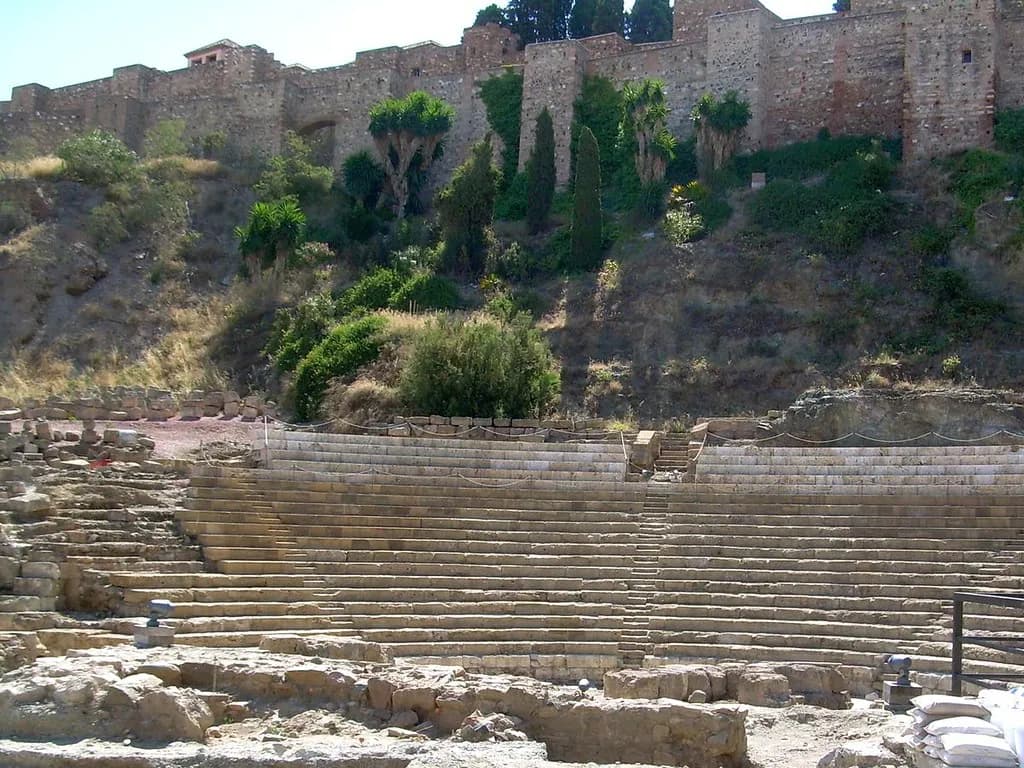
Malaga's Roman Theatre sits at the foot of the Alcazaba, open to the street and completely free to enter. In under an hour you can stand in the same semicircular orchestra where Romans watched performances two thousand years ago. For a city-center ruin of this age, that level of access is extraordinary.
The site is small but layered. Beneath the theatre are Republican-era baths. Above it rose the Moorish Alcazaba. And for most of the 20th century, a government office building buried the whole thing. Knowing that backstory turns a brief stop into something genuinely memorable.
This guide covers the theatre's history, its relationship with the Alcazaba, what to expect on the ground in 2026, and how to fit both sites into a single morning.
Plan with trusted sources: cross-check opening hours and seasonal details with the official Andalusia tourism board, and read more about the city on its Wikipedia entry before you go.
The Roman Theatre of Málaga: History and Significance
The Teatro Romano de Málaga was built in the early 1st century AD during the reign of Emperor Augustus. It is one of the oldest surviving theatres in Spain and the most significant remnant of Roman presence in the city. At its peak it seated around 2,000 spectators for dramas, mimes, and public speeches.
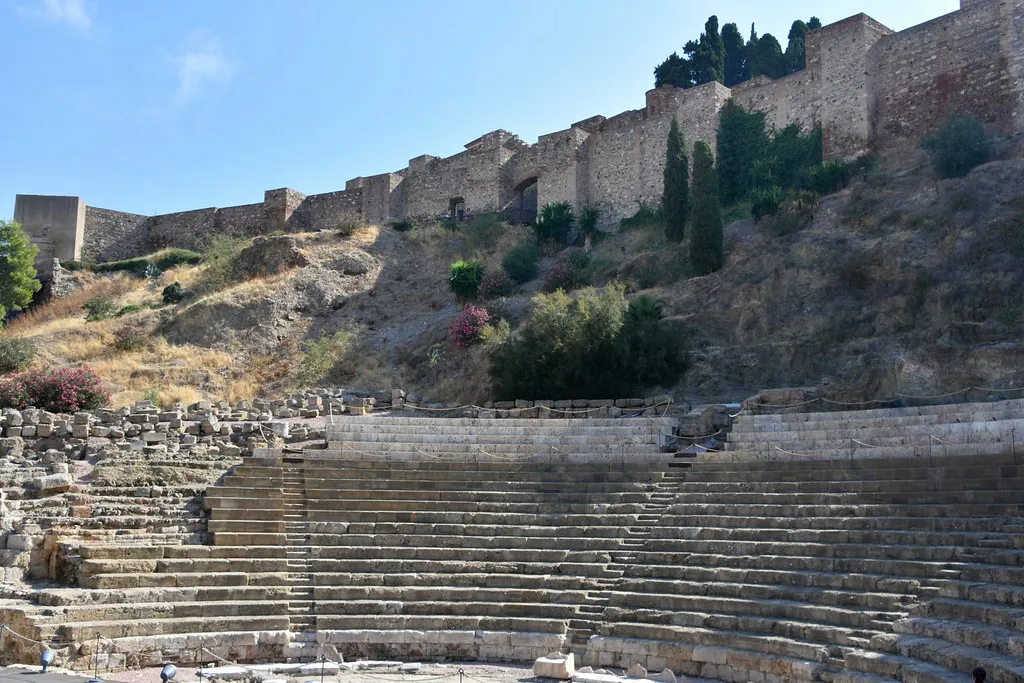
The theatre was built using a hybrid construction method common in Roman Spain. Part of the seating bank (*cavea*) leans into the natural hillside of the Alcazaba mound — Greek-style — while the rest sits on artificial foundations. The stage building (*scaena*) would have been an ornate two-storey façade decorated with columns and sculptures, several of which have been recovered. The orchestra floor is paved in large marble slabs that are original to the Roman period.
Active use continued into the 3rd century AD, after which the theatre fell into disuse. The site then cycled through a series of further occupations over the following centuries — each one burying the last. That layered story is one of the most interesting things about this site, and it is covered in detail in the Alcazaba guide. Learn more about its history on Juntadeandalucia.es.
What Happened After the Romans Left: The Site's Hidden Centuries
Most visitors focus on the Roman layers, but what came after is equally interesting — and no other visitor guide covers it in full. When the theatre was abandoned in the 3rd century, the space was repurposed for fish-salting works (*salazones*). Several *piletas* (stone vats) used to produce the Roman fish sauce *garum* were built directly over the old stage area. You can still see a cluster of these vats today, preserved under a glass pyramid on Calle Alcazabilla right beside the site entrance.
From the 5th century onward the space became a necropolis. Archaeologists have excavated a series of tile-roofed burials in the western section, some of which sit at a visibly higher ground level than the theatre itself — evidence of how much the city floor rose over the centuries. By the medieval period, streets and houses completely covered the ruins.
In 1940 a government building — the Casa de la Cultura — was constructed directly on top of the buried theatre. Landscaping work in 1951 accidentally exposed a monumental arch that workers initially mistook for a Roman city gate. Further digging revealed stepped seating: it was a theatre. Decades of excavation, debate, and legal battles followed. The Casa de la Cultura was eventually demolished, the full site excavated, and the archaeological enclave opened to the public. The wood-plank stage floor you see today is a modern reconstruction of what the Roman original would have looked like.
The Alcazaba of Málaga: Historical Context and Features
The Alcazaba is an 11th-century Moorish fortress-palace built during the period of the Caliphate of Córdoba. It sits directly above the Roman Theatre on the hill's lower slopes, making the two sites visually inseparable. Over the centuries it served as a defensive stronghold, a royal residence, and an administrative center through successive periods of Muslim and Christian rule.
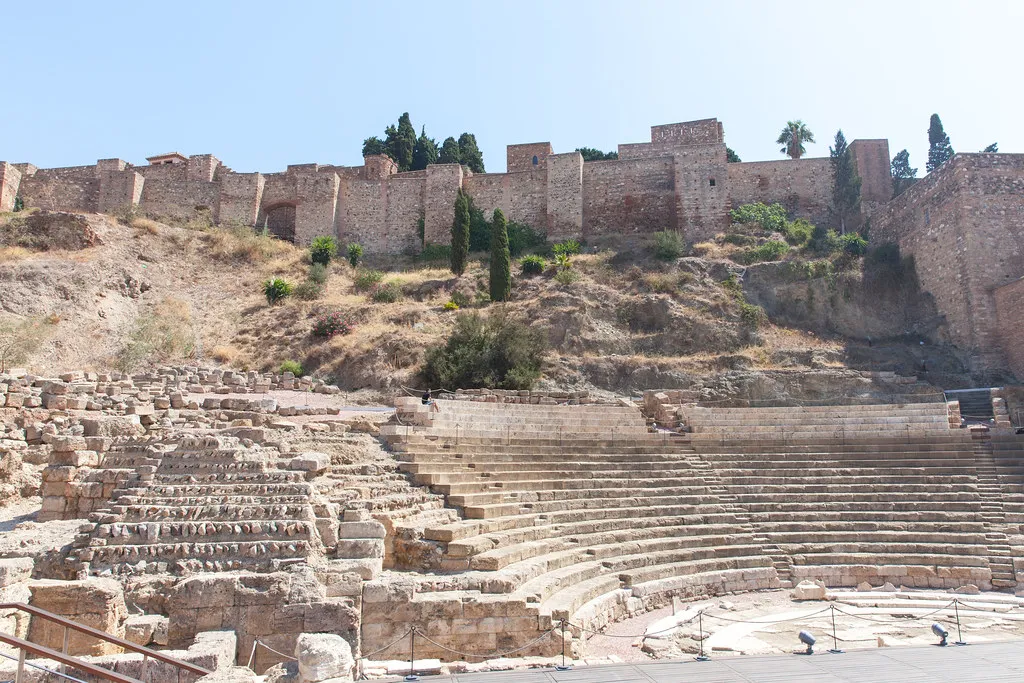
The Alcazaba features layered defensive walls, a series of small ornamental courtyards, water channels, and views over both the port and the city. It is one of the best-preserved Moorish fortresses in Spain. Entry costs a few euros for adults, with reduced rates for students and seniors; it is free on Sundays after 14:00, though crowds are larger on free afternoons. Consider a fuller exploration with our guide to Malaga's Alcazaba.
Alcazaba opening hours are seasonal. In summer (April–October) the site generally opens 09:00–20:00; in winter (November–March) hours are typically 09:00–18:00. Last entry is 30 minutes before closing. Always verify the current schedule at the official box office or online before your visit, as hours adjust for public holidays.
The Connection Between the Alcazaba and the Roman Theatre
The physical relationship between the two sites is more direct than most visitors realize. Medieval Islamic architecture frequently reused stonework from earlier Roman structures — a practice known as *spolia*. In the Alcazaba you can identify original Roman materials embedded throughout: Corinthian capitals, column shafts, and marble staircases. One of the clearest examples is the Puerta de las Columnas (Gate of the Columns), where Roman column pieces from the theatre were built directly into the fortress's main gateway.
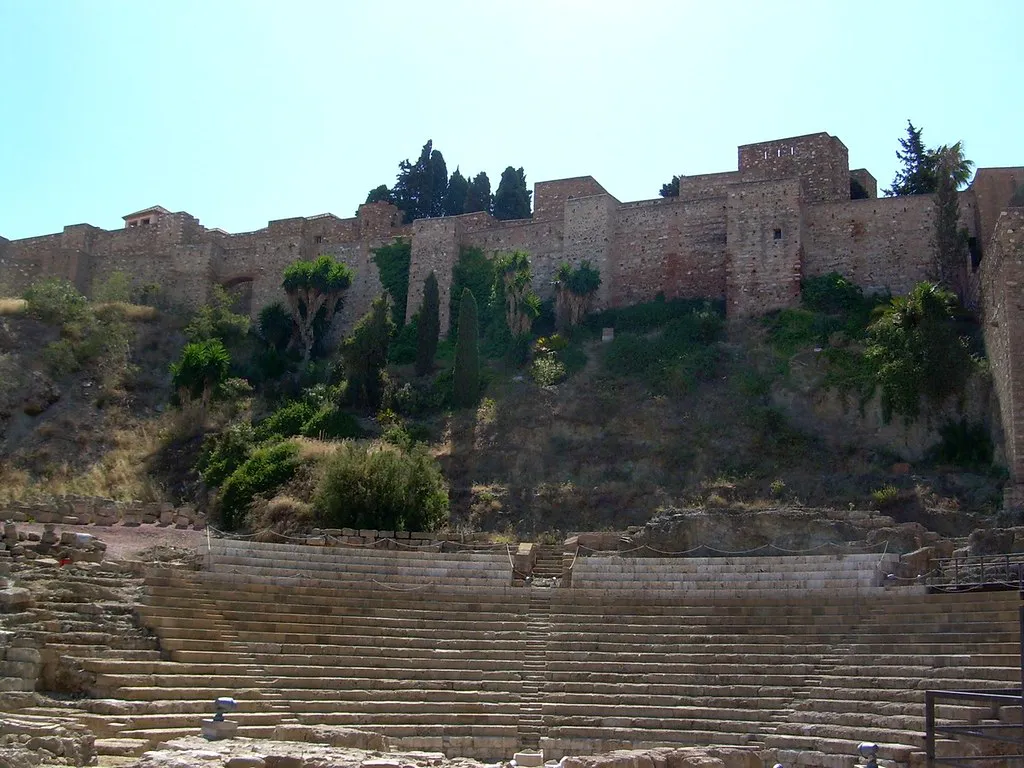
The Alcazaba was also built on the foundations of an ancient Roman fortress that predated the theatre itself. As you move through the lower passageways, you are walking a path that layers Roman military, Roman civic, and Moorish palatial uses in the same vertical slice of hill. This geographic compression — Roman ruins visible from Moorish walls, Moorish towers visible from Roman seating — is the defining characteristic of Málaga's historic core.
Explore this fascinating link on Alcazabamalaga.com. For the widest view of both sites together, climb to the Gibralfaro Castle viewpoint above — from there the spatial relationship becomes immediately clear.
Planning Your Visit: Tickets, Hours, and Accessibility
The Roman Theatre itself is free. Entry to the archaeological enclave and interpretive center costs nothing, and no advance booking is required for individual visits. Guided visits are available — book in advance by phone (951 501 115) or email (TRomanoMalaga.aaiicc@juntadeandalucia.es). No animals are permitted on site, except certified assistance dogs.
Opening hours in 2026: the enclave is open Tuesday to Sunday, typically 10:00–18:00 (summer hours may extend). It is closed on Mondays and on the following public holidays: 1 and 6 January, 1 May, and 24, 25, and 31 December. For other national, regional, or local holidays, contact the site directly before visiting. No entry is permitted in the 30 minutes before closing time.
The viewing area and interpretive center are accessible by ramp and suitable for wheelchairs. The center has multilingual information panels. The Alcazaba, by contrast, involves significant slopes and many steps — wheelchair access within the fortress is limited to the lower sections. If mobility is a concern, the Roman Theatre plus the view from the street-level terrace gives you the essential experience without the climb.
A weather note: the site can close on short notice when AEMET issues an orange or red heat alert — a realistic scenario in July and August in Málaga. Check forecasts and call ahead if visiting during a heatwave.
| Site | Entry Fee | Opening Hours (2026) | Closed | Time Needed |
|---|---|---|---|---|
| Roman Theatre | Free | Tue–Sun 10:00–18:00 (summer may extend) | Mon, 1 & 6 Jan, 1 May, 24/25/31 Dec | 30–45 min |
| Alcazaba | Paid (free Sun after 14:00) | Apr–Oct 09:00–20:00; Nov–Mar 09:00–18:00 | Check locally for public holidays | 60–90 min |
| Gibralfaro Castle | Combined ticket with Alcazaba | Same as Alcazaba | Same as Alcazaba | 45–60 min |
Combining Your Visit: Roman Theatre and Alcazaba Tour Options
The Roman Theatre and the Alcazaba are separated by about 100 metres and a short uphill walk. Most people do them together — arrive at the theatre first (it needs 30–45 minutes), then ascend to the Alcazaba (allow 60–90 minutes). Budget 2–2.5 hours total for a relaxed combined visit.
A combined ticket covering the Alcazaba and Gibralfaro Castle is available at the Alcazaba ticket office and offers a small saving compared to buying separately. The Roman Theatre has no ticket cost either way. If you plan to visit Gibralfaro too, do it after the Alcazaba — the path continues uphill and the views from the castle ramparts are the best in the city.
Guided tours covering both sites are widely available and worth considering. A good guide will point out the specific Roman columns embedded in the Alcazaba walls — details you will miss without context. Tours typically depart from the theatre entrance and take 2–3 hours. Book in advance during high season (June–September), when spots fill quickly.
If time is short and you must choose one: the Roman Theatre is the more historically unusual of the two. Free, central, and open-air, it takes less time and involves no climbing. The Alcazaba offers more total space to explore and better views. Most first-time visitors to Málaga find both worth the half-day. Plan your wider city day with our guide to top things to do in Málaga.
Getting There and Nearby Stops
The Roman Theatre is on Calle Alcazabilla, in Málaga's historic center. It is a 10-minute walk from the main train station (Málaga Centro-Alameda) and about 5 minutes on foot from the Picasso Museum. The Alcazaba entrance is immediately adjacent, on the same street.
Parking in this part of the old city is limited and expensive. The practical approach is to walk from the Alameda Principal (the main boulevard), take the metro to Alameda station, or use one of the car parks near the port and walk along the waterfront. There is no dedicated bus stop immediately in front of the theatre — the nearest city bus routes serve the Alameda Principal, a 5-minute walk away.
After the sites, the street itself is lined with cafes and restaurants. For traditional Malaga tapas, the backstreets of the Perchel quarter (10 minutes west) offer better value and fewer tourists than the immediately surrounding area. The Picasso Museum is a 5-minute walk north through Plaza de la Merced — a logical afternoon stop if you've spent the morning on the Roman and Moorish layers.
Frequently Asked Questions
What is the history of the Roman Theatre Malaga?
The Roman Theatre Malaga dates back to the 1st century AD, built during the reign of Emperor Augustus. It was used for performances and public gatherings until the 3rd century. Later, it lay buried for centuries until its rediscovery in 1951, revealing a significant piece of Malaga's ancient past.
How much does it cost to visit the Roman Theatre Malaga?
Entry to the Roman Theatre Malaga and its interpretive center is completely free for all visitors. You can explore the site and learn about its history without any admission fee. However, the adjacent Alcazaba does have an entrance fee.
What are the opening hours for the Roman Theatre Malaga?
The Roman Theatre is generally open Tuesday to Sunday from 10:00 AM to 6:00 PM. It is closed on Mondays and on certain public holidays. Always check the official website for any seasonal changes or public holiday closures before your visit.
Can you visit the Roman Theatre and Alcazaba together?
Yes, you can easily visit the Roman Theatre and Alcazaba together due to their close proximity. They are located side-by-side, making a combined tour very convenient. Many visitors choose to do both in one extended outing to experience Malaga's layered history.
Is a guided tour recommended for the Roman Theatre Malaga?
A guided tour can significantly enhance your understanding of the Roman Theatre and its connection to the Alcazaba. Guides offer historical context and interesting anecdotes you might miss on your own. While not essential, it provides a richer, more informative experience.
The Roman Theatre Malaga stands as a powerful reminder of the city's ancient roots. Its rediscovery brought a vital piece of history back to life, and the layers beneath it — baths, fish-salting works, burials, a demolished office block — make it one of the most genuinely stratified sites you can visit for free anywhere in Spain.
Paired with the Alcazaba directly above, these two landmarks tell a compelling story of conquest, reuse, and continuity. The Moorish builders didn't just build next to the Roman ruins — they built with them, and the Puerta de las Columnas makes that visible to anyone who knows to look.
Whether you explore them individually or as a combined experience, the Roman Theatre and Alcazaba are must-see attractions. Discover more top things to do in Málaga during your stay.
You might also like


Continue reading
More guides you'll find useful


