
Madrid 2 Day Itinerary: Local Tips & Must-See Sights
Plan your Madrid 2 day itinerary with expert local tips, must-see attractions, neighborhood context, timing advice, and practical booking guidance for a memorable trip.
On this page
Madrid 2 Day Itinerary: Your Perfect Local Guide
Madrid is one of Europe's great capital cities — and two days is genuinely enough to fall hard for it. You will leave having ticked off world-class art, a royal palace, sun-soaked parks, and some of the best eating in Spain. You just need a plan that doesn't waste time.
This guide is built around how the city actually works in 2026: which queues hit first, which museums offer free entry windows, and which neighborhoods reward an evening wander over a fourth museum visit. Follow it and you will cover the essentials without the exhaustion that comes from over-scheduled city breaks.
Plan with trusted sources: cross-check opening hours and seasonal details with the official Madrid tourism site, and read more about the city on its Wikipedia entry before you go.
Madrid Planning Cheatsheet
Before you land, run through these basics. They will save you money and frustration on the ground.
- Currency: Euro (€). Cards are accepted almost everywhere, but carry €20–30 in cash for small bars and market stalls.
- Language: Spanish. Most staff at major tourist sites speak English. A few words of Spanish — por favor, gracias, una cerveza — go a long way.
- Transport card: Buy a 10-trip Metrobus card (€12.20) or a Tourist Travel Pass (€8.40/day, unlimited metro + bus) at any metro station. Single tickets cost €1.50–€2 and are poor value if you ride more than twice a day.
- Apps: Google Maps handles Madrid metro routing well. Download the official Madrid metro map offline as a backup. EMT Madrid is the bus app.
- Tipping: Not obligatory. Rounding up or leaving €1–2 on a restaurant bill is customary and appreciated.
- Timing: Madrid runs late. Lunch is 14:00–16:00; dinner rarely starts before 21:00. If you sit down at 19:30, you will be eating alone surrounded by empty tables.
- Book in advance: Prado Museum, Royal Palace, and Reina Sofía all have timed-entry slots. Book at least a week ahead for weekends in spring and autumn.
Recommended hotels by budget
Staying in La Latina or Barrio de Las Letras puts you within walking distance of most Day 2 sights and close to good tapas bars. Centro / Sol is the most convenient but the most tourist-saturated.
- Splurge (€250–350/night): Hotel Urban (Barrio de Las Letras) — design-forward, excellent bar, five minutes from the Prado.
- Mid-range (€150–225/night): Catalonia Las Cortes (Barrio de Las Letras); Tribu Malasaña (Malasaña) for a younger, more neighbourhood feel.
- Budget (€80–150/night): Hotel Gavinet (La Latina) — good value, very central, walkable to Plaza Mayor.
For a deeper breakdown of each neighbourhood's character and what to expect from accommodation, see our guide to where to stay in the city.
Itinerary Overview
Two days gives you enough time for two distinct halves of the city. Day 1 follows the cultural corridor of Paseo del Arte south to east, then pivots into the energy of Gran Vía and Malasaña for the evening. Day 2 is rooted in the historic centre — Puerta del Sol, Plaza Mayor, the Royal Palace — before finishing in the bohemian south of La Latina and Lavapiés.
- Day 1: Prado Museum → Retiro Park → Gran Vía → Templo de Debod → Malasaña
- Day 2: Puerta del Sol → Plaza Mayor → Mercado de San Miguel → Royal Palace → Almudena Cathedral → La Latina → Reina Sofía (optional evening free entry)
| Day 1 | Day 2 | |
|---|---|---|
| Morning | Prado Museum (10:00–12:30, €15) | Puerta del Sol + La Mallorquina (09:30) |
| Late morning | Calle Claudio Moyano + Retiro Park (free) | Plaza Mayor + Mercado de San Miguel + Chocolatería San Ginés |
| Afternoon | Puerta de Alcalá → Cibeles → Gran Vía walk | Royal Palace (€12) + Almudena Cathedral (free) |
| Late afternoon | Templo de Debod (free, sunset views) | La Latina tapas crawl — Calle Cava Baja |
| Evening | Malasaña — Calle del Pez, Plaza del Dos de Mayo | Reina Sofía free entry (19:00–21:00 Mon/Wed–Sat) |
| Focus | Art museums + parks + bohemian nightlife | Historic centre + royal landmarks + local tapas |
| Walking distance | ~11 km | ~10 km |
Both days are roughly 10–12 km on foot. Wear good shoes. The metro is useful for one or two hops but most of the route is walkable and you will miss a lot by going underground.
Day 1: Prado Museum, Retiro Park, Gran Vía, and Malasaña
Start your morning with a short walk down the Paseo del Prado before the city wakes up. This leafy boulevard connects the Fountain of Neptune and the Fountain of Cibeles, passes the Royal Botanical Garden, and sits flanked by three of the world's great art museums — the Prado, the Thyssen-Bornemisza, and the Reina Sofía. The whole stretch is known as the Paseo del Arte.
Arrive at the Prado Museum (Calle Ruiz de Alarcón 23) right at opening, 10:00. Crowds are thin for the first hour and you can stand in front of Velázquez's Las Meninas without a scrum of selfie sticks. A standard adult ticket costs €15; a guided tour with a small group is worth it given the scale of the collection — the building holds over 8,000 works and without a plan you will wander aimlessly. Allow 2–2.5 hours. Photography is not permitted inside the galleries.
After the Prado, stroll up Calle Claudio Moyano — a hill lined with second-hand book kiosks that have operated here since the early 20th century. They open around 10:30 and it is free to browse. This leads naturally into the southern entrance of Retiro Park. Spend at least 90 minutes here. The highlights are the Crystal Palace (a 19th-century iron-and-glass greenhouse that hosts rotating art exhibitions), the Estanque Grande boating lake, and the Rosaleda rose garden — at its best in May and June. The park is entirely free to enter.
Exit the park at the northern end and you will pass the Puerta de Alcalá, the 18th-century triumphal arch that is one of Madrid's most photographed monuments. Cross into the Plaza de Cibeles — the square's palace is now city hall and the rooftop viewing terrace costs just €2. From there, head west along Gran Vía. This is Madrid's main commercial boulevard, lined with Art Nouveau and Art Deco buildings, flagship shops, and theatres. Walk to Plaza del Callao and then continue to Plaza de España, where the Cervantes monument with Don Quixote and Sancho Panza stands in front of a reflecting pool.
Directly adjacent to Plaza de España is the Templo de Debod, a 2,200-year-old Egyptian temple gifted to Spain in 1968 after Spanish engineers helped save Nubian ruins during the construction of the Aswan High Dam. The temple is free to visit; the hilltop it sits on provides one of the best views of the Royal Palace and the mountains beyond. This is a genuinely extraordinary thing to have in a city park and it is worth pausing here for twenty minutes before pushing on.
By early evening you should arrive in Malasaña. This neighbourhood was the heart of Madrid's counterculture movement in the 1980s and still carries that independent spirit — street art, vintage shops, vinyl record stores, and independent coffee roasters. Wander down Calle del Pez and Calle del Espíritu Santo. Have a tortilla de patatas at Pez Tortilla (one of the best in the city) or a vermut at one of the old bars on Plaza del Dos de Mayo. Dinner can be here or you can head to La Latina; either will serve you better than eating on Gran Vía itself.
Day 2: Historic Centre, Royal Palace, and La Latina
On day two, arrive at Puerta del Sol by 09:30 before the tour groups descend. This is the geographic heart of Spain — the Kilómetro Zero marker embedded in the pavement is the reference point from which all national road distances are measured. Look for the bear-and-strawberry-tree statue (El Oso y El Madroño), the symbol of Madrid. Stop for breakfast at La Mallorquina, a pastry shop on the square that has been open since 1894. Get an napolitana de crema and a cortado.
Walk west along Calle Mayor to Plaza Mayor, Madrid's grand 17th-century arcaded square. The red facades and uniform balconies make it one of the finest squares in Europe. It is touristy but unavoidable and genuinely beautiful in morning light. Nearby is the Mercado de San Miguel, a covered iron market from 1916 that has been restored into a gourmet food hall. It opens at 10:00 (Sunday–Thursday until midnight, Friday–Saturday until 01:00). Grab a small plate of jamón or some local cheese. Just around the corner, Chocolatería San Ginés (Pasadizo de San Ginés 5) has been serving churros with thick hot chocolate since 1894 — the queue is usually manageable before 11:00.
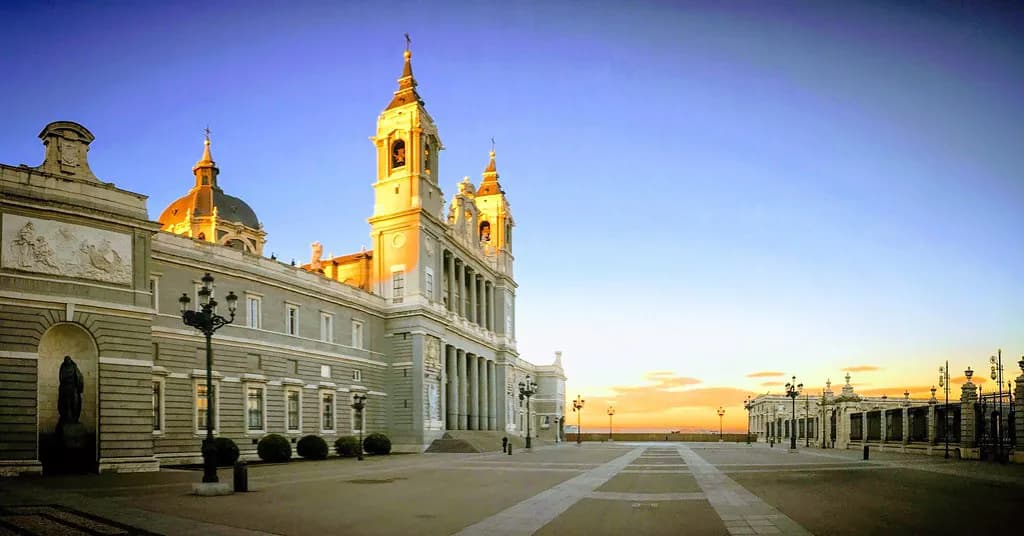
From Plaza Mayor it is a ten-minute walk to the Royal Palace of Madrid (Calle de Bailén), the largest royal palace in Western Europe by floor area, with over 3,000 rooms. The Spanish Royal Family no longer lives here — it is used for official state ceremonies — but the state rooms are extraordinary: frescoed ceilings, Stradivarius instruments, and the Royal Armoury. Buy tickets online in advance (€12 standard adult). On Wednesdays and Sundays at 12:00, a Solemn Changing of the Guard ceremony takes place in the Plaza de la Armería in front of the palace — it involves cavalry, infantry, and a military band. If your visit falls on one of these days, time your arrival accordingly; the ceremony lasts around 50 minutes and admission to watch is free.
After the palace, visit the Almudena Cathedral immediately next door. Construction began in 1883 and the building was only consecrated in 1993, making it one of Europe's newest cathedrals. Admission is free; a €1 donation is requested. The interior is unexpectedly contemporary — colorful neo-Gothic vaulting painted in bold blocks — and the crypt below is worth ten minutes. On a clear day, walk around to the palace's Sabatini Gardens or the Campo del Moro for views back toward the mountains.
Spend your afternoon in La Latina, the neighbourhood directly south of Plaza Mayor. This is where many locals say you get the most authentic feel for old Madrid: narrow medieval streets, tapas bars that have barely changed in decades, and a mix of long-term residents and young professionals who chose authenticity over trendiness. Sunday's El Rastro flea market fills the streets between 09:00 and 15:00 and is worth timing your trip around. On other days, the bar crawl along Calle Cava Baja is the main event — order a tinto de verano and small plates of patatas bravas or croquetas.
For the evening, the Reina Sofía Museum (Calle de Santa Isabel 52) is free on Monday, Wednesday, Thursday, Friday, and Saturday from 19:00 to 21:00, and on Sunday from 13:30 to 19:00. The museum holds Picasso's Guernica — one of the most important paintings of the 20th century — along with major works by Salvador Dalí and Joan Miró. Standard admission is €12. If you have already seen the Prado in the morning on Day 1, the free evening slot at the Reina Sofía is the ideal way to end the trip without another big entry fee.
How to See Madrid's Best Museums for Free (or Nearly Free)
All three museums in the Golden Triangle offer free entry windows and the timing logic is rarely explained together. Understanding how to stack them can save a group of two over €70 across the trip.
The Prado Museum is free Monday through Saturday from 18:00 to 20:00, and on Sundays from 17:00 to 19:00. The queues at those hours are longer than at opening, but the free slots work well if you have already covered the main museums by midday and want a second pass to see specific works you missed. The Prado is large enough that a second visit to one wing is entirely reasonable.
The Reina Sofía free windows are more generous: Monday, Wednesday, Thursday, Friday, and Saturday 19:00–21:00, plus Sunday 13:30–19:00. If you are visiting on a Sunday, the afternoon free window means you can visit the entire collection without paying at all — plan your Day 2 afternoon around this. The evening slot on a weekday fits naturally after dinner (remember, Madrid eats at 21:00, so 19:00 is pre-dinner by local standards).
The Thyssen-Bornemisza, between the other two, is free on Mondays from 12:00 to 16:00. It covers European art from the 13th century to the late 20th and is a strong complement to the Prado's Spanish focus. If one of your days falls on a Monday, build the free Thyssen visit into the Day 1 morning before or after the Prado. The combined Paseo del Arte ticket (€32 for all three) is worth it only if you plan to visit paid entry at all three on the same day or consecutive days without free-window access.
Where to Stay in Madrid: Neighborhoods and Hotel Picks
For a two-day trip, the neighbourhood you sleep in matters more than the hotel category. Central location cuts commute time, which is your scarcest resource. The two neighbourhoods that most locals recommend to visiting friends are La Latina and Barrio de Las Letras. Both are within a 15-minute walk of Puerta del Sol and a short metro ride from the Prado, but they feel genuinely lived-in rather than tourist-saturated.
La Latina is the best choice if you want an authentic Madrid vibe. Cobblestone streets, Gothic and neoclassical architecture, and a tapas culture that actually serves locals. The Sunday Rastro flea market takes over the neighbourhood — a bonus if your trip includes a Sunday. Hotels here include Posada del León de Oro (€150–300) and L&H La Latina (€125–200).
Barrio de Las Letras (the Literary Quarter) sits between the Prado Museum and Puerta del Sol. It has a slightly more upscale feel, with terraces where Hemingway drank, good hotel stock, and easy access to both Day 1 and Day 2 routes. Hotel Urban (€250–300) and Catalonia Las Cortes (€175–225) are the standouts here.
Avoid staying in the Sol/Gran Vía corridor unless you get a strong deal. The area is convenient but noisy, saturated with souvenir shops, and lacks the neighbourhood character that makes Madrid memorable. Malasaña is a good third option if you are travelling solo or as a younger couple and want nightlife on your doorstep; Tribu Malasaña hotel (€150–250) sits in the middle of the action.
Getting Around Madrid: Transport Tips
Madrid's metro is fast, clean, and covers the whole city. For a two-day itinerary centred on the historic core, you will realistically only need it for a few journeys — from your hotel to the Prado in the morning, and perhaps one trip to cross between neighbourhoods in the evening. Most of the walking routes in this itinerary are 20 minutes or less on foot.
A single metro ticket costs €1.50 within Zone A (the central zone covering all tourist areas). The 10-trip Metrobus card costs €12.20 and covers both metro and bus. The Tourist Travel Pass (Abono Turístico) costs €8.40 per day for Zone A, or €17 for a 2-day pass — only worth it if you plan five or more journeys per day. Buy either card at any metro station vending machine; they accept cards.
Walking is genuinely the best option within the historic centre. The distance from Puerta del Sol to the Royal Palace is 1.2 km. From the Royal Palace to La Latina is 800m. Taxis and Uber both operate in Madrid and are reasonably priced; useful late at night if you are heading back from Malasaña to a hotel in the south. Renting a bike or e-scooter (BiciMAD and various scooter apps) makes sense for the Retiro Park section of Day 1.
Essential Madrid Attractions: Orientation Map
Madrid's main attractions cluster into three zones that map neatly onto the two-day plan. Understanding this geography saves backtracking.
- Zone 1 — Paseo del Arte corridor (Day 1 morning/afternoon): Prado Museum, Reina Sofía Museum, Thyssen-Bornemisza Museum, Retiro Park, Crystal Palace, Cibeles Fountain, Puerta de Alcalá. All within 1.5 km of each other, running north-south along Paseo del Prado.
- Zone 2 — Gran Vía and Malasaña (Day 1 afternoon/evening): Edificio Metrópolis, Callao Square, Plaza de España, Templo de Debod. A 1.5 km east–west walk along Gran Vía leads into Malasaña just north.
- Zone 3 — Historic Centre and Royal Madrid (Day 2): Puerta del Sol, Plaza Mayor, Mercado de San Miguel, Chocolatería San Ginés, Royal Palace, Almudena Cathedral, Campo del Moro, La Latina. Concentrated within a roughly 1 km radius.
The Reina Sofía sits at the southern end of Zone 1 and the northern edge of Zone 3, making it accessible from either day. If you plan to use the Sunday free window, visiting it as a mid-afternoon stop on Day 2 before heading to La Latina works well. For the full list of top things to do in Madrid beyond this two-day plan, including lesser-known museums and neighbourhood markets, see our broader city guide.
Beyond the Itinerary: Day Trips and Local Experiences
With only two days in Madrid, adding a full day trip means sacrificing one of the two days in the city. That is a meaningful trade-off and most people who do it regret not spending more time in the city itself. That said, half-day options are more viable than they appear.
Toledo is the most popular choice and for good reason — the medieval city is a UNESCO World Heritage Site with a cathedral, a Moorish fort, and streets that have barely changed in 500 years. The high-speed AVE train from Madrid Atocha takes 33 minutes and runs frequently. If you go, leave Madrid on the first train of the morning (around 07:00) and return by 14:00, giving you an afternoon in Madrid. A full-day tour from Madrid is more relaxed but eats the whole day.
Segovia is similarly accessible — 30 minutes on the Avant train from Chamartín station — and the Roman aqueduct is one of the best-preserved in Europe. The Alcázar castle inspired Walt Disney's Cinderella Castle design, though this claim is disputed by historians. Both Segovia and Toledo make more sense if you have a third day; treat them as genuine additions, not quick stops. You can find more detailed options and logistics in our guide to the best day trips.
If you want to stay in the city but vary the experience, consider a tapas and wine food tour on one of the evenings — local guides take small groups through La Latina and Lavapiés, covering neighbourhood bars that do not appear in guidebooks. A flamenco show at Corral de la Morería (Calle de Morería 17, near the Royal Palace) is expensive at €45–55 per person but includes dinner and is one of the more genuine tablao experiences in Madrid. Book ahead — shows sell out weeks in advance in peak season.
Frequently Asked Questions
Which Madrid 2 day itinerary options fit first-time visitors?
This itinerary is designed for first-timers, focusing on iconic landmarks like the Prado Museum and Royal Palace. It balances cultural immersion with efficient sightseeing. We cover major attractions while allowing time for local experiences like tapas.
How much time should you plan for Madrid 2 day itinerary?
Two full days allows for a good overview of Madrid's main attractions. You'll need to be efficient and prioritize your interests. For a more relaxed pace or to include day trips, consider a longer stay.
What should travelers avoid when planning Madrid 2 day itinerary?
Avoid over-scheduling, trying to see too many museums, or not booking popular attractions in advance. Also, avoid eating only in tourist traps; seek out local eateries. Don't underestimate walking distances; use the metro.
Is Madrid 2 day itinerary worth including on a short itinerary?
Absolutely. Madrid offers a rich experience even in two days, covering art, history, and vibrant street life. It's a fantastic choice for a quick city break. You'll leave with a strong sense of its unique charm.
Two days in Madrid is a focused, rewarding trip if you follow a logical geographic route and avoid the trap of trying to see every museum on the same day. The city rewards those who take their time in a neighbourhood over those who rush between monuments.
Book the Prado and Royal Palace tickets before you leave home. Stay in La Latina or Barrio de Las Letras. Eat dinner at 21:00 like everyone else. And if your second evening happens to fall before 20:00, walk into the Prado for free and spend an hour with Goya.
You might also like


Continue reading
More guides you'll find useful


