Reina Sofia Museum Madrid Travel Guide
Plan your Reina Sofia Museum Madrid visit with top picks, neighborhood context, timing tips, and practical booking advice for a smoother trip.
On this page
Reina Sofia Museum Madrid: Modern Art Masterpieces
The Reina Sofia Museum Madrid is Spain's premier collection of modern and contemporary art, home to Picasso's Guernica and a sweeping survey of 20th-century Spanish painting. Known formally as the Museo Nacional Centro de Arte Reina Sofía, it sits at the southern end of the Paseo del Arte alongside the Prado and the Thyssen-Bornemisza. Together the three form Madrid's Golden Triangle of Art.
This guide covers everything you need before you go: opening hours, ticket prices, free entry windows, how to get there, what to see floor by floor, and the satellite venues most visitors overlook. Use it as a planning reference rather than reading it cover to cover.
Plan with trusted sources: cross-check opening hours and seasonal details with the official Madrid tourism site, and read more about the city on its Wikipedia entry before you go.
Reina Sofía Museum Hours and Tickets
The main venue — the Sabatini Building and the Nouvel Building at Calle de Santa Isabel, 52 — opens Monday and Wednesday through Saturday from 10:00 to 21:00. On Sundays the museum closes at 14:30. It is shut on Tuesdays and on the following public holidays: 1 and 6 January, 1 and 16 May, 9 November, and 24, 25 and 31 December.
General admission is €12 for adults (18 and over). Entry is free during the last two hours each evening: Monday and Wednesday to Saturday from 19:00 to 21:00, and on Sundays from 12:30 to 14:30. It is also free on 18 April, 18 May, and 12 October. Children under 18 and registered students enter free at all times; bring valid ID. People with a certified disability also enter free.
Online booking is available through the Museo Reina Sofia's official website and is strongly recommended even for free-entry slots, which fill up quickly on weekends. The ticket office at the main entrance closes 30 minutes before the museum does. If you plan to visit the Prado and the Thyssen on the same trip, the Abono Paseo del Arte combined pass saves money compared to buying three separate tickets.
| Ticket Option | Price | Best For |
|---|---|---|
| General admission | €12 | Adults 18+ visiting once |
| Free evening entry (Mon, Wed–Sat 19:00–21:00) | €0 | Budget visitors with flexible timing |
| Free Sunday entry (12:30–14:30) | €0 | Weekend visitors who book in advance |
| Under 18 / registered students | €0 | Young visitors with valid ID |
| Abono Paseo del Arte (Reina Sofia + Prado + Thyssen) | ~€32 | Multi-museum visitors over 1 year |
Must-See Works in the Collection
Picasso's Guernica is the undisputed centrepiece. The 7.7-metre-wide painting depicting the 1937 Nazi bombing of the Basque town of Guernica hangs in room 206 on the second floor of the Sabatini Building, surrounded by the preparatory sketches Picasso made in the weeks leading up to it. The context they provide is just as powerful as the finished canvas. Picasso refused to allow the work back to Spain until democracy was restored; it arrived from New York's MoMA in 1981 and moved permanently to the Reina Sofia in 1992.
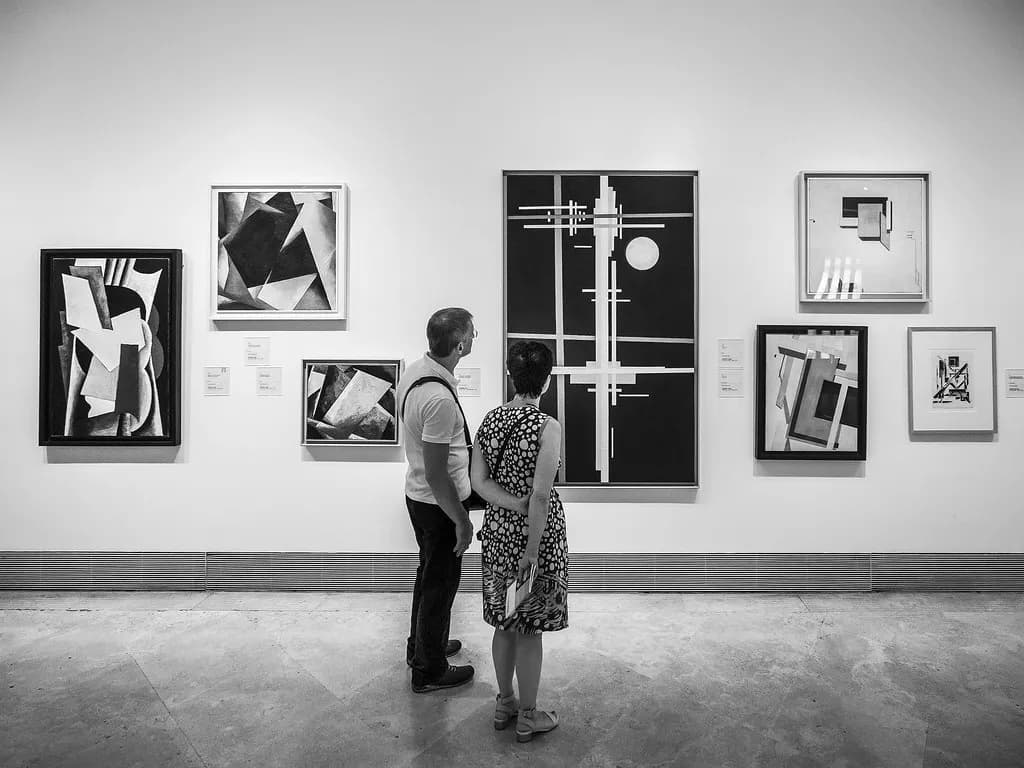
The second floor also holds key works by Joan Miró, Juan Gris, and a substantial Cubist collection. Salvador Dalí's surrealist canvases — including Face of the Great Masturbator — appear here alongside the short film Un chien andalou, which Dalí co-wrote with Luis Buñuel. The fourth floor covers work from 1945 onwards, with Dau al Set, Antoni Tàpies, and later-period Picassos and Mirós; it is consistently quieter than the Guernica rooms and worth the extra time.
Beyond the headline names, look for Un mundo by Ángeles Santos, a large and rarely-discussed 1929 canvas that rivals the Surrealists in its unsettling vision. René Magritte's Grelots roses, ciel en lambeaux and works by María Blanchard round out a collection that goes well beyond the Picasso–Dalí axis that most visitors focus on.
Navigating the Buildings Floor by Floor
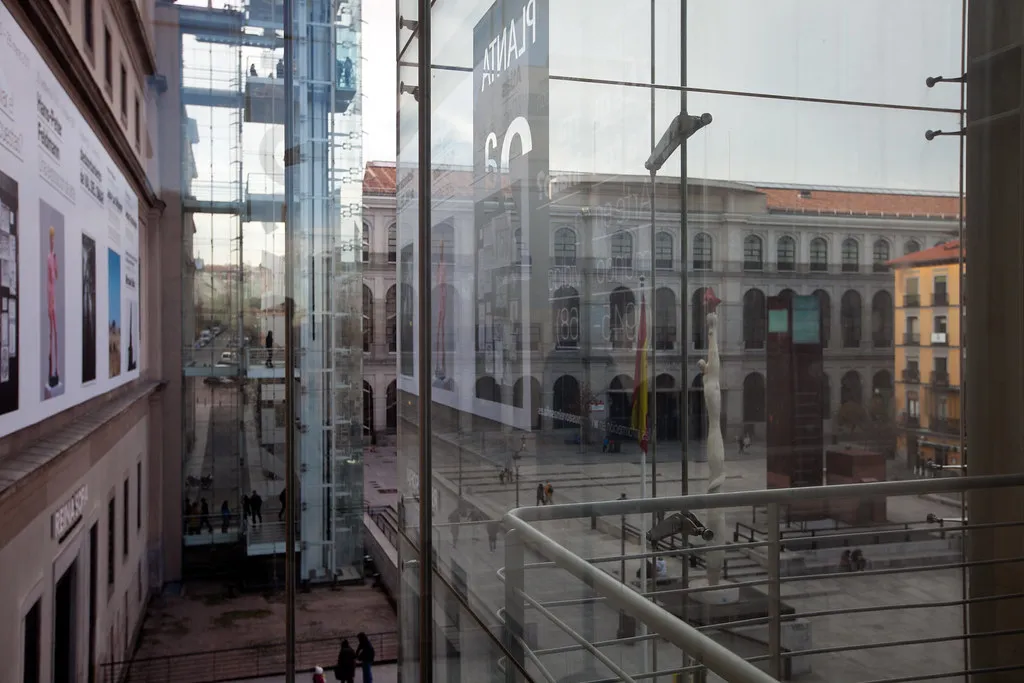
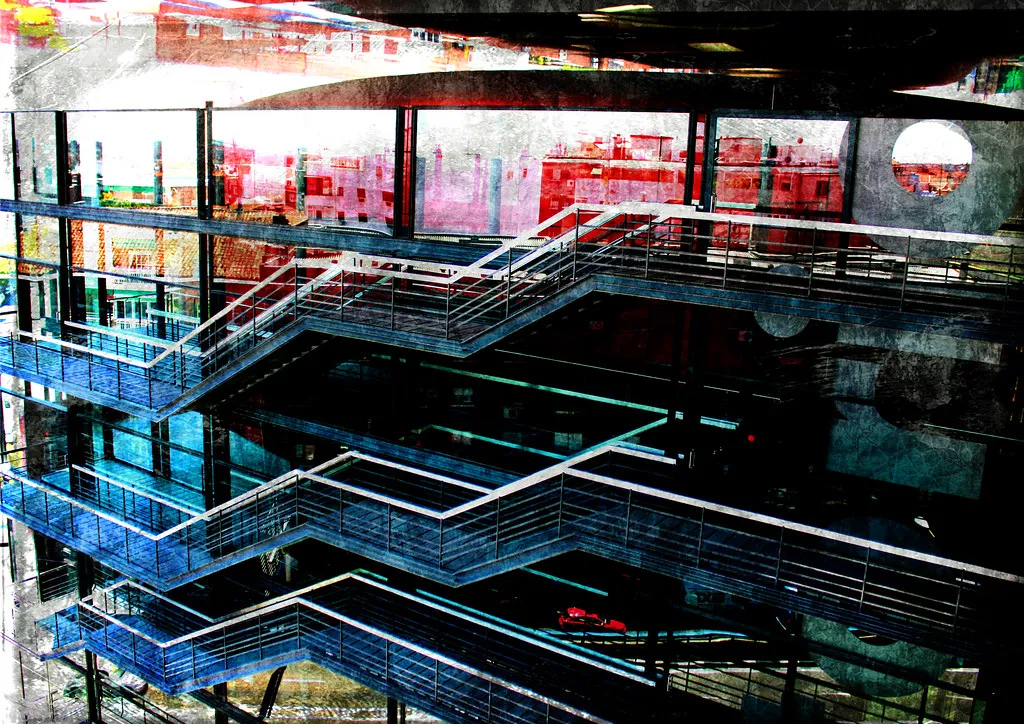
The museum splits across two interconnected buildings. The Sabatini Building is the older structure — an 18th-century hospital designed by Francisco Sabatini that operated as a medical facility until 1965 before being repurposed as an art centre in 1986. Its floors hold the permanent collection from the early 20th century through 1945. The Nouvel Building, added in 2005 as a €92 million expansion designed by Jean Nouvel, houses post-1960s work and the main temporary exhibition galleries. Pick up a free printed floor plan at the entrance because the two buildings connect in non-obvious ways and it is easy to miss entire wings.
The permanent collection occupies floors 2 and 4 in the Sabatini and the equivalent floors in the Nouvel. Floor 3 in the Sabatini is reserved for temporary exhibitions, which change several times a year and are included in the standard admission fee. The lower floors hold the library, auditorium, and café. If your time is limited, floor 2 (Guernica, Cubism, early Surrealism) takes around 90 minutes at a reasonable pace. Adding floor 4 brings the total to a comfortable three hours.
Free Guided Tours and What Competitors Don't Tell You
The museum offers free guided tours to selected rooms and artworks at no extra charge beyond regular admission. Tours last 30 to 60 minutes and are capped at nine people, so the experience is genuinely intimate rather than a crowd shuffle. English-language tour availability varies by season, and schedules are posted on the museum's website a few days in advance. If an English slot is available on your visit date, book it online when you book your ticket — these fill first.
The free tour programme is one of the most underused features of the Reina Sofia. Most first-time visitors walk past the tour sign-up desk near the entrance without realising it exists. A knowledgeable guide in the Guernica room specifically changes the experience: the painting's full symbolic vocabulary — the bull, the lamp, the screaming horse — becomes readable rather than overwhelming.
The museum also runs a year-round programme of film screenings, symposiums, and concerts, often free with a museum ticket. Check the events calendar on the official site before your trip, especially if you are visiting in autumn, when the programme is most active.
The Satellite Venues in Retiro Park
The Reina Sofia has two additional venues about 20 minutes on foot from the main building: the Palacio de Velázquez and the Palacio de Cristal, both inside Retiro Park. Entry to both is free at all times. They host changing exhibitions of contemporary art and are far less crowded than the main venue, even on busy weekends.
The Palacio de Cristal is worth visiting even when it holds no exhibition at all. The 1887 iron-and-glass pavilion — originally built for a tropical plants fair — floods with light in a way that changes dramatically by time of day. Morning visits give cleaner, cooler light; late afternoon turns the space golden. To reach both palaces, enter the park through the Puerta de Felipe IV gateway, which is directly opposite the Prado's Casón del Buen Retiro. The palaces open Monday through Sunday from 10:00 to 19:00 and close on the same public holidays as the main venue.
How to Get to the Reina Sofia
The museum sits between Paseo del Prado and Ronda de Atocha, about 300 metres from Atocha station. By metro, the most direct stop is Estación del Arte on Line 1 (red line), a six-minute walk from the main entrance. The Lavapiés stop on Line 3 (yellow line) is a slightly longer seven-minute walk and puts you closer to the Nouvel Building entrance on Ronda de Atocha. Bus lines 6, 10, 14, 19, 26, 27, 32, 34, 36, 41, and 45 stop directly in front of the museum.
If you are arriving by commuter rail (Cercanías), Atocha is the hub — lines C1, C2, C3, C4, C5, C7, and C10 all stop there. Driving is possible but not recommended: parking near Atocha is paid and scarce, and traffic on the ring road around the station is consistently heavy. Madrid's BiciMAD public e-bike system has a dock on Nouvel Square right outside the museum and another beside the Sabatini building entrance; hire costs around €2 per hour and you can return the bike at any of the 30 stations across the city.
The museum is wheelchair accessible throughout all public areas. The recommended entrance for wheelchair users is through the Nouvel Building via the Plaza del Emperador Carlos V, which has a flat ramp rather than steps.
The Reina Sofia in Madrid's Art District
The Reina Sofia anchors the southern end of Madrid's museum corridor. The Prado is a ten-minute walk north and focuses on classical European painting from the 12th to early 19th century — think Velázquez, Goya, El Greco, and Rubens. The Thyssen-Bornemisza sits between the two and covers the gap, with a survey running from medieval altarpieces through to 20th-century American Expressionism. The three complement rather than duplicate each other, and serious art tourists spend at least one full day in each.
If you are buying individual tickets, the Abono Paseo del Arte pass is valid for one entry to each of the three museums within a year and costs less than two individual tickets combined. It is available at any of the three museum ticket offices and online. Discover more about the full range of top things to do in Madrid to build a balanced itinerary around your museum days.
Practical Tips for Families and Budget Visitors
Children under 18 enter free at all times. The evening free entry window (19:00–21:00 Monday and Wednesday to Saturday) is well-suited for families who spend the day elsewhere and want to fit in a shorter museum visit. The downside is crowds: free-entry windows draw the longest queues. Book a free-entry slot online in advance rather than joining the walk-up queue, which can stretch 30–45 minutes during peak summer weeks.
Large bags must go in the cloakroom near the entrance, which is free. The museum café in the Nouvel Building offers reasonably priced food, but the surrounding neighbourhood has better options. The Lavapiés district, a five-minute walk west, is one of Madrid's most affordable areas for lunch and dinner, with a wide range of independent eateries and authentic tapas bars. For a more polished meal, the restaurant Arzábal inside the museum has been praised by the New York Times for serving genuinely good Spanish food rather than tourist-facing fare.
Photography without flash is permitted in the permanent collection for personal use. Temporary exhibition rooms often display separate rules — check the signage at each entrance. Tripods and selfie sticks are not allowed.
Planning Your Visit Day
Weekday mornings between 10:00 and 12:00 are the least crowded time in the building. If Guernica is your priority, arrive at opening and go directly to room 206 on the second floor before the tour groups arrive around 11:00. Weekends between 12:00 and 16:00 are the peak window — manageable but busy.
Budget two to three hours for the permanent collection if you want to cover floors 2 and 4 properly. Adding a temporary exhibition extends that to around three and a half hours. A focused first-timer visit covering just the Guernica room, the Dalí and Miró sections, and a quick pass through floor 4 can be done in 90 minutes without rushing. The Retiro Park venues are worth stacking onto the same afternoon — walking there from the main building along the Paseo del Prado takes 20 minutes and passes the Prado and Thyssen.
The museum address is Calle de Santa Isabel, 52, Madrid. For the full trip plan, pair your Reina Sofia visit with a Madrid 3-day itinerary that distributes the three art museums across separate mornings. All three are walkable from the same central accommodation zone.
Madrid Context: Where the Reina Sofia Fits
The museum's neighbourhood rewards time outside its walls. To the east is Retiro Park, Madrid's main green lung, with a boating lake, rose garden, and the Palacio de Cristal satellite venue. To the west, Lavapiés is one of the city's most genuinely multicultural barrios, with independent bookshops, street food, and neighbourhood bars that feel entirely separate from the tourist trail two blocks over.
Madrid is walkable in a way that few capital cities are. From the Reina Sofia you can reach the Royal Palace on foot in 35 minutes via Gran Vía, passing the Puerta del Sol and Plaza Mayor along the way. Plan your logistics and accommodation with a clear starting point — check our guide to where to stay in the city for the neighbourhood breakdown relative to the museum district.
Frequently Asked Questions
Which Reina Sofia Museum Madrid options fit first-time visitors?
First-time visitors should prioritize seeing Picasso's 'Guernica' and the works by Dalí and Miró. These masterpieces offer a strong introduction to the museum's core collection. Focus on the second and fourth floors for these key exhibits.
How much time should you plan for Reina Sofia Museum Madrid?
Plan at least two to three hours to explore the main collections and significant artworks. If you want to delve deeper into specific artists or exhibitions, allow for half a day. Free entry hours can extend your visit without extra cost.
What should travelers avoid when planning Reina Sofia Museum Madrid?
Avoid visiting without pre-booked tickets during peak season or free entry hours, as queues can be very long. Do not rush through the 'Guernica' room; take time to absorb its impact. Also, avoid bringing large bags, as they must be checked.
Is Reina Sofia Museum Madrid worth including on a short itinerary?
Yes, the Reina Sofia Museum Madrid is definitely worth including, even on a short itinerary like a Madrid 1-day itinerary. Focus on 'Guernica' and a few other major works to make the most of your limited time. Its central location makes it easy to access.
Which Must-See Reina Sofia Attractions options fit first-time visitors?
For first-time visitors, the absolute must-sees include Picasso's 'Guernica' on the second floor, along with key works by Salvador Dalí and Joan Miró. These pieces are central to understanding the museum's modern art focus. Start with these to grasp the museum's essence.
The Reina Sofia Museum Madrid is one of the strongest cases for modern art anywhere in Europe. Its collection runs from early Cubism through the Spanish Civil War period and into the post-war avant-garde, with Guernica as its undeniable anchor. Plan your visit around the free guided tour slots if they are available — the difference between reading Guernica alone and reading it with a guide who knows the room is significant.
Stack the visit with the free Retiro Park satellite venues the same afternoon, use the metro to avoid parking headaches, and book your tickets online regardless of whether you plan to pay or come during free entry hours. The museum rewards preparation and punishes last-minute walk-ups, especially in summer.
You might also like
Continue reading
More guides you'll find useful