

Best Area To Stay In Madrid Travel Guide
Plan best area to stay in Madrid with top picks, neighborhood context, timing tips, and practical booking advice for a smoother trip.
On this page
Best Area To Stay In Madrid
Choosing the best area to stay in Madrid shapes your entire trip. The city has six distinct neighborhoods that locals and repeat visitors consistently recommend — and each one suits a different type of traveler. Get this decision right and you will save time, money, and energy every single day.
Madrid's center is compact enough that every neighborhood covered here is within walking distance or one metro stop of the main sights. That said, the atmosphere varies enormously from block to block. A stay in La Latina feels nothing like a stay in Salamanca, even though they are only twenty minutes apart on foot.
This guide covers the six best areas with honest pros, cons, and price context — plus a quick overview of how the city is laid out so you can choose with confidence.
Plan with trusted sources: cross-check opening hours and seasonal details with the official Madrid tourism site, and read more about the city on its Wikipedia entry before you go.
Overview of Madrid's Layout
Madrid radiates outward from Puerta del Sol, the symbolic center of the city and Spain's "Kilometer Zero." Unlike Barcelona, which follows a strict grid, Madrid's streets grew organically in all directions from this central square. That means the city feels more labyrinthine but also more atmospheric, especially in the older quarters to the west and south.
The historic core sits roughly between the Royal Palace to the west, Retiro Park to the east, Gran Vía to the north, and Ronda de Atocha to the south. Every neighborhood recommended in this guide falls within or just outside this boundary. None of them will leave you more than 25 minutes' walk from Puerta del Sol, and all have nearby metro access.
Madrid's metro is efficient and cheap. A single journey costs around €1.50–€2.00 in 2026, and a 10-trip metrobus card brings the per-ride cost down further. If you stay anywhere central, you will rarely need it — but it is reassuring to have. The key thing to know is that being "not quite in the center" does not mean you will waste time in transit.
Where to Stay in Madrid For a First-Time Trip
For first-time visitors, the single most useful filter is travel style. All six neighborhoods below are central, well-connected, and close to the major museums and sights. The real question is what kind of atmosphere you want to wake up and come home to each day.
If you want everything at your doorstep and do not mind crowds, Sol or Los Austrias is the most convenient base. If you want to feel like a local and eat the best tapas in the city, La Latina is the stronger pick. For art lovers and culture seekers, Barrio de las Letras puts you within walking distance of the Prado, Reina Sofía, and Thyssen-Bornemisza. Families benefit from the green space and quieter streets of Retiro. Night owls and creative types gravitate toward Malasaña. Luxury travelers head to Salamanca.
Here is a quick reference before the full breakdown below:
- La Latina — best for most visitors; tapas, historic streets, local atmosphere; limited hotel supply but great apartments and boutique options; budget to mid-range (€125–€200/night)
- Sol / Los Austrias — best for first-timers and short stays; maximum convenience; mid-range to luxury (€200–€400/night)
- Barrio de las Letras — best for art and culture lovers; close to the Golden Triangle of Art; mid-range (€175–€250/night)
- Retiro — best for families; green space, quieter streets, elegant boulevard; mid-range to luxury (€200–€350/night)
- Malasaña — best for nightlife, creative types, younger travelers; mid-range (€150–€250/night)
- Salamanca — best for luxury travelers; designer boutiques, fine dining, upscale hotels; luxury (€300–€600/night)
| Neighborhood | Best For | Price/Night (2026) | Metro Access |
|---|---|---|---|
| La Latina | Most visitors; tapas & local feel | €125–€200 | La Latina, Tirso de Molina |
| Sol / Los Austrias | First-timers; short stays | €200–€400 | Sol (Lines 1, 2, 3) |
| Barrio de las Letras | Art & culture lovers | €175–€250 | Antón Martín, Sevilla |
| Retiro | Families; green space | €200–€350 | Retiro (Line 9) |
| Malasaña | Nightlife; creative types | €150–€250 | Tribunal, Noviciado |
| Salamanca | Luxury travelers | €300–€600 | Serrano, Velázquez (Line 4) |
La Latina — Best Area for Most Visitors
La Latina is the oldest neighborhood in Madrid and the one locals most often recommend when asked where visitors should stay. It occupies the area just southwest of Plaza Mayor and sits on a gentle rise that gives some streets unexpected views over the city. The architecture is primarily Baroque and Neoclassical, but the layout still follows the medieval street plan — narrow, winding lanes that open suddenly onto wide plazas.
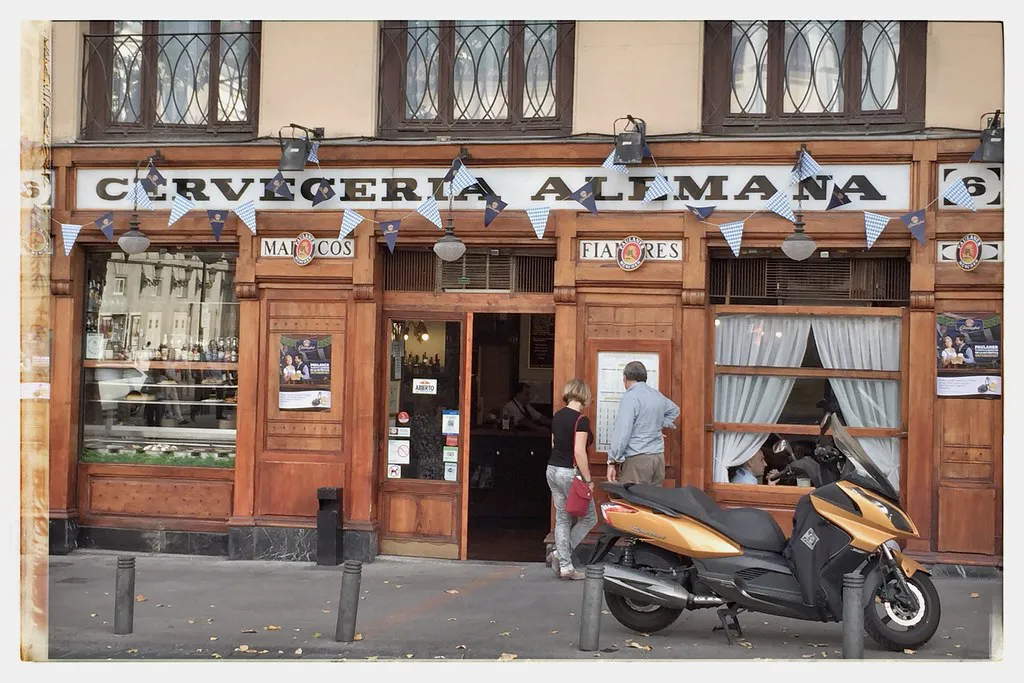
Calle de la Cava Baja is the spine of the neighborhood's social life. This single street has more than fifty bars and restaurants, many of them genuinely excellent rather than tourist-facing. The local custom here is to do a "tapeo" — moving from bar to bar for a small plate and a glass of wine at each. On Sunday mornings, the famous El Rastro flea market fills the surrounding streets with stalls selling antiques, vintage clothing, and crafts, after which everyone migrates to the terraces for a late aperitivo.
Three metro stops — La Latina, Tirso de Molina, and Embajadores — connect you quickly to the rest of the city. The Royal Palace and Plaza Mayor are a 10-minute walk. The Prado is about 20 minutes on foot. The main downside is that large hotels are rare here, so you are mostly choosing between boutique properties and apartment rentals. Budget around €125–€200 per night for a solid mid-range option.
Sol — Very Touristy, but Gorgeous and Ideal for Short Visits
Puerta del Sol is Madrid's beating heart — a vibrant central square where three metro lines converge and where Spanish New Year's Eve is televised nationally. "Sol" as a neighborhood refers loosely to the entire historic core around it: Puerta del Sol square, Plaza Mayor, Gran Vía, and the streets weaving between them. This is not technically one district, but staying anywhere within this area gives you the same experience.
The benefits are hard to argue with. Almost every iconic landmark is walkable: the Royal Palace is 15 minutes west, the Prado is 20 minutes east, and both are connected by a mostly pedestrianized street network. Mercado de San Miguel, a covered gourmet market in the shadow of Plaza Mayor, is the kind of place you might visit for a glass of vermouth at 11:00 and find yourself still there at 14:00. Gran Vía buzzes with theaters, shops, and a famous skyline of early 20th-century architecture.
The tradeoffs are real. This area is the most touristy in Madrid. Restaurant quality around Plaza Mayor is inconsistent — many places near the square charge inflated prices for mediocre food. Hotels are more expensive here than in neighboring areas. Expect noise at night, especially on weekends. That said, if you have two nights or fewer, the convenience factor is decisive. Expect to pay €200–€400 per night for a mid-range to luxury hotel.
Barrio de las Letras — Old-World Atmosphere and Great Hotels, but Crowded
Barrio de las Letras, the Literary Quarter, sits between Sol and Retiro Park. Its narrow streets are embedded with quotes from Cervantes, Lope de Vega, and Quevedo in bronze lettering on the pavement — these authors lived and wrote within the neighborhood in the 17th century, and the area has cultivated a bookish, intellectual identity ever since. Today that translates to independent bookshops, literary cafés, and a thriving theatre and gallery scene around Plaza de Santa Ana.
The cultural pull is strong. The Prado, Reina Sofía, and Thyssen-Bornemisza — the "Golden Triangle of Art" — are all within a 10-minute walk. This concentration makes the neighborhood particularly efficient for anyone on a museum-focused trip. The hotel supply here is also noticeably better than in La Latina, with a wider range of boutique and mid-range options at €175–€250 per night.
The downside is popularity. The area has become one of the most visited parts of Madrid, and evenings around Plaza de Santa Ana can be crowded and noisy. It is not as local-feeling as La Latina, but it is prettier and more atmospheric than Sol. For travelers who want culture, walkability to the big museums, and a characterful base without being in the absolute tourist epicenter, this is an excellent choice.
Malasaña — Creative, Youthful, and a Lot of Fun
Malasaña sits just north of Gran Vía and has been Madrid's bohemian heartland since the 1980s counterculture movement known as "La Movida." The neighborhood has gentrified considerably since then, but it retains a distinct creative energy. Plaza Dos de Mayo — named for the 1808 uprising against Napoleon — anchors the neighborhood and is where locals congregate on warm evenings.
By day, Malasaña is full of independent coffee shops, vintage clothing stores, and small galleries. By night, it is the best area in the city for bar-hopping and live music, with dozens of venues within a few blocks of each other. The crowd skews younger and more local than Sol, which makes the bars feel less self-conscious. You will find craft beer bars, jazz venues, cocktail bars, and late-night clubs all within easy walking distance.
The location is genuinely central — Gran Vía is the southern boundary, and from there you can walk to Sol in about 10 minutes. Accommodation is generally a step cheaper than in Sol or Barrio de las Letras, with solid boutique hotel options at €150–€250 per night. The one caveat: if you are a light sleeper or traveling with young children, choose a hotel on a quieter street rather than directly on the main plaza. Check top things to do in Madrid for what is on in the Malasaña area during your visit.
Salamanca — Upscale, Elegant, and Away from the Crowds
Salamanca is where Madrid's upper classes have lived since the 19th century, and it shows. The streets follow a neat grid — unusual for Madrid — lined with grand apartment buildings, luxury boutiques, and high-end restaurants. Designer labels cluster along Calle de José Ortega y Gasset (the Spanish equivalent of Rodeo Drive), while more approachable upscale dining spreads across the entire neighborhood.
Culturally, the area is stronger than most visitors expect. The Museo Arqueológico Nacional and the Biblioteca Nacional de España are both here, and the neighborhood's architecture alone is worth exploring. For travelers who want to avoid tourist-trap restaurants entirely, Salamanca's dining scene — built around a discerning local residential clientele — is arguably the best in the city for quality-to-noise ratio.
The tradeoff is distance. Salamanca sits northeast of the historic core, meaning you will need the metro or a taxi to reach most major sights. The nearest metro stations are Serrano and Velázquez on Line 4. Budget €300–€600 per night for the luxury hotels that make this neighborhood worth considering. Travelers on mid-range budgets will get better value in Barrio de las Letras or La Latina and take the metro to Salamanca for dinner instead.
Retiro — Best Area for Families and Green Space
The Retiro neighborhood borders the park of the same name — Madrid's largest central green space and one of the finest urban parks in Europe. The 350-acre park contains a rowing lake, the glass-and-iron Crystal Palace (now used for large-scale art installations), formal gardens, fountains, and street performers on weekends. Families can easily spend a full morning here without running out of things to do.
The neighborhood itself is quieter and more residential than the neighborhoods to the west. Paseo del Prado forms its western edge — a wide, tree-lined boulevard with monumental fountains that connects the Prado Museum in the north to Atocha train station in the south. Staying adjacent to this boulevard, on the western side closer to the Prado, gives you the best of both worlds: easy museum access and park access without being in the thick of the tourist center.
Hotels here are generally mid-range to luxury, running €200–€350 per night. Pre-booking Prado Museum tickets before you arrive is strongly recommended — walk-up queues in 2026 regularly run 45–60 minutes during peak season. The Retiro metro stop (Line 9) and Atocha (Line 1) both give quick access to the wider city. For families, this area offers the quietest nights of any central neighborhood.
When You Book Matters as Much as Where You Book
Most neighborhood guides stop at the "where" and skip the "when" — but timing your booking for Madrid can meaningfully change both price and atmosphere. August is Madrid's least crowded month in the center, not because fewer tourists arrive, but because most locals leave. The city empties out as residents escape to the coast or the mountains to avoid the heat (Madrid regularly hits 38–40°C in July and August). The result for visitors staying in Sol or Gran Vía is a noticeably calmer, more spacious atmosphere — the same central streets with fewer crowds and lower hotel rates than June or September.
The flip side of August is that some smaller, locally-run bars and restaurants in La Latina close for two to four weeks. If the tapas crawl on Cava Baja is a priority, late September through November or March through May gives you full neighborhood life with mild temperatures. Semana Santa (Easter week, typically March or April) is busy everywhere and hotel prices spike — book at least two months ahead if traveling then.
For the most reliable booking strategy in 2026: reserve the Sol or Los Austrias area for short visits of one to two nights where location efficiency matters most; use La Latina or Barrio de las Letras for stays of three nights or more where neighborhood atmosphere adds daily value. And regardless of where you stay, check the the best day trips options in advance — Toledo, Segovia, and Ávila book up quickly on weekends.
Frequently Asked Questions
Which best area to stay in Madrid options fit first-time visitors?
First-time visitors should consider staying in Sol, Gran Vía, or Los Austrias. These central areas offer excellent access to major attractions like the Royal Palace and Plaza Mayor. They also provide abundant dining and transport options. You can easily walk to most key sights from these locations.
How much time should you plan for best area to stay in Madrid?
Plan at least 3 to 4 days to fully experience Madrid and its chosen area. This allows enough time for sightseeing, museum visits, and enjoying the local culture. A longer stay, around 5-7 days, lets you explore specific neighborhoods more deeply. It also provides time for the best day trips.
What should travelers avoid when planning best area to stay in Madrid?
Avoid booking accommodation too far from public transport links if you plan to explore widely. Also, do not underestimate the noise levels in very central, bustling areas like Sol if you prefer quiet evenings. Always check reviews for specific hotel locations. This helps manage expectations for your stay.
Is best area to stay in Madrid worth including on a short itinerary?
Yes, absolutely. Even on a short itinerary, choosing the right area is crucial for efficiency. Staying in a central neighborhood like Sol or Gran Vía maximizes your time. You can quickly reach iconic landmarks and immerse yourself in the city's energy. This makes every moment count.
The best area to stay in Madrid comes down to travel style, budget, and how long you are staying. La Latina suits most visitors with its local feel, unbeatable tapas scene, and central location. Sol and Los Austrias are the most practical base for short trips. Barrio de las Letras wins for culture and museum access. Malasaña delivers the best nightlife. Salamanca is the luxury choice. Retiro is the right pick for families.
All of these neighborhoods are well-connected and close to Madrid's best sights. Whichever you choose, Madrid's compact center means you can easily explore the others during your stay. Use budget-friendly places to stay resources if you want to compare specific hotels within each district. Enjoy the trip.
You might also like


Continue reading
More guides you'll find useful


