Montserrat Day Trip From Barcelona Travel Guide
Plan your Montserrat day trip from Barcelona with top picks, neighborhood context, timing tips, and practical booking advice for a smoother trip.
On this page
Montserrat Day Trip From Barcelona
A Montserrat day trip from Barcelona is one of the most rewarding excursions in all of Spain. Forty kilometres northwest of the city, the jagged peaks of the Montserrat massif rise to 1,236 metres and shelter a working Benedictine monastery that has drawn pilgrims for over a thousand years. The mountain's name means "serrated mountain" in Catalan — look at the skyline from the train and you will immediately understand why.
The visit suits almost every type of traveller. Hikers can spend a full day on the trails above the monastery. Culture seekers can explore the Basilica, the Montserrat Museum, and the legendary Boys' Choir. Those after views can ride the cable car and two funiculars without walking more than a few hundred metres. Planning carefully makes the difference between a rushed afternoon and a genuinely memorable day out.
This guide covers every practical decision: which ticket to buy, how to get up the mountain, what to see at the monastery, where to hike, what to eat, and how to avoid the mistakes that catch most first-time visitors.
Plan with trusted sources: cross-check opening hours and seasonal details with the official Barcelona tourism board, and read more about the city on its Wikipedia entry before you go.
What Is Montserrat?
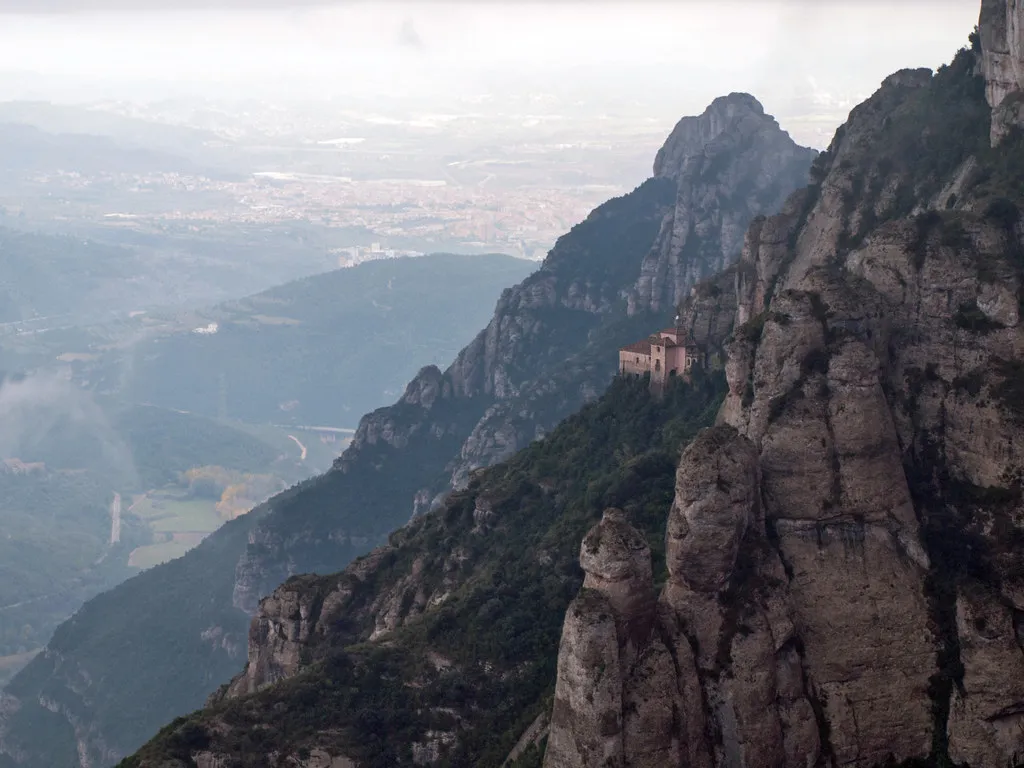
Montserrat is a mountain range in the Catalonia region of Spain, about an hour by train from Barcelona's Plaça Espanya. The unusual rock formations — towering rounded spires of conglomerate stone — make it unlike any other landscape in Spain. The park covers roughly 3,630 hectares and is protected as a natural park.
Nestled in the rock face at 720 metres above sea level is the Santa Maria de Montserrat Abbey, a Benedictine monastery that has been continuously occupied since the 11th century. The monastery is the spiritual heart of Catalonia. It houses the celebrated Black Madonna (La Moreneta), who was declared the Patroness of Catalonia in 1844 and is the destination of hundreds of thousands of pilgrims every year.
Most visitors spend between four and six hours on the mountain. If you want to hike to Sant Jeroni, the highest peak, set aside a full day. The monastery grounds, museum, and viewpoints alone fill three to four hours comfortably.
How to Get to Montserrat From Barcelona
The standard route starts at Plaça Espanya station in Barcelona. Take the R5 FGC train towards Manresa. Trains run roughly once per hour, so check the schedule before you leave. The ride takes about an hour to the base of Montserrat. Do not miss your train — the next one is an hour away, and that lost time compounds badly when funiculars have fixed closing times.
At the base of the mountain you choose between two ways up: the Aeri de Montserrat cable car or the Cremallera de Montserrat rack railway. Both end at the monastery level, but they depart from different train stops. The cable car stop (Aeri de Montserrat) comes one stop before the rack railway stop (Monistrol de Montserrat). If you fall asleep on the train or are unsure, stay on until Monistrol and take the rack railway.
If you prefer to skip public transport entirely, guided tours depart directly from central Barcelona and handle all logistics. They cost more but remove all timing stress. You can also take a guided tour to Montserrat that includes expert commentary on the monastery and mountain. See more the best day trips if you want to combine this with other excursions.
Cable Car vs. Rack Railway: Which One to Take
This is the most consequential decision you make before reaching the monastery. Both take you to the same place at the same ticket price, but they are very different experiences — and the choice affects your journey home more than most guides explain.
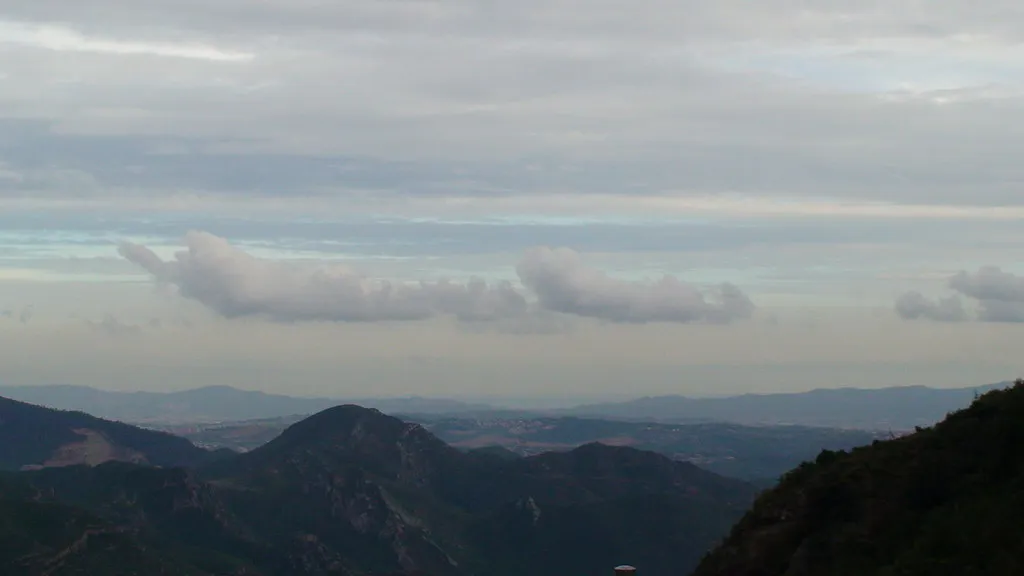
The Aeri de Montserrat cable car is the faster option: roughly five minutes of dramatic aerial suspension, with vertical views down the cliffside. Only 15 to 20 passengers fit per cabin, so on busy days you may queue for 20 to 30 minutes. The platform requires a short steep climb from the train stop.
The Cremallera rack railway takes about 15 minutes and follows a winding mountain track with panoramic views across the valley. It boards at Monistrol de Montserrat, one stop further on the R5 line. Carriages are larger, boarding is level (fully wheelchair accessible), and there is usually enough room to sit without waiting.
The less-discussed advantage of the rack railway: when you return to the R5 platform at the end of the day, rack railway passengers board the train to Barcelona before cable car passengers. After a long day of hiking, the cable car crowd frequently boards last and stands for the entire hour-long return journey. If your legs are tired, the rack railway is the smarter choice in both directions. When you purchase your Trans Montserrat or TOT Montserrat ticket, you commit to one mode for the return as well — there is no combination ticket for going up one way and down the other without paying an additional single-journey fare.
| Cable Car (Aeri) | Rack Railway (Cremallera) | |
|---|---|---|
| Journey time | ~5 minutes | ~15 minutes |
| Train stop | Aeri de Montserrat | Monistrol de Montserrat |
| Capacity per run | 15–20 passengers | Large carriage |
| Peak-day wait | 20–30 minutes | Usually minimal |
| Wheelchair accessible | No (steep platform) | Yes (level boarding) |
| Return train boarding | Later (last stop) | Earlier (penultimate stop) |
| Best for | Thrill-seekers, shorter queues off-peak | Families, tired hikers, accessibility needs |
Montserrat Ticket Options: Trans vs. TOT
Buying the right ticket in advance is the single best thing you can do for a smooth visit. It prevents you from queueing at the Barcelona vending machines and missing your train, and it costs no more than buying on-site.
The Trans Montserrat ticket (around €50 per person in 2026) covers the return metro in Barcelona to Plaça Espanya, the return R5 train, your choice of cable car or rack railway, and unlimited rides on both the Sant Joan and Santa Cova funiculars at the top. This is the right ticket for most visitors planning to hike.
The TOT Montserrat ticket (around €71.50 per person) adds admission to the Montserrat Museum and a meal at the self-service restaurant. Given that food on the mountain is expensive — two bottles of water and a pack of biscuits can easily cost over €10 — the meal inclusion makes the TOT ticket worth serious consideration if you plan to eat on-site.
A few practical notes. The Sant Joan funicular is not included in basic train-only tickets — always confirm what your chosen pass covers before arriving. If you plan to use only the funicular up and walk back down to the monastery, buy a single-journey ticket rather than a return: the hike back down is well-marked and only takes about 45 minutes. Buying a return when you only need a single is an easy and surprisingly common mistake to make on-site.
What to See at the Monastery
The Black Madonna (La Moreneta) is the centrepiece of the Basilica. This small wooden statue, believed to date from the 12th century, sits high above the altar and draws pilgrims from across Spain and Latin America. As of 2026 you need a timed ticket to approach the statue up close — the queue for the timed visit can reach 45 minutes on peak days, so arriving before 10:00 is strongly recommended if this is your priority. Viewing the Madonna from inside the Basilica without the timed ticket is still possible and free.
The Escolania de Montserrat, the Montserrat Boys' Choir, is one of the oldest boys' choirs in Europe, with documented history reaching the 14th century. The choir sings Monday through Friday at 13:00 for about ten minutes, and takes part in the 11:00 Mass on Sundays. The choir takes a break in July, so check the schedule online before you plan your visit around it. Seating at the front of the Basilica fills up quickly — arrive at least 30 minutes early if you want a good position.
The Montserrat Museum holds six collections with over 1,300 pieces. Highlights include works by Picasso, Dalí, and Caravaggio, plus an Egyptian sarcophagus from the 13th century BC. Admission is €8 for adults; the entrance is directly outside the Basilica. The museum was rebuilt after Napoleon's troops burned the original monastery in 1811, so the current collections are entirely post-19th century acquisitions. The TOT Montserrat ticket includes museum admission.
Hiking at Montserrat
Montserrat has trails for every fitness level. The key decision is whether to hike from the monastery level or take the Sant Joan funicular to the upper trailheads, saving roughly 200 metres of vertical gain and up to an hour of effort each way.
The Sant Jeroni route is the most rewarding full hike: roughly 4 kilometres from the Sant Joan funicular upper station to the summit at 1,236 metres, taking two to three hours return from the funicular. The final stretch involves steep stone stairs and a short scramble, but the 360-degree views of Catalonia and the Pyrenees are among the best in the region. On a very clear day you can see Barcelona from the top. Set aside a full day if this is your goal.
The Santa Cova path is shorter and more accessible. It leads down from the monastery to the Holy Grotto where the Black Madonna was said to have been discovered. The route follows a series of large bronze sculptures depicting the Mysteries of the Rosary, several created by Antoni Gaudí. Allow 40 to 60 minutes return. The Santa Cova funicular shortens the descent but the return is still an uphill climb, so budget your energy accordingly.
The Degotalls path is a flat contour trail that most visitors skip entirely. It hugs the mountain's southern face and ends at a panoramic viewpoint with ceramic relief monuments. For visitors who want good views without steep effort, this is the best route on the mountain for time invested. It takes about 30 to 45 minutes one way and avoids the summit crowds completely.
Do not underestimate your limits. The mountain's altitude means temperatures can be 5 to 8 degrees cooler than in Barcelona, but the midday sun in summer is intense and there is little shade on exposed sections. Carry more water than you think you need. If you feel tired at a trail junction, turn back — the last funicular has a fixed closing time, and the consequences of misjudging your pace cascade quickly.
Packing for a Montserrat Day Trip
Comfortable walking shoes are non-negotiable. The monastery grounds, trail approaches, and stone stairs involve uneven terrain and significant distance even without a dedicated hike. Dedicated hiking boots are not necessary for most trails — trail runners or supportive sneakers are fine — but flat-soled fashion shoes will cause discomfort well before the end of the day.
Layer your clothing. Mornings in Barcelona feel warm, but the monastery sits 720 metres above sea level and the summit trails are several hundred metres higher. In winter, bring a warm mid-layer, a hat, and gloves. In summer, pack sunscreen and a hat; the exposed ridge trails above the Sant Joan funicular have almost no shade. A light jacket is useful year-round for the cable car ride and the air-conditioned museum.
Bring food and water from Barcelona. The cafeteria and shops at Montserrat are expensive — you can easily spend €10 on two bottles of water and a small snack. Packing a picnic from a Barcelona market or supermarket before you leave saves money and gives you more flexibility on timing. The Montserrat and Cava tour is a convenient alternative if you would rather include a wine-tasting lunch in your itinerary. There are picnic areas on the mountain if you bring your own food.
Keep your return train ticket in a fixed, secure location. Losing it on the trail means buying a new one on-site. Store it in an inside zip pocket, not a loose outer pocket. In Barcelona itself, wear your bag in front of you on the metro and on the return train — pickpockets target tired tourists on the R5 line back from Montserrat.
Getting Back to Barcelona From Montserrat
The return journey reverses the way you came: funicular or walk down to the monastery level, then cable car or rack railway to the R5 train station, then the R5 train back to Plaça Espanya. The last trains and funiculars run in the early evening — exact times vary by season, so check the schedule when you arrive at the monastery (timetables are posted at all funicular stations).
If you came up by cable car, consider switching to the rack railway for the descent. Rack railway passengers reach the R5 platform before cable car passengers and almost always get a seat. The cable car crowd boards the same train from the stop before, meaning when the train arrives at Monistrol de Montserrat, it may already be full. After a full day on the mountain, standing for an hour on a crowded train is an unpleasant end to an otherwise excellent day — and it is entirely preventable.
If you want to avoid the crowds on the train entirely, the simplest option is to leave Montserrat by 15:00. Most day-trippers from Barcelona arrive between 10:00 and 12:00 and depart in the late afternoon rush. Leaving earlier means a quieter train, shorter queues at the cable car, and lower stress overall. Check top things to do in Barcelona to plan your evening once you are back in the city.
Best Time to Visit Montserrat
Montserrat is open year-round, with one exception: the cable car and some facilities close for maintenance between approximately 13 January and 31 January each year. Confirm closures on the official website if you are visiting in January.
Weekdays in spring (March to May) and autumn (September to October) are the sweet spot. The weather is mild, the trails are not dusty from summer heat, and the weekday crowds are manageable. Summer weekends bring very heavy crowds, especially in August — the cable car queue can run to 45 minutes, the Basilica fills to capacity for the choir, and parking lots are full from mid-morning.
Winter visits have a genuine appeal that is underrated. The monastery is far quieter, the light is sharp and photogenic, and you can sometimes see snow on the upper peaks. The choir does not perform in July, so winter is paradoxically better for catching a performance than summer. Dress warmly: temperatures at the summit can be well below zero in January and February.
Regardless of season, arrive early. Leaving Barcelona at 08:30 or 09:00 means reaching the monastery before 11:00, seeing the choir at 13:00, hiking in the afternoon, and returning before the evening rush. Arriving after midday compresses everything and forces rushed decisions at every step.
As you plan, our guides to Girona Day Trip From Barcelona Travel Guide and Sitges Day Trip From Barcelona Travel Guide cover the rest of the essentials.
Frequently Asked Questions
What is the dress code for the Montserrat Monastery?
Visitors to Montserrat Monastery should dress respectfully. This means covering shoulders and knees. While there isn't a strict enforcement, modest attire is appreciated. It shows respect for the sacred site. Comfortable shoes are also essential for walking around the complex.
How much time do I need to visit Montserrat?
A typical Montserrat day trip from Barcelona usually requires 4 to 6 hours. This includes travel time and exploring the main sites. If you plan to hike extensively or attend a choir performance, allow more time. Arriving early helps maximize your visit.
Is it safe to hike alone at Montserrat?
Hiking alone at Montserrat is generally safe, especially on well-marked trails. Stick to popular routes and inform someone of your plans. Bring a phone and sufficient water. Always check weather conditions before heading out for a solo hike. The trails offer stunning views and are well-maintained.
Can I stay overnight in Montserrat?
Yes, you can stay overnight at Montserrat for a unique experience. The Hotel Abat Cisneros Montserrat is located right at the monastery. Staying overnight allows you to explore the mountain in peace. You can enjoy the serene atmosphere after the day-trippers leave. Book well in advance, especially during peak season.
A Montserrat day trip from Barcelona rewards visitors who plan ahead and start early. Buy your ticket in advance, choose between the cable car and rack railway with your full day in mind, arrive before the midday crowd, and leave enough time to hike beyond the monastery level if you want the best of what the mountain offers.
The monastery, the Black Madonna, the Boys' Choir, the museum, and the high trails each stand on their own as reasons to visit. Together they make Montserrat one of the most complete day trips in Europe. Whether you spend a focused half-day at the Basilica or a full day reaching the summit of Sant Jeroni, the mountain rarely disappoints.
You might also like

Continue reading
More guides you'll find useful