Segovia Day Trip From Madrid Travel Guide
Plan your Segovia day trip from Madrid with top picks, neighborhood context, timing tips, and practical booking advice for a smoother trip. Discover the best of Segovia.
On this page
Segovia Day Trip From Madrid: Your One-Day Itinerary
A Segovia day trip from Madrid is the best single-day excursion you can make from the Spanish capital in 2026. In under 30 minutes by high-speed train you step into a UNESCO World Heritage city with a two-thousand-year-old Roman aqueduct, a Gothic cathedral, and a fairytale castle perched on a rocky cliff. The city is compact, mostly flat once you're inside the walls, and easy to cover on foot.
This guide gives you the transport options with real prices, a practical walking order, the top sights with admission details, where to eat, and the one photo hike that no one skips after they learn about it. Plan two to three weeks ahead during spring and summer, and you will have no queues and no wasted time.
Plan with trusted sources: cross-check opening hours and seasonal details with the official Madrid tourism site, and read more about the city on its Wikipedia entry before you go.
What You Need to Know About Segovia
Segovia sits in the Castile and León region of central Spain, about 90 kilometres northwest of Madrid. The old city is entirely walkable and most of the major landmarks fall within a 1.5-kilometre arc from the Aqueduct to the Alcázar. The terrain is gently hilly rather than steep, but comfortable shoes are essential — cobblestones and uneven stone paths are everywhere.
Currency is the euro; credit cards are accepted almost everywhere, though a few smaller cafes near the Aqueduct still prefer cash. Most shop staff and restaurant servers speak basic English, but learning a few words of Spanish makes a noticeable difference in service, particularly away from the main tourist corridor. The city is generally safe. As with any busy tourist area, keep an eye on your belongings around the Aqueduct plaza, which is the most crowded spot in the city.
A realistic day starts when you arrive around 09:00 and ends when you board a return train or bus around 18:00–19:00. That gives you eight to nine hours on the ground — enough to see all three major sights at a relaxed pace, eat a proper lunch, and still have time for a walk around the Jewish Quarter.
How to Get to Segovia from Madrid
The high-speed RENFE Avant train is the fastest and most convenient option. Trains depart from Madrid Chamartín station roughly every hour between about 07:00 and 21:00, and the journey takes just 28 minutes. Tickets cost approximately €11–€22 each way depending on how far in advance you book; the cheapest prices appear online at least a week ahead. Buy at renfe.com or the Chamartín ticket machines. One important note: the Segovia-Guiomar station is about 5 kilometres outside the city centre. From the station, take local bus Line 11 to the Aqueduct (around €1.50, 15–20 minutes). Plan enough time at Chamartín for the security screening — bags go through an X-ray scanner similar to an airport, and the queues can be long during peak hours.
The Avanza bus from Madrid Moncloa bus station is the budget alternative. The journey takes 75–90 minutes but drops you much closer to the old city, stopping near the Aqueduct. A return ticket costs around €9–€12 and buses run approximately every 30 minutes throughout the day. No booking is usually required on weekdays, but weekend services can fill up so an advance purchase online is worthwhile.
Guided day tours depart from central Madrid hotels or the Atocha area and often combine Segovia with nearby Ávila. Expect to pay €50–€90 per person for a full-day guided tour with transport and entry fees included. This option suits travellers who want expert commentary and prefer not to manage logistics, but it gives you less flexibility over where you linger.
| Option | Journey Time | Return Cost | Drop-off | Best For |
|---|---|---|---|---|
| RENFE Avant train | 28 min | €22–€44 | Segovia-Guiomar (+ bus) | Speed, early starts |
| Avanza bus | 75–90 min | €9–€12 | Near Aqueduct | Budget travellers |
| Guided day tour | ~90 min | €50–€90 | Central Madrid pick-up | Hassle-free commentary |
Top Things to Do in Segovia
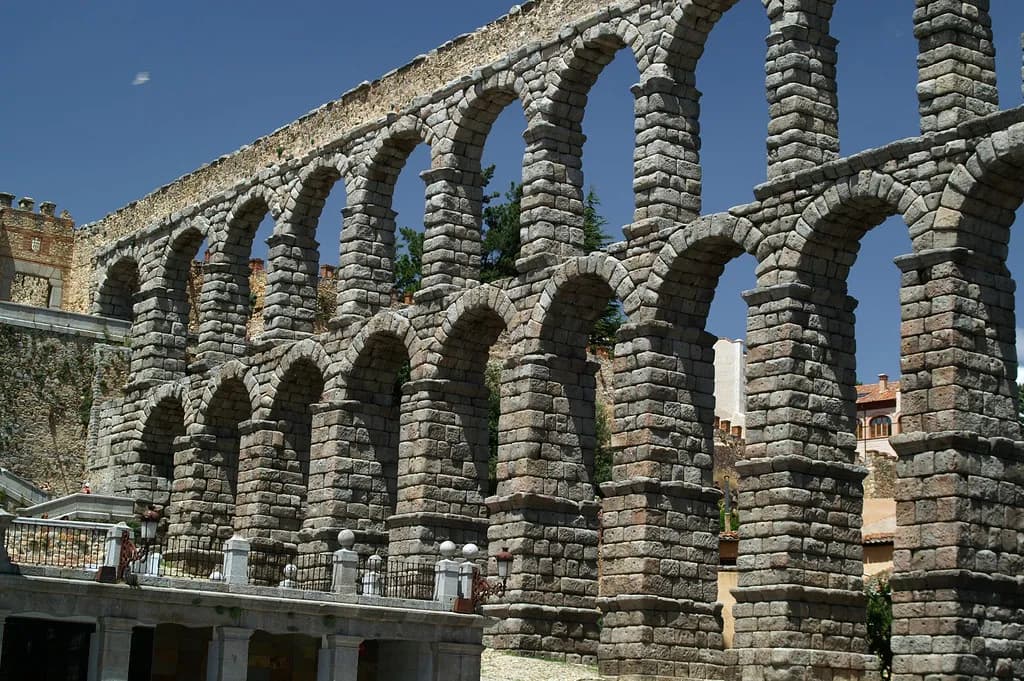
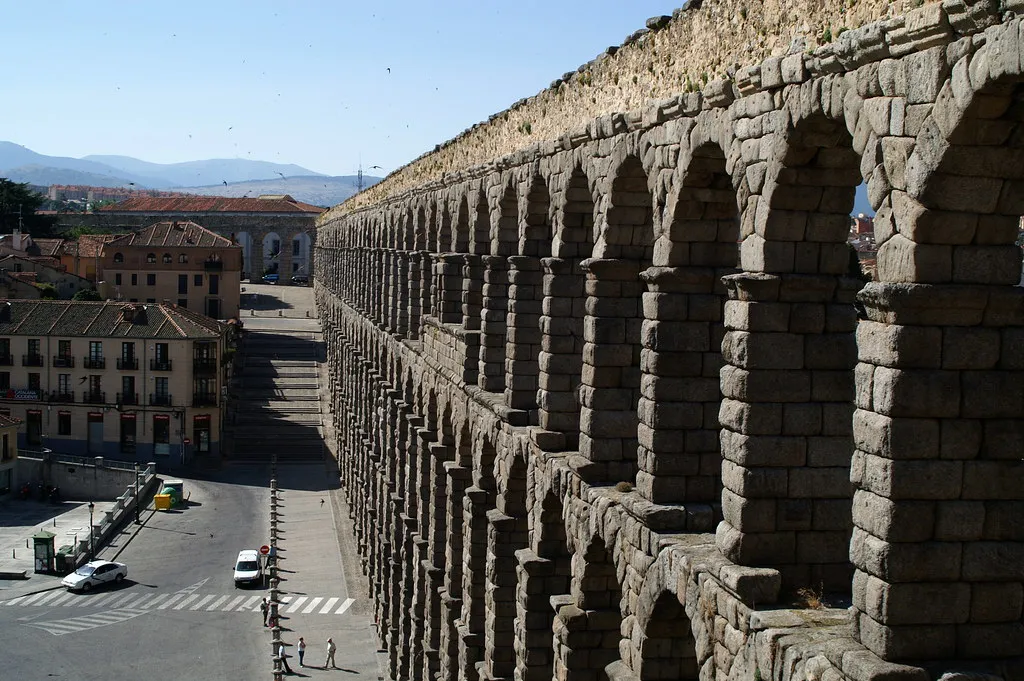
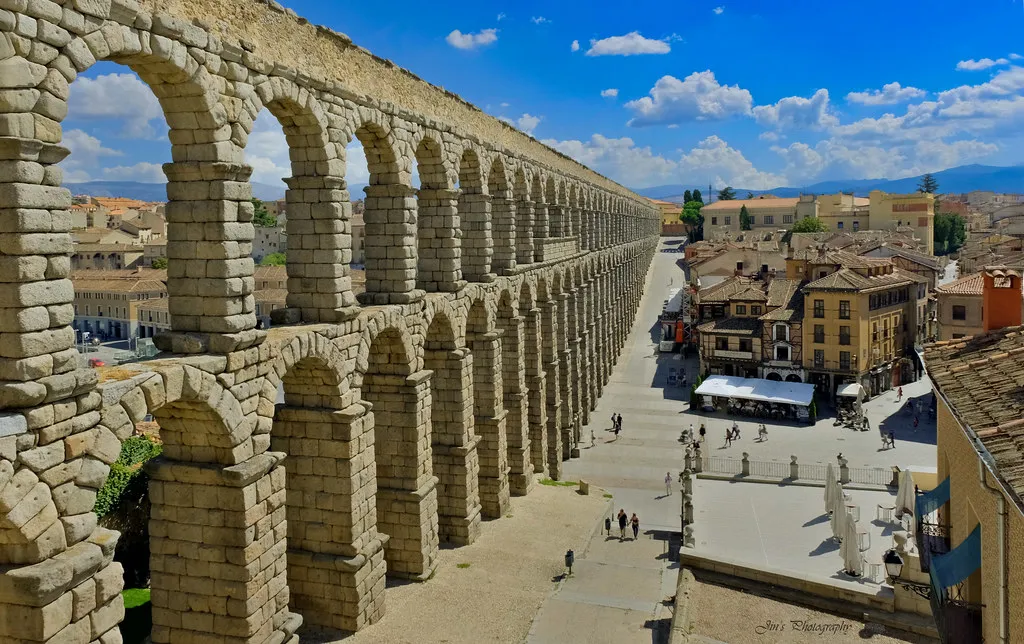
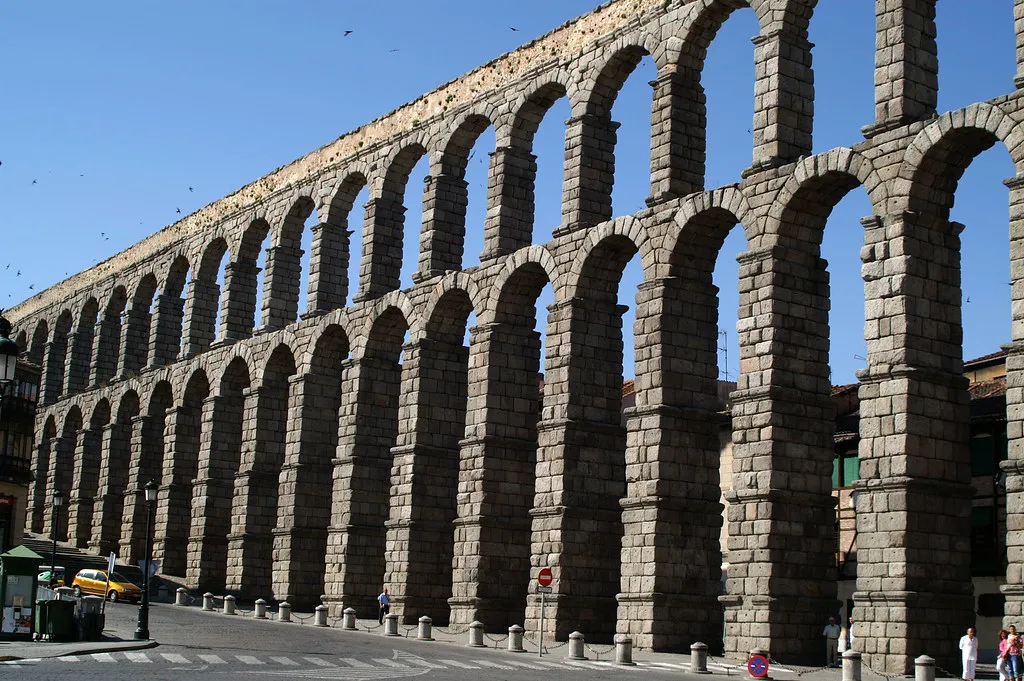
The Roman Aqueduct is where most visitors start, and rightly so. Built in the first century AD without a drop of mortar, it carries 20,000 interlocking granite blocks across 167 arches up to 29 metres high. Entry to view and walk around the Aqueduct is completely free. Climb the stone stairway to the elevated walkway at Plaza del Azoguejo for a different perspective — from up there you look along the full length of the structure with the old city behind it. This is one of the best-preserved elevated Roman aqueducts anywhere in the world, and standing at its base genuinely stops you in your tracks.
Segovia Cathedral is a ten-minute walk uphill from the Aqueduct, sitting at the high point of the old town on Plaza Mayor. Known as the "Lady of the Cathedrals," it was the last Gothic cathedral built in Spain — construction began in 1525 and the building took nearly 200 years to complete. Inside there are more than 20 individual chapels, carved choir stalls, 16th-century stained glass, and a lower-level museum. Entry costs €4 (adults) from Monday to Saturday; on Sundays admission is free between 09:30 and 13:15, which is a significant saving that no other major sight in the city replicates. Standard opening hours are approximately 09:30–18:30 (until 21:30 in summer). You can also book a tower-climbing tour for panoramic views over the city.
The Alcázar of Segovia sits at the far western tip of the old city, a 15-minute walk from the Cathedral. It is arguably the most dramatic castle in Spain — blue-grey turrets rising from a rocky cliff above the confluence of two rivers. The interior holds armour collections, the ornate Hall of Kings with its gilded ceiling and busts of 52 monarchs, and the Royal Chambers where Queen Isabella reportedly planned Christopher Columbus's 1492 voyage. Admission is €9 for adults (€7 with reduced rate); climbing the Torre de Juan II for the best views of the city and surrounding Sierra de Guadarrama costs an extra €4. Book online in advance at the official Alcázar website, especially for weekend visits when timed entry slots sell out. Opening hours are 10:00–18:00 (until 20:00 in summer).
Jewish Quarter, Plaza Mayor, and Where to Eat
Between the Aqueduct and the Cathedral lies Segovia's Jewish Quarter (Judería), a tangle of narrow cobblestone streets lined with artisan workshops, ceramic shops, and small restaurants. This neighbourhood existed from the 10th century until the Jewish expulsion from Spain in 1492, and the winding layout reflects medieval urban planning rather than any later renovation. It takes about 30 minutes to wander through without a specific agenda, or longer if you stop in the shops. The alleyways running parallel to Calle Juan Bravo offer the quietest and most photogenic stretches.
Plaza Mayor is the natural midpoint of the day and the obvious place for lunch. The plaza is dominated by the Cathedral on one side and ringed by arcaded buildings housing cafes and restaurants. The local speciality is cochinillo asado — roast suckling pig traditionally served with just a plate and a theatrical cut with the edge of a ceramic dish to prove how tender it is. A typical set lunch menu (menú del día) at a plaza restaurant runs €15–€22 per person including a starter, main, dessert, and a glass of wine. Restaurants along the square fill up quickly after 13:30 on weekends, so aim to arrive by 13:00 or have a reservation.
Museums, Art, and Culture in Segovia
Beyond the three headline attractions, Segovia has a quieter cultural layer worth knowing about. The Corpus Christi Church on Plaza Corpus Christi holds a remarkable piece of history: the original Gothic cloister from Segovia's previous cathedral, which was destroyed in a fire during the 1520 Comunero revolt. The cloister was physically dismantled, transported stone by stone, and rebuilt here — making it one of the most unusual architectural survivals in Castile. Entry is free or by small donation, and the church is almost always uncrowded even when the Alcázar queue stretches outside.
The Alcázar's own museum rooms function as a dedicated museum of Castilian medieval history. The weapons room alone — with crossbows, medieval cannons, and full suits of armour including a notably small example made for a young heir — is worth at least 45 minutes. There is also a room dedicated to female rulers, which includes a suit of armour made for a woman, a detail that surprises nearly every visitor. The Segovia Cathedral museum in the lower cloister level holds Renaissance paintings and royal artefacts spanning three centuries.
For contemporary work, the Casa de la Moneda (Royal Mint) near the river at the base of the Alcázar cliff houses a permanent exhibition about Segovia's role as the first mechanised mint in Spain. Entry is around €3. It is a five-minute detour from the path between the Aqueduct and the Alcázar and rarely mentioned in standard day-trip guides.
Parks, Gardens, and Outdoor Spots
The area around the Alcázar opens onto a series of riverside paths and gardens that most day-trippers skip entirely. From the castle's eastern gate, steps descend through the Jardines de los Hoyos into the valley below where the Eresma and Clamores rivers meet. The path along the river bank is shaded and cool even in summer, and the views back up at the castle walls are unlike anything you see from inside the city. Allow 20–30 minutes for this loop before heading back up into the old town.
The city walls and the road that runs beneath the south face of the old town (Paseo del Salón and Paseo de la Alameda) offer continuous views across the valley toward the Sierra de Guadarrama. The mountains are snow-capped from November through April, which makes spring the most visually dramatic season for this walk. It connects the area near the Aqueduct back toward the Cathedral and lets you see the old city's silhouette from the outside.
How to Get the Best Photos of Alcázar de Segovia
The iconic postcard view of the Alcázar — showing the entire castle from across the valley with the Cathedral behind it — requires a short hike that takes you outside the city walls and down into the river gorge. From the Alcázar's western entrance, descend into the gardens below the castle walls until you reach the Eresma River. Cross the river and walk uphill on the trail toward the main road. The terrain is rough in places and you will gain about 80 metres of elevation, so sturdy shoes are necessary. The whole route from the Alcázar gate and back takes about 90 minutes at a comfortable pace.
The best single viewpoint is Mirador del Alcázar y los dos Valles, which you can find on Google Maps. From here you see the Alcázar, the Cathedral spire, the old city, and the Sierra mountains in a single frame. Earlier in the day (before 10:30) gives softer light and fewer other photographers on the trail. The second viewpoint worth stopping at is Mirador de la Pradera de San Marcos, a wide open meadow slightly lower down that gives a more frontal view of the castle from across the flat valley floor.
If you only have an hour to spare, skip the full hike and walk south from the Alcázar along the road outside the walls for 10 minutes. There are partial views from several informal pull-offs that give a sense of the castle's cliff setting even without the climb. The full hike rewards you with an entirely different picture from anything sold in the souvenir shops inside the city.
Family-Friendly and Budget-Friendly Options
Segovia works well for families with children because all three major sights are within a short walk of each other and the city has no significant traffic inside the old walls. The Alcázar draws children immediately — the armour room and the Torre de Juan II are popular with kids of all ages, and the castle's narrative (medieval battles, royal intrigue, Disney rumours) is easy to make engaging. The bus from Madrid Moncloa is the cheapest transport option at around €9–€12 return, and if you time your Cathedral visit for Sunday morning you get free entry between 09:30 and 13:15, cutting your total attraction spend considerably.
A realistic budget day without a guided tour: €11 return train (booked in advance) + €9 Alcázar + €4 Cathedral + €15 menú del día lunch = approximately €39 per adult. With the free Sunday Cathedral admission it drops to around €35. Children under 6 enter the Alcázar free; there are reduced rates for students and pensioners. The Aqueduct, Jewish Quarter, city walls walk, and the Alcázar viewpoint hike all cost nothing. You can have a full, rich day in Segovia without spending more than €40–€50 all in if you plan the timing correctly.
For families wanting a structured experience, half-day guided tours from Madrid that focus on the Aqueduct and Alcázar (skipping the Cathedral) are available from around €35 per adult and often include child rates. These tours typically use the Moncloa bus, which drops you within a five-minute walk of the Aqueduct, and return early enough to be back in Madrid by 16:00.
How to Plan a Smooth Segovia Day
Leave Madrid on the first or second morning train (07:05 or 08:00 from Chamartín). Arriving at the Aqueduct before 09:30 means the plaza is nearly empty and the early light is excellent for photos. Walk uphill through the Jewish Quarter to the Cathedral. If it is a Sunday, enter the Cathedral during the free window (09:30–13:15) before the regular admissions crowd arrives. From the Cathedral, continue west to the Alcázar — your advance ticket has a timed slot, so arrive at your booked window. After the Alcázar, either do the viewpoint hike (add 90 minutes) or descend to the riverside gardens for the lower-cost version. Return through the old town to Plaza Mayor for lunch between 13:00 and 14:00, then spend the afternoon browsing the streets or visiting the Corpus Christi Church and Casa de la Moneda before heading back to the bus or train station by 17:30–18:00.
Book train tickets and Alcázar entry at least two to three weeks in advance for any weekend between March and October. Midweek visits in spring (April–May) or autumn (September–October) are quieter, cheaper, and the weather is ideal — mild temperatures and lower humidity than July and August. August sees the most visitors and the hottest temperatures; if you go in summer, start as early as possible and do the Alcázar viewpoint hike before 09:00 or after 18:00 to avoid the midday heat.
The one mistake most first-time visitors make is underestimating the time needed at the Alcázar. Budget at least 90 minutes inside, not just 45. If you rush through the castle to fit in more sights, you miss the tower views and the museum rooms that make it more than just a pretty facade. Prioritise depth over coverage on this particular attraction and the day will feel more rewarding than checking off a list.
Frequently Asked Questions
Which Segovia day trip from Madrid options fit first-time visitors?
First-time visitors should prioritize independent travel via high-speed train for flexibility. Alternatively, a guided tour offers convenience and expert insights. Both options allow you to see the main highlights easily.
How much time should you plan for a Segovia day trip from Madrid?
Plan for a full day, dedicating 8-10 hours in Segovia itself, plus travel time. The high-speed train journey is about 30 minutes each way. This allows ample time for sightseeing, lunch, and a relaxed pace.
What should travelers avoid when planning a Segovia day trip from Madrid?
Avoid visiting without booking Alcázar tickets in advance, especially during peak season. Also, try to avoid wearing uncomfortable shoes, as Segovia involves a lot of walking. Don't rush your lunch; savor the local cuisine.
A Segovia day trip from Madrid rewards anyone willing to leave the capital for one day. The combination of Roman engineering, medieval castle, Gothic cathedral, and a walkable old town in a single compact city is exceptional. Plan your transport in advance, time your Cathedral visit for a Sunday morning if you want free entry, and set aside 90 minutes for the Alcázar viewpoint hike — that combination turns a good day trip into a great one.
For more ideas on how to spend your time around the Spanish capital, see our guides to top things to do in Madrid and the the best time to visit. You can also read about where to stay in the city to choose the neighbourhood closest to Chamartín station for an early departure.
You might also like


Continue reading
More guides you'll find useful