Semana Santa Malaga Travel Guide
Plan Semana Santa Malaga with top picks, neighborhood context, timing tips, and practical booking advice for a smoother trip.
On this page
Semana Santa Malaga: Your Guide to Holy Week 2026
Semana Santa Malaga is one of the most intense cultural experiences in southern Spain. From 29 March to 5 April 2026, the city's historic centre shuts down for traffic, fills with incense, and becomes the stage for processions that have run without interruption for over 500 years. This is not a festival you watch from a distance — it surrounds you.
Understanding what actually happens on each day, where to stand, and what the competing sounds and sights mean makes the difference between a confusing week and an unforgettable one. This guide covers the full picture: the processions, the traditions behind them, practical viewing strategy, and what else is happening in Málaga at the same time.
Plan with trusted sources: cross-check opening hours and seasonal details with the official Andalusia tourism board, and read more about the city on its Wikipedia entry before you go.
What Is Semana Santa in Málaga?
Semana Santa — Holy Week — is the annual commemoration of the Passion, Death, and Resurrection of Jesus Christ. In Málaga, it takes a distinct form shaped by centuries of Andalusian tradition. Between 6 and 10 processions take place every day across the week, each organised by a different brotherhood (cofradía). Every procession begins and ends at the brotherhood's home church and winds through the historic centre on a fixed route.
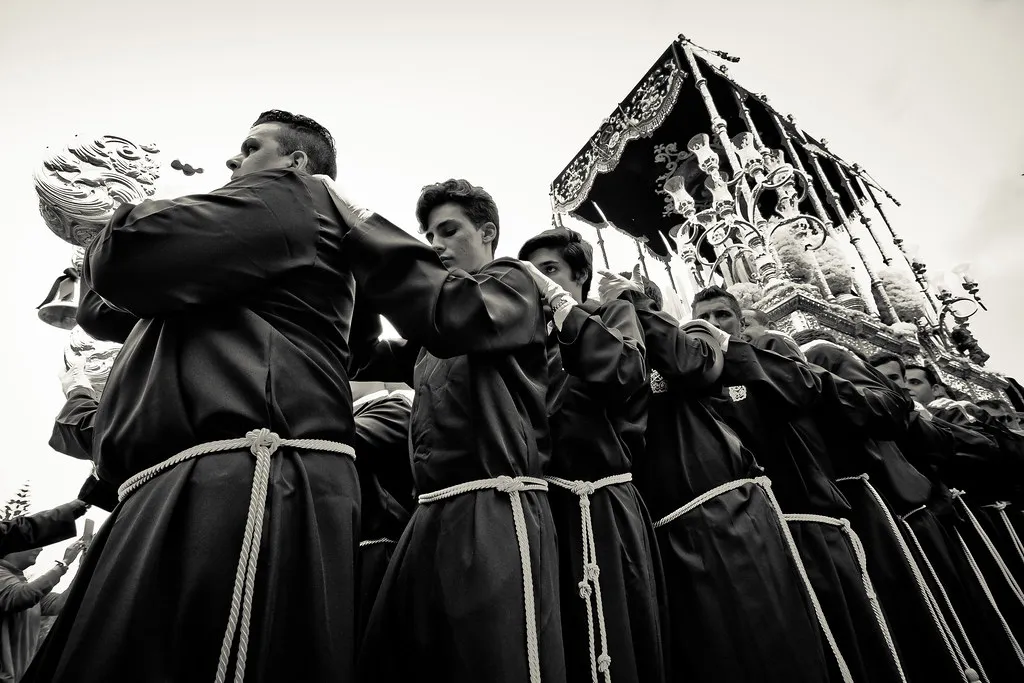
What sets Málaga apart from other Spanish cities is the sheer scale of the thrones (tronos) and the emotional intensity of the week. The tronos here weigh between 3,200 and 4,200 kg and are carried entirely on the shoulders of costaleros (bearers) — not on wheels. Each throne requires between 160 and 280 men walking in a crouched position under a wooden frame, unable to see where they are going. The processions can run from 15:00 until 06:00 the following morning.
The experience is both religious and deeply civic. Families line the routes for hours. Locals rent balconies for hundreds of euros. The atmosphere swings between reverent silence and spontaneous emotion — particularly when a saeta rings out. A saeta is an improvised flamenco-style lament sung from a balcony or the street as a throne passes below. Often performed by singers of gypsy origin, it stops the procession in its tracks and draws silence from the entire crowd. Hearing one is one of the most striking moments you can have during the week.
When Is Semana Santa Málaga 2026?
In 2026, Semana Santa in Málaga runs from Sunday 29 March (Palm Sunday) through Sunday 5 April (Easter Sunday). Holy Thursday (2 April) and Good Friday (3 April) are public holidays in Spain. Most shops close on those afternoons; bars and restaurants typically stay open but get extremely crowded.
- Palm Sunday: 29 March 2026
- Holy Monday: 30 March 2026
- Holy Tuesday: 31 March 2026
- Holy Wednesday: 1 April 2026
- Holy Thursday: 2 April 2026 (public holiday)
- Good Friday: 3 April 2026 (public holiday)
- Holy Saturday: 4 April 2026 (no processions)
- Easter Sunday: 5 April 2026
Note that there are no processions on Holy Saturday — the brotherhoods observe the day as a vigil before the Resurrection. If you arrive on Saturday expecting processions, you will find the city quieter than the rest of the week.
The History of Semana Santa in Malaga
The origins of Semana Santa in Málaga trace back to the Christian Reconquest. Ferdinand II of Aragon and Isabella I of Castile completed the Reconquista in 1492 with the fall of Granada, and the Catholic Monarchs set about re-Christianising a population long under Moorish rule. Because most people were illiterate, religious images carried through the streets served as living Bible stories — the same purpose the massive tronos still serve today.
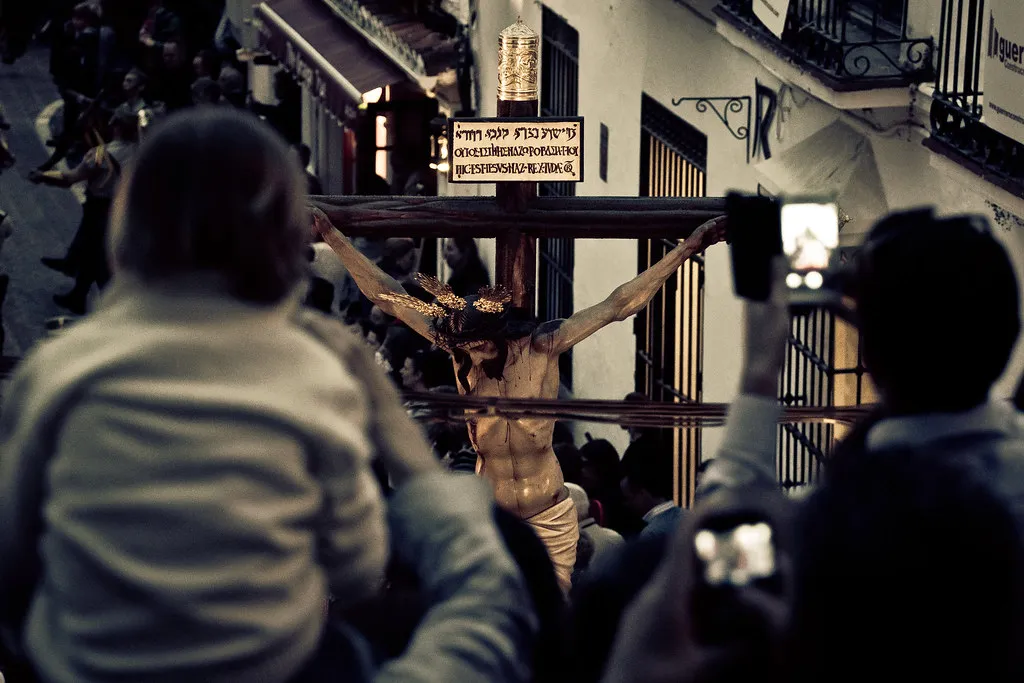
Brotherhoods began forming in the 16th century, initially as charitable religious societies. The Agrupación de Cofradías, established in 1921, now coordinates and sequences the processions so that multiple brotherhoods can use the same city-centre routes without colliding. There are currently 41 brotherhoods in Málaga participating across the week.
The processions were suppressed during parts of the 20th century but always revived. The tradition has deep personal resonance for many Malagueños: families pass down membership in brotherhoods across generations, and young children grow up expecting to eventually carry the throne their grandfather carried. The famous actor Antonio Banderas is a native of Málaga and returns every year to participate with his brotherhood — the Virgen de Lágrimas y Favores, which sets out on Palm Sunday evening.
Must-See Processions: Day-by-Day Guide
With dozens of processions across eight days, the hardest question for first-time visitors is which ones to prioritise. Here are the standouts by day, chosen for their visual spectacle, cultural significance, or emotional intensity.
| Day | Date 2026 | Key Procession | Highlight | Best for |
|---|---|---|---|---|
| Palm Sunday | 29 March | La Pollinica | Children with palm fronds; festive opener | Families, first-timers |
| Holy Monday | 30 March | El Cautivo | "Lord of Málaga" — most beloved image; huge crowds | Devotion & atmosphere |
| Holy Tuesday | 31 March | Multiple brotherhoods | Good mid-week pace; less crowded main route | Free street viewing |
| Holy Wednesday | 1 April | Multiple brotherhoods | Mood shifts toward solemnity; saetas more frequent | Flamenco/saeta fans |
| Holy Thursday | 2 April | Mena & Spanish Legion | Legion boat arrival at Muelle Uno 10:00; military march | Spectacle seekers |
| Good Friday | 3 April | Servitas (midnight) | Streetlights off; total silence; no bands | Most intense experience |
| Holy Saturday | 4 April | No processions | Corrida Picassiana at La Malagueta bullring | Cultural alternative |
| Easter Sunday | 5 April | Resurrection procession | Joyful close; lighter music; celebratory | Uplifting finale |
Palm Sunday (29 March) — La Pollinica. The week opens on a joyful note. Children wave palm fronds, and custom says you should wear new clothes. It is the most family-friendly procession and a good first introduction to the format before the week becomes more intense.
Holy Monday (30 March) — El Cautivo. El Cautivo is arguably the most beloved image in all of Málaga — locals call it "the Lord of Málaga." Thousands of residents accompany the procession for its entire route. The devotion on display is unlike anything else in the week.
Holy Thursday (2 April) — Mena and the Spanish Legion. This is the most dramatic moment of Semana Santa. The Spanish Legion arrives at Málaga's port (Muelle Uno) by boat in the morning, disembarking to crowds of hundreds. They then march through the city in the afternoon before carrying the Cristo de Mena throne, singing their famous hymn "Novio de la Muerte" (Bridegroom of Death). It is military, mournful, and utterly unlike any other procession. Arrive at Muelle Uno by 10:00 if you want to see the boat arrival — space fills fast.
Good Friday (3 April) — Servitas. A midnight procession in near-darkness. The streetlights along the route are switched off. This procession does not use marching bands — only silence and footsteps. For many people it is the most affecting experience of the entire week.
Consult the official itineraries for precise route timings for 2026. You can find the full schedule on the Diario Sur procession guide or pick up a printed itinerario at the tourist office on Calle Marqués de Larios.
The Tronos, Nazarenos, and the Sounds of the Week
Understanding what you are looking at makes the processions far more absorbing. Each procession is structured the same way. At the front come the nazarenos — members of the brotherhood wearing long robes and a tall pointed hood called a capirote. The exact colour and design of the robe identifies which cofradía they belong to. Some walk barefoot as penance. Some carry rough-hewn wooden crosses or shackle chains on their feet. The veil worn by the Virgin figures can reach 8 to 9 metres in length.
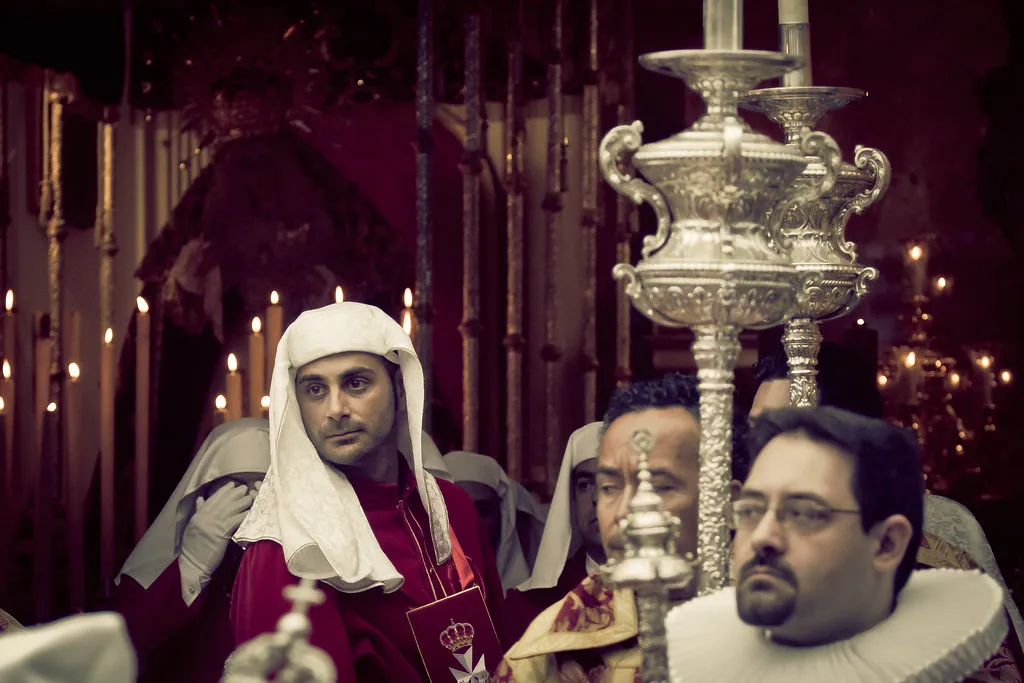
The tronos come in two per procession: one carrying a figure of Christ at a point in the Passion story, one carrying the Virgin Mary. The Cristo de Mena throne alone requires 260 costaleros; the Virgen de la Paloma requires 280. The costaleros work in near-darkness inside the wooden frame, moving to the beat of a drum and the shouts of the capataz (foreman), who taps the frame with a staff to signal stops and starts. Watching a throne turn a tight corner in a narrow street is a feat of collective human coordination that takes years of training.
The musical backdrop changes mood as the week progresses. Early in the week, bands play dramatic processional marches at a brisk tempo. By Good Friday, the music slows to a crawl, and some brotherhoods dispense with bands entirely, using only drums and trumpets. When a saeta breaks out — that unaccompanied voice from a balcony — the band stops, the bearers halt, and the entire crowd falls silent. It is one of those moments that lands differently for everyone.
Viewing Strategy: Where to Watch and What It Costs
You do not need to spend a single euro to watch Semana Santa. The processions move through public streets and anyone can stand and watch for free. That said, the experience varies enormously depending on where you position yourself.
The main tribune is at Plaza de la Constitución and along Calle Larios. Locals call the reserved chairs here "la Tribuna de los Ricos" — the rich tribune. Box seats for the full week can cost up to €600, booked months in advance through the Agrupación de Cofradías. Individual chairs on resale platforms go from around €70. If you just want a seated view, the beginning of Calle Carretería has standing-room crowds and is known affectionately as "la Tribuna de los Pobres" — free, noisy, and full of locals.
For free street viewing, the key rules are: arrive at least 90 minutes before a major procession, claim a spot on the kerb, and stay. Once crowds form, movement is nearly impossible. Elevated positions — windowsills, steps, bollards — significantly improve visibility. If you have young children, a small folding stool brings them up to a viable height. Side streets off the main route offer a less compressed crowd and sometimes a better view of the throne turning a corner, which is where the real drama happens.
The historic centre becomes effectively impassable to vehicles every afternoon during procession days. Plan your accommodation within walking distance of the centre, or budget for a longer taxi ride from outside the cordon. The practical tips for visiting Málaga page has more on navigating the city.
The Corrida Picassiana: Saturday 4 April 2026
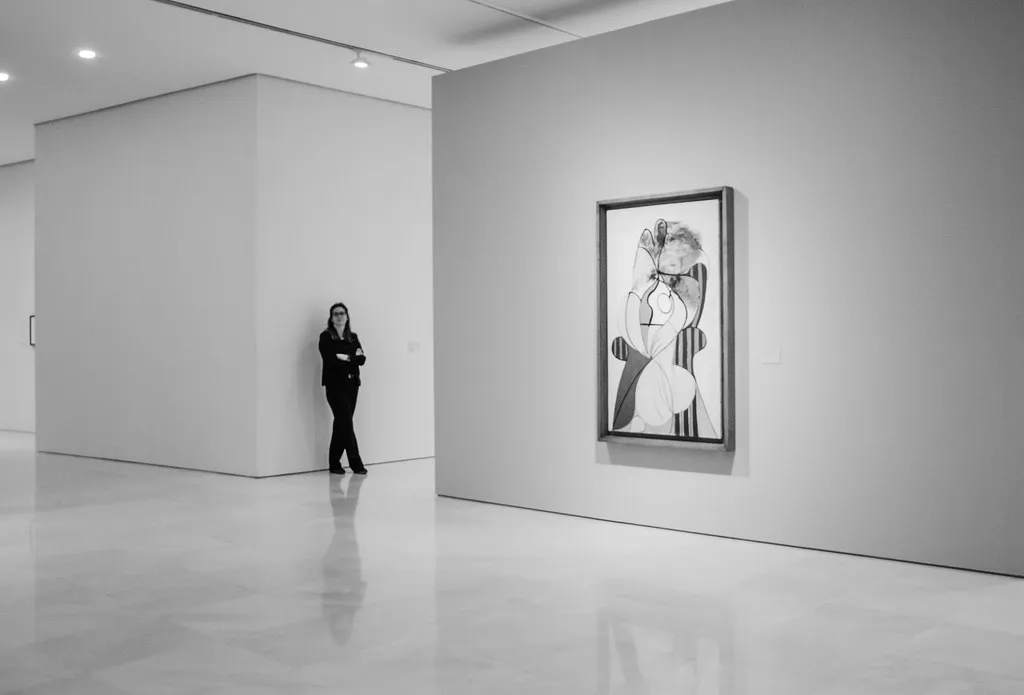
Holy Saturday falls on 4 April 2026, and with no processions scheduled, the city hosts a very different kind of spectacle: the Corrida Picassiana. This is a special bullfight held at the Plaza de Toros La Malagueta — Málaga's 19th-century bullring just east of the centre — that pays tribute to Pablo Picasso, who was born in the city in 1881.
The arena is dressed with scenography and visual references drawn from Picasso's work. It is not a standard corrida: the event blends the formal structure of bullfighting with Málaga's artistic identity, and it tends to draw visitors interested in local cultural heritage rather than committed aficionados. Tickets are limited and can sell out; check the bullring's official listings and the Semana Santa de Málaga programme for 2026 pricing and availability.
For visitors curious about the history but not wanting to attend a live bullfight, La Malagueta also offers guided tours of the stadium and museum, which give context to the culture without the live event. This is also one of the only quieter afternoons of the week if you simply want to walk the seafront or visit the Picasso Museum Málaga without peak-week crowds.
Important Travel Tips for Semana Santa
The week rewards preparation. These are the practical details that most first-timers only learn by experience.
- Do your sightseeing in the mornings. After roughly 15:00 on procession days, the historic centre becomes extremely crowded and movement slows to a shuffle.
- Holy Thursday and Good Friday are public holidays. Most businesses close; stock up on food and water the day before.
- Wear flat, closed shoes. The streets accumulate candle wax from the nazarenos — it is slippery and invisible in low light.
- Download or pick up a printed itinerario. Routes change slightly each year and no app fully replaces the official paper schedule.
- If you are staying in the historic centre, confirm with your accommodation that you can access it after 15:00. Some streets become completely blocked and staff should be able to advise on alternative entry points.
- Carry water. April in Málaga is warm, queuing and standing in crowds for hours is physical work, and vendors charge a premium.
Málaga's beaches — including La Malagueta Beach — are about 20 minutes' walk east of the procession routes and offer a genuine escape if you need to decompress mid-week. Pedregalejo, a former fishing village 4 km from the centre, is typically much quieter during Holy Week and has good seafood restaurants and chiringuitos along the shore.
Family-Friendly and Budget-Friendly Options
Semana Santa Malaga is one of the most accessible festivals in Spain from a cost perspective. Watching the processions is entirely free. The Roman Theatre, near the Alcazaba, is free to enter and sits just off several procession routes — it makes a useful waypoint for families who need to sit down. The city's free attractions are worth building into your daytime schedule: read through the free things to do in Málaga list before you go.
Children engage strongly with the visual drama of the tronos and the nazarenos, but long waiting periods can be difficult. Palm Sunday (La Pollinica) is the best procession for families — it is the most festive and least solemn, runs at a manageable hour, and the sight of children waving palm fronds gives young visitors something they can connect to immediately. For very young children, position yourself at a point where the procession turns a corner: the manoeuvring of a multi-ton throne through a tight street holds attention far better than a long straight stretch of marching.
Traditional Semana Santa sweets — torrijas (a bread-and-milk dessert similar to French toast, soaked in wine and honey), pestiños (honey-glazed fritters), and roscos fritos — appear in bakeries throughout the week and cost very little. They are a genuine and budget-friendly way to taste a part of the tradition.
Experience Semana Santa in Málaga
Semana Santa in Málaga is not a performance put on for tourists. The brotherhoods have been preparing since January — sewing robes, repairing thrones, rehearsing routes. The costaleros train for months. The devotion is real, whether or not you share the faith, and that reality is what makes the week so striking for outside observers. You are watching something that exists for the community first and the visitor second.
The city's character shifts noticeably across the eight days. The earlier days have a more festive, almost carnival energy — families catching up, bars overflowing, children staying out past midnight. By Holy Thursday and Good Friday, the atmosphere becomes genuinely solemn. People cry at the passage of the Christ of Mena. The silence on Good Friday is the loudest thing you will hear all week.
Plan to attend at least three or four different processions across different days. A single procession gives you the format; the variety of moods across the week is what makes it a complete experience. Combine it with the wider city — the top things to do in Málaga includes the Alcazaba, the cathedral, and the Picasso Museum, all of which are open during Semana Santa and far less crowded in the mornings before the processions start.
Luggage Storage During Semana Santa
If you are arriving or departing during Holy Week, moving through the historic centre with luggage is genuinely difficult. Street closures and dense crowds make the usual drag-your-bag-from-the-station route unworkable on procession afternoons.
LOCK & enjoy! operates luggage storage locations across Málaga, including spots near Alameda Principal, Calle Carretería, and Málaga María Zambrano train station. Booking in advance during Holy Week is strongly advisable — demand in this period is high and walk-in availability cannot be guaranteed. Check their current pricing and hours directly, as rates vary by bag size and duration.
Storing your luggage before noon on arrival day gives you a full afternoon free for processions without lugging bags through crowds. On departure days, drop your bags early and use the remaining hours for a final morning walk — the city is noticeably quieter in mornings throughout the week.
Frequently Asked Questions
What is Semana Santa (Holy Week) in Malaga?
Semana Santa in Malaga is the annual commemoration of the Passion of Christ through elaborate street processions. Brotherhoods carry large, ornate 'tronos' depicting religious scenes. It is a week of deep religious and cultural significance, filled with solemnity and community spirit.
When Is Semana Santa in Málaga 2026?
Semana Santa dates vary each year, typically occurring in late March or April. In 2026, Semana Santa in Málaga will run from March 29th (Palm Sunday) to April 5th (Easter Sunday). Plan your visit to Malaga accordingly.
What do the processions look like?
Processions feature hundreds of 'nazarenos' (penitents) in traditional robes and conical hoods, leading large 'tronos.' These massive floats are carried on the shoulders of 'hombres de trono,' accompanied by marching bands playing solemn music. The sight is both visually stunning and emotionally powerful.
What Happens on Easter Sunday?
Easter Sunday marks the culmination of Semana Santa with a joyful procession celebrating the Resurrection. It is a less solemn event than the preceding days, often with lighter music and a more celebratory atmosphere. It signifies the end of Holy Week and the beginning of Easter festivities.
Prefer to Escape the Crowds?
If you prefer to avoid the densest crowds, consider viewing processions from side streets or slightly less central locations. Daytime processions are generally less crowded than evening ones. Explore Málaga's parks or visit museums during peak procession times for a quieter experience.
Semana Santa Malaga offers an extraordinary journey into Andalusian culture and tradition. The vibrant processions and deep spiritual significance create an unforgettable experience. Planning your visit carefully ensures you make the most of this unique event.
From historical insights to practical tips, this guide helps prepare you for the crowds and the emotion. Embrace the opportunity to witness a centuries-old tradition firsthand. Your trip to Málaga during Holy Week will be truly memorable.
Whether you seek cultural immersion or spiritual reflection, Semana Santa delivers. It is a powerful testament to faith and community. Consider exploring more of Roam Spain's travel guides for your next adventure.
You might also like


Continue reading
More guides you'll find useful