Caminito del Rey from Malaga: Your Complete Planning Guide
Plan your perfect Caminito del Rey trip from Malaga with our comprehensive guide. Get details on transport, tickets, what to expect, and essential tips for a smooth adventure.
On this page
Caminito del Rey from Malaga: Your Complete Planning Guide
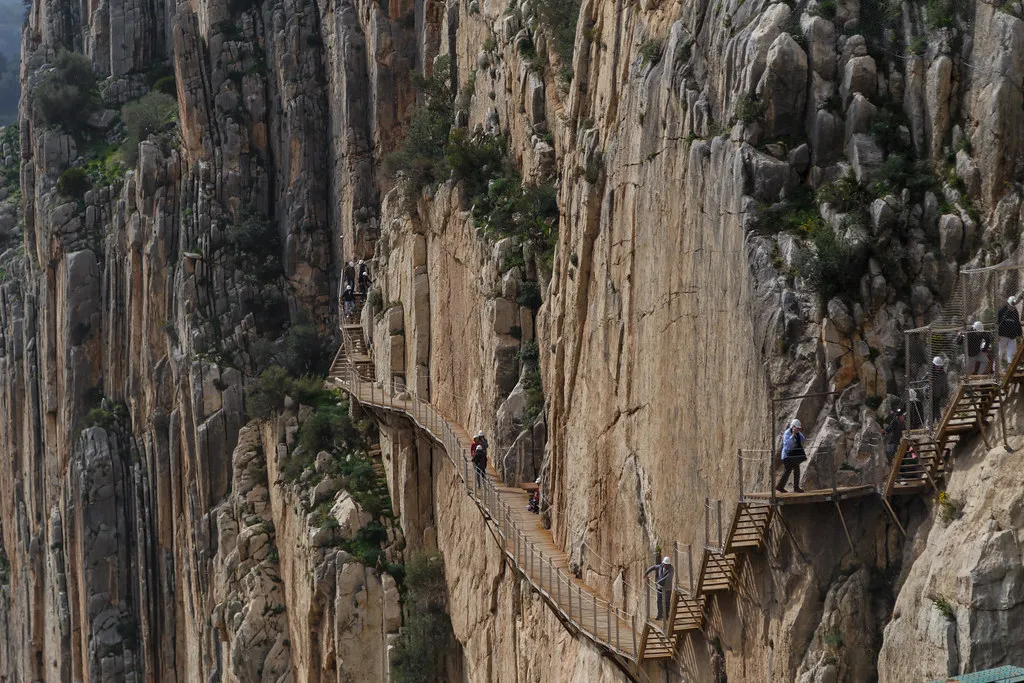
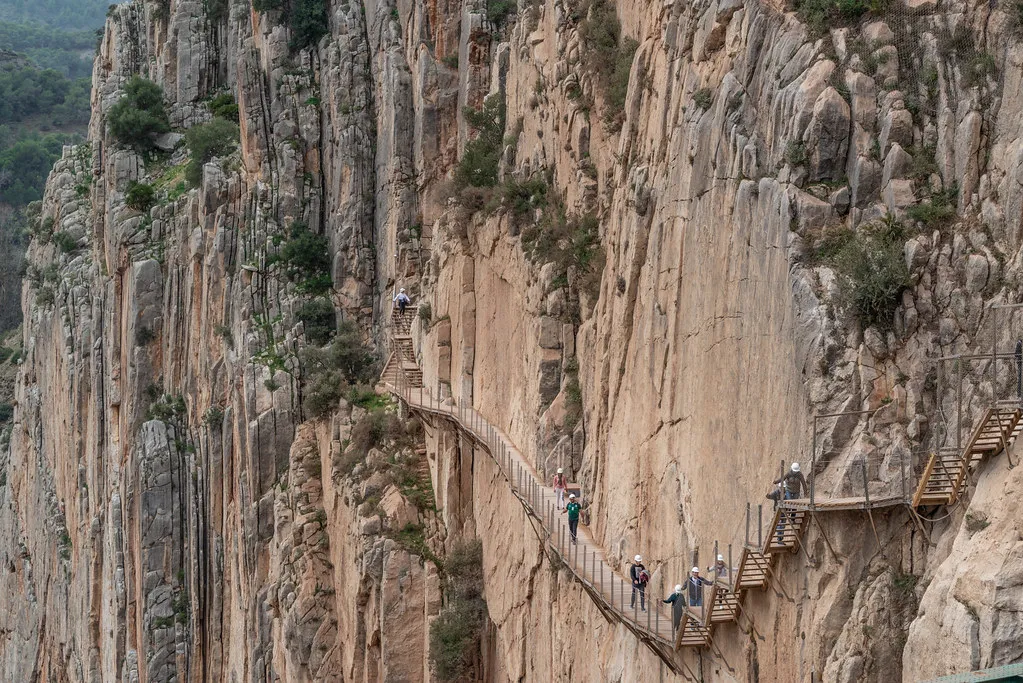
The Caminito del Rey is one of Spain's most dramatic walking experiences — a narrow boardwalk suspended more than 100 metres above the Guadalhorce River, carved into the walls of the Desfiladero de los Gaitanes canyon. From Malaga, it makes an excellent day trip, with the city sitting roughly 60 kilometres to the south. But it takes more planning than most day trips: tickets sell out weeks in advance, there is effectively one practical train each morning, and the walk itself is one-way, ending at a different point from where you started.
This guide covers every step of the logistics — how to get there, which ticket to buy, what to expect on the walk itself, and the one timing mistake that catches first-timers by surprise.
Plan with trusted sources: cross-check opening hours and seasonal details with the official Andalusia tourism board, and read more about the city on its Wikipedia entry before you go.
Where Is Caminito del Rey and How Does the Route Work?
The Caminito del Rey sits inside the Desfiladero de los Gaitanes, a deep gorge carved by the Guadalhorce River in the province of Málaga. The gorge runs between the municipalities of Ardales, Álora, and Antequera. The nearest villages are Ardales to the north and El Chorro to the south — both around 60 kilometres from Málaga city.
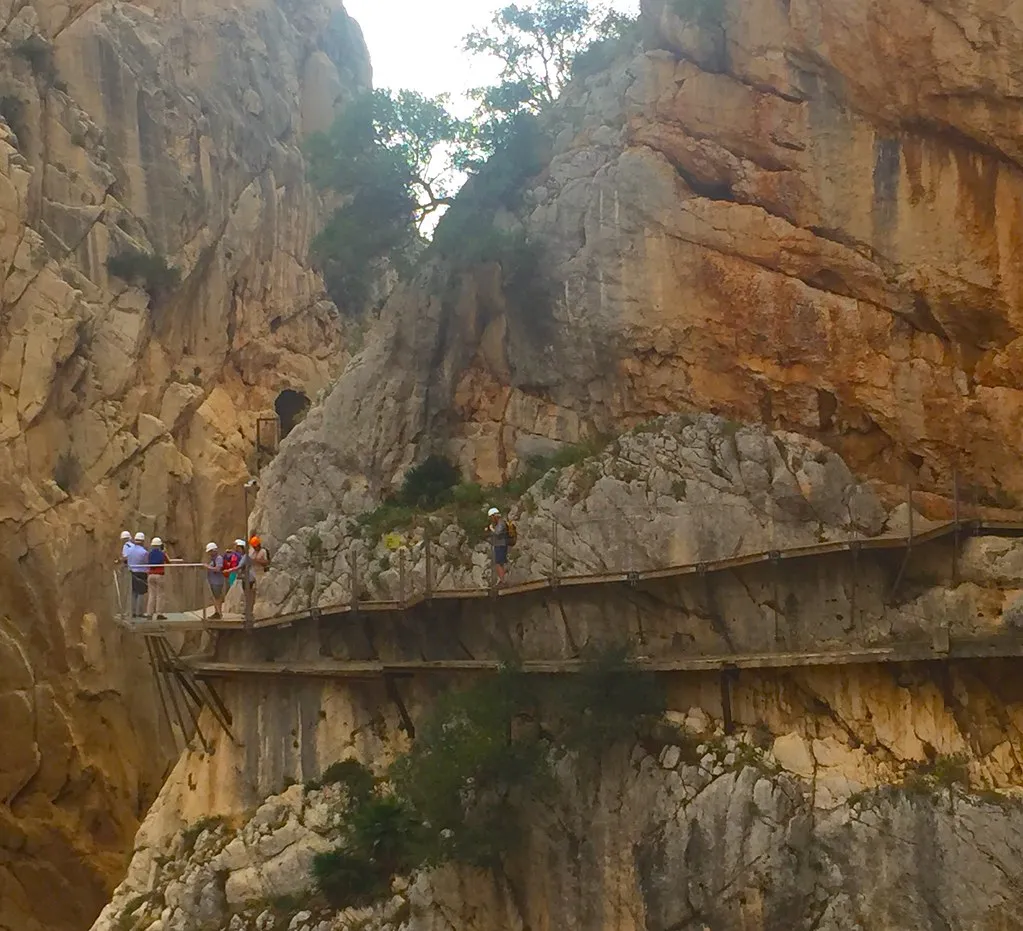
The route runs strictly north to south — you start at the northern access point near Ardales and finish at the southern exit near El Chorro train station. The total distance is 7.7 kilometres, broken into three sections: a 2.7 km access path through forest, the main 3.2 km boardwalk through the gorge, and a 1.8 km path down to El Chorro. Because the route is one-way and ends at a different point from where it starts, a shuttle bus (€2.50, cash only) connects the southern exit back to the northern car park area. If you arrive by train, the journey works in reverse: you take the shuttle from El Chorro station to the northern entrance, walk south, and return to El Chorro to catch your train home.
The path was originally built between 1901 and 1905 for workers maintaining the hydroelectric infrastructure along the gorge. King Alfonso XIII walked it at the inauguration of the Conde de Guadalhorce reservoir in 1921, which is how it earned its name. After decades of disuse and decay the route became notorious as "the world's most dangerous path." It was officially closed in 2000 and reopened in 2015 after a full restoration, with sealed concrete boardwalks, steel handrails, and mandatory safety helmets.
How to Get to Caminito del Rey from Malaga
There are four realistic options for getting from Málaga to the Caminito del Rey: train, car, organised tour, or public bus. Each involves different trade-offs on cost, convenience, and — critically — which entry time slots you can realistically book.
| Option | Journey time | Approx. cost | Flexibility | Best for |
|---|---|---|---|---|
| Train | ~50 min | ~€6.25 each way | Low — one morning service | Budget solo travellers |
| Car | ~50 min | Fuel + parking (~€5) | High — any entry slot | Families, multi-stop days |
| Organised tour | ~60–90 min | €40–€70 incl. ticket | Medium — fixed departure | Sold-out ticket situations |
| Public bus | 2–3 hrs | ~€5–€10 return | Low — infrequent service | Travellers with no time pressure |
By Train
The train is the most popular independent option. Trains depart from Málaga María Zambrano station and take approximately 50 minutes to El Chorro station. There is one practical morning service — currently the MD 13057 departing at 10:06 and arriving at El Chorro at 10:46. A second late-afternoon train exists but arrives too late for hiking. Check current timetables on Renfe.com before booking, as schedules change seasonally.
A single ticket costs approximately €6.25 each way. Once you arrive at El Chorro, take the shuttle bus north to the Kiosko restaurant, which is the trailhead. Count on 1 hour 15 minutes between your train arrival and the moment you reach the official northern entrance gate — factor this into your entry slot when booking Caminito tickets.
The return train leaves El Chorro at around 15:50. If you miss it, your alternatives are a taxi (around €60 to Málaga) or a very long wait. This single constraint is the most important planning detail for train travellers: do not book an entry slot later than 13:00, or you will not finish the walk in time to catch the return service.
By Car
Driving takes about 50 minutes from Málaga city centre. Head north on the A-357 towards Ardales. Car parks are available at the northern access point near Ardales and at El Chorro village. There is a parking fee — bring cash as card readers are not always available. Driving gives you complete flexibility on entry time and allows stops at nearby sights like El Torcal de Antequera or the village of Ardales on the way back.
By Organised Tour
Organised day tours from Málaga typically include return coach transport, your Caminito entry ticket, the shuttle bus, and a bilingual guide. They cost around €40–€70 per person and depart daily from Málaga city centre, with some services picking up along the Costa del Sol in Torremolinos, Fuengirola, and Marbella. Tours handle all the logistics of timing and ticket availability — a strong choice if direct tickets are sold out when you search, or if you'd rather not manage transfers independently.
By Public Bus
Buses from Málaga bus station run to the village of Alora, where you transfer for onward transport towards Caminito del Rey. Services run roughly every two to three hours and the total journey is 2–3 hours each way. This is the cheapest method at around €5–€10 return but requires patience and careful timetable checking. It is not recommended for anyone with a tight schedule.
The Train Timing Problem Most First-Timers Miss
If you are travelling by train, the relationship between your arrival time, your entry slot, and the return train is tight enough that it deserves its own section. Every year visitors arrive at El Chorro by train, discover they booked a 14:00 or 15:00 entry slot, walk the route, and then face either a very rushed exit or a missed train home.
Here is how the timing works in practice. The morning train arrives at El Chorro at approximately 10:46. You wait for the shuttle bus (runs every 20–30 minutes) and ride it to the northern trailhead — approximately 15–20 minutes. You then walk 2.7 kilometres of forest access track to the official entrance gate — roughly 40–50 minutes at a relaxed pace. That puts your earliest realistic arrival at the entrance at around 12:00–12:15. The walk itself takes 2.5–3 hours. Allow 20 minutes to return the helmet and reach the shuttle pickup at El Chorro south exit. The return train leaves at around 15:50.
The practical window for your entry slot is 12:00–13:00. Book anything later and you are racing the clock. Book at 13:00, walk briskly, skip long photo stops, and you will arrive at El Chorro south exit around 16:00–16:15 — after the last practical return train. If the math does not work for you, either drive, book a tour, or accept that you will need a taxi back to Málaga.
Booking Your Caminito del Rey Tickets
Ticket availability is the single most common planning headache. The official website at caminitodelrey.info releases tickets per day and they sell out quickly — often weeks ahead for weekends and public holidays in spring and autumn. The standard entry ticket costs €10 per person and includes a safety helmet. It does not include the shuttle bus, parking, or transport from Málaga.
A guided entry ticket costs around €18–€20 and is often available when the standard tickets are sold out. This happens because tour operators block allocations — when they do not sell their full allotment, they release tickets back to the official site, sometimes the night before. If you find the official site sold out, check back at different points during the day and check again late in the evening before your intended visit date.
Renfe sells a combined package from Málaga María Zambrano that bundles the train, the shuttle bus, and the Caminito entrance ticket. In 2026 the price is approximately €23 per person (or €31 with a guide). These tickets are sold only at Renfe ticket machines (the purple terminals) in María Zambrano station between 06:00 and 09:15, for travel on the same day. A limited number — roughly 70 standard and 30 guided — are available each morning on a first-come first-served basis. Arriving at the station by 07:00 gives a good chance of securing one. This is arguably the best deal for independent travellers who have flexibility on the day.
Buying at the northern entrance ticket office on the day is possible but not recommended. If tickets are sold out you will be turned away after travelling 60 kilometres. Always book in advance, especially for visits between March and November.
Planning Your Visit: Duration, Difficulty, and Best Season
The full walk from the northern trailhead to El Chorro station covers 7.7 kilometres. The core boardwalk section — the part that clings to the cliff face — is 3.2 kilometres. Most people take 2.5 to 3 hours to complete the whole route, including the forest access path. Add time for photos, the helmet handover at the start, and waiting for the shuttle bus at both ends. Plan for a total of 5–6 hours from arrival at the northern car park to departure from El Chorro.
The route is graded medium-low difficulty. The path is almost entirely flat or gently downhill, so fitness is not a major barrier. The sections most likely to cause discomfort are the narrow boardwalks over the gorge — not because they are dangerous (they are heavily reinforced with handrails on both sides) but because the drop below is visible and striking. Most visitors who describe themselves as moderately uncomfortable with heights complete the walk without problems. Children under 8 are not permitted on the route. Children aged 8 and above must present ID at the entrance.
The best months to visit are March through May and September through November. Temperatures in spring and autumn sit between 15°C and 25°C — comfortable for several hours of walking. Summer (June through August) is manageable but the exposed cliff sections receive direct sunlight and midday temperatures can exceed 35°C; an early entry slot is essential. In winter the route sometimes closes after heavy rain or strong wind; check the official site the day before any winter visit.
What to Wear and Bring
Footwear is the most important item. Wear closed-toe shoes with grip — trail runners or light hiking boots are ideal. Sandals, flip-flops, and smooth-soled casual shoes are not allowed. The path surface is mostly sealed concrete but includes some uneven rock sections, particularly on the forest access track.
Dress in layers. Even on a warm day the deep gorge is shaded and can feel cool, while the exposed sections in full sun are hot. A breathable t-shirt, a light mid-layer, and a windproof jacket cover most conditions. In winter or if rain is possible, bring a waterproof outer layer. The helmet provided at the entrance must be worn throughout the walk — it cannot be removed until you exit the gorge section.
- Bring at least 1.5 litres of water per person. There are no water points on the trail itself.
- Pack some snacks — there is a kiosk-restaurant at the northern trailhead but nothing on the path.
- Sunscreen, sunglasses, and a hat for exposed sections in summer.
- Bring your ID or passport — it is checked at the entrance against your ticket booking name.
- Carry €3–€5 in cash for the shuttle bus (€2.50) and parking if you drive. Card payment is often not accepted at both.
- A charged phone for navigation and photos. Mobile signal is intermittent inside the gorge.
What to Expect on the Day
On arrival at the northern access point you pass through a short tunnel and walk 2.7 kilometres through pine forest to the entrance control cabin. Here your ticket is scanned, your ID is checked, and you collect a safety helmet. Entry is managed in batches roughly every 30 minutes to space out groups on the narrow sections — expect a short queue at peak times.
The boardwalk sections begin after the entrance gate. The path winds along the cliff face, crosses the spectacular Hoyo Valley via a pinch point of exposed rock, and passes through the most dramatic narrowing of the Gaitanes Gorge. The suspension bridge near the midpoint is a highlight — the river runs over 100 metres below. Despite the exposure, the walkway is wide enough for two people to pass, the handrails are solid, and there is never a section where a fall is realistically possible under normal behaviour.
The path exits the gorge at the southern access point. Walk 2 kilometres to the shuttle bus stop near El Chorro station, where you return your helmet and board the bus back to the northern parking area or continue to the train station for the return journey. The shuttle bus runs between approximately 07:50 and 20:00.
Extending Your Day: Nearby Stops Worth Adding
If you are driving, the area around the Caminito del Rey rewards an early start and a slow return. The village of Ardales, 7 kilometres north of the northern access point, has a small castle ruin and a string of bars on the main plaza serving local dishes — the plato de los montes, a grilled meat platter typical of the Málaga interior, is common here and worth stopping for after the walk. Ardales also sits above the Embalse del Conde de Guadalhorce reservoirs, where kayaking and paddleboarding are available in summer.
El Torcal de Antequera is 45 kilometres east and makes a natural second stop for anyone with a car. It is one of the most unusual limestone landscapes in Spain — a plateau covered in eroded rock formations, with well-marked hiking loops of 1.5 to 3 kilometres. The combination of Caminito del Rey in the morning and El Torcal in the afternoon is a full but very rewarding day.
If you prefer to stay overnight and make a slower trip of it, El Chorro has several small hotels and guesthouses within walking distance of the train station and shuttle bus stop. Staying the night means you can explore the area at a relaxed pace, try some of the alternative hikes around the gorge, and avoid the early morning rush to secure train or ticket reservations. See top things to do in Málaga and where to stay in the city if you are still deciding how to structure your trip.
Frequently Asked Questions
How long does it take to walk Caminito del Rey?
The Caminito del Rey walk typically takes 2.5 to 3 hours to complete. This includes the access paths and the main boardwalk section. Allow extra time for photos and shuttle bus transfers.
What is the best season to visit Caminito del Rey?
The best seasons to visit Caminito del Rey are spring (March-May) and autumn (September-November). The weather is pleasant for hiking, and the landscapes are vibrant. Summer can be very hot, while winter might bring closures due to rain or wind.
What should I wear to walk Caminito del Rey?
Wear comfortable, closed-toe walking shoes with good grip. Dress in layers, as temperatures can change, and bring a hat, sunglasses, and sunscreen. A small backpack for water and snacks is also highly recommended.
Where is Caminito del Rey located?
The Caminito del Rey is located in the Desfiladero de los Gaitanes canyon in Málaga province, Spain. Its main access points are near the towns of Ardales (northern entrance) and El Chorro (southern exit), approximately 60-90 kilometers from Málaga city.
The Caminito del Rey is one of Andalusia's standout experiences — dramatic scenery, genuine history, and a walk that feels adventurous without being technically difficult. Getting there from Málaga is manageable on any budget, but the logistics require advance planning. Book your ticket as early as possible, check the train timetable before locking in an entry slot, and arrive with cash for the shuttle bus. Everything else is straightforward.
For more help planning your time in the region, see our guide to the best time to visit Málaga and how many days you need.
You might also like


Continue reading
More guides you'll find useful