

Barcelona Neighborhoods Guide Travel Guide
Plan barcelona neighborhoods guide with top picks, neighborhood context, timing tips, and practical booking advice for a smoother trip.
On this page
Barcelona Neighborhoods Guide
Barcelona is one of those cities where neighborhood choice genuinely shapes your trip. The areas here are distinct enough that staying in the wrong one can mean 40-minute metro commutes to sights you planned to walk to, or paying tourist-area prices when a quieter street two neighborhoods over would cost you 30% less. This Barcelona neighborhoods guide cuts through the noise so you can pick the right base before you book anything else.
The city divides into four main districts that matter for visitors: Ciutat Vella (the old town), Eixample, Gràcia, and the coastal strip around Barceloneta. Within those you have a dozen or so distinct barrios, each with a different density of tourists, a different price point, and a different relationship to public transport. Understanding those differences takes most of the guesswork out of planning.
Below you will find honest assessments of the six neighborhoods most worth considering, a quick summary table for those short on time, practical transport notes, and a section on a few lesser-known areas worth knowing about.
Plan with trusted sources: cross-check opening hours and seasonal details with the official Barcelona tourism board, and read more about the city on its Wikipedia entry before you go.
Quick Summary of the Best Barcelona Neighborhoods
All six neighborhoods listed here are central and reasonably well connected. The differences come down to atmosphere, price, and tourist density — not access to sights. Here is the short version before the detail.
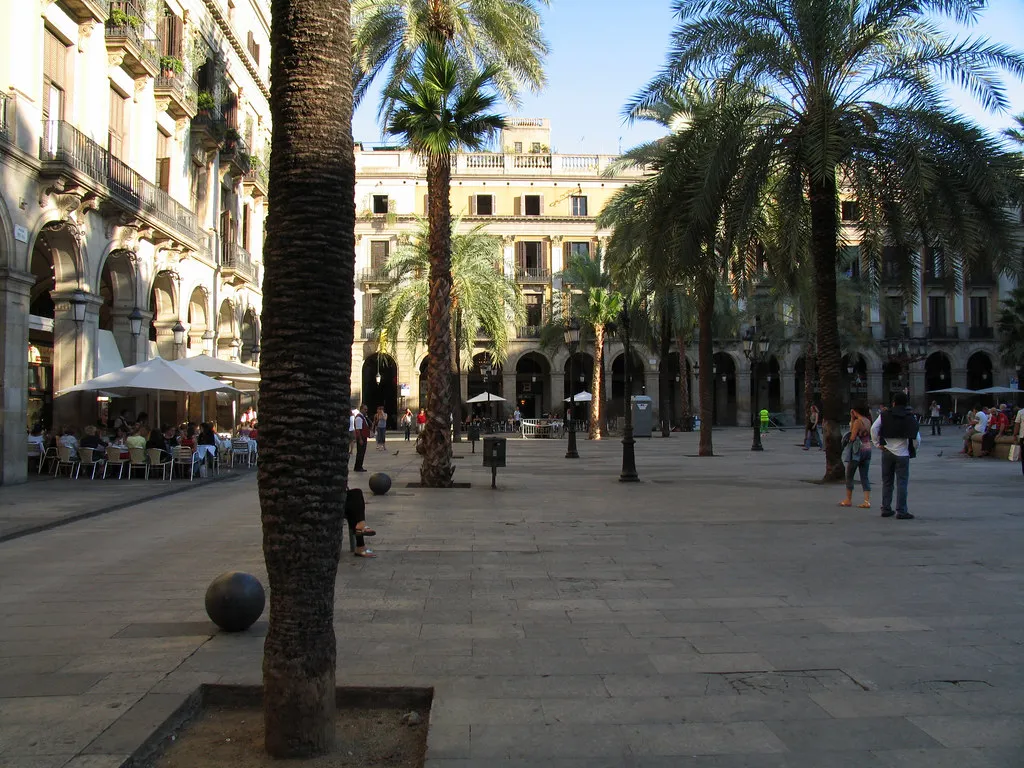
- La Dreta de l'Eixample — best for first-time visitors; close to Gaudí landmarks, elegant streets, higher prices.
- Gràcia — best for longer stays and families; bohemian, local feel, requires metro to reach the historic center.
- Sant Antoni — best for food-focused travelers; hip market scene, fewer tourists, good value.
- El Born — best for those who want the historic center feel with slightly less crowding than Gothic Quarter.
- Esquerra de l'Eixample — best for returning visitors and budget travelers; residential, affordable, excellent metro access.
- Barrio Gótico — best for maximum sightseeing convenience; beautiful but heavily touristic in peak season.
| Neighborhood | Best For | Tourist Density | Price Range/Night | Metro Access |
|---|---|---|---|---|
| La Dreta de l'Eixample | First-time visitors | Moderate | €150–300 | Excellent |
| Gràcia | Longer stays, families | Low | €100–200 | Edge stops only |
| Sant Antoni | Food-focused travelers | Low–Moderate | €80–160 | Good |
| El Born | Historic center feel | Moderate | €120–250 | Good |
| Esquerra de l'Eixample | Returning visitors, budget | Low | €80–150 | Excellent |
| Barrio Gótico | Sightseeing convenience | High | €175–300 | Excellent |
If you are spending just one or two nights, La Dreta de l'Eixample or El Born gives you the most within walking distance. If you are staying three or more nights and want to feel like less of a tourist, Gràcia or Sant Antoni will serve you better.
La Dreta de l'Eixample — Top Pick for First-Time Visitors
La Dreta de l'Eixample — the "right side" of the Eixample district — is the strongest all-round choice for most first-time visitors in 2026. It sits between Plaça de Catalunya and the Sagrada Família, with Passeig de Gràcia running straight through its center. Casa Batlló, La Pedrera, and a dozen other modernist buildings are within a ten-minute walk of almost any hotel in the area.
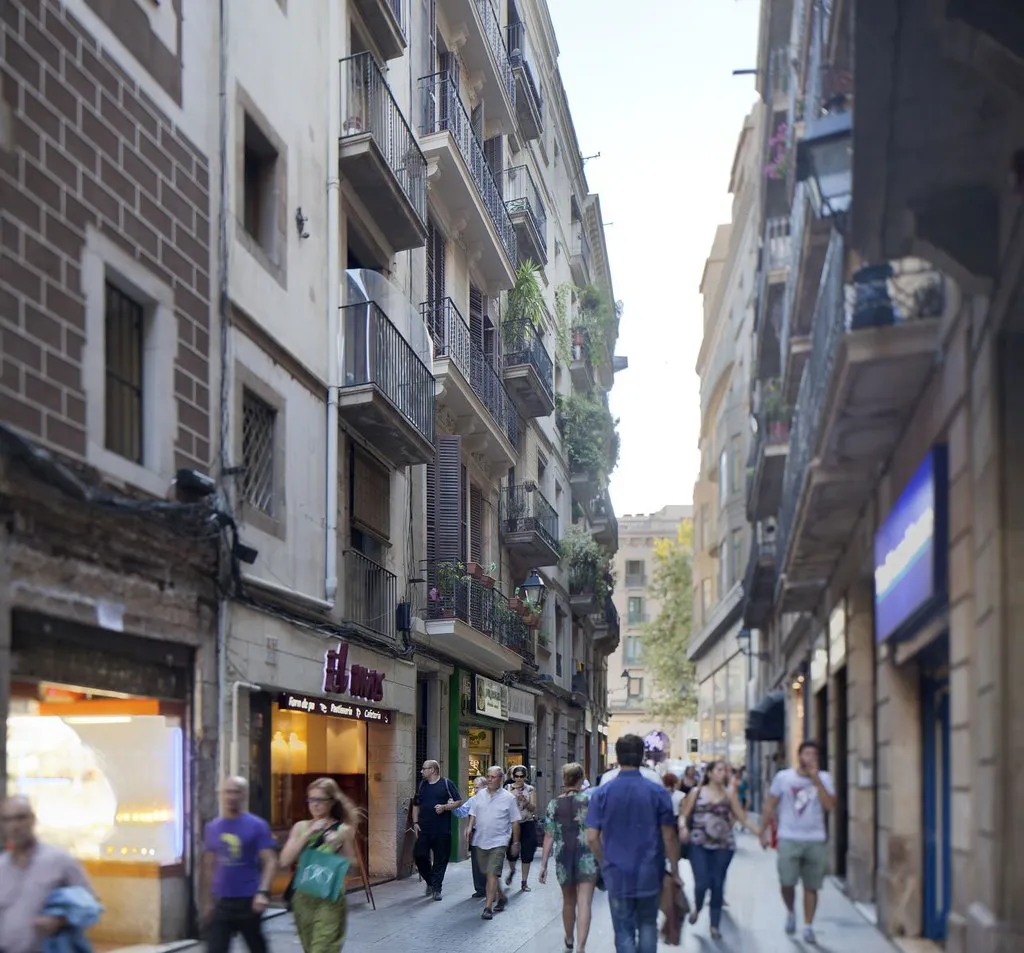
The grid layout makes navigation simple and the wide pavements feel noticeably less chaotic than the narrow medieval streets further south. You are never more than one or two metro stops from the Gothic Quarter and about 20 minutes on foot from El Born. Hotels here run expensive — expect to pay €150–300 per night for a solid mid-range option — but the convenience justifies it for short stays.
One practical note that most guides skip: when you search "Eixample hotels" on booking platforms, results often default to the Esquerra (left) side, which is a different neighborhood with a very different character and further from the key sights. Always check the map before confirming. The right side is east of Passeig de Gràcia and north of Gran Via de les Corts Catalanes.
Good hotel anchors in the area include the Radisson Blu 1882 (€200–300), a few blocks from the Sagrada Família with a rooftop pool, and the Occidental Diagonal 414 (€120–200), which offers solid value with good metro access near the Verdaguer stop.
Gràcia — For Local and Laidback Vibes
Gràcia sits just north of Eixample and feels like a different city. It was an independent village until the 19th century and still carries that energy: plazas where locals actually sit and drink coffee, narrow streets with independent shops, and almost no large chain restaurants. If you have been to Barcelona before and want something more authentic, this is the neighborhood most worth considering.
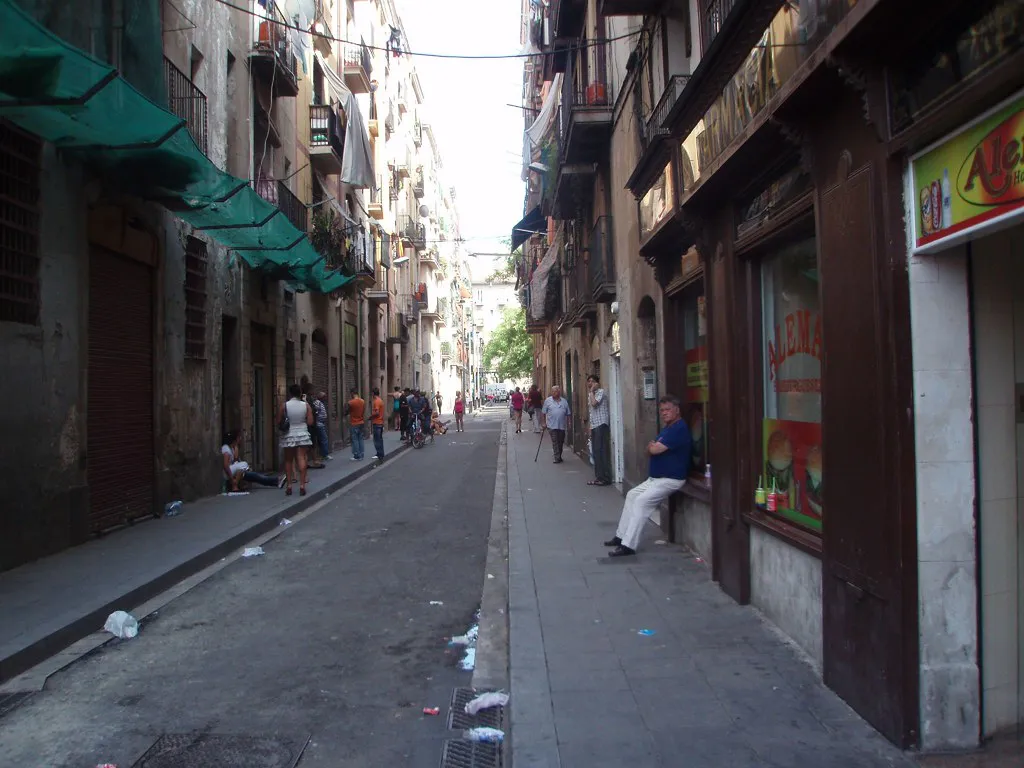
The best parts of Gràcia center on Plaça del Sol and Plaça de la Vila de Gràcia. Both squares are lined with bars and fill up in the evenings with a genuinely local crowd. Gaudi's Casa Vicens is here — less visited than his other works and worth an hour. Park Güell is a 20-minute walk uphill from the heart of the neighborhood.
The main trade-off is distance. There are no metro stations in the center of Gràcia — the closest stops ring the neighborhood at its edges. Plan 15 minutes on foot plus a metro ride to reach the Gothic Quarter. For a one-night stay this is impractical. For three or more nights it quickly becomes irrelevant as you settle into the rhythms of the neighborhood.
One thing to know about timing: if you visit in the second half of August, Gràcia hosts the Festa Major de Gràcia, one of the city's biggest street festivals. The streets are decorated by residents and the neighborhood is packed day and night for a week. Hotel prices in Gràcia specifically spike during this period — book six to eight weeks ahead if your dates overlap with the festival (usually 15–21 August). Outside of that window, Gràcia typically offers better value than comparable stays in Eixample or El Born. The Seventy Barcelona (€200–400) and Hotel Catalonia Gracia (€150–200) are the most-cited options.
Sant Antoni — Hip and Trendy with Great Dining
Sant Antoni is the neighborhood that travel writers keep calling a hidden gem even though it has not been one for several years. It is now one of the most enjoyable places to eat and drink in Barcelona, and it is still less touristy than El Born or the Gothic Quarter. The anchor is the Mercat de Sant Antoni, a beautifully restored 19th-century iron market that reopened after renovation and transformed the surrounding streets.
The area around the market — particularly along Carrer del Parlament and Carrer de Manso — has filled up with vermouth bars, natural wine shops, and modern tapas places that cater to a mix of locals and food-focused visitors. Sunday mornings bring a book market around the market's perimeter and a particular energy that makes the whole neighborhood feel alive without feeling chaotic.
From a practical standpoint, Sant Antoni sits just west of Esquerra de l'Eixample and south of the Eixample grid. The Universitat and Rocafort metro stops give you good access to the city. Accommodation is generally cheaper than in Dreta de l'Eixample and the neighborhood does not attract the large tour groups that clog El Born and the Gothic Quarter. It is a good fit for travelers who prioritize food, evening atmosphere, and local character over proximity to specific monuments.
El Born — A Less Touristy Alternative to Barrio Gótico
El Born sits between the Gothic Quarter and the Parc de la Ciutadella and shares many of the same qualities as the historic center — medieval architecture, narrow pedestrian streets, a dense concentration of bars and restaurants — without quite the same volume of tourist foot traffic. The Picasso Museum and the Basílica de Santa Maria del Mar are both here. The Palau de la Música Catalana is a ten-minute walk north.
The neighborhood is genuinely lively in the evenings. Passeig del Born, the central pedestrian boulevard, is lined with bars and fills up late. The quality of restaurants is high for the price range. El Xampanyet on Carrer de Montcada is worth knowing: it has been serving house cava and montaditos for decades and does not take reservations, so arrive by 19:00 or expect to wait.
If you want to be right in the historic center and are choosing between El Born and the Gothic Quarter, El Born is the better call for most people. It is walkable to the same sights, slightly less overwhelmed with tour groups, and has a stronger dining and drinking scene. Hotels are limited directly in El Born — many "El Born" listings on booking sites are actually in Eixample, so check the pin. The Grand Hotel Central (€400–500) is the standout luxury option actually in the neighborhood. Learn more about the area in our the Gothic Quarter for a comparison of the two adjacent neighborhoods.
Barrio Gótico — Beautiful and Heavily Touristic
The Barrio Gótico is the oldest part of Barcelona, built on top of the Roman city of Barcino. The streets are genuinely medieval, the squares are photogenic, and the concentration of historical sights — the Catedral de Barcelona, the remains of the Roman walls, Plaça Reial, Plaça de Sant Jaume — is higher here than anywhere else in the city. From a sightseeing standpoint, it is the most convenient neighborhood in Barcelona to be based in.
The downside is significant: from March through October, the Gothic Quarter is one of the most crowded tourist areas in southern Europe. The narrow streets fill up with tour groups by mid-morning and do not empty until late evening. Pickpocketing is common and the quality of restaurants on the main routes is inconsistent — many places rely on foot traffic rather than reputation. The better eating and drinking is on the quieter streets: look for Carrer del Bisbe, the area around Plaça dels Traginers, and the streets behind the cathedral.
Whether to stay here comes down to your priorities. If maximum sightseeing convenience matters most and you are visiting for two nights in shoulder season (November, February, or early March), it is a fine choice. If you are visiting in July or August with more than two nights, the crowds will wear you down and a base in El Born or Eixample makes more sense. Hotels tend to be mid-range in price: Catalonia Catedral (€200–300) and Portal de L'Àngel (€175–250) are reliable options.
Esquerra de l'Eixample — Affordable for Returning Visitors
Esquerra de l'Eixample — the left side of the Eixample grid, west of Passeig de Gràcia — is where a lot of Barcelona residents actually live. It has no major tourist sights of its own and looks similar to the right side of Eixample (the same wide streets, the same Modernista buildings) but without the premium pricing that proximity to Gaudí's landmarks commands. It is residential, walkable, and well-served by metro.
The neighborhood is known for its LGBTQ+ scene, concentrated around Carrer del Consell de Cent and Carrer de Muntaner, and for a strong cluster of restaurants and bars that cater to locals rather than tourists. The Mercat de Sant Antoni is on the southern edge of Esquerra, making it a good base for food lovers. The Corner Hotel (€200–300) and Hotel Villa Emilia (€200) are solid mid-range picks.
For returning visitors who already have the major sights handled and want to spend more time eating, shopping, and wandering, Esquerra de l'Eixample is the practical choice. You save money on accommodation, you are close to good food, and you can reach any part of central Barcelona within 20 minutes by metro. The main limitation is the same as on the right side: it is not a neighborhood you will fall in love with aesthetically the way you might with Gràcia or El Born.
La Barceloneta — For Beach Access and Coastal Life
La Barceloneta is the narrow peninsula that juts into the sea between the Port Olímpic and the old harbor. It is primarily residential, densely built, and home to Barcelona's main city beach. From April through September, the beach is busy and the neighborhood has a particular energy: fishermen's bars, padel courts, early-morning joggers, and sunset crowds all existing in a compact space.
It is not the first recommendation for a first-time visit because it is genuinely further from the main sights — the Gothic Quarter is a 20-minute walk or one metro stop, and the Sagrada Família requires either a 30-minute walk or a connection. But for visitors who prioritize beach access or who have been to Barcelona before and want a different base, it works well. The W Barcelona (€300+) is the most recognizable hotel, built directly on the beach. The Hotel Arts Barceloneta (€200+) offers a similar seaside position with a slightly lower price floor.
For eating, the seafood here is genuinely good — La Barceloneta was a fishing quarter and the paella at places like Salamanca or XupXup has a better claim to authenticity than anything served on La Rambla. One insider detail: Bar Jai-Ca on Carrer de la Ginebre is a small tapas bar with no website and no social media that locals use as a reference point for honest Catalan cooking. No reservations, cash only.
Other Neighborhoods Worth Knowing About
Two neighborhoods sit just outside the standard recommendations but deserve a mention for certain types of travelers. El Raval, directly west of the Gothic Quarter, is one of Barcelona's most culturally diverse areas. It is home to the MACBA (Museu d'Art Contemporani de Barcelona) and Palau Güell, and it has a younger, more counter-cultural atmosphere than most of the neighborhoods above. It is genuinely local and less polished, which some travelers find appealing and others find uncomfortable. Hotels here are cheaper than in the Gothic Quarter for comparable centrality.
El Poble Sec, at the foot of Montjuïc Hill, is worth considering if you are visiting for the Fundació Joan Miró or spending time at Montjuïc. The tapas bar Quimet & Quimet on Carrer del Poeta Cabanyes is one of the most cited local institutions in the city — a small standing-room bar that has been serving montaditos and canned conservas since 1914. The neighborhood has become notably more expensive in the last two years as it has attracted attention, but it is still cheaper than Eixample and well connected by the Paral·lel metro stop. Check out top things to do in Barcelona for more on what the Montjuïc area offers.
Getting Around Barcelona Neighborhoods
Barcelona's metro system has 12 lines and around 160 stations. It covers the city well enough that no central neighborhood is more than two stops from a major connection point. A single journey costs €2.55 in 2026; a T-Casual ten-journey card costs €12.55 and works across metro, bus, and tram. For a four-night stay you will typically use eight to twelve single journeys, making the T-Casual the better value.
Walking is underused by first-time visitors. The distance from the Gothic Quarter to the Sagrada Família is about 3 km — roughly 35 minutes on foot through Eixample. The distance from El Born to Gràcia is similar. If the weather is good and you have time, walking between neighborhoods is often the best way to see the city. The Eixample grid makes navigation trivially easy compared to the medieval street pattern of the old town.
Cycling has improved significantly. Barcelona now has over 230 km of protected bike lanes and the city's Bicing scheme is available to residents with an annual subscription. Visitors cannot use Bicing, but rental bikes are easy to find near Plaça de Catalunya and in El Born. A day rental typically costs €15–20. The terrain is flat across most of the city; the hills only begin at Gràcia, Park Güell, and Montjuïc.
For planning purposes: if your hotel is in Dreta de l'Eixample, Gràcia, El Born, or the Gothic Quarter, you can reach all the major sights either on foot or in one metro stop. If you are in Barceloneta, La Barceloneta metro station (Line 4) connects you directly to Jaume I (for the Gothic Quarter) in four minutes. Consult our guide on getting around the city for full transport options including the airport bus and night bus network.
Barcelona Planning Cheatsheet
A few practical notes that save time and money across any neighborhood choice. Book tickets for the Sagrada Família, Casa Batlló, and Park Güell online before you arrive. All three use timed-entry slots and sell out days or weeks ahead in peak season (June–September). The Sagrada Família in particular is frequently sold out 30 days in advance for popular morning slots.
Dinner in Barcelona starts late by northern European standards. Most restaurants do not fill up until 21:00 and many kitchens close at 23:30. If you sit down at 19:30 you will often be the only people in the restaurant and will occasionally find a prix-fixe menu de la noche that is not available later in service. The market lunch is the best value: a three-course menú del día with wine runs €12–18 in most neighborhoods outside the Gothic Quarter and La Rambla, where prices inflate by 30–50% for comparable food.
Pickpocketing is a real issue in the Gothic Quarter, on La Rambla, at the Sagrada Família entrance, and on the L3 metro line between Liceu and Drassanes. Use a front pocket or a bag with a zipper. This is not a reason to avoid these areas — it is simply worth knowing before you arrive so the awareness is already there. Consider the Barcelona City Pass for potential savings if you plan to visit multiple major attractions in a short window. Check our guide to free things to do for a list of no-cost options that fit around any neighborhood base.
Finally, the busiest months are June, July, and August. If you have flexibility, late September through November and March through May offer noticeably fewer crowds, lower hotel prices, and more comfortable temperatures for walking. The city operates year-round and the off-peak months are underrated.
A Few Quick Things to Know About Barcelona
Barcelona runs on Catalan time as well as Spanish time. Shops typically open at 10:00 and close by 20:00 or 21:00, with some smaller shops still observing an afternoon break between 14:00 and 17:00. Supermarkets and larger stores in central neighborhoods run continuously. Sunday trading is more restricted outside of the tourist center.
Catalan is the co-official language alongside Spanish. Most menus, museum signage, and street names are in Catalan first. In practice, English is widely spoken in tourist-facing businesses across all central neighborhoods. Making an attempt at basic Spanish is appreciated; attempting Catalan (even just a "gràcies" for thank you) is noticed positively by locals and sets you apart from the default tourist experience.
Tipping is not built into the culture the way it is in the United States. In casual bars and cafes, rounding up or leaving coins is normal. In sit-down restaurants, 5–10% for good service is common but not obligatory. On La Rambla and in the Gothic Quarter, some tourist-facing restaurants will add a service charge automatically — always check the bill before adding more.
Frequently Asked Questions
Which Barcelona neighborhoods guide options fit first-time visitors?
First-time visitors often enjoy the Gothic Quarter for its history or El Born for its bohemian vibe. Both offer central locations and easy access to major sights. Consider Eixample for its grand architecture and excellent transport links. Each neighborhood provides a distinct experience.
Gothic Quarter: where to eat?
The Gothic Quarter offers many dining options, from traditional tapas bars to charming cafes. Look for authentic Catalan restaurants tucked away in its narrow streets. You can also find modern eateries serving international cuisine. the city's best tapas bars can be found here.
El Born: where to stay?
El Born provides a variety of boutique hotels and stylish apartments. Staying here offers a mix of historic charm and modern amenities. It is a great choice for those seeking a lively yet authentic atmosphere. Many options cater to different budgets.
Eixample: where to eat?
Eixample is known for its wide array of dining, from upscale restaurants to casual bistros. Many of Barcelona's finest dining establishments are located in this elegant neighborhood. Explore the various streets for diverse culinary experiences.
Barceloneta: where to stay?
Barceloneta is perfect for beach lovers and offers a vibrant, lively atmosphere. You'll find a mix of apartments and hotels with easy access to the beach. It's a great choice for those who want to combine city exploration with coastal relaxation.
Exploring Barcelona's diverse neighborhoods unveils the city's true character and charm. Each area offers a unique atmosphere, from historical grandeur to modern vibrancy. Choosing the right base enhances your overall travel experience.
This Barcelona neighborhoods guide helps you navigate the city's rich cultural landscape. Whether you seek history, art, food, or relaxation, Barcelona has a perfect spot for you. Plan your trip with confidence and embrace the local vibe.
Enjoy discovering the hidden gems and iconic sights that make Barcelona an unforgettable destination. Your adventure through these distinct areas promises lasting memories. Start planning your perfect Barcelona getaway today.
You might also like


Continue reading
More guides you'll find useful


