Barcelona 2 Day Itinerary: Ultimate Guide for First-Timers
Plan your Barcelona 2 day itinerary with top attractions, neighborhood context, timing tips, and practical booking advice for a smoother trip.
On this page
Barcelona 2 Day Itinerary: Your Perfect First-Timer's Guide
Barcelona is a city bursting with vibrant culture and stunning architecture. Planning a short visit can feel overwhelming with so much to see. This 2-day Barcelona itinerary is crafted specifically for first-time visitors. It focuses on hitting the city's most iconic highlights without feeling rushed.
I built this itinerary after multiple visits to Barcelona, ensuring a realistic pace. You'll experience the best of Gaudi, explore historic neighborhoods, and savor delicious food. 2026 is a particularly special year to visit — it marks 100 years since Antoni Gaudi's death, and the Sagrada Familia is set to reach a major completion milestone. Get ready for an unforgettable journey through Catalonia's capital.
Plan with trusted sources: cross-check opening hours and seasonal details with the official Barcelona tourism board, and read more about the city on its Wikipedia entry before you go.
Is Two Days Enough for Barcelona?
Two days in Barcelona is enough to see the city's defining landmarks and understand what makes it unique. You will cover Gaudi's architecture, the Gothic Quarter, the waterfront, and get a genuine taste of the food scene. For most first-timers, this is a satisfying and complete introduction.

The honest trade-off: you'll move at a brisk pace, and a few things will have to wait. The beaches, Montjuïc, Camp Nou, and the quieter neighborhoods of Poblenou or Gràcia require a third day at minimum. If your trip is a stopover within a wider Spain or Europe tour, two days is the right call — prioritize depth over breadth. If Barcelona is the main destination, consider arriving on day one and treating the first morning as a buffer for settling in.
Two days also works best if you book everything in advance. Barcelona's most popular sites sell timed-entry slots, and arriving without a ticket for Sagrada Familia will cost you two or three hours in a queue — hours you do not have on a tight itinerary.
Barcelona 2 Day Itinerary: At a Glance
Here's a quick overview of your two days in Barcelona. Each day balances iconic sights with cultural experiences and keeps travel distances manageable.
- Day 1 — Gaudi & Modernisme: Park Güell (morning) → Hospital de Sant Pau → Sagrada Familia (afternoon) → Passeig de Gràcia evening stroll with Casa Batlló and Casa Milà
- Day 2 — Gothic Quarter & the Sea: Barcelona Cathedral and Gothic Quarter (morning) → El Born and Picasso Museum (midday) → La Boqueria or Time Out Market for lunch → Barceloneta waterfront (evening)
Day 1 requires metro rides between sites — the attractions are spread across the city. Day 2 is largely walkable once you are in the old town. Wear comfortable shoes for both days.
Day 1: Gaudi's Masterpieces & Modernisme
Start your first day at Park Güell before 09:30 to beat the crowds. The timed-entry zone (the iconic terrace and Hypostyle Hall) requires an advance ticket — roughly €10 online. The park sits in the hills above the city, and the nearest metro stop is Lesseps, from which it is a steep 30-minute walk uphill. Bus lines H6 and D40 stop closer, and the tourist bus drops you directly. Allow two hours here.
From Park Güell, make your way to the Recinte Modernista de Sant Pau (Hospital de Sant Pau). This UNESCO World Heritage complex of 12 Art Nouveau pavilions is one of the most beautiful buildings in Europe and is consistently less crowded than Barcelona's Gaudi headliners. Tickets cost around €18 online. Allow 1.5 to 2 hours — the underground corridors and garden courtyard reward a slow visit.
Stroll 10 minutes south along Avinguda de Gaudí to reach the Sagrada Familia. This is the unmissable anchor of any Barcelona visit. Book fast-track tickets at least two to four weeks ahead (€26–€40 depending on the tower access option you choose; open daily from 09:00). Even with advance tickets, allow time for security. Inside, the forest-like nave and kaleidoscopic stained glass are unlike anything else. Plan two to three hours here including the tower lift if you opted for it.
End the day with a walk along Passeig de Gràcia. Admire the exteriors of Casa Batlló and Casa Milà (La Pedrera) — both designed by Gaudi, both on the same elegant boulevard. If budget allows, the Casa Batlló evening "Magic Nights" experience (€35–€45) is one of the most distinctive experiences in the city. Otherwise, dinner in the Eixample grid nearby makes a comfortable close to a full day.
Day 2: Gothic Charm & Coastal Views
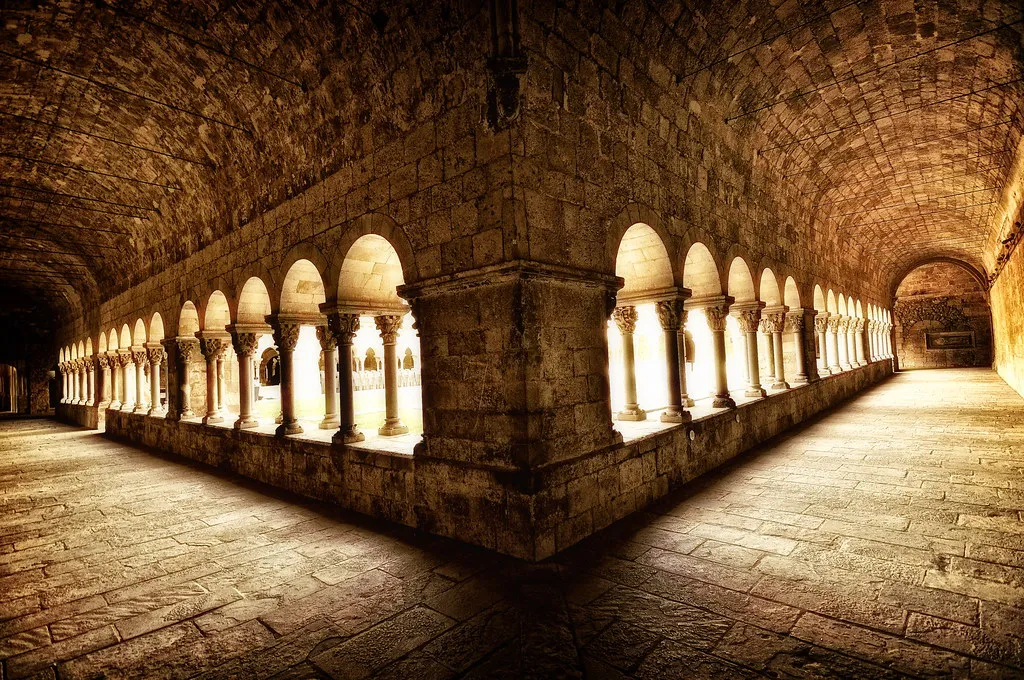
Begin at the Barcelona Cathedral (La Seu) by 09:30. The Gothic building itself is striking, but the real highlight is the 14th-century cloisters, shaded by palm trees and home to a colony of geese that have lived there for centuries. Entry to the cloister, chapter house, and tower is around €9; the nave is free during morning worship hours. Allow one to one and a half hours.
Spend the rest of the morning getting lost in the Gothic Quarter. Key stops include Plaça del Rei, home to the Barcelona History Museum with its underground Roman ruins (€7 entry), and the nearby Plaça Reial, a grand arcaded square ideal for a mid-morning coffee. The narrow lanes of El Call, the medieval Jewish quarter, are quieter and worth a detour. A free walking tour starting in the Old Town (tip-based, around 2.5 hours, wheelchair accessible) is one of the best ways to absorb the history of both the Gothic Quarter and the Roman city beneath it.
For the afternoon, walk to El Born for the Picasso Museum. The museum holds over 4,000 works and focuses on Picasso's formative Barcelona years — buy timed tickets online (€12; closed Mondays). Afterward, the streets of El Born reward a slow browse: Santa Maria del Mar basilica is free to enter and architecturally stunning, and the neighbourhood has some of Barcelona's better casual restaurants. Head to La Boqueria on Las Ramblas for a late-afternoon market visit (go at 16:00 or later when it is less packed), or detour to the equally excellent Santa Caterina Market, which is larger, less touristy, and has a remarkable wave-tiled roof.
Close the day at Barceloneta. Walk along the waterfront as the light drops, then pick a restaurant on the seafront for paella or fresh seafood. Alternatively, the Time Out Market Barcelona near the waterfront brings food stalls from the city's best chefs under one roof — a reliable option if the group can't agree on a single cuisine.
Barcelona City Passes: Which One Is Worth Buying?
Most first-timers should at minimum buy the Hola Barcelona Travel Card for transport. Beyond that, the right pass depends on how many paid attractions you plan to visit. Here's an honest breakdown of the main options for a 2-day trip in 2026.
- Hola Barcelona Travel Card (from €17.50 for 2 days): Unlimited rides on metro, bus, tram, funicular, and airport lines. This is the baseline purchase for anyone doing a 2-day itinerary — the cost-per-ride savings over single tickets kick in quickly. Buy in advance via GetYourGuide.
- Barcelona Card (from €68): Covers unlimited public transport plus free entry or discounts at over 20 museums including the Picasso Museum. If you plan to add the History Museum, MACBA, and one or two smaller museums, this card pays for itself. It does not cover Sagrada Familia, Park Güell, or the Casa Batlló/Milà interiors.
- Best of Barcelona Bundle (from €115): Bundled entry to Sagrada Familia, Park Güell, and Casa Batlló at a discount versus individual tickets — typically saving €30–€40. Does not include transport. Best for visitors whose priority is Gaudi's three flagship sites.
| Pass | Price (from) | Covers | Best for |
|---|---|---|---|
| Hola Barcelona Travel Card (2 days) | €17.50 | Metro, bus, tram, funicular, airport lines | Everyone doing this itinerary |
| Barcelona Card | €68 | Unlimited transport + free/discounted 20+ museums (incl. Picasso) | Museum-heavy visitors |
| Best of Barcelona Bundle | €115 | Sagrada Familia + Park Güell + Casa Batlló entry | Gaudi-focused visitors |
Most 2-day itineraries benefit most from combining the Hola Barcelona Travel Card with individual tickets for Sagrada Familia and Park Güell booked well in advance. Add the Barcelona Card if you plan to go deep on museums. Buy the Best of Barcelona Bundle if you want all three Gaudi sites without the mental arithmetic of separate bookings.
Getting Around Barcelona: Transport Tips
Barcelona's metro has 11 lines and connects all the major attractions. Lines 1, 2, and 3 (Red, Purple, Green) cover most places on this itinerary. A single journey costs €2.55; a T-Casual 10-trip card costs €12.15 and can be shared between travellers. For two full days, the Hola Barcelona Travel Card at €17.50 for 2 days is better value if you make more than seven metro or bus journeys — which this itinerary easily does.
Walking is practical within the old town on Day 2, but the Day 1 route (Park Güell → Sant Pau → Sagrada Familia → Passeig de Gràcia) is too spread out to cover on foot. The metro is faster than the tourist bus for point-to-point travel, but if you prefer a narrated overview of the city and want to skip driving between stops, the Hop-On Hop-Off Bus (€33 for one day, €44 for two days) is a workable alternative.
Taxis and Uber are available and reliable. Uber in Barcelona connects you with licensed taxi drivers rather than private drivers, and fares are roughly comparable to metered taxis. Use them for late-night returns to your hotel or for airport/cruise port transfers where luggage makes the metro impractical.
Is the Hop-On Hop-Off Bus Worth It?
The Barcelona Hop-On Hop-Off operates two routes (Red and Blue) and stops directly at most major sights including Park Güell, Sagrada Familia, Passeig de Gràcia, Montjuïc, and the waterfront. The narration is informative and gives solid context for each site. At €33 per day it is significantly more expensive than the unlimited metro pass, but it removes the need to navigate transfers.
For a 2-day itinerary, it works best as a hybrid: use the metro for fast cross-city trips between timed-entry bookings, and jump on the tourist bus for exploratory legs when you are not on a deadline. Cruise passengers or visitors who want a passive city overview on arrival day often find it the easiest way to orient themselves before going deeper. If you bought a 2-day pass, as one Sunshine Traveler commenter noted, the discount versus two single-day passes makes it more sensible.
The main downside is frequency — buses run every 20–30 minutes on some stops, which can kill time on a tight schedule. If your priority is covering the Day 1 Gaudi circuit efficiently, the metro is faster. If you have older travellers in your group or want to avoid navigation stress, the bus is worth the premium.
Beyond the Main Sites: Other Gaudi Gems Worth Knowing
Sagrada Familia and Park Güell dominate every Barcelona itinerary, but Gaudi's output extended well beyond them. If you have gaps in your schedule or want to swap out one of the main sites, these are worth knowing about.
- Casa Vicens — Gaudi's first major commissioned work (1883–1885), located in the Gràcia neighbourhood a short walk from Park Güell. It looks like nothing else in the city — orientalist tilework and polychrome ceramic details that predate his later style. Far fewer visitors than Casa Batlló. Entry is around €16.
- Palau Güell — Built for Gaudi's patron Eusebi Güell near Las Ramblas, this mansion (completed 1890) is where Gaudi began developing the ideas he later pushed to extremes. The rooftop chimneys are a preview of the Sagrada Familia spires. Tickets run €12 and the queues are far shorter than the flagship sites.
- Casa Calvet — A more restrained Gaudi (1900), near the Sant Pere neighbourhood on your Day 2 route. The exterior is free to view and adds five minutes to a Gothic Quarter walk. The ground floor has been converted to a restaurant if you want lunch in an actual Gaudi building.
2026 is the centenary of Gaudi's death — he was struck by a tram in Barcelona in 1926. The city is marking the year with exhibitions and events at several of these lesser-known sites, so check local listings closer to your trip for any special access or programming.
Essential Barcelona Packing List
Comfortable walking shoes are the single most important thing you will pack. Both days of this itinerary involve substantial walking on cobblestones and uneven terrain — break in your shoes before you arrive. A second pair is worth the bag space.
Clothing-wise, layers work best. Evenings can be cool even in summer, and Sagrada Familia requires covered shoulders and knees to enter. An anti-theft bag or money belt is recommended in the Gothic Quarter, Las Ramblas, and on the metro — these are the pickpocket hotspots. Keep cards and your phone in a front zip pocket or an inside compartment.
Don't forget a portable charger, sunscreen, and a wide-angle camera lens if you shoot on a DSLR — the scale of Sagrada Familia and Park Güell is almost impossible to capture on a standard lens. If you are visiting the beach in Barceloneta, a compact towel and sandals pack easily into a day bag. Adapter plugs (Type C and F for Spain) are essential for non-European travellers.
Where to Stay for a Short Trip
Location matters more on a 2-day itinerary than on a longer trip — every extra metro ride eats into limited time. Pick a neighbourhood that keeps you close to the Day 1 or Day 2 route depending on your priorities.
Eixample is the best all-round base for this itinerary. It sits between the Gaudi sites to the north and the Gothic Quarter to the south, is well connected by metro, and has excellent restaurants and café options. Casa Batlló and Casa Milà are walkable from most Eixample hotels. It is the most convenient neighbourhood for the Day 1 Gaudi circuit.
Gothic Quarter (Barri Gòtic) is ideal if the medieval old town is your priority. You can walk to the Cathedral, El Born, the Picasso Museum, and Las Ramblas without using the metro at all on Day 2. The streets are narrow and atmospheric. Hotels like Hesperia Barcelona Barri Gòtic offer good access to the main sights without being on a noisy tourist street.
El Born is a quieter, more local-feeling alternative to the Gothic Quarter — adjacent to it, but with a better concentration of independent restaurants, cocktail bars, and boutiques. It is well placed for the Picasso Museum and Santa Maria del Mar, and is a 15-minute metro ride from the Sagrada Familia area.
Avoid staying on or immediately adjacent to Las Ramblas. The street is convenient but overrun, and hotels there charge a premium for proximity to one of the city's least enjoyable pedestrian strips.
Add an Extra Day: Day Trip Ideas
If you can extend to three days, Montserrat is the top recommendation. The mountain monastery, 90 minutes from Barcelona by train and cable car, offers some of the most dramatic scenery in Catalonia. It can be done as a half-day or full-day trip. The basilica is free; the Aeri de Montserrat cable car costs around €13 return.
Girona makes an excellent alternative for history lovers — a medieval walled city with an intact Jewish Quarter, a Gothic cathedral, and the iconic coloured houses of the Onyar riverfront. It is 40 minutes from Barcelona Sants by high-speed train. For a beach day, Sitges is 35 minutes by train from Passeig de Gràcia and has more relaxed, less packed beaches than Barceloneta.
Planning Your Barcelona Trip: FAQs
Navigating a new city can bring up many questions. Here are some common queries about visiting Barcelona to help you plan with confidence.
As you plan, our guides to Barcelona 3 Day Itinerary and Day Trips from Barcelona cover the rest of the essentials.
Frequently Asked Questions
Which Barcelona 2 day itinerary options fit first-time visitors?
A first-time Barcelona 2 day itinerary should prioritize iconic Gaudi sites like Sagrada Familia and Park Güell. It should also include a walk through the historic Gothic Quarter and a visit to Las Ramblas. This balance offers a comprehensive introduction to the city's highlights.
How much time should you plan for Barcelona 2 day itinerary?
For a 2-day itinerary, plan for early starts and efficient movement between attractions. Allocate 2-3 hours for major sites like Sagrada Familia and Park Güell, including travel time. Evenings can be more relaxed, focusing on dining and strolling.
What should travelers avoid when planning Barcelona 2 day itinerary?
Avoid over-scheduling your days; trying to see too much leads to burnout. Do not neglect booking popular attractions in advance, as tickets sell out quickly. Also, try to avoid eating solely in tourist trap areas like Las Ramblas for better food experiences.
Is Barcelona 2 day itinerary worth including on a short itinerary?
Absolutely, a 2-day Barcelona itinerary is definitely worth it for a short trip. It allows you to experience the city's vibrant energy and stunning architecture. While you won't see everything, you'll get a fantastic taste of what makes Barcelona special.
This 2-day Barcelona itinerary provides a comprehensive yet manageable plan. You'll discover Gaudi's architectural genius and the charm of the Gothic Quarter. Remember to book tickets in advance and wear comfortable shoes. Barcelona truly offers an unforgettable experience, even on a short visit.
Embrace the city's lively spirit and savor every moment. From stunning cathedrals to bustling markets, there's always something to see. We hope this guide helps you create lasting memories. Enjoy your incredible adventure in Barcelona!
You might also like


Continue reading
More guides you'll find useful