

10 Best Churros in Madrid (2026) – A Local's Guide
Discover the 10 best churros in Madrid with our local guide. Find top spots, learn about porras, and get tips for an authentic experience in 2026.
On this page
10 Best Churros in Madrid for an Authentic Taste
Churros in Madrid are not just a snack. They are a ritual with two distinct lives: the 7 AM breakfast eaten by families and early workers, and the 4 AM recena shared by night owls and street sweepers alike after the clubs close. To find the best churros in Madrid, you need to understand both worlds. This guide, updated for 2026, covers the top churrerías by honest criteria — freshness, chocolate quality, atmosphere — plus the practical details that most guides skip, from how San Ginés actually works to where to find certified gluten-free options.
Plan with trusted sources: cross-check opening hours and seasonal details with the official Madrid tourism site, and read more about the city on its Wikipedia entry before you go.
The Anatomy of a Perfect Madrid Breakfast
Three components define the experience. First, the churro: a simple dough of wheat flour, water, and salt, piped through a star-shaped nozzle called a churrera directly into clean, hot oil. The ridges give it a signature shattering crunch, yielding to a dense interior. A properly made churro has no excess grease and holds its shape when dipped.
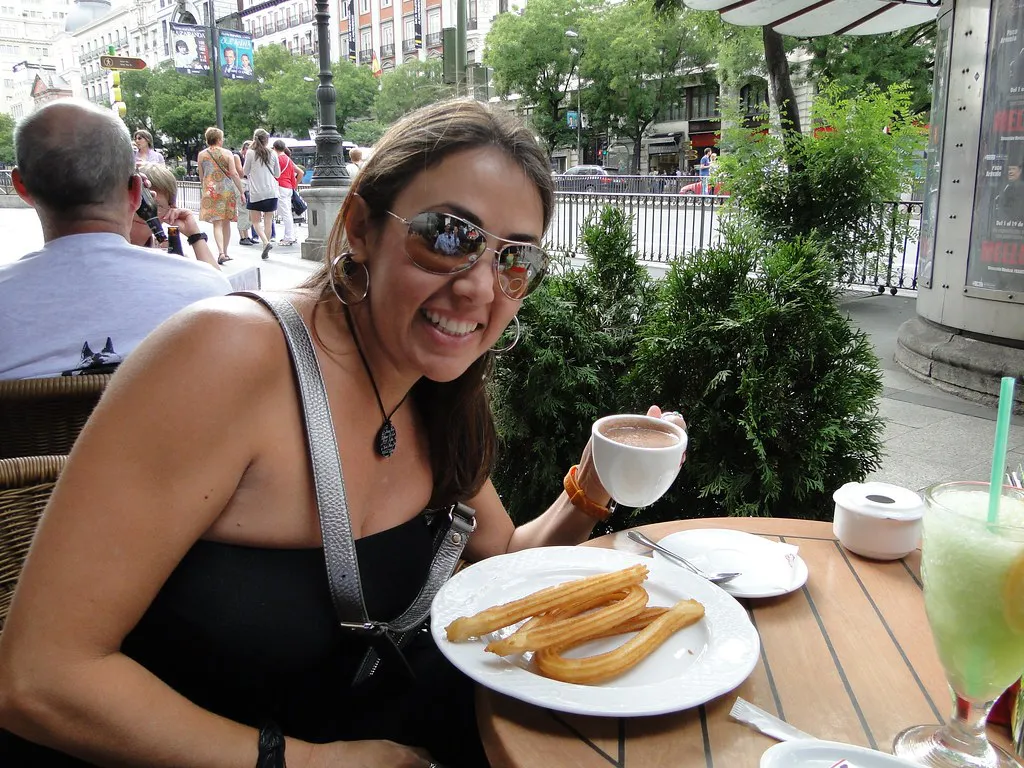
Second, the porra. This is the churro's thicker, spongier cousin, and the preferred choice for many madrileños. The dough includes a leavening agent and rests before frying, creating an airier interior. Porras are fried in large spirals and cut to order with scissors. A badly fried porra — heavy and soaked in old oil — is one of Madrid's great culinary disappointments. A good one is extraordinary.
Third, the chocolate a la taza. Spanish drinking chocolate is not thin cocoa. It is a thick, pudding-like dip, traditionally thickened with cornstarch. It should taste of deep, dark cocoa — not sweetness alone. After the fried dough is gone, you finish the remaining chocolate with a spoon.
The History and Culture of Churros in Madrid
The origin of churros in Spain is genuinely contested. One widely held theory credits Castilian shepherds who fried simple dough over campfires in the highlands — a portable, high-energy breakfast requiring no oven. Another attributes the shape to Portuguese sailors bringing back a similar preparation from China. What is certain is that by the 19th century, the churrería had moved from roadside stalls into the urban fabric of Madrid.
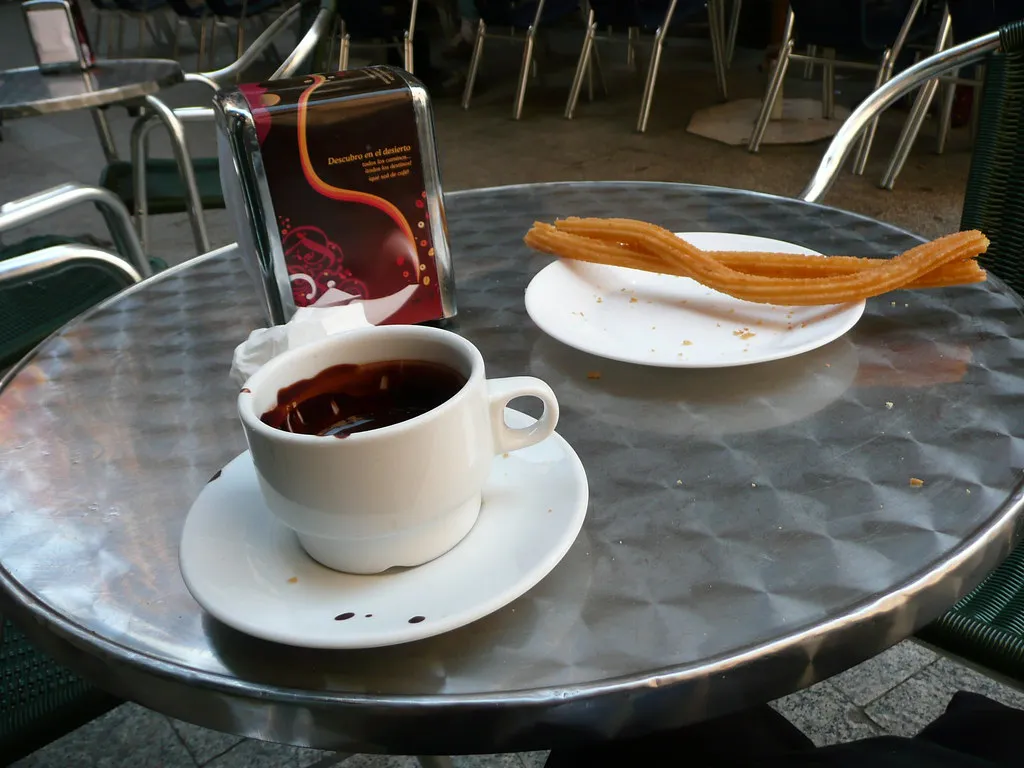
The chocolatería emerged as a distinct social institution, a place where people from every class would gather before work or after a long night. Chocolatería San Ginés, founded in 1894, is the most famous surviving example. By the early 20th century, churros con chocolate had become inseparable from Madrid's identity — as specific to the city as cocido madrileño or the Prado.
Today the ritual endures largely unchanged. The recipe at the best places has not evolved because it does not need to. The appeal is in the simplicity: fresh dough, clean oil, thick chocolate, and good company.
Are You Team Churro or Team Porra? The Great Madrid Debate
Which one you order says something about your priorities. Churros are for crunch. Their high surface area relative to their volume makes them an efficient vehicle for dipping — you get a decent but not overwhelming amount of chocolate with each bite. They are precise, slightly formal.

Porras are for absorption. Their spongy interior soaks up as much chocolate as possible. They are a more substantial, comforting bite with a longer finish. If you cannot decide, ask for un surtido or un mixto — a plate with both, which most churrerías will put together without issue.
There is a quiet class distinction historically attached to porras. They are more associated with working-class Madrid — a heartier, no-nonsense breakfast. The best porras are found not in the tourist-area chocolaterías but in neighborhood counters where porras are the entire focus of the kitchen. If you only have time for one, lean toward the porra: the skill differential between a bad and a brilliant porra is much larger than the equivalent gap for churros.
When and How to Eat Churros and Chocolate in Madrid
Churros are not a dessert. They are a breakfast food, eaten between 07:00 and 11:00, or a late-night meal eaten between 03:00 and 06:00. The latter is called la recena — a fourth meal that acts as a social equalizer. Street sweepers starting their shift stand next to club-goers ending their night, sharing the same simple plate.
The recena ritual peaks during winter and reaches its climax on New Year's Day, when the entire city seems to nurse a hangover with fried dough. Three Kings' Day on 6 January is another key date: churros con chocolate is the traditional breakfast before families open presents, and the best churrerías have queues out the door before 09:00.
When you sit down, you will not find cinnamon sugar. That is a Mexican and American adaptation. In Madrid, churros arrive plain — the flavor comes from the salt in the dough contrasting with the rich chocolate. Dip generously, eat while hot, and drink any leftover chocolate straight from the cup or with a spoon.
First Up — Chocolatería San Ginés
Let's be direct: San Ginés does not serve the best churros in Madrid. But you will probably go anyway, and that is fine. Founded in 1894 at Pasadizo de San Ginés, 5 — a passageway just off Calle Arenal, a short walk from Puerta del Sol — it is the closest thing Madrid's food scene has to the Eiffel Tower. The green wood panelling, white marble tables, and mirrored walls are genuinely beautiful. Famous visitors over the decades have included Stevie Wonder, Tina Turner, and Rod Stewart, whose photos line the walls inside.
Operationally, San Ginés is more complex than most guides acknowledge. It has grown to encompass five storefronts around the passageway. One storefront is takeout only. Others offer sandwiches and ice cream in addition to churros and chocolate. If you want to eat outside, you order inside first, join a second queue, then hand your receipt to a waiter who brings your order once you are seated. If you eat inside, you order at the counter, sit at a free table, and a server collects your receipt. It is efficient once you understand the system, but disorienting the first time.
Timing matters more here than anywhere else. At 14:00 on a Saturday, expect a 30-minute queue with other tourists. At 04:00 on a Friday night, you find the real San Ginés — filled with the chaotic, joyful collision of Madrid's nightlife. San Ginés is open 24 hours a day, every day. A portion of churros with chocolate runs €4–€6 in 2026. The chocolate is consistently praised; the churros themselves are competent but not remarkable.
Beyond the Hype: Where to Find the Best Churros in Central Madrid
Churrería Santa Ana (established 1895, one year before San Ginés) is widely considered by honest reviewers to have the best churros in Madrid. It sits on a quiet, non-touristy street in the Huertas neighbourhood and operates as takeout only — opening in the mornings, typically from around 07:00 until sold out. The owner fries large porra spirals to order and cuts them with scissors. The result: fried dough with actual flavor, a touch of salt, and notably less grease than the tourist-area competition. The chocolate is relatively weak, but the churros and porras are good enough to eat without it. Go early; they sell out.
Churrería Madrid 1883, at Calle del Espíritu Santo, 8 in Malasaña, is older than San Ginés and has zero interest in being an Instagram destination. It is a tiny, no-frills counter in a working neighbourhood, where a cone of churros costs around €2. The attraction here is simplicity and authenticity — classic Malasaña, unchanged by tourism. This is the best option if you want churros while walking rather than sitting.
Chocolat Madrid, in the Barrio de las Letras, is the pick if chocolate quality matters most. The owner Alfonso Cuervo focuses on high-quality, artisanal dark chocolate that is less sweet and more complex than the standard. Porras are exceptionally light. Note that they are closed on Tuesdays. Prices run €5–€8.
Los Artesanos 1902 (also known as Churrería Chocolatería 1902) is a five-generation family business steps away from San Ginés. Its main distinction from every other place on this list: certified gluten-free churros prepared in a dedicated fryer, with serious cross-contamination protocols. For coeliacs traveling in Madrid, this is the only reliably safe traditional option in the centre. Prices around €3.50–€5. Note that service can be slow during busy morning hours.
| Churrería | Neighbourhood | Best For | Price (2026) | Hours |
|---|---|---|---|---|
| Chocolatería San Ginés | Centro (Pasadizo de San Ginés) | Atmosphere, late-night recena | €4–€6 | 24 hours |
| Churrería Santa Ana | Huertas | Best churros & porras overall | €2–€4 | ~07:00 until sold out |
| Churrería Madrid 1883 | Malasaña | Cheapest authentic takeout | ~€2 | Morning hours |
| Chocolat Madrid | Barrio de las Letras | Best artisanal chocolate | €5–€8 | Daily except Tuesdays |
| Los Artesanos 1902 | Centro (near San Ginés) | Certified gluten-free option | €3.50–€5 | Morning hours |
| Chocolatería Valor | Centro (Postigo de San Martín) | Full sit-down experience | €5–€7 | ~09:00–22:00 daily |
| Churrería Siglo XIX | Vallecas | Best porras in Madrid | €2–€4 | Morning hours |
For Serious Foodies: A Pilgrimage for Madrid's Best Porras
If you want to taste the best porras in Madrid, you need to earn it. This requires a trip on Metro Line 1 to Vallecas, a working-class neighbourhood far from the tourist trail, to find Churrería Siglo XIX. Local food critics and chefs treat this place as an open secret. They do not make churros — only porras. The family has refined its dough recipe and resting process over decades, producing a porra with an exterior that shatters and an interior that is closer to a cloud than a doughnut. The chocolate is honest and dark.
The trip itself is instructive. Vallecas is a Madrid that exists entirely for itself: neighbourhood routines, regulars who have been coming for years, no tourists. This is what the churrería as a social institution looks like when it has never had to adapt for an outside audience.
Chocolatería Valor, with a central location at Calle del Postigo de San Martín, 7, is the best option if you want the full sit-down chocolatería experience without the San Ginés chaos. Valor is Spain's largest chocolate brand and their cafés deliver on the promise: the chocolate is thicker and richer than the San Ginés version, with a noticeable depth of cocoa flavor. The churros are a slightly different shape — no ridges, deeper color — and the dining atmosphere is calm. Open daily approximately 09:00–22:00. A portion with chocolate runs €5–€7.
How to Spot Bad Churros and Avoid Tourist Traps
The most reliable warning sign is churros sitting under a heat lamp. A proper churrería fries to order, or in small fresh batches. Pre-made churros left to cool produce a soggy, greasy texture and the unmistakable taste of stale oil. If the kitchen is not actively frying, be suspicious.
Use your nose. A good churrería smells of fresh dough and clean, hot oil. A tourist trap smells of old, reused grease. Be especially cautious of any establishment immediately facing Plaza Mayor or directly on Puerta del Sol that uses large laminated photo menus or has no queue of locals. The chocolate is another giveaway: if it is watery and cloyingly sweet with an artificial thickness, it has been made from powder rather than proper maicena-thickened cocoa.
The practical rule: if a place on a major tourist square has no locals and no active fryer visible, keep walking. A five-minute detour off the main drag almost always yields a better and cheaper plate. Prices in authentic churrerías range from €2 for a takeout cone to €6 for a full sit-down ración with chocolate. Anything above €8 without a clear reason — artisanal chocolate, dedicated fryers, historic ambiance — is a red flag. For more Madrid food guidance, see our the best places to eat guide.
Practical Tips for Your Churros Visit
- Order un surtido or un mixto on your first visit to get both churros and porras on the same plate. Most places do this for no extra cost.
- Smaller, older churrerías are typically standing-room only or have a few stools at a counter. Do not expect full table service.
- For the San Ginés experience without the tourist crush, go after 03:00 on a Friday or Saturday night.
- Churrería Santa Ana is a takeout-only morning establishment. Bring cash, arrive by 08:30, and eat at a nearby bench.
- The gluten-free option at Los Artesanos 1902 is the only certified, dedicated-fryer option in the city centre. Call ahead if cross-contamination is a medical concern: +34 915 21 12 48.
- For the Churrería Siglo XIX porra pilgrimage in Vallecas, allow a 20-minute Metro journey from Sol on Line 1 (direction Valdecarros, exit at Portazgo).
- Churros are almost never served with cinnamon sugar in Madrid. The flavour profile is savory dough against rich, dark chocolate.
For a broader view of the city's culinary scene, our guide to top things to do in Madrid covers the major neighbourhoods and food markets worth visiting alongside your churrería tour.
Frequently Asked Questions
Are Spanish churros served with cinnamon sugar?
Traditional Spanish churros in Madrid are typically not served with cinnamon sugar. They are almost always accompanied by a thick, rich hot chocolate for dipping. While some places might offer sugar packets, cinnamon is not a common accompaniment.
Are there gluten-free churros in Madrid?
Finding truly gluten-free churros in Madrid can be challenging due to cross-contamination risks in traditional churrerías. Some modern cafes or specialty dessert shops might offer gluten-free options, but it's best to call ahead or check their menus carefully. Always inquire about dedicated fryers.
What is the best time of day to eat churros?
Churros are popular throughout the day in Madrid. Many locals enjoy them for breakfast, as a mid-morning snack, or for 'merienda' (afternoon snack) around 5 PM. They are also a beloved treat after a night out, with some churrerías open 24 hours.
How do you spot bad churros?
You can spot bad churros by their appearance and texture. Avoid churros that look greasy, are soggy, or have been sitting under a heat lamp for too long. Good churros should be golden brown, crispy on the outside, and served fresh and hot.
Madrid's churro scene rewards the curious visitor who ventures beyond the famous passageway at San Ginés. The best porras in the city sit at a counter in Vallecas. The best chocolate is in Barrio de las Letras. The best all-round morning churros are in Huertas, sold out of a takeout window by 09:00. Each of these places tells you something different about the city. Whether you arrive at 07:30 for breakfast or at 04:00 after a long night, the ritual is the same: fresh dough, thick chocolate, and no rush. For more ideas on what to eat and see, explore our guide to top things to do in Madrid.
You might also like


Continue reading
More guides you'll find useful


