Toledo Day Trip From Madrid Travel Guide
Plan your Toledo day trip from Madrid with top picks, timing tips, and practical booking advice for a smoother trip. Discover the City of Three Cultures.
On this page
Your Essential Toledo Day Trip From Madrid
Toledo is Madrid's most popular day trip for good reason. Perched on a granite hill above the Tagus River, this UNESCO World Heritage city packs over 2,000 years of history into a walkable medieval core. Christians, Muslims, and Jews once coexisted here in remarkable harmony, and the evidence is still standing: Gothic cathedrals, Moorish mosques, and ancient synagogues crowd the same narrow streets. This guide covers how to get there, what to see, what to skip, and how to time your visit in 2026 for the best possible experience.
Plan with trusted sources: cross-check opening hours and seasonal details with the official Madrid tourism site, and read more about the city on its Wikipedia entry before you go.
How to Get to Toledo from Madrid
The Avant high-speed train from Madrid Puerta de Atocha-Almudena Grandes station to Toledo is the best option by far. The journey is direct, takes 36 minutes, and costs €11.10 each way if you buy a round-trip (ida y vuelta) ticket — or €13.90 per leg if you buy one-way tickets separately. Book on Renfe's website or at the Atocha ticket machines. Trains run roughly every hour from around 07:00, so catching an early departure is easy without rushing.
Buses from Madrid's Plaza Elíptica Interchange are cheaper but take around 75–90 minutes each way. They make sense if the train is sold out or you are travelling on a very tight budget. For a day trip, the extra hour each way costs you meaningful sightseeing time in Toledo itself. If you prefer a guided experience with transport included, organized day tours from Madrid typically add a photo stop at the Mirador del Valle viewpoint — something that is hard to fit into a DIY itinerary without good planning.
| Option | Journey time | Cost (one way) | Departure point | Best for |
|---|---|---|---|---|
| Avant high-speed train | 36 min | €11.10 (round-trip rate) | Madrid Atocha | Most travellers — fastest and most convenient |
| Bus (ALSA) | 75–90 min | ~€6–€7 | Plaza Elíptica Interchange | Tight budget or train sold out |
| Guided day tour | ~1 hr (coach) | €50–€90 pp (transport + guide) | Central Madrid pickup | First-timers wanting context + Mirador stop included |
| Rental car / taxi | ~70 min (A-42 motorway) | Variable (tolls ~€7 each way) | Any Madrid location | Groups or travellers continuing onward |
How to Get to Toledo's Old Town from Toledo's Train Station
Toledo's train station sits outside the walled city, but reaching the historic centre is straightforward. The easiest option is bus line 5 or 12, which departs from right outside the station and drops you at Plaza de Zocodóver, the main square of the old town. The fare is around €1.50 and the ride takes 10 minutes. Taxis queue at the station and cost roughly €8–€10 for the same trip if you prefer door-to-door convenience.
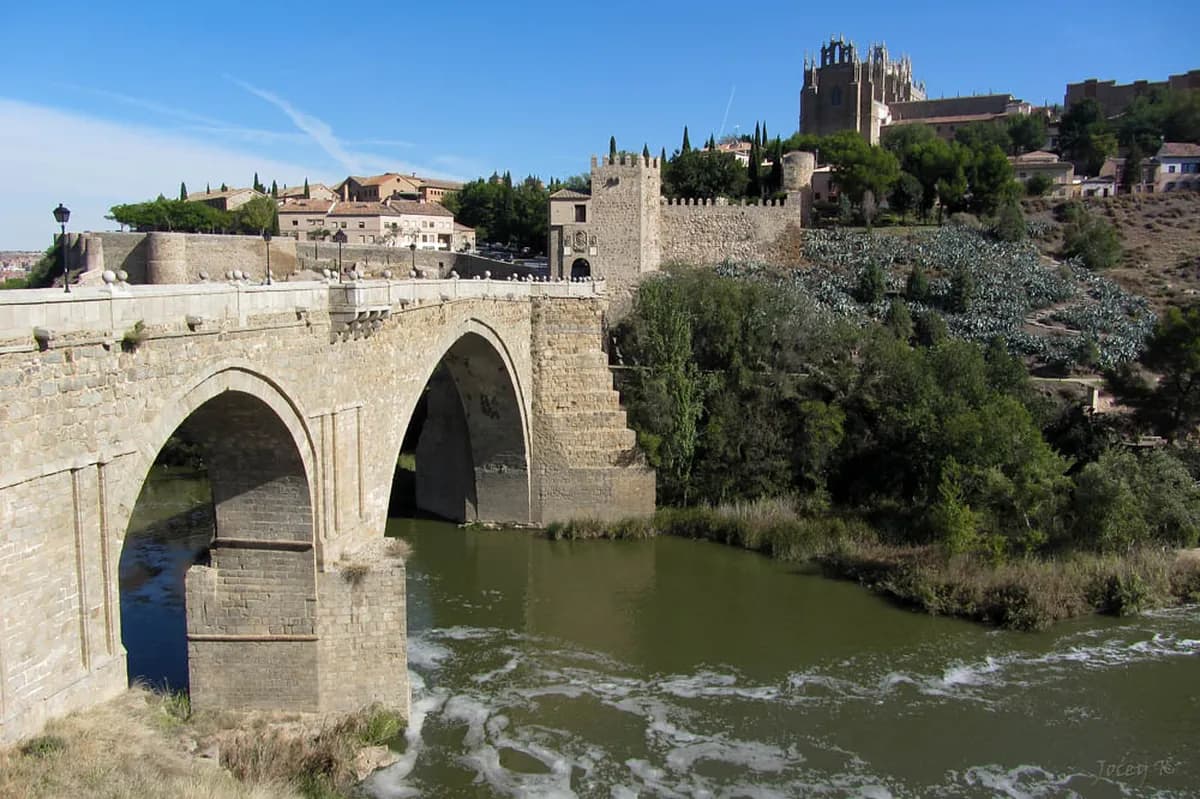
You can also walk into the old town via the Alcántara Bridge, a Roman arch bridge crossing the Tagus River that dates to the 2nd century AD. The walk from the station takes about 20 minutes and includes a steady uphill climb once you cross the bridge. It is genuinely scenic and a good way to arrive if you want to photograph Toledo's skyline before entering the walls. Either way, you will reach Plaza de Zocodóver, the natural starting point for any Toledo itinerary.
Must-See Toledo Attractions
The Santa Iglesia Catedral Primada de Toledo is the city's undisputed centrepiece. Completed in the late 15th century, it is one of the finest examples of Spanish Gothic architecture and holds paintings by El Greco, Caravaggio, and Rubens inside its sacristy. Entry costs €12 and includes an audio guide. Book your ticket online in advance, especially for weekends, and aim to arrive at opening time (10:00) before tour groups fill the nave.
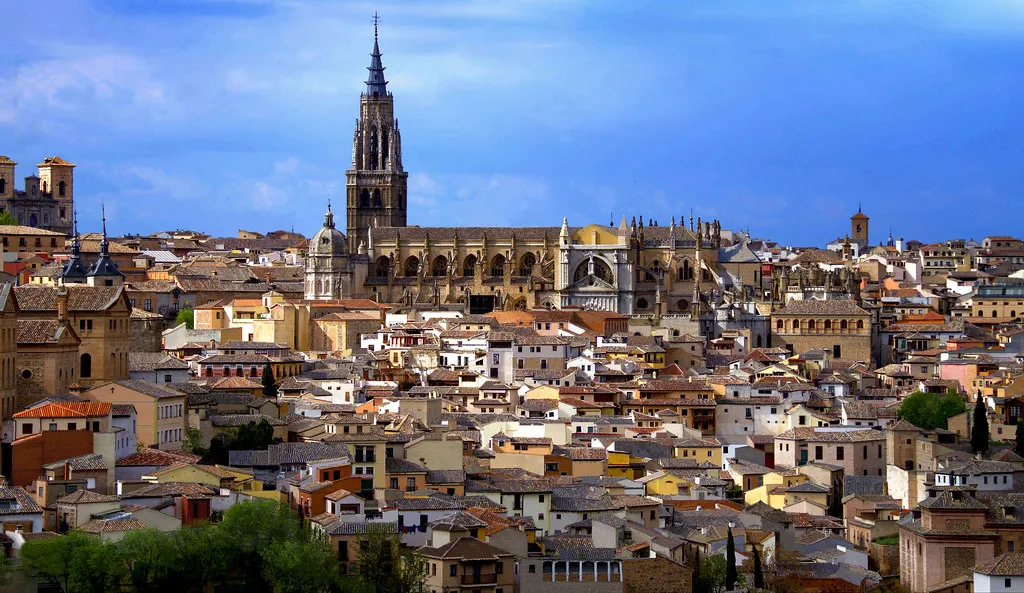
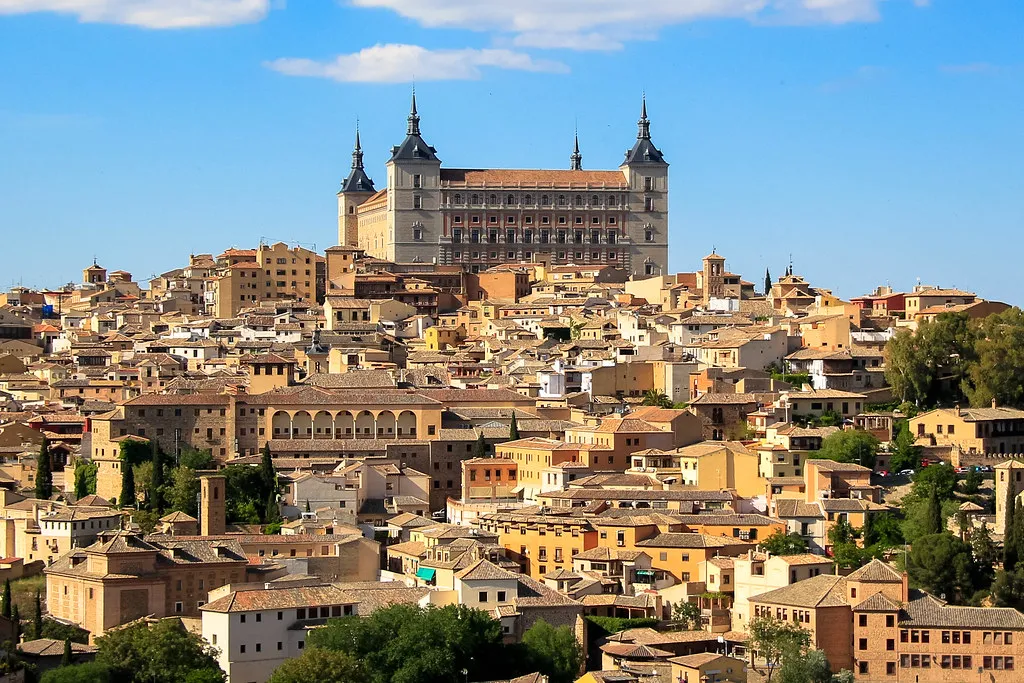
The Alcázar de Toledo stands at the highest point in the city and houses the Army Museum. The fortress has changed hands repeatedly — Romans, Visigoths, Moors, and Catholic monarchs all occupied it — and it became a symbol of Spanish nationalism after a ten-week siege during the Civil War in 1936. Entry costs €5 and the museum is detailed enough to spend two hours inside. Check the Toledo tourism page for current opening hours before you go.
The Church of Santo Tomé houses El Greco's masterpiece "The Burial of Count Orgaz," painted in 1586. It is a single-room visit that takes 15 minutes but is worth every one of them. Entry is €4. Nearby, the Sinagoga de Santa María la Blanca is one of the oldest synagogues in Europe, built in the 12th century and notable for its stunning white horseshoe arches. Entry is also €4. Both sites sit in the Jewish Quarter and can be visited back-to-back in under an hour.
Museums, Art, and Culture in Toledo
Toledo is the city most associated with El Greco, the Greek-born painter who spent the last four decades of his life here. The Museo del Greco is the only museum in Spain dedicated entirely to his work and is set in a beautifully reconstructed 16th-century house in the Jewish Quarter. Entry is €3. The nearby Sinagoga del Tránsito, now home to the Sephardic Museum, is an outstanding example of Mudéjar architecture built in the 1350s and is the better-preserved of Toledo's two remaining synagogues. Entry is €3.
The Museo de Santa Cruz is worth a look even if you are not a museum person. The 16th-century building, originally constructed as a hospital, is architecturally stunning and currently free to enter. It holds Renaissance and Gothic art, including several El Greco pieces. Always verify current opening hours and any admission changes on the official site before visiting.
The Mezquita del Cristo de la Luz is one of the oldest buildings in Toledo — and in all of Spain — dating to around 999 AD. It is small but dense with historical meaning: it functioned as a mosque, then a Christian church, and the transition is visible in the architecture itself. Entry is €4. The Monasterio de San Juan de los Reyes, built by the Catholic Monarchs Isabel and Fernando, has a two-level cloister with intricate stonework that many visitors consider the most photographable spot in Toledo. Entry is €4.
Viewpoints and Outdoor Spots in Toledo
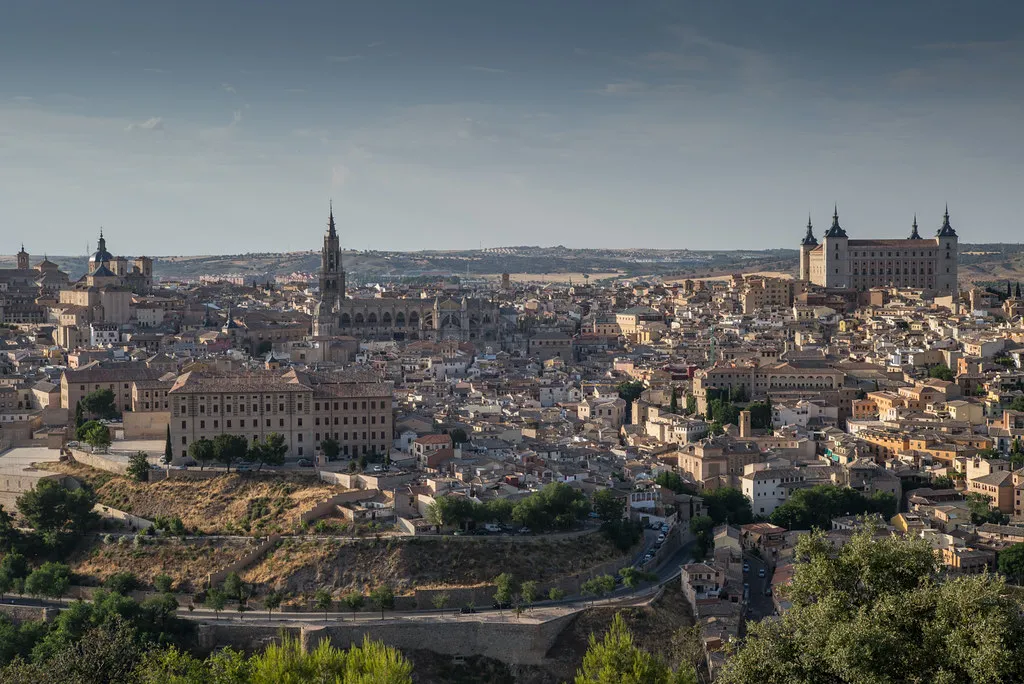
The Mirador del Valle gives you the classic postcard panorama of Toledo — the full skyline reflected in the Tagus River below. It sits about a 40-minute walk from the Alcántara Bridge, on the opposite bank of the river. Most visitors either skip it for lack of time or arrive in the afternoon when the sun is behind the city, creating flat, shadow-heavy photos. The right time to visit is in the morning, roughly 09:00–10:00, when the light hits the facade head-on. If you are doing a DIY trip by train, going to the Mirador first — before entering the old town — is the simplest way to hit this timing without rerouting your whole day.
Plaza de Zocodóver is the social heart of the old town, a lively square lined with cafés and the point from which Toledo's main streets radiate. It makes a natural lunch stop and a convenient meeting point if you are travelling with others. The Puerta de Bisagra, Toledo's main historical gate, is a few minutes' walk downhill from Zocodóver and worth a photograph as you leave the walled city at the end of the day.
The Pulsera Turística: Toledo's Best Budget Move
The pulsera turística (tourist wristband) is the single most useful ticket in Toledo and most visitors miss it entirely. For €12 in 2026 it gives you entry into seven monuments: Santa María la Blanca, the Church of Santo Tomé, the Monasterio de San Juan de los Reyes, the Iglesia de los Jesuitas (San Ildefonso), the Mezquita del Cristo de la Luz, the Iglesia del Salvador, and one more rotating site. Each of those costs €3–€4 individually, so the wristband pays for itself after just three stops. You can buy it at the entrance to any of the included monuments.
If you plan to visit the Toledo Cathedral and the Alcázar as well, budget around €29 total for a full day of sightseeing (€12 pulsera + €12 Cathedral + €5 Alcázar). That is the realistic cost for a thorough visit in 2026, which is useful to know before you arrive with an underprepared wallet. Families with children should note that most Toledo attractions offer reduced or free entry for under-16s and EU students, and the Museo de Santa Cruz remains free for all visitors.
How to Plan a Smooth Toledo Day Trip
Take the first or second train out of Atocha — ideally the 07:30 or 08:00 departure — to arrive in Toledo before the tour buses. The Cathedral and Alcázar both get crowded from around 11:00 onwards, and the Jewish Quarter fills up by midday. Starting at the Mirador del Valle (before entering the old town) and then working your way through the Cathedral, Jewish Quarter, and Alcázar in roughly that order keeps you moving with the crowds rather than against them.
Avoid visiting on Mondays: several museums including the Museo del Greco close for the day. Many attractions also observe reduced hours or close entirely on public holidays, so check before you travel. Summer afternoons in Toledo are intensely hot — July and August temperatures regularly exceed 38°C — so plan to eat lunch indoors around 14:00 and resume walking once the heat eases after 17:00. The last Avant train back to Madrid departs around 21:30, giving you a full evening if you want to stay for sunset views.
Toledo's streets are cobbled and hilly throughout. Comfortable walking shoes are non-negotiable. The city is compact enough that you will cover most attractions on foot without needing transport within the old town. One practical note: cash is still useful for smaller sites and market stalls, though all the main attractions accept cards. There are ATMs on Plaza de Zocodóver if you need them.
A full day in Toledo means arriving by 09:00 and leaving on a 19:00–20:00 train. That gives you 10 hours in the city, which is enough to see the Cathedral, the Alcázar, the Jewish Quarter, two or three pulsera sites, and the Mirador del Valle without rushing. If you only have 6 hours, cut the Mirador and the museums and focus on the Cathedral, Santo Tomé, and Santa María la Blanca — the core of what makes Toledo unique. You can combine this day trip with your Madrid itinerary as a standalone excursion on day 2 or 3.
Frequently Asked Questions
Which Toledo day trip from Madrid options fit first-time visitors?
First-time visitors should prioritize the high-speed train for efficiency. Focus on the Toledo Cathedral, Jewish Quarter, and Alcázar for a comprehensive cultural experience. Consider a guided tour to gain deeper insights into the city's history.
How much time should you plan for Toledo day trip from Madrid?
Plan a full day, dedicating at least 6-8 hours to exploring Toledo itself. Factor in about 30 minutes each way for train travel from Madrid. This allows for comfortable sightseeing and a leisurely meal.
What should travelers avoid when planning Toledo day trip from Madrid?
Avoid visiting on Mondays, as many museums and attractions are closed. Do not forget comfortable shoes, as Toledo has steep, cobblestone streets. Also, try to avoid peak midday heat during summer months.
Is Toledo day trip from Madrid worth including on a short itinerary?
Absolutely. Toledo is easily accessible and offers a profound historical and cultural experience. It is a perfect addition to a short Madrid itinerary, providing a wonderful contrast to the capital city. The unique blend of cultures makes it truly special.
A Toledo day trip from Madrid delivers more history per square kilometre than almost anywhere else in Spain. The combination of Gothic, Moorish, and Jewish architecture in a single walkable medieval city is genuinely rare in Europe. Buy the pulsera turística, arrive early, time the Mirador for morning light, and you will leave Toledo having seen its best side. Whether you follow this itinerary closely or wander freely, the city rewards curiosity. Safe travels, and enjoy one of Spain's most remarkable UNESCO sites.
You might also like

Continue reading
More guides you'll find useful