

7 Best Spots in Our Valencia Street Food Guide (2026)
Discover the ultimate Valencia street food guide. From the historic Mercat Central in Spain to the trendy Mission District in SF, find the best markets and eats.
On this page
7 Best Spots in Our Valencia Street Food Guide
After my fourth trip to Spain's coastal gem and a decade of dining in San Francisco, I have mastered this dual-destination guide. Many travelers search for a Valencia street food guide without realizing there are two world-class culinary hubs sharing this name. One is a historic city in Spain famous for paella, while the other is a vibrant corridor in San Francisco's Mission District. This guide covers both locations to ensure you find the exact flavors you are looking for this year.
This article was last refreshed in October 2023 following my most recent autumn visit to the Mediterranean coast. I noticed several new artisan stalls opening in the smaller neighborhood markets that many tourists often overlook. Knowing the difference between these two locations is vital for planning your logistics and setting your expectations. Whether you want horchata by the sea or tacos in the Mission, this list has you covered.
Food culture in both regions relies heavily on seasonal ingredients and neighborhood loyalty. In Spain, the experience revolves around centuries-old markets where grandmothers and Michelin-starred chefs shop side-by-side. San Francisco offers a more modern, fast-paced street food scene defined by innovation and global fusion. Both destinations provide an authentic taste of their respective local cultures through casual, accessible bites.
Mercat Central: The Architectural Heart of Valencia’s Food Scene
The Mercat Central stands as one of the oldest running food markets in Europe and is a masterpiece of Modernisme architecture. Walking inside feels like entering a cathedral of food where sunlight streams through massive stained-glass windows and iron domes. You will find over 1,200 stalls selling everything from live eels to the finest saffron in the world. For official visiting hours and exhibition details, check Visit Valencia’s official tourism site. This is the best place to start any culinary tour of the city because it anchors the local food identity.
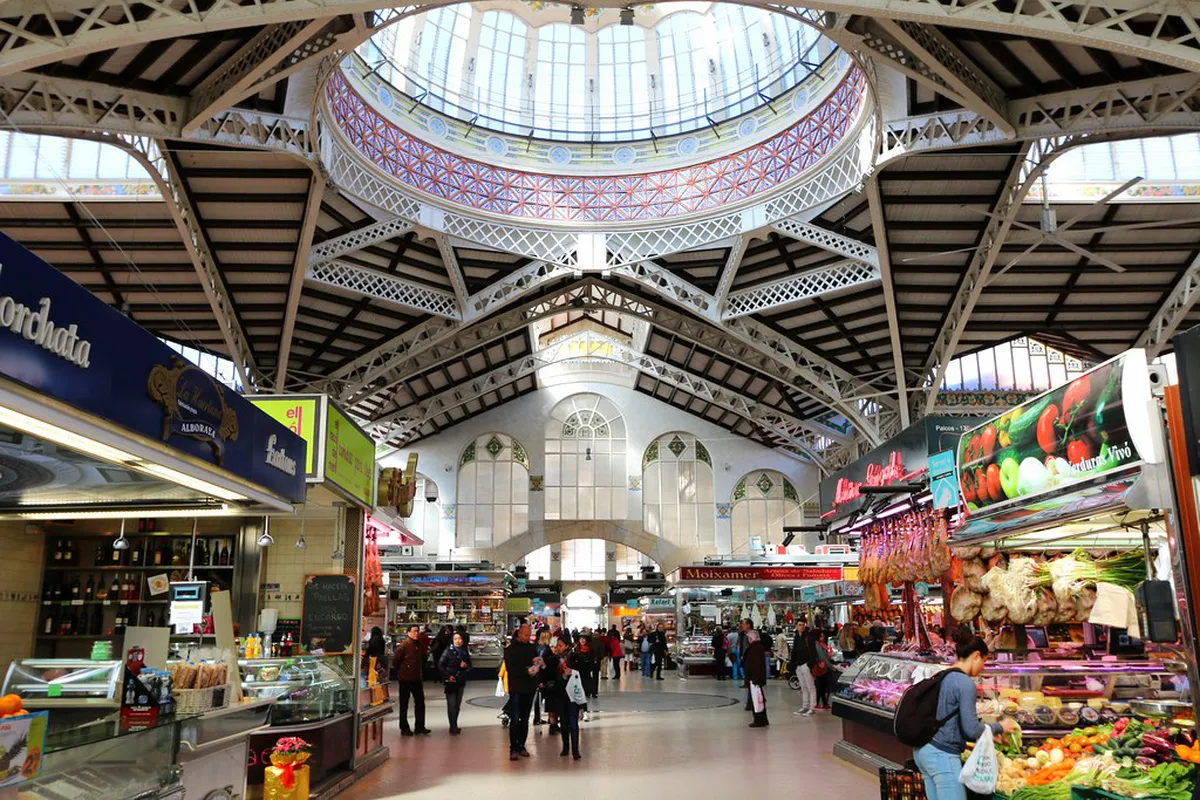
The market is a sensory overload of bright citrus piles, hanging ham legs, and the scent of fresh rosemary. Locals come here early to secure the best catch of the day before the afternoon heat settles over the city. I recommend visiting before 11:00 AM to see the market in its most authentic, bustling state. For a deeper look at the history, check our Valencia Central Market and La Lonja guide for visiting tips.
While it is a working market, the rise of gourmet stalls has made it a premier street food destination. You can grab a cone of fried seafood or a slice of local cheese to eat while you explore the aisles. Be sure to look up at the central dome which features beautiful parrot and orange motifs. The building itself is as much a draw as the incredible produce found within its walls.
7 Best Spots in Our Valencia Street Food Guide
Finding the best bites requires knowing which stalls are tourist traps and which are local favorites. I once made the mistake of buying pre-packaged fruit at the entrance, only to find better quality deeper inside. This list blends the historic markets of Spain with the trendy takeout windows of San Francisco. Each selection represents a specific neighborhood vibe and a must-try dish that defines the area.
In Spain, the street food scene is often synonymous with market stalls that serve ready-to-eat tapas. San Francisco’s version of Valencia Street is more about brick-and-mortar spots that specialize in quick, high-quality counter service. Both styles allow you to eat your way through a neighborhood without a formal sit-down reservation. Check our list of cheap eats in Valencia for even more budget-friendly options.
Most of these spots are very affordable, making them perfect for travelers who want to save money for other activities. Expect to pay between $5 and $20 for a satisfying meal at most of these locations. Keep some cash on hand for the Spanish markets, though most San Francisco spots are now card-only. Always check the opening hours as many traditional markets close early in the afternoon.
Never touch produce in Spanish markets; point to what you want and let vendors select the best pieces. Markets close by 3 PM and observe siesta (2-5 PM). Tiger nut horchata with fartons (sugar-glazed sponges) is THE Valencia street food experience, not found elsewhere in Spain. Esgarraet (roasted peppers with salt cod) and bocadillos are authentic street snacks available at every market stall.
- Mercat Central in the Old Town
- This iconic market is the crown jewel of Spanish food culture and offers endless ready-to-eat snacks.
- Expect to pay $2 to $12 per item, and it is open Monday through Saturday from 7:30 AM to 3:00 PM.
- Head to the center of the market for the best fresh fruit juices and cones of local Manchego cheese.
- Ruzafa Market in the Creative District
- Located in the trendy Ruzafa neighborhood, this market feels more local and less crowded than the central hub.
- Typical snacks cost $3 to $15, with the market operating daily except Sunday from 7:30 AM to 3:00 PM.
- The surrounding streets are perfect for finding artisan bakeries and small craft coffee shops after your market visit.
- Mercado del Cabanyal near the Beach
- This maritime market specializes in the freshest seafood and traditional salted fish dishes like esgarraet.
- Prices range from $4 to $18, and it stays open from 7:00 AM to 2:30 PM most days of the week.
- It is the best place to buy authentic ingredients if you plan on cooking your own Mediterranean feast.
- Calle Ribera Pedestrian Dining Street
- This pedestrian-only street in the city center is lined with outdoor terraces and quick-service gourmet kiosks.
- Meals here usually cost $8 to $25, and most spots serve food from 10:00 AM until 11:00 PM daily.
- It is a great spot for people-watching while enjoying a glass of local wine and some patatas bravas.
- Central Bar by Ricard Camarena
- Located inside Mercat Central, this high-end counter serves elevated tapas made with ingredients sourced from the surrounding stalls.
- Dishes cost between $12 and $35, and it is open during market hours from 9:00 AM to 3:30 PM.
- Arrive before 10:00 AM if you want any chance of getting a stool without a long wait.
- Taqueria Los Coyotes in San Francisco
- This legendary Mission District spot on Valencia Street is famous for its massive California-style burritos and street tacos.
- A full meal costs $10 to $18, and they are open daily from 10:00 AM until midnight or later.
- Try the 'California Burrito' which includes french fries inside for a truly local San Francisco experience.
- Souvla Mission District Greek Food
- This popular rotisserie serves high-quality Greek wraps and salads that are perfect for a quick street-side lunch.
- Expect to spend $15 to $22, with daily hours usually running from 11:00 AM to 10:00 PM.
- The frozen Greek yogurt with olive oil and sea salt is a mandatory dessert for any first-time visitor.
Must-Try Valencian Street Food: Horchata, Fartons, and Beyond
You cannot claim to have visited the Spanish city without trying a glass of ice-cold horchata. Unlike the Mexican version made with rice, this local drink uses tiger nuts grown in the nearby Alboraya fields. For deeper background, Wikipedia's horchata entry covers its ancient origins. It is traditionally served with fartons, which are long, sugar-glazed sponges designed for dipping into the drink. Learn more about this tradition in our guide to horchata and fartons in Valencia.
For something savory, look for esgarraet, a salad made of roasted red peppers and salted cod. It is often served on a small piece of crusty bread and is a staple at market stalls. The salty cod balances perfectly with the sweetness of the peppers and a heavy drizzle of olive oil. This dish represents the simple but high-quality nature of Mediterranean street food.
If you are looking for a quick snack, grab a 'bocadillo' which is a classic Spanish sandwich. The most local version is the 'Almussafes', filled with sobrasada, melted cheese, and caramelized onions. You can find these at almost any bar or market stall for just a few euros. Avoid the pre-made sandwiches at the main train station as they are often dry and overpriced.
How to Navigate Valencia’s Markets and Food Streets
Navigating the markets in Spain requires following a few unwritten rules to avoid upsetting the vendors. The most important rule is to never touch the produce yourself unless you are at a self-service supermarket. Point to what you want and let the stall owner select the best pieces for you. This ensures the fruit stays bruise-free and shows respect for the vendor's expertise.
Timing is everything when it comes to eating like a local in the Mediterranean. Most markets close by 3:00 PM, so do not plan on a late afternoon food tour at the stalls. The city also observes the siesta, meaning many small shops close between 2:00 PM and 5:00 PM. Review our tips on getting around Valencia to time your transit between neighborhoods perfectly.
Public transport is the easiest way to reach the different food districts without the stress of parking. The metro and bus systems are efficient and connect the city center to the beach and Ruzafa. Walking is also a great option as most food streets are located in pedestrian-friendly zones. I suggest wearing comfortable shoes as you will be standing and walking through crowded aisles.
San Francisco’s Valencia Street: A Mission District Food Tour
In San Francisco, Valencia Street is the pulse of the Mission District's modern dining scene. The area has undergone a massive transformation, becoming a hub for artisan chocolate, craft beer, and global tacos. It is one of the most walkable streets in the city, especially during designated car-free hours. According to the official SF.gov website, certain blocks become pedestrian-only on weekends.
The vibe here is casual and eclectic, with many spots offering window service for quick bites. You can grab a coffee at a minimalist cafe and then walk a block for some of the city's best pizza. The Mission is also the birthplace of the 'Mission Burrito', which is a must-try for any street food fan. Look for long lines as a sign of quality, especially on sunny Saturday afternoons.
What to skip on SF's Valencia Street are the generic chain restaurants that have started to creep in. The true magic of the Mission lies in the independent businesses that have been there for decades. Seek out the small bakeries and family-owned taquerias that give the street its unique character. These spots offer better value and a more authentic taste of San Francisco's diverse culture.
Is Valencia Worth Visiting for Foodies?
Whether you are heading to Spain or California, the answer is a resounding yes for any food lover. The Spanish city offers a deep connection to history and traditional Mediterranean ingredients that are hard to find elsewhere. San Francisco provides a look at the future of food with its innovative fusion and high-quality casual dining. Both locations offer incredible value if you know where to look and what to order.
If you have to choose just one, the Spanish coast is better for those who love markets and seafood. The sheer scale of the Mercat Central is something every traveler should experience at least once. For more help deciding, read our full article on is Valencia worth visiting for a complete breakdown. Regardless of your choice, you will leave with a full stomach and a new appreciation for street food.
Don't forget to book a guided tour if you want to find the hidden gems that aren't on the main maps. We have a list of the best food tours in Valencia to help you find an expert guide. Local guides often have relationships with stall owners that allow you to taste items not available to the public. It is a great way to deepen your understanding of the local culinary landscape.
Frequently Asked Questions
What is the most famous street food in Valencia, Spain?
The most famous street food is arguably horchata served with fartons. This sweet, refreshing tiger nut milk is a local staple, especially during the warm summer months. You can find it at dedicated horchaterias and market stalls throughout the city.
Is Valencia Street in San Francisco car-free?
Yes, parts of Valencia Street in San Francisco are car-free on specific days. Currently, the city implements pedestrian-only zones on Friday evenings and Saturdays to encourage outdoor dining. Always check the official city transit site for the latest schedule updates.
Which food market in Valencia is best for tourists?
The Mercat Central is the best market for tourists due to its incredible architecture and central location. It offers a wide variety of ready-to-eat snacks and gourmet stalls. For a more local feel, the Ruzafa Market is a great alternative.
Exploring the street food of Valencia, whether in Spain or San Francisco, is a journey through local culture. From the historic domes of the Mercat Central to the busy sidewalks of the Mission, these flavors tell a story. I hope this guide helps you navigate the markets and find your new favorite dish this year.
Remember to respect local customs, time your visits wisely, and always come hungry. For more planning help, see our best restaurants in Valencia guide to round out your trip. Safe travels and enjoy every bite of your culinary adventure.
You might also like


Continue reading
More guides you'll find useful


