Málaga Weather By Month: Your Ultimate Travel Guide
Plan málaga weather by month with top picks, neighborhood context, timing tips, and practical booking advice for a smoother trip.
On this page
Málaga Weather By Month: A Seasonal Travel Guide
Málaga enjoys more than 300 days of sunshine a year and one of the warmest climates in mainland Europe. For most travellers the sweet spot is May, September, and October — warm temperatures, minimal rain, and far fewer crowds than the peak summer months. That said, every month has a strong case: winter is genuinely mild, spring is spectacular, and summer beach culture is unmatched in southern Spain.
This guide breaks down Málaga weather month by month, covering average temperatures, rain days, sea temperature, key events, and honest notes on who each month suits best. All data references the Spanish Meteorological Service (AEMET) and reflects 2026 conditions.
Plan with trusted sources: cross-check opening hours and seasonal details with the official Andalusia tourism board, and read more about the city on its Wikipedia entry before you go.
Málaga Weather at a Glance: Month-by-Month Summary
Málaga's Mediterranean climate divides cleanly into four phases. Winters are mild and mostly sunny with occasional short rain spells. Spring warms quickly, with temperatures already comfortable by March. Summers are hot and reliably dry, peaking in July and August. Autumn stays warm well into October before gradually cooling.
| Month | Avg High | Avg Low | Sea Temp | Rain Days | Best For |
|---|---|---|---|---|---|
| January | 17°C / 63°F | 8°C / 46°F | 16°C | 6 | City breaks, low prices |
| February | 18°C / 64°F | 9°C / 48°F | 15°C | 5 | Carnival, great value |
| March | 20°C / 68°F | 11°C / 52°F | 15°C | 5 | Hiking, Caminito del Rey |
| April | 22°C / 72°F | 13°C / 55°F | 16°C | 5 | Sightseeing, Holy Week |
| May | 25°C / 77°F | 16°C / 61°F | 18°C | 3 | Everything — top pick |
| June | 29°C / 84°F | 19°C / 66°F | 21°C | 1 | Beach + sightseeing combo |
| July | 31°C / 88°F | 22°C / 72°F | 23°C | 0 | Beach, nightlife, festivals |
| August | 32°C / 90°F | 22°C / 72°F | 24°C | 0 | Beach holidays, Feria |
| September | 28°C / 82°F | 19°C / 66°F | 23°C | 3 | Everything — top pick |
| October | 24°C / 75°F | 15°C / 59°F | 21°C | 5 | Culture, photography, hiking |
| November | 20°C / 68°F | 12°C / 54°F | 19°C | 5 | Gastronomy, low prices |
| December | 17°C / 63°F | 9°C / 48°F | 17°C | 6 | Christmas lights, budget |
Weather in Málaga in January
January is Málaga's quietest month, and for budget travellers it is one of the best. Average daytime temperatures sit around 17°C / 63°F with roughly six rainy days — short bursts rather than all-day downpours. Evenings cool to about 8°C so a light jacket is essential, but you will still find locals sitting at outdoor cafés at lunchtime.
The sea averages 15–16°C in January, which is brisk but swimmable if you are brave. More realistically, January suits sightseeing in Málaga — the Alcazaba and the Picasso Museum are uncrowded, queues are minimal, and you can take your time. The Three Kings' Parade (5–6 January) is a genuine local highlight: floats leave the port in the late afternoon and move through the city centre.
January also marks the start of winter sales from 7 January. If you want to experience everyday Málaga life without jostling for pavement space, this is your month. Flight and hotel prices are at their annual low.
Weather in Málaga in February
February is often the coolest calendar month, but temperatures still reach 18–19°C on sunny afternoons — warmer than many northern European midsummers. Rain days drop slightly to around five, and the days grow noticeably longer as the month progresses. The almond trees bloom inland around Antequera and in the mountains, making day trips particularly beautiful.
The big event is Carnaval, a 10-day celebration in late February with parades, drag-queen competitions, and the ceremonial burial of the sardine at the seafront. It is lively, colourful, and free to watch. Hotels fill up during Carnaval week so book accommodation early if you plan to visit then. The sea is still cool at 15°C — swimming is possible but not pleasant for most people.
Weather in Málaga in March
Spring arrives early in Málaga. Daytime temperatures average 20°C by mid-March, the parks fill with blossom, and the Guadalhorce Natural Park is at peak nesting season. Rain is possible — roughly five days — but it clears fast. The clocks go forward at the end of March, adding a full extra hour of evening light.
March is excellent for hiking and outdoor day trips. Caminito del Rey, the famous gorge walk about 60 km northwest of Málaga, is at its most dramatic in spring when the river runs high and the vegetation is vivid green. Book the Caminito del Rey in advance regardless of season — entry is timed and sells out weeks ahead. Semana Santa (Holy Week) occasionally falls in late March; in 2026 it runs from 29 March to 5 April, so expect large processions through the city centre from the final days of March.
Weather in Málaga in April
April is one of the most popular months to visit Málaga, and it is easy to see why. Daytime temperatures average 22°C / 72°F, days are long, and spring flowers cover the Concepción Botanical Gardens. Rainfall is around five days — short afternoon showers rather than sustained rain — and the UV index is already high, so sunscreen is essential even for sightseeing.
In 2026 Easter falls in early April: Maundy Thursday is 2 April and Good Friday is 3 April. Holy Week processions are a major event, drawing visitors from across Spain and Europe. The streets around the cathedral fill with candlelit floats and brass bands late into the night. If you are visiting specifically for Semana Santa, book accommodation at least two months in advance and expect higher prices. Outside of the Easter week, April crowds are manageable and the sea is warming to 16–18°C — not yet swimming temperature for most, but warm enough to sit on the beach.
The wisteria at the Concepción Botanical Gardens is in full bloom through April and into May. It is worth a morning visit on the way to or from the city centre. The Málaga Film Festival (Festival de Málaga) also runs in March or April each year, bringing outdoor screenings and events to the city.
Weather in Málaga in May
May is arguably the best single month to visit Málaga. Temperatures reach 24–25°C, rain is down to three days or fewer, and the sea starts to warm to 18–20°C — comfortable for swimming. Crowds are moderate: European school holidays have not begun, prices are still below summer peak, and you can walk the Alcazaba or Gibralfaro without queuing.
Evenings in May are long and balmy, perfect for outdoor dining along the Muelle Uno or rooftop terraces in the historic centre. International Museum Day on 18 May brings free entry to most city museums, often with guided tours in English. The Noche en Blanco — a free evening of city-wide cultural events — usually falls on a Saturday in the second half of the month. If you can only visit once, May delivers the best overall combination of weather, crowds, and price.
Weather in Málaga in June
June brings reliable warmth without the suffocating heat of high summer. Daytime temperatures average 28–29°C and rain is almost non-existent — typically just one day across the whole month. The sea reaches 21–22°C, which is comfortable for swimming from the start of the month. Early June is a genuinely good value window: summer prices have not fully kicked in, but the weather is nearly identical to July.
The Noche de San Juan (23–24 June) is celebrated on the city beaches with bonfires, fireworks at midnight, and traditional rituals. It is a significant local event and the beaches are packed from the evening of the 23rd. The Málaga Tango Festival runs through June with free street performances alongside theatre concerts. Crowds build steadily through the month as European school holidays begin in the final weeks.
Weather in Málaga in July
July is peak summer. Daytime temperatures average 30–31°C on the coast and climb higher inland, with zero rain days and a sea temperature of 23–24°C. The Mediterranean sea breeze keeps the beachfront several degrees cooler than the city centre, which matters when you are choosing where to spend midday. Nights stay warm at 21–22°C — there is no real cool-down after dark.
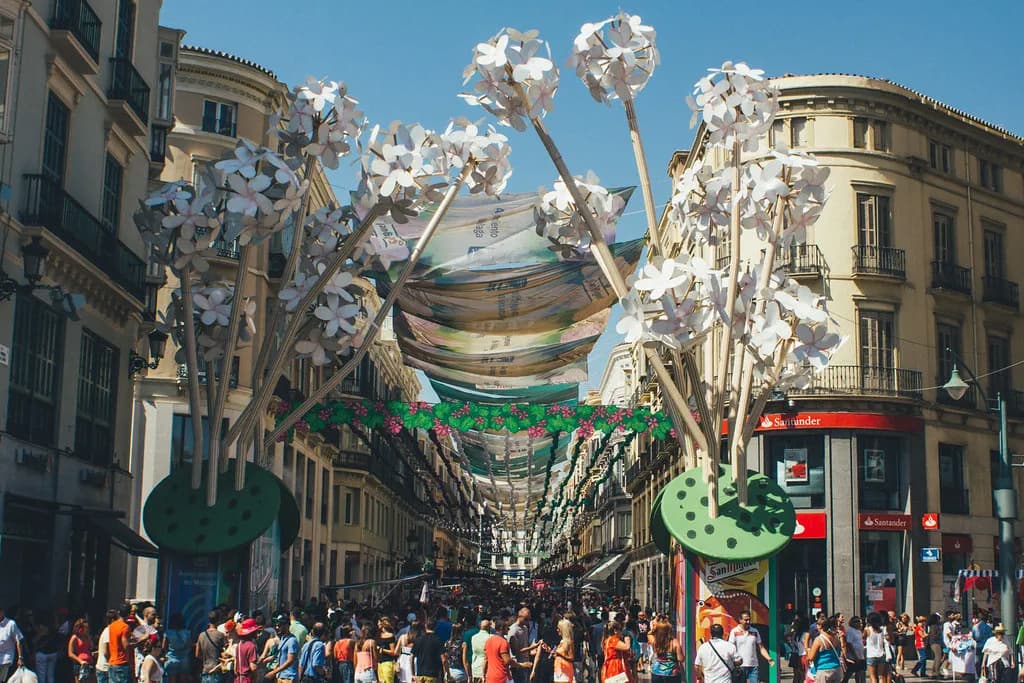
For beach holidays and nightlife, July is excellent. For sightseeing in historic districts, it is challenging: the Alcazaba terraces are exposed and the heat is intense between 12:00 and 17:00. Plan any walking tours for before 10:00 or after 18:00. The Festival Terral brings music and dance to various city venues, the Roman Theatre hosts classical plays, and open-air cinema runs at multiple locations including the beachfront. Calle Larios puts up its summer shade awnings from late June, making the pedestrian shopping street significantly cooler.
July is the second-busiest month of the year for tourism. Book accommodation well in advance, especially at the beach hotels on the Malagueta and Pedregalejo strips.
Weather in Málaga in August: The Terral Warning
August is Málaga's hottest month, averaging 31–32°C on the coast with essentially zero rain. The sea peaks at 24°C — warm even by Mediterranean standards. The Feria de Málaga runs from 15 to 22 August in 2026, transforming the city into a 10-day celebration of flamenco, food, and fireworks. The fairground at the Cortijo de Torres stays open until dawn; the daytime fair in the historic centre runs from late morning.
One detail almost no travel guide mentions: August brings the risk of the terral, a hot dry wind that blows from the interior and can push coastal temperatures above 38–40°C for two or three days at a time. On terral days the sea breeze disappears and even the beach becomes uncomfortable. These episodes typically last 48–72 hours before a westerly sea wind restores normal conditions. If you are sensitive to extreme heat, check short-range forecasts before activities and have an indoor plan ready.
August is peak season in every sense. Hotels along the Costa del Sol fill weeks in advance, prices are at their annual high, and the beaches — especially Playa de la Malagueta — are densely packed by midday. Families with school-age children have no alternative, and August is genuinely fun if you embrace the festival atmosphere. For those with flexibility, late July or early September gives nearly identical weather with fewer crowds and lower prices.
Weather in Málaga in September
September rivals May as the best month to visit Málaga. Temperatures average 28°C by day and the sea stays at 23°C — as warm as July, but the crowds thin dramatically once Spanish schools restart in the second week of the month. Locals call this period veroño (a blend of verano/summer and otoño/autumn), and it genuinely feels like a private extension of summer.
Rain begins to reappear — roughly two to three days in September — but these are typically short afternoon storms rather than disruptions to a full day. Art exhibitions open across the city's galleries, and the Málaga Fashion Week catwalk takes over Calle Larios, turning the pedestrian street into a runway. World Tourism Day on 27 September means free entry to most monuments and museums, often with guided tours. Prices drop noticeably from 15 September onwards as summer school holidays end across Europe.
Weather in Málaga in October
October is warm, sunny, and increasingly quiet. Daytime temperatures average 24°C and the first half of the month can feel like an extension of summer — warm enough for the beach, with a sea temperature still at 21°C. By late October the light softens into a golden autumn quality that photographers particularly appreciate. Evenings cool to around 15°C, so a light jacket is needed after sunset.
October has around six rainy days statistically, making it one of the rainier autumn months, but rain arrives in concentrated bursts rather than persistent cloud cover. The Picasso Birthday celebrations (Picasso was born in Málaga on 25 October 1881) bring events across the city's art institutions, including temporary exhibitions and evening openings at the Picasso Museum. October is an excellent month for day trips inland to Ronda, Antequera, and the white villages, when temperatures are pleasant for walking and the tourist buses have thinned out.
Weather in Málaga in November
November is the quietest month in Málaga for tourism and one of the best for budget travellers. Daytime temperatures average 20°C — still comfortable for walking without a coat — and flights and hotels drop to some of their lowest annual prices. Rain arrives more frequently now, averaging five to six days, but most days remain dry and bright with that clear Mediterranean light.
The Málaga Jazz Festival is the headline event, with concerts at the Cervantes and Echegaray Theatres and free performances at smaller venues across the city. Roast chestnut sellers appear on street corners. The sea cools to around 19°C — still swimmable for hardened swimmers — but most visitors will find it too cold. November is ideal for cultural tourism: museum visits, day trips, and long lunches without summer's midday heat pressure.
Weather in Málaga in December
December is cool by Málaga standards — daytime averages of 17–18°C — but remarkably mild compared with northern Europe. Evenings require a proper jacket, and rain is at its most frequent (around six to seven days). Sunny afternoons are still common, and you will find outdoor café terraces busy on clear days. The sea drops to 16–17°C.
The main draw is the Calle Larios Christmas illuminations, which are among the most celebrated in Spain. The light display runs nightly from late November until 6 January, with a timed sound-and-light show that draws large crowds. The city centre has Christmas markets, nativity scenes, and evening concerts on Plaza de la Constitución through Christmas week. Hotel prices are low except around Christmas Day and New Year's Eve, when they spike briefly. Public holidays include 6 December (Constitution Day), 8 December (Immaculate Conception), and 25 December.
Planning to Visit Málaga: Quick Decision Guide
The right month depends on what you are planning to do. Matching your priorities to the season avoids the most common frustrations — booking a beach holiday in November or planning long sightseeing walks in August both lead to disappointment.
- Beach and swimming: June through September. The sea is genuinely comfortable from late May. July and August are hottest but most crowded.
- Sightseeing and walking: April, May, October, and November. Temperatures stay below 26°C and the city's historic sites are accessible without a midday break.
- Budget travel: January, February, and November. All three offer mild weather, quiet streets, and the lowest prices for flights and accommodation.
- Festivals and events: August (Feria de Málaga), April (Semana Santa), November (Jazz Festival), December (Christmas lights).
- Day trips and hiking: March through May and October. Caminito del Rey, Ronda, and the white villages are most enjoyable in cool, clear conditions.
- First-time visitors: May or September. Both offer near-ideal conditions without requiring compromises on weather, crowds, or price.
One practical note: Málaga Airport (AGP) serves direct routes from most major European airports year-round. Flight prices typically bottom out in January–February and November, and peak sharply in late July through August. Booking accommodation in April during Semana Santa requires at least six to eight weeks' lead time — the city fills completely during Holy Week. For everything else, two to four weeks' notice is usually sufficient outside of peak summer.
What to Pack for Each Season in Málaga
Sun protection is non-negotiable in Málaga at any time of year. UV levels are high even in winter on clear days, and the sun feels stronger than it does further north at equivalent temperatures. High SPF sunscreen, sunglasses, and a hat should be in your bag regardless of when you travel.
- Spring (March–May): Light layers and a compact jacket for evenings. Comfortable walking shoes. Sunscreen and a hat. A small umbrella is useful in March and April.
- Summer (June–August): Light breathable clothing (linen or cotton), swimwear, and sandals. High SPF sunscreen and a wide-brimmed hat are essential. For the heat of August, pack a small portable fan and electrolyte tablets if you are doing active sightseeing.
- Autumn (September–November): Light layers through September and October, moving to a mid-weight jacket by November. Closed-toe shoes for October onwards. Compact umbrella from October.
- Winter (December–February): A proper jacket or coat for evenings. Sweaters and layers for daytime. Waterproof shoes are useful in December and January. You will not need gloves or a heavy coat — locals layer up more than the actual temperatures require.
What's Closed in Low Season in Málaga?
Málaga's city centre remains active year-round, but the coastline quiets significantly from November to February. Many chiringuitos (beachside restaurants) outside the city proper close from late October until March or April, particularly along the beaches east of the centre toward Nerja. Seasonal boat tours and some ferry routes to coastal coves also stop operating.
The main cultural attractions stay open. The Alcazaba and Picasso Museum both operate through winter, though hours may be slightly reduced. Tapas bars and restaurants in the centre keep normal hours throughout the year. Always check official websites for current opening times, especially in early January when some venues take a brief post-holiday rest.
Frequently Asked Questions
Is January a good time to visit Málaga?
Yes, January is a good time for budget travelers and those seeking cultural experiences. The weather is mild, with average temperatures around 12-17°C / 54-63°F, and fewer crowds mean better deals on accommodation and flights. You can enjoy sightseeing comfortably without the summer heat.
What's the weather like in Málaga in April?
April in Málaga offers beautiful spring weather, ideal for outdoor activities. Temperatures typically range from 18-22°C / 64-72°F, with plenty of sunshine and minimal rainfall. It's perfect for exploring the city's historical sites and enjoying al fresco dining.
What's Málaga weather like in July?
July is one of Málaga's hottest and driest months, with temperatures often exceeding 30°C / 86°F. It's perfect for beach lovers and nightlife, but be prepared for intense sun and high humidity. Many locals take siestas during the hottest part of the day.
Will I need suntan lotion in Málaga?
Yes, you will almost certainly need suntan lotion in Málaga, regardless of the season. The sun is strong on the Costa del Sol, even during winter months. Always apply a high SPF sunscreen to protect your skin, especially if you plan to be outdoors.
Is the weather good for sightseeing in winter in Málaga?
The weather in Málaga is excellent for sightseeing in winter. Temperatures are mild, typically 12-18°C / 50-65°F, making it comfortable for walking and exploring museums. You'll also encounter fewer tourists, allowing for a more relaxed experience at popular attractions.
Málaga rewards visitors in every month of the year, but matching the season to your priorities makes the difference between a good trip and an exceptional one. May and September are the standout months for most travellers — warm, uncrowded, and versatile. January and November deliver the best value. August brings the Feria and the best beach conditions, but also the most heat and the most competition for accommodation.
Whatever month you choose, pack sunscreen, book early for Semana Santa and Feria, and keep an eye on short-range forecasts if you are travelling in August (watch for the terral wind). Ready to start planning? Check out the cheapest flights to Malaga and explore more of this stunning city.
You might also like


Continue reading
More guides you'll find useful